

Here's What Restaurant Menus Looked Like In 1950s America
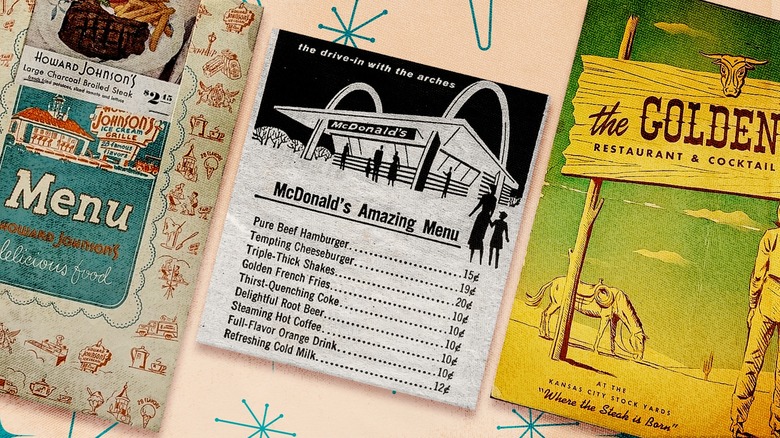
Tastes change as the years pass, and there's no better way to see just how our foodie landscape has changed than to look back over the decades of the previous century. Even things as simple and unassuming as the humble sandwich have gotten some pretty wild overhauls. There are plenty of vintage sandwiches that no one remembers these days, much less eats. And sure, peanut butter and mayo sandwiches should probably remain in the past, right alongside the 1950s-era sandwich loaf. But what about restaurant menus?
We got curious about what sort of things someone in the '50s would have seen when they headed out to a restaurant, sat down, and opened up a menu. And honestly? It's pretty interesting stuff that came out of this post-World War II decade. Even if you're familiar with some of the once-common foods that defined home cooking in the '50s, you might be surprised by what the professionals were serving up.
We certainly were, and we browsed through scores of menus from the decade to get a feel for what was popular. Will you be getting some ideas for your next midcentury theme party? Will you find the perfect meal for serving up on your favorite ultra-collective set of vintage jadeite dishware? You just might, because while some of these meals have been left in the past for a very good reason, some have stood the test of time.
The McDonald's menu was smaller in item number and portion sizes
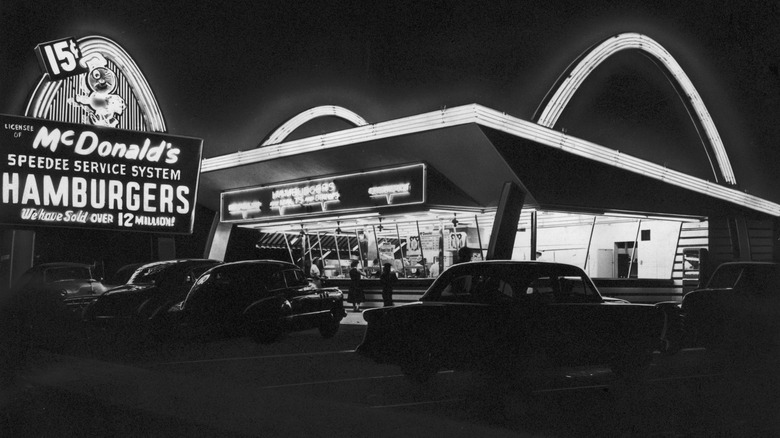
The trials and tribulations of the McDonald brothers is a fascinating story in itself, and in the 1950s, there were some big things going on — including Ray Kroc's involvement and the start of franchising. Kroc opened his first location in 1955, and the menu looked very different. For starters, there was nowhere near the variety we see today, and customers could order a hamburger, cheeseburger, and fries. There were three different kinds of milkshakes — vanilla, strawberry, and chocolate — and for drinks, there was milk, coffee, orangeade, and two sodas — root beer or Coke. That's it!
Those drinks and the fries would set you back just a dime, while the hamburger was slightly more expensive, at 15 cents. Splurging for a cheeseburger would add another four cents, and the 20-cent milkshakes were the most expensive thing on the menu. That streamlined menu was a huge part of the chain's success, and it allowed them to not only be efficient, but customers knew they were getting the same thing no matter when or where they ordered.
It was like that for a long time, too. The menu stayed the same until the addition of the now-famous, super-popular Filet-O-Fish, and that didn't happen until 1965. The Big Mac followed three years later, but for those first customers, there wasn't a lot of choice.
Steakhouse menus were simple and straightforward
Today, steakhouse menus can be pretty expansive. Even at chains like LongHorn Steakhouse, there are plenty of incredible menu items that aren't steak, and customers expect to see options like fish, chicken, pork chops, pastas, and an array of sides. Some places will hand you a menu that's about the same size as "Moby Dick," but things were a little more straightforward in the '50s.
Then, you could expect to see a generally smaller selection of steaks, with sirloin, tenderloin, and filet mignon all being common options. We did notice that steak sandwiches appeared a lot, including prime rib sandwiches, with chopped steak and even corned beef sandwiches. Even Peter Luger had a steak sandwich option, which stood out on a menu that included only steak for one, two, or three people, lamb chops, chopped steak, broiled chicken, and roast prime ribs of beef (with a note that availability was limited).
While there wasn't the plethora of options we're familiar with today, there were some. Veal was pretty common, and there were a lot of fish dishes. Lobster, shrimp, halibut, and swordfish made appearances on the menus we looked at, but interestingly, it was only one of our random selection of restaurants — the California-based Dobbs Bronze Room — that put seafood and steak together in the same dish. The origins of surf and turf are still debated, but we do know that this option only started getting popular at the very end of the decade.
Howard Johnson's was a huge deal
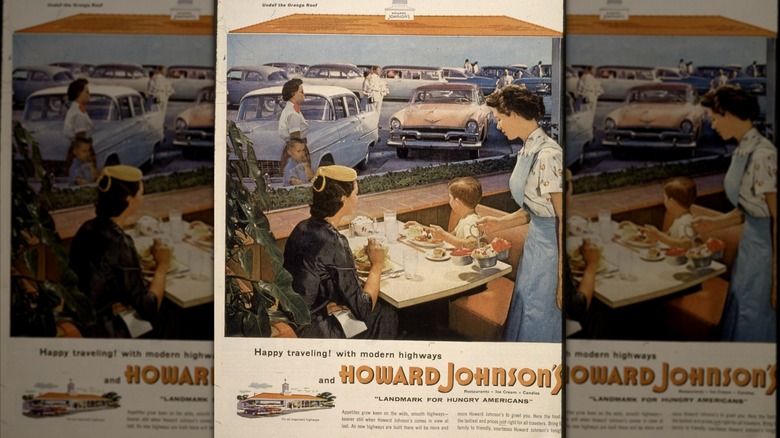
Dining in the 1950s was in a large way defined by one massive chain: Howard Johnson's. With McDonald's little more than a fledgling fast food chain, it was HoJo's that provided much-needed rest and respite to weary travelers, and it all started with ice cream.
Howard Johnson was a real person and when he started in the food business, it was with his own specially-formulated ice cream recipe and 28 flavors. It makes sense, then, that HoJo's continued to be known for its ice cream, and by the 1950s, menus included a dessert section we'd time-travel for. There were 20- and 25-cent sundaes like coffee fudge, butterscotch almond crumble, maple marshmallow, pineapple whip and pineapple mint, and you could get floats, milk shakes, frappes, egg shakes, and dessert parfaits, too. (Waffles with ice cream and syrup? Yes, please!)
HoJo's wasn't just about dessert, though, and by the 1950s, was offering things like a variety of sandwiches, fried chicken, pork chops, chicken pot pie, and a ton of steak options. The chain marketed to families, and offered kids' menus that doubled as activity books. In between connect-the-dots puzzles and games to play on the road were kids' meals like tuna salad, clams and mashed potatoes, roast turkey and beef, fish filets, hamburgers, and PB&J.
Hotel breakfast menus would look a little familiar to a time traveler from today
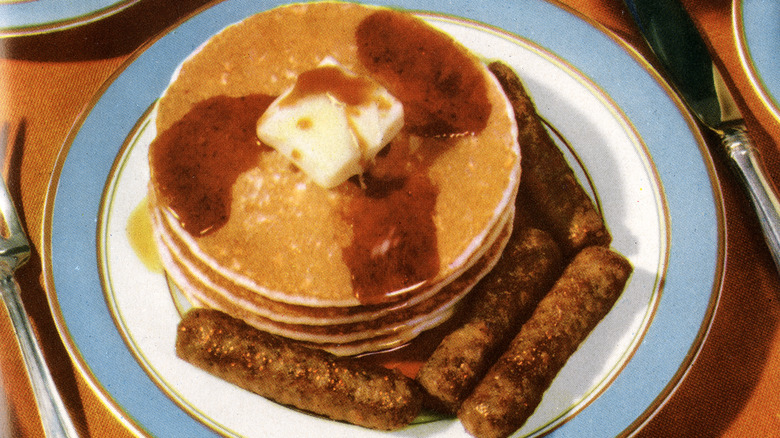
Howard Johnson's thrived in the 1950s, particularly because of a customer base that included everyone from families to businessmen, all taking advantage of the expanding highway system. Part restaurant, part hotel, the chain offered a breakfast menu, too. If you were in a hurry, you could get the "Quickie Breakfast," with juice, eggs, ham, grits or hash browns, a muffin, and a coffee for just 95 cents. Other options included pancakes, eggs, bacon, ham steak, coffee crumb cake, English muffins, and glazed sweet rolls.
Other breakfast menus we looked at were similar. Opt to stay at the Holiday Inn instead, and you could order a 75-cent "Old Fashioned" breakfast with eggs, toast, cereal, and a whole pot of coffee. In addition to eggs and toast, there were waffles, French and cinnamon toast, and omelets.
Step up to a place like the Sheraton-Park Hotel, and you'd see all the standards, and some more high-end options. Imported Scottish kippers would set you back $1.05, a chicken liver omelet cost $1.25, while four link sausages added 50 cents to your bill. Get stewed prunes or figs in syrup for 40 cents, or French toast with whipped butter and syrup for 60 cents.
Drive-ins were the place to be
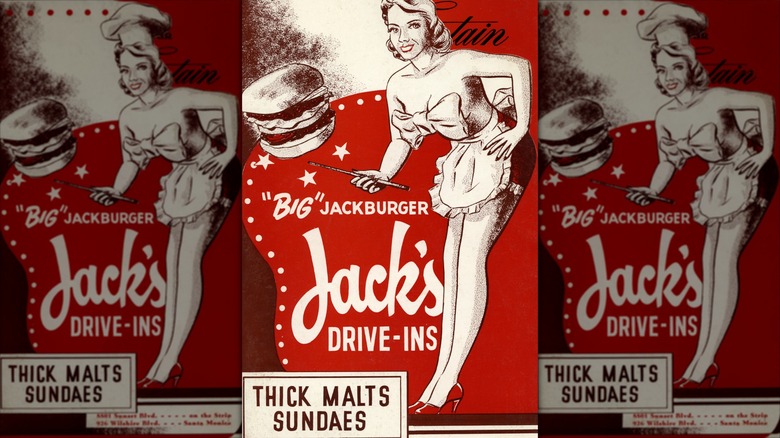
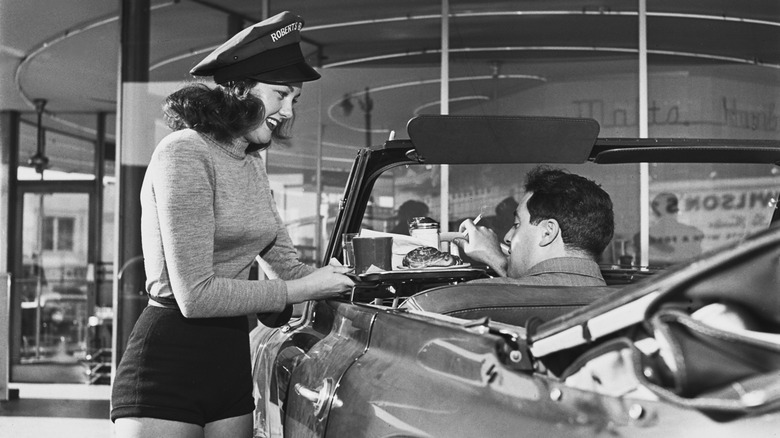
For anyone road-tripping across the country today, there are still a handful of fun drive-in restaurants that should definitely be experienced. Back in the 1950s, drive-ins were so popular that some places skipped hiring carhops and installed push-button ordering systems and conveyor belts to deliver food. Drive-in menus varied and ranged all the way from the full dinners you might expect at a sit-down restaurant to burgers and fries, and at the end of the decade, A&W was one of the most wildly popular.
Many drive-ins were serving some of the same things you can expect to see on menus today. Think burgers and sandwiches, fried shrimp, fish and chips, fried chicken, hot dogs, ice cream, and sodas, but there was another menu item that was all the rage, and doesn't get much love anymore.
Those are the pizza burgers, which were basically a burger with pizza toppings. That idea can be traced back to Muskego, Wisconsin, where they were sold for around 35 cents each. The creators of the idea were two World War II veterans who went into the drive-in business after the war, and the pizza burger was so popular that they were franchised across the country.
Today's pharmacies were the restaurants of the 1950s
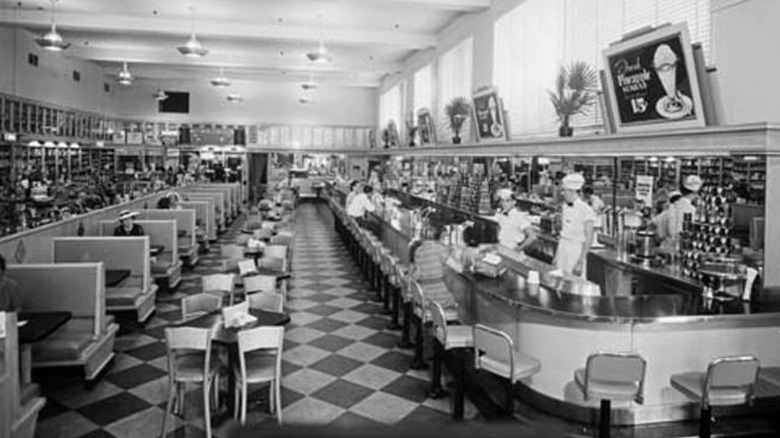
In our 21st-century world, many Americans probably think of pharmacies as somewhere to get prescriptions filled, buy things like shampoo and toothpaste, and, as far as food goes, maybe there are some good candy bars at the registers. In the 1950s, though, pharmacies like Walgreens were serving full meals, and they were surprisingly extensive. A dinner menu from Walgreens in 1950 included things like scratch-made soup, frankfurters and cabbage, Swiss or hamburger steak, omelets, fish and chips, sandwiches and salads, and ice cream and pie for dessert. It's safe to say these menus rivaled many local restaurants and diners, so it's no wonder they were so popular.
Walgreens was far from the only drug store serving food, and menus from Wall Drug Store have everything from grilled peanut butter sandwiches and hot dogs to eggs and pancakes, spaghetti, fried shrimp, and fish and chips. So, where did pharmacies and food get connected like this?
Pharmacies had long been home to soda fountains, and back in the 19th century, soda — particularly those containing ingredients like cocaine — were medicinal. The cocaine was phased out, but the soda fountains themselves stayed. They got super popular during Prohibition, and as more people started hanging out there, it just made sense to serve food. They remained trendy through the '50s, when customers could find them serving breakfast, lunch, dinner, and dessert.
Many places had early bird specials
What, you might ask, is an early bird special? The idea is pretty straightforward: Meals are offered at discounted prices during off-peak hours to encourage diners to come in and fill what might be otherwise empty tables. Early bird specials have been offered for a long time — and some chain restaurants still do offer early bird specials — but they were huge in the 1950s.
Interestingly, the idea of selling something at a discount price to early shoppers wasn't initially applied to food, but to men's underwear. By Prohibition, it had become a way to encourage customers to patronize alcohol-free restaurants, but in the '50s, places from restaurants to nightclubs were offering discounts on dinners that were served in the early evening hours.
It wasn't a dinner-only thing, though. Drug stores and soda fountains, which were lunchtime hotspots, would have menus offering things like discounted meals to customers who came in before the main lunch rush. The practice remained popular into the 1980s.
Ice cream parlor menus were a dessert-lover's dream
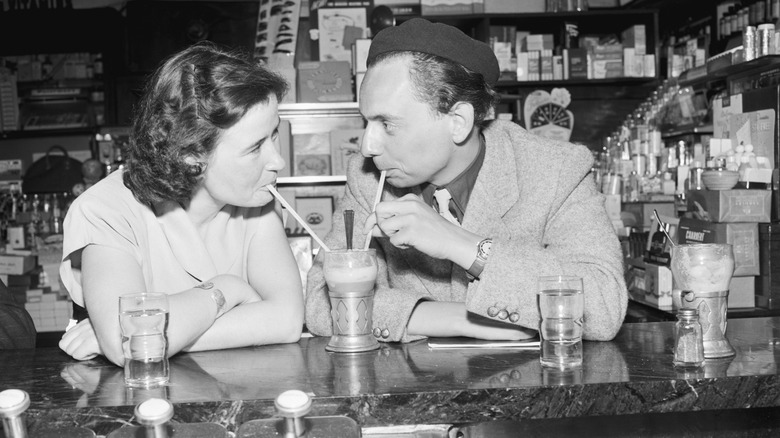
If you get bored with the same old ice cream offerings and find yourself turning to making eggnog ice cream at home just for some variety, you would have loved the ice cream parlors of the 1950s. Ice cream was something of an art form, and let's talk about just a few of the menus we found, starting with Hollywood's CC Brown's. Here, customers could choose from so-called "Fancy Sundaes and Formulas" that included things like a Hot Golden Mocha Sundae (with a pitcher of hot mocha sauce), and a Cinderella, with Melba peach, strawberries, pineapple, roasted almonds, and whipped cream over vanilla ice cream and lemon sherbet.
Anyone stopping in to Mooo Shops would have been spoiled for choice, as the saying goes. Milkshakes, malts, and floats were huge (and found on many, many menus), and there were also delicious-sounding desserts like banana splits, Hawaiian splits, and sundaes like chocolate and marshmallow, coconut, lime and pineapple, and whatever fresh fruit was in season.
Today, Friendly's is known for its ice cream and for still being around after two bankruptcies, and in the 1950s, it was known for ice cream, too. Menus featured a special ice cream of the month, and sundaes like the Banana Imperial, the Marshmallow and Chocolate Shot, and the Swiss Chocolate Almond. The truly adventurous could try the Awful Awful, an extra-thick shake that was so named because it was awful big and awful good.
Woolworth's lunch counters were wildly popular
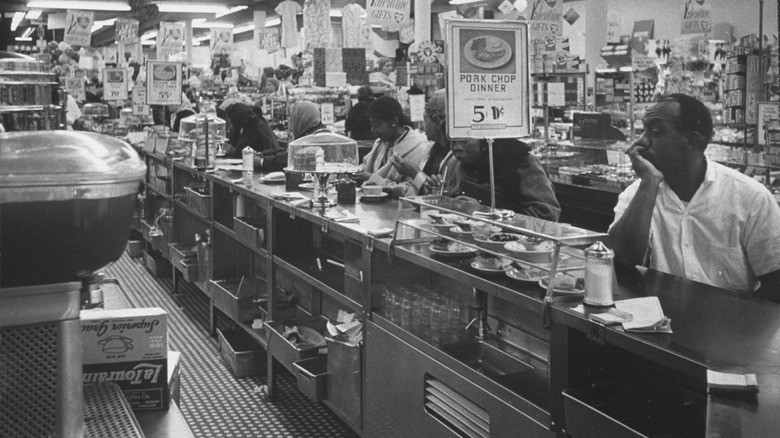
Today, we can grab lunch at the Costco food court and get our shopping done all in one stop, and the 1950s version of that was Woolworth. Founded at the end of the 19th century, F.W. Woolworth was one of the largest retail chains in the U.S., and in the 1950s, it was a hot lunch spot, too.
Some menus were pretty straightforward, and included things like chicken-, ham-, and egg salad sandwiches, sundaes and splits, and — of course — malts and shakes. Dinner menus dated toward the end of the decade included options like full corned beef dinners with cabbage, carrots, peas, potatoes, and a roll, or meatloaf with all the fixins. One of the choices was a beef and macaroni dinner, which was described as being exactly that — ground beef and macaroni baked then served with beets, coleslaw, and a roll.
Prices were almost shockingly affordable. Diners at Woolworth's might choose a roast turkey dinner — with dressing, gravy, beets, potatoes, cranberry sauce, and a roll — for just 65 cents, or get that turkey and accouterments in a sandwich form for 60 cents. Chow mein was also on the menu, along with club sandwiches, fresh juices, and desserts like lemon meringue or cherry pie.
Delis were serving up some funky sandwiches
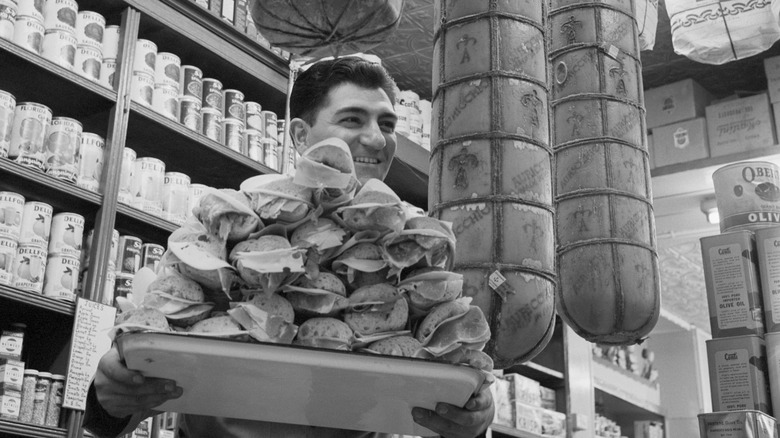
Some popular sandwiches of the 1950s are still popular today. There are plenty of places where you can still order a Reuben, a chicken salad sandwich, or a breakfast sandwich, but when we started looking through deli menus from the '50s, there were a lot of funky sandwiches on there right alongside those familiar ones.
Reuben's in Manhattan was a Jewish deli and a longtime city staple, and the 1950s-era menu is fascinating stuff filled with sandwiches named after famous people. The Judy Garland, for example, was salmon and Swiss, the Danny Kaye was ham, turkey, tongue, and coleslaw, and the Ed Sullivan was chopped chicken liver, turkey, and coleslaw on rye. Others look even stranger to modern eyes: The Elaine Malbin was raw meat, raw egg, and chopped onion, while the Ginger Roger's Special was Beluga caviar and cream cheese.
Reuben's wasn't the only deli serving up some funky sandwiches, and we also found options like peanut butter and bacon, lots of eggs, anchovies, and cream cheese-based sandwiches, and over at the Mid-City Delicatessen Stores, you could even order a sandwich with a whole can of sardines. As for the price, the most expensive sandwiches were hero subs for a dollar, and many options were much cheaper than that.
Tiki drinks were popular, but there was much more on drink and cocktail menus
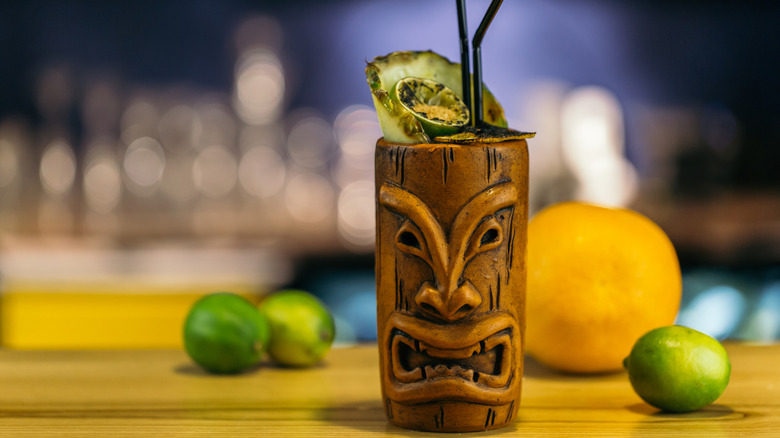
The idea of the Tiki bar goes back to the 1930s, but thanks to Trader Vic Bergeron, it really kicked off in a big way and went nationwide in the 1950s. That's when drinks like the Mai Tai started showing up everywhere, but that was just the beginning. Cocktail menus were filled with drinks that had names like Shark's Tooth, the Royal Hawaiian, and the West Indies, and the menu illustrations could get surprisingly risque. When food was offered, sometimes it matched the vibe: think pineapple spare ribs, duck with plum sauce, and pork Cantonese.
You might not think of coffee drinks as being a thing in the 1950s, but today's popular espresso martini was far from the first. Some menus featured coffee-based drinks like Coffee Grog, which was a Tiki-inspired drink made with coffee, rum, and coconut cream. (Some versions were slightly different.)
It wasn't all Tiki, though, and many places were still serving up classic cocktails like the Mint Julep, the Grasshopper, and the vodka martini. Q. Lung was a New York cocktail lounge with a focus on serving Chinese-inspired dishes, and also had a wildly impressive liquor list that included everything from Tiki-themed Zombies to fizzes and rickeys, sours, cordials, all alongside staples like the Sidecar, the Old Fashioned, and the Manhattan.
Let's talk about prices
Menu prices in the 1950s look absolutely unbelievable; we're talking about an entire roast pork and salami hero for a dollar, and all-you-can-eat dinner at a sit-down restaurant for $1.50, a prime rib dinner for $2.75, and $3 steaks. One of the biggest burger chains of the time was the truly ground-breaking White Castle, and at the time, the chain was offering 5-cent hamburgers, 5-cent coffees, and 4-cent small sodas. Today, a slider is around $3.
Fortunately, some other restaurants have also survived, and that means we can directly compare some prices. Let's take New York City's Keens Steakhouse. In 1950, a sirloin steak was $4.50, a starter of shrimp cocktail was 85 cents, a side of spinach was 30 cents, and a slice of apple pie was 45 cents. At the time of this writing, the sirloin is $69, the shrimp cocktail is $29, the side of spinach is $17, and although desserts have changed, we can compare that to a $15 slice of key lime pie. The meal that was $6.10 in 1950 is now $130.
Comparing prices and wages gets ridiculously complicated really, really quickly, but discussing things like the difference in grocery prices between today's market and the 1950s is pretty fascinating — especially considering the seemingly relentless increases we're seeing in food prices across the board. The idea that you could go to one of New York's best and oldest steakhouses for a $12 date night is absolutely wild.