

17 Chef-Worthy Tips For Cooking With Eggplant
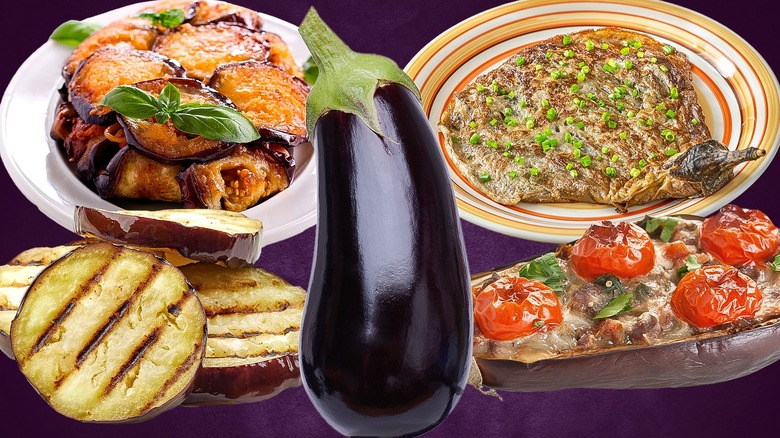
Ah, eggplants. Tricky, beloved, and often misunderstood ancient fruits of the nightshade family, with culinary roots as deep as their flavor. Long and striped, small and white, short and round — there are dozens of varieties, but their superpower is the same: an unmatched ability to absorb flavor and shapeshift in texture. One day they're the star of a smoky dip or briny relish; the next, they're crisped into vegan bacon or masquerading as umami-packed "eel."
But eggplant can also be a diva — bitter if overripe, leathery if mistreated, bland if underseasoned. That's where this guide comes in. You'll walk away with plenty of ways to give eggplant the respect it deserves — with tips on how to select, store, prep, and cook it like a pro — and maybe even discover your next go-to dish along the way. Lifelong fans and budding eggplant enthusiasts, this one's for you!
1. Eggplant: ancient, global, and greatly misunderstood
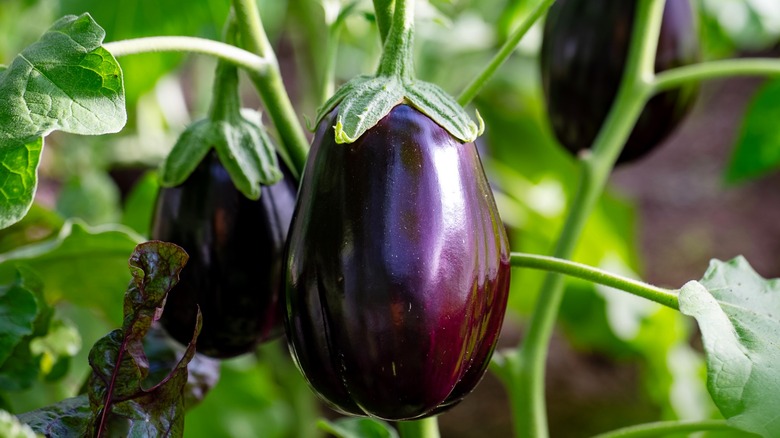
Eggplant may be less globally popular than its New World relatives — potatoes and tomatoes — but those who've fallen for it have fallen hard. While your first association might be with Mediterranean or Middle Eastern cuisine, the eggplant's roots stretch much farther east. It's believed to have been first domesticated in what is now India, Myanmar, China, and Malaysia. This happened at least two millennia ago, as suggested by Sanskrit texts.
It was in the early Middle Ages that the residents of the Iberian Peninsula first encountered the fruit (yes, fruit — not a vegetable!), likely brought from India by Arab soldiers or traders. By the 15th century, it had finally gained acceptance in Italy, while France took another three centuries to come around. Due to its close relation to the nightshade family, eggplant was long mistrusted in Europe over fears of toxicity. Thankfully, that changed — and now we get to enjoy everything from eggplant parm to moutabal.
2. Aubergine vs. eggplant: what's in a name?
Eggplants are unique among nightshade vegetables because they originated in the Old World, which influenced the many names they've acquired over time. The word "aubergine" in particular reflects this rich history: it comes from the Sanskrit word vatinganah, meaning "the vegetable that cures wind disorders," due to its traditional use as a digestive aid. This name passed through Persian (badingan) and Arabic (al-badinjan) before reaching Spain, where it became alberengena. From there, the French adopted it as aubergine in the early 1600s. Meanwhile, Italy took a different path, calling it melanzana, derived from a Latin phrase meaning "apple of madness."
And if you've ever wondered why there's more than one English name for eggplant, we have one particular eggplant variety to thank. Almost at the same time as English speakers borrowed the French aubergine, "eggplant" came onto the scene, inspired by a particular variety of the plant. These small white eggplants, common in India, resembled eggs, which made them a novelty for British colonizers, cementing the name "eggplant" in English usage, though they're also called "garden eggs" in West Africa.
3. Know your eggplant varieties

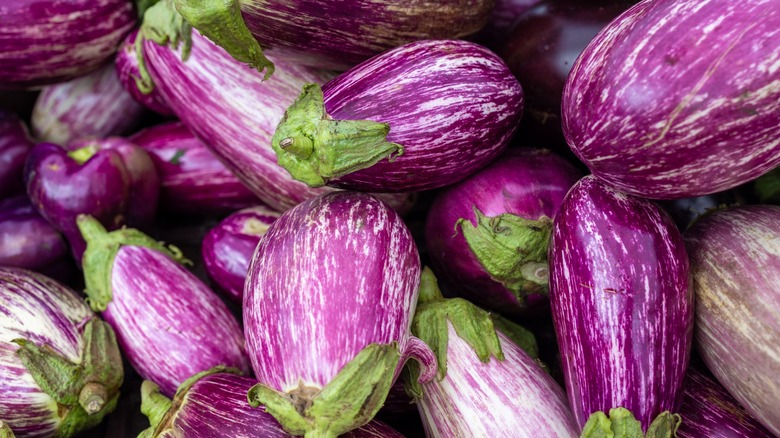
Eggplants come in a surprising variety of shapes and shades — far beyond the large, dark purple kind most people know. There are dozens of eggplant varieties to explore, but the most commonly found types in markets are American globe eggplants (large and dark), Italian eggplants (medium-sized and oval), and the long, slender Japanese and Chinese varieties.
Which type you choose should depend on what you're cooking. Globe and Italian are firm and sturdy, making them ideal for stuffing or roasting whole to scoop out the flesh for dips like baba ghanoush. Graffiti eggplants, with their striped skin, are ideally suited for baking. Chinese eggplants are long, thin-skinned, and low in seeds. They're mild in flavor and have a satisfying, meaty texture perfect for meatless dishes. Japanese eggplants are similar but slightly smaller, with tender skin and flesh that makes them well-suited for stir-fries and roasting.
4. Know how to choose the best eggplant at the store
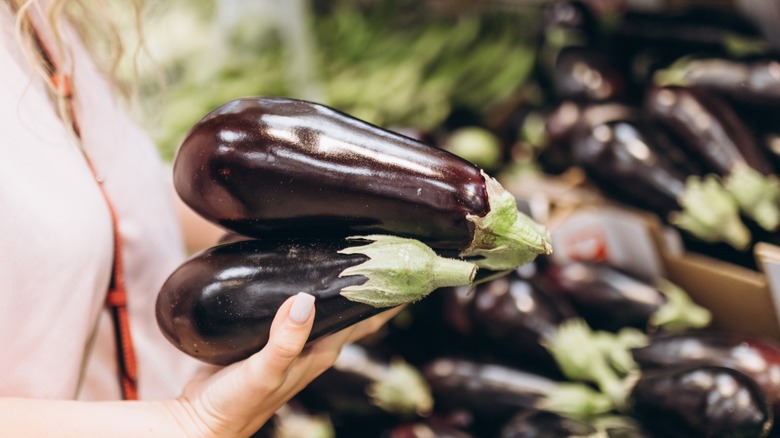
Cooking eggplant can be tricky, but you can set yourself up for success by picking the right one at the market. One rule most chefs swear by is to always buy small eggplants — either varieties that naturally produce smaller fruit or young globe eggplants. The skin should be plump, glossy, and unblemished. A good eggplant has just the right amount of give, similar to a ripe tomato, and a vibrant green, mold-free stem.
Like people, eggplants tend to grow bitter with age. Older eggplants are more likely to have a spongy texture and a higher seed-to-flesh ratio, which can make them taste unpleasant. A good tip is to check the weight — an eggplant that feels heavy for its size is likely young and fresh, while a light one may be past its prime. To get the best flavor and texture, buy eggplants in late summer through early fall when they're in season.
5. Don't refrigerate your eggplant
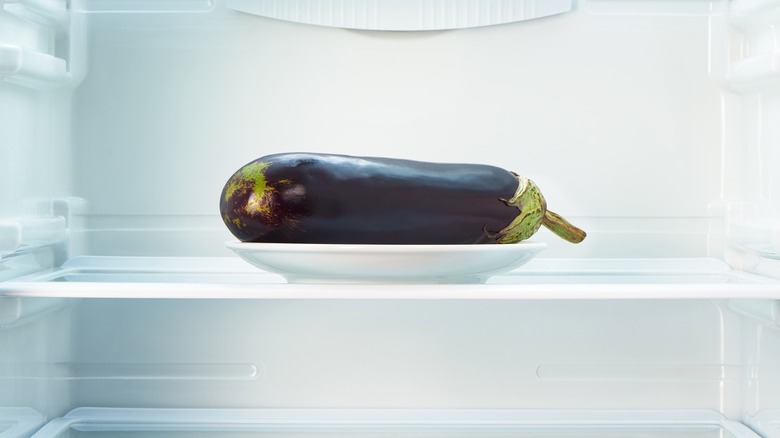
Did you know you can ruin an eggplant before you even start cooking it? Picture this: you just brought a glossy bunch home for a grand weekend meal. What do you do next? If your first instinct is to toss it into the fridge, you've already set your future meal up for disappointment.
Here's why you should think twice before refrigerating eggplant: like other tropical members of the nightshade family (tomatoes, peppers, and potatoes), they're sensitive to cold. They keep best around 50 degrees Fahrenheit. Refrigeration translates to internal damage, browning and unpleasant flavors after just a few days, so a spot on the countertop out of direct sunlight is your safest bet. Another thing to keep in mind is eggplant's sensitivity to ethylene, the natural gas released by certain fruits as they ripen. So, to keep eggplants fresh longer, store them away from ethylene-producing fruits like apples, avocados, and bananas.
6. Should you peel it? Here's when to say yes
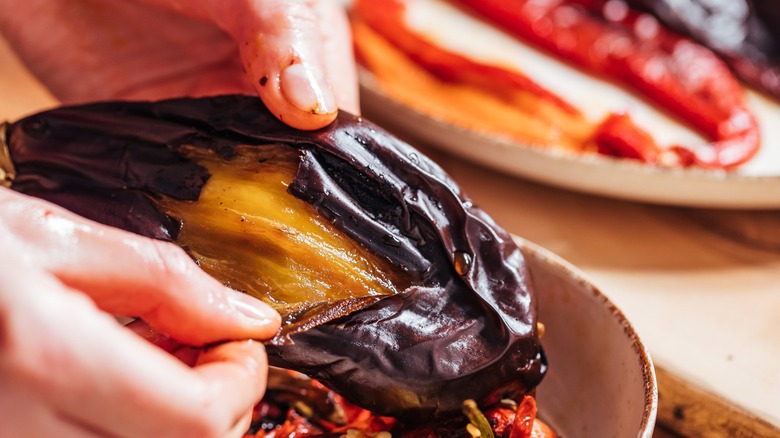
If you've stared down an eggplant and asked yourself whether you should bother removing its skin, the short answer is no. The real answer: it depends. The skin is perfectly edible and packed with anthocyanins, the antioxidants responsible for its deep purple hue. Keeping the skin on also helps the slices sturdier and easier to work with. However, if your eggplant's thick-skinned or overripe, the texture can turn out leathery.
If you prefer skinless eggplant, go ahead and use a vegetable peeler, but keep a few things in mind. Purple-skinned varieties brown quickly once cut, due to high polyphenol oxidase activity. To prevent discoloration, either cook the eggplant right away or submerge the pieces in lemon water until needed. And if the eggplant's past its prime, peeling it raw might be tricky. In that case, roast it whole instead. Once it's cooked, cover it briefly to trap steam, then peel or scrape out the softened flesh.
7. Salt it like a pro

To salt or not to salt — it's the age-old eggplant debate. For years, traditionalists unanimously advised salting eggplant slices to draw out bitterness and reduce moisture. While it sounds reasonable, the reality is a bit more complicated — and a lot less bitter. For one, modern eggplants are much gentler-tasting than their predecessors, as the bitterness was simply bred out, never much appreciated in the first place. In fact, salting doesn't even eliminate the alkaloids that cause bitterness; it just alters our perception of their taste.
So, why do people — chefs included — still salt eggplant? Beyond following the wisdom of generations past, salting does serve a purpose: it helps extract some of the water locked inside the flesh, especially useful in recipes where cooking time is short and texture matters. Brining eggplant in a saltwater bath or microwaving salted slices can also help when you're aiming for firmer slices that hold their shape or want to limit oil absorption.
8. Avoid the sog factor
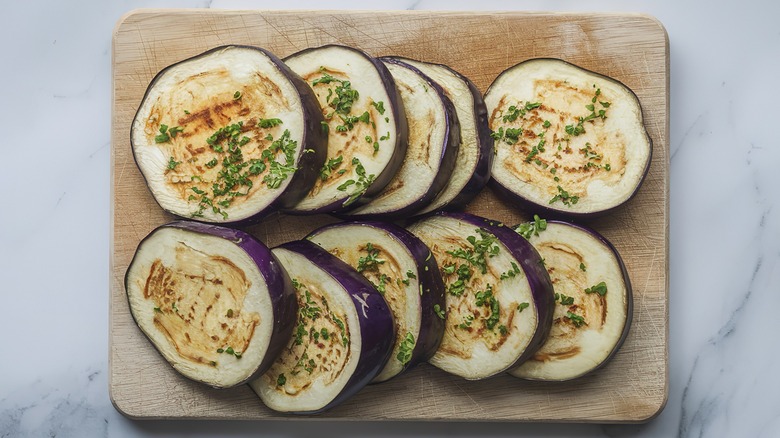
Start by choosing the right eggplant: glossy, green-stemmed, and garden-fresh is your best bet. Smaller varieties like Chinese or Japanese eggplant are ideal. They're naturally lower in seeds, which means less chance of mush. At their peak, eggplants don't need salting or brining — their taste is mild, and their flesh holds up well. But if yours is past its prime or you want to absolutely make sure it stays intact — say, for a stir-fry — give it a quick brine or microwave it with salt. You can also use another foolproof eggplant trick: press salted slices with a heavy pan to draw out even more moisture.
Eggplant can shrink significantly during cooking, so as a rule of thumb, slice the eggplant twice as thick as you want the final size to be. Another slicing mistake to avoid is cutting it lengthwise instead of rounds — the latter give you larger, more stable pieces.
9. Cooking method matters
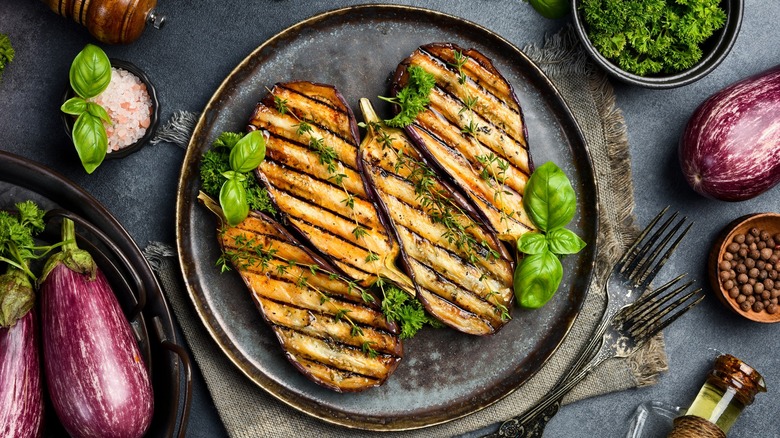
There are many ways to cook eggplant, but picking the right one is key — otherwise, the results can range from underwhelming to disastrous. Cooking sliced eggplant? Opt for smaller, thin-skinned types, like graffiti eggplant. Worried about oil? Keep the slices thick, the oven hot, and the oil to a minimum for toasty-yet-tender results. If you'd rather keep the eggplant whole but not turn it into a purée, try Chef Costa's technique: peel some skin off, halve it, score the flesh, and roast.
If you want it smooth, creamy, and completely, deliciously disintegrated, roasting it whole should be your go-to method. Ideally, charring it over an open fire, a grill, or a gas burner. However, do not forget to prick holes in it if using the whole eggplant, lest you want it to explode. For a lighter texture sans oil, try steaming. Frying does work wonders, but only if the oil's hot enough and the eggplant is brined or battered to reduce oil absorption.
10. Don't shy away from microwaving eggplant

A microwave oven is a fascinating, yet underrated, appliance. While it's mostly used for reheating food, its potential in cooking is remarkable. Allow us to demonstrate with eggplant. Its juicy flesh filled with air pockets tends to absorb a lot of oil and moisture during cooking like a sponge, often leading to undesirable results. That's where precooking eggplant in a microwave comes in. While salting raw slices achieves a similar effect by drawing out moisture and sealing air pockets, the superior control over flavor and texture is the real reason you should be microwaving your eggplant.
For even more effective results, try combining both techniques. Salt the eggplant slices, then microwave them between layers of paper towels. The salt draws out excess liquid while the microwave's heat steams the eggplant from within, accelerating the moisture release. This dual-action method gets you drier, firmer slices and significantly cuts prep time.
11. Improve eggplant's texture and flavor with brining
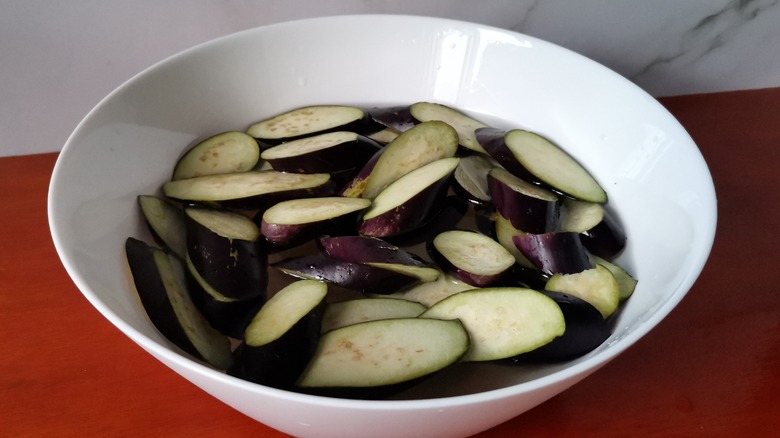
Cooking with eggplant is all about managing texture, and one of the best ways to do so is with a saltwater brine. Considering most eggplant tips concern removing moisture, this seems counterintuitive. But the salt firms up the exterior, making it less likely to go limp during cooking. Just salt the water until it tastes like the sea, submerge the eggplant slices, and let them soak for 30 to 60 minutes. Rinse, pat dry, and cook. This technique works for virtually every eggplant application except when you actually do want it to get all mushy for soups and dips.
For even more flavor, skip the plain brine and go for a full marinade. Just a few minutes of prep can transform your eggplant into something memorable. Cross-hatch halved eggplants so they soak up every drop — classic blends like balsamic, olive oil, herbs, and garlic work beautifully, or try bold options like miso or red curry paste.
12. Use eggplant as a meat stand-in
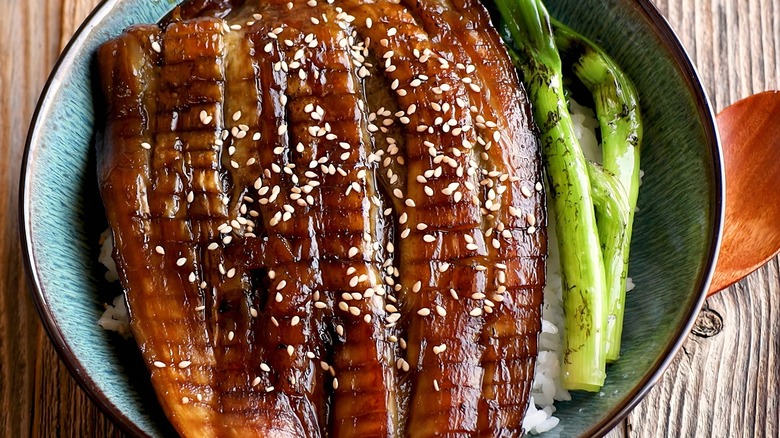
Whether or not eggplant works as a meat alternative often depends on whether you actually eat meat. Nevertheless, countless vegan dishes successfully rely on its "meaty" texture. Eggplant bacon is a favorite: ultra-thin slices crisped in the oven or air fryer, seasoned with a classic "meaty" mix of smoked paprika, vegan Worcestershire, maple syrup, and soy sauce. It's perfect for a plant-based BLT — make that a brinjal, lettuce, and tomato. Roasted and shredded, eggplant can also stand in for pulled pork, soaking up the sauce like a pro.
Other meat-eater-friendly eggplant classics include eggplant parmesan, ragout, and meat-free moussaka. Italians have been using eggplant as a meat stand-in for centuries, hence the invention of eggplant meatballs. More into French cuisine? Try eggplant bourguignon with wine-braised slices, mushrooms, and crispy herbs. Or head east with bulgogi-style fried eggplant. For seafood lovers, pan-fried eggplant basted in seaweed-based sauce makes a surprisingly good vegan eel, while marinated strips can replace anchovies.
13. Preserve eggplants via pickles and ferments
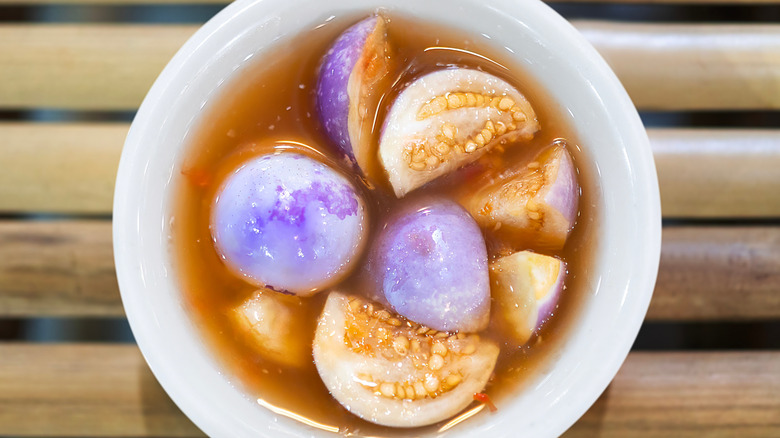
Pickling and fermenting aren't just a great way to preserve leftover eggplants, but also a new way to experience them: tangy, briny, salty, and deeply flavorful. If you're short on patience, try melanzane sotto aceto, an Italian quick pickle. Salt eggplant sticks to draw out moisture, simmer them in vinegar, then mix with herbs and garlic. Chill for a day, and you've got a zesty snack. Or go the Indian route with brinjal pickle, a relish made from salted, squeezed, oil-cooked eggplant mixed with warming spices. Feeling retro? Recreate 1970s eggplant "lox": salt thick slices overnight, fry in oil, and dress with garlicky vinaigrette.
Fermentation fans, look to Japan's shibazuke, where eggplant is dry-cured with salt, shiso, ginger, and ume vinegar and left for two weeks. Or try Vietnam's ca muoi, small white eggplants fermented for 28 days until crunchy, umami-rich, and slightly sour. Fermented eggplant can also be pureed into dips or used in stuffed rolls. Just don't can it — eggplant's low acidity makes it unsafe.
14. Treat eggplant as the ultimate flavor sponge
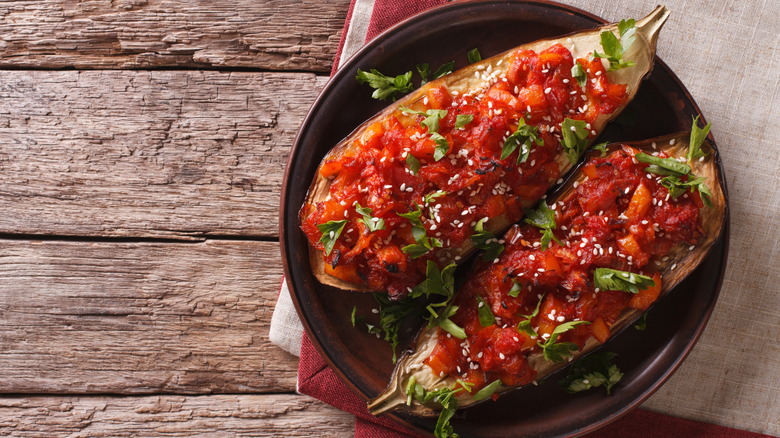
If there's one takeaway from this article, let it be this: Stop treating eggplant's incredible absorption prowess as a bug, and start treating it as a feature. Letting it bathe in the flavors you've envisioned for it is one of the foolproof ways to make eggplant taste better. Baking it often leaves eggplant on the drier side, making it especially receptive to vinaigrette-style marinades packed with punchy ingredients like soy sauce, garlic, vinegar, or fresh ginger.
Oil is another key to unlocking eggplant's potential. It brings out richness, keeps the texture tender, and enhances overall flavor. The famously oily Turkish dish imam bayildi — which means "the imam fainted" – allegedly got its name from the sheer amount of oil used. How much is too much? That's up to you. But if you're trying to rein it in, soak slices in ice water for 5 minutes before frying to seal their surface, and make sure your oil is at 350 degrees Fahrenheit or more to minimize absorption. Or add it little by little and use tongs to remove eggplant from the pan.
15. Embrace the dips

There isn't anything easier and more delicious than charring an eggplant, then getting all the creamy flesh out, and whipping it into a smoky baba ghanoush (or its Lebanese tahini-laced relative, moutabal). These dips are a great entry point for cooking with eggplant, just like the classic Soviet eggplant "caviar," which also happens to be an excellent way to repurpose leftover vegetables. But there's so much more to explore.
Mediterranean flavor pairings rarely miss: think tomatoes, alliums, coriander, cumin, cinnamon, tahini, harissa, or toppings like za'atar, pomegranate seeds, and toasted sesame. Use them in any combination to build something uniquely suited to your taste. For example, combine eggplant with roasted red pepper, garlic, olive oil, and a splash of pomegranate vinegar for a smoky, tangy love child of baba ghanoush and muhammara. And who says your dips must stick to tradition? Add miso, sriracha, gochujang, kefir, or walnuts – whatever calls to you. Who knows, you might just discover the next big name in eggplant spreads.
16. Venture into chef-worthy creative eggplant uses
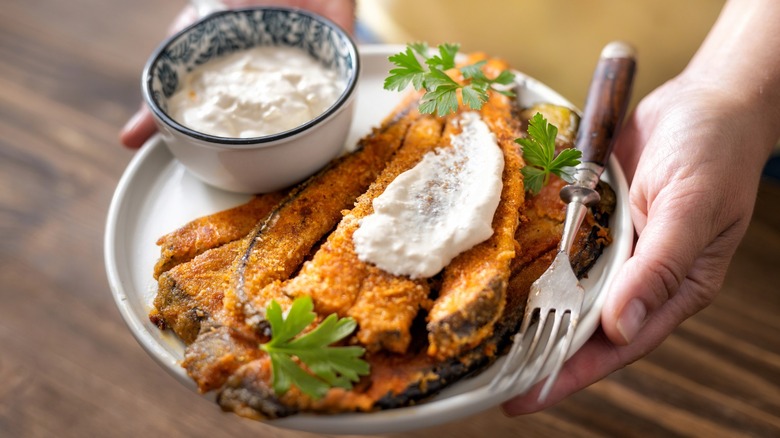
As delicious as baba ghanoush and eggplant parmesan are, there's a whole world of culinary possibilities waiting for those who dare experiment with eggplant beyond these renowned basics. For example, did you know eggplant makes a great snack? Just slice it thin on a mandoline, toss with oil and spices, and bake into crispy eggplant chips. And where there are chips, there can be fries – breaded, air-fried, and served with a dill dip. That same mandoline can turn eggplant into noodles, perfect for soaking up rich pasta sauces.
If you're looking for more substantial dishes, try tortang talong, a Filipino-style omelette where a roasted, peeled, and flattened eggplant takes center stage. Thickly sliced eggplant can be used as crusts for mini pizzas – just add tomato, cheese, and basil, and bake. And when sliced thin, eggplant becomes the perfect wrapper for pilaf cakes or a pasta-stuffed timballo. So, if you haven't found an eggplant dish you like, just keep trying new ones!
17. Got eggplant leftovers? Don't waste them
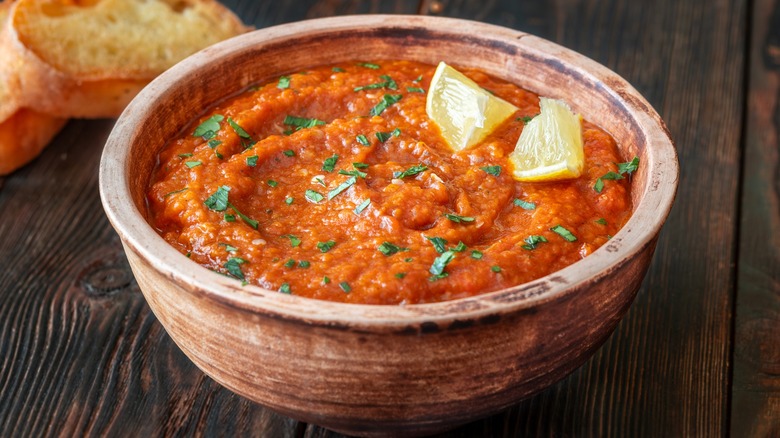
Leftover roasted eggplant is one of those ideal ingredients to throw into a soup – just add it to sautéed aromatics with fire-roasted tomatoes and broth, simmer for 15 minutes, then blend and brighten with a squeeze of lemon. Alternatively, you could incorporate leftover baked eggplant into zaalouk — a chunky Moroccan eggplant salad where the tomato's acidity plays off the eggplant's creamy texture. Caponata, its Italian counterpart, is another great option. If you've only got cooked flesh, blend it into your favorite dip.
Got uncooked eggplant on hand? Dice it up and stir into a curry, a pasta sauce, or a noodle stir-fry. Prefer it in slices? Bake them in the oven and serve with a rejuvenating mint-vinegar scapece dressing, or tuck the cooked slices into a sandwich. If you're worried about raw eggplant's browning, don't be — the aesthetics won't matter once you bread it and turn it into eggplant fries. The bottom line: don't toss it. Your leftover eggplant deserves a second life.