

The Food Court Restaurants Everyone Ate At In The '90s
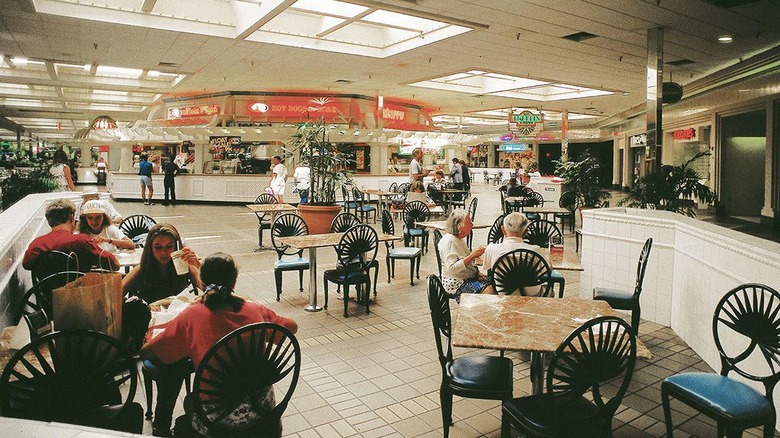
The shopping mall was the 1990s version of social media. It was where people of all ages gathered to socialize, be seen, gain new followers, or, in other words, meet future friends, buy the latest clothes, and experience the ASMR overload of the bustling food court. Today, what we call doomscrolling is no different than what we once called window shopping, and back then, instead of experiencing life's moments on a timeline, we ventured to the local mall to experience them together.
As America's all-purpose retail hub, everyone had their favorite stores and may have come for different reasons. But, whether you came for your first ear piercing or to peruse the latest CDs at Sam Goody, the one place that everyone would eventually end up was the food court. This communal section of the mall was where food court restaurants teased hungry shoppers with sample and where aromas would flow in every direction as you made your way through a sea of filled tables, just to find an open seat to enjoy your meal in.
The freshly baked cinnamon rolls from Cinnabon were to die for, and the orange chicken from Panda Express remains legendary, and those were just two of many delicious foods to look forward to. The hours spent walking to and fro or waiting for your mom to finish in Macy's, were all worth it, thanks to the food court restaurants everyone ate at in the '90s.
Gloria Jean's Coffees
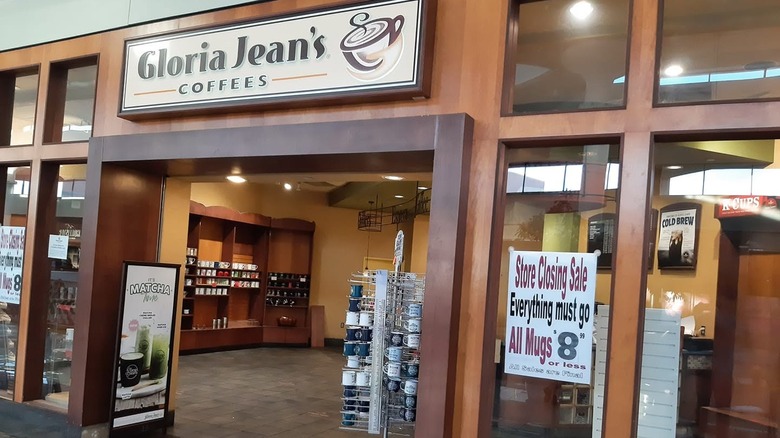
This pioneering coffee chain was founded in 1979, but peaked in the U.S. as a food court staple during the 1990s. Originally named Gloria Jean's Coffee Bean, it had grown to over 100 locations by 1991, and then to 220 by 1993. That same year, the chain continued to rapidly expand after husband-and-wife founders Gloria Jean and Edward Kvetko sold it to the Colorado-based firm Brothers Gourmet, which would change the name to Gloria Jean's Coffees. However, as the number of malls began to dwindle across America, so did the number of locations.
Today, you'd be hard-pressed to come across its swirly coffee cup logo. But in the '90s, if the robust aroma of freshly brewed coffee lured you into one of its spots, you'd find a cozy ambiance with a wide array of specialty coffee blends and coffee-making equipment. Today, Gloria Jean's Coffees is one of the most overpriced coffee chains and operates over 600 stores across 40 countries, though most are overseas. Its U.S. footprint now extends to just 12 states, with its heaviest presence along the East Coast and in the Midwest.
Nathan's Famous
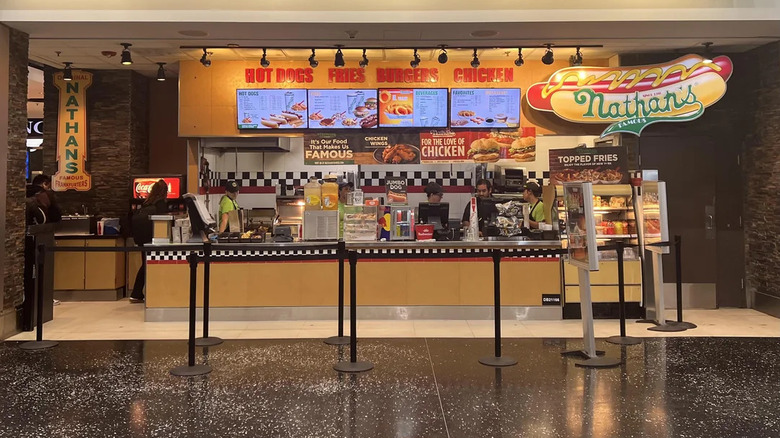
For over 100 years, Nathan's Famous has been serving up some of the tastiest, juiciest beef hot dogs around. While it's mostly known as a boardwalk snack, for anyone who's spent their fair share of time window shopping at malls, it's just as famous for being a food court restaurant. The chain, which boasted over 800 locations at its peak, many of which were in malls, has dwindled drastically to just 52 U.S.-based franchises. Even more surprising is that it now has a larger international presence.
Nathan's signature sauerkraut-loaded natural-casing hot dogs and crinkle-cut fries with cheese sauce were a quintessential food court staple. Though, unlike others on this list, it remains a popular food court go-to even after the height of mall-dom. As recently as 2025, in fact, it opened up a brand new location at Stamford Town Center Mall in Stamford, Connecticut. The new outpost still dons Nathan's iconic green logo, but like the chain's faded food court glory, it lacks the neon-lit pizazz of the original outpost on Coney Island.
Cinnabon
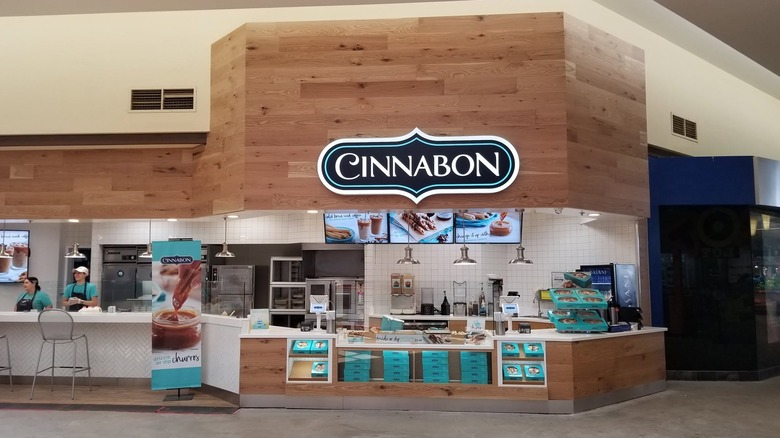
Entering through the food court entrance was always a risky affair. You may have come only to get your hands on the newest Jordans from Foot Locker that you feverishly begged your mom to buy. But, before you could secure the goods, you had to resist the sweet aroma of freshly baked cinnamon rolls flowing from Cinnabon. And even if you managed to make it through, the thought of its signature cinnamon roll coated with delectable melty icing would undoubtedly reel you in on the way out.
It was founded in 1985 in the SeaTac Mall in Seattle, Washington, and was destined to be a food-court staple. The chain grew rapidly during the 1990s, then expanded to almost 400 locations by 2000, many of which could be found in shopping malls across America. As foot traffic died down in food courts, Cinnabon smartly pivoted to a brick-and-mortar format, servicing similarly high-traffic areas such as truck stops, college campuses, and hospitals. The move allowed it to avoid the fate that so many food-court restaurants ultimately fell victim to, which is why today it still operates hundreds of locations nationwide and in over 60 countries abroad.
Sbarro
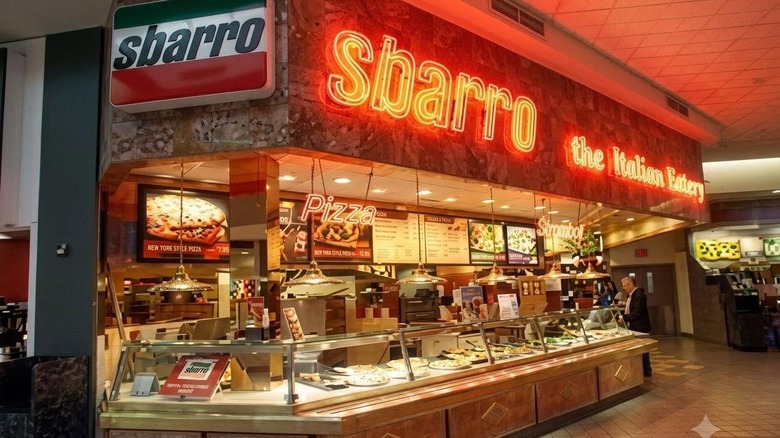
For those who didn't grow up in New York City, Sbarro was the place to go for large, NY-style pizza slices. The chain, which first opened its doors in 1956, was a fixture in shopping mall food courts throughout America. When you saw its iconic red, green, and white sign, you knew what awaited: greasy, hot-and-ready cheese and pepperoni slices, stuffed stromboli, lasagna, and more, toasting patiently under heat lamps. The luckiest of us arrived just in time to snag a slice fresh out of the oven. And of course, the customary way to scarf down a Sbarro slice was to fold it over.
Unlike other shopping mall legends, Sbarro made an unlikely comeback after the food court dust settled, miraculously surviving two bankruptcies — one in 2011 during the Great Recession and the other soon after in 2014 due to debt and the winding down of mall culture. The chain once operated over 1,000 locations nationwide and overseas, but today, that number has fallen to just 600 worldwide.
Auntie Annie's
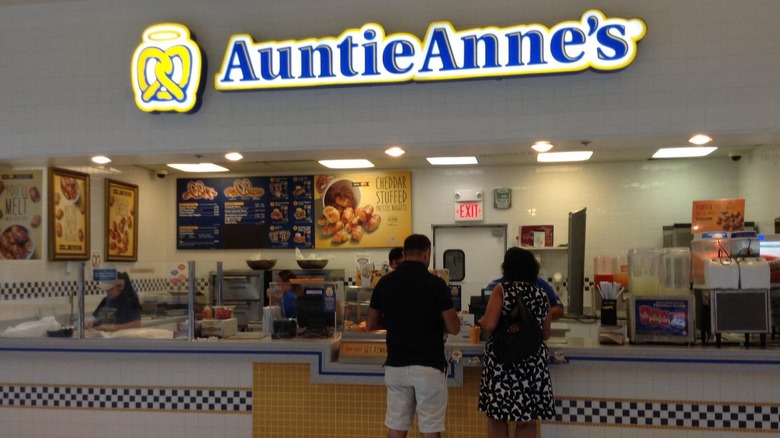
Before Wetzel's Pretzels hit the food-court scene, Auntie Annie's was the go-to restaurant for freshly baked soft pretzels. The chain, which started as a small Pennsylvania-based concession stand in 1988, grew to over 300 locations in shopping malls across America by 1995. The irresistible buttery aroma, the hand-rolled pretzels baked to moist perfection right before your eyes, the constant rotation of free samples that made you greedily circle back for seconds — yup, that was the Auntie Annie's experience, and you can't forget the signature lemonade to wash it all down.
At one point, Auntie Annie's had locations in over half the malls in America, which gives you an idea of how prevalent it was. Mall-goers no longer fill food courts, of course, but the chain continues to satisfy soft pretzel-lovers at its 1,396 locations nationwide. After being purchased in 2010 by Focus Brands (now known as GoTo Foods), it strategically moved into single-unit, co-branded brick-and-mortars alongside Cinnabon, which was owned by the same company. Today, you can still find it at shopping malls serving one of the best fast-food items of all time.
Hot Dog on a Stick
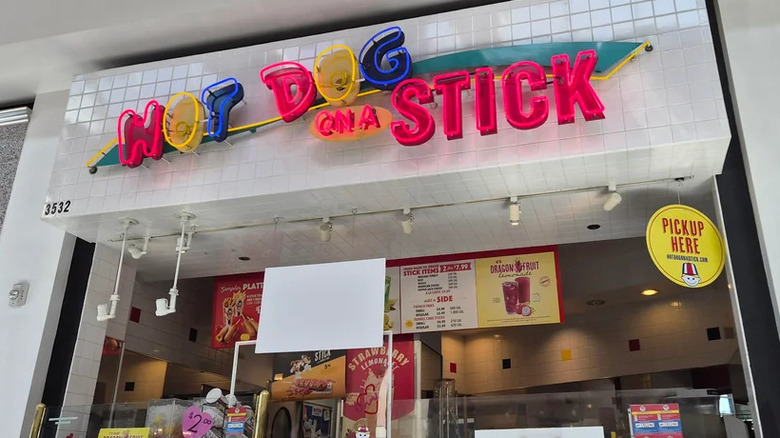
From Southern California's Muscle Beach to shopping malls nationwide, Hot Dog on a Stick is a food court institution. Without Nathan's Famous hot dogs dipped in its signature cornbread recipe, fresh lemonade, and those iconic red-, yellow-, blue-, and white-striped uniforms, a visit to the shopping mall would've been incomplete. In the '80s and throughout the '90s, this corn dog chain was a mall-rat magnet, and in fact, it's one of the first food court restaurants to exist.
Before food courts became a common fixture in shopping malls, store owners banned customers from carrying food around. That is, until Hot Dog on a Stick founder Dave Barham convinced the Old Towne Mall in Torrance, California, to change the rules. After his food stand proved to be a success, the rest was history. Hot Dog on a Stick managed to outlast America's once-beloved consumerist hub and still serves dipped dogs today. Along with its original location on the beach, it can be found in Nevada, Utah, New Mexico, and Hawaii.
Mrs. Fields
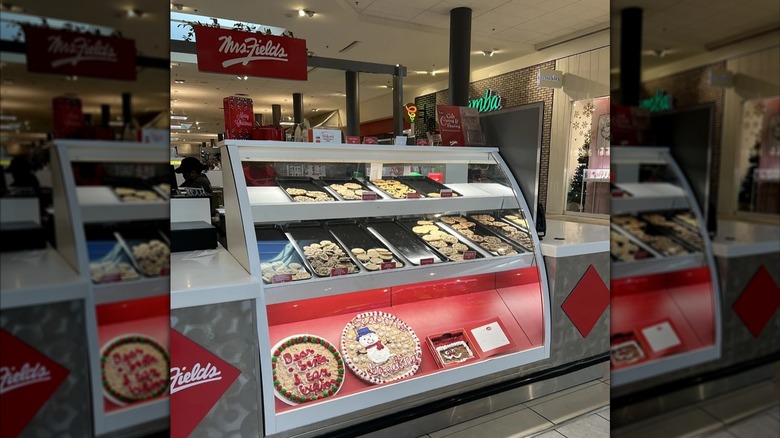
Smell has powerful connections to memory, and a great example of that is the aroma of freshly baked Mrs. Fields cookies that used to fill mall food courts. Their signature soft-baked texture and founder Debbi Field's working-mom persona helped the brand stand out from other cookie makers of the era, such as The Original Cookie Company, a '70s mall-based cookie chain, and Famous Amos, which specialized in bite-sized crunchy cookies.
By the late 1980s, however, Mrs. Fields had emerged as the fan-favorite, with over 78% of its 275 stores located in malls. Some popular cookie flavors of the time include the classic chocolate chip, the white chocolate macadamia nut, and the milk chocolate walnut. The chain's skyward success almost came to a screeching halt, though, because in 1993, Field's was forced to surrender almost 80% of the company to lenders in exchange for loan relief.
That same year, under new management, it grew to nearly 800 locations, solidifying it as the food court's premiere cookie purveyor. With the shopping mall scene but a distant memory, Mrs. Field's cookie empire is now a crumble of what it used to be, and for those who remember its heyday, the taste isn't quite the same. That said, you can still find locations in 20 states, including in its home state of California.
Panda Express
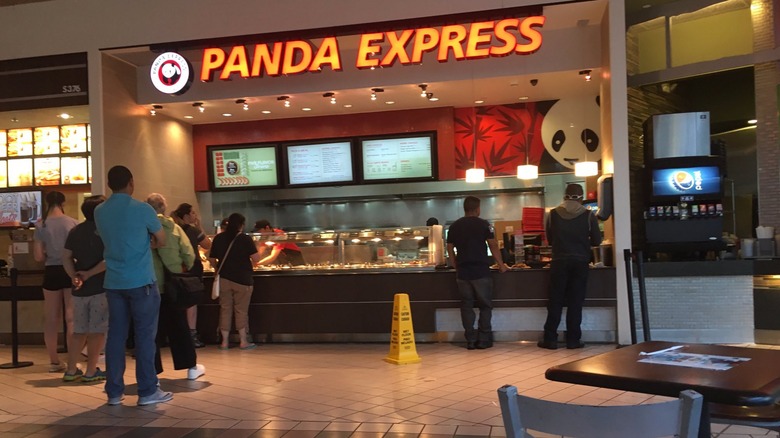
Chinese-American cuisine wouldn't be what it is today were it not for Panda Express. The 40-plus-year-old chain, which now operates over 2,600 locations worldwide, opened its first restaurant at Glendale Galleria Mall in Glendale, California. A few years later, the then-executive chef of Panda Express, Andy Kao, would develop the chain's signature orange chicken, which not only helped it survive the downfall of malls, but has been a major contributor to its overall success. The company now sells more than 100 million pounds of orange chicken each year, per an interview with Eater.
Before becoming a global behemoth, however, Panda Express lured in passing mall-goers with toothpick samples and the savory aroma of fried rice, chow mein, and orange chicken in steaming metal trays. The chain opened its first standalone drive-thru in 1997, before the bustling traffic of mall shoppers began to wane. That foresight, combined with continued menu innovation over the years, has helped it survive decade after decade. Today, husband-and-wife founders Andrew and Peggy Cherng still lead the company.
Orange Julius
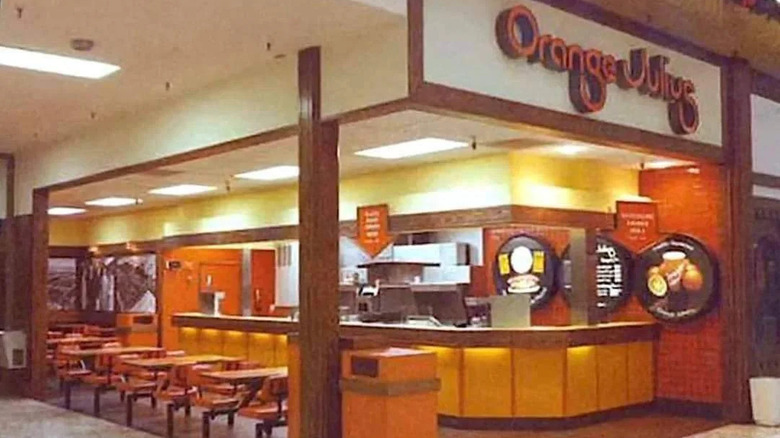
This citrusy SoCal chain got its start in 1926, but didn't truly find its footing until after cofounder Bill Hamlin transformed regular orange juice into a frothy-topped beverage. Hamlin, who liked oranges as much as his business partner, Julius Freed, would get an upset stomach if he ate too many. His search for a solution led to the invention of Orange Julius's signature drink, which was not only less acidic than pure orange juice, but was essentially the first-ever smoothie to exist.
From the 1970s to the 1980s, the orange creamsicle taste of this classic beverage ruled food courts. And then in 1987, after the company was acquired by Dairy Queen, its reign continued into the '90s. At its height, Orange Julius had hundreds of locations. Nowadays, however, its nostalgic taste can only be experienced at some Dairy Queens and at select malls throughout the U.S.
Dippin' Dots
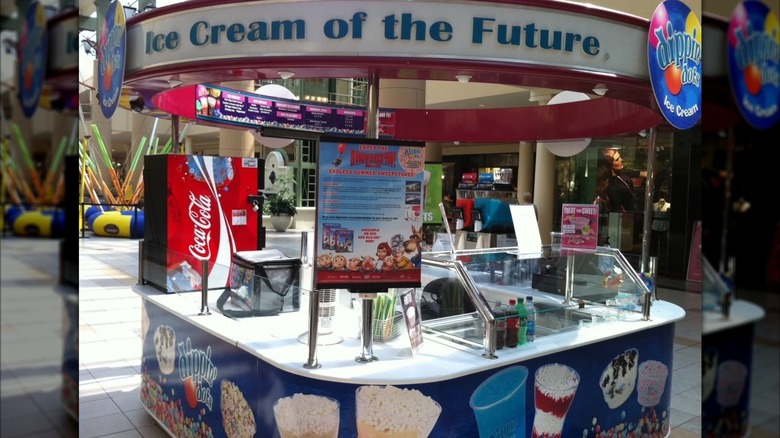
Dippin' Dots are arguably the most inventive form of ice cream to ever exist, and for mall-loving kids who grew up in the '90s, they were a chilly sneak peek into the future of ice cream. It took a scientist who understood cryogenic technology to create them, and microbiologist Curt Jones was that man. These small, colorful, beaded balls hit the food court scene in 1988, and offered much more than just taste and temperature.
Eating Dippin' Dots was a full sensory experience, especially when the tiny beads would annoyingly stick to your mouth before melting into sweet bliss. Popular Dippin' Dot flavors in those days included banana split, cookies and cream, and mint chocolate. By 1995, Dippin' Dots had reached 33 states. That increased to 42 states by 1998 including locations in Canada and Japan. By the early 2000s, you could find them in 250 shopping malls throughout the country.
However, financial woes and a crippling lawsuit would eventually prove that Dippin' Dots were more novelty than a replacement for the real thing. As a result, this '90s-era frozen treat was forced to file for Chapter 11 bankruptcy protection. The following year, it was sold to Fischer Enterprises, but by then, its status as a food court favorite had faded alongside the glory days of shopping malls.
A&W Restaurants
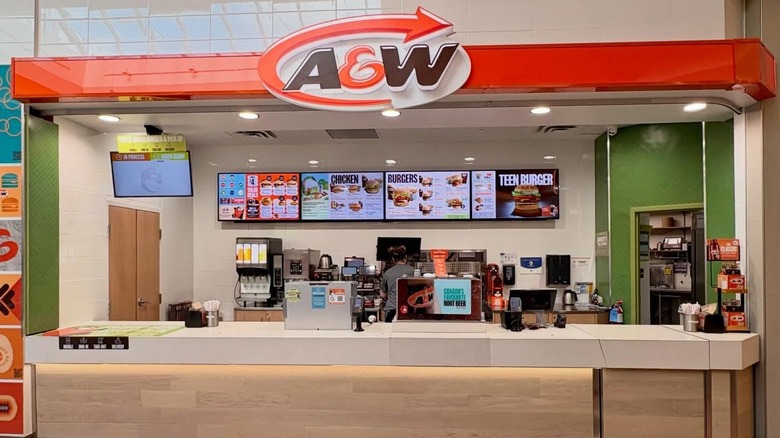
What started as a small roadside stand in 1919 would eventually occupy shopping mall food courts across America. A&W Restaurants, which claims to be the first-ever fast food franchiser, is mostly known for its root beer. It eventually evolved from a humble roadside stand into a car hop drive-in restaurant that served floats, fries, and burgers, before being rebranded as A&W Hot Dogs and More. During this period, it also began entering the burgeoning shopping mall scene.
While the name had changed, frosted glass mugs of root beer topped with scoops of vanilla ice cream were still a menu fixture. Customers could watch as employees filled the mugs from a specialty dispenser, and if you purchased a mug, you'd get free refills. Chili cheese-topped fries and corn dog nuggets were fan favorites. Unlike other restaurants, A&W managed to outlast the peak era of food courts. Even today, its orange and brown logo can be found in malls throughout the country.