

The Best Boardwalk Snacks On America's Coasts
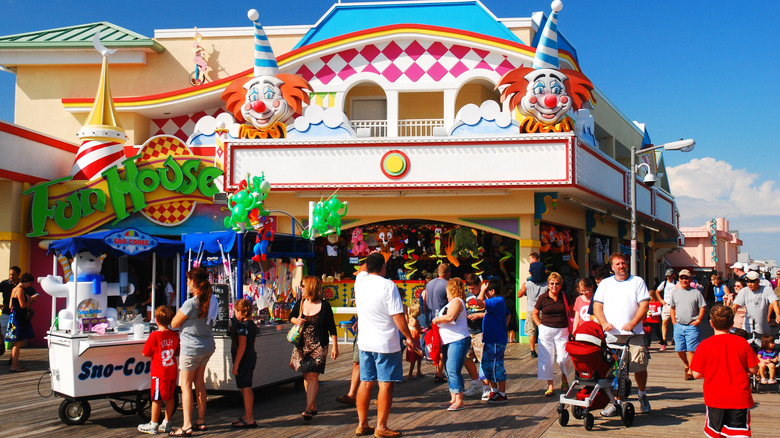
Along the Pacific and Atlantic coastlines, the Great Lakes, and endless stretches of U.S. rivers, you'll find one of America's best places for social gatherings — the boardwalk. Atop these wooden-planked promenades, concession stands serve sweet and savory food, and theme park rides carry the sound of joyful screams, amid a sun-tinged backdrop of never-ending blue. And while ferris wheels and roller coasters certainly make visiting these vibrant walkways worthwhile, food is the real glue that binds one exciting moment to the next.
Whether you're getting Atlantic City's signature salt water taffy stuck to the roof of your mouth, enjoying frozen custard as a chilly remedy to the summer heat on Coney Island, or trying a classic Pronto Pup corndog at Rockaway Beach in Oregon, the classic foods are what stick with us long after the sound of waves crashing against the pier fade. So in the spirit of fried finger foods, fudge-coated confections, and mischievous seagulls, here are some of the best boardwalk snacks on America's coasts.
Salt water taffy
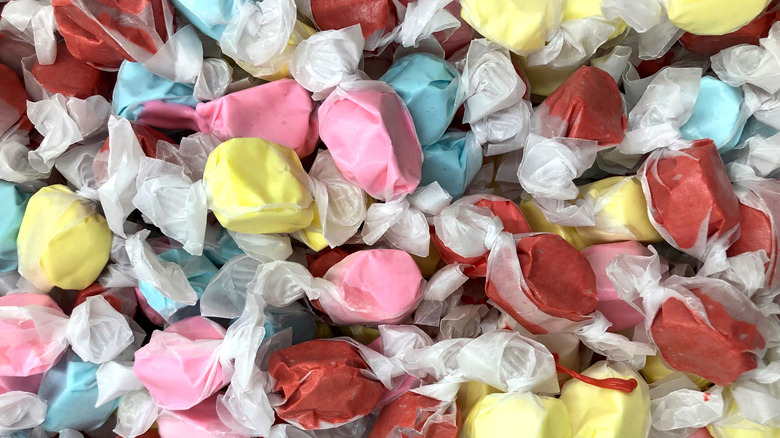
This classic candy debuted on the Atlantic City Boardwalk during the late 1800s. As the story goes, the name salt water taffy was jokingly coined by a candy shop owner, following an incident in which their shop was flooded with salt water from the ocean. Today, the candy remains a popular boardwalk treat sold along the West and East Coast, as well as in novelty candy shops throughout the U.S. Despite the name, the candy's ingredients don't literally contain salt water from the ocean.
Salt water taffy is basically molten sugar, but more specifically, it's composed of boiled sugar, water, corn syrup, a fat like coconut oil or butter, along with food dye and flavoring. Though recipes do vary from place to place. You can find salt water taffy in a range of flavors, including cherry, banana, chocolate, licorice, cinnamon, peppermint, and strawberry, to name a few, and there's even a sour variety.
Clam chowder
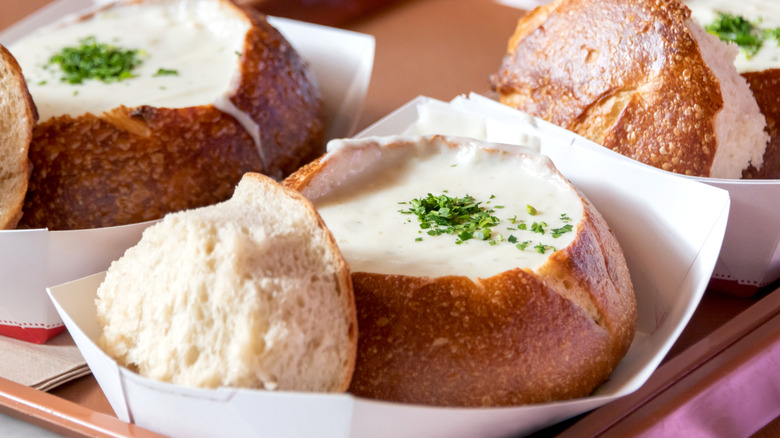
You'll find no shortage of seafood to enjoy on the boardwalk, and one of the most popular is clam chowder. While New England deserves credit for giving birth to this soup classic, lots of clam chowder varieties have spawned over the years, from the tomato-based Manhattan style to the iconic San Francisco one served in a bowl made of sourdough bread. The third well-known clam chowder style in the U.S. hails from Rhode Island, and unlike the others, it's clear and has an extra clammy taste due to clam juice being the primary ingredient.
Clam chowder is most commonly enjoyed with oyster crackers, saltines, or toasted bread, and sprinkled with bacon bits, cheese, fresh parsley, and chives. That said, if you're making it yourself, it can be paired with more adventurous complements such as tortilla chips, sauteéd collard greens, fried onions, and even hot chicharrones.
Fish and chips
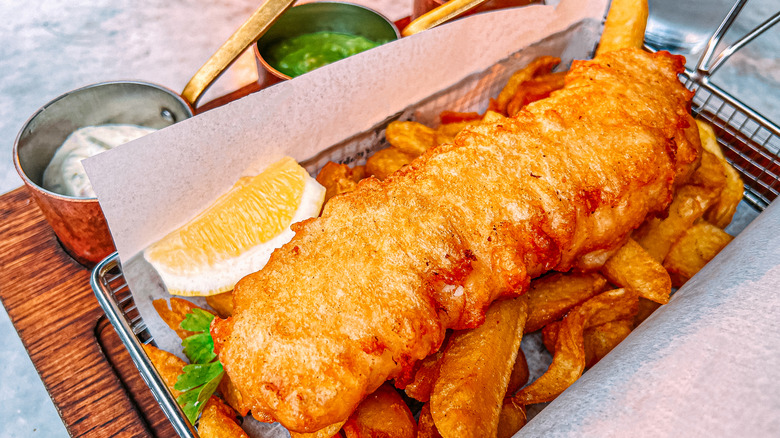
An iconic fried-food pairing, fish and chips is another British invention that can be found on boardwalks the world over. To be clear, and this goes for Americans who are reading this, chips are what the Brits call thick-cut fried potatoes, not to be confused with the thin, flat, crispy variety. Traditionally, they're eaten by hand fresh from a newspaper, and doused with salt and enough malt vinegar that it stings your nose. In time it became just as common to serve them with tartar sauce, a lemon slice, malt vinegar, and mushy peas, the latter of which is used as a dip.
Today, however, ketchup, brown sauce, and gravy are all popular condiments. Ye Olde King's Head, a West Coast favorite located just steps from the Santa Monica Pier and the maker of what some people consider the best fish and chips in America, is a great place to go if you want an authentic British-style experience without having to hop a plane across the pond.
Kettle and caramel corn
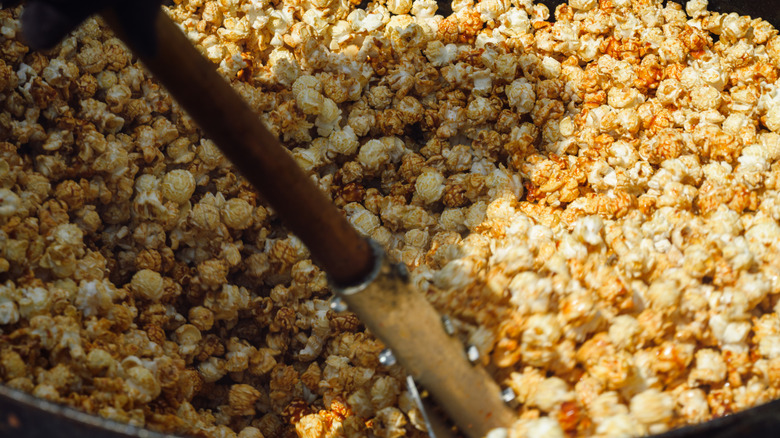
Spend enough time on the boardwalk, and you'll notice that many of the foods are the same kinds that you'll find at a carnival or state fair. There are two specific types of popcorn that fall into this category, and that's kettle corn and caramel corn. Kettle corn is a bit different from regular popcorn, and not just in how it's prepared. The actual kernel variety is called mushroom, and it's flatter than the variety used for regular popcorn, with a wider surface area. Traditional kettle corn has a subtly sweet flavor, and as the name suggests, it's cooked in oil in an actual kettle over a flame.
Caramel corn is the go-to for boardwalk visitors with a sweet tooth. You may see it being prepared in large old-school copper kettles, though a cooker mixer is now more commonly used. It's typically made with butter or oil, brown sugar, corn syrup, and regular popcorn, but nowadays boardwalk vendors make a range of flavors.
Lobster rolls
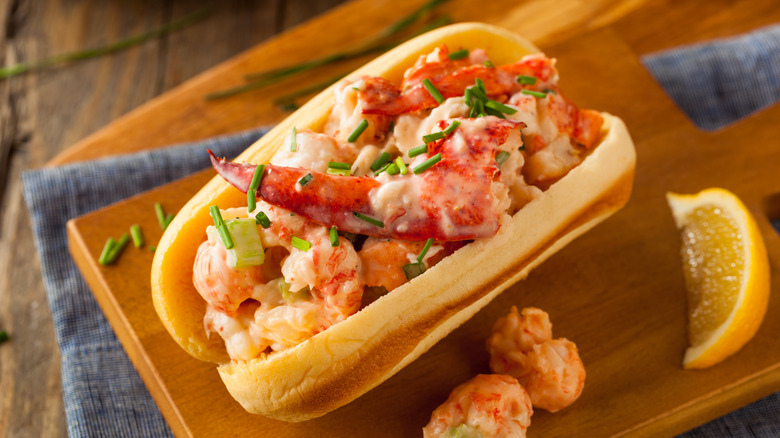
While lobster rolls can certainly be found on West Coast boardwalks, the East Coast is where they were first introduced, and a restaurant named Perry's in Milford, Connecticut, is credited as their birthplace. The sandwich, which traditionally consists of chunks of buttered lobster meat served on a toasted hot dog bun, has since evolved into two main styles: the Maine approach and the Connecticut one. A Maine-style lobster roll is served cold with light mayonnaise, lemon, and chives, while Connecticut-style arrives warm, doused in melted butter with simple seasoning.
There are also Rhode Island and Long Island-style lobster rolls, along with numerous other varieties that can be found on either coast. The popularity of lobster rolls as a boardwalk staple is unsurprising, considering that it's the perfect on-the-go meal. And since it's pretty ubiquitous along the East Coast, finding the best lobster rolls in the Northeast shouldn't be too hard.
Funnel cake
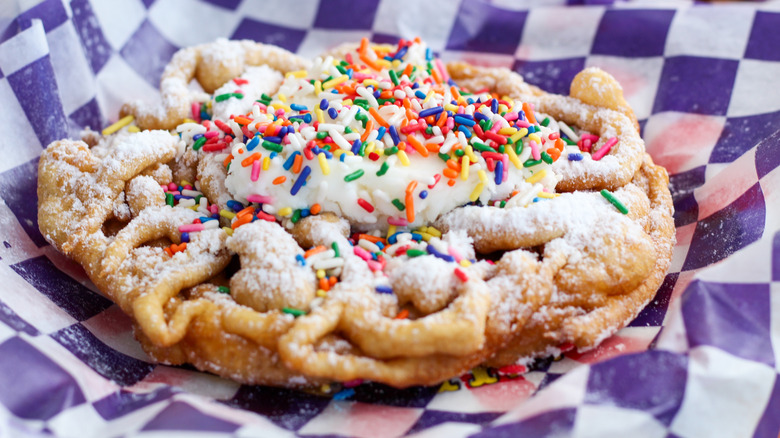
Arguably one of the tastiest versions of fried dough ever conceived by a human mind, funnel cake is a certified boardwalk classic. The smell alone is transportive, and instantly brings about memories of carnival rides amid the coastal breeze. The recipe is simple enough: a drizzle of batter into sizzling oil, where it cooks until golden brown and mouthwatering. Once the lattice-shaped treat is ready, it's pulled from the oil, coated with powdered sugar, then topped with whipped cream and your choice of sweet syrup and freshly chopped fruit.
As such, there is no shortage of ways to spruce up funnel cakes, including hot honey, fruit fillings and compotes, ice cream, Nutella, Oreo cookies, candy, and even savory toppings such as bacon bits, cheese sauce, and chicken. If you're into funnel cakes, you'll probably enjoy elephant ears, which are similar fried dough treats flavored with cinnamon and sugar.
Frozen custard
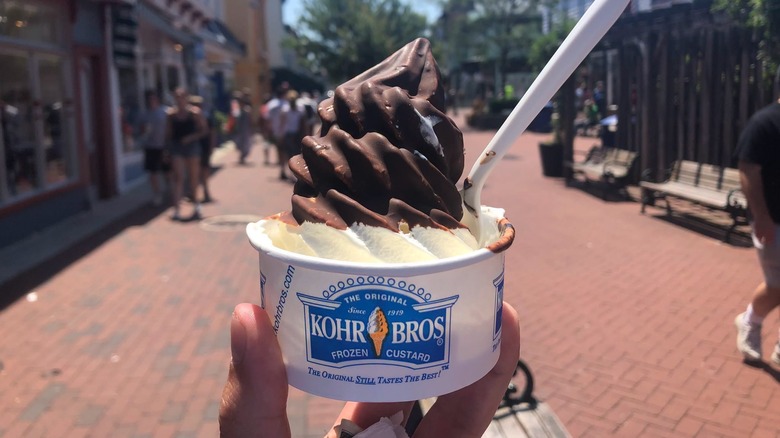
Nowadays, most people think of Wisconsin as the capital of frozen custard, and while that's true, it was actually invented in Coney Island, New York, by brothers Archie and Elton Kohr. They discovered that by adding egg yolk to ice cream, it would develop a creamier consistency, and because it contained less air and more fat, it didn't melt as quickly. Of course, that makes it ideal for beach hangs and boardwalk activities. From Coney Island, frozen custard made its way across the U.S., establishing itself in Wisconsin and eventually as a boardwalk staple.
Today, it's normal to find frozen custard shops serving up classic flavors like orange cream, cookie dough, mint chocolate chip, espresso chocolate chip, and more, which can be topped with sprinkles, crumbles, and drizzles. Even if Wisconsin holds the crown, some of the best places to find frozen custard in America are still on the boardwalk.
French fries
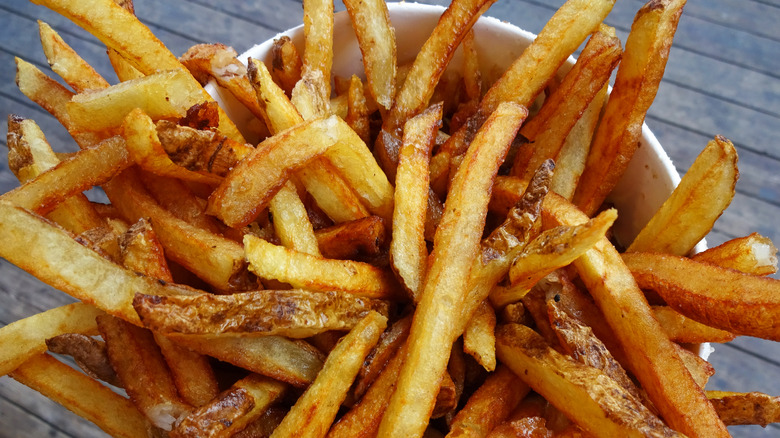
There are a variety of popular french fry styles sold on boardwalks. In places like the Rehoboth Beach Boardwalk in Delaware and Ocean City, Maryland, a boardwalk outing is incomplete without thick, twice-fried fries, sprinkled with salt, drizzled with vinegar, dusted with Old Bay Seasoning, and served in a cup. This style of fry was invented by the East Coast legend, Thrasher's. While on the Santa Cruz Beach Boardwalk, french fries coated liberally in garlic butter are a local tradition. Between the two, the Thrasher's boardwalk-style fries are the only ones that can be found exclusively on the East Coast.
That said, despite their ubiquity as a boardwalk staple across the U.S., garlic fries were indeed invented in the Bay Area. The man credited with their creation is Dan Gordon, the co-founder of Gordon Biersch Brew Co. Beyond these two signature fry styles, you can expect a wide variety of french fry types on boardwalks across the U.S., from classic and curly to chili-drenched, cheese-topped, and more.
Zeppole
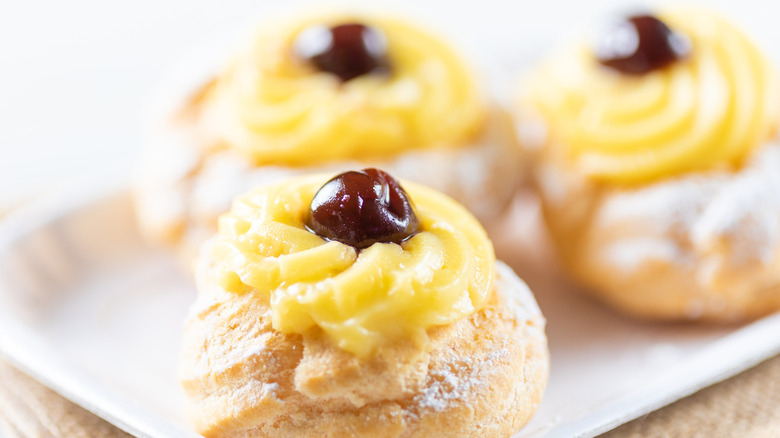
This lesser-known fried food is mostly found along the 130-mile stretch of Jersey Shore, which features 18 major boardwalks, including well-known ones like Atlantic City, Ocean City, and Wildwood. Similar to beignets, but different in shape and the type of dough used, zeppole are a doughnut-like pastry that come from Italy. Traditionally, Italians eat them during the St. Joseph's Day celebration, a Catholic holiday centered on a large feast dedicated to St. Joseph.
The tradition followed Italian immigrants to America, where it continues, particularly in Northeastern states. Zeppole come in a variety of sweet and savory flavors, from the most common powdered sugar variation to creme-filled, fruit-topped, ricotta-stuffed, and even savory kinds such as Parmesan and anchovy, sardines and tomato, and more.
Italian (water) ice
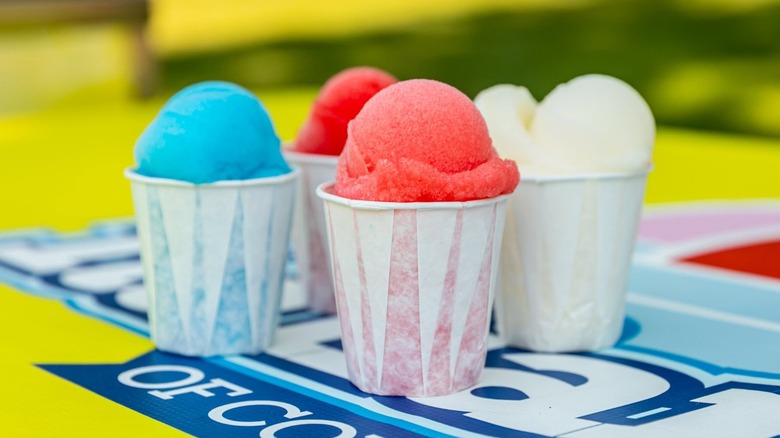
If you're looking to cool down with something other than ice cream, the chilly boardwalk treat worth trying is Italian ice, or as it's referred to in Pennsylvania and New Jersey, water ice. Italian ice is made from water, sugar, and fruit, but rather than the fruit flavor being added to frozen ice after the fact, like how shaved ice is made, it's added to water first, then blended and frozen. This process results in a smooth, scoopable texture, unlike the icy consistency of shaved ice and the watery texture of a slushie.
While Italian ice is definitely a Northeastern creation, you'll certainly find it sold on boardwalks along the West Coast, too. Some popular flavors include lemon, mango, piña colada, cherry, cotton candy, and root beer. Like ice cream, flavors can be combined, garnished with herbs, topped with whipped cream and sprinkles, and also paired with other ice cream flavors.
Corn dogs
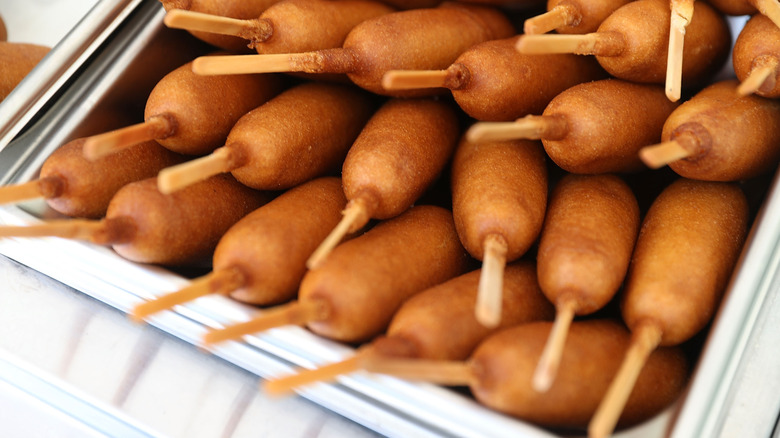
The true origin of the corn dog may be disputed, but one thing that isn't is its status as a boardwalk favorite. A man named George Boyington is credited with introducing the fried, batter-coated dog to the world, no less on the shores of Oregon's Rockaway Beach. At the time, and still today, they were called "Pronto Pups," and unlike the modern iteration, the dogs were coated with wheat and rice flour, instead of sweet cornmeal batter. The Pronto Pup recipe remains the same.
Now, in terms of where the name corn dog came from and who was first to use cornmeal batter, it's anyone's guess. Whoever deserves credit, we appreciate your delicious contribution to the boardwalks of America, because since those days, corn dogs have evolved considerably. Nowadays you'll find elote-topped corndogs, panko-crusted Korean-style corndogs, veggie-style, beef hot dog and cheese, and more.
Fudge
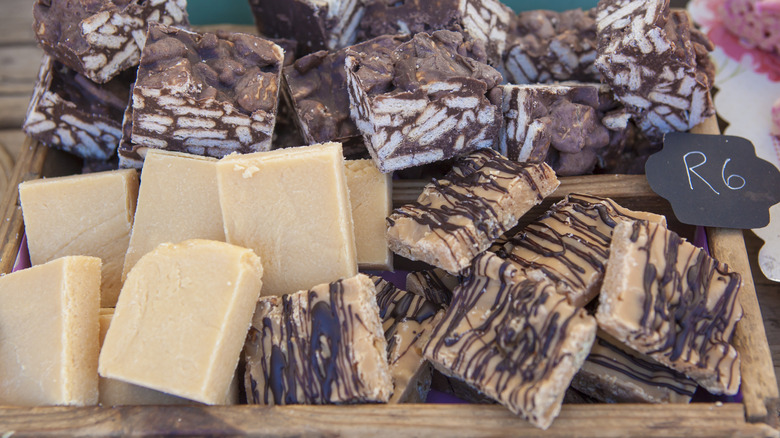
Fudge is as synonymous with boardwalks as salt water taffy is, and chances are slim that you can walk more than a few planks without seeing rows of brown-colored chunks, chocolate-covered pretzels, and fudge-dipped strawberries lined up and ready for consumption. Fudge first appeared on the coastal scene over 100 years ago on Mackinac Island in Lake Huron, which today is referred to as the "Fudge Capital of the World." The fudge shops there also pioneered the "right-in-front-of-you" style of service, which allows patrons to watch fudge being made on the spot.
It isn't quite clear how fudge evolved into a signature boardwalk treat, but like other staples, it's also popular at county fairs, festivals, and carnivals. Whether you're riding the Giant Dipper on the Santa Cruz Beach Boardwalk or perusing the Doo-Wop architecture of the New Jersey Wildwoods, you can bet that fudge makers are toiling away, whipping up decadent treats for the masses.
Hot dogs
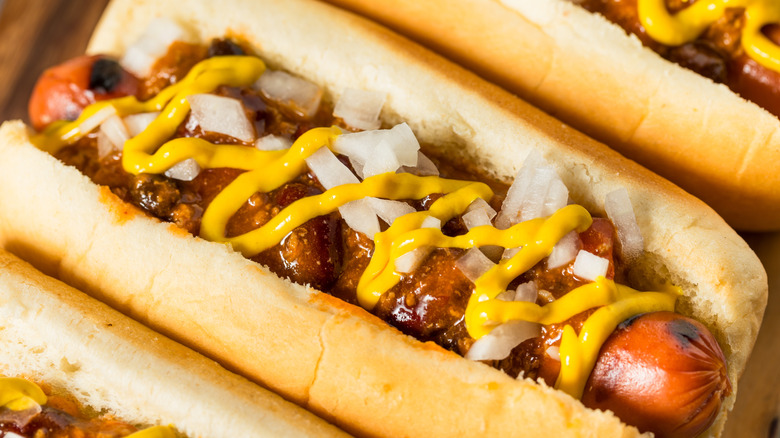
Few handheld foods can hold a match to a juicy hot dog, and there are several well-known hot dog styles that are associated with boardwalk life. You've surely heard of the 100-year-old Nathan's Famous, which made its name hawking franks on Coney Island in Brooklyn, New York. That said, it wasn't the first hot dog stand on the boardwalk; that was Feltman's, and it definitely didn't invent the legendary Coney Island Dog, which features ground beef chili, diced onions, and mustard; that honor likely goes to Greek immigrants who settled in Michigan.
In fact, the traditional New York-style hot dog you'll see on the boardwalk is topped with onions in peppery, tomato-based sauce or sauerkraut. Household-name hot dogs aside, they're a pretty ubiquitous treat on boardwalks from coast to coast, so if a plain traditional beef dog is your go-to, you'll have no problem finding it. Or, if you want something with a bit of flair, there are wagyu hot dogs, dogs with international spins, and even Chicago dogs.
Fried clams
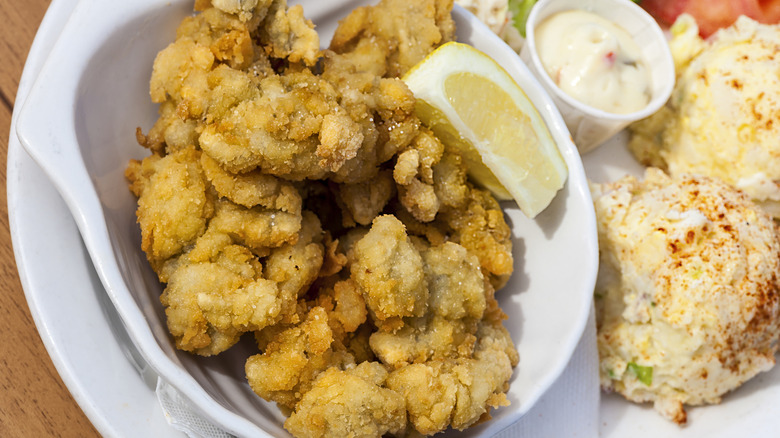
Among the wide array of seafood options found on boardwalks are fried clams. Created by Lawrence "Chubby" Woodman of Essex, Massachusetts, they've been a shoreline favorite since hitting the scene in 1916. Fast forward to today, and Woodman's is still serving Chubby's clams to New England locals, but now it faces stiff competition.
From the coastal region of New England, down south to Virginia Beach, then across the map to Redondo Beach Pier, followed by a scenic ride up the coast to Santa Cruz, you'll find no shortage of fried clams to try. Some popular ways to enjoy this famed fried mollusk are with tartar sauce, cocktail sauce, juice from a lemon wedge, french fries, coleslaw, or potato salad. If you happen to reside miles away from rolling ocean waves, not to worry; you can experience the boardwalk vicariously through our New England-style fried clams recipe.
Tornado potatoes
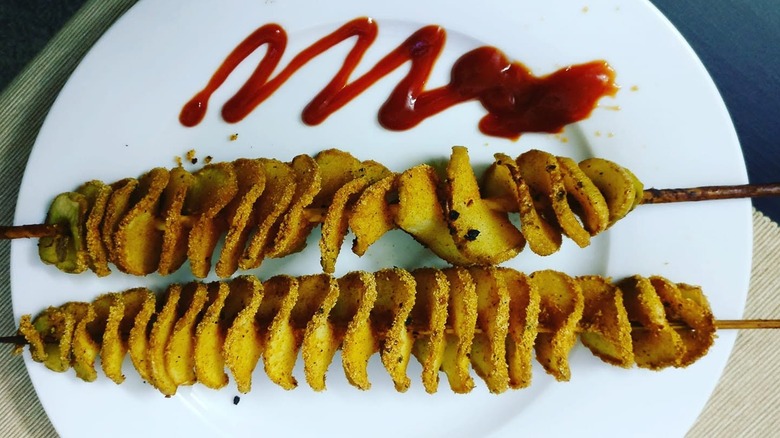
These fried spiral-cut beauties aren't quite fries, but they're definitely part of the fry family. Aptly dubbed tornado potatoes, or spiral potatoes, their unique shape is half the appeal; the other is the corn dog-like way of enjoying them. These fun-shaped 'tates are newer additions to America's boardwalk scene, and have really only been a staple since the early 2010s. They were invented in South Korea, the country also responsible for potato-encrusted corn dogs, and considering how popular those have become in recent years, it's not surprising that tornado potatoes have as well.
The same condiments apply here: ketchup, mustard, mayonnaise, garlic aioli, sriracha, or whatever savory sauce is available on the boardwalk. Since they've only been around for a short while compared to other boardwalk foods, they're not yet as widespread. Given time, however, we're confident that tornado potatoes will rise in the ranks on the planks.
Fish tacos
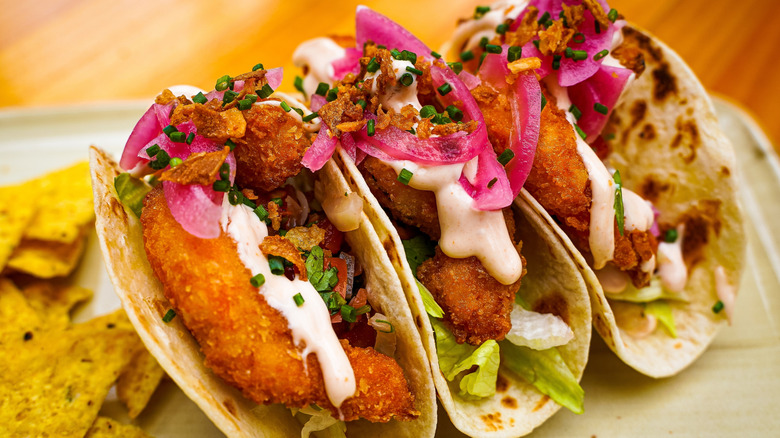
Fried fish-loaded tortillas are a must when on the boardwalk. They're a newer concession go-to, and are definitely more of a West Coast thing, but considering how common they are on the East Coast now, it's looking like they're here to stay. That said, the OG fish taco hails from San Diego, where they're called Baja-style fish tacos, named after the place they were invented in, Baja, California.
Considered by many to be San Diego's unofficial dish, it features three base characteristics — deep-fried fish topped with pico de gallo, cabbage, and a creamy sauce — though beyond that, the type of fish and ingredients can vary. Cod, tilapia, halibut, Mahi Mahi, and bass are all popular fish varieties. While the sauce could be sour cream, salsa, avocado crema, or another type of crema. And of course, you might find it served spicy, blackened, beer-battered, or grilled.
Soft pretzels
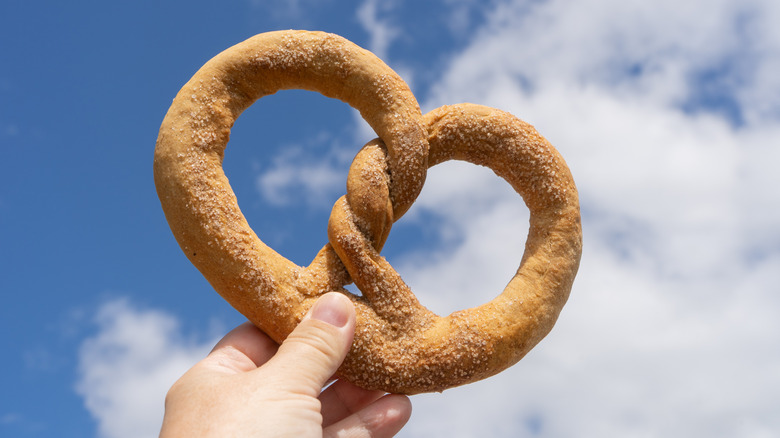
Golden-baked on the outside, chewy and moist on the inside, soft pretzels are a great option if you want to avoid the fried, fudged, oil-popped, and copiously seasoned array of foods on the boardwalk. However, if you crave something more adventurous than the plain, salt-flecked variety, there are plenty of ways to enjoy this twisty baked treat. Mustard dip is classic, of course, but on the boardwalk, you can also spruce it up with cheese-based dips, barbecue sauce, garlic aioli, or even a different type of mustard.
And if you prefer something sweet, cinnamon-sugar-dusted soft pretzels will do the trick, drizzled with decadent chocolate or plunged into one of numerous sweet dips. Savory pepperoni, cheese, and jalapeño-topped pretzels are also available. In general, from the East Coast to the West Coast, soft pretzels are one of the most commonly enjoyed boardwalk snacks.
Oysters
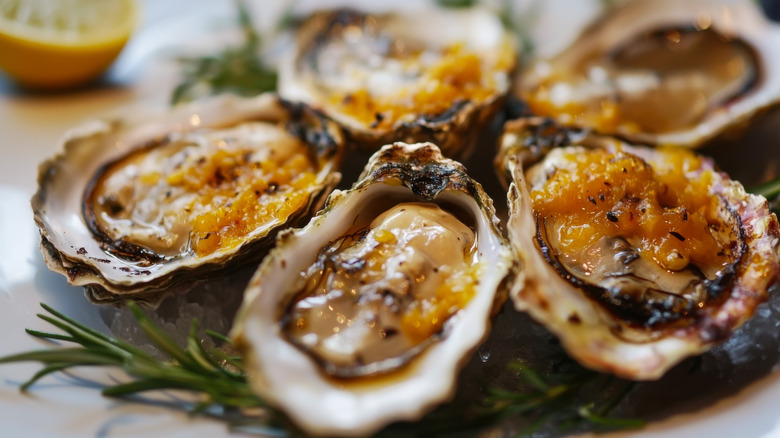
Whether they're steamed, fried, charbroiled, baked, or served raw on a half shell, a boardwalk just wouldn't be a boardwalk without oysters. This port city food staple wasn't always considered a luxury seafood dish, either. The shores of New York, for example, were once famous hubs for oyster shuckers, and at one point, they measured as wide as 10 inches. They were pretty populous in New Jersey, too. Pollution reduced the Big Apple's and the Garden State's oyster population considerably, though in recent years, efforts have been made to restore it.
Besides their obvious coastal nature, oysters are one of the most versatile seafood options around. That said, there's a bit of a learning curve if you're new to eating oysters. However, thanks to the wide variety of preparation methods, if you're weird about their soft, slippery texture, there are lots of other tasty ways to take the plunge.