

10 Single Malt Whiskeys That Are A Waste Of Your Money

This was a difficult list to curate as I love single malt, and I often find some charm in even the most basic expressions. Yet, there are some labels that aren't worth your money. There can be a few reasons for this. Some single malts are reasonably priced but come off as too basic and can easily be outperformed by similarly priced rivals. Other bottles are great but are overpriced and just don't represent good value. Both types make the list here.
All of these bottles are decent and perfectly drinkable. I have tasted them all and if I was gifted one again, I'd happily drink it. However, I'd never go and buy these bottles out of my own pocket. I have vast experience with single malts and enjoying countless bottles has given me a deep understanding of what equals great value and what doesn't. If you're making your way through the world of single malts and want to avoid poor choices, here are 10 bottles you should think twice about buying.
1. Auchentoshan American Oak

The first thing that bugs me about this bottle is the name. It gives the impression that being matured in American oak is somehow unique. In reality, the vast majority of Scotch is matured this way. I'd be able to quickly move past that if the whisky was great, but alas, it leaves a lot to be desired. The problem here is a common one among these bottles: The profile is a little too thin. There are many single malts which are light and approachable but still have enough depth to make them an enjoyable pour. Then, there are the ones like Auchentoshan, where the tasting notes are a little too one-dimensional.
Those tasting notes give you plenty of vanilla with some brightness coming in the form of lemon and coconut. Soft oak notes at least help to give it some depth, but simplicity is its biggest weakness. If you like your single malts with more pronounced fruit, spice, or oak, you'll be searching for something that isn't there. It's not a silky-smooth whisky, but it is completely inoffensive, so it's pleasant enough to drink, just not memorable. The average price is around $40. It shouldn't be difficult to find some more rounded single malts, but this bottle at least has the advantage of pairing brilliantly with Coke.
2. Cardhu 12-year
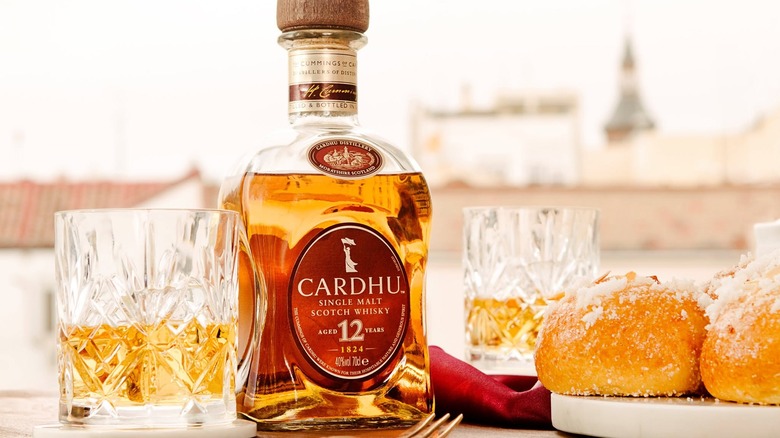
A beautiful bottle is always going to catch the eye, but it doesn't mean the whisky inside is going to be a beautiful dram. This is a bottle that could almost work as a decanter if you remove the branding. However, instead, this is a whisky stripped of any deep flavors. There are occasionally some nice notes, but they don't last long enough to be truly appreciated.
The sweetness here mainly comes from honey. There are also some orchard fruits, but they are a little too vague to pick out any specific note. Also, there is a gentle underlying warmth, but again, it's not deep enough to allow you to pick out an individual spice to describe it. As with most of the whiskies here, Cardhu is inoffensive, which makes it easy enough to drink. However, even with approachable expressions, most people want their whisky to have character. Sadly, nothing about this whisky captures your attention or leaves you with much to contemplate, and it usually sells for around $50. The only thing you're usually contemplating is what Scotch your money would have been better spent on.
3. Tomintoul 10-year
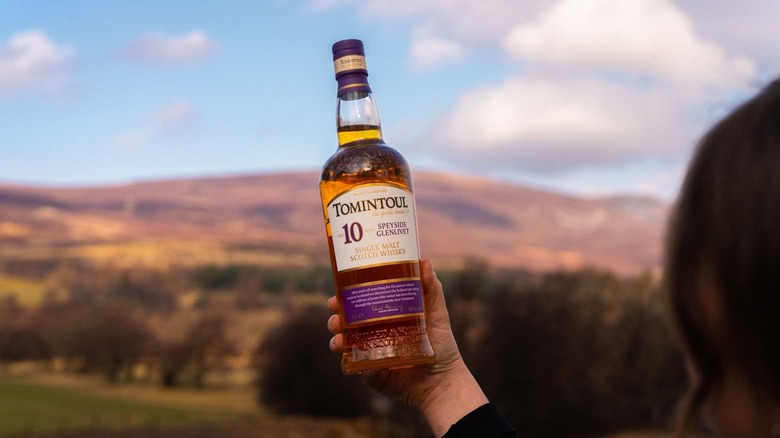
When I talk about deep whiskey flavors, this means that there are some that can be richer, stronger, and more complex than others. The basic profile may mimic similar flavors, but the tasting experience is vastly different. So, when a whisky like Tomintoul 10-year gives you vanilla on the palate, it's not the same as the vanilla you'll get from the likes of an Aberlour 12. You're left wishing for more flavor — and wishing you'd spent your money on a different bottle.
The other notes you'll get on the palate here include honey, citrus, and a touch of almond. The problem is that there is very little depth or development as you drink it, and the relatively gentle flavors don't leave a particularly lasting impression. Even those who enjoy delicate Speyside, they still expect some layers of flavor. Again, the issue here is more about value than it is about quality. There are numerous single malts that deliver greater complexity and stronger character. Tomintoul 10-Year is decent enough, but straightforward nature makes it difficult to call it a worthwhile purchase. Expect to spend around $40.
4. The Tyrconnell Single Malt
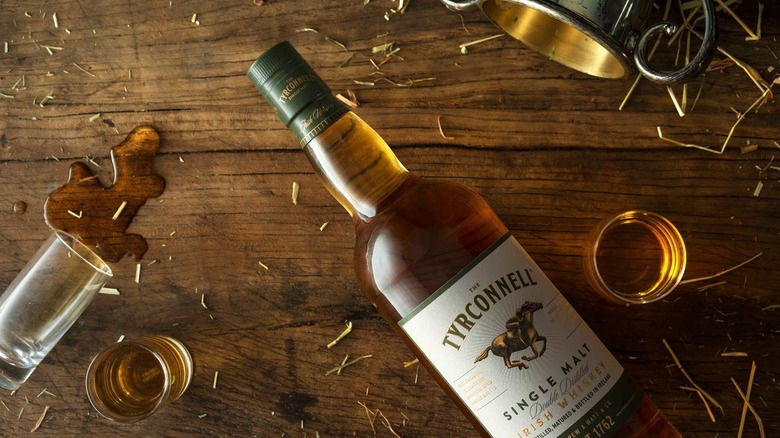
None of the whiskeys in this list have been extensively aged, but this single malt feels particularly youthful. It feels somewhat underdeveloped and is perhaps one of the reasons why The Tyrconnell didn't make our list of the best Irish whiskey brands. You get an immediate sense of that youthfulness with the tasting notes reminiscent of light cereal, citrus, and some vanilla. Usually sold at around $40, it's fine to drink neat, but it doesn't have the smoothness that accompanies many Irish whiskeys. To say it has an ethanol burn would be too harsh, but there is a little roughness.
That could be easily forgiven if it was a robust whiskey full of depth, but it's quite the opposite. Rather than showcasing the richness, fruitiness, and distinctive character that Irish single malts can offer, Tyrconnell doesn't deliver anything unique or particularly interesting. If you want an affordable introduction to Irish whiskeys, there are many great, underrated Irish whiskeys under $30. However, as a representation of what Irish single malt whiskey can offer, Tyrconnell falls a little short. There are more interesting Irish single malts, making this difficult to recommend.
5. Smokehead Original
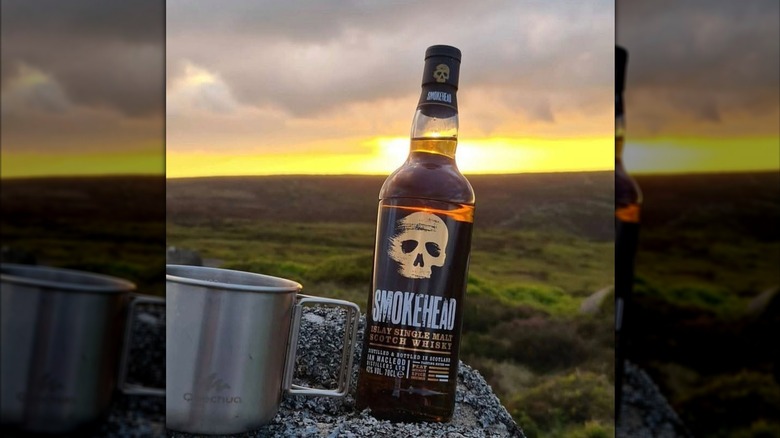
I get what Smokehead is trying to do with its presentation – using the smokiness of peat to create a brand that is a little bit punk, a little rebellious, and a little defiant. And I have no doubt it works. The bottles look great and the whisky is good. It delivers big, smoky flavors from an Islay distillery that is not disclosed. Yet, one of the things I love most about Islay whisky is the individual character and distinct personality you get from each distillery. So, it's not that the whisky is awful, but it just ends up feeling a little generic and a little too one-dimensional.
There's plenty of smoke, medicinal peat, pepper, and charred oak in this bottle, making a big impression for anyone who enjoys powerful whiskies. For an average price of $40, it certainly doesn't lack intensity, and that alone can make it an enjoyable choice for casual peat lovers. The problem is that intensity alone doesn't necessarily make a great Islay single malt. With heavy peat and smoke dominating much of the experience, there's less fruit, sweetness, maritime character, and complexity you can typically find in best peated whiskies. Its redeeming quality is that it delivers exactly what its name suggests. If you simply want a smoky whisky without worrying too much about subtlety, Smokehead provides it. But I still want some nuance with peated whisky, and you don't get that here.
6. Jura 12-year
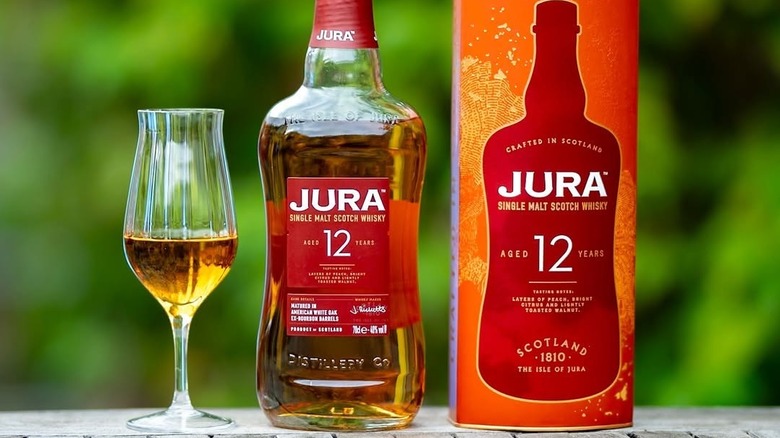
Made on an island just north of Islay, this distillery has the honor of being the only whisky distillery on the Isle of Jura. As you already know, this is faint praise, but it's another brand that has a beautiful bottle – the elegant curves contrast the harsh coastal setting. As for the whisky inside, you get a relatively gentle profile. Age isn't everything in Scotch, but when a whisky reaches the 12-year mark, you expect it to have some complexity, with tasting notes that highlight the personality of the distillery it's coming from.
Sadly, there isn't much personality to speak of. You get some vanilla and oak, along with just a touch of orchard fruit and spice. The problem is that these tasting notes are shared by most single malts, preventing them from having any memorable character. I've always wanted Jura to lean into its coastal surroundings and clash its gentle nature with more maritime influences. Instead, it's left in a space where there are many more elegant whiskies on the mainland, and many more interesting ones on other Scottish islands. You can get it for approximately $50.
7. Loch Lomond Original
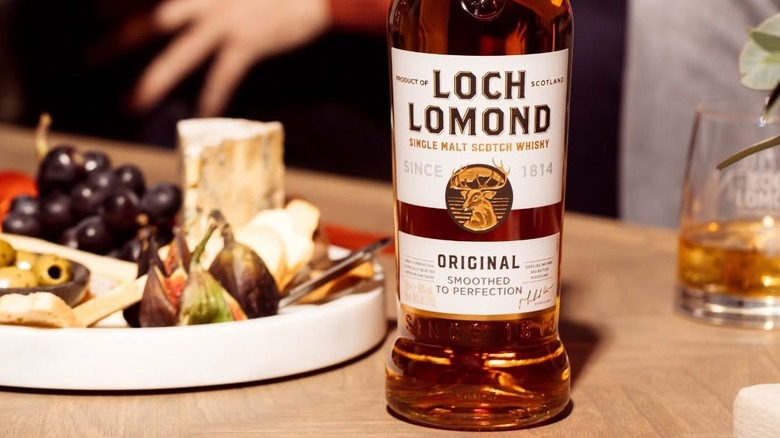
I mentioned how The Tyrconnell suffers from a lack of aging, and I feel the Loch Lomond Original (available for around $35) also falls into that category. It's easy to drink but features a profile that could benefit from more time in the barrel. You'll get some pleasant vanilla and some citrus brightness. Add a little malt and gentle oak, and you get a tasting experience that is somewhat uncomplicated. These flavors are restrained and feel rather basic compared to the competition. The texture also doesn't have any weight — the finish passes you by without any new flavors coming to the fore.
With good whisky, you'll enjoy your initial sip, and new notes can reveal themselves as you let the spirit rest in your mouth. You then may find more complexity when you take additional sips. With the Loch Lomond Original, what you get on the first sip is all you get. There are better entry bottles out there and better no age statement Scotches. The Loch Lomond distillery produces some excellent single malts, but its most basic bottle is, well, just a little too basic.
8. Tamnavulin Double Cask
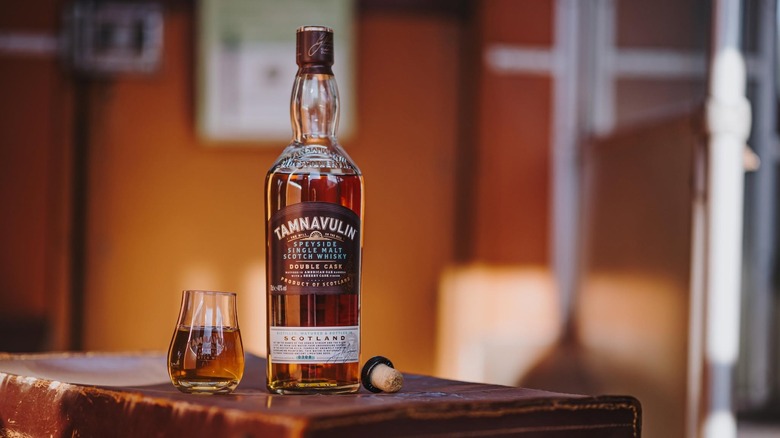
Tamnavulin is a distillery where I can never quite figure out what the plan is. It has a range of expressions that are just okay, without producing standard labels that really blow you away. While some of those bottles are still nice, the Double Cask (available for approximately $35) is a little too bland. When it comes to approachable Speyside single malts, drinkers are spoiled for choice, and it's hard for any distillery to stand out. Therefore, you need something to show why your bottles are worth spending money on. I think Tamnavulin bottles are too often lacking that extra something.
The flavors are relatively simple, the texture is light, and there isn't a great deal of complexity or development as you drink it. The extra cask influence adds some sweetness and richness, but it doesn't transform the whisky into anything particularly distinctive. You're still getting those basic tasting notes with not a lot beyond them. Is it still smooth and accessible? Yes, but that's the minimum you should expect. Tamnavulin Double Cask is perfectly decent for what it is, but when the competition offers more for your money, it becomes a waste of money.
9. The Macallan 12-year Double Cask
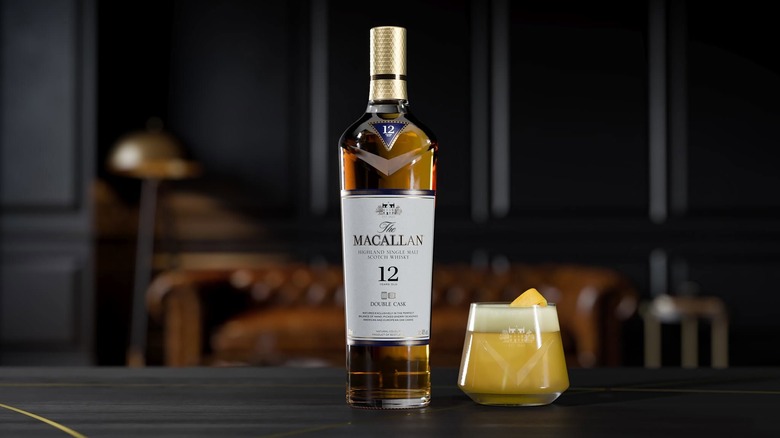
The Macallan 12-Year Double Cask is genuinely good, so calling it a waste of money requires some context. That comes in the form of its high price tag, with an average price reaching around $90. It's a price tag I've never quite agreed with or understood. It makes this a waste of money as you can buy two bottles of Scotch that are equally good for more or less the same price. Macallan Double Cask 12 Years Old offers a polished and approachable profile, combining dried fruit, vanilla, caramel, orange, honey, and gentle oak. The sherry-seasoned cask influence also gives it a richer and sweeter character than many entry-level single malts.
While Double Cask is enjoyable, it doesn't deliver enough additional flavor, complexity, or character to justify costing considerably more than many excellent competitors. There are many great top-shelf whiskeys that are worth the money, but this bottle isn't one of them. You'll eventually want to scratch your itch and wonder what this bottle tastes like, but, unless you have plenty of spare cash, it's best to do that in a bar or at a tasting event. In the meantime, you'll learn more about the qualities of single malts by spending your money more wisely.
10. The Glenlivet Caribbean Reserve
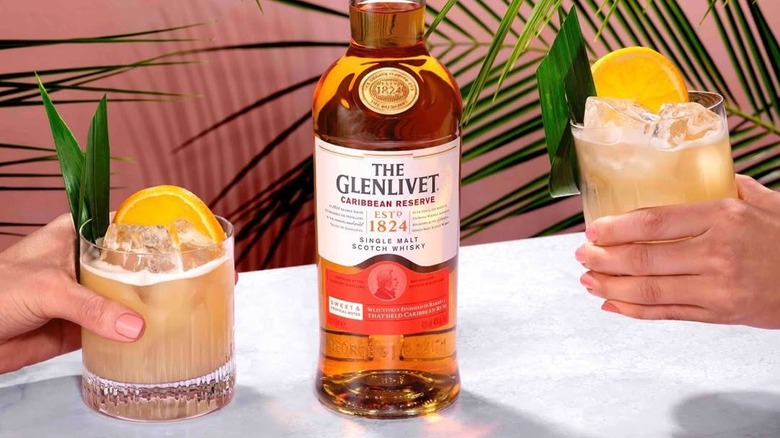
I'm generally a big fan of The Glenlivet whisky, including the classic Glenlivet 12-Year, but I feel the Caribbean Reserve, which typically retails for around $35, is the weakest of its expressions. This is coming from someone who thinks that its most basic bottle, the Founder's Reserve, is one of the best beginner single malts. Many distilleries will find creative ways to give the spirit more of an adventurous twist. Perhaps the easiest way to do this while still keeping it a single malt is to give it a unique finish. When it comes to Caribbean spirits, you may have already worked out that here it means that finishing has been done in rum casks.
It sounds like a good idea on the surface, and some of the qualities of rum do shine through. There is some tropical fruit that goes nicely with vanilla and gentle spice you can expect from The Glenlivet. Yet, these flavors feel a little disconnected. Although it's probably not the case, it almost feels like artificial flavoring instead of a genuine melding of flavors. It does offer something a little different to standard Scotch, but it ends up feeling a little gimmicky. There are better whiskies with unique cask finishes, and better, more affordable expressions from The Glenlivet if you want an elegant Scotch.
11. Methodology
For a whiskey expert and a huge fan of single malt, it was hard to choose these bottles. I've been enjoying these spirits for nearly two decades, a period which included a tasting of hundreds of bottles. That includes all 10 bottles that I've reviewed here. After tasting them, I've been left wanting more, wishing I'd spent my money elsewhere. It's on that basis that I thought them worthy of inclusion.
That tasting experience is backed by numerous other bottles I've tried, allowing me to gain an understanding of what you should expect from a single malt. It has given me insight into which whiskeys offer value and which don't. When you're making your way through the world of whisky, I know wasting money can be a huge frustration.
All 10 picks here have been chosen because they don't offer great value for money. Even if they are affordable, there are better options available for the same price. This is usually evident in a tasting profile that is too basic, too rough, or too thin. It doesn't mean that these labels are bad, per se, but if you want to spend your money wisely, these are bottles to avoid.