

Cacio E Pepe-Inspired Mac And Cheese Recipe
We may receive a commission on purchases made from links.
Cacio e pepe, a Roman dish that's been around for centuries, is proof that a long ingredient list is not a necessity for a great meal. The core ingredients of cacio e pepe also remain largely the same even after all these years, with some sort of pasta, sheep's milk cheese (the cacio), and black peppercorns (the pepe) being the stars of the show. Modern recipes may incorporate new ingredients to the mix, like various types of pasta, oil, or different cheeses, but the relatively bare-bones nature of cacio e pepe remains a selling point for the beloved pasta dish.
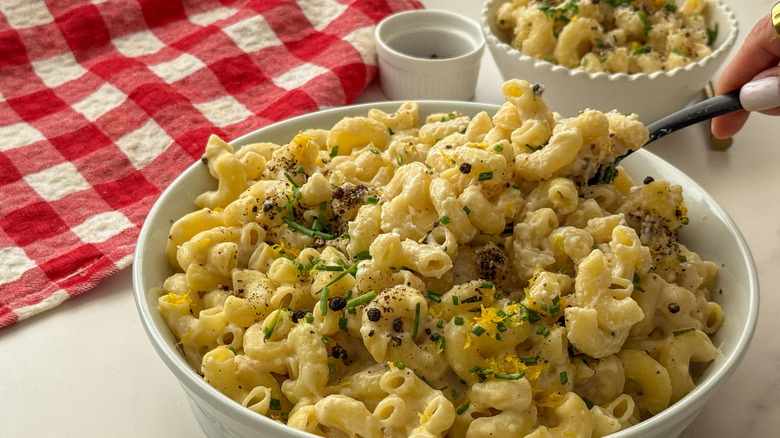
This cacio e pepe-inspired mac and cheese recipe combines the best of both pasta worlds, resulting in a positively rich, cheesy, and peppery dish. It all starts with toasting whole black peppercorns and grinding them up fresh, which not only elevates the flavor of the whole dish, but plays up the cacio e pepe inspiration. Those toasted peppercorns pair with sharp and salty pecorino Romano and parmesan cheeses and butter, making for a rich, creamy, and peppery béchamel sauce to coat tender macaroni. I like to add just a touch of soy sauce to the sauce, which adds a layer of umami depth and helps enhance the overall richness of the dish. Lemon zest and chopped chives serve as the final garnish, brightening up the dish and keeping it from feeling too heavy.
Gather the ingredients for cacio e pepe-inspired mac and cheese
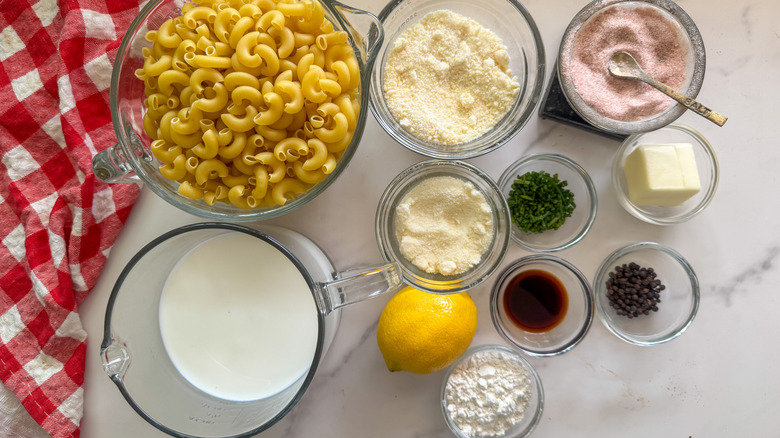
To make this recipe, start by picking up elbow macaroni or your small pasta of choice. Stop by the dairy aisle for unsalted butter, whole milk, and both pecorino Romano cheese and grated parmesan cheeses. Manchego or Asiago are good cheese substitutes if needed.
You'll also need plenty of whole black peppercorns, so be sure to grab a container from the spice aisle if you only have ground pepper at home. Other necessary ingredients include all-purpose flour, soy sauce, and salt, along with fresh chives and lemon zest to garnish the final dish.
Step 1: Toast the peppercorns
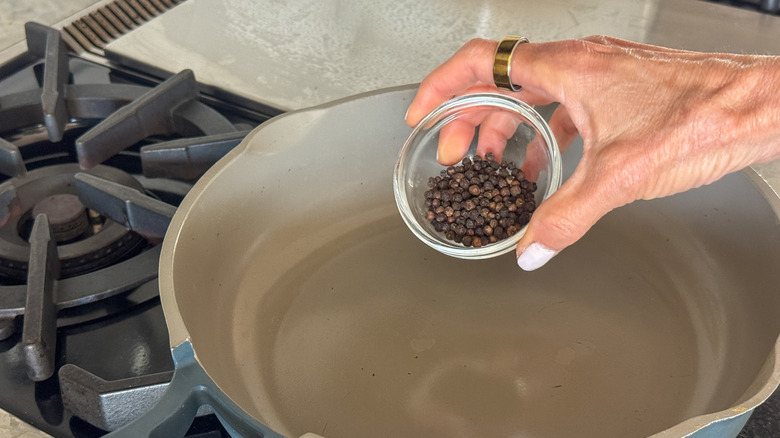
Add the peppercorns to a small dry skillet over medium heat and toast for 3 to 4 minutes, shaking the pan often, until the peppercorns are fragrant and start to pop.
Step 2: Grind the peppercorns
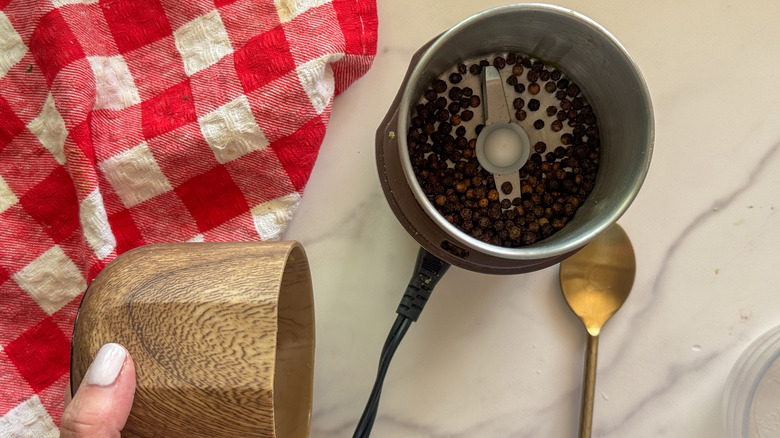
Transfer the peppercorns to a mortar and pestle or spice grinder and grind to a coarse texture. Set aside 1 teaspoon of the cracked pepper for garnish.
Step 3: Bring water to a boil
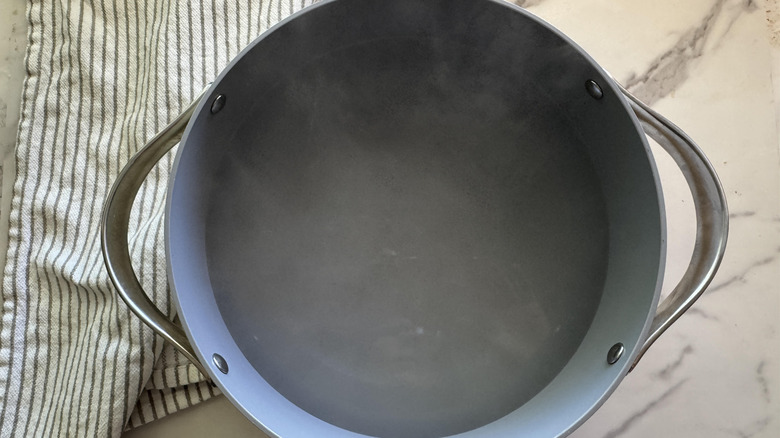
Bring a large pot of salted water to a boil.
Step 4: Cook and drain the pasta
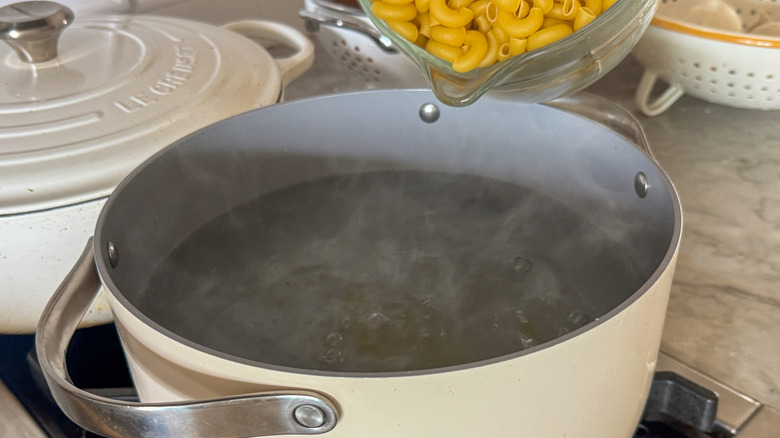
Once boiling, add the macaroni to the water and cook until al dente. Reserve ½ cup of the pasta water before draining, then return the cooked pasta to the pot.
Step 5: Melt the butter for the sauce
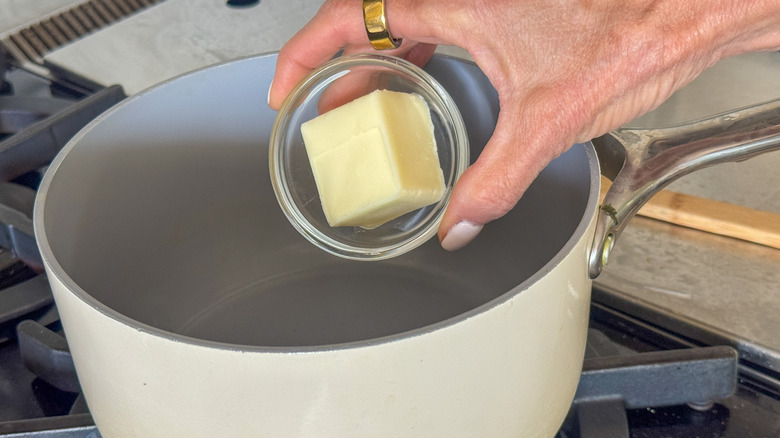
Meanwhile, melt the butter in a medium saucepan over medium heat.
Step 6: Stir in cracked black pepper
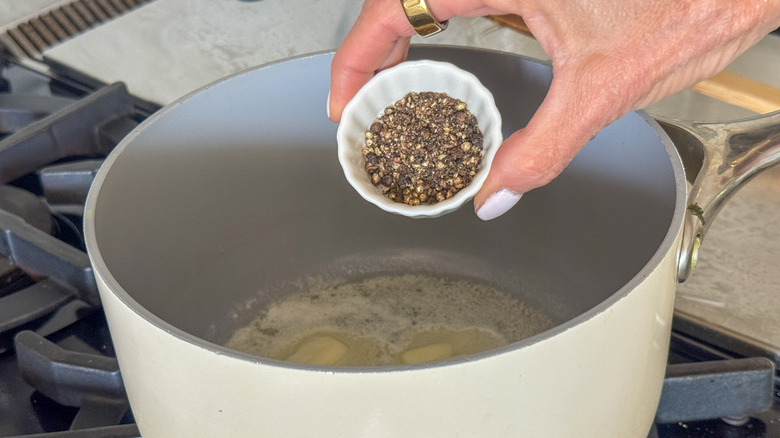
Add the remaining cracked pepper to the butter and cook for 30 seconds, until fragrant.
Step 7: Whisk in the flour
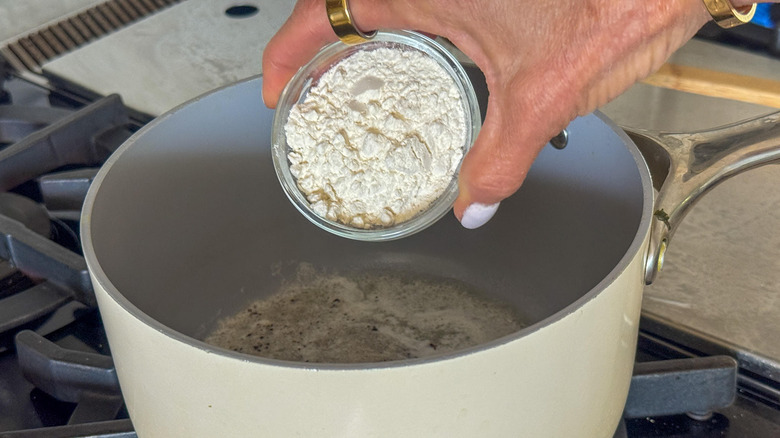
Whisk in the flour and cook for 1 minute.
Step 8: Build the sauce and simmer
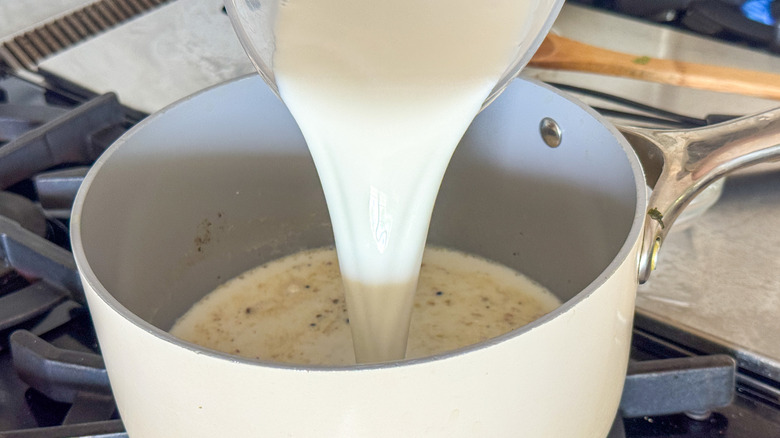
Pour in the milk and soy sauce and simmer for 5 to 8 minutes, whisking often, until the sauce is thick enough to coat the back of a spoon.
Step 9: Stir the cheese into the sauce
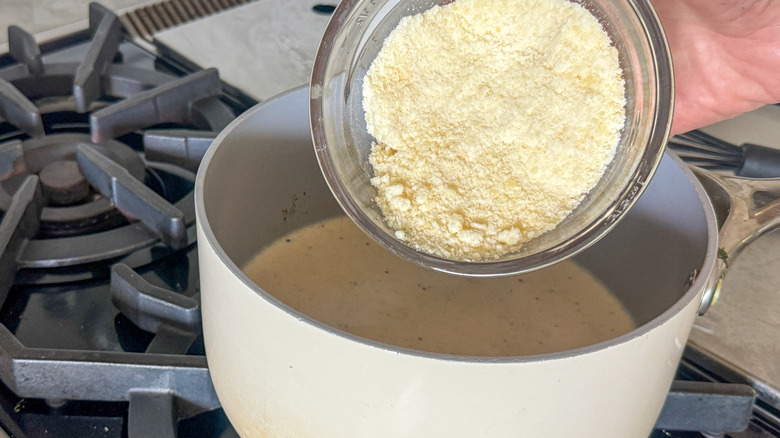
Reduce heat to low and add the pecorino Romano, parmesan, and salt, and stir until the cheese is fully melted and the sauce is smooth.
Step 10: Pour the sauce over the pasta
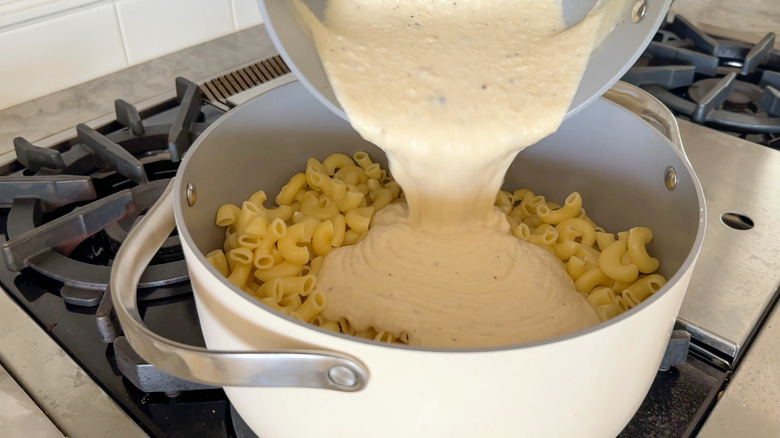
Add the sauce to the pasta in the pot and stir to coat, adding some of the pasta water if needed to get your desired creamy consistency.
Step 11: Garnish and serve the cacio e pepe-inspired mac and cheese
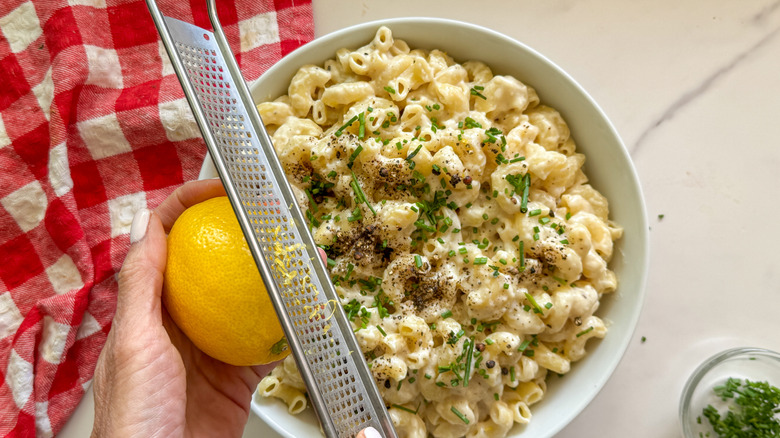
Transfer the pasta to a serving dish and top with the reserved cracked pepper, chives, and the lemon zest.
Pairs well with cacio e pepe-inspired mac and cheese
Cacio e Pepe-Inspired Mac And Cheese Recipe
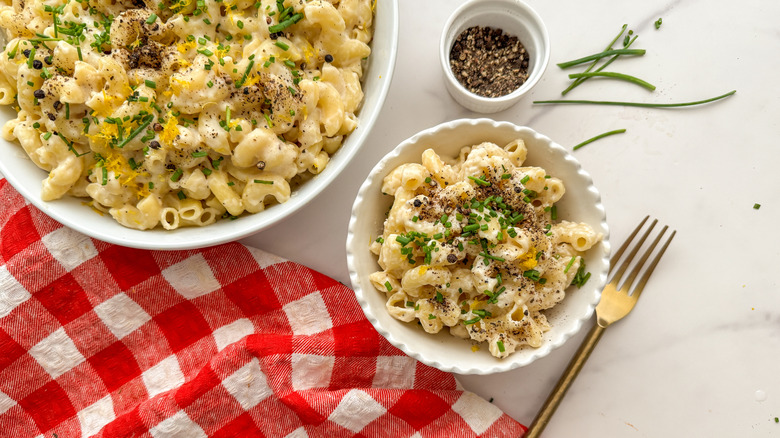
This two-for-one pasta recipe combines rich, peppery cacio e pepe with creamy, cheesy mac and cheese, resulting in a unique dish the whole family will love.
Ingredients
- 1 tablespoon whole black peppercorns
- 1 pound elbow macaroni
- 3 tablespoons unsalted butter
- 3 tablespoons all-purpose flour
- 2 ½ cups whole milk
- 2 teaspoons low-sodium soy sauce
- 1 ½ cups grated pecorino Romano
- ½ cup grated parmesan
- ¼ teaspoon salt
- 2 tablespoons chopped fresh chives
- 1 teaspoon lemon zest
Directions
- Add the peppercorns to a small dry skillet over medium heat and toast for 3 to 4 minutes, shaking the pan often, until the peppercorns are fragrant and start to pop.
- Transfer the peppercorns to a mortar and pestle or spice grinder and grind to a coarse texture. Set aside 1 teaspoon of the cracked pepper for garnish.
- Bring a large pot of salted water to a boil.
- Once boiling, add the macaroni to the water and cook until al dente. Reserve ½ cup of the pasta water before draining, then return the cooked pasta to the pot.
- Meanwhile, melt the butter in a medium saucepan over medium heat.
- Add the remaining cracked pepper to the butter and cook for 30 seconds, until fragrant.
- Whisk in the flour and cook for 1 minute.
- Pour in the milk and soy sauce and simmer for 5 to 8 minutes, whisking often, until the sauce is thick enough to coat the back of a spoon.
- Reduce heat to low and add the pecorino Romano, parmesan, and salt, and stir until the cheese is fully melted and the sauce is smooth.
- Add the sauce to the pasta in the pot and stir to coat, adding some of the pasta water if needed to get your desired creamy consistency.
- Transfer the pasta to a serving dish and top with the reserved cracked pepper, chives, and the lemon zest.
Nutrition
| Calories per Serving | 588 |
| Total Fat | 22.3 g |
| Saturated Fat | 13.2 g |
| Trans Fat | 0.0 g |
| Cholesterol | 68.2 mg |
| Total Carbohydrates | 66.9 g |
| Dietary Fiber | 2.9 g |
| Total Sugars | 7.5 g |
| Sodium | 731.1 mg |
| Protein | 28.7 g |

What is the benefit of toasting whole peppercorns?
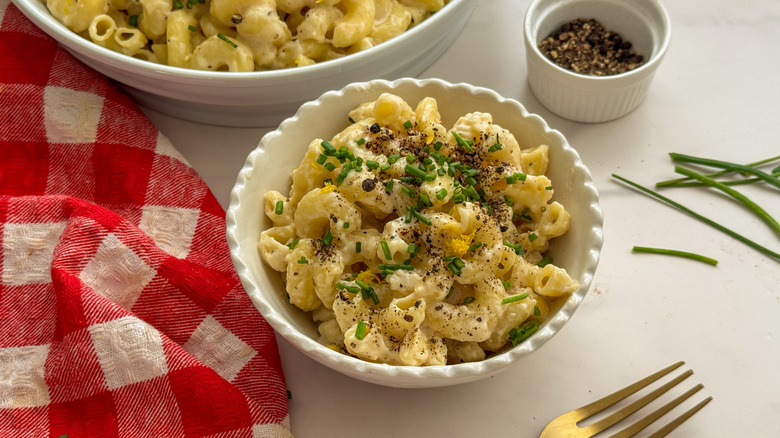
Toasting black peppercorns is an easy way to elevate cacio e pepe, and considering how crucial pepper is to the dish in general, I wanted to highlight the staple ingredient as much as possible. As you heat up dry peppercorns, they'll begin to release oils, and you may notice a slightly floral, citrusy scent. The dried outer layer of the peppercorns will begin to caramelize slightly, and it'll take on a nutty taste that you just don't get from raw pepper.
After the peppercorns have toasted and cooled, there are a couple of ways to grind them. Keep in mind that you're going for uneven chunks of peppercorn rather than a fine powder. A mortar and pestle is a useful tool for such a task, and it will give you the most control because you can see what is happening with each stroke. The second option is a spice grinder. This option is quicker, but it'll be easier to overgrind the peppercorns. Be sure to use short pulses when grinding, and stop as soon as the peppercorns are broken down into chunky, uneven pieces.
What should I do if my cheese sauce comes out grainy or too thin?
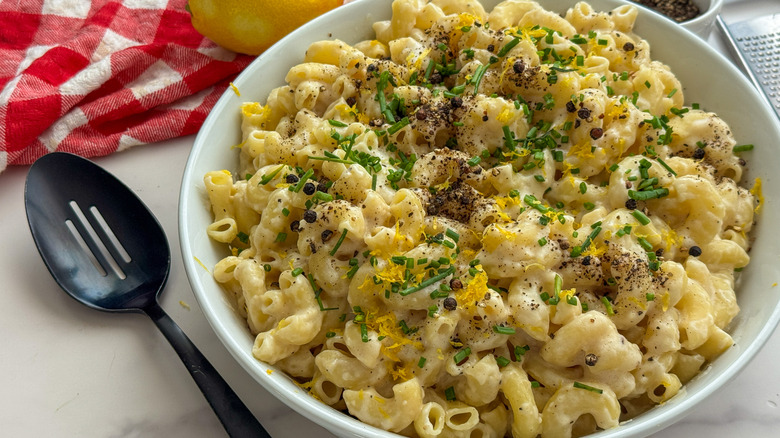
A big reason why cheese sauce sometimes ends up gritty or grainy is excess heat. If the heat on your stovetop rises too high, the fat from the cheese may separate from the proteins, which can also result in a greasy sauce instead of a silky smooth one. If your stove tends to run hot or uneven, once you reduce the heat to low, give the sauce a few minutes to cool down before proceeding with the cheese. Cutting heat is also key to avoiding a grainy mac and cheese sauce, so while you don't need to fully remove this sauce from heat when stirring in the cheese, keeping it from getting too hot is key. When adding the cheese, do so slowly and stir in between additions — adding it all at once may result in a big, clumpy mess.
If the sauce is too thin or runny, it may need to simmer longer. The flour needs time to thicken, and setting the timer for a few more minutes could fix the issue. Adding about ¼ cup more of either the pecorino Romano or the parmesan will help the sauce thicken if needed. When adding it, remove the pan from the heat and stir it slowly. Another way to thicken the sauce is with a cornstarch slurry. Combine 1 tablespoon of cornstarch with 1 tablespoon of room temperature water or milk, then stir it into the sauce on low heat. Within just a few minutes, you should notice the sauce thicken up quite a bit.