

Green Goddess Deviled Eggs Recipe
We may receive a commission on purchases made from links.
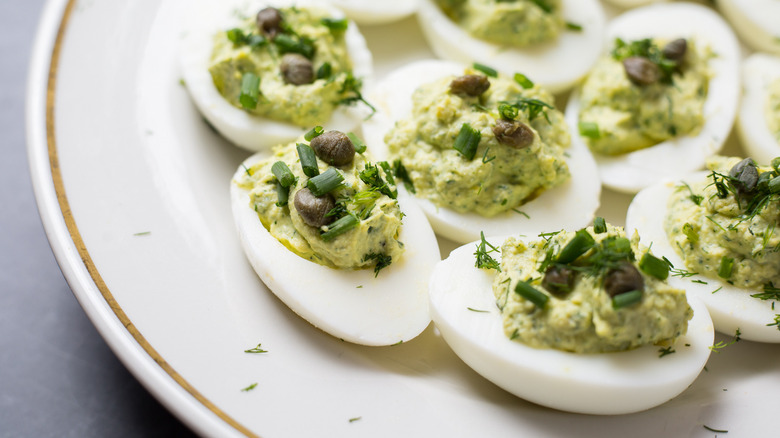
Creamy and bright with a beautiful verdant hue, Green Goddess dressing has taken the salad world by storm — but this luxurious dressing isn't just for salads. It's perfect for a variety of foods, including sandwiches, grilled meats, and even potato salad. Since it's a mayonnaise-based dressing with ingredients like fresh herbs, lemon juice, and garlic, it works well with eggs, and more specifically deviled eggs. With that inspiration in mind, this Green Goddess deviled eggs recipe transforms the classic appetizer we all know and love into something impeccably fresh, bright, and herby.
When making actual Green Goddess dressing, you'll come across a whole slew of herb choices depending on which recipe you're looking at, so there's some flexibility with the herbs here as well. I chose parsley, basil, chives, and dill as the herbs for this dish, but do use what you have on hand if needed. Cilantro, tarragon, and chervil are other good choices. I've gone lighter on the mayonnaise and added Greek yogurt to make the dressing a bit lighter and tangier without sacrificing creaminess. The resulting deviled egg makes for one truly delicious appetizer, and it provides an easy way to upgrade a classic dish without much extra fuss.
Gather your Green Goddess deviled eggs ingredients
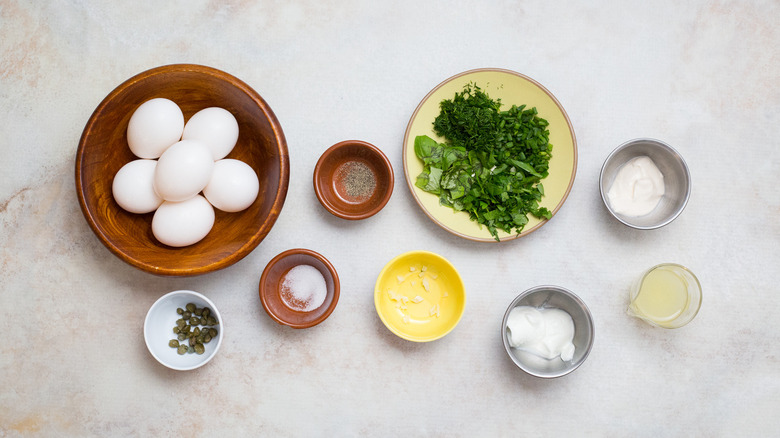
To make this recipe, start by grabbing eggs, mayonnaise, Greek yogurt, and lemon juice. The herbs the recipe calls for are parsley, basil, chives, and dill. You will also need garlic, salt, black peppers, and nonpareil capers.
Step 1: Cover the eggs with water
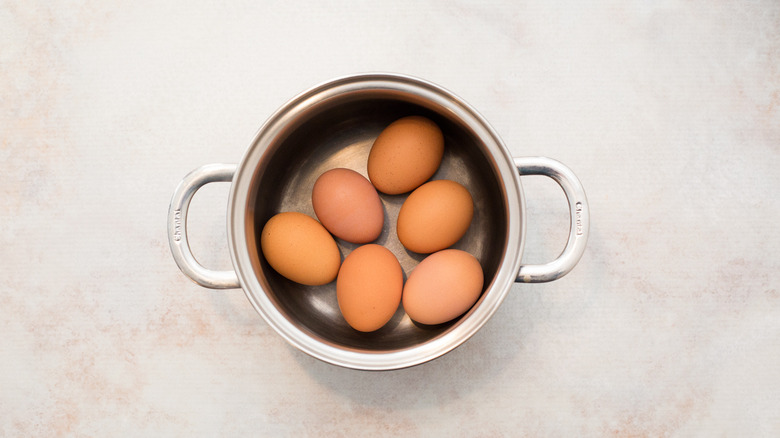
Place the eggs in a medium saucepan. Pour in just enough water to fully cover the eggs.
Step 2: Bring the water and eggs to a boil
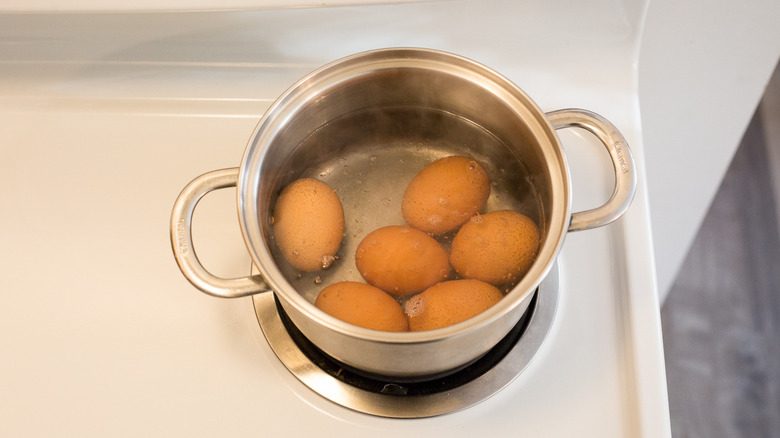
Place the pan over medium-high heat and let the water come to a boil.
Step 3: Prepare an ice bath
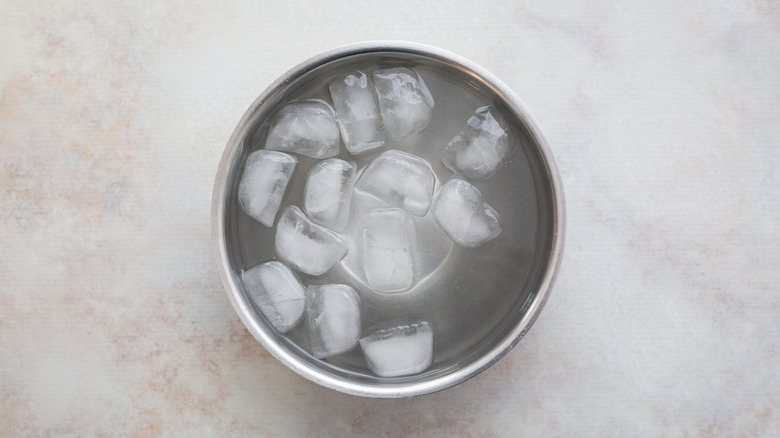
Meanwhile, fill a mixing bowl with water and ice to create an ice bath.
Step 4: Remove pan from heat, cover the pot, and set a timer
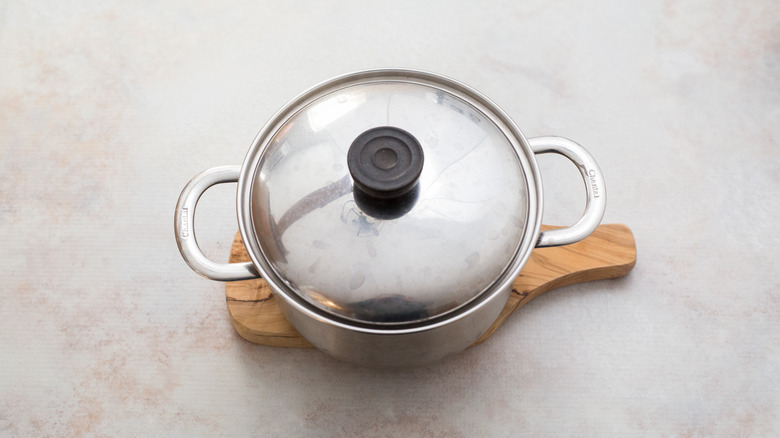
Once the water is boiling, take the pan off heat and cover it. Set a timer for 10 minutes.
Step 5: Cool the eggs
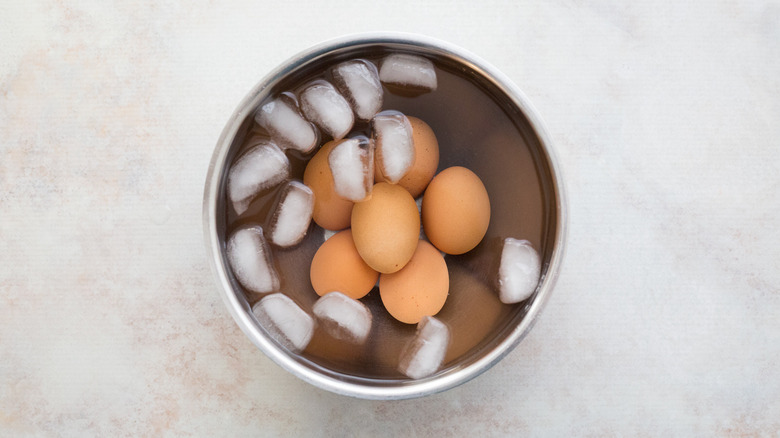
After 10 minutes, transfer the eggs to the ice bath. Allow the eggs to sit in the ice bath until they are completely cool, about 10 more minutes.
Step 6: Peel the eggs
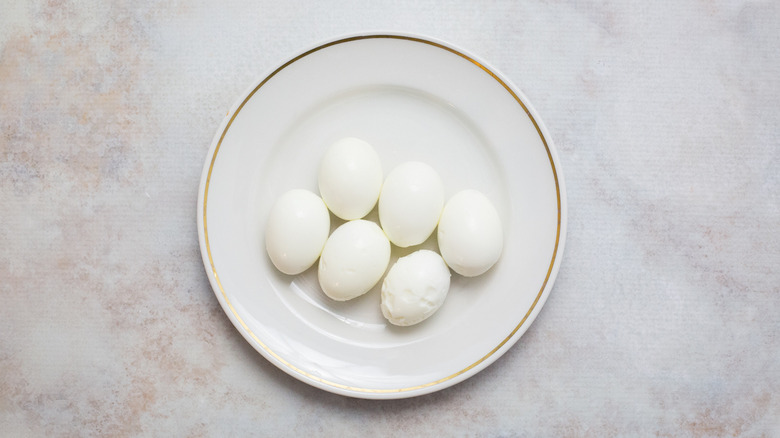
Remove the eggs from the water and peel them.
Step 7: Slice the eggs
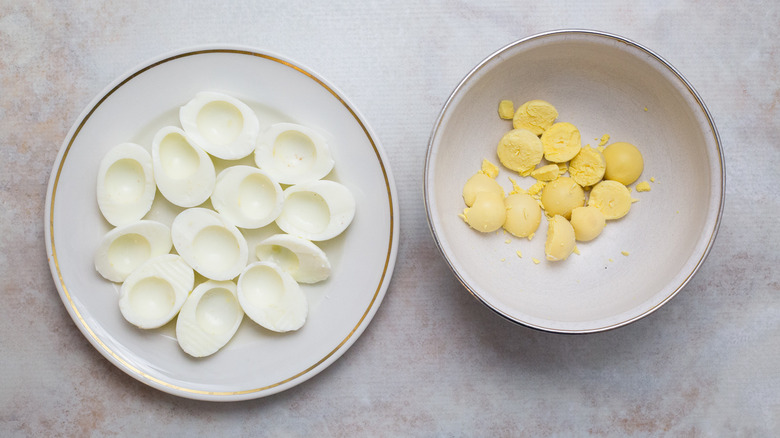
Slice the eggs in half lengthwise and carefully separate the whites and yolks.
Step 8: Place the yolks in a jar
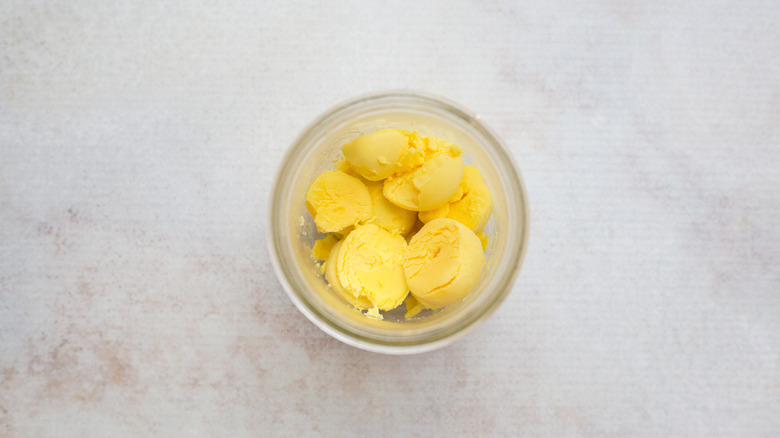
Place the yolks in a jar or tall container suitable for an immersion blender (alternatively you can use a food processor).
Step 9: Add the other filling ingredients
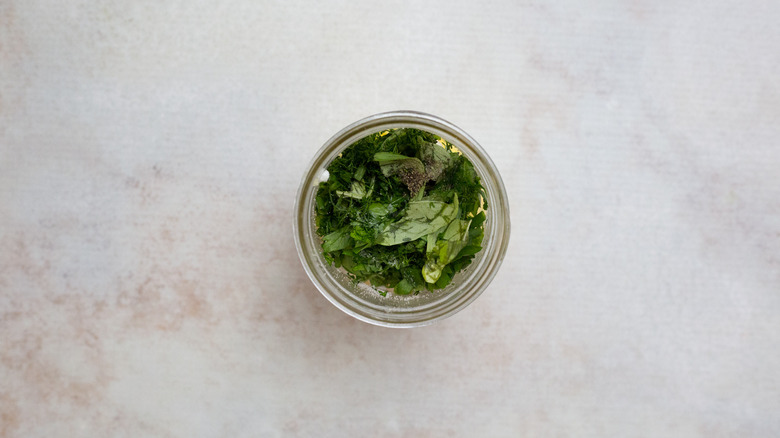
Add the mayonnaise, Greek yogurt, lemon juice, parsley, basil, 1 tablespoon chives, 1 tablespoon dill, garlic, salt, and black pepper to container with the yolks.
Step 10: Blend the Green Goddess filling
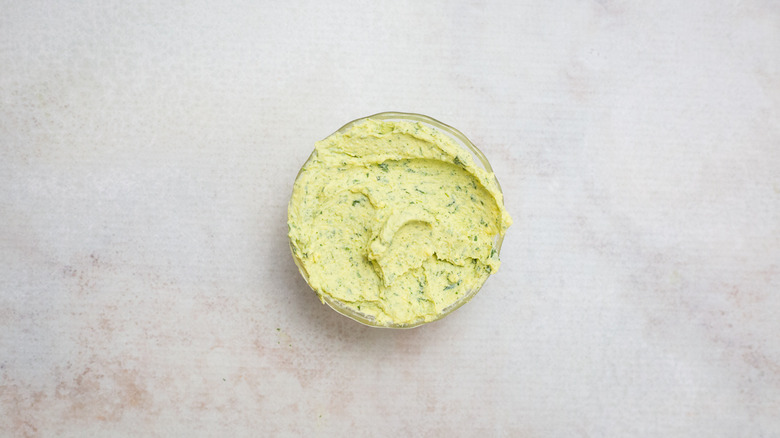
Blend until smooth with an immersion blender. Add a very small amount of water if needed to help get a smooth but thick consistency.
Step 11: Fill the eggs
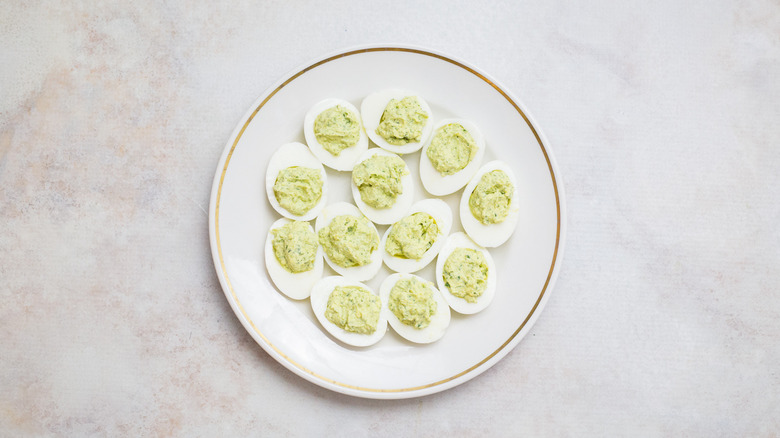
Place the egg whites on a serving dish and divide the filling equally among the eggs with spoon (or piping bag).
Step 12: Serve the Green Goddess deviled eggs
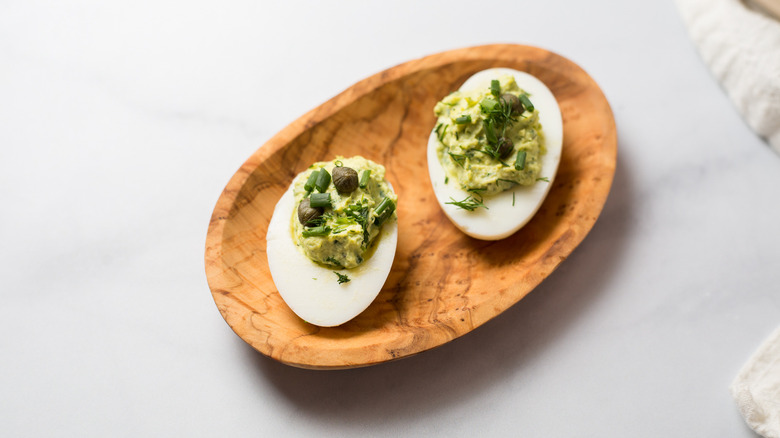
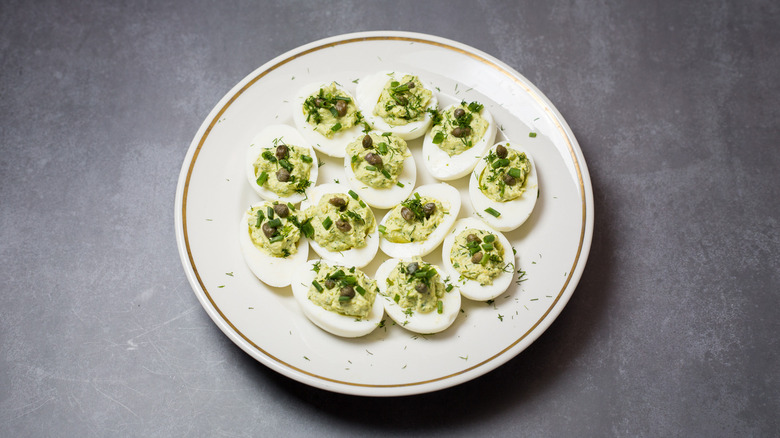
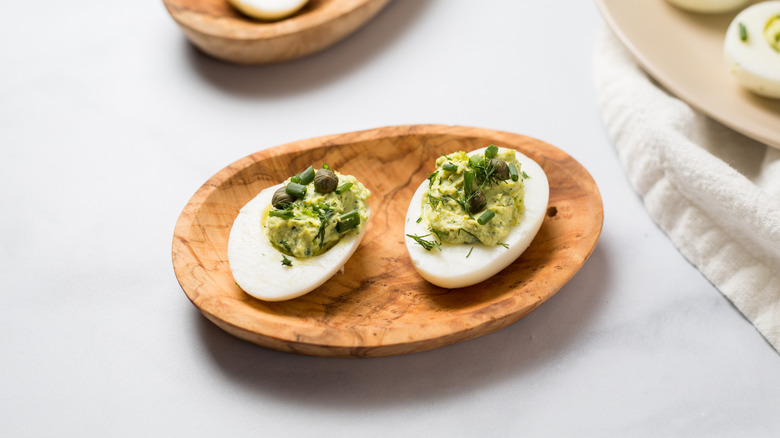
Garnish each deviled egg with 2 capers and sprinkle the remaining chives and dill over all of the eggs before serving.
Other appetizers to serve with Green Goddess deviled eggs
Green Goddess Deviled Eggs Recipe
These Green Goddess deviled eggs feature all of the creamy, herby goodness of the iconic dressing, all piled into egg whites and topped with herbs.
Ingredients
- 6 eggs
- 1 tablespoon mayonnaise
- 2 tablespoons Greek yogurt
- 2 tablespoons lemon juice
- 1 tablespoon chopped parsley
- 1 tablespoon torn basil
- 1 tablespoon + ½ teaspoon thinly sliced chives, divided
- 1 tablespoon + ½ teaspoon chopped dill, divided
- ½ clove garlic, minced
- ¼ teaspoon salt
- ⅛ teaspoon black pepper
- 24 nonpareil capers
Directions
- Place the eggs in a medium saucepan. Pour in just enough water to fully cover the eggs.
- Place the pan over medium-high heat and let the water come to a boil.
- Meanwhile, fill a mixing bowl with water and ice to create an ice bath.
- Once the water is boiling, take the pan off heat and cover it. Set a timer for 10 minutes.
- After 10 minutes, transfer the eggs to the ice bath. Allow the eggs to sit in the ice bath until they are completely cool, about 10 more minutes.
- Remove the eggs from the water and peel them.
- Slice the eggs in half lengthwise and carefully separate the whites and yolks.
- Place the yolks in a jar or tall container suitable for an immersion blender (alternatively you can use a food processor).
- Add the mayonnaise, Greek yogurt, lemon juice, parsley, basil, 1 tablespoon chives, 1 tablespoon dill, garlic, salt, and black pepper to container with the yolks.
- Blend until smooth with an immersion blender. Add a very small amount of water if needed to help get a smooth but thick consistency.
- Place the egg whites on a serving dish and divide the filling equally among the eggs with spoon (or piping bag).
- Garnish each deviled egg with 2 capers and sprinkle the remaining chives and dill over all of the eggs before serving.
Nutrition
| Calories per Serving | 129 |
| Total Fat | 9.4 g |
| Saturated Fat | 2.7 g |
| Trans Fat | 0.0 g |
| Cholesterol | 242.5 mg |
| Total Carbohydrates | 1.7 g |
| Dietary Fiber | 0.2 g |
| Total Sugars | 0.8 g |
| Sodium | 208.5 mg |
| Protein | 9.0 g |

How can I be sure not to overcook hard-boiled eggs?
There are different ways to cook hard-boiled eggs, with some methods calling for boiling the eggs for a certain number of minutes depending on how hard you want the yolks to be. I prefer placing the eggs in a single layer in a pot, just bringing the water to a boil, and then covering the pan and removing it from the heat. The residual heat will continue to cook the eggs.
To avoid overcooking the eggs, make sure to set a timer for 10 minutes at that point. I find that amount of time to be the sweet spot for large eggs so the whites remain tender and the yolks are fully cooked but still soft. Don't forget about the eggs, though, because overcooked hard-boiled eggs have rubbery whites and dried out yolks that run from yellow to green — not the appetizing result most people are going for.
Another tip to avoid overcooking the eggs is to have an ice bath prepared ahead of time. Once the timer goes off, remove the eggs from the pan, let them drip, and place them in the cold water. This will stop the eggs from cooking any more. Let them cool down completely before you peel them.
What's the best way to peel hard-boiled eggs?
Trying to peel hard-boiled eggs and dealing with stubborn, sticky shells is a true culinary headache. You need great patience and an extra delicate touch or chunks of the whites come off with the shell. Luckily, there are a few ways to avoid this. First of all, avoid using fresh eggs. Although that advice may sound backwards, older eggs are actually easier to peel because the flesh starts to shrink back from the shell as they get drier with age. A carton that's been sitting in your fridge for about one week is at a sweet spot, but you can of course use any eggs (even fresher ones) if you're in a pinch.
Regardless of what eggs you're working with, there are various methods to cracking hard-boiled eggs, some more successful than others. One method that may work well for stubborn eggs is the crack-and-submerge one, which allows a little cold water to enter the shell, helping them cool faster and making them a little easier to peel. As you peel, make sure you grasp the membrane under the shell, lifting it up and removing it with the shell. Ultimately, keep in mind that even if your eggs aren't perfectly peeled, they'll still taste good with that Green Goddess filling regardless.