

I Tried 5 Methods For Peeling Hard-Boiled Eggs And This Was The Best
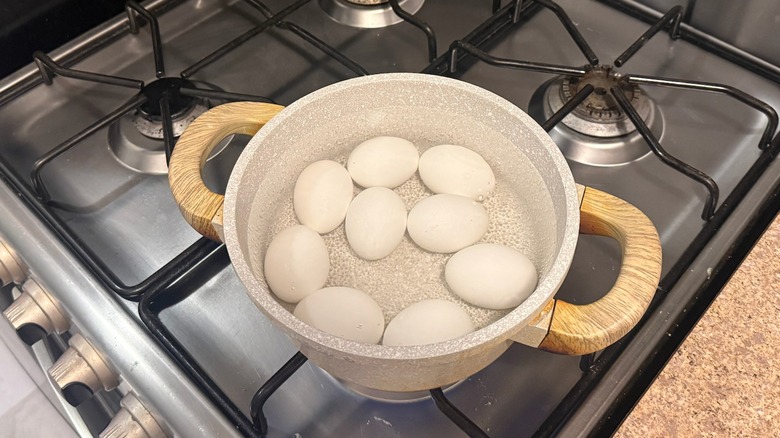
There are many ways to hard-boil eggs. Some people feel very strongly about their method of choice — and they also feel strongly about peeling those hard-boiled eggs. I personally love my method of hard-boiling eggs, which gets me the ideal texture I want every time. I place enough water in the pot to cover all of the eggs, and then I turn on the stove until it hits a rapid boil. Then, I put on the lid, shut off the stove, and leave the eggs in the hot water for eight minutes. After the timer goes off, I drain the water.
While I've always found that this method of hard-boiling eggs has worked well for me, I haven't quite found one specific method for peeling them. That's why I decided to test out several egg peeling methods to see which one is truly the best. To do this experiment, I hard-boiled my eggs and tried each method in rapid succession, so there wasn't much difference in the starting temperature for each method. Then, I compared how easy each one was and how smooth each egg came out. So without further ado, let's get crackin'.
The ice bath method
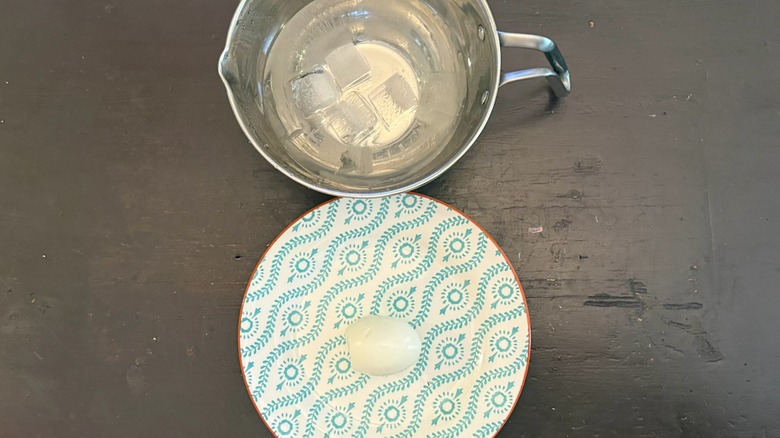
For the ice bath method, you're going to fill a mixing bowl with ice and cold water. Once the eggs are done cooking, immediately transfer them to the bowl. Let them sit for about 10 minutes to cool, then take them out and peel them like normal.
This method, which is similar to how Gordon Ramsay peels eggs, works well. As the egg cools down, the egg white shrinks a bit, which almost adds room inside the shell, making it easier to peel. The pieces did come off in smaller chunks, but it didn't take me longer than 20 seconds to peel the egg. It came out almost perfectly — nice and smooth with just a few divots of missing egg white. This is definitely a method that I'd use again, especially because I prefer to eat my hard-boiled eggs cold rather than warm.
The jar method
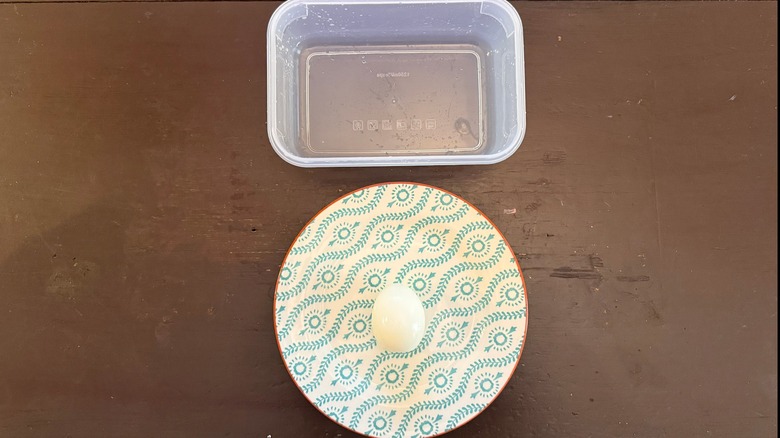
This is a method that I've never heard of before, so I was very excited to try it, as it makes it easier to peel batches of eggs at once. You take either a jar or food container and add water and the egg. If you have a bigger jar or container, you can do multiple eggs at once. Close the lid and shake the container vigorously. The shell will start to fall off easily.
When I did this method, I shook the container with one egg in it for about 12 seconds. I opened the container and about half of the shell had fallen cleanly off the egg. I picked it up, and in one or two tugs I was able to get the rest of the shell off. It came off easily and the egg was untouched on the inside. In some videos that I watched online of people doing this method, it looks like the shell completely fell off during their shakes — so I know it's possible. That didn't happen for me, but it still was incredibly easy to do and resulted in a cleanly peeled hard-boiled egg.
The spoon method
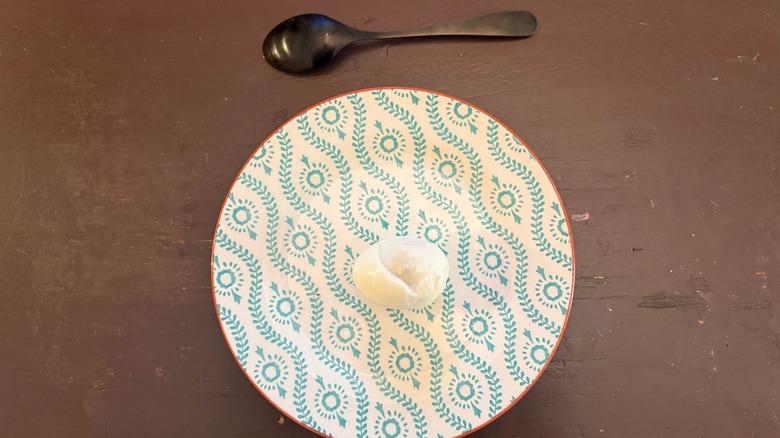
To peel a hard-boiled egg with a spoon, simply take the egg, crack it at one end and use the spoon to hug the side of the egg and peel away the shell. Then, repeat on the other side until the eggshell comes completely off. This method worked deceptively well. I placed the spoon in, concave side facing the egg, and it easily slipped off an entire side of the shell.
Unfortunately, the rest of the process didn't go as smoothly. Multiple pieces got stuck to the surface of the egg, and when I used the spoon to try to separate them, chunks of the egg white flew off with the egg. It resulted in a half-smooth, half-destroyed hard-boiled egg. Unfortunately, this isn't a reliable peeling method.
The crack-and-submerge method
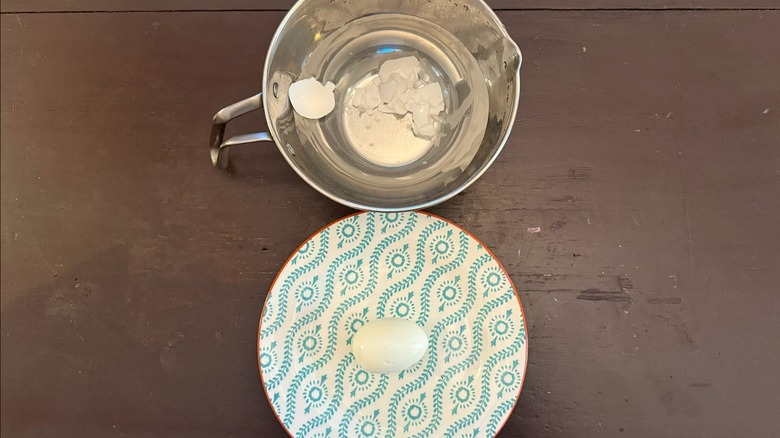
For the crack-and-submerge method, you'll need a mixing bowl filled with enough cool water to submerge the egg and your hand. Then, take your egg, dunk it under the water, and crack the end of the egg on the bottom of the mixing bowl. From there, keep the egg under water and peel the shells away.
I was completely surprised by how seamlessly this method worked. The shell basically came right off in two easy pieces, and I didn't need to do any hardcore peeling with my hands. Just two simple swipes of the thumbs, and the shell was completely gone. This works well because the water gets under the membrane of the shell, helping it to slide right off without pieces sticking to the egg white. I will definitely be using this method again, as I thought it worked flawlessly.
The crack-and-roll method
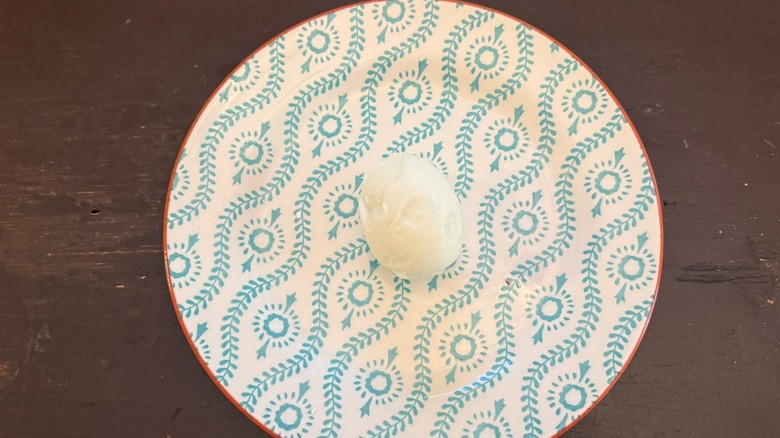
The crack-and-roll method is probably the laziest of them all. To do this, you take your egg, crack it on its side, and gently roll it back and forth on your counter with your hand. This causes the entire shell to crack all over, allowing you to peel away each piece.
When I did this method, it was an absolute disaster. The shell cracked very easily with little force. It was broken into so many pieces that it took a ton of extra time to peel away the shell. As I did so, some pieces stuck to the egg, and since it was very dry, it took the egg white with it. This egg did not come out looking great at all, and I wouldn't even consider it a viable method for peeling eggs.
Final verdict: Which method worked the best?
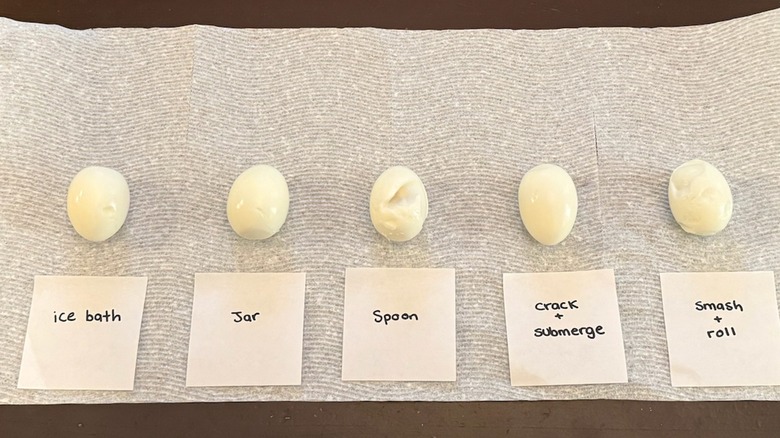
Out of all of the egg peeling methods, the crack-and-submerge method was the ultimate winner. Not only did it create a perfectly peeled egg, but it only took a few seconds to achieve. I didn't have to spend extra time carefully peeling away the shells; they just came off in two easy pieces. It was simple, easy, and effective. Plus, It doesn't make any sort of mess, which reduces cleanup time.
Methodology
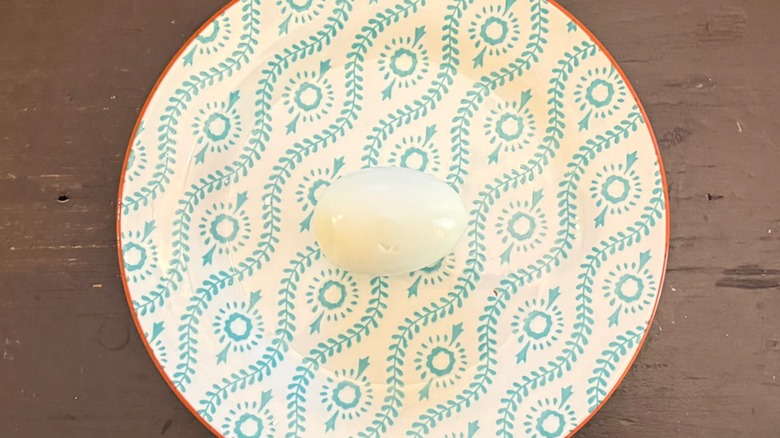
I first had to hard-boil the eggs on the stove. The eggs all came from the same carton, meaning they were the same age and there was no difference between the type or quality of eggs. Then, I tested the methods by performing them back-to-back.
For the ice bath method, I immediately placed an egg in the ice bath once it was fully cooked. For the other four eggs, I drained the pot and let them cool for 10 minutes before trying the respective method. I took note of how long each egg took me to peel, how easy it was to get the shell off of the egg, and how smooth each egg came out to decide which method was best.