

13 Retired Food Mascots No One Remembers Anymore
There's no denying that the branding and marketing of various foods is a strange business. Food mascots range from widely beloved to downright weird nightmare fuel, and in some cases, you're just kind of left wondering why some marketing teams were so convinced they had a win on their hands (we're looking at you and your briefly retired, creepy-as-heck King mascot, Burger King).
Burger King isn't the only one to bid a fond farewell to mascots, though, and we'd like to take a little walk down memory lane ... for better or worse. We learned very, very quickly that decades past were filled with some seriously strange creatures, and that's kind of an understatement. In some cases, you can see how marketing gurus thought they might appeal to customers, particularly children. In other cases? Not so much.
So, let's talk about old-school mascots, because for one reason or another, these may be long gone, but absolutely shouldn't be forgotten. Are some of these uncomfortable to see by today's cultural sensibilities? Yes, they are; please consider that a disclaimer. Just because a mascot was pretty horrible — for one reason or another — that doesn't always mean it should be erased. Erasing history is how mistakes get repeated, after all, and while there are a few of these that we'd love to see make a comeback, others are firmly in let's-not-do-that-again territory.
Mountain Dew: Willy the Hillbilly
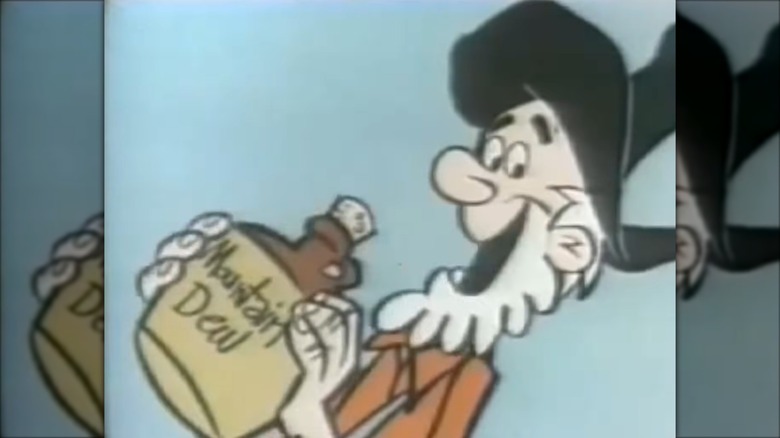
Mountain Dew has long had a color that's only found in nature if that nature happens to be within Chornobyl's Exclusion Zone, and that's seemingly at odds with a name that evokes images of a misty mountain morning. This particular soda was invented for a very unexpected reason: creators Barney and Ally Hartman wanted an excellent mixer for whiskey, couldn't find anything that struck their fancy, and made their own.
"Mountain Dew" is actually a translation of an old Gaelic term for what was essentially moonshine, and that little bit of history will make the brand's OG mascot much more logical. His name was officially Willy the Hillbilly, and he was a huge fan of saying that Mountain Dew would "Tickle your innards!" Commercials leaned heavily into the idea that the "bang in every bottle" would inspire you to do everything from winning the girl of your dreams to scoring big on the turkey hunts.
The soda has been through a number of changes since those good ol' days, and today, there are some old-school can designs that bring back a wonderful bit of nostalgia. What happened to Willy is a little less clear, but he seems to have gotten dropped by parent company Pepsi as a new decade — the 1970s — called for a new look.
Domino's: The Noid
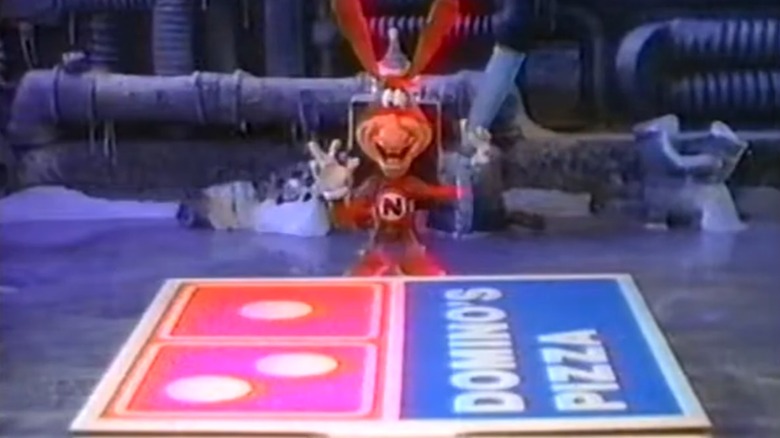
Mascots should be memorable, and perhaps the best thing you can say about Domino's Noid is that he was definitely that. The rise and tragic fall of the pizza chain's most bizarre mascot is a long and strange one, and it started back in 1986. Even then, reactions to the Noid, a name inspired by the word "annoyed," were pretty polarizing. He was definitely annoying, but he was also such a big hit that he got his own video game: 1989's "Avoid the Noid," and was recruited to help star in the Michael Jackson video "Speed Demon" (yes, it's every bit as weird as you're expecting).
The Noid made headlines in 1989, and not in a good way. A man named Kenneth Lamar Noid had come to believe that the chain was targeting him specifically with the mascot, and things escalated into an hours-long hostage situation at an Atlanta Domino's. Ultimately diagnosed with schizophrenia, Noid died by suicide in 1995, still claiming that he'd been right about Domino's alleged plot.
Things weren't entirely over for the Noid. He resurfaced, briefly, in 2011 and 2021, but it's safe to say that he never regained his late-'80s-era popularity. Meanwhile, Reddit threads occasionally recount the tragic story.
Frito-Lay: The Frito Bandito
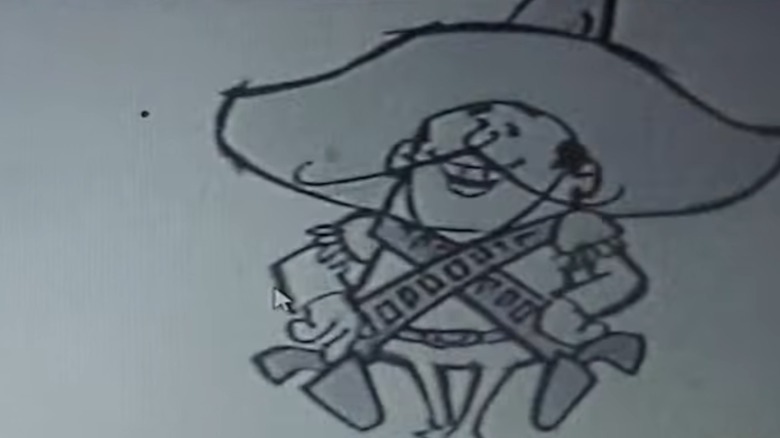
We did say that some of these make for uncomfortable viewing in the 21st century, and that brings us to the Frito Bandito. It's exactly what you think it's going to be: it's a very, very stereotypical illustration of a Mexican revolutionary, who sings about how much he loves Fritos corn chips, will definitely steal them, and will love you if you get them for him. He also encourages viewers to join him in becoming a Frito Bandito, and not only is it cringe-inducing today, but it also got some pretty immediate pushback.
The Frito Bandito hit screens in 1967 and was voiced by Mel Blanc of "Looney Tunes" fame. Perhaps unsurprisingly, he was also short-lived. He disappeared in 1971 after sparking major backlash from groups like the National Mexican-American Anti-Defamation Committee. The mascot, they said, not only crossed the line into racism but went far beyond it, and initially, Frito-Lay insisted that it was all fine and that the Mexican-American demographic loved him. That was debatable, and he rode off into the sunset.
McDonald's: Mac Tonight
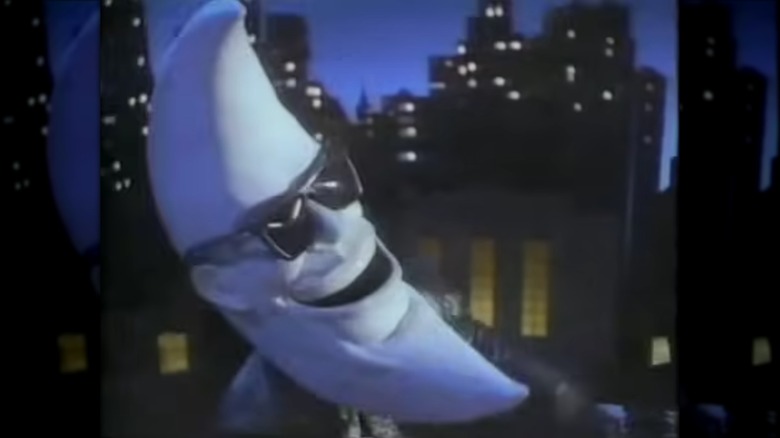
McDonald's has had a ton of mascots over the years, from the famous Ronald McDonald to the ultra-popular Grimace, whose 52nd birthday was celebrated with a special shake in 2023. Go back to the 1980s, though, and you'll find that McDonald's was trying to lure in a mature, late-night crowd with the help of a moon-headed mascot named Mac Tonight. He came on the scene back in 1986, and there was just enough time between the commercial and the popular crooners of the 1950s that the chain could tap into some delightful nostalgia. Well, almost.
It's definitely a case of someone not doing their due diligence and learning anything about the source material before kicking off the ad campaign. Mac Tonight's theme was based on the song "Mack the Knife," which was a huge hit for Bobby Darin in the late '50s. So far, so good, but this escalates pretty quickly.
Listen to the lyrics, and it's pretty clear that "Mack the Knife" is about a man who is an incredibly efficient killer. It was based on the German "Threepenny Opera," which is actually much, much worse. There's murder, assault, and a whole bunch of other explicit topics that we won't get into, and it's all set against the backdrop of Berlin's 1920s-era seedy underbelly. Mac Tonight, meanwhile, was featured in dozens of commercials, had a line of merch, and was credited with attracting a new customer base. Things came to an end in 1990, after it was tarnished by a lawsuit from Darin's estate.
Taco Bell: Gidget the Chihuahua
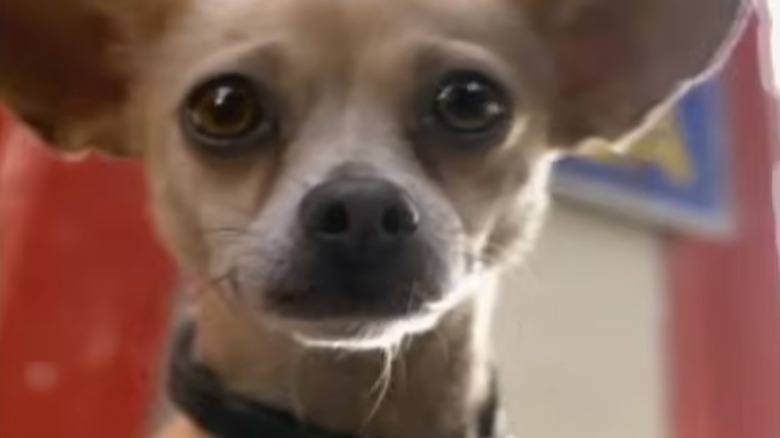
This one's likely to trigger some memories from readers of a certain age, as the Taco Bell Chihuahua was an absolute pop culture phenomenon for the duration of the 1997 to 2000 campaign. Everyone was going around saying, "Yo quiero Taco Bell!" and being absolutely charmed by the little Chihuahua on a mission to score some sweet, sweet tacos and nachos. The Taco Bell dog starred in scores of commercials, tried to capture Godzilla, and even tracked down Richard Speight Jr. and Johnny Knoxville on a boat in the middle of a lake.
The dog in the commercials was actually a rescue dog named Gidget, and even though her onscreen persona was both widely beloved and occasionally controversial, sometimes decried as racially insensitive, the campaign was cut short when it was determined that it wasn't bringing in the business in the way the chain hoped. The little dog's abrupt disappearance from the spotlight prompted rumors that she'd died, but she only passed away in 2009 at the respectable age of 15.
Post: Krinkles the Clown
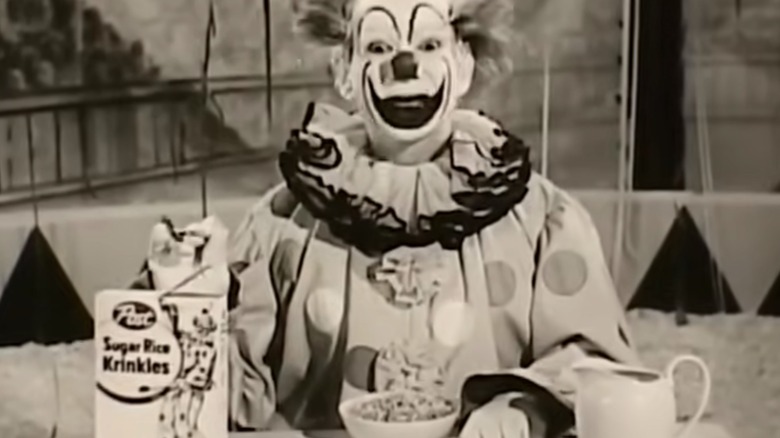
We couldn't find too much information out there about Post Cereal's Krinkles the Clown, and that's a shame, because we have so many questions, that only start with wanting to know if this is where pop culture got its killer-clown inspirations from. It started with artwork that could perhaps best be described as mildly creepy, but definitely not out of place for an era that featured TV personalities like Howdy Doody.
Things really went off the rails in 1960, when someone, somewhere — who presumably hates sweet dreams and happiness — gave Krinkles live-action television commercials. We do know why Krinkles disappeared, and it wasn't because parents were finally sick of kids who were convinced that this thing was hiding under beds. When one cartoon built up enough pop culture clout to inspire its own breakfast cereal, Sugar Krinkles and Krinkles the Clown were discontinued to make room for the new kid on the block. Thanks, Fruity Pebbles. We owe you.
California Raisins Advisory Board: The California Raisins
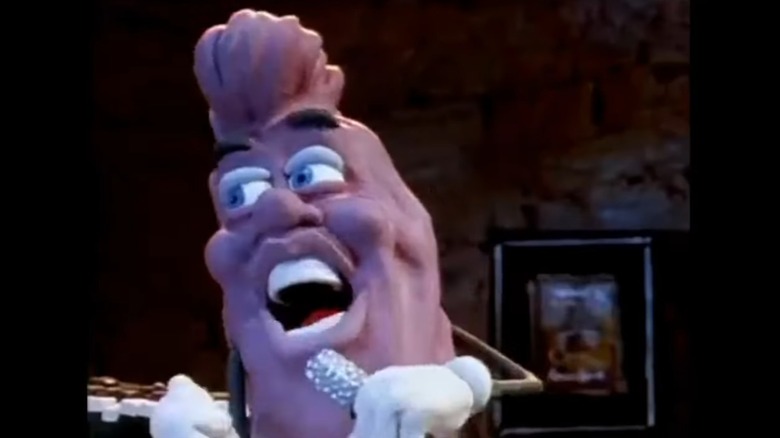
Most of the food-related mascots you're familiar with are connected to brands, rather than generic foods. Honestly, though, if there's any food that needs a mascot to help sell it, it's raisins. Full disclosure, this writer has always and will forevermore refer to them as "obstacles." And yes, the mid-1980s saw the California Raisins Advisory Board developing and introducing a mascot to help sell raisins, and those were the aptly named California Raisins.
It's almost impossible to say just how big a deal these anthropomorphic, singing and dancing raisins were. They won awards for advertising and animation as well as netting an Emmy nomination, spawned a ton of merch, and their version of "I Heard It Through the Grapevine" made it onto the Billboard charts. Michael Jackson even called and said he wanted to be "raisinified," and ended up participating in the campaign for free.
Although they've occasionally been brought back for brief appearances, the Raisins met their end in 1994. There's been an interestingly long-lasting academic impact: the campaign has been a case study on how depictions of race in pop culture shape public opinions and attitudes in what is a wildly complicated conversation.
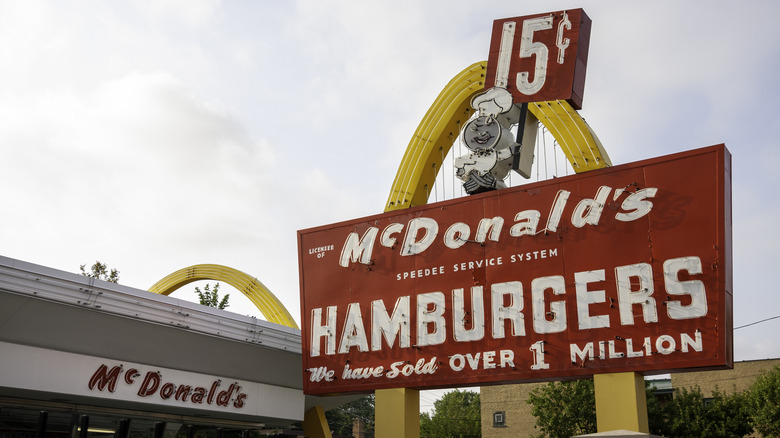
McDonald's: Speedee
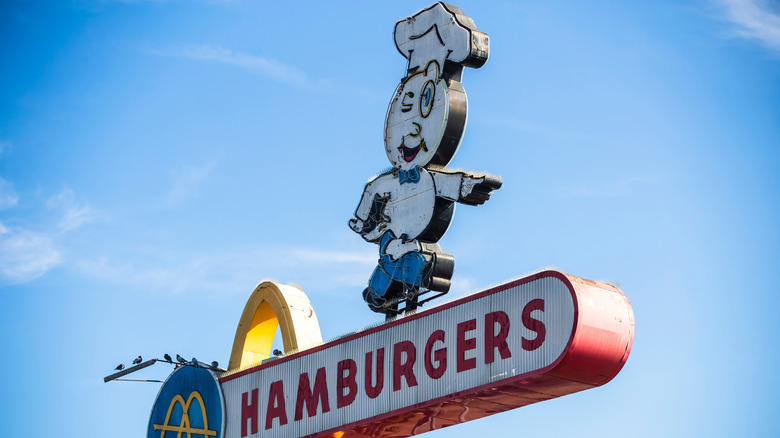
Head to Massachusetts' 1950s-era throwback McDonald's and you'll find familiar Golden Arches and a not-so-familiar mascot. The grinning chef is officially named Speedee, and it's a reference to the chain's original Speedee Service System that promised to have customer orders out quicker-than-quick. It was what gave McDonald's that potential to be the powerhouse that it initially turned into and was meant to be the chain's main draw, but the personification of McDonald's speedy service had a surprisingly short shelf life.
The first McDonald's opened in 1948, and Speedee followed soon afterward. The trials and tribulations of the McDonald brothers have been well documented and wrapped up in the drama that was Ray Kroc's buyout and ultimately Speedee's ignominious end. He disappeared around 1961, and any chances that he would reappear in anything but fond memories and the occasional throwback promotion largely disappeared with the 1963 debut of Ronald McDonald.
Bud Light: Spuds MacKenzie
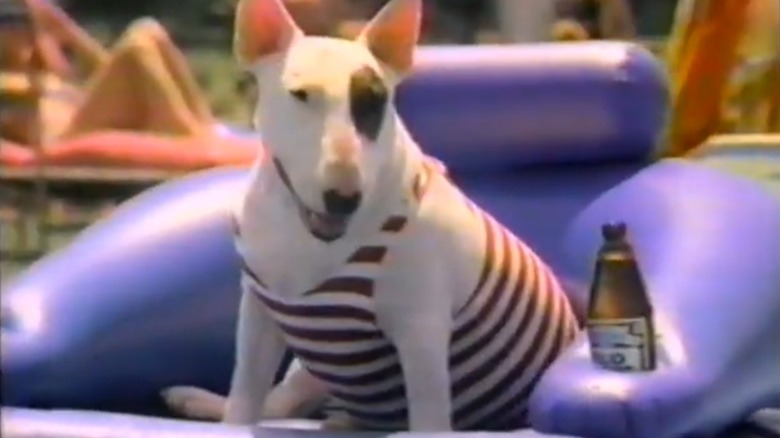
When Spuds MacKenzie hit in the 1980s, he hit really, really big. Bud Light's proclaimed "Original Party Animal" started on posters and went on to be not only featured in commercials, but also starred on an almost irrational amount of merchandise for the too-cool-for-the-room bull terrier. Spuds made it into Hollywood movies, and even lookalikes could find themselves suddenly so popular that it launched careers.
Commercials depicted Spuds in any number of situations that mostly depict a college student's ideal weekend: hanging out at the pool, playing acoustic guitar at a party, and being dropped off at a nightclub. Spuds was always the center of attention, and hilariously, some marketing gurus at the time noted that the dog's popularity was both unexpected and probably short-lived. They were wrong.
Spuds was played by a female dog with the unlikely name of Honey Tree Evil Eye and was ultimately retired in 1989 for an equally unlikely reason. Anheuser-Busch decided that the campaign had been too successful, and people had sort of just settled into loving the dog without bothering too much with the product she was promoting. Whoops.
7Up: Cool Spot
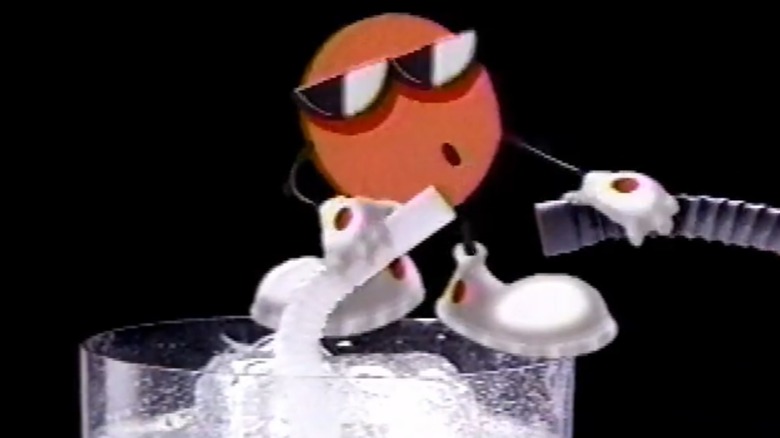
7Up's Cool Spot commercials of the 1980s and early 1990s honestly kind of feel like things were getting down to the wire, a struggling ad exec needed an idea and just decided to slap some sunglasses on 7Up's red dot and call it a day. We're not saying that's what happened, and we're definitely not saying that it didn't work, because it definitely did. The campaign got its start when 7Up gave Pac-Man a helping hand against those pesky ghosts way back in 1982, and in 1987, it was promoted to its own advertising spots and line of merchandise.
Cool Spot was so popular that it even scored starring roles in video games across the early '90s-era consoles, and it's worth mentioning that they weren't just reskins of old games or uber-basic concepts. Those who do remember the games note that they were pretty decent — although how they'd stand up against today's games, we're not going to comment. It's not entirely clear just why this super-fun dot overflowing with attitude was retired, but he seems to have largely disappeared by around 1997.
Cheetos: Mouse
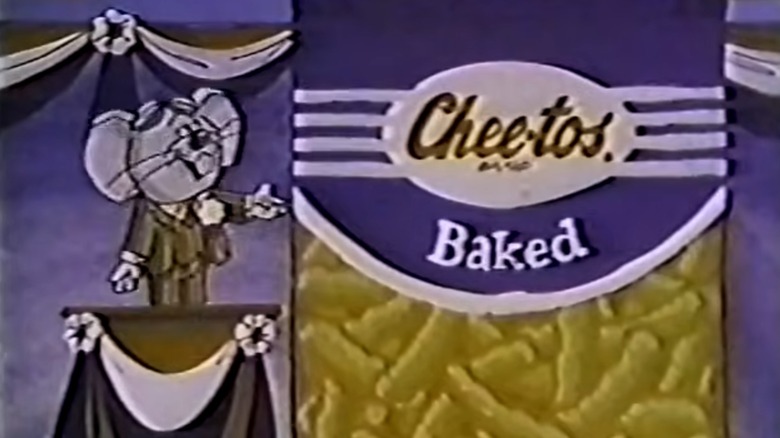
When it comes time to talk about the 1990s-era snack commercials that send you right down memory lane, Cheetos commercials with the super-cool Chester Cheetah are definitely on the list. Chester is so firmly associated with Cheetos that it's difficult to imagine the cheesy snacks ever having another spokesanimal, but it did, and it was perhaps unsurprisingly a mouse.
Chester came on the scene in 1986, and when he did, he ousted a plane-flying, magic carpet-riding, space-exploring, motorcycle-loving mouse who also ran for office on a platform that might perhaps best be described as, well, Cheetos. While the Cheetos mouse did have a good, long run, the end of the road seemed to be something of a gentle fading away. Times were changing in the '80s, and Chester was just the kind of cool cat the decade needed.
Tropicana: Tropic Ana
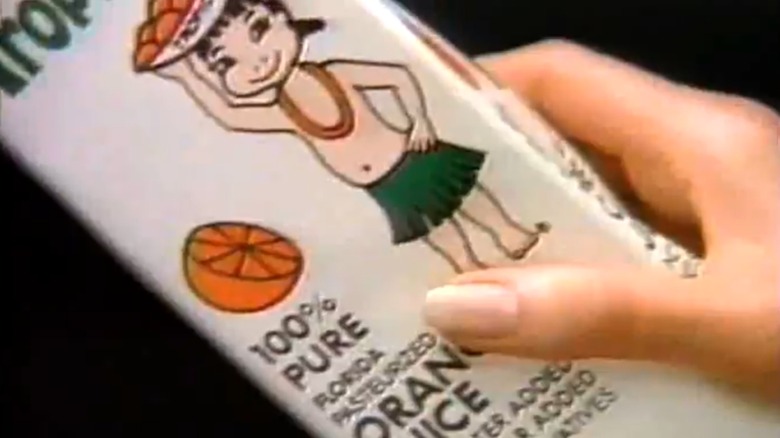
People take brand loyalty very, very seriously, and in 2009, Tropicana's attempts at rebranding were such a massive failure that it resulted in a loss of around $30 million. It wasn't the first time that the orange juice brand had rethought its image, and before the freshly-picked orange with a straw, the face of the brand was a very human one. Her name was Tropic Ana, and she was an orange-carrying little girl clad in a grass skirt and lei.
She was inspired by a very real person, who was the four-year-old playmate of the son of Tropic Ana's designer. Not only did Christine Keston provide the inspiration for the mascot, but she made public appearances as her alter ego, too. Until, that is, she accidentally cut her hair and removed the character's trademark braid. Tropic Ana was around for decades before she was replaced as the mascot in the mid-1990s, and the move was, in hindsight, one that made the brand decidedly less problematic. Gone are issues of racial insensitivity and questionable depictions of children, and honestly, it's kind of surprising that it took as long as it did.
Popsicle: Popsicle Pete
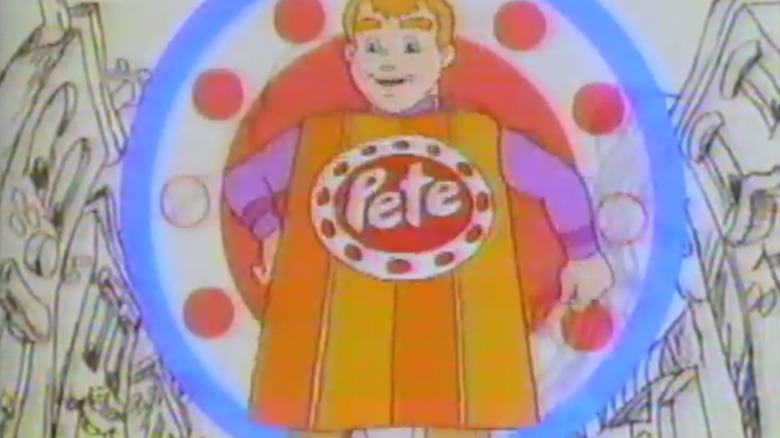
Popsicle is a brand name, but it's become such a widespread term that it's easy to forget that. It's really fun and relatively easy to make your own creamy popsicles at home, after all, so it's not surprising if you also completely forgot that the OG Popsicle company once had a mascot called Popsicle Pete. He's been around for a long time, too, first introduced in 1939, alongside a pony named Chiefy, and lasting into the 1990s.
Like many longtime mascots, there's a ton of Popsicle Pete merch to be found out there, from comics to t-shirts. Customers could collect coupons and redeem them for fun little prizes, and strangely, it's not entirely clear just what happened to Pete and his pony. He just sort of disappeared, proving that it doesn't matter how long you're popular — there's always a chance that you'll fade into obscurity. That's gratitude for you. Did you expect a discussion of food mascots to include an existential crisis? Neither did we.