

10 Discontinued Chocolate Candies You'll Probably Never Eat Again

Chocolate candies evoke more nostalgia than most other foods. Maybe it's the impression that Willy Wonka left on your childhood memories, or the fond recollections you have of trick-or-treating. It could be that your parents occasionally treated you to a bar while checking out groceries, or maybe you had a specific vending machine that you regularly fed coins in return for a chocolate treat. Regardless, if you're old enough to remember Y2K, then you've seen a few chocolate candies vanish off the shelves for good.
Most of these candies have suffered a quiet demise, with little to no explanation from brands about why they have been discontinued. Lack of consumer interest, high production costs, limited ingredient availability, and tough competition could all be responsible. Despite such mysterious circumstances, consumers have left many eulogies online memorializing these candies, and we've featured some of the most poignant expressions of love below. Of course, there's also a fair share of public criticism of these products, helping explain why they are no longer with us; we've included those stances, too. Finally, we've highlighted both recent discontinuations and a few products that reach further back in time — if you're young, make sure to ask your grandparents about them to bring back fond memories.
Hershey's S'mores
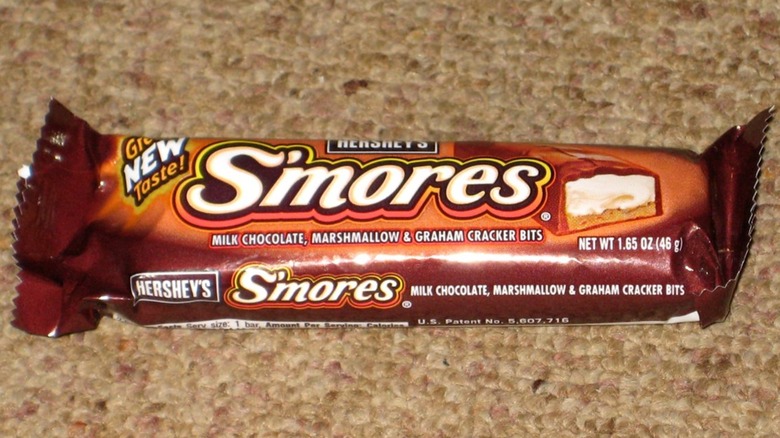
We'd like to argue that you can light a bonfire all year-round, if nothing else than for an excuse to make s'mores. But if you aren't up to the task of gathering firewood or finding a suitable location for your bonfire, it's natural to look to the candy aisle for something to mimic the marshmallow, chocolate, and graham cracker trifecta. From 2003 until 2012, you could answer your cravings with a Hershey's S'mores bar, which layered marshmallow cream with graham cracker crumbs and enrobed it all in milk chocolate. It's one of several Hershey's chocolates that have been discontinued.
Of course, it only made sense for the Hershey company to try something like this, since Hershey bars are, more often than not, the chocolate of choice when making real s'mores. But chocolate wasn't the only delightful aspect of these bars; one Redditor remembers the marshmallow layer striking the perfect level of sweetness, while the graham cracker lent a wonderful crunchiness. Another Redditor appreciated that these bars weren't messy to eat. Meanwhile, yet another Redditor remembered intentionally microwaving them for a gooier treat.
Even if some folks loved the taste of this candy, we can verify that it didn't live up to our summertime fantasies of hot, gooey s'mores eaten right by the campfire. Eating is just as much about flavor as it is about emotions and sensory details, and that's where this candy bar fell short. However, if you're still craving a Hershey S'mores bar years later, one customer recommended trying Favorite Day's S'mores Mix at Target.
Caravelle
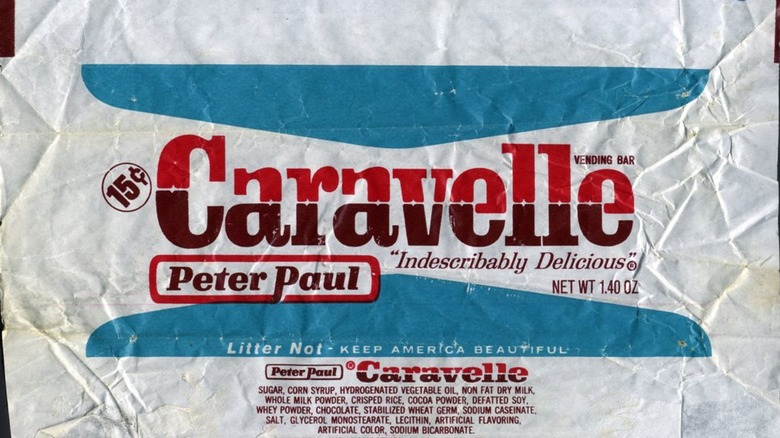
Launched in 1965, Caravelle bars were considered one of the trendiest candies by 1967. These bars were composed of crisped rice, caramel, and milk chocolate, along with a handful of other ingredients providing textural support and shelf-life viability. As is common with candy bars, these ingredients changed slightly over the years, with one version notably containing Brazil nuts. Caravelle bars were soft, crispy, and crunchy all at once, which isn't something that every candy bar is able to pull off. Folks say that the commercials for Caravelle bars were memorable, too.
Younger generations have never had the pleasure of tasting a Caravelle bar — and that's largely thanks to Cadbury's merger with the Peter Paul company in 1978. Nevertheless, these chocolates have been compared to 100 Grand bars, which are still on the market. The common consensus, however, is that Caravelle bars were better; they were allegedly creamier and boasted a softer caramel. This is just one of those times when "you have no idea what you missed," will have to do.
Butterfinger BB's
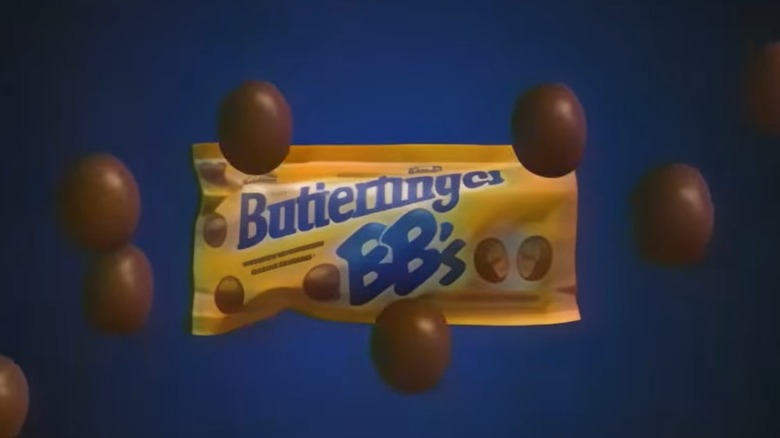
One could be forgiven for mistaking a handful of Butterfinger BB's for malt balls at first glance. But while malt balls feature, well, malt inside them, Butterfinger BB's contained the signature Butterfinger filling of crispy peanut butter. If you're old enough to remember these candies, you may associate them with "The Simpsons," whose characters were used for advertising purposes.
Customers were head over heels for Butterfinger BB's. They demanded less of a commitment than full candy bars since you could theoretically only have one or two balls in one sitting ("theoretically" being the keyword, of course). Folks also remember Butterfinger BB's as a movie theater staple when mixed into popcorn buckets.
Despite their immense popularity, Butterfinger BB's only stayed on the market from 1992 to 2006. What happened to these sweet treats, you ask? Well, there's no clear answer to why they were discontinued, but several variations of Butterfingers have since been debuted, including Butterfinger Bites and Butterfinger Snackerz. The chocolate candy market has long been saturated with competing products, both within and between brands, so it's no wonder why some beloved products have to leave us for good.
Swoops
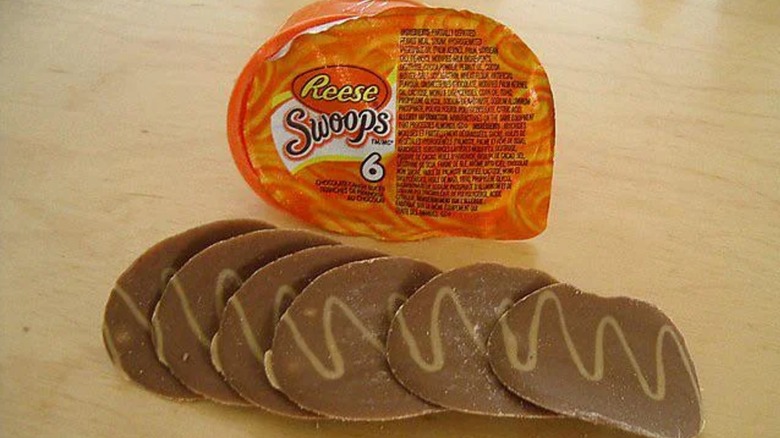
What's your favorite Pringles flavor? Plain? Sour cream and onion? Barbecue? Well, what about chocolate? That's essentially what Swoops are remembered as: Chocolate Pringles. But, oh, they were so much more.
In reality, these candies weren't chocolate-covered potato chips, although one Redditor did share that they were superb when eaten in combination with Pringles. Rather, Swoops were Pringles-shaped chocolates that melted beautifully in the mouth thanks to their thinness. They came in a variety of flavors, including Reese's, Hershey's, Almond Joy, and York. Indeed, many Reese's fans still yearn for Swoops. Unfortunately for them, Swoops lasted a very short time; they were only produced from 2003 to 2006.
It's likely that customer demand wasn't as high as predicted for these sweet treats. Indeed, Redditors have left mixed reviews for Swoops; for instance, while one customer remembered eating three containers in one sitting, another lamented that the texture of these chocolates was not to their liking. Perhaps the novelty of Swoops was both the product's most winning attribute as well as its downfall; many customers didn't really understand what these chocolates were, leading to a mismatch between expectations and reality. One consistent piece of feedback, however, is that the commercials for Swoops had extremely catchy jingles, so look one up for a blast from the past.
Chicken Dinner
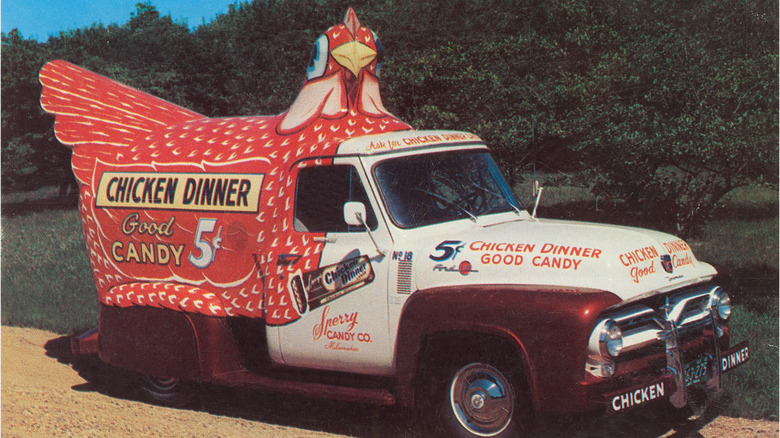
Built upon the classic combination of caramel, peanuts, and milk chocolate, how could this candy bar not be a winner, winner (chicken dinner)? Chicken Dinner bars were first released in 1923 and quickly skyrocketed in popularity, in no small part due to Sperry Candy Company's creative advertising campaigns. Just look at that truck shaped like a chicken! These bars were also marketed as being "wholesome" and "nourishing," which wasn't altogether unusual for chocolates in the early 20th century.
Despite the funky name of these bars, they were 100% vegetarian. They consisted of three layers (peanuts, caramel, and a fudgy French cream) and were enrobed in chocolate. As such, they were strong competitors to Oh Henry! bars, which featured the same primary ingredients.
In the early years, each bar cost not just a pretty penny, but rather a dazzling dime. That made them a bit of a luxury good before their price later became a more affordable 5 cents per piece. Nevertheless, these bars were discontinued by the early 1960s. Pearson's took over Sperry Candy Company, and that's where the Chicken Dinner story ends. The public wasn't given a clear explanation as to why, but perhaps it had something to do with strong competition from brands like Hershey and Mars.
Marathon
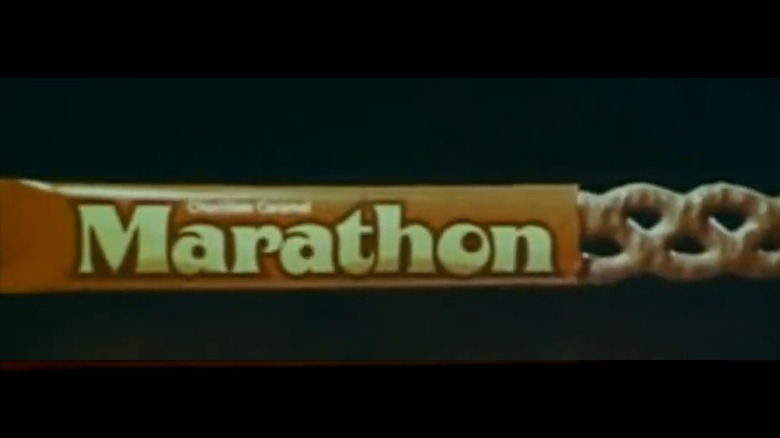
For some reason, braids just scream, "fun." It's why Dorothy sported two braided pigtails in "The Wizard of Oz" and why challah, striezel, and other braided breads are so appetizing based on looks alone. So it's no wonder why someone 50 years ago may have been tempted to buy a Marathon bar, with its 8-inch-long, braided, caramel-and-chocolate composition.
However, having only been on grocery store shelves for less than a decade (from 1973 until 1981), Marathon bars are one of those vintage candy bars no one remembers anymore. They were extremely chewy and could have been a doozy to eat if you were extremely hungry. The fact that they "last[ed] a good long time," as their advertising slogan proclaimed, was therefore both a blessing and a curse. That's not necessarily why they were discontinued, but few other theories have been posed to explain their demise.
If you find yourself in the U.K., grab a Curly Wurly (sold by Cadbury) for a similar candy bar. Don't ask for a Marathon bar, though; they don't exist, and some generations might think you're referring to a Snickers bar, which went under the name of "Marathon" until 1990.
Summit
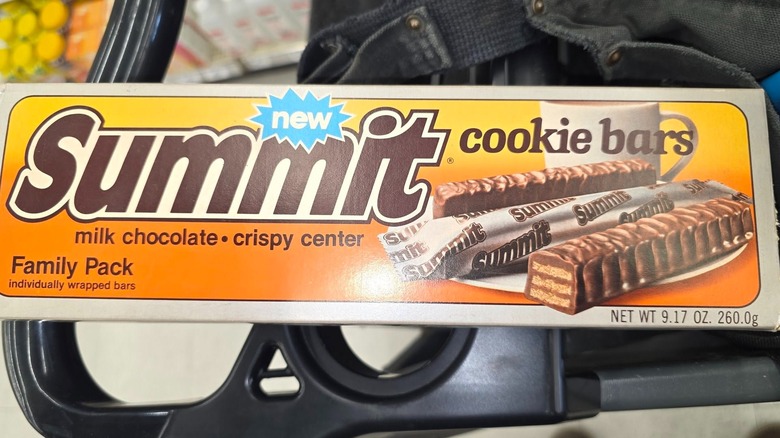
First released in 1977, Summit bars fizzled out of production by 1984. Consisting of wafers, chocolate, and peanuts, their packaging described them as "cookie bars," and each standard package contained two thin pieces. Advertisements made a big deal about Summit bars being light, and they certainly stood apart from other contemporary products like Caravelle and Oh Henry! bars, which were lusciously thick and chewy.
Despite being marketed as a bar that one might eat while recreating outdoors (including, perhaps, while climbing to the eponymous summit of a mountain), these chocolates were infamous for melting the moment they were hit by a single ray of sunlight.
If you never had a chance to try a Summit bar — or if you have been missing them for over 40 years — the closest modern alternatives you'll find are Twix bars and Kit Kat bars. That might not be any consolation, however, given that these are two vastly different candies. As one of the most memorable discontinued candies of the 1980s, we'll just have to make peace with the fact that nothing can approximate the messy yet delicious nature of Summit bars.
Hershey's Kissables
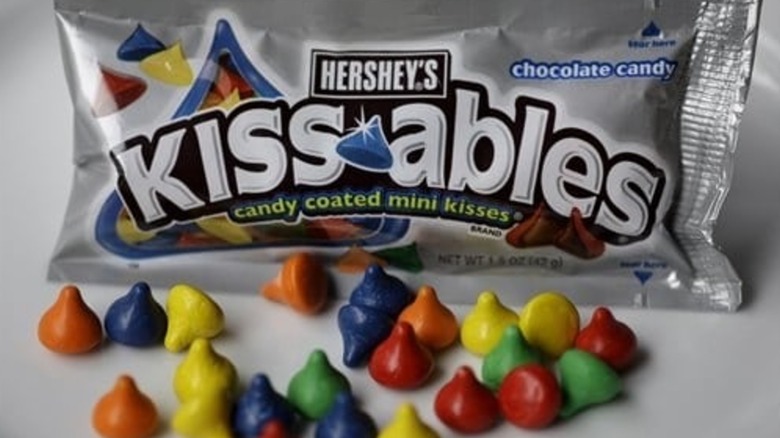
Hershey's Kissables were a competitor to M&Ms from 2005 until 2009. They were a candy bowl staple, but also an excellent addition to trail mix and popcorn. Their small, bell-like shape and crunchy texture made them delightful to eat by the handful. Plus, their colorful appearance was enticing to kids and adults alike.
But alas, Kissables came with their fair share of controversy. For one, those who felt strong brand loyalty to M&Ms were less willing to leave the circular candies behind for this newcomer. Additionally, these candies were critiqued for being too crunchy, and an ingredient change in 2007 elicited public outcry. This wasn't just any ordinary ingredient change; the cocoa butter was swapped out for vegetable oil, and customers could clearly tell the difference. Folks have described the second rendition as oily and waxy.
Adding to the chaos, Kissables were just one of many products that The Hershey Company was experimenting with at the time. Without the bandwidth to, say, ensure this product was made with high-quality ingredients, there was no way Kissables could enjoy a long run on the market. Kissables may be one of many discontinued candies we'd love to bring back, but we want them back in their original avatar.
Reese's Bites
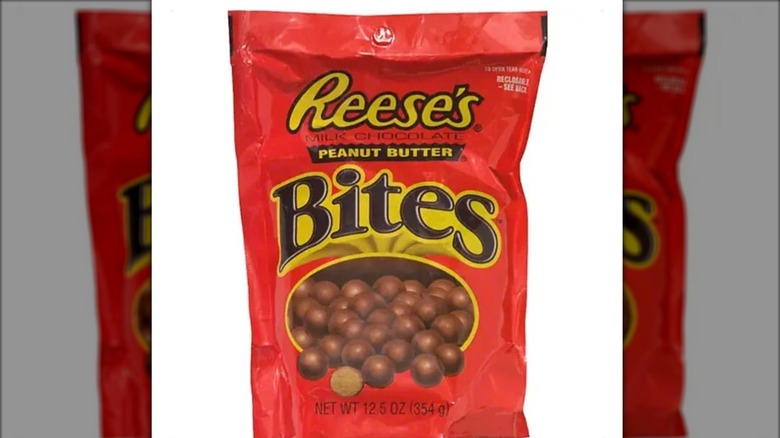
By now, it's become clear that redesigning America's favorite candy bars into bite-sized treats is a popular business move — and also a risky one. Reese's Bites met their end in 2007, allegedly due to insufficient sales and rumors of the candy being a choking hazard. Regarding the latter, it's easy to see why Reese's Bites weren't deemed worthy of reformulation. While there's no single reason why they were terminated, many other Reese's products — featuring elements like caramel, banana crème, and double chocolate — were enjoying a heyday of their own.
Folks remember these candies as being easy to eat in large quantities, and they also note that they made for an excellent movie theater snack (naturally, Reese's Bites could be eaten on their own, but they also paired splendidly with popcorn). One customer even reported that these candies were fantastic when served frozen on top of ice cream. Meanwhile, some people fondly remember saving money to buy Reese's Bites, indulging in them as a once-in-a-while treat.
Reese's Bites are one of many Reese's candies that have completely vanished from grocery store shelves. While customers clearly miss them, it's obvious that new Reese's variations will continue to come our way, so let's savor the products we've got while they're still within our reach.
PB Max
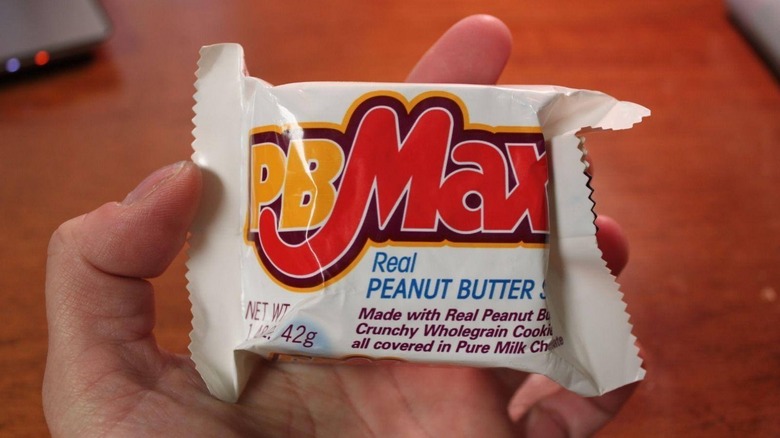
If this list seems like it's saturated with peanut butter chocolate candies, that's because it is. PB Max is just one more product that met an early end, perhaps due to prolific competition and perhaps due to the Mars family's aversion to peanut butter. Who really knows for sure?
What we do know is that people were enamored with this combination of peanut butter, milk chocolate, and whole-grain cookie. Ah, yes, the whole-grain cookie ... it's only telling that PB Max was around from 1989 until the early 1990s! The whole-grain cookie didn't exactly make this candy a healthy treat, but it surely helped in the marketing department.
30 years later, folks are still trying to get PB Max, one of the most nostalgic '90s candies, reintroduced to the market. Redditors remember PB Max for its fantastic commercials, admirable texture, and strong peanut butter flavor that gave Reese's cups a serious run for their money.