

This Popular Mexican Soda Had A Coffee Flavor Long Before Coke Or Pepsi
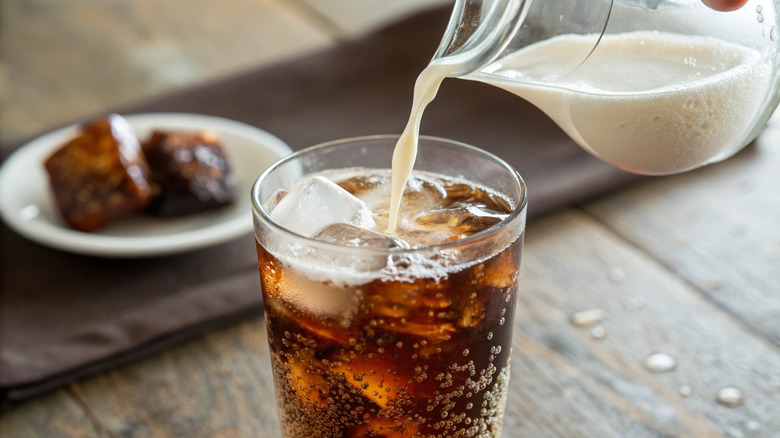
Finding unique ways to add fizz to coffee has long been a fixation. There are plenty of coffee-bar and at-home methods, like transforming an iced coffee with a splash of fizzy cola or the trend of serving coffee tonics, but for decades upon decades, soda companies have also been trying to find a way to bottle the stuff. While products from global soda giants like Coca-Cola and Pepsi may dominate recent memory for coffee-soda-hybrids, well before either had even dipped its toes in the market, the Mexican soda company Jarritos launched its business with a coffee-flavored soda.
It was all the way back in 1950 that Jarritos got its start, with a man by the name of Don Francisco "El Güero" Hill at the helm. He was an inventor with a strong palate and a love of beverages. In the late 1940s, Hill noticed that Mexico's ancient aguas frescas were facing increasing competition from sodas. Working at his dining room table in Mexico City, with his wife and children as his primary tasters, Hill formulated his first product and entered the soda business. Unfortunately, the initial coffee-flavored offering was a verified dud.
In Mexico at the time, coffee was strictly a morning beverage consumed with milk. The idea of adding carbonation to coffee, bottling it, and serving it cold just didn't take. Fortunately, that failure was not the end for Hill or Jarritos. He quickly shifted gears to more familiar flavors, and in those, he found the foothold that he was looking for in the soda business.
The story of Jarritos
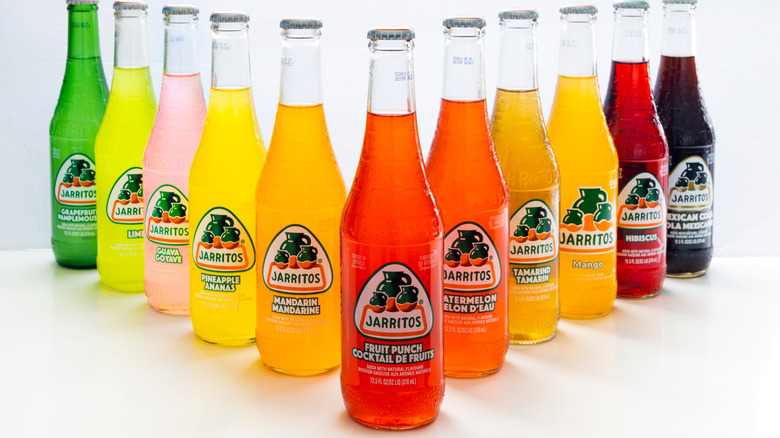
The next flavor of Jarritos to hit the market, mandarin, was a bit more run-of-the-mill. This one, thankfully, caught on, and soon thereafter Jarritos expanded its lineup with tamarind, lime, and tutti-frutti — which you likely know as fruit punch. These days, the full complement of Jarritos flavors is quite expansive, featuring varieties that you won't find many other soda companies putting out. Tamarind remains a favorite, but unique options like passion fruit, mango, and guava highlight the culinary origins of this popular soda.
The Jarritos packaging retains the original look as well, with clear glass bottles that show off the bright colors of the soda as well as the illustration of three jugs designed by Hill himself. Just like the flavors of the soda, the jugs are a cultural touchpoint for this popular international soda brand. The name "Jarritos" translates to "little jugs," a reference to the clay vessels from which aguas frescas were traditionally served. With his soda brand, Hill was giving new life to the unique flavors of sweet Mexican beverages and creating a means to share them with consumers around the world.
Despite that initial flop of the Jarritos coffee flavor, the history of Jarritos has been one of great success. It is still the best brand of grapefruit soda for a paloma, and a cold glass bottle of the soda is a perfect accompaniment to any Mexican meal. The inability to crack the code of coffee-flavored soda is not a unique trouble for Jarritos, either.
Coffee sodas just can't seem to make it in the market
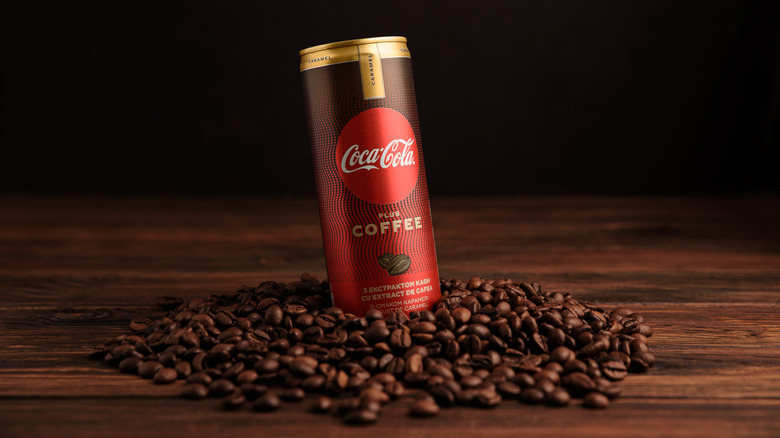
There are plenty of examples of manufacturers trying to launch coffee sodas to no avail. On the small side, there are companies like Keepers, which launched a short-lived citrus and coffee soda, but even the giants can't seem to make this product stick. Coca-Cola Blak was a cola-coffee-hybrid that failed twice, and the company even tried a third time with Coca-Cola plus Coffee, though the energizing Coca-Cola drink was discontinued in 2022. As you might expect, Coke's biggest competitor attempted the same, but the vintage Pepsi Kona flavor, named for the Hawaiian coffee variety, never even made it out of the test markets. There is, however, one coffee soda success story.
Manhattan Special is a coffee soda that has held its place on the market. Founded by Italian immigrants in Brooklyn all the way back in 1895, Manhattan Special makes its sodas "the old-fashioned way," with hand-brewed espresso and cane sugar. The company obviously does not enjoy quite the same recognition or distribution as Coca-Cola, Pepsi, or Jarritos, but it does enjoy a cult-like following in New York. Add to that the accomplishment of staying in business for 130 years with a product that the soda giants can't even seem to make work, and you have quite an impressive business indeed.
Coffee soda clearly struggles to hold the attention of the broad soda market, but maybe that's not a bad thing, in the end. If that first coffee-flavored Jarritos had taken off, the world may have never seen all of the fruity technicolor varieties that we enjoy today.