

5 Things You Should Never Keep In Your Oven's Bottom Drawer
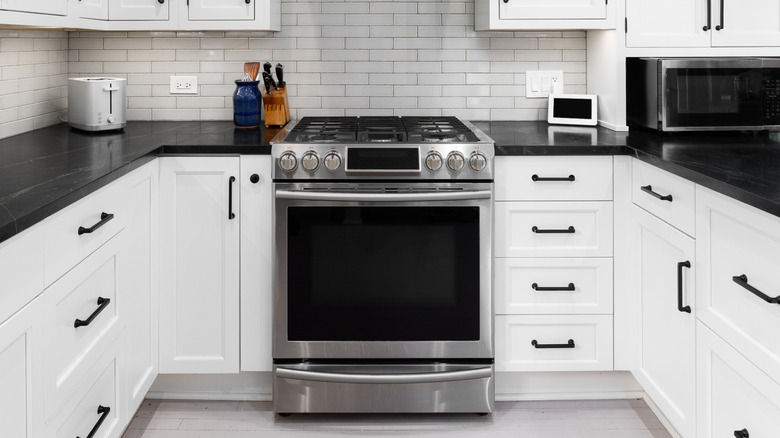
If your oven has a drawer on the bottom, it could be for a few potential purposes: a warming drawer to keep food hot or to proof bread dough, a broiler drawer for crisping food, or a storage drawer for cookware like pots, pans, and baking sheets. The easiest way to tell if your oven's bottom drawer is for storage or heating food is to read the manual. Your oven manual will explain what the drawer is for, as well as provide safety tips for properly using, cleaning, and maintaining the space. If you don't have a manual, try looking up the make and model of your oven online to find a pdf copy to review.
If the drawer has a heating element, it should not ever be used for storage. However, even if the drawer is designed for storing pots and pans, you should still be aware of the do's and don'ts of using it for storage, including what can safely be placed there. Though it's not exposed to direct heat, the space under your oven will still get very hot due to residual heat from the oven above. That means that items stored in the drawer are at risk of melting or causing a dangerous kitchen fire.
As long as you properly follow kitchen safety rules and only use the bottom drawer of your oven as intended by the manufacturer, you should be fine. In general, it is safe to store oven-safe cookware and bakeware, including metal baking sheets, roasting pans, and cast iron utensils. If you still have doubts about what you can't keep in your oven's bottom drawer, however, read on. These are the five items you should never store below your oven.
Fabric items like kitchen towels, pot holders, and aprons
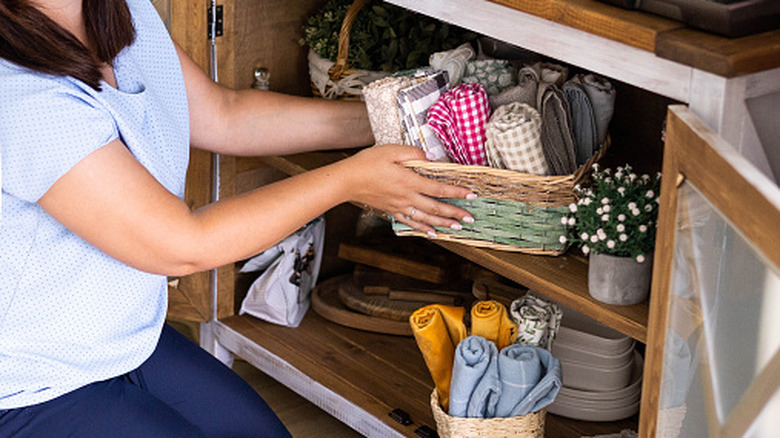
Many fabric items that you may keep in your kitchen could be flammable. Kitchen towels, pot holders, oven mitts, and aprons should not be stored underneath your oven, even in a storage drawer. Although pot holders and oven mitts are designed to withstand extreme heat, they still should not be exposed to consistent, high heat in an enclosed space, especially alongside other potentially flammable fabrics. As for kitchen towels, they are designed to be used to dry hands and dishes or clean up spills. While they may offer some heat protection when used to move a hot pan or dish, they are not fire-resistant. Prolonged exposure to high oven temperatures could cause the fibers to ignite.
The same goes for aprons, which could potentially be the least heat-safe fabric in your kitchen. Many aprons have decorative features like buttons or ribbons that could be flammable, or may contain silkscreened patterns or designs that aren't meant to stand up to intense oven temperatures. Over time, these elements could melt or pose a fire hazard. Unless you buy an apron labeled as fire-resistant or heat-resistant, the fabric may melt. To avoid safety hazards with kitchen linens, roll your kitchen towels for storage in a drawer, and hang aprons, oven mitts, and pot holders on a wall away from heat and open flames.
Anything flammable, including oil, cleaners, and chemicals
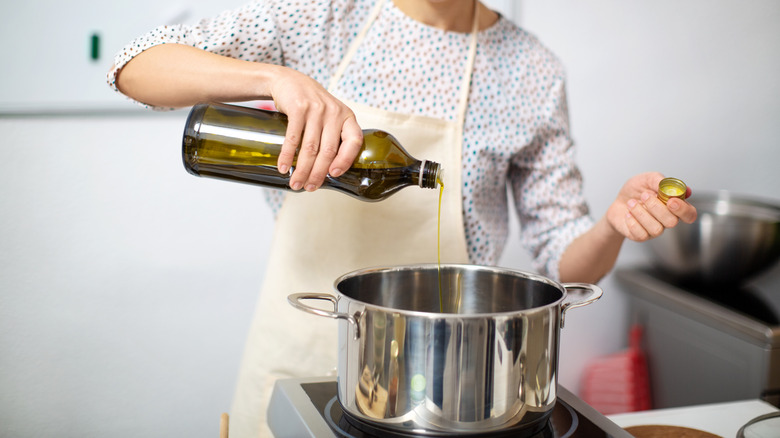
It should go without saying that storing flammable items underneath your oven is a no-no. But just in case you need the reminder: You should not keep anything flammable in the oven drawer, whether the drawer contains a heating element or is just meant for storage. Liquids and chemicals like oven cleaners, cooking oils, cleaning products, cooking sprays, and other flammable items can spill out and pose a fire hazard.
Compressed canisters or aerosol cans are also a major fire hazard. When exposed to high heat, they can explode, releasing dangerous toxins into the air and causing an injury or fire. Heat can not only affect the lifespan of different cooking oils and cause their quality to degrade, but it may also cause them to ignite if they spill. Any flammable liquids or aerosol cans should be stored in a cool, dark, dry place. It's a mistake to store cooking oil above the stove or below it, and the same applies to the oven; the best place to keep it is in a dark glass or metal bottle in your pantry or cabinet.
Cooking or baking ingredients like flour or spices
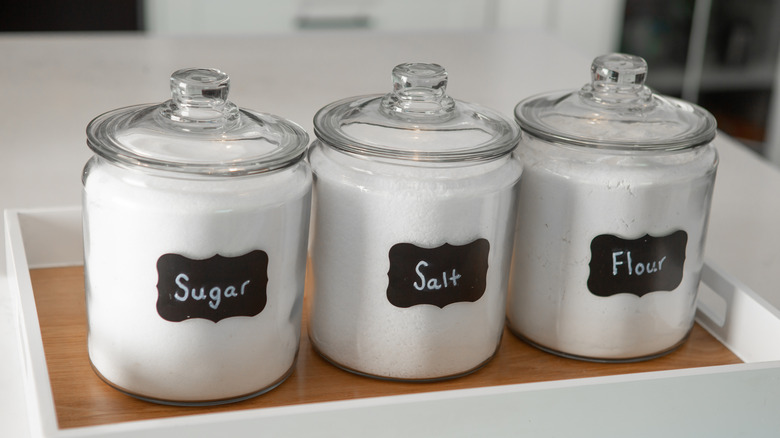
Flour, spices, and other cooking and baking ingredients can degrade if they are exposed to prolonged heat. The storage drawer under your oven may also become humid, and exposure to moisture can cause flour to mold and spices to lose their flavor and lump up. In addition, flour is an everyday pantry item that can literally explode under the right conditions. Flour is extremely flammable, and if it is exposed to high heat for long enough, it can ignite and catch other nearby items on fire. If it is airborne, a small spark can lead to a dangerous explosion. That's the last thing you want underneath your stove, especially if it's a gas stove.
Sugar, garlic powder, and cinnamon are also flammable under certain conditions. For those reasons, flour, sugar, and spices are items you should never store above the stove either. Instead, keep them in sealed, airtight containers on a kitchen shelf or in a cabinet or pantry.
Wooden cutting boards or utensils
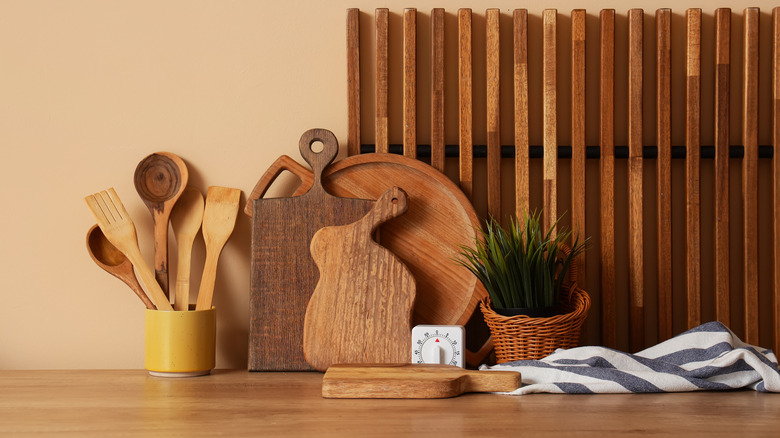
If wooden cutting boards are exposed to extremely high heat, they may warp and crack. If you want your cutting boards to last as long as possible, you should hand wash them, dry them thoroughly, and store them in a cool, well-ventilated area. Wooden utensils may also degrade faster if they are stored in an enclosed environment that is consistently hot. Intense heat and moisture can lead to warping, cracking, and mold growth, which is the last thing you want to happen to an item you're using to stir or serve food.
If you're short on space in your kitchen and don't want to store utensils or cutting boards on your counters, we have the perfect solution. This convenient spice rack hack makes it easy to organize wooden cutting boards in cabinets or your pantry for easy access. You can also use these genius tips, tricks, and hacks to organize wooden cooking utensils and free up valuable countertop space in your kitchen — without having to store them in the oven drawer.
Plastic cooking, baking, or food storage items
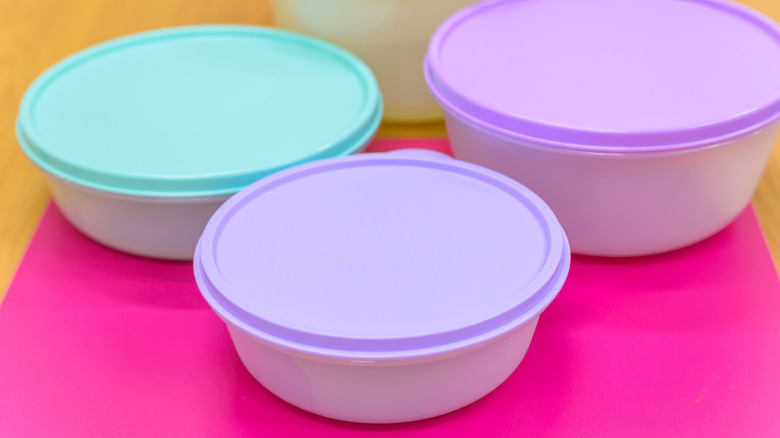
It's a good rule of thumb to avoid storing anything plastic in the drawer underneath your oven. Plastic wrap, plastic cutting boards and cooking utensils, plastic food storage containers and lids, and any cookware or bakeware with plastic parts should be stored elsewhere, away from heat and flame. If plastic is exposed to high heat, even for a short period of time, it can warp and melt. This could lead to a fire, and release dangerous and toxic chemicals into the air or even into food that you're cooking in the oven above. Thin plastic items, like plastic wrap or storage container lids, are even more vulnerable.
High heat can also degrade plastic, making it brittle and unusable. This is especially dangerous for plastic cooking utensils, cutting boards, and storage containers, as it could result in plastic pieces ending up in your food. Because plastic cutting boards aren't that safe in general, you might consider ditching yours for a healthier and more eco-friendly alternative, like bamboo. To safely organize and store plastic food storage containers, wraps, lids, and utensils, you can always use some of these pantry storage hacks that will keep your kitchen both cute and organized, as well as safe.