

No-Knead High Protein Bread (No Protein Powder Needed) Recipe
We may receive a commission on purchases made from links.
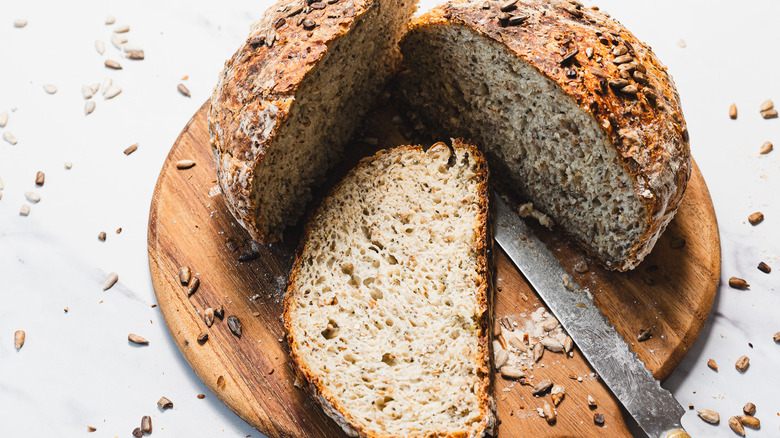
Give your favorite sandwich a protein boost with our no-knead high-protein bread recipe. Hearty, delicious, and made with only natural ingredients and not a grain of protein powder in sight, this bread will give a whole new meaning to effortless baking.
Brought to us by recipe developer Ksenia Prints of At the Immigrant's Table, who's been baking bread long before the pandemic popularized it, this bread gets its protein not from added powders but from seeds and grains that are folded straight into the dough. With whole food ingredients like chia seeds, hemp hearts, flax seeds, and Greek yogurt, we manage to naturally increase the protein content while also adding texture and flavor. This results in a bread that feels toothsome and wholesome, and which requires minimal effort for maximum nutrition.
The beauty of this recipe truly lies in its simplicity. You mix the ingredients, find a quiet, dark, and warm corner, and let time do the work. A quick bake in a preheated Dutch oven, and you've got yourself a hearty loaf that's perfect for breakfast toast, in sandwiches, or alongside soup.
Gather the ingredients for this high-protein bread
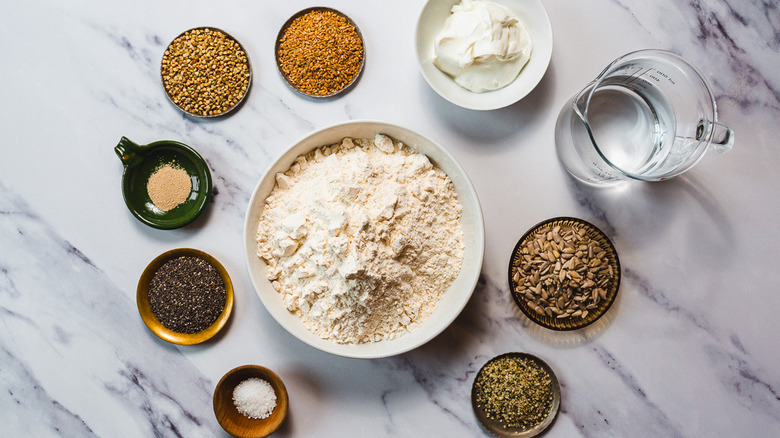
To make this high-protein no-knead bread, you will need bread flour for elasticity and gluten development. For the protein components, in place of protein powder, we will be using a mix of chia seeds, buckwheat groats, hemp hearts, flax seeds, sunflower seeds, and Greek yogurt. To complete the bread, you'll also need sea salt, active dry yeast, and room-temperature water.
Step 1: Mix the dry ingredients
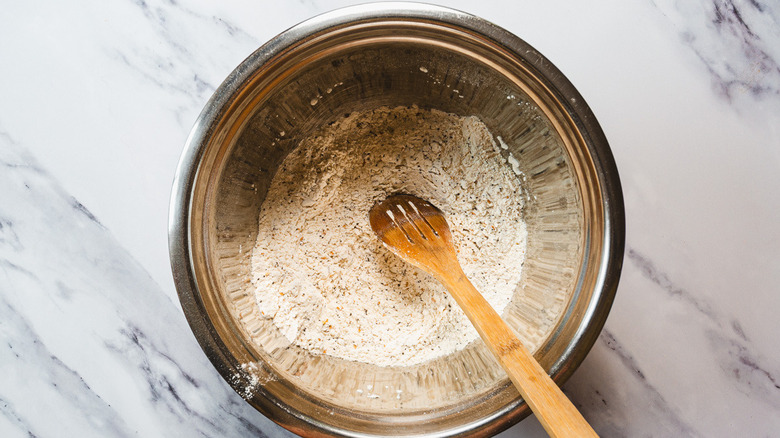
In a large mixing bowl, combine the bread flour, chia seeds, buckwheat groats, hemp hearts, flax seeds, sunflower seeds, sea salt, and yeast. Stir until well mixed.
Step 2: Add the wet ingredients
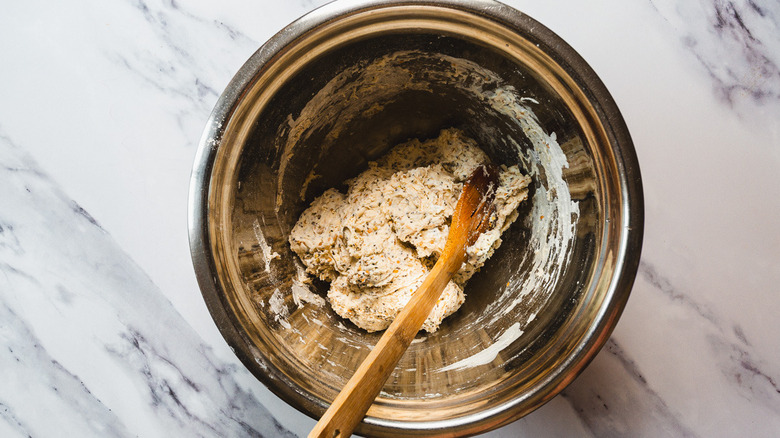
Add the water and Greek yogurt to the dry ingredients and mix with a wooden spoon or your hand until a sticky, shaggy dough forms and no dry flour remains. The dough should be wet but manageable. If it feels too stiff, you can add a tablespoon or two of water.
Step 3: Let the dough ferment
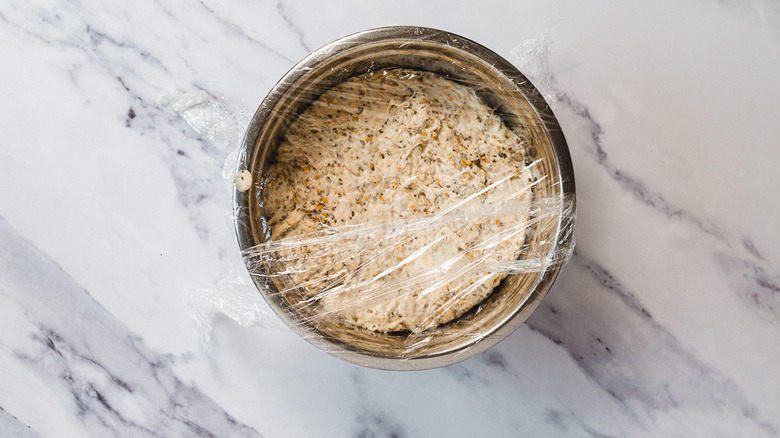
Cover the bowl tightly with plastic wrap and let the dough rest at room temperature (about 70 F) for 12 to 18 hours, until the surface is bubbly and the dough has doubled in size.
Step 4: Prep a working area
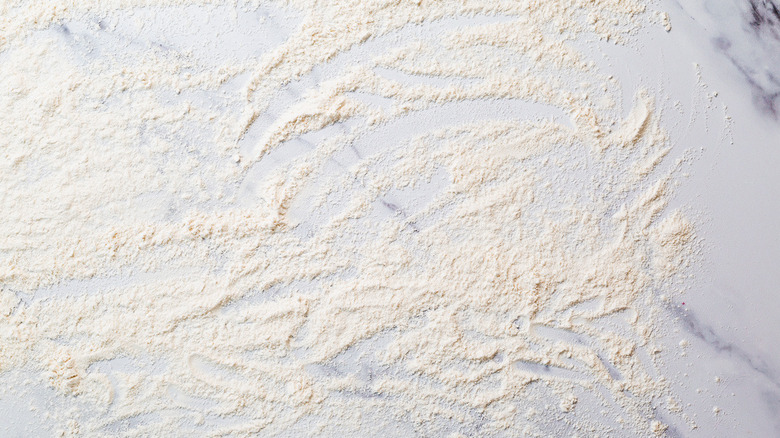
Lightly flour a clean work surface.
Step 5: Turn out the dough
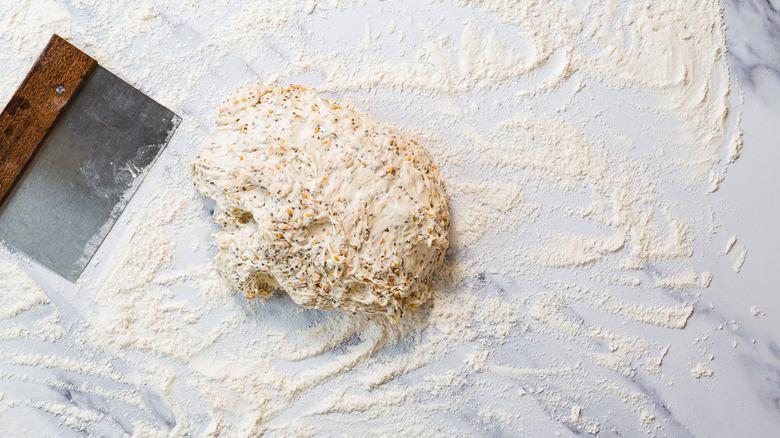
Use a spatula or dough scraper to gently turn the dough out onto the surface.
Step 6: Fold the dough
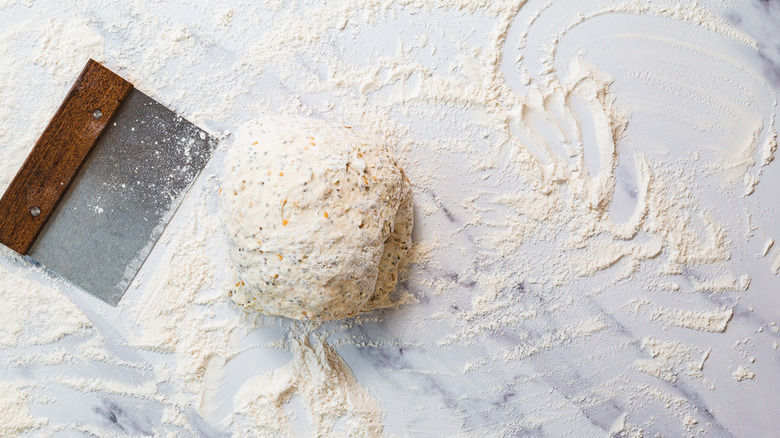
With floured hands, fold the dough over onto itself two or three times to form a rough ball. Let it rest, uncovered, for 15 minutes.
Step 7: Shape into a ball
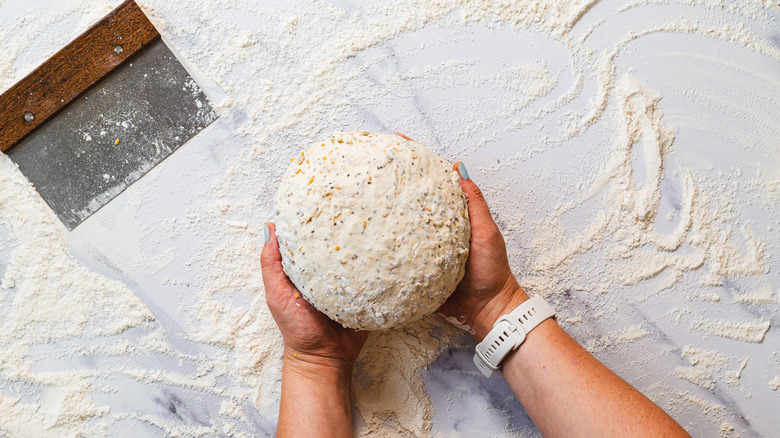
Shape the dough into a tight ball by folding the edges toward the center and pinching them together.
Step 8: Prep parchment paper
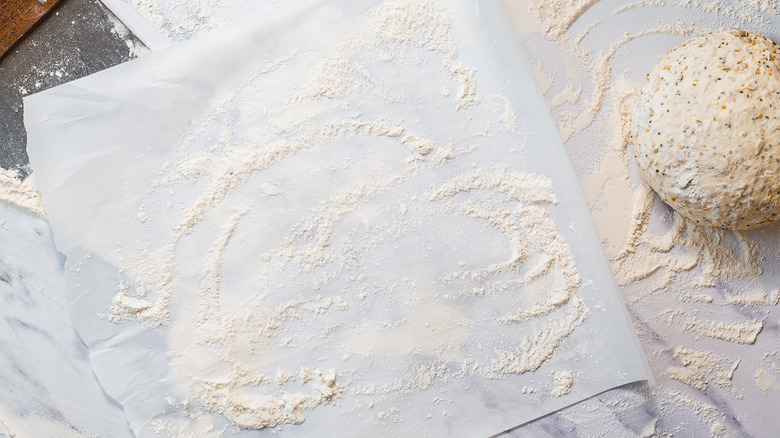
Place a sheet of parchment paper on the counter and dust it lightly with flour.
Step 9: Transfer the dough onto parchment
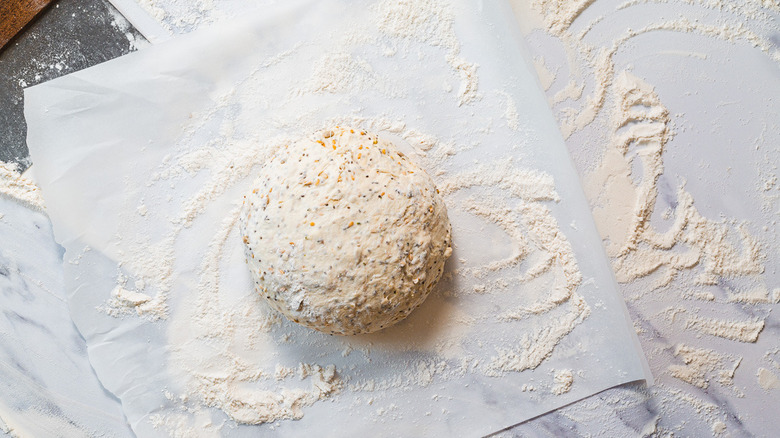
Place the dough seam-side down on the parchment.
Step 10: Sprinkle with more seeds
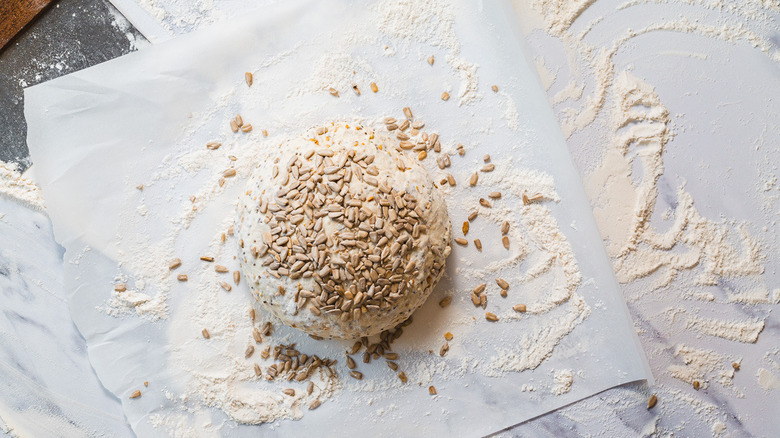
Sprinkle the top with additional sunflower seeds.
Step 11: Cover and proof
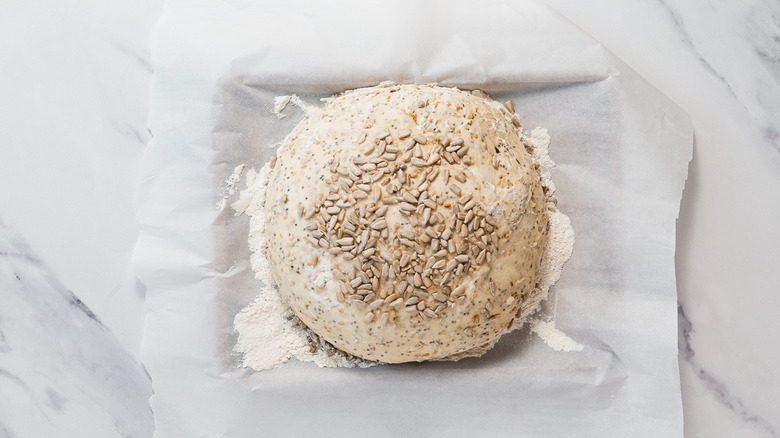
Cover the dough loosely with a clean kitchen towel and let it rise at room temperature for 1 to 2 hours, until doubled in size and the dough holds an indentation when gently pressed.
Step 12: Preheat the oven
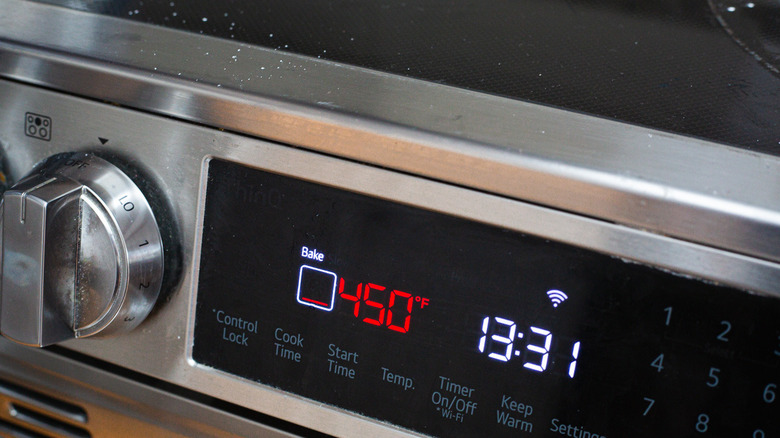
Place a lidded 6–8 quart Dutch oven and preheat the oven to 450 F.
Step 13: Transfer dough to the Dutch oven
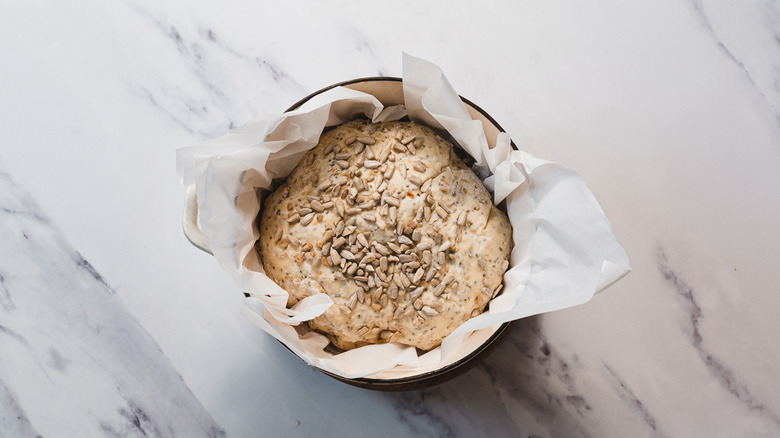
When the dough is ready, carefully remove the hot Dutch oven from the oven. Lift the dough using the edges of the parchment paper and lower it into the Dutch oven. Cover with the lid.
Step 14: Bake the loaf
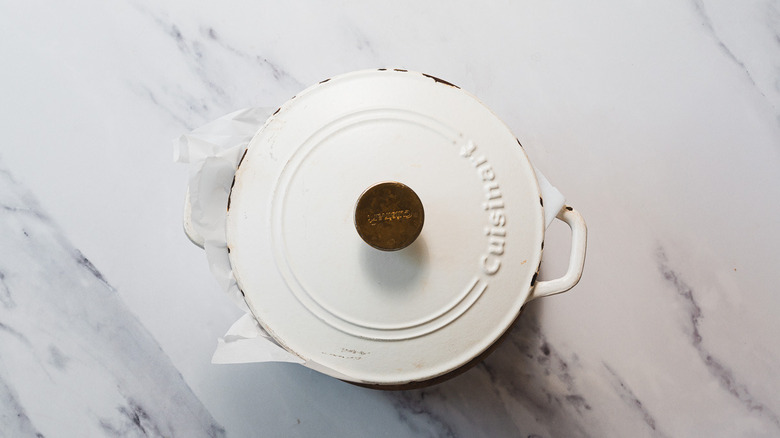
Bake for 30 minutes with the lid on.
Step 15: Remove the lid and finish baking
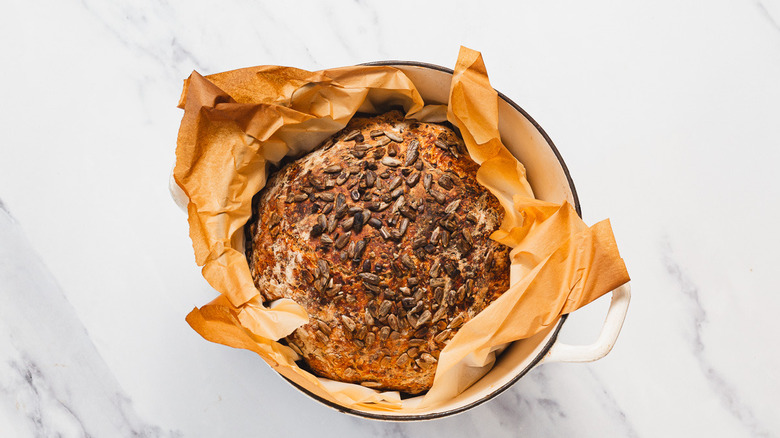
Remove the lid and continue baking for 15 minutes, until the bread is deep golden brown and the crust is crisp.
Step 15: Take the bread out
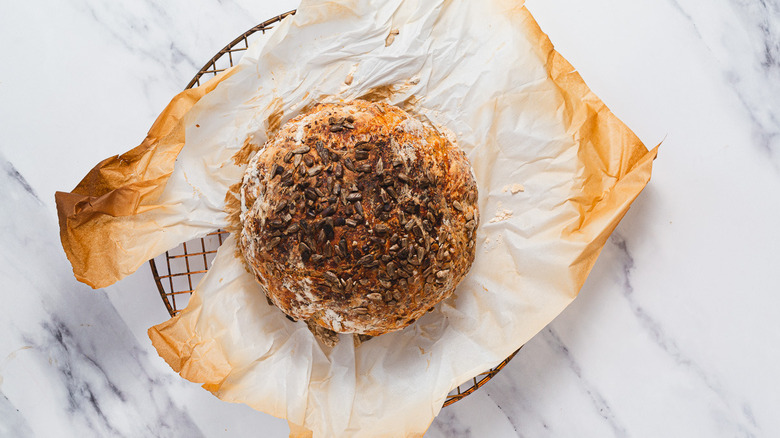
Use the parchment to lift the bread out of the Dutch oven before placing it on a wire rack.
Step 16: Let cool and serve the high-protein bread
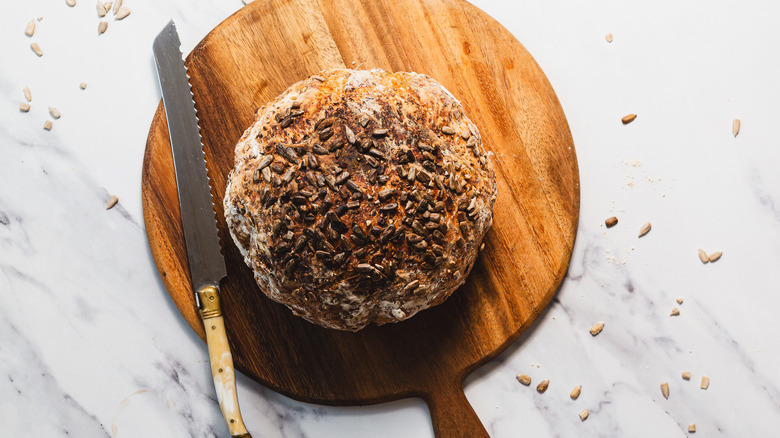
Let the bread cool completely before slicing.
What can I serve with this no-knead high protein bread?
No-Knead High Protein Bread (No Protein Powder Needed) Recipe
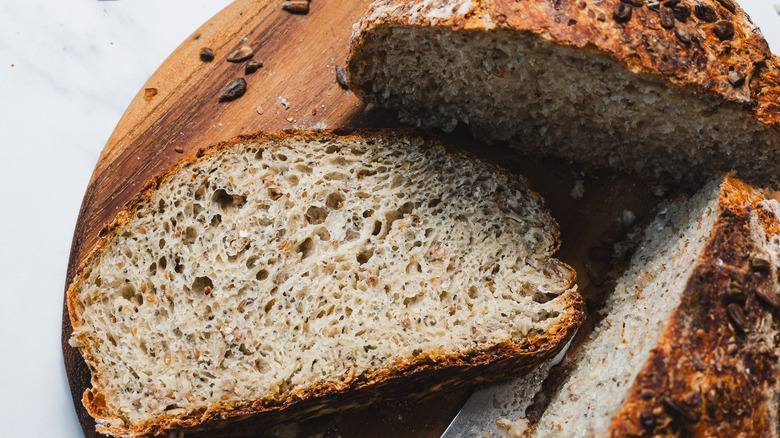
Achieve maximum nutrition with minimal effort and no protein powder in our hearty no-knead high-protein bread recipe, chock full of seeds, grains, and yogurt.
Ingredients
- 3 cups bread flour
- 2 tablespoons chia seeds
- 2 tablespoons buckwheat groats
- 1 tablespoon hemp hearts
- 2 tablespoons flax seeds
- ¼ cup sunflower seeds, plus more for topping
- 1 teaspoon sea salt
- ½ teaspoon active dry yeast
- 1 ½ cups water, room temperature (reduce by ¼ cup)
- ½ cup plain Greek yogurt (full-fat or 2%)
Directions
- In a large mixing bowl, combine the bread flour, chia seeds, buckwheat groats, hemp hearts, flax seeds, sunflower seeds, sea salt, and yeast. Stir until well mixed.
- Add the water and Greek yogurt to the dry ingredients and mix with a wooden spoon or your hand until a sticky, shaggy dough forms and no dry flour remains. The dough should be wet but manageable. If it feels too stiff, you can add a tablespoon or two of water.
- Cover the bowl tightly with plastic wrap and let the dough rest at room temperature (about 70 F) for 12 to 18 hours, until the surface is bubbly and the dough has doubled in size.
- Lightly flour a clean work surface.
- Use a spatula or dough scraper to gently turn the dough out onto the surface.
- With floured hands, fold the dough over onto itself two or three times to form a rough ball. Let it rest, uncovered, for 15 minutes.
- Shape the dough into a tight ball by folding the edges toward the center and pinching them together.
- Place a sheet of parchment paper on the counter and dust it lightly with flour.
- Place the dough seam-side down on the parchment.
- Sprinkle the top with additional sunflower seeds.
- Cover the dough loosely with a clean kitchen towel and let it rise at room temperature for 1 to 2 hours, until doubled in size and the dough holds an indentation when gently pressed.
- Place a lidded 6–8 quart Dutch oven and preheat the oven to 450 F.
- When the dough is ready, carefully remove the hot Dutch oven from the oven. Lift the dough using the edges of the parchment paper and lower it into the Dutch oven. Cover with the lid.
- Bake for 30 minutes with the lid on.
- Remove the lid and continue baking for 15 minutes, until the bread is deep golden brown and the crust is crisp.
- Use the parchment to lift the bread out of the Dutch oven before placing it on a wire rack.
- Let the bread cool completely before slicing.
Nutrition
| Calories per Serving | 220 |
| Total Fat | 5.5 g |
| Saturated Fat | 1.0 g |
| Trans Fat | 0.0 g |
| Cholesterol | 1.9 mg |
| Total Carbohydrates | 34.3 g |
| Dietary Fiber | 3.1 g |
| Total Sugars | 0.7 g |
| Sodium | 199.1 mg |
| Protein | 8.3 g |

How does a no-knead bread rise sufficiently?
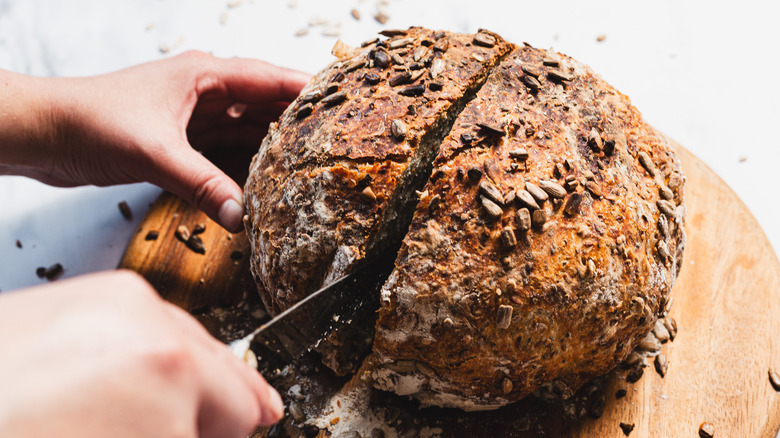
If you've seen recipes for no-knead bread and always wondered how they worked, then you might be surprised to learn that the science behind this approach is actually rather simple. This technique became popular when Jim Lahey of Sullivan Street Bakery published his eponymous no-knead bread recipe in The New York Times, sparking a craze for Dutch oven-made bread. So yes, the effect of this unique baking dish does matter, because it works to lock the steam inside the cast-iron pot and keep it from escaping, ensuring a crispy crust. But there are other factors at play in making this a no-knead recipe.
The key to no-knead bread is the high-hydration dough, which is wetter and stickier than your average bread dough. This dough is then given extra time to ferment (not unlike sourdough), which results in the development of the gluten structure that normally comes from vigorous kneading. So, in other words, water, air, and patience are the three most important principles to no-knead bread.
And if you've wondered particularly about the wait, it's because the initial 12-18 hours are essential for developing both the structure and the flavor of our bread. The second rise helps the bread develop its final volume and structure, just like with traditional kneaded bread.
Can you bake this bread without using a Dutch oven?
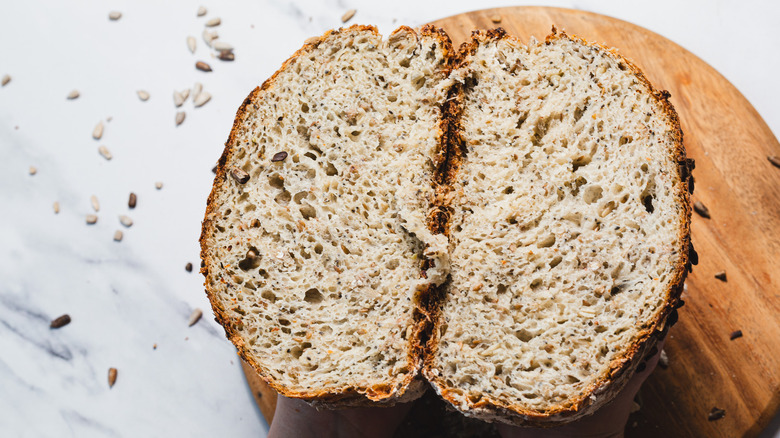
This recipe turns to the Dutch oven for baking, and if you aren't sure what it is or how to use it, then you'll be glad to learn that you can still bake this bread even if you don't have one. The results may slightly differ, but the bread will still be delicious.
The Dutch oven creates a steam chamber that helps the bread produce a crispy crust and get maximum oven spring. Without it, you'd need to create steam in your oven. This can be done by preheating a pizza stone at 450 F, then placing a metal pan filled with hot water on the oven's bottom rack in order to generate steam. You can remove the pan after 15 minutes, and let the bread finish baking.
Another approach is to bake the bread in a covered casserole dish or roasting pan, and spray the oven walls with water immediately after placing the loaf inside. You could also cover the bread with an upside-down metal bowl for the first 30 minutes of baking, effectively trapping the steam inside. The downside is that with all these methods, the shape of your bread may be a bit more droopy and flat without the structure of the Dutch oven. That said, it'll still be delicious and packed with protein.