

10 Mid-Century Modern Kitchens To Inspire Your Next Remodel

We may receive a commission on purchases made from links.
A blast from the past is a magical way to breathe life into worn kitchens. There's something homely about incorporating nostalgic touches into sleek remodels. And for fun-yet-functional appeal, what better period to revisit than the mid-century?
Let's set the scene: Mid-century modernism began as a reaction to the end of World War II. There was a noticeable turn toward nature through organic materials, and homeowners were shrugging off rigid Victorian design by embracing bright or earthy colors. Picture an emphasis on the experiential. Whether it was textured wood paneling or shiny brown appliances, mid-century designs aimed to start afresh.
Let's be honest: not everything is worth rewinding the clock (for example, there's a list of retro dishes we're glad aren't popular anymore). Furthermore, adding too many vintage features runs the risk of designing a dated-looking kitchen. Keep a selective eye and a light hand. Brush up on trusty tips for mixing modern and vintage in your kitchen, and aim to select tasteful retro elements to weave into modern designs. Stuck for ideas? Here's a collection of beautiful mid-century touches to add character to modern canvases.
Checkered floors
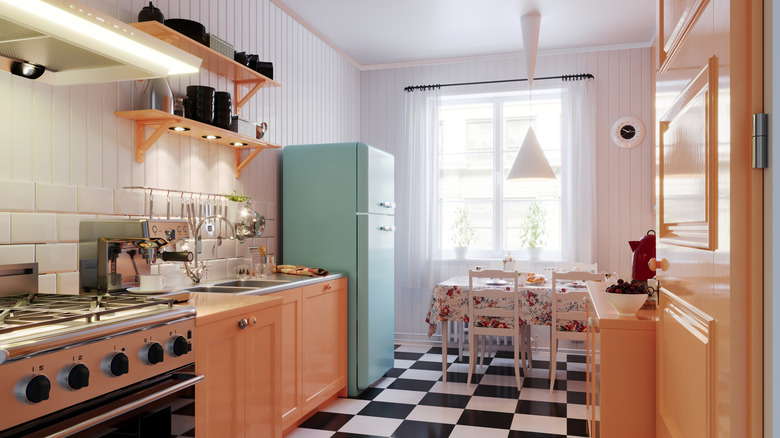
The classic checkerboard design is here to stay. This revered monochromatic pattern is an effective addition when bridging the delicate space between modern and vintage. Similarly, it's smart to prioritize flooring, which is one of the most efficient ways to design the retro kitchen of your dreams. This design doesn't need to cost the world; peel-and-stick floor tiles cost under $20 online, such as these FloorPops x Chris Loves Julia tiles.
Mint green cabinets
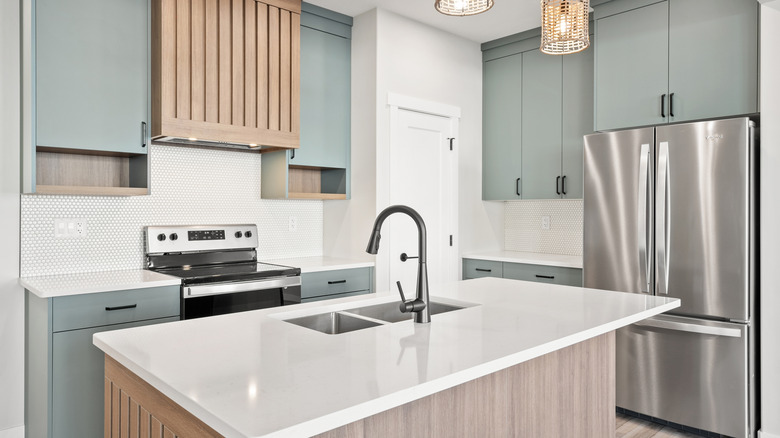
The mid-century era wasn't averse to a pop of color, especially in pastel tones. Retro kitchens often featured painted cabinetry. To blend 21st-century preferences with a touch of mid-century influence, consider adding matte, rather than glossy, mint green. Anyone who has renovated mid-century houses will have found traces of this familiar color; mint green had celebrity status.
Wood-paneled walls
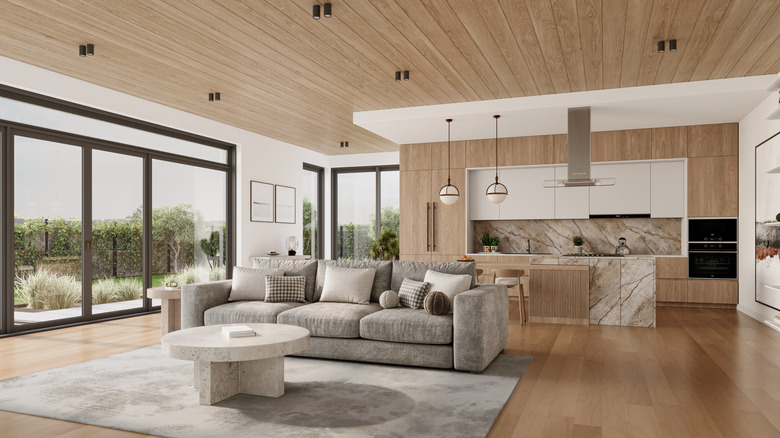
As mid-century homeowners craved closer connections with nature, it's no wonder that wood paneling exploded in popularity. Oak and teak were common contenders, and designers would regularly add wall and ceiling panels — encasing the kitchen in wood. Let's face it, the honey-toned woods of the '50s have lost their allure. However, adding different tones of wood is a smart way to modernize this nature-drenched trend.
Transparent cabinets and bright colors
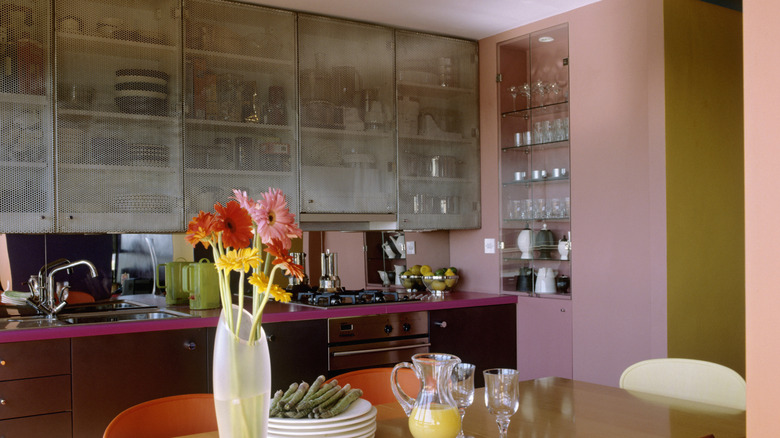
Mid-century designs weren't shy, especially when displaying cookware. Open shelving is the simplest way to tap into this design, but mesh or glass-covered cupboards are other options. After memorizing the beloved mid-century cookware to look for at thrift stores and estate sales, who could blame you for showing it all off? We're looking at you, Dansk Købenstyle stock pot ... literally.
Novelty-driven range hood designs
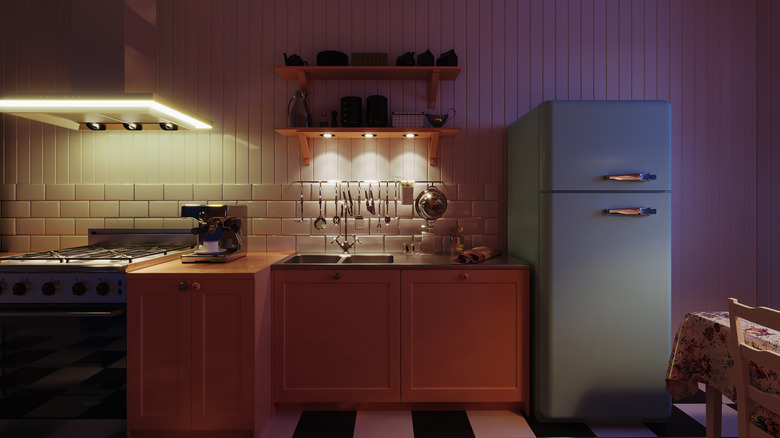
Although they've become an essential kitchen feature, range hoods were only invented in the 20th century, gaining popularity in the 1950s and '60s as a key part of creating more comfortable cooking spaces. Older hoods didn't quite meet modern-day standards (imagine the overstimulation from even louder extractor fans), but why not tap into that original sense of novelty? You can easily find modern hoods featuring the clean lines and sleek trim that defined the mid-century look.
Harvest gold cabinets
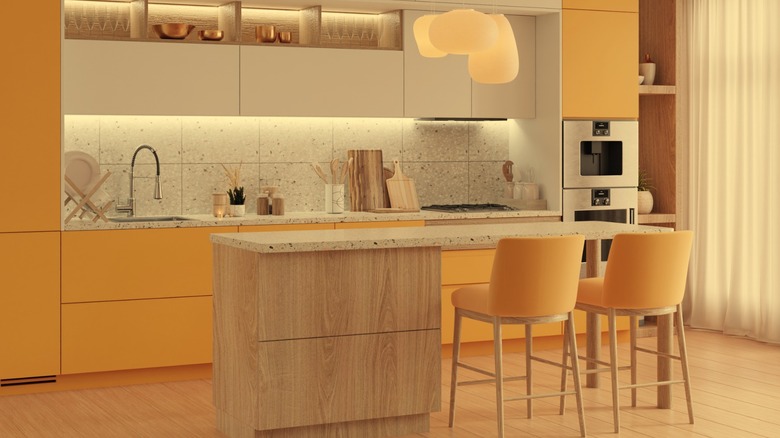
Whisk your focus forward to the 1970s, as the mid-century was drawing to a close. It's no secret that homeowners of this period loved honey tones, especially when painting cabinets. One of the most popular choices of the '70s, though, was harvest gold. To embrace a retro color palette (without accidentally designing a dated-looking kitchen), choosing the right cabinet finish is essential. Glossier finishes were rife in mid-century designs, but matte looks can help bridge the gap between modern and vintage styles.
Laminate countertops
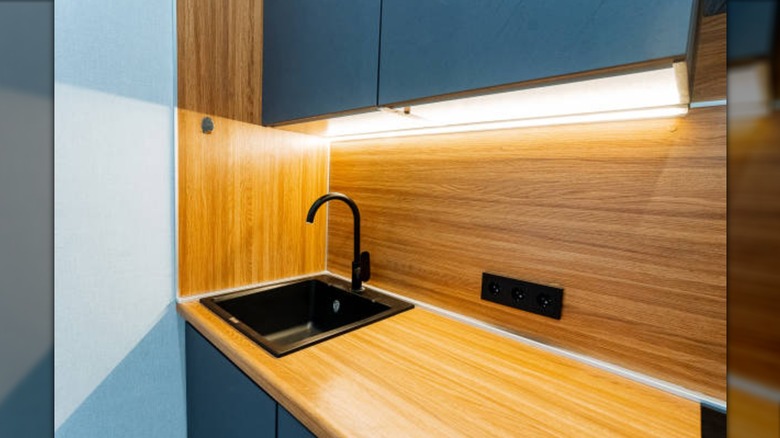
In hot pursuit of sleek designs, mid-century homeowners turned to a trusted material: laminate. This synthetic material is a real crowd-divider; you love it or hate it. Still, after reviewing the different types of kitchen countertop materials, there's no denying laminate's functionality and affordability, especially compared to buying real wood or stone. Proceed tentatively.
Brown appliances
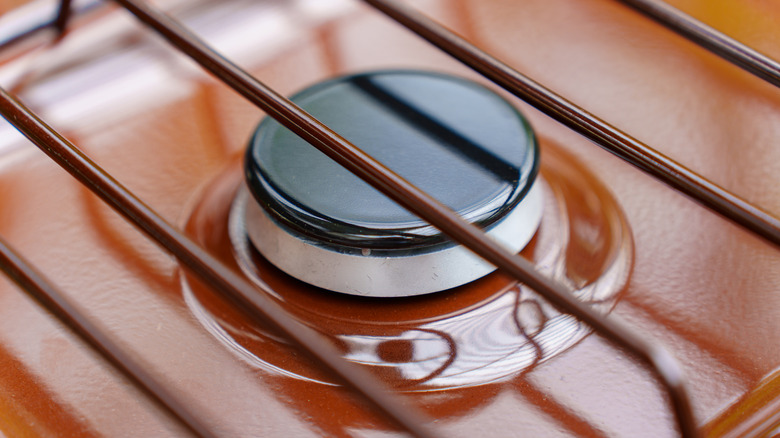
By the '60s, chocolate-colored appliances were all the rage — and given the resurgence of brown kitchens in 2025, there's no better time to weave this color into your cooking space. There are plenty of brands that offer stylish retro appliances; envision microwaves, cookers, and coffee machines in chocolate tones.
Patterned backsplashes
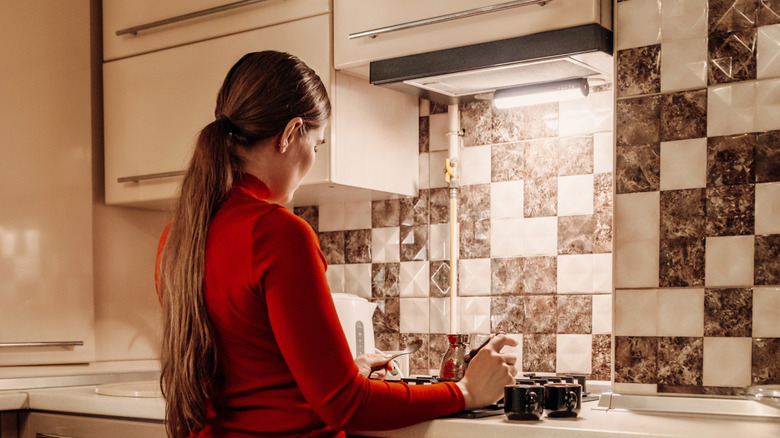
Backsplashes are undergoing a metamorphosis, and patterned designs are among the kitchen trends we are excitedly following in 2025. In fact, those eye-catching patterns are the 1970s kitchen design trend we're glad made a comeback. The blending of a geometric aesthetic with earthy tones, for example, is a prime example of this trend.
Curved countertops and gloss finishes
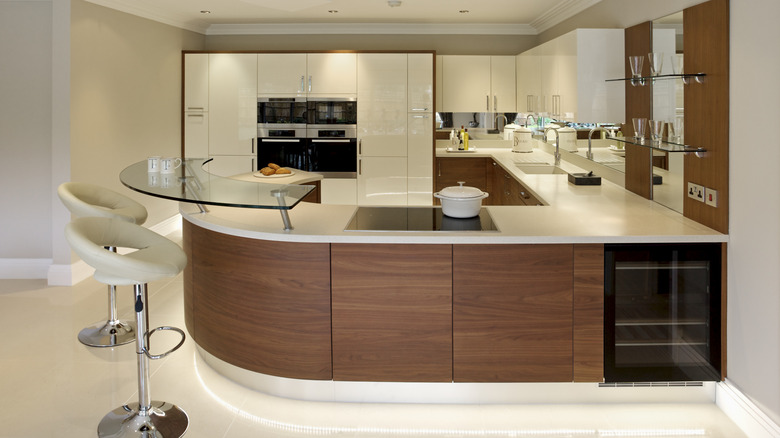
To achieve a sleek aesthetic, sometimes you've got to bend the rules. In its rebellion against the uniform designs of the Victorian era, mid-century design was all about playing with form — incorporating elements like curved countertops or furniture. Modern adaptations embrace this by featuring glossy surfaces and flowing layouts, both key staples of the mid-century era.