

The Biggest Fast Food Chains Of The 1970s
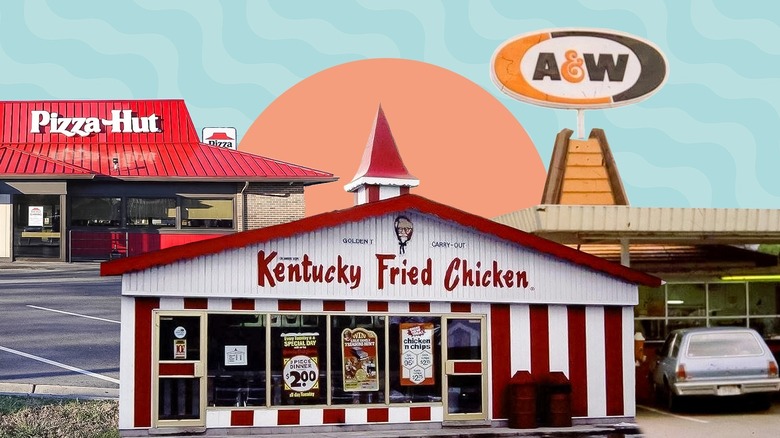
Nowadays, it's hard to leave the house without seeing a fast-food chain of some sort. According to Ibis World, there were more than 213,000 fast-food restaurants in the U.S. alone as of 2024. But it hasn't always been this way.
The fast-food industry that we know today started to take root in the 1940s, 1950s, and 1960s, with many major chains getting their start in these decades. But it was in the 1970s that the industry really started to expand. Many Americans look back on this decade with fondness, remembering heading to Pizza Hut, McDonald's, or Arby's to fill up on fast-food classics while they dined with family, friends, or first dates.
Want to take a trip down memory lane? We're rounding up some of the biggest fast-food chains of the 1970s. Some are no longer with us, but plenty have stood the test of time and are still part of the fast-food landscape today.
Pizza Hut
Today, Pizza Hut is one of the biggest pizza chains in the world. In fact, it has more than 20,000 locations in more than 110 countries and territories. But it all started with just one restaurant in Wichita, Kansas. Brothers Frank and Dan Carney were studying at Wichita University in 1958 when they decided to start their own pizza joint, with the help of a $600 loan from their mom.
The Carneys were on to something big. While it was originally seen as an Italian immigrant food, by the 1950s, pizza was quickly becoming one of America's favorite dishes. By the 1970s, pizza was a firm household staple, and the Carneys' humble Wichita restaurant had expanded into one of the biggest pizza restaurant chains not just in the U.S., but in the entire world.
Many people have fond memories of the chain's 1970s rustic interior, the focus on dining in, and strong family-friendly vibe, as well as the salad buffets and even live music performances inside the restaurants. By the 1980s, Pizza Hut had started to pivot to a new business model, focusing more on delivery and less on the unique, family-friendly dine-in experiences that were enjoyed by so many across the U.S.
A&W
Now, when you think of the biggest fast-food chain on the planet, your mind probably goes straight to McDonald's. But it hasn't always been this way. Back in the 1970s, A&W was actually even bigger than McDonald's, with around 2,400 restaurants across the U.S.
The chain had a head start on the Golden Arches. It was founded in 1919 by Roy W. Allen, more than two decades before the first McDonald's. Back then, it was just a humble root beer stand, but after partnering with Frank Wright and becoming A&W, Allen franchised the chain in the 1920s, and by the 1970s, it was a popular drive-in spot. Its root beer continued to be iconic, alongside its Original Bacon Cheeseburgers and Rooty the Great Root Bear mascots (which were launched in 1974).
For some growing up in small-town America in the 1970s, A&W was one of the only fast-food options available. When many look back on the chain during this decade, they envision sipping on root beer floats in frosted glass mugs with their loved ones, munching on burgers, and filling up on side orders of everything from fish and chips to tacos.
McDonald's
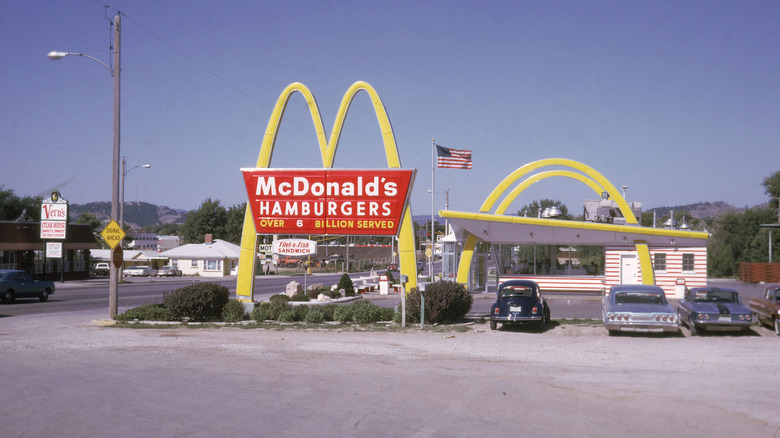
Of course, we can't talk about major fast-food chains without talking about McDonald's. It might not have been the biggest in the 1970s, but it was certainly on its way up. Founded in the 1940s, by 1971, McDonald's had sold more than 7 billion hamburgers.
The 1970s were big for the fast-food chain. Not just because of all the burger sales, but because this was the decade that McDonald's started morphing into the go-to fast-food destination we all know today. In 1971, the first Egg McMuffin was sold in Santa Barbara, California, for example. By 1977, the chain had an entire breakfast menu (just under 40 years later, McDonald's was voted as the go-to for breakfast for 44% of Americans).
The 1970s was also the decade that McDonald's launched the Quarter Pounder, which remains one of its most popular menu items today. The era also saw the very first McDonald's drive-thru, as well as its first restaurant PlayPlaces.
Shakey's Pizza
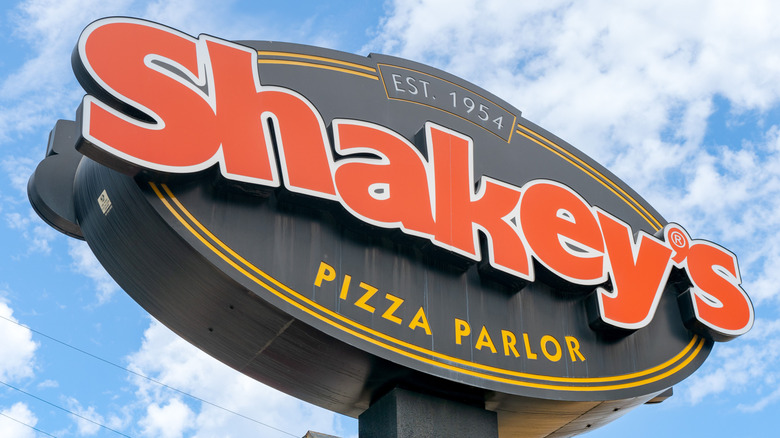
In 1954, Sherwood "Shakey" Johnson opened the very first Shakey's Pizza Parlor (then known as Ye Public House) in Sacramento, California. The joint specialized in two key menu items: Pizza and beer. But it wasn't just a place to eat and drink, it was also where locals went to socialize and dance to live Dixieland jazz.
In the decades that followed, Shakey's Pizza grew into the first franchise pizza chain, with nearly 300 locations across the U.S. by the late '60s. It became the ultimate hangout destination, mainly for teens, but also families, too. Many Americans look back on Shakey's Pizza in the 1970s with a feeling of nostalgia, remembering happy evenings eating pizza with family and friends, attending children's birthday parties, and even gathering around the piano player to sing.
Shakey's Pizza wasn't just big in the U.S. in the 1970s; this was also the decade that the chain expanded into Japan and the Philippines for the first time. While Shakey's popularity has waned in America, with now just over 60 restaurants in Southern California, it is still big in the Philippines. It currently has more than 300 locations in the country.
KFC
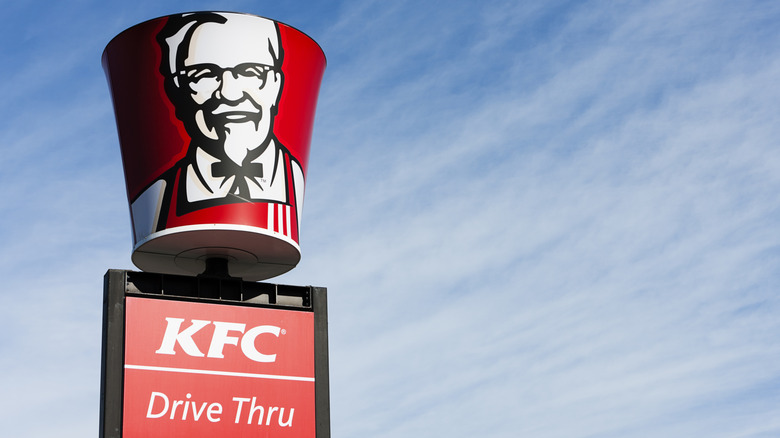
If you want to get an idea of how big KFC was in the 1970s, here's a fun fact for you: In 1976, the Colonel was named the second most recognizable celebrity in the entire world. The Colonel, of course, is Colonel Harland Sanders, the founder of the fried chicken chain and creator of its signature secret blend of 11 herbs and spices.
Sanders started the first restaurant in Utah back in 1952, and over the course of the 1950s and 1960s, KFC expanded rapidly. More restaurants opened across the U.S., as well as internationally, in countries like Canada, Mexico, the U.K., the Philippines, and Australia. By the time 1970 rolled around, KFC had around 3,000 restaurants in nearly 50 countries. Today, that footprint has expanded to more than 30,000 restaurants and 150 countries.
When many Americans look back on KFC in the 1970s, they think of the iconic rotating buckets outside of the restaurants, and their parents coming home with a feast of fried chicken after a long day. Many say the food was cheaper and tastier back then, with bigger portions and less grease.
Burger Chef
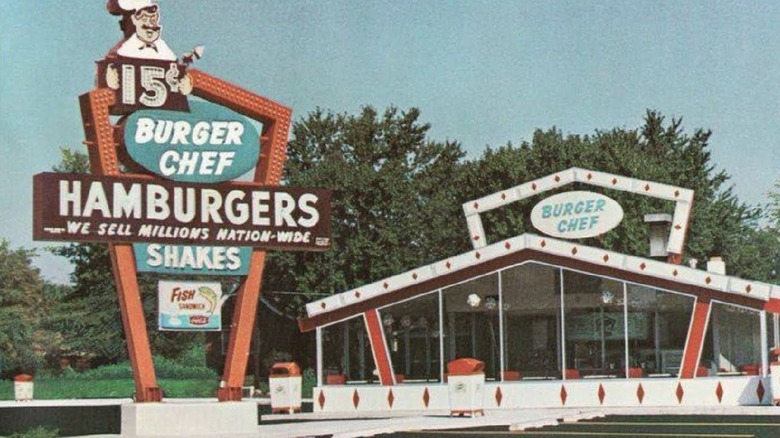
If you went to McDonald's as a child, the chances are you were treated to a Happy Meal. But did you know that the idea for a special children's fast-food meal probably wasn't actually McDonald's idea? It turns out, Happy Meals were likely inspired by a totally different fast-food chain called Burger Chef, which was popular in the 1970s for its Fun Meals.
Burger Chef was founded in Indianapolis in 1957, and by 1965, it had 500 stores across the U.S. slinging burgers, fries, and shakes. In the 1970s, it created cartoon characters to appeal to more children, as well as its Fun Meals. It also likely inspired the Big Mac with its Big Shef burger, which featured two hamburgers, cheese sauce, and lettuce. In fact, Burger Chef got so frustrated with McDonald's stealing its ideas that it actually filed a lawsuit against the fast-food giant (which was ultimately dismissed).
Still, despite the competition, Burger Chef had a loyal following back in the 1970s. Many Americans feel nostalgic about visiting their local restaurant on the way home after a family day out. The last Burger Chef restaurant closed its doors in Michigan in 1996.
Taco Bell
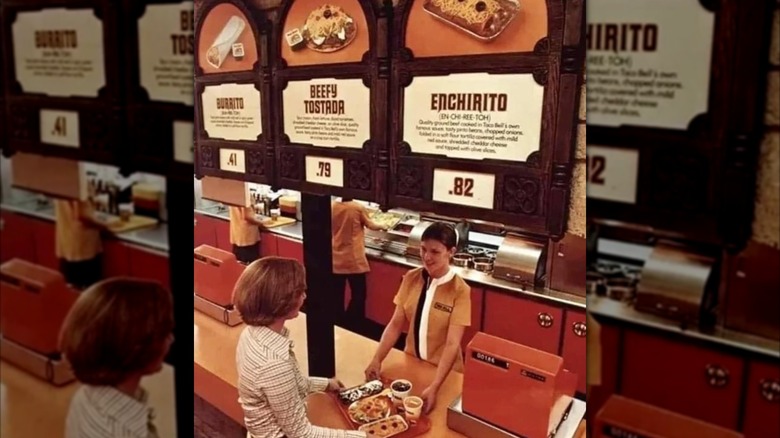
The very first Taco Bell opened back in the early 1950s. The owner, Glen Bell, had been inspired by the success of a local Mexican American cafe selling hard-shell tacos, and decided to take the idea for himself. The original eatery, named Mitla Cafe, is still standing today, but it is dwarfed by the number of Taco Bells on the planet. Right now, that number stands at more than 8,750.
That controversial start (stealing recipes from a Mexican business), didn't hinder Taco Bell's success. Bell's business model was a hit, and by the 1970s, his restaurant chain had nearly 400 locations across the U.S. By the end of the decade, that figure had tripled, and PepsiCo ended up buying the chain for $125 million.
In the 1970s, the menu featured the chain's signature hard-shell tacos, of course, as well as tostadas, burgers, and the hugely popular Enchiritos. A mix between a burrito and an enchilada, the Enchiritos, which are no longer available but occasionally make a comeback, are one of the most nostalgic menu items for many people.
Dog n Suds
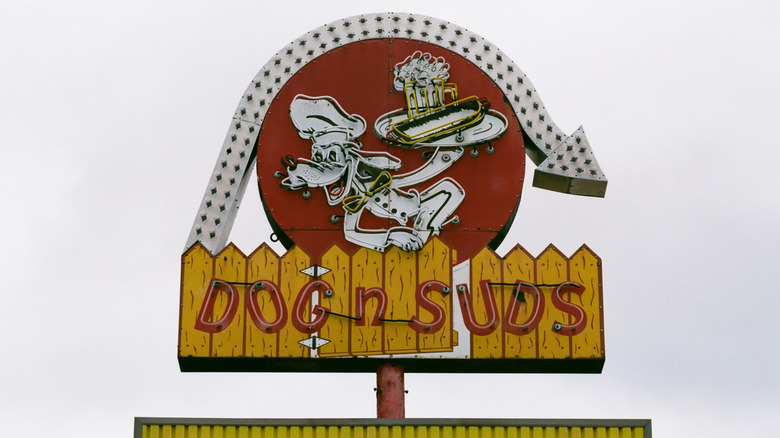
If you were after a 1950s-style drive-in restaurant in the 1970s, Dog n Suds (nicknamed Arf and Barf) was the place to be. Just like A&W, it specialized in frosted mugs of root beer and fast-food classics. Its signature offering was Coney Dogs, but it also served up a range of menu items, like french fries, burgers, shrimp baskets, and fish sandwiches, too.
The chain was first founded in Illinois in 1953 by two high school teachers, Don Hamacher and Jim Griggs, and it stayed true to its roots long after the decade was over. Even today, its 11 remaining locations in the U.S. have the same look and feel as they did more than 70 years ago.
Back in the 1970s, there were around 650 locations of Dog n Suds across the U.S. Many remember them for the aesthetic and the food, of course, but also because they were the ultimate hangout location for teens and young people on a Friday or Saturday night.
Burger King
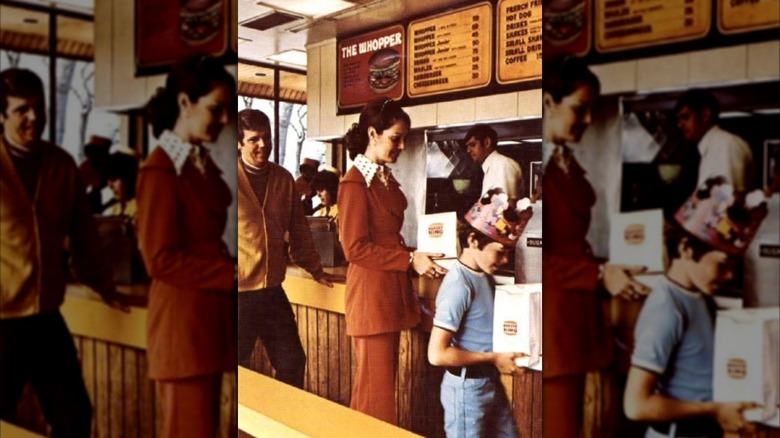
After McDonald's, Burger King is arguably the next biggest name in American fast food. It has 20,000 locations around the world, and more than 6,600 of those are in the U.S. Another fun fact: Every year, it sells around 1.3 billion Whoppers globally.
The chain has been a firm favorite for decades. Burger King was founded back in Miami in the 1950s by James W. McLamore and David Edgerton, and by 1977, it had opened its 2,000th location in Hawaii, giving it a presence in every state in America.
One of the biggest reasons why Burger King accelerated in popularity in the 1970s was its hugely successful "Have It Your Way" campaign. The campaign not only birthed one of the most iconic taglines in advertising history, but the slogan also helped to separate the burger giant from its rival, McDonald's. (Unlike Burger King, McDonald's wasn't so lenient with order customization).
Arby's
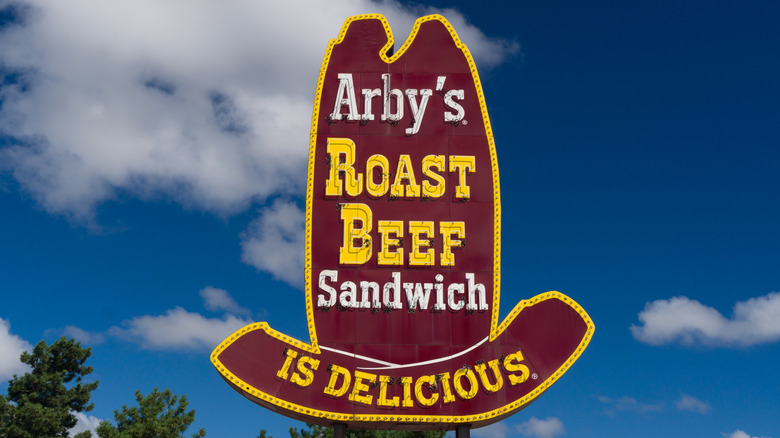
The beginning of 1970 was difficult for Arby's. The fast-food chain, which specialized in roast beef sandwiches rather than burgers like its rivals McDonald's and Burger King, was in a lot of debt, and in 1970, it was declared bankrupt. But its founders, Forrest and Leroy Raffel, who started the company in Ohio in 1964, were not ready to give up.
The Raffels took the bankruptcy as an opportunity to reorganize the company, and their efforts were hugely successful. Before bankruptcy, in the 1960s, Arby's had more than 300 locations across the U.S., but by 1979, despite its financial difficulties, the chain had expanded to more than 800 restaurants. During this decade, Arby's cemented its status as an American fast-food giant, and created many of its most iconic menu items, like the Classic Beef 'N Cheddar and Horsey Sauce (both of which are still hugely popular today).
In the 1970s, the chain also offered its signature crispy, golden brown potato cakes, which continue to be a major source of nostalgia for many Arby's customers. The potato cakes were removed from the menu in 2021, but were temporarily brought back in 2024.
Jack in the Box
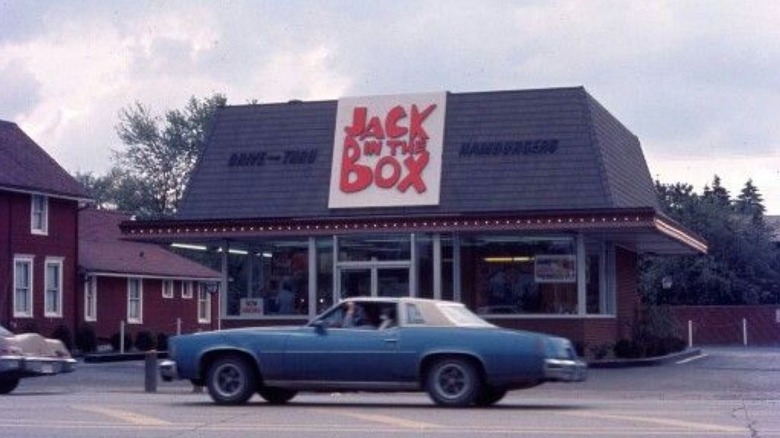
Before Jack in the Box was Jack in the Box, it was a 1940s San Diego drive-in restaurant called Topsy's. And after that, it was rebranded to Oscar's, after the founder, Robert Oscar Peterson. And after that? Yes, it was finally changed to Jack in the Box, and the branding was changed to include the iconic drive-thru speaker topped with a plastic clown with the slogan "Jack will speak to you."
Jack in the Box was launched in the 1950s, and over the following decades, the fast-food concept, which offered classics like burgers and french fries, as well as tacos and shrimp, quickly expanded. By the end of the 1960s, there were 300 Jack in the Box locations across the U.S., and by the 1970s, there were more than 1,000. The 1970s were also when Jack in the Box launched the Jack in the Box Bunch. The characters, including Jack the Clown and Onion Ring Thing, were a key feature on the popular children's toy the Box Ball, which was also sold at Jack in the Box locations in the 1970s.
Whether it was a family treat or a late-night taco hit, many Americans have memories of visiting Jack in the Box in the 1970s. The chain is still going strong today, with more than 2,100 locations across the U.S.
Dunkin'
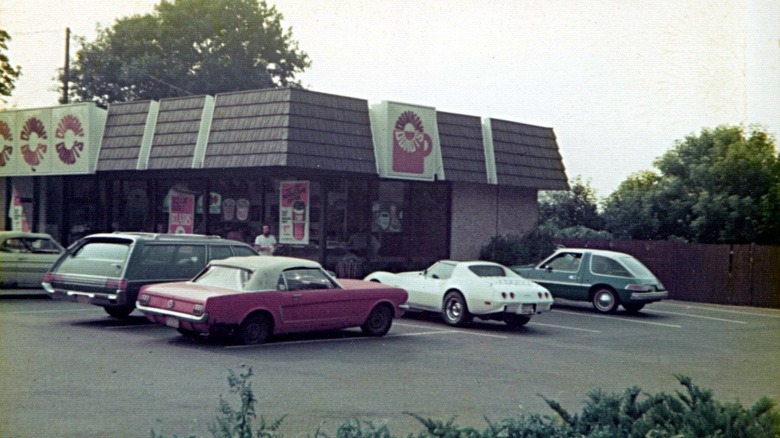
The 1970s was a major decade for Dunkin'. The chain, which started out in Quincy, Massachusetts, in the 1950s (originally as Dunkin' Donuts, of course), had expanded to 100 locations in the early 1960s, and by the end of the 1970s, it would reach the major milestone of 1,000. This was also the period when some of its most iconic treats hit the menu, like Munchkin donuts and freshly-baked muffins.
Many people look back on the 1970s as a glowing period in Dunkin's history. Some say the doughnuts were even better back then, as well as considerably cheaper. In fact, a dozen would set you back around $1.49 in 1979. Today? You're looking at upwards of $13 depending on your location and type of donut. That said, the chain is still irresistible to many people, both in the U.S. and internationally, as it sells more than 1 billion donuts and Munchkins around the world every year.
Hardee's
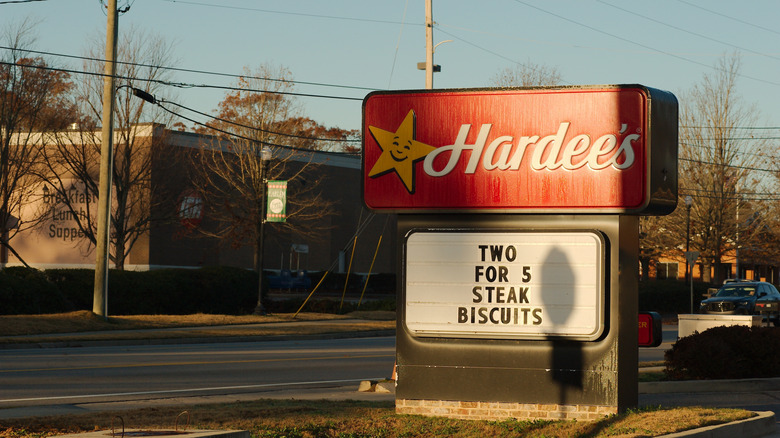
Without McDonald's, there would be no Hardee's. Founder Wilber Hardee was inspired by the success of the Golden Arches, but he thought he could create something even better. He opened the very first Hardee's in 1960 in North Carolina, and like McDonald's, it offered french fries, apple pies, shakes, and cheap hamburgers and cheeseburgers. The main difference, however, was that the burgers were chargrilled for extra flavor, and instead of a big yellow M, there was a red H on the packaging.
Hardee's was an instant hit. Hardee himself would soon part with the chain, but the fast-food juggernaut he created would go on to achieve nationwide success. By the end of the 1960s, there were 200 Hardee's locations. The 1970s brought yet more customers and locations, as well as exciting new menu items, like its now-iconic Made From Scratch Biscuits.
The biscuits are still available now, of course, but they're also a source of major nostalgia for many who remember ordering them from the chain in the 1970s. People also remember feasting on Hardee's steak sandwiches (which also hit the menu in this decade), as well as its iconic burgers, of course. The menu back then was far simpler than it is today, but The Big Deluxe was a particular favorite. Now, Hardee's is still going strong, with more than 1,500 locations across the U.S.
Lums
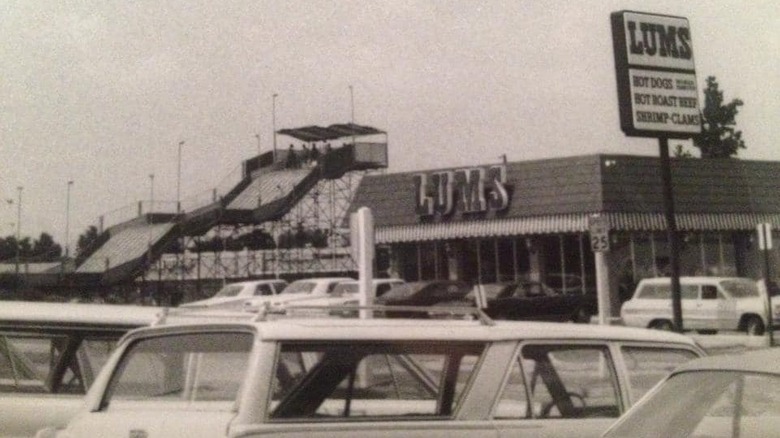
Every fast-food joint needs a unique selling point. Dunkin' had its donuts, McDonald's had its cheap hamburgers, Arby's had its roast beef, and Lums? Well, Lums had hot dogs cooked in beer. The chain isn't around anymore. Its last location actually closed its doors in 2017, but at its peak in the 1960s and 1970s, Lums had around 400 locations across the U.S.
The hot dog chain was founded by Burnett Carvin, who sold his Miami restaurant to two brothers, Stuart and Clifford Pearlman, in 1956. The Pearlman brothers grew Lums into a major hit. It offered the signature beer hot dogs, of course, and later on, in the 1970s, Ollieburgers hit the menu.
Ollieburgers were seasoned with a secret blend of 32 herbs and spices. Sound familiar? That's probably because in 1971, John Y. Brown Jr. took over the helm of Lums. Brown, who also went on to become Kentucky's governor, had previously helped turn KFC into a major success.
Arthur Treacher's
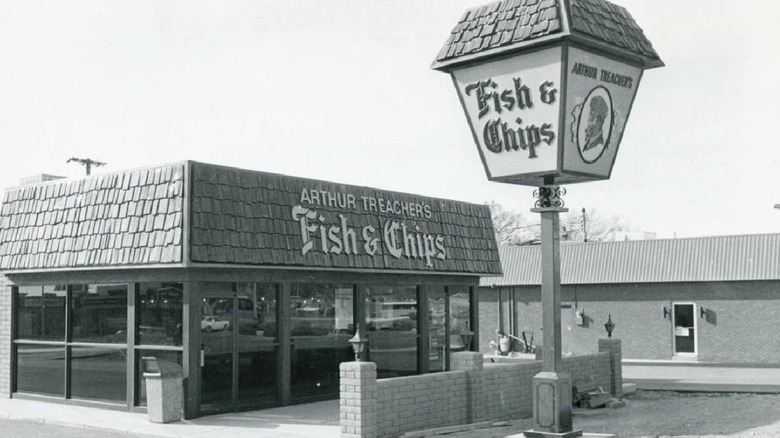
If you wanted fish and chips in the 1970s, Arthur Treacher's was the place to be. Named after the British actor Arthur Treacher, the fast-food chain specialized in the English takeout classic of deep-fried fish and potatoes, which was always served with lots of salt and malt vinegar. Many Americans remember visiting the chain on a Friday (as is traditional when it comes to fish and chips, largely due to historic religious rituals of avoiding meat on a Friday).
Arthur Treacher's was founded in 1969 in Columbus, Ohio, by a group of businessmen (future Wendy's co-founder Dave Thomas was one of the original investors), and during the 1970s, it was a huge success. In fact, during this decade, the chain expanded to more than 800 locations. But sadly, Arthur Treacher's wasn't meant to last forever.
As of 2025, there are only three Arthur Treacher's left, all of which are located in its home state of Ohio. Recently, there was talk of a fourth Arthur Treacher's making a return to Columbus, but plans are currently on hold.