

Best Elephant Ears Recipe

We may receive a commission on purchases made from links.
Who's ready for a blast from the past? If you've gone to a carnival, state fair, or any similar event, you've likely passed one of those great-smelling food stands with wooden boards which have "Elephant Ears" painted on them in colorful letters. Just saying the name aloud literally fills our nostrils with a sugary aroma — a little throwback to childhood. Back in the day, we'd beg our parents to let us stop at the stand to get that little slice of heaven (and a sugar high). But as adults, we can make these sweet desserts on our own. See? Being a grown-up has its perks!
Recipe developer Miriam Hahn of YouCare-SelfCare is one of the most talented recipe developers out there and she knocked this recipe out of the park. "I love that this mimics theme park and fair food! It is an easy way for you to feel like a kid again," she raves. We couldn't agree more.
Gather the ingredients for elephant ears
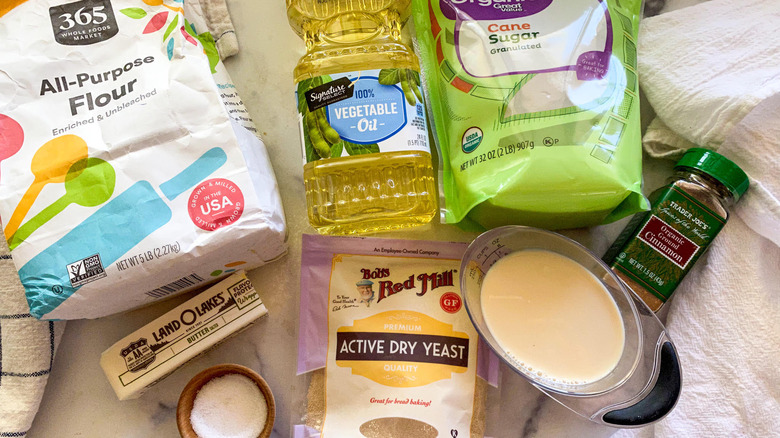
The first thing you'll need to do is gather all of the necessary ingredients needed to make these elephant ears. That means you'll need to take a trip to the grocery store or order your stuff online. For starters, you'll need milk and salt. Then, grab sugar, butter, and active dry yeast. The remaining items are pretty standard. In fact, you may already have them at home so be sure to double check. Those items include all-purpose flour, cinnamon, and oil.
Melt the butter
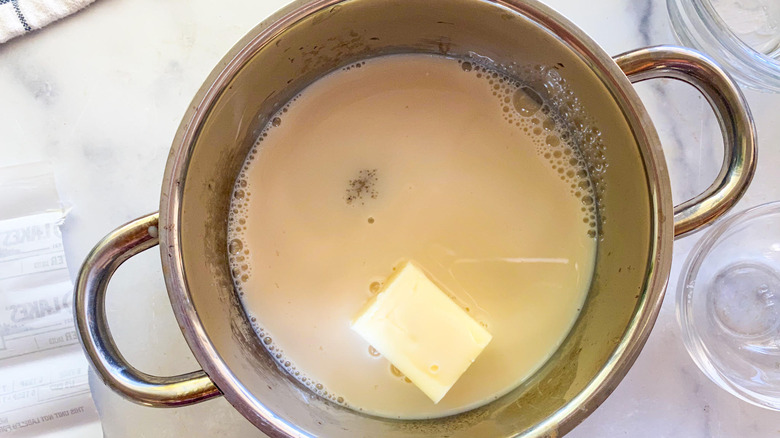
Now that you have all of your ingredients in front of you, it's time to begin. Start by pulling out a small pot and adding the milk and salt. Then, toss in the butter and 1½ tablespoons of sugar. Place the pot on your stove, and turn the heat to medium-low. Continue cooking for a few minutes until the butter melts, remembering to stir occasionally.
Remove the pot from heat and let the mixture cool for 10 minutes. A timer wouldn't be a bad idea.
Add active dry yeast to the butter
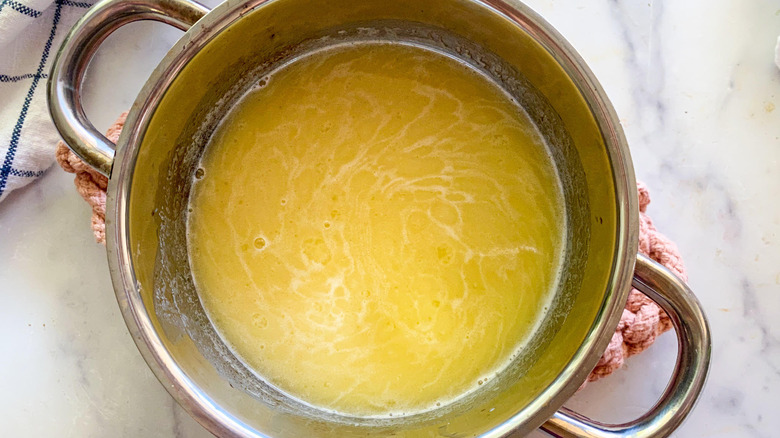
Once you've allowed the mixture to cool for 10 minutes, go ahead and add the active dry yeast to the pot. Stir everything together and let the mixture sit for another 10 minutes. "The active dry yeast takes about 10 minutes to activate, helping the dough rise and get those great bubbles when cooking! (If you are using instant yeast, you don't need to activate it)," Hahn says. Okay, it's time to add the mixture to another large bowl.
Make the dough by kneading the butter mixture with flour
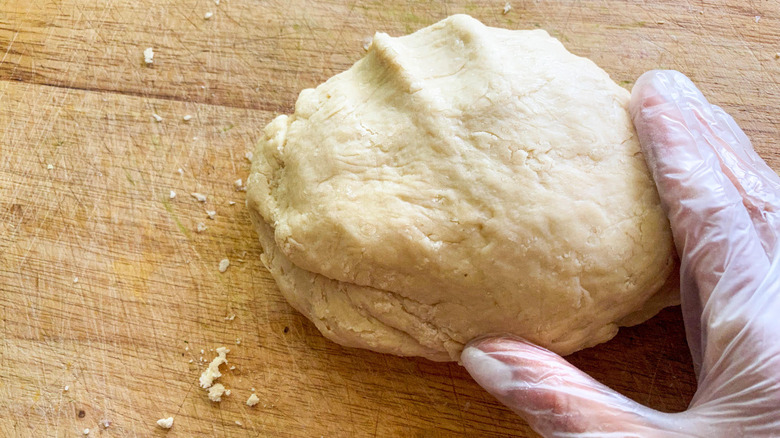
Now that you have your yeast mixture with flour in it. Stir it a few times so it forms into a dough. "For stirring the dough, I like to use a wooden spoon to get it started and then you can mix the rest with your hand," Hahn shares. "It can be messy and sticky so I use disposable kitchen gloves for things like this, but of course bare hands work just fine."
Remove the dough from the bowl and grab a wooden board. Knead the dough for a few minutes with your hands.
Let the dough rest for 30 minutes then roll it into balls
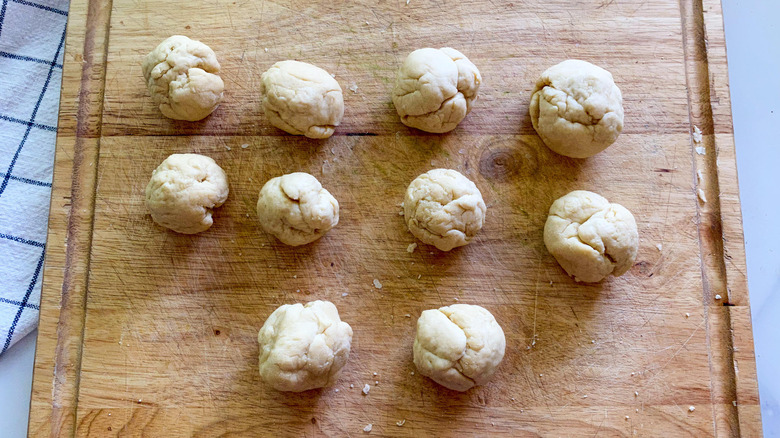
Now, cover the dough and let it rest for 30 minutes. In the meantime, add the remaining 2 tablespoons of sugar and the cinnamon to a small bowl. "If you want to try something different, you can skip the sugar cinnamon mixture and use honey," Hahn says.
Once your 30-minute timer goes off, form the dough into 10 balls. Simply roll each ball into an oval shape about 6 inches big. "Once it is rolled up in the balls, it is super easy to roll out, because you aren't going that big," Hahn shares. "It only takes a few back and forth rolls and you are done. And if you want them bigger or smaller, you can just alter the size of the dough ball."
Cook each piece of dough in oil, then cover in cinnamon sugar
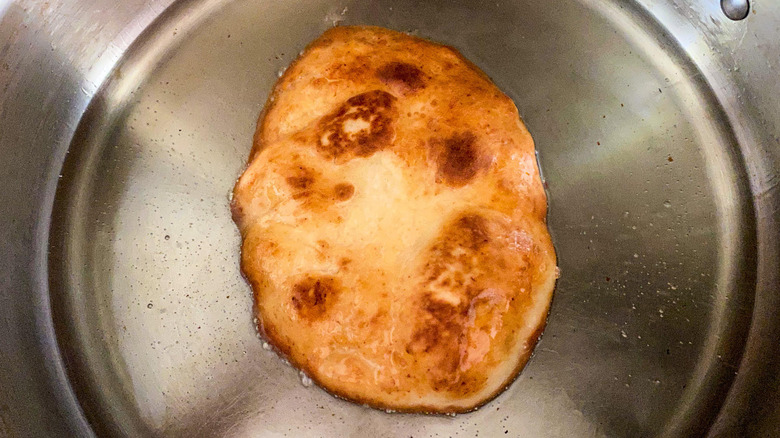
Now grab a deep skillet and crank the heat to high. Once the oil is hot, drop in one oval dough piece at a time. Cook for roughly one minute on each side and then use tongs to remove the elephant ear and lay it on a paper towel.
"When you start frying, the first one will take longer. Once the oil is really hot, the next ones go quick, so be ready," Hahn shares. "Have the paper towels ready. You want to add the sugar and cinnamon right when they come out, so it sticks!" Repeat the steps with the remaining elephant ears.
Serve the elephant ears and enjoy
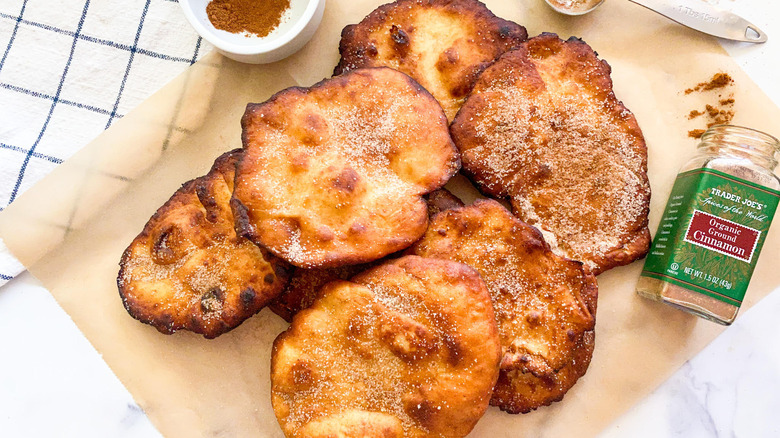
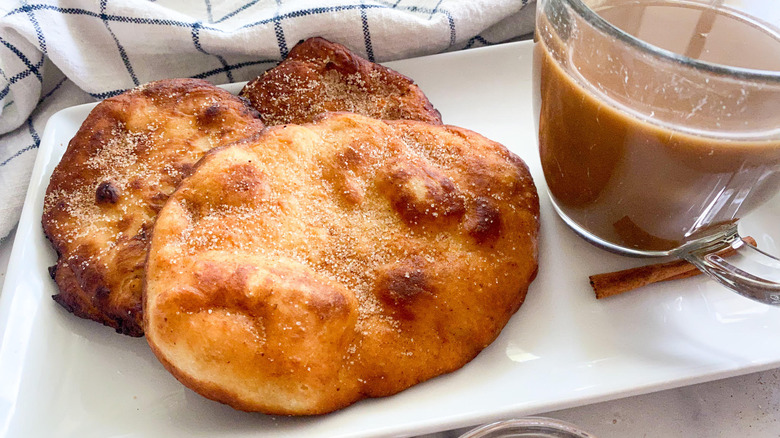
Once you've finished cooking all of the elephant ears, give yourself a little pat on the back. Now, you can dig into this sweet, nostalgic treat. These are great to eat by themselves, but you can add a little whipped cream or a scoop of ice cream to up your game.
If you have anything left, it will save. "You can store these in an airtight container on the counter for a few days," Hahn says. We hope you love this nostalgic treat as much as we do. We're guessing it will be a favorite recipe at your house soon.
What to serve with elephant ears
Best Elephant Ears Recipe
This sweet recipe for elephant ears will bring you back to visiting state fairs and carnivals as a kid. Enjoy them with whipped cream or a scoop of ice cream.
Ingredients
- ¾ cup milk
- ½ teaspoon salt
- 3 ½ tablespoons sugar, divided
- 3 tablespoons butter
- 1 tablespoon active dry yeast
- 2 cups all-purpose flour
- ½ tablespoon cinnamon
- 2 cups oil
Directions
- In a small pot, combine the milk, salt, 1 1/2 tablespoons of sugar, and butter.
- Cook on medium-low heat until the butter is melted.
- Remove from the heat, and let cool for 10 minutes.
- Add the active dry yeast to the pot, stir, and let it sit for another 10 minutes.
- Add the mixture to a large bowl.
- Add the flour, and stir to form a dough.
- Remove from the bowl, and knead for a couple of minutes on a board.
- Cover the dough, and let it rest for 30 minutes.
- Mix the remaining 2 tablespoons of sugar with the cinnamon in a small bowl.
- When the dough is done resting, form it into 10 balls.
- Roll each ball out into an oval shape about 6 inches.
- Heat up the oil in a deep skillet to high heat.
- Drop in one oval dough piece at a time. Cook for about 1 minute on each side. Remove with tongs, and lay on a paper towel.
- Sprinkle the elephant ears with the cinnamon-sugar mixture.
Nutrition
| Calories per Serving | 540 |
| Total Fat | 48.0 g |
| Saturated Fat | 5.8 g |
| Trans Fat | 0.3 g |
| Cholesterol | 11.0 mg |
| Total Carbohydrates | 25.1 g |
| Dietary Fiber | 1.2 g |
| Total Sugars | 5.4 g |
| Sodium | 125.8 mg |
| Protein | 3.7 g |

Can you reuse the oil after frying elephant ears?
Frying these elephant ears requires a good amount of oil. If you're looking at what you have left in the pan after you're done cooking and wondering if you really have to throw it all away, the good news is that you don't. Frying oil can be reused several times before it needs to be thrown out. The trick is finding some place to store it all until you're ready to use it.
You first need to strain the oil out so there aren't bits of leftover elephant ear floating around muddying things up; a fine mesh strainer or cheesecloth will do the trick. You can keep the strained oil in any airtight container. For best results, label it with the date and keep track of how many times it's been used right there on the label, and keep it in a cool, dark place away from heat sources. Just keep an eye on the flavor, since the oil will begin to taste more and more like what you're cooking (strained or not). No one wants fish-flavored elephant ears.