

Seafood Provençal Cassoulet Recipe
We may receive a commission on purchases made from links.
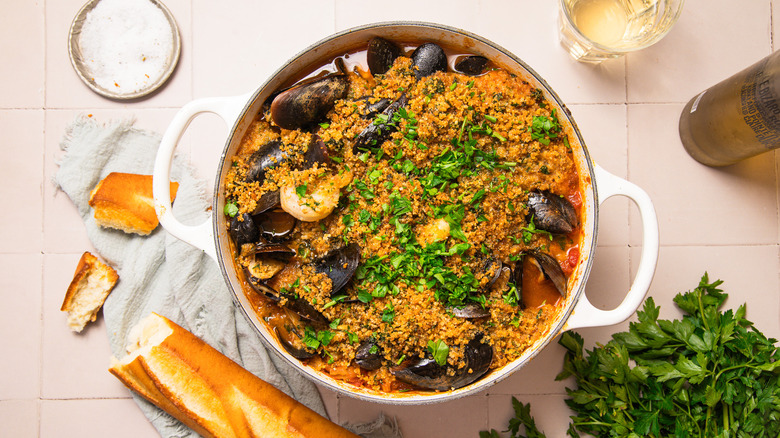
This seafood Provençal cassoulet recipe takes the traditional French cassoulet, and makes it lighter, more savory, and much more reminiscent of the sea. It keeps the spirit of the traditional stew, but reinvents it into something worthy of a serious seafood lover.
As a recipe developer and blogger with a penchant for using fish anywhere I can, I was excited by the prospect of taking a traditional cassoulet and making it pescatarian. The Provençal cassoulet is a slow-cooked French bean stew from the Languedoc region of southwest France that has traditionally been built around white beans and braised meats like duck confit, pork sausage, and sometimes goose or lamb. With a long and slow braise, all the ingredients are cooked down together and finished with a golden breadcrumb crust. It's an excellent dish for cold weather, designed to be rich and filling, but the classic version somewhat inconveniently takes the better part of three days to make properly.
This recipe borrows that structure, but applies it to seafood. The flavors are built on saffron, fennel, and orange, with smoked oysters instead of pork sausage, and a mix of cod, shrimp, and mussels to take the place of the other meats. Our version comes together in under an hour, and while it has all the comfort-food value of the original, it's essentially quite a light, bright dish. It's smoky, briny, and faintly sweet, and a meal that feels like a production but requires a lot less effort than the traditional version.
Gather the ingredients for this seafood cassoulet
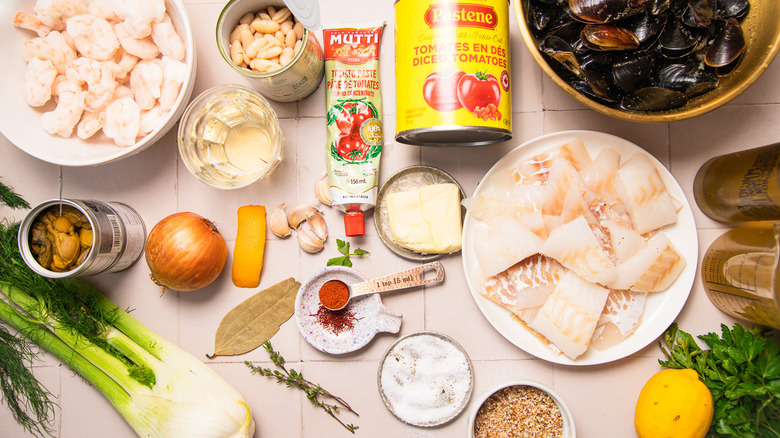
To make this cassoulet you'll need saffron threads, smoked oysters in oil, extra-virgin olive oil, a fennel bulb, yellow onion, garlic, tomato paste, smoked paprika, dry white wine, a can of diced tomatoes, seafood or chicken stock, cannellini beans, fresh thyme, bay leaf, orange peel, kosher salt, black pepper, coarse breadcrumbs, unsalted butter, fresh parsley, fresh thyme leaves, garlic, lemon zest and juice, as well as skinless cod, large shrimp, and mussels.
Step 1: Preheat the oven
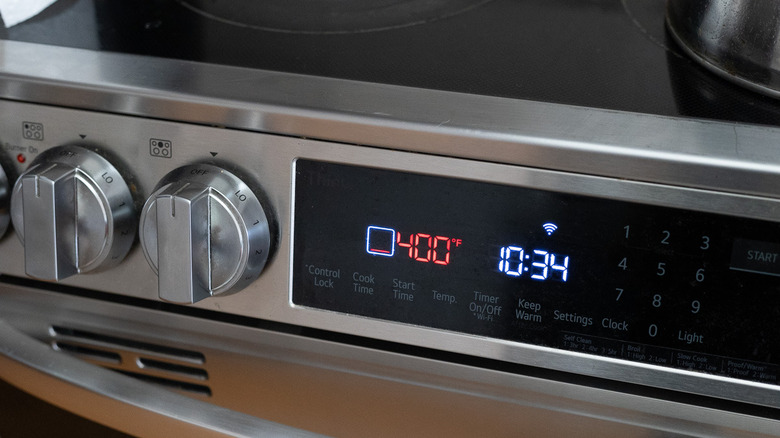
Preheat the oven to 400 F.
Step 2: Steep the saffron

Crumble the saffron into 2 tablespoons of warm water and let it steep.
Step 3: Preheat a Dutch oven
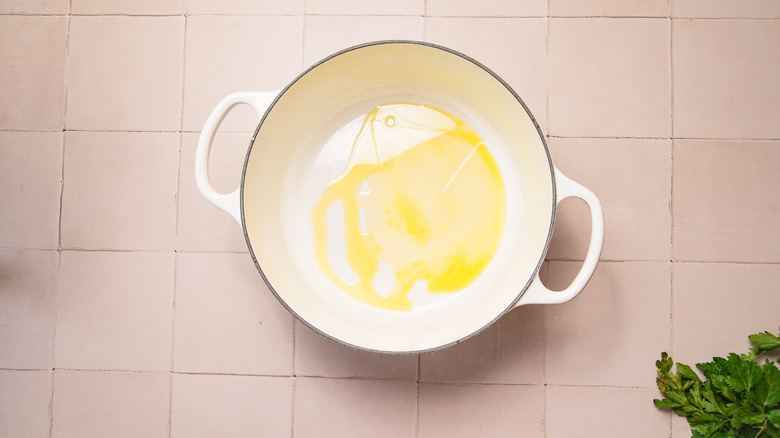
Heat 2 tablespoons of olive oil and 1 tablespoon of the reserved oyster tin oil in a large Dutch oven or an overproof braiser over medium-high heat.
Step 4: Cook the fennel and onion
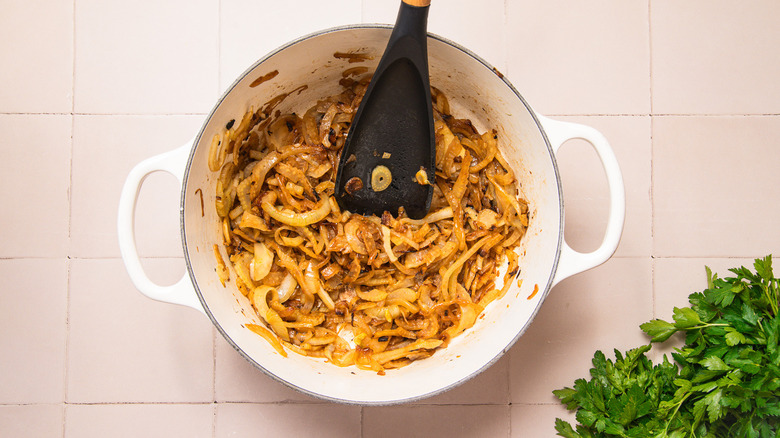
Reduce the heat to medium. Add the fennel and onion to the pot and cook, stirring, until softened and lightly golden, about 10 minutes.
Step 5: Add the aromatics
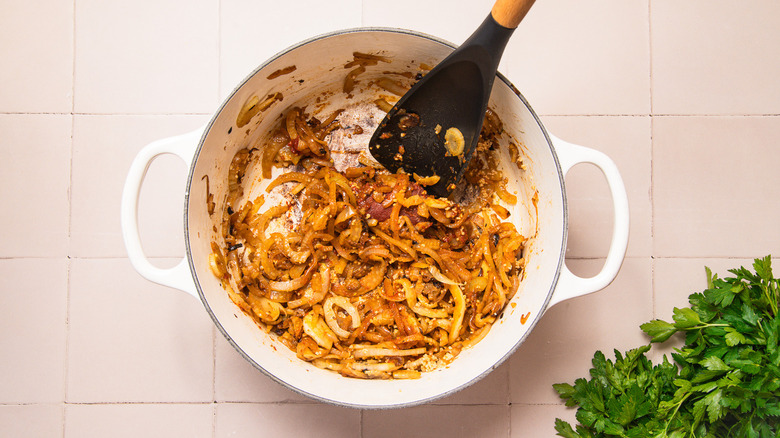
Add the garlic, tomato paste, and smoked paprika and cook, stirring, for 1 minute.
Step 6: Add the wine
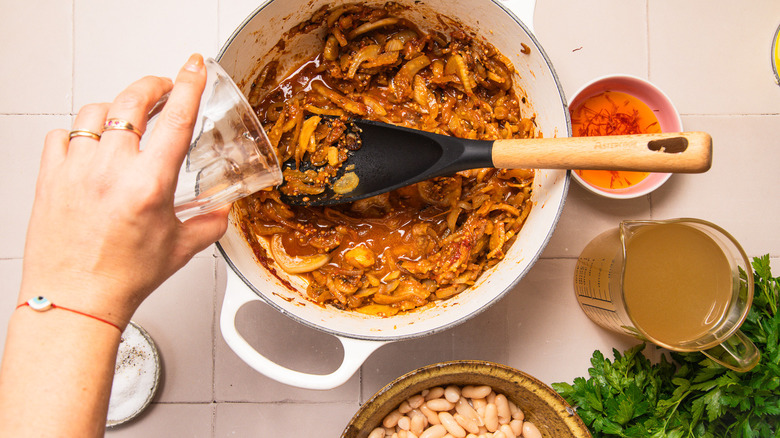
Add the white wine and simmer until reduced by half, about 2 minutes.
Step 7: Build the broth
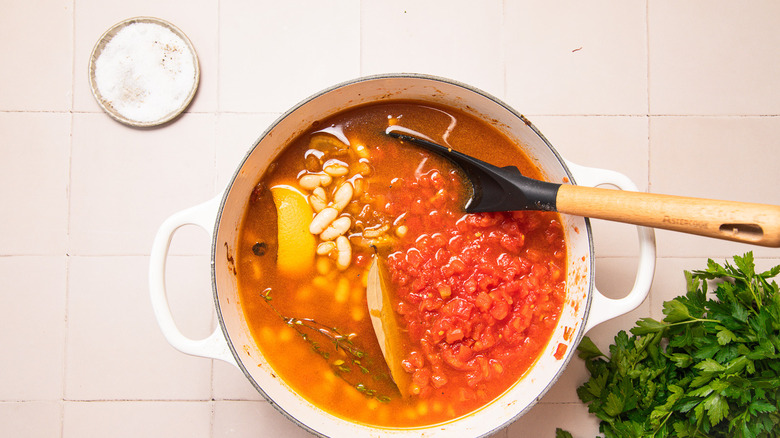
Stir in the saffron with its water, diced tomatoes, stock, beans, thyme sprigs, bay leaf, orange peel, 1 teaspoon salt, and pepper.
Step 8: Simmer and discard the leaves
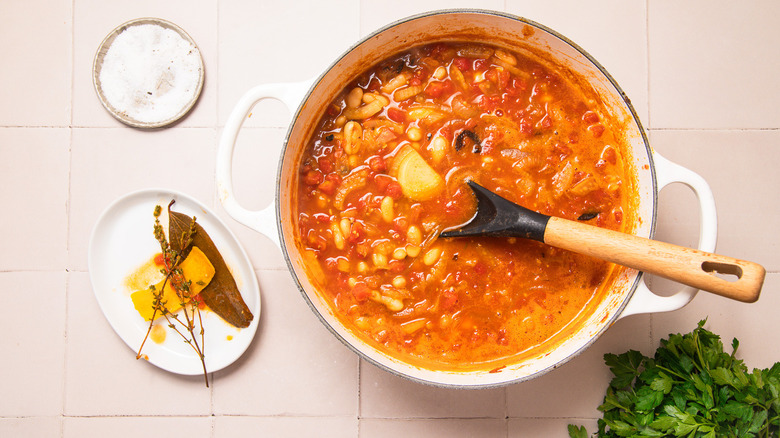
Bring to a simmer and cook uncovered, stirring occasionally, until the broth is slightly thickened, about 20 minutes. Discard the thyme sprigs, bay leaf, and orange peel.
Step 9: Make the breadcrumb topping
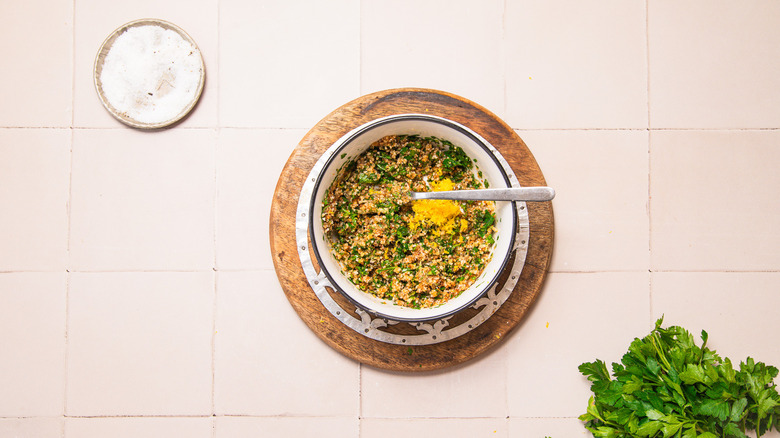
While the broth simmers, toss the breadcrumbs with the melted butter, 2 tablespoons parsley, 1 teaspoon thyme leaves, grated garlic, lemon zest, and ¼ teaspoon salt.
Step 10: Toast the breadcrumbs
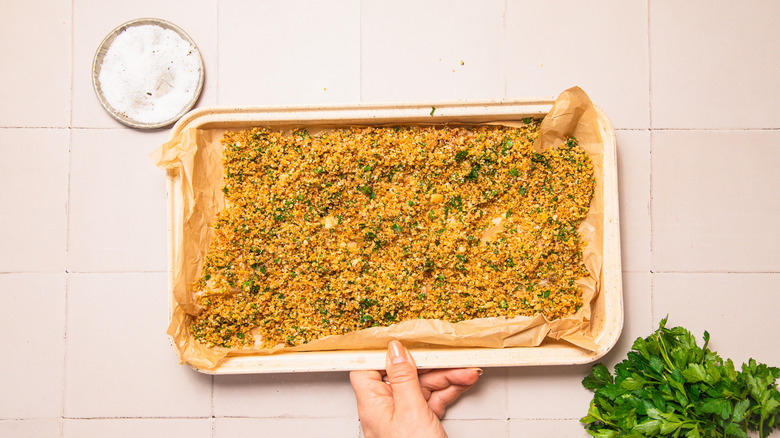
Spread on a parchment-lined baking sheet and toast in the oven, stirring once, until golden, about 6 minutes.
Step 11: Season the seafood
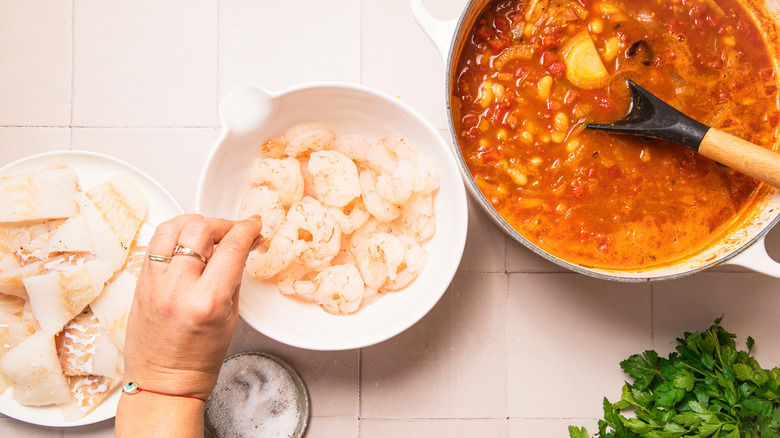
Season the cod and shrimp with the ½ teaspoon salt.
Step 12: Add seafood to the stew
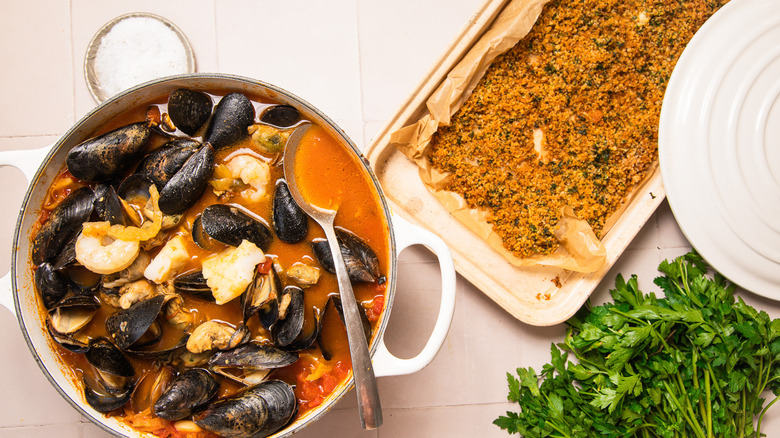
Nestle the cod into the beans, then scatter the shrimp, fresh mussels, and the drained smoked oysters over the top. Cover and bake for 8 minutes. Remove the lid. The cod should flake easily, the shrimp should be pink, and the fresh mussels should be open. Discard any fresh mussels that stayed closed.
Step 13: Finish with lemon and breacrumbs
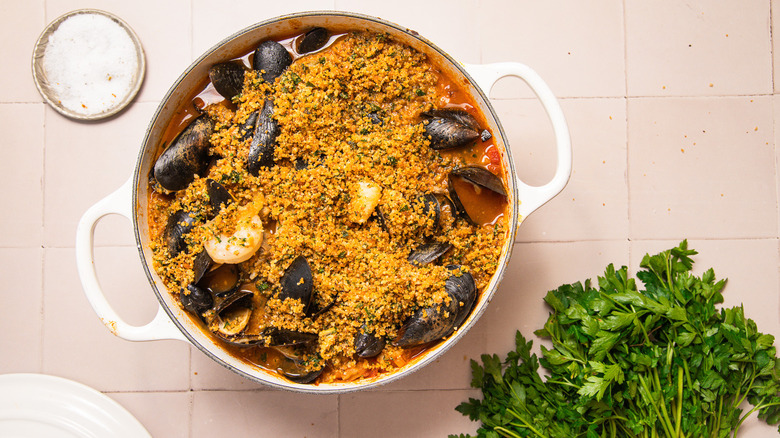
Stir in the lemon juice. Scatter the toasted breadcrumbs over the top and broil for 1 to 2 minutes, watching closely, until deeply golden.
Step 14: Garnish and serve the seafood Provençal cassoulet
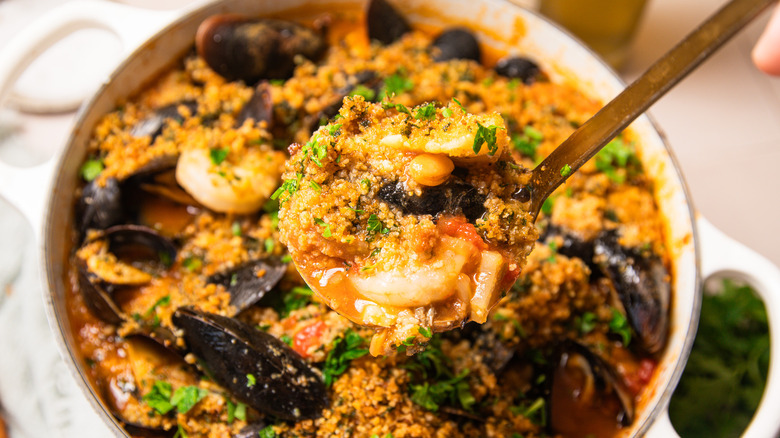
Drizzle with the 1 tablespoon olive oil, sprinkle with the remaining parsley, and serve directly from the pot with crusty bread.
What can I serve with cassoulet?
Seafood Provençal Cassoulet Recipe
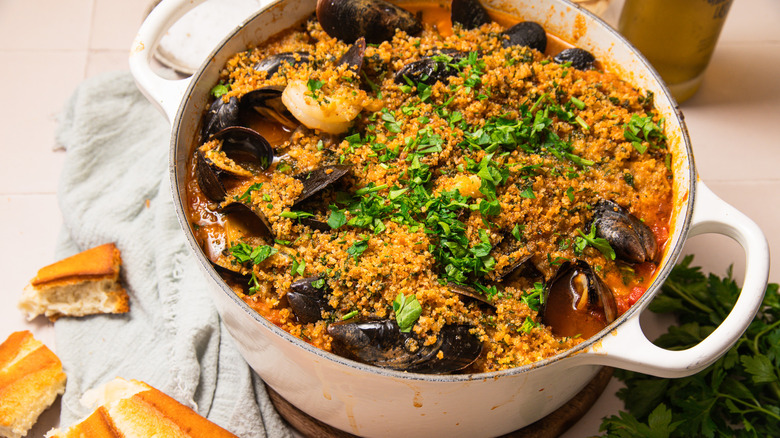
Our cassoulet is fragrant with saffron, fennel, and orange, and filled with smoked oysters, fresh fish, shrimp, and mussels for a light but comforting stew.
Ingredients
- ½ teaspoon saffron threads
- 2 (3-ounce) tins smoked oysters in oil, drained, oil reserved
- 3 tablespoons extra-virgin olive oil, divided
- 1 large fennel bulb, cored and thinly sliced
- 1 yellow onion, diced
- 4 cloves garlic, minced
- 2 tablespoons tomato paste
- 1 teaspoon smoked paprika
- ½ cup dry white wine
- 1 (14.5-ounce) can diced tomatoes
- 2 cups seafood or chicken stock
- 2 (15-ounce) cans cannellini beans, drained and rinsed
- 2 sprigs fresh thyme
- 1 bay leaf
- 1 (3-inch-long) strip orange peel
- 1 ¾ teaspoons kosher salt, divided
- ½ teaspoon black pepper
- 1 cup fresh coarse breadcrumbs
- 3 tablespoons unsalted butter, melted
- 4 tablespoons fresh parsley, finely chopped
- 1 teaspoon fresh thyme leaves
- 1 clove garlic, grated
- 1 lemon, zest of
- 1 pound skinless cod fillet, cut into 2-inch pieces
- 12 ounces large shrimp (16 to 20 count), peeled and deveined
- 1 pound mussels, scrubbed and debearded
- 1 tablespoon fresh lemon juice
Directions
- Preheat the oven to 400 F.
- Crumble the saffron into 2 tablespoons of warm water and let it steep.
- Heat 2 tablespoons of olive oil and 1 tablespoon of the reserved oyster tin oil in a large Dutch oven or an overproof braiser over medium-high heat.
- Reduce the heat to medium. Add the fennel and onion to the pot and cook, stirring, until softened and lightly golden, about 10 minutes.
- Add the garlic, tomato paste, and smoked paprika and cook, stirring, for 1 minute.
- Add the white wine and simmer until reduced by half, about 2 minutes.
- Stir in the saffron with its water, diced tomatoes, stock, beans, thyme sprigs, bay leaf, orange peel, 1 teaspoon salt, and pepper.
- Bring to a simmer and cook uncovered, stirring occasionally, until the broth is slightly thickened, about 20 minutes. Discard the thyme sprigs, bay leaf, and orange peel.
- While the broth simmers, toss the breadcrumbs with the melted butter, 2 tablespoons parsley, 1 teaspoon thyme leaves, grated garlic, lemon zest, and ¼ teaspoon salt.
- Spread on a parchment-lined baking sheet and toast in the oven, stirring once, until golden, about 6 minutes.
- Season the cod and shrimp with the ½ teaspoon salt.
- Nestle the cod into the beans, then scatter the shrimp, fresh mussels, and the drained smoked oysters over the top. Cover and bake for 8 minutes. Remove the lid. The cod should flake easily, the shrimp should be pink, and the fresh mussels should be open. Discard any fresh mussels that stayed closed.
- Stir in the lemon juice. Scatter the toasted breadcrumbs over the top and broil for 1 to 2 minutes, watching closely, until deeply golden.
- Drizzle with the 1 tablespoon olive oil, sprinkle with the remaining parsley, and serve directly from the pot with crusty bread.
Nutrition
| Calories per Serving | 634 |
| Total Fat | 18.5 g |
| Saturated Fat | 5.9 g |
| Trans Fat | 0.0 g |
| Cholesterol | 178.2 mg |
| Total Carbohydrates | 62.4 g |
| Dietary Fiber | 12.0 g |
| Total Sugars | 8.7 g |
| Sodium | 1,573.6 mg |
| Protein | 52.8 g |

What do the smoked oysters add to the dish, and can I leave them out or substitute them?
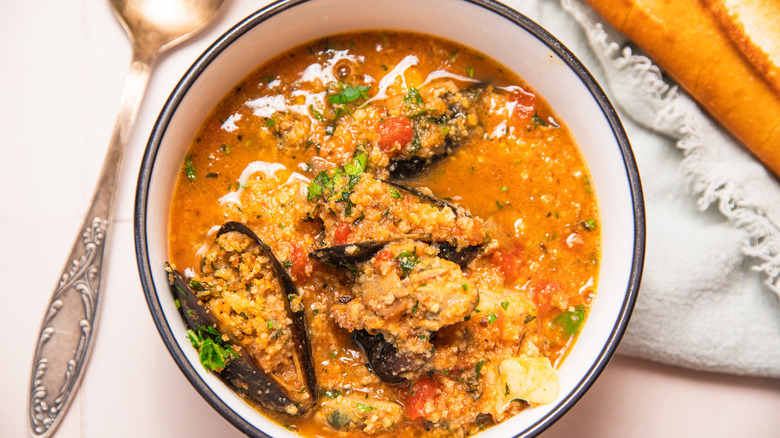
Smoked tinned oysters can be hard to find, but luckily, there are now some versions available on Amazon. However, without them, this dish won't taste as close to the original, so read on to understand exactly what these smoked bivalves bring to the table.
First, when cooking with tinned oysters, you should know they bring a deep, smoky umami flavor that layers over the saffron and paprika in the broth. This adds depth and a pungent layer that is needed to offset the otherwise fresh seafood and flavors. They also add a slightly sweet meatiness that is missing from the rest of the light ingredients we're using. Despite their strong flavor, the final dish doesn't taste noticeably of oyster, but they add a savory background that makes the whole pot taste more complex.
You can leave them out if you prefer, and the braise will still taste great. To replace the oysters, stir in a tablespoon of white miso or a couple of minced anchovy filets at the same time as you add the tomato paste. If you want another seafood option, smoked clams or smoked mussels are the best direct swaps — and if you haven't yet, try incorporating smoked tinned fish into your next charcuterie board, too.
Can I substitute any of the fresh seafood in this recipe?
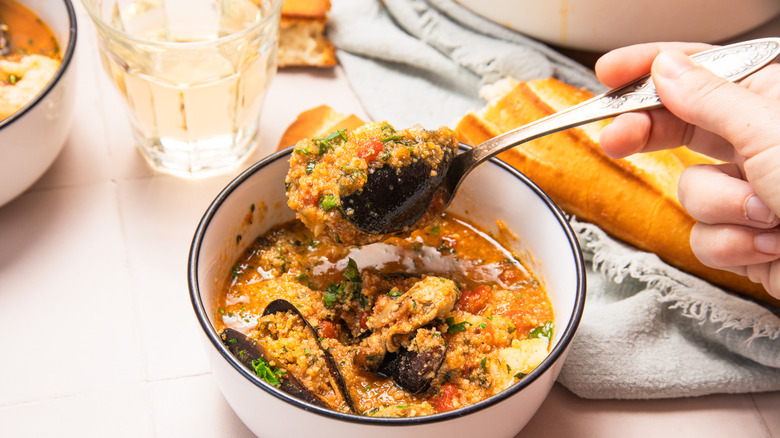
There are three elements of fresh seafood in this cassoulet, and you can play around with some of them with various swaps and substitutions. We just recommend that you keep a smoky element as discussed above, and the flavor will stay true to the original.
The cod is the most flexible element here. Haddock is the type of fish that makes the best and closest substitute in terms of texture and flavor. Sea bass, halibut, and pollock are great substitutions as well, as they keep their shape and have similar cooking times. If you can find it, hake works too, but it's much more delicate, so take it off the stovetop at least a couple of minutes earlier. Avoid oily fish like salmon and mackerel.
For the shrimp, you could swap in some scallops. They're a rich and easy substitute that will keep some of the same lightness and have a similar bite and body. The mussels are the one thing I wouldn't recommend swapping, as they add a briny depth to the dish. If you're skipping shellfish entirely, increase the cod or shrimp by a few ounces to keep the stew meaty.