

This Classic Canned Fish Is The Easiest Charcuterie Board Upgrade
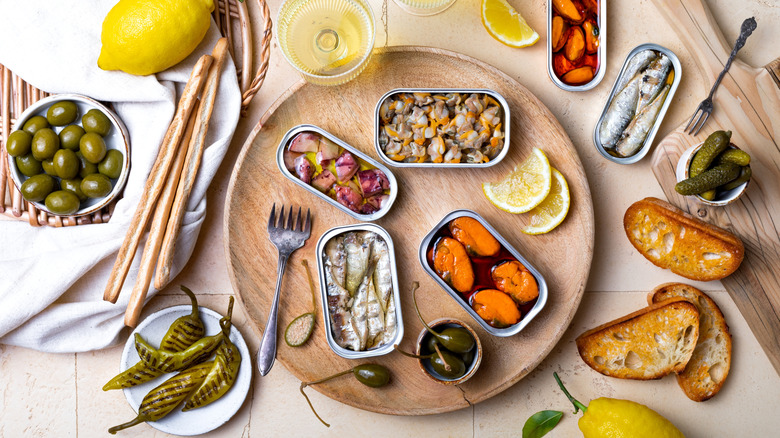
Every charcuterie board needs something smoky and a little untamed to break up the cheese and cured meat. Smoked oysters do it better than anything on land. Crack a can and they announce themselves confidently with an aroma that is equal parts campfire and clean, minerally tide-pool, somewhere between bacon and the ocean.
Smoked oysters are rich, salty, and faintly sweet. They're meaty and saline, and perfectly bite-sized, fitting in synchronously with the other board-fellows, prosciutto, figs, maybe some salty green olives or expensive-but-worth-it almonds, and a crispy glass of dry white wine. They could also benefit from bright company, like from a spoonful of minced preserved lemon, a sliver of pickle, or a swipe of crème fraîche. Rye crisps or toasted baguette slices make ideal carbohydrate bases, and the oil they come in can be a yummy dip for a crostini or drizzle over warm potatoes.
Oysters have been smoked and canned since the late 1800s, when oyster boats worked the Pacific and Chesapeake bays, hauling in a marine abundance that had to be preserved fast. Smoking and sealing in oil was the perfect technological innovation, allowing the fragile mollusk to be easily stored as a pantry staple or road food. The smoking process gives them a depth and complexity that fresh oysters don't have, and a texture that falls somewhere between pâté and the chewier, but still toothsome, muscle tissue of a perfect steak. Few foods are so suited to both survival ration and cocktail hour. Outside the charcuterie board, I love them straight from the tin at the summit of a hike, on a cracker, or folded into a heap of hot spaghetti with garlic and lemon. They always taste like they cost more than they do.
The world is your oyster tin
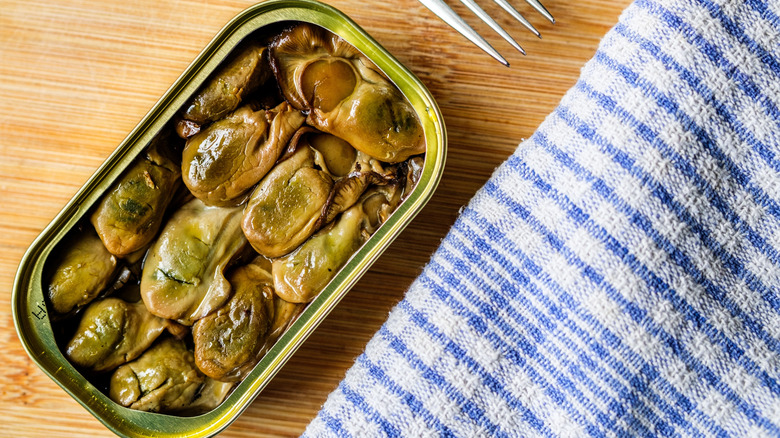
Smoked oysters pack a lot into a small space, flavor wise, and are also about as nutrient-dense as it gets, weighing in at between ten and twenty grams of protein per serving, along with hefty doses of zinc, iron, copper, selenium, and vitamin B12. Gram for gram, they deliver more zinc than beef and almost as much iron as chicken liver. They're also low in mercury and high in omega-3s. For a few dollars, you get a snack with all the benefits of a supplement, but it tastes way better and is more bioavailable.
They're also one of the most sustainable animal proteins on earth. Oysters don't need feed, antibiotics, or freshwater. They filter the very water they grow in, improving ecosystems just by existing. Smoking and canning multiply that efficiency, preserving without refrigeration and keeping waste close to zero. Every part of the process, from shell to smoke, feels proportionate and beneficial, with delicious results. If you want an affordable seafood that aligns with both appetite and conscience, the humble smoked oyster sets the bar, so make a little space for it on your next board.