

Ribeye Aguachile Verde Recipe
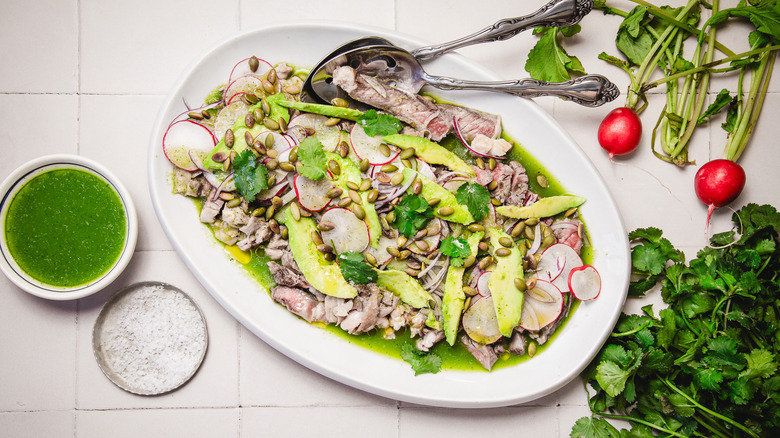
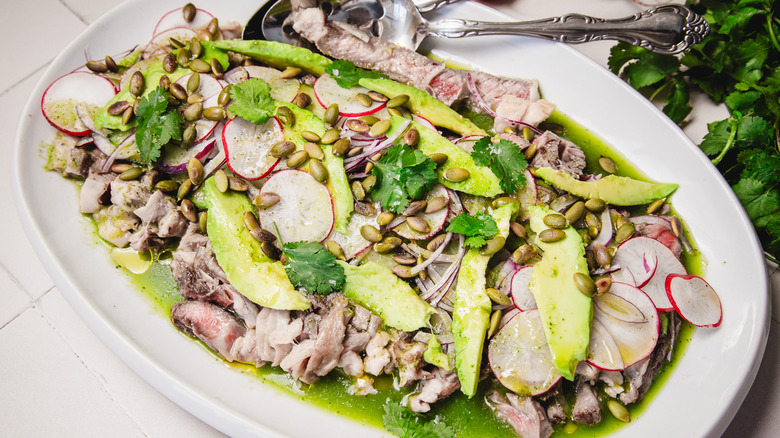
Ribeye aguachile verde is a meat-forward twist on a familiar Mexican classic. We blend a cold green and zesty sauce of lime, chile, cucumber, and cilantro and pour it over thinly sliced seared beef, and then we finish the dish with radishes, avocado, and pepitas. The sauce is bright and sharp with just the right amount of heat, and the beef is barely cooked, almost carpaccio-like. And together, it tastes like a creation from coastal Mexico that might stay with you for years to come.
As a recipe developer and blogger, I love a good aguachile. I first tasted it in the legendary and Michelin-mentioned Contramar by chef Gabriela Cámara, where it was redolent with heat and served in the typical fashion, with camarones. In this dish, I wanted to adapt it to feature steak instead, which I seared briefly and sliced thinly. The steak takes just as well to the flavorful sauce as the shrimp did.
This dish works particularly well in summer, served immediately after plating. Once the aguachile hits the beef, the dish deteriorates quickly, so assemble it right before bringing it out to the table.
Gather the ingredients for ribeye aguachile verde
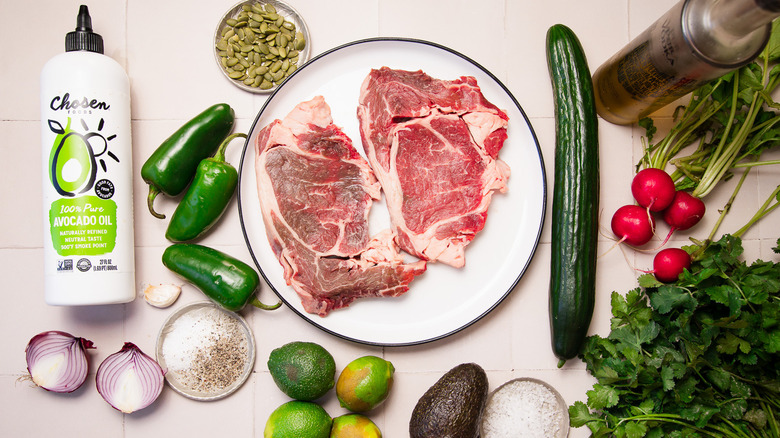
For the steak and sauce that make up this aguachile verde, you'll need a boneless ribeye steak, kosher salt, black pepper, avocado oil, fresh lime juice, jalapeño chiles, an English cucumber, fresh cilantro leaves, garlic, and kosher salt. For garnish, you'll need an English cucumber, a small red onion, radishes, a jalapeño chile, and an avocado, all thinly sliced. You'll also need toasted pepitas, fresh cilantro leaves, extra-virgin olive oil, and flaky sea salt.
Step 1: Season and temper the steak
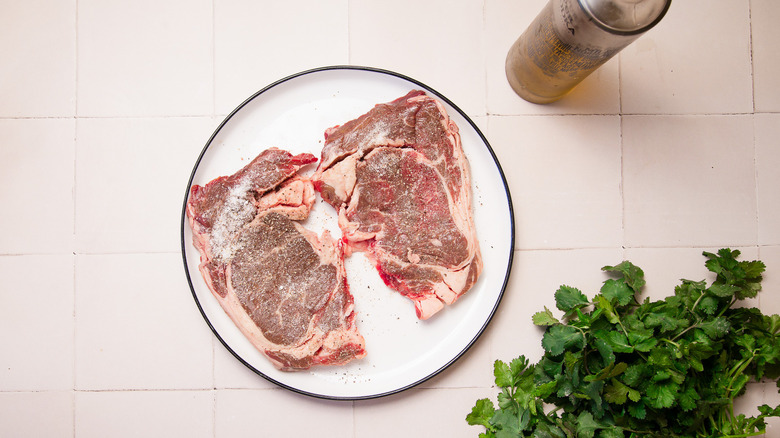
Pat the ribeye dry and season both sides with the 1 teaspoon salt and pepper. Let it sit at room temperature for 20 minutes.
Step 2: Preheat a cast iron skillet
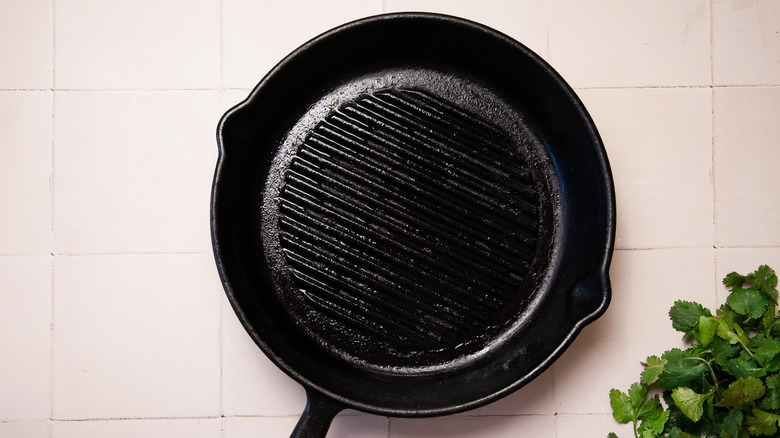
Heat the oil in a cast iron skillet over high heat until just smoking.
Step 3: Sear the steak
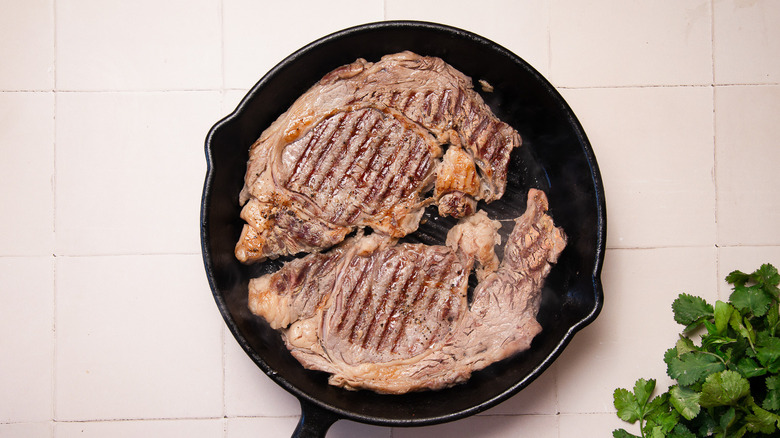
Sear the steak for 2 minutes per side for rare.
Step 4: Chill the steak
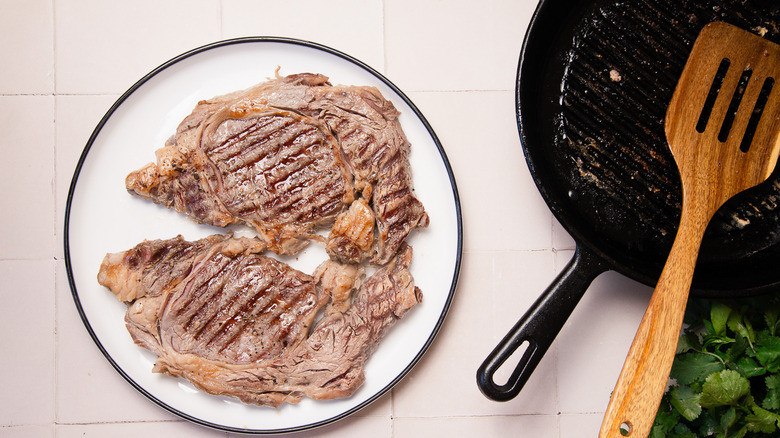
Rest the steak on a plate for 5 minutes, then freeze for 15 minutes, until firm and cold to the touch. This makes thin slicing easy.
Step 5: Combine the aguachile ingredients in a blender
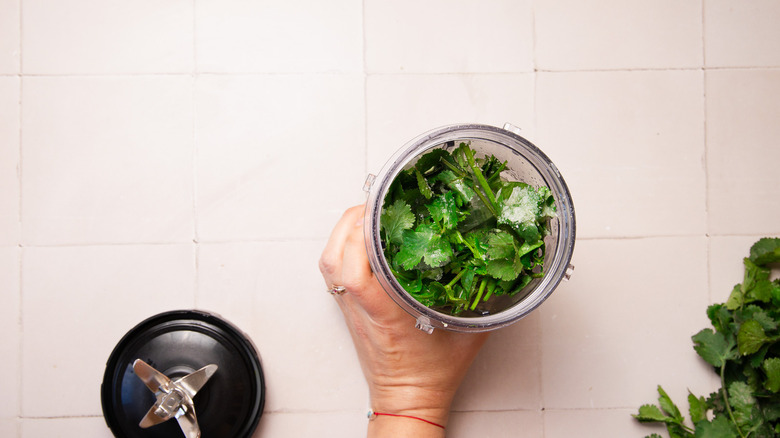
Meanwhile, add the lime juice, 2 jalapeno chiles, chopped cucumber, ½ cup cilantro, garlic, ½ teaspoon salt, and ¼ cup ice water to a blender.
Step 6: Blend the aguachile sauce
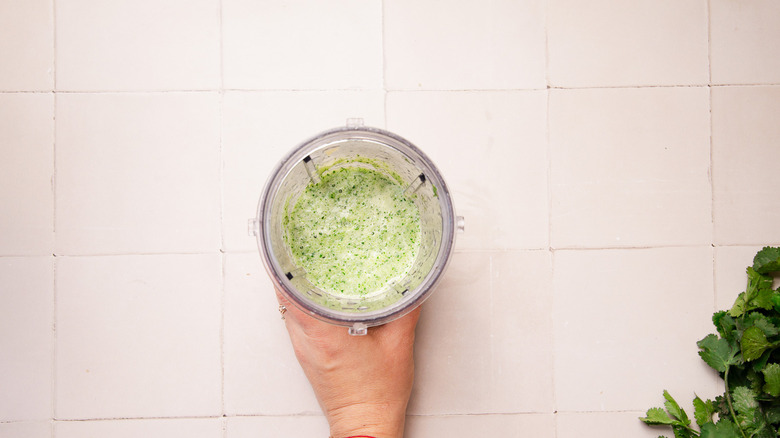
Blend on high until completely smooth, about 1 minute.
Step 7: Strain the sauce
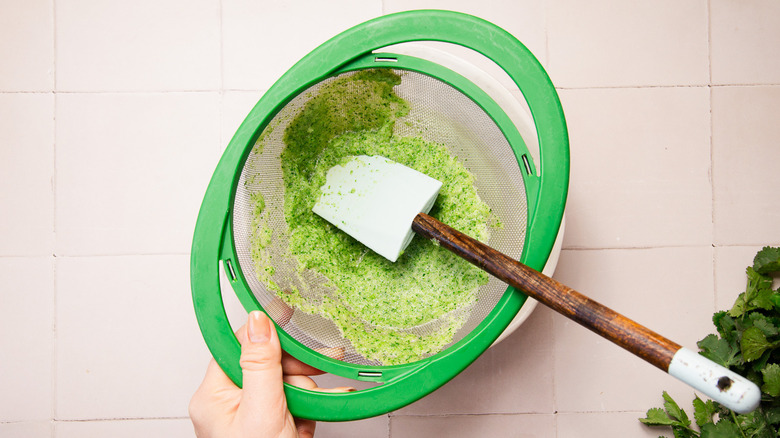
Strain through a fine-mesh sieve, pressing on the solids. Refrigerate until ready to use.
Step 8: Slice the steak
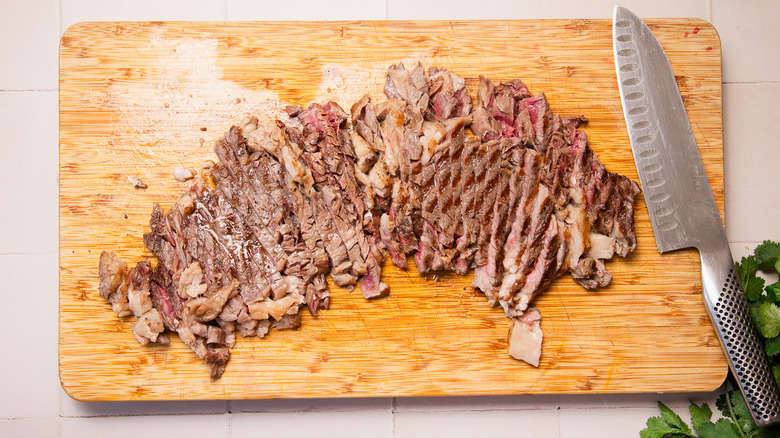
Slice the chilled steak against the grain into slices ⅛ inch thick.
Step 9: Plate the ribeye aguachile verde
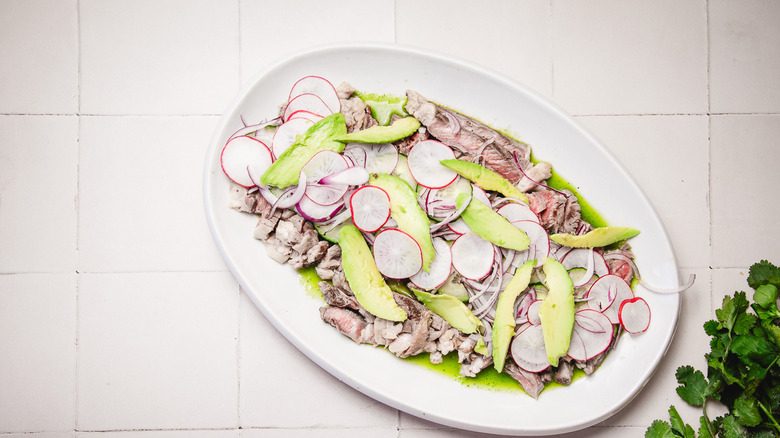
Spoon about ½ cup of the aguachile into a wide shallow platter. Arrange the beef slices over it in a single layer, then scatter the cucumber, red onion, radishes, jalapeno rounds, and avocado over the top.
Step 10: Garnish and serve the ribeye aguachile verde
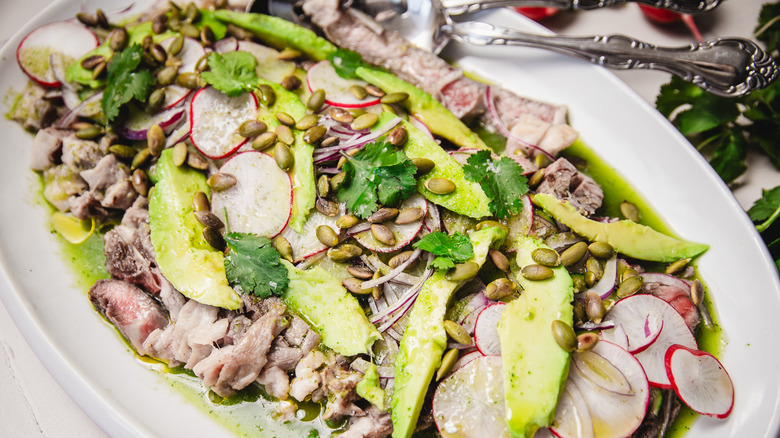
Pour another ¼ cup aguachile over the beef. Top with the pepitas, 2 tablespoons cilantro leaves, olive oil, and flaky sea salt. Serve within 5 minutes, with the remaining aguachile on the side.
What can I serve with aguachile?
Ribeye Aguachile Verde Recipe
We pair a cold green and zesty sauce of lime, chile, cucumber, and cilantro with thinly sliced seared beef in our meat-forward ribeye aguachile verde recipe.
Ingredients
- For the steak and sauce
- 1 (1-pound, 1-inch thick) boneless ribeye steak
- 1 teaspoon kosher salt
- ½ teaspoon black pepper
- 1 tablespoon avocado oil
- ½ cup fresh lime juice (about 4 limes)
- 2 jalapeño chiles, stemmed, plus more to taste
- ½ English cucumber, peeled and roughly chopped
- ½ cup fresh cilantro leaves and tender stems
- 1 clove garlic
- ½ teaspoon kosher salt
- For garnish
- ½ English cucumber, thinly sliced into half moons
- ¼ small red onion, thinly sliced
- 4 radishes, thinly sliced
- 1 jalapeño chile, thinly sliced into rounds
- 1 avocado, sliced
- 2 tablespoons toasted pepitas
- 2 tablespoons fresh cilantro leaves
- 1 tablespoon extra-virgin olive oil
- ½ teaspoon flaky sea salt
Directions
- Pat the ribeye dry and season both sides with the 1 teaspoon salt and pepper. Let it sit at room temperature for 20 minutes.
- Heat the oil in a cast iron skillet over high heat until just smoking.
- Sear the steak for 2 minutes per side for rare.
- Rest the steak on a plate for 5 minutes, then freeze for 15 minutes, until firm and cold to the touch. This makes thin slicing easy.
- Meanwhile, add the lime juice, 2 jalapeno chiles, chopped cucumber, ½ cup cilantro, garlic, ½ teaspoon salt, and ¼ cup ice water to a blender.
- Blend on high until completely smooth, about 1 minute.
- Strain through a fine-mesh sieve, pressing on the solids. Refrigerate until ready to use.
- Slice the chilled steak against the grain into slices ⅛ inch thick.
- Spoon about ½ cup of the aguachile into a wide shallow platter. Arrange the beef slices over it in a single layer, then scatter the cucumber, red onion, radishes, jalapeno rounds, and avocado over the top.
- Pour another ¼ cup aguachile over the beef. Top with the pepitas, 2 tablespoons cilantro leaves, olive oil, and flaky sea salt. Serve within 5 minutes, with the remaining aguachile on the side.
What is aguachile verde?
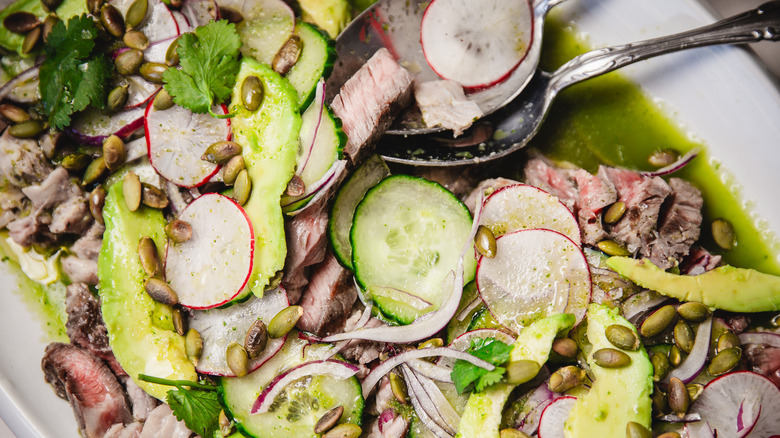
Aguachile is a classic Mexican Seafood dish originally from the Sinaloa region in Mexico's northwest coast, and the name literally translates to "chile water." The original recipe was just water blended with dried chiltepin peppers and poured over hot shrimp. It was sharp, spicy, and unapologetically bold, but it lacked nuance and refinement.
The modern version of aguachile uses fresh lime juice as the base for the dressing, with fresh chiles, cucumber, and herbs blended in. The dish is closer to ceviche than anything else, with a highly acidic sauce that "cooks" the protein through acid and cold rather than heat. However, aguachile is hotter and more assertive, and needs to be served immediately after marination, to keep the protein as close to raw as possible.
The verde, or green, version of aguachile uses fresh serrano or jalapeño chiles, cilantro, and cucumber, blended together, which gives the sauce its vibrant color and herbaceous, grassy flavor. In our ribeye aguachile verde, we take the same treatment and apply it to steak, although one that is cooked, though only very briefly.
Is the steak here cooked or raw? Is it safe to eat?
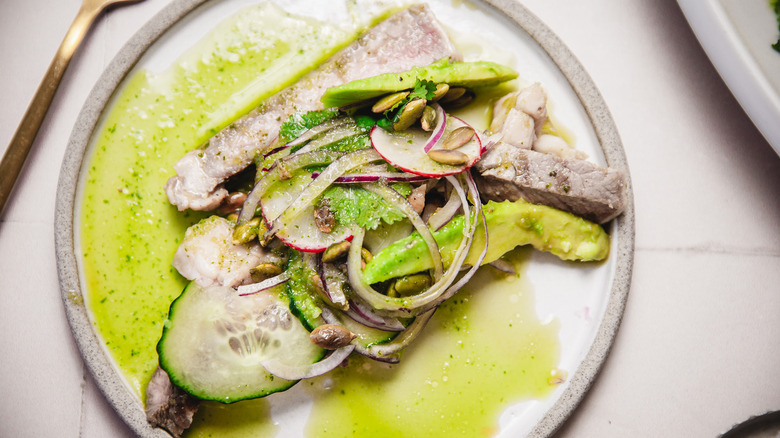
In our recipe, we seared the steak for two minutes per side. This cooks the exterior but leaves the center rare. Thus, the steak is not raw like steak tartare is, but the center does remain pink and cold, making it closer to carpaccio.
Rare steak is generally considered safer to eat than rare ground beef in a burger, because bacteria on whole muscle live mostly on the surface. That's why we're giving our steak a hot sear, so we can kill off any bacteria that still insists on hanging out on our steak's surface. This quick sear makes the steak safe enough to eat.
That said, it should be noted that the USDA recommends cooking beef to an internal temperature of 145 F, which is medium-rare, so a rare steak falls short of that guideline. For most healthy adults, eating fresh, high-quality beef from a trusted source should keep this dish safe enough. Avoid undercooking the steak if you're pregnant, or otherwise belong to a higher-risk, immunocompromised group.