

8 Biggest Failures In Burger King History
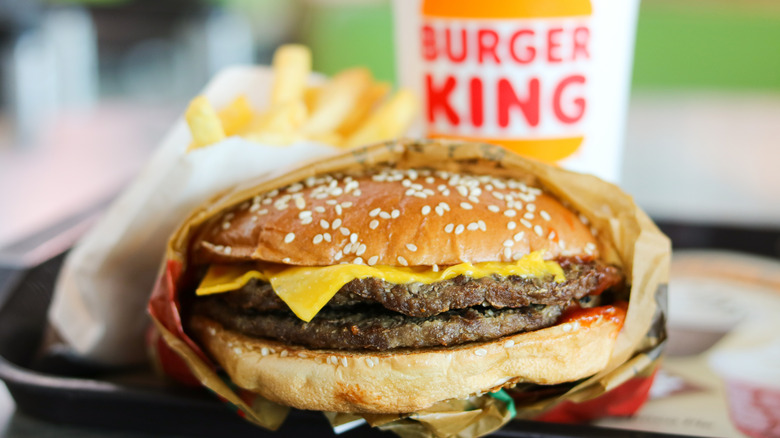
Sometimes, Burger King just gets it right. In October, for example, one of our taste testers raved about five of the best things they had eaten at the chain in 2026, which included the classic Whopper, the Bacon King, and the mozzarella fries. But sometimes, this fast food giant, which has been slinging its burgers since the 1950s, gets it really wrong. Just ask the customers, who regularly complain about issues like inconsistent quality and rising prices. And then you can also ask the marketing team, who have likely had to deal with several major failures from Burger King HQ over the last few decades.
From boring burgers to disappointing low-fat fries, here are some of the biggest failures in Burger King history. And just a warning, but some of these might make you feel a little bit queasy. After all, we're going to be talking about green poop and misogyny.
The Big Plain
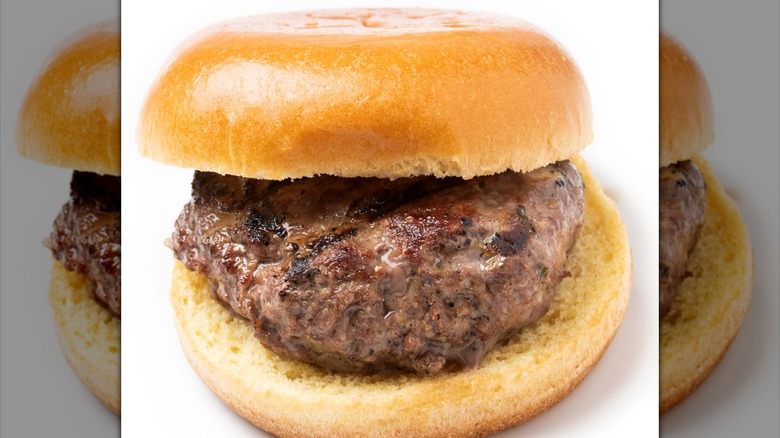
In the 1970s, the Burger King menu looked pretty different to the way it does today. Of course, there was the classic Whopper, but the iconic burger was joined by other less familiar items, like the Yumbo (essentially a hot ham and cheese sandwich), the Whaler (the chain's answer to McDonald's Filet-O-Fish), and The Big Plain. The latter was just as it sounds — it was, quite literally, a plain burger and a bun.
The Big Plain debuted in 1973, but was removed from the menu the following year. The Big Plain was a big flop, largely because, despite its all-American branding, it was pretty dull. It was also more expensive than a Whopper or a regular hamburger, which picky eaters could already easily order without the toppings if they wanted to. "I remember the Big Plain burgers," recalls one Redditor in the r/TheWayWeWere subreddit. "I think my friends and I had one or two and concluded they sucked."
Hot dogs
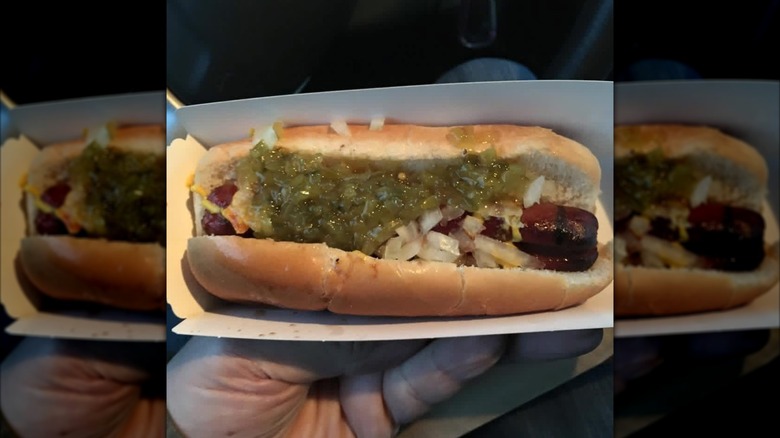
When you go to Burger King, you've probably got one thing on your mind: Hot dogs. Pardon? Clearly, that's not the case for most of us when we step through the doors of the Home of the Whopper. But back in 2016, Burger King tried its best to make hot dogs happen anyway. Burger King added two hot dog options to its national menu, one with chili and one with regular ketchup, mustard, and relish, both made with grilled Oscar Meyer links.
Burger King had done its research with the Grilled Dogs, spending more than a year trialing the menu items in select locations. But it seems it wasn't enough. The BK hot dogs disappeared shortly after they were introduced. "I just tried to order two hotdogs at my local Burger King," reads one Reddit post in r/fastfood from 2017. "They weren't amazing or anything, but I was just told that the item has been discontinued." It seems many people did not share this sentiment. "I tried them once and they sucked," added another user. "Small, hard, rubbery hot dogs lost in a sea of relish and mustard."
Burger King isn't the only fast food chain to attempt to add hot dogs to the menu. Wendy's, McDonald's, and even Pizza Hut (which, in a more unusual menu item, stuck them in a pizza crust) have experimented with the glizzies in the past. Unfortunately, none have stuck around for the long haul.
Satisfries
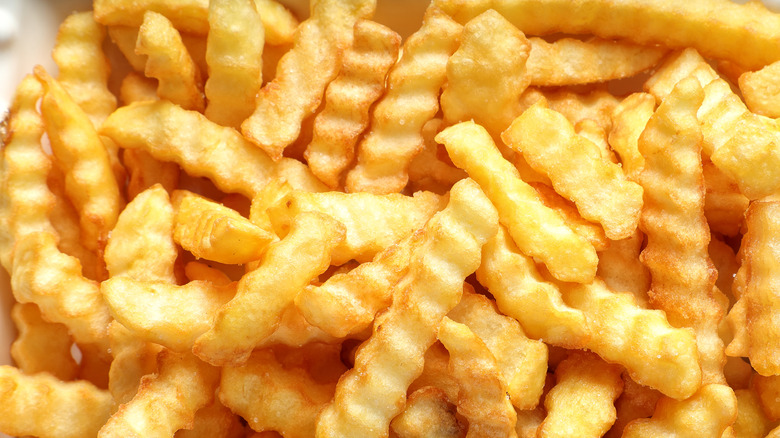
Before the hot dog flop, Burger King tried to reinvent fries. It's a tall order for any fast food chain, and as you won't be surprised to learn given the subject of this article, Burger King did not manage it successfully.
Launched in 2013, Satisfries were supposed to be a lower fat version of the chain's regular fries. They were also more expensive and crinkle cut — both factors that likely worked against their success. In 2025, research by McCain Foods and Talker Research found that the overwhelming majority of Americans prefer straight-cut fries to other varieties.
But according to many who tried the Satisfries, it wasn't the cut of the fry that was the problem, but the lack of flavor. One illustration posted to Reddit's r/funny subreddit, which received 1600 upvotes, refers to them as Saddest Fries. "I have to agree after getting a stray one in my normal fries," commented another user. "Who the hell goes to BK for lower fat fries? Blasphemy." By 2014, Satisfries were gone from the menu for good. It turns out, when most people go to Burger King, they're not usually overly fussed about healthy options. Who knew?
The Seven Inch Cheeseburger ad
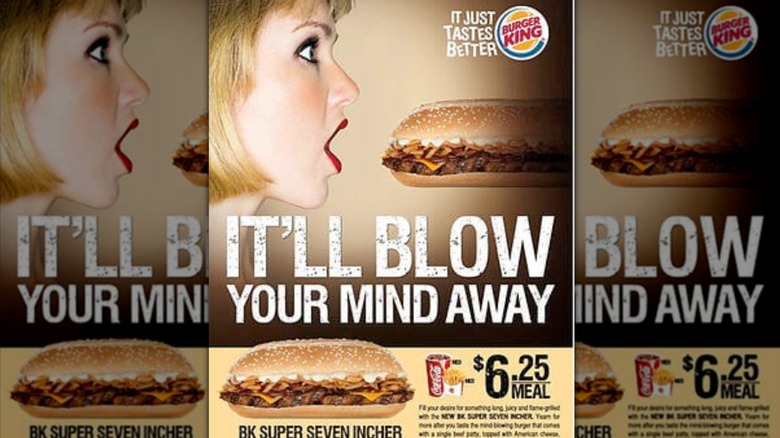
Burger King has produced some seriously weird promotions in its time. In 2018, for example, during the World Cup, Burger King Russia offered $47,000 and a lifetime supply of Whoppers to any woman who got pregnant with a soccer player's baby. Yes, that actually happened. Nearly a decade earlier, Burger King Singapore also found itself in hot water when it released an ad for its BK Super Seven Incher burger with the caption "It'll blow your mind away." Above the caption, there was an image of a woman with her mouth open next to the long seven-inch burger.
The print ad, which was listed in Time Magazine's top 10 Tasteless Ads, was widely criticised for being misogynistic. It turns out, the model who appeared in the commercial also hadn't been informed about exactly how her image was going to be used. "Burger King found my photo online from a series I did," she wrote in a YouTube video description, as reported by Fox News. "and with no due regard to me as a person, profited off reducing me to an orifice ... publicly humiliating me in the process." It appears the model's video has since been deleted from the platform.
The Where's Herb? campaign
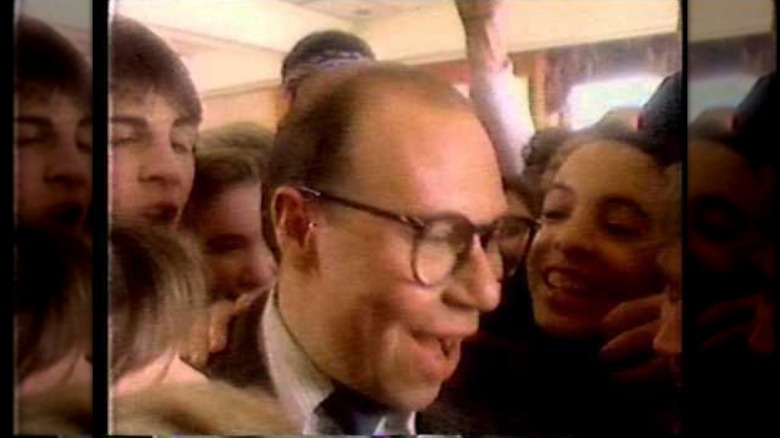
Another failed Burger King campaign occurred in the middle of the 1980s. This one was less controversial, but it was seemingly pointless. The campaign, called 'Where's Herb?', involved sending customers on a wild goose chase looking for a man called, you guessed it, Herb. Mysterious ads started appearing in newspapers and then on the television, urging customers to seek him out. Little information was given about Herb, other than his name, a black and white image with a bowling ball in front of his face, and the fact that he'd never eaten anything from Burger King.
During the Super Bowl, Herb was revealed as a clumsy nerd from Wisconsin, played by the actor Jon Menick. It seems that Herb was supposed to be the new Burger King mascot (after trying a burger, he obviously fell in love with the fast food giant), and Menick even went on tour in character. But ultimately, Burger King misjudged how much people would actually care about Herb. The entire campaign cost $40 million, but in the end, Burger King's profits ended up falling significantly.
"It's actually a fairly instructive case study for young marketing minds," explained one former advertising student in the r/todayilearned subreddit in a comment with 11,000 upvotes. "Bottom line: where's the benefit? 'BK's burgers taste great because a stranger named Herb hasn't been there before' isn't even a tenuous, abstract hint of a benefit statement. It's just dorkiness for its own sake."
The Whopperito
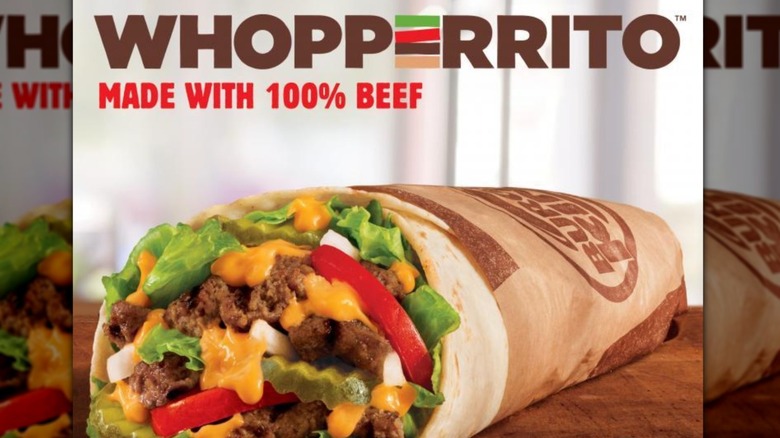
Sometimes, fast food chains go off brand, and sometimes, it works. McDonald's Lobster Rolls, for example, were actually pretty popular in New England, and its McSpaghetti is beloved in the Philippines. But experimenting doesn't always pay off, as Burger King learned in 2016 when it launched The Whopperito.
As you've probably guessed from the name, the menu item featured the Whopper burger ingredients wrapped up in a tortilla instead of a classic bun and slathered in queso sauce. The idea behind it was to cash in on America's love of Tex Mex cuisine, but it didn't quite deliver. According to some who tried it, it wasn't different enough from a regular Whopper to be exciting, while others condemned its sloppy presentation.
"I adore fast food and I think this looks so repulsive," wrote one Reddit user in r/fastfood. Another added: "If this were a whopper on a tortilla, I'd have loved this. Instead, [it's] an actual attempt at a burrito. Mine tasted like taco seasoning and little else." Given these pretty scathing reviews, you probably won't be surprised to learn that the Whopperito only lasted for a few months before it was discontinued.
The Halloween Whopper
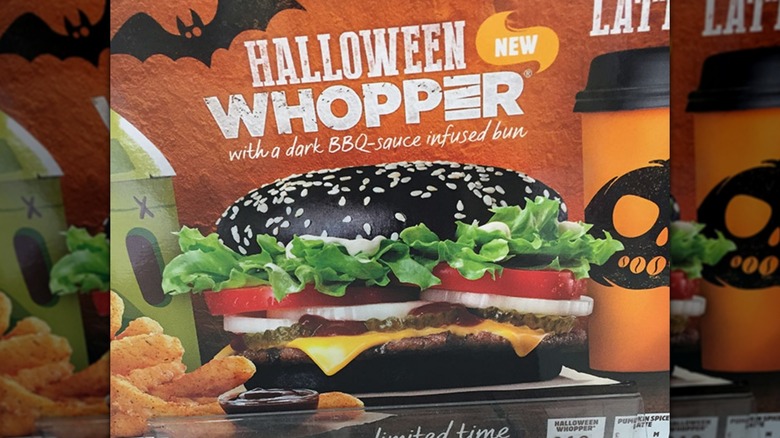
Burger King rarely shies away from a Halloween themed menu item. In 2025, for example, it launched a Monster Menu, complete with an orange Jack-O-Lantern Whopper, and in 2024, it opted for an Addams Family limited-edition menu with items like Gomez's Churro Fries and Wednesday's Whopper, featuring a purple bun. Usually, the Halloween burgers have a similar theme: They're just the regular patty, but with a fun name and a food dyed bun.
However, back in 2015, this approach went a little wrong for Burger King. It launched the Halloween Whopper Sandwich, with a black bun dyed with steak sauce. And shortly after, customers started panicking over the sight of green, er, remenants in the toilet bowl.
Yep, it turns out, the bun's food coloring scared many people. And not in the fun Halloween spooky way, but in the genuinely-concerned-for-your-bowel-health way. "It was wild, it was bright green, like green play-doh," recalls one Redditor in r/todayilearned. Another chimed in: "I have first hand experience with this. I also have a wife who got a very scared husband calling her at work about it."
The Real Meals
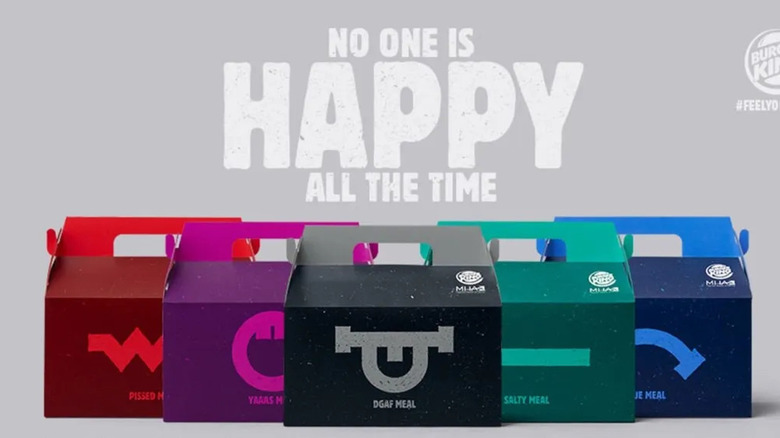
In 2019, Burger King decided it was going to try and show its customers that it cared about their mental health. How? By making mental health-themed burgers, of course. The Real Meals campaign featured options like The Blue Meal, the Salty Meal, the Yaaas Meal, and the DGAF Meal. Each contained the same items, a Whopper, a drink, and fries, but the idea was that customers would order the different branded packaging based on how they felt. It appeared to be a thinly veiled jab at McDonald's Happy Meals, and not everyone appreciated it.
In fact, some felt that the promotion was a disingenuous attempt to use mental health awareness to sell fast food. "I think the main reason this is getting backlash is because it's viewed as part of a wider trend of corporations trying to score brownie points by attaching themselves to a particular movement or ideology in order to attract sales," explained one Redditor in r/OutOfTheLoop.