

The 16 Weirdest Burger King Promotions We Can't Believe Got Greenlit
Burger King is everywhere, with cheery, slightly 1970s-feeling logos and a vintage color scheme. But BK is also very, very weird, and it's possible you're so used to seeing them sitting on so many street corners that you don't even clock some of the what-the-heck that's going on here. We'd even go as far as to say that a deep dive into the strangest BK promotions might change your opinion of this ubiquitous chain, one that's not so much sitting in your periphery as it's lurking there with an unsettling sort of grin.
Promotions come fast and furious at BK — just take the Whopper, for example. There have been a ton of absolutely wild Whoppers that have hit the market, like the 2019 "Stranger Things" Upside Down Whopper. That was — wait for it — a Whopper. Served upside down. Literally. That was it. That's how the vast majority of our Whoppers have come out of the take-out bag anyway, but this one was such a big deal that it was only offered in 11 different cities. Huh.
As far as BK goes, it turns out that's tame. We wanted to take a look at some of the strangest, most unsettling, and sometimes wildly offensive campaigns, promotions, and ads the chain has ever greenlit, and it did not disappoint. We would have loved to be a fly on the wall during some of these pitch meetings, because seriously: what the heck, Burger King?
The Subservient Chicken
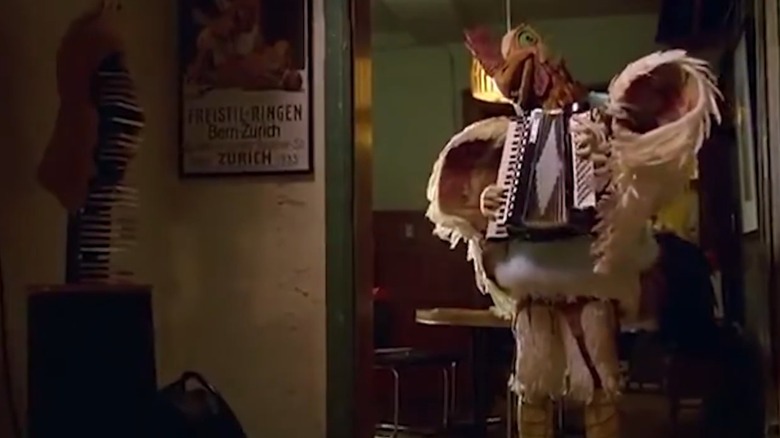
The world was a different place back in 2004, but Subservient Chicken was still perhaps one of the most what-could-possibly-go-wrong ideas in advertising. The idea was that a person dressed in a massive chicken costume would do anything they were asked ... within reason. Sort of. Along with a series of commercials was a website where visitors could type in commands the chicken would obey.
Tame commands included things like getting the chicken — who was confined to a rather dismal-looking living room — to moonwalk, do a somersault, or salute. X-rated or otherwise inappropriate gestures were met with a scolding finger-wag, but a peek at the database of commands that were programmed into the site is ... weird. While commercials included some rather risque dancing, you could order the chicken to relieve themselves on the furniture.
It was all done to publicize the release of a new chicken sandwich, and it got around a billion hits. The Subservient Chicken was brought back in 2014 when BK kicked off a campaign to find the now-missing bird, and honestly, maybe they should stay missing.
Whopper Sacrifice
If you've ever wondered what your friends really think of you, you're not alone. Back in 2009, you could find out in a hilariously heartless way after Burger King promised to hand out coupons for free Whoppers to anyone who deleted 10 friends from their Facebook profile. It turns out friendship doesn't mean a lot when there's free food involved. It was wildly successful, despite how there was a major catch — anyone who got deleted would be notified of the sacrifice.
It took about a week and a half before Facebook shut the whole thing down over privacy concerns, but BK had already given away about 20,000 Whoppers. That's somewhere around 200,000 broken friendships, if you're counting, and while there's no way to know how many friends took it in stride, we're going to go out on a limb and say that grudges are probably still held.
Find Herb
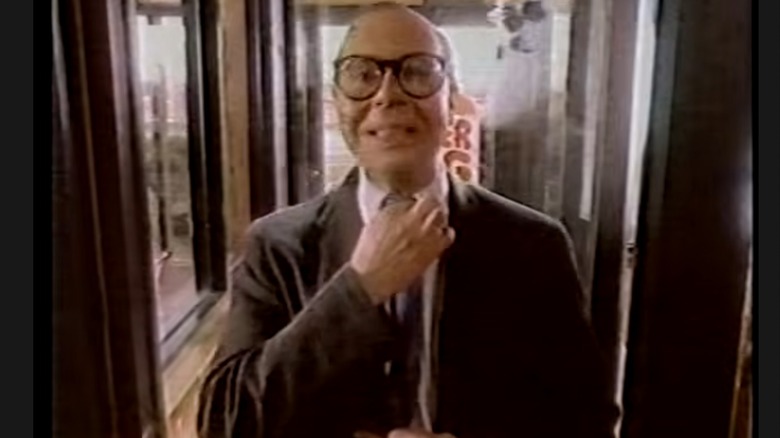
Back in 1986, Burger King introduced Herb, who was notable because he'd never had a Whopper before. Ever. After he tried one and found it delicious, he started popping up in Burger King locations across the country. The gimmick was that if you found him, you could win $5,000. It's far from terrible at a glance, but it became notorious for being one of the chain's most hated ad campaigns.
There are a few reasons for that, starting with the fact that the campaign kicked off with a series of ads that name-dropped some dude named Herb, with zero context. People named Herb or Herbert were so annoyed that there were plans of lawsuits, and some came forward to say they felt personally threatened.
The big reveal was that Herb was just sort of a nondescript, bland character, and when you add in controversies about the prize money being improperly awarded after a minor was among the first to spot him, it wasn't a great look. It ended up costing the chain millions, which was exactly the opposite of what was supposed to happen.
Student-debt sweepstakes
Every so often, an ad campaign comes along that takes an ever-growing national crisis and turns it into a marketing opportunity to sell burgers. What do you mean, that's terrible and would never happen? It did back in 2019, when Burger King sent a tweet asking followers how much student debt they were carrying. People responded — with a lot of personal financial information — and were ultimately told to head to the app and enter to win for a chance at $500 weekly prizes or the $100,000 grand prize, which would go toward paying off student loans.
The media quickly pointed out that BK was essentially taking advantage of a devastating problem to encourage more people to download its app, and at the end of the day, there were some serious "Hunger Games" vibes. At the time, Americans had over a trillion dollars in student debt, and the idea of offering a total of 300 prizes per week to a nation filled with people laboring under massive debt was perhaps not the thoughtful, selfless act that it was pitched as.
Whopper Detour
We all know our tech already knows way too much about us. If you doubt it, just give a product you've never used a shout-out around your phone, and see how long before it shows up on your social media. It makes sense that some have raised concerns over a 2018 marketing campaign that saw BK offering app users a coupon for a one-cent Whopper ... with some conditions.
Customers needed to activate location tracking, then order via the BK app while standing in or near a McDonald's. It was a wild success, and pushed the BK app into a position of huge popularity during the promotional period. There is a footnote: Geofencing and using GPS tech to track people has become wildly controversial — and it's even been debated in courts whether or not it violates the Fourth Amendment. Add in court cases where Burger King has been sued over illegal web tracking practices, and you see where this is questionable, right?
The Super Seven Incher
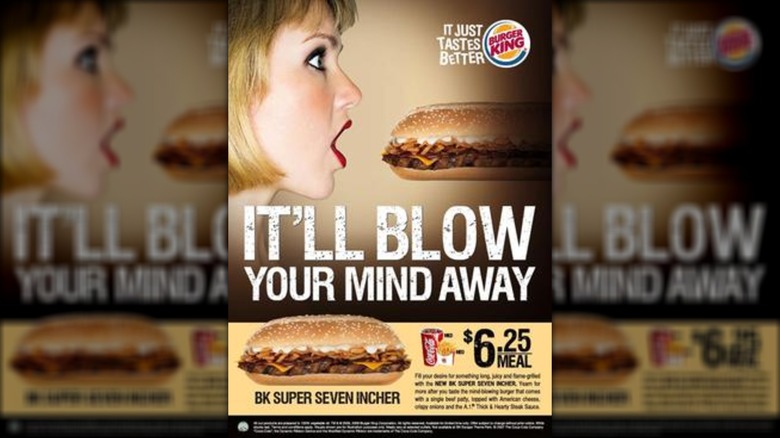
Now, we're going to head back to 2009 and a campaign meant for Singapore. Because we live in a world that's connected by the internet, the images in the advertising campaign for the chain's so-called Super Seven Incher have spread, and it's called one of the most uncomfortably suggestive ads that's seen the light of day in a long time. The burger being advertised is a seven-inch-long cheeseburger, and if that pre-teen adolescent part of your mind conjured up an image, snickered a bit, then tried to backtrack in an oh-no-they-didn't kind of way ... take note that Burger King absolutely did.
Really, BK? Really ... really? To add to the controversy, the woman pictured went public, claiming she had no idea her photo was going to be used in an obviously explicit ad. She had simply done a photo shoot for a series of stock images, which were then used in a way perhaps best described as icky.
2018's World Cup pregnancy challenge
Did we ever think we would have to write "2018's World Cup pregnancy challenge" in any context? No, but thanks to Burger King, we can cross that off our bingo card of 21st century dystopian weirdness. That year's event was held in Russia, and Burger King's Russian arm got a little overexcited. It got so excited, in fact, it sent out a tweet that promised any Russian woman who conceived a child with a football player would earn a lifetime of free Whoppers, along with $47,000.
BK doubled down and specified that it was hoping that the move would help keep all the best football genes right in Russia where they belonged, and if you're thinking it couldn't actually have meant that, the quickly deleted tweet continued (via USA Today): "It is a reward for the girls who would get pregnant from the international football superstars." To say it didn't go over well is an understatement, and an apology was issued.
Scary Clown Day
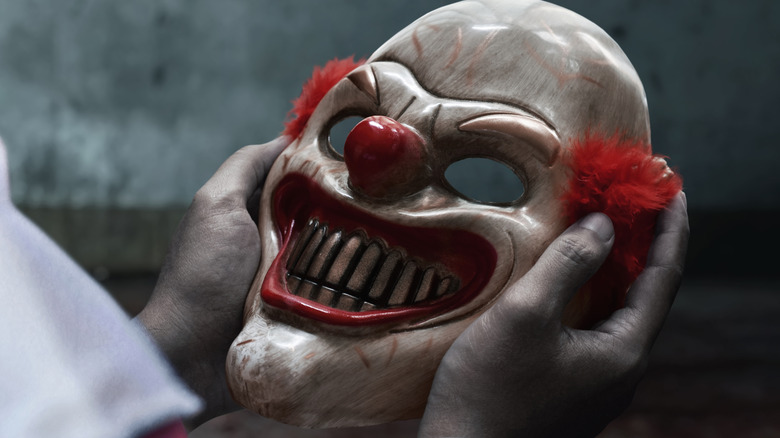
Can we agree that clowns are scary? Yes? Good. In 2017, Burger King took a swing at McDonald's with a promotion that invited customers to stop by on Halloween. Dress as a terrifying clown, and you could score a free Whopper. Not only is that some serious shade from a company said to have one of the worst mascots in food history, but we'd argue the timing was questionable.
A year prior, there were some weird things going on in the U.S. Specifically, there was a rash of clown sightings that started in Wisconsin and spread across the country. Although the initial sighting in August was found to be the work of amateur filmmakers, reports of clowns targeting, chasing, threatening, and harassing children started to spread. It escalated, and there was a worry about child predators using the epidemic to stalk victims. By October, there were a slew of arrests, robberies, and assaults perpetrated by people dressed as clowns, and Burger King's decision seems a little odd in that light.
BK's international clown weirdness
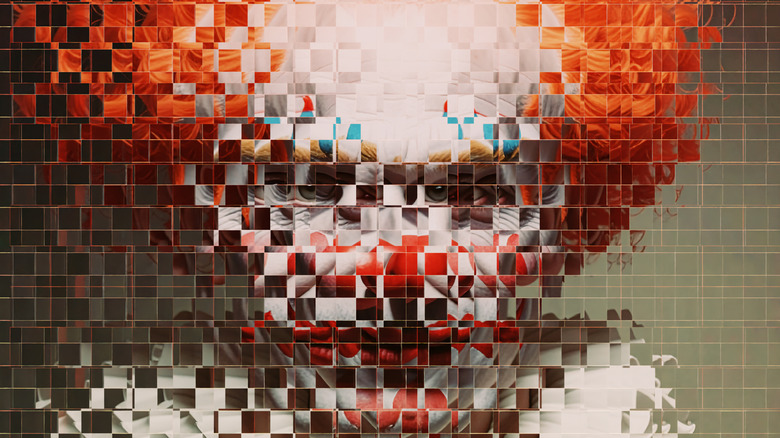
Burger King U.S. isn't the only one to take every opportunity to point out the fact that McDonald's mascot is just a short hop, skip, and a jump from Creepyville. Anyone who headed into a Burger King bathroom in Sweden or Denmark in 2020 could repeat "canceled clown" three times to kick off a Bloody Mary-esque show that turned off the lights and manifested the image of a terrifying clown in the mirror, which is precisely what you might want not to happen if you're just in there minding your own business.
Germany's stunt was perhaps worse. Remember when Domino's had to abandon its famous 30-minute delivery promise after it found out the hard way that racing against the clock for food was a great way to cause accidents? In 2019, McD's customers with a BK app on their phone would get a ping to race to the nearest Burger King if they wanted a one-cent Whopper. The so-called EscapeTheClown campaign was perhaps not the safest.
Finally, that same year was when BK Spain decided to use real photos of terrified and crying children in its Birthdays Should Be Happy campaign. There's no acting here, as ad exec Tomas Ostiglia explained to Little Black Book, "These photos were taken at real birthday parties, and they are as real as the fear of clowns. You can't fake the tears of a child."
Real Meals
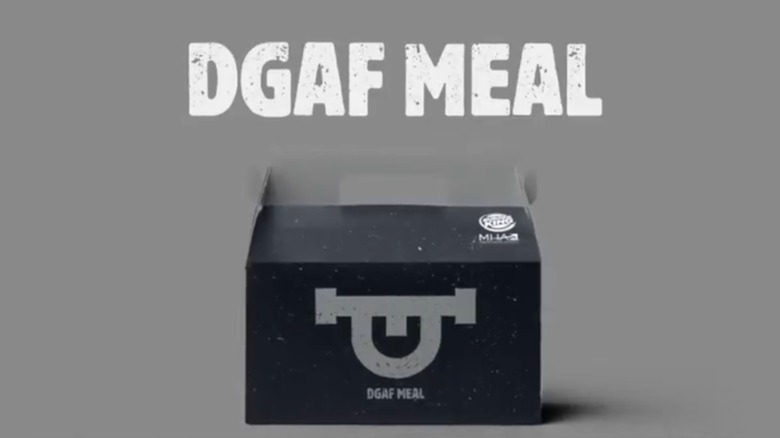
McDonald's Happy Meals have changed a lot over the years, but what hasn't changed is the fact that life is hard and oftentimes stupid, and sometimes we just want to play with our little toy and ride that wave of dopamine for as long as it lasts. In 2019, Burger King took May's Mental Health Awareness Month as a chance to release its own Real Meals, with the slogan "No One is Happy All The Time." Meals included the Blue Meal and the DGAF Meal, and reactions were mixed. Although some lauded it as a great way to help raise awareness, it was widely panned as an incredibly half-hearted, ridiculously insensitive attempt to hop on a bandwagon while not actually doing anything productive or bringing anything useful to the conversation.
On one hand, Mental Health America had been involved with the development of the campaign, but overall, the delivery ended up lacking, with many social media users accusing BK of trivializing the sensitive issue of mental health.
The quest to find a Whopper Virgin
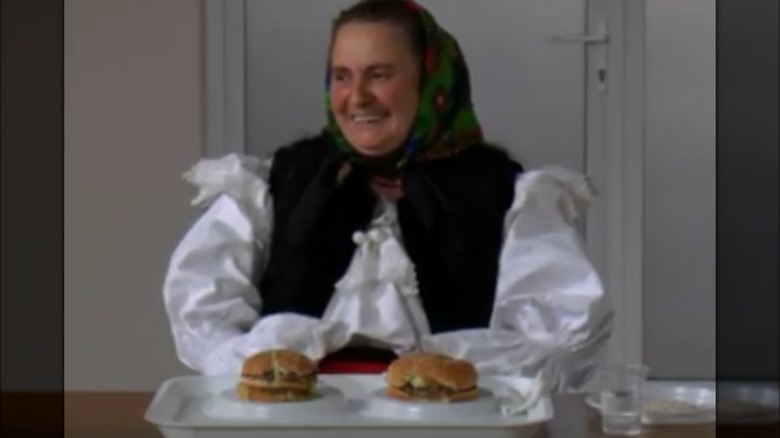
You know a campaign misses the mark when there are academic studies explaining why it's offensive, and we're talking about Burger King's Whopper Virgin campaign. In 2008, Burger King sent representatives to remote locations in Greenland, Thailand, and Romania to find people who had never had a Whopper and ask them to participate in a taste test. The problem was that many of the areas featured were areas of extreme poverty and widespread hunger crises, and while it ended up being a popular campaign on paper, the problem experts had wasn't even twofold; it was manyfold.
Not only was BK accused of misrepresenting various cultures in a way that was xenophobic and colonialist, but it was described as trivializing massive, sweeping, and devastating social problems. Mainstream media condemned it for being a tasteless attempt at exploiting different cultures and peoples, and it was even spoofed by "Saturday Night Live."
BK's Google Home hack
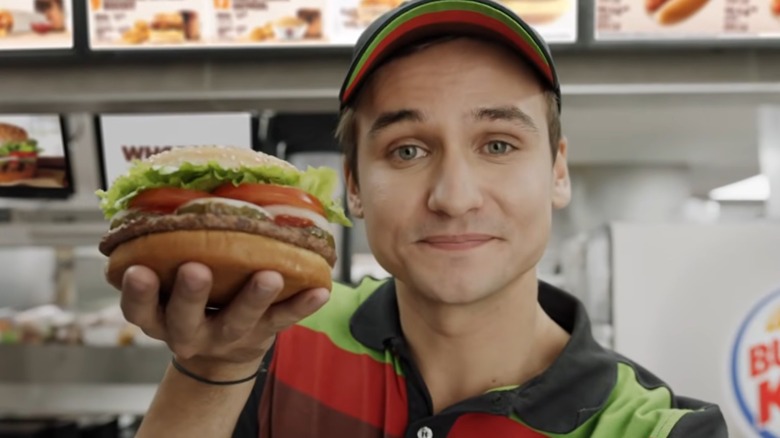
Sometimes, it's amazing to see companies get comeuppance after overstepping, and that happened in 2017. Burger King thought it would be cool if it released a commercial designed to trigger Google Home and Android phones of anyone who was watching, and get those devices to read a Wikipedia entry on the chain's famous Whopper. The idea was that BK would get something of an interactive commercial without having to pay for the TV time, but the chain apparently forgot that anyone can edit a Wikipedia page.
People did not, however, forget that last fact, and the chaos was nothing short of magical. Google quickly shut the whole thing down, but for a brief moment, viewers were treated to an interactive experience in which the ingredients of a Whopper were proudly advertised to include toenail clippings, rats, cyanide, and human children. Well played, intrepid editors of Wikipedia. Well played.
Burger King UK's poorly planned International Women's Day post
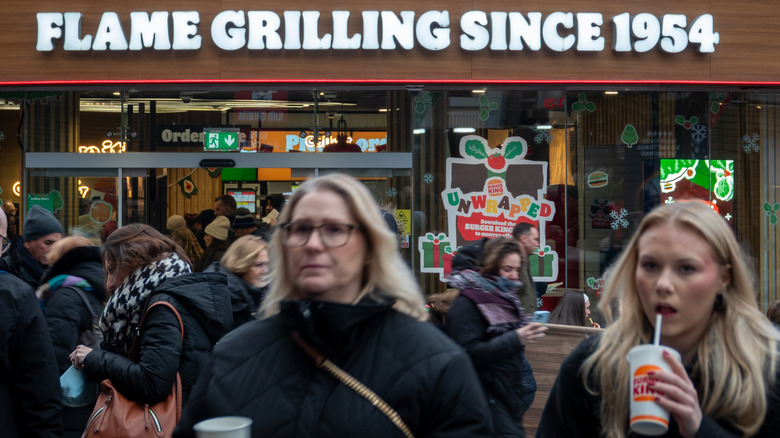
Context is everything, and when you only have a certain number of characters to get your point across, you'd better choose wisely. Burger King has a track record of doing just the opposite of that, and in 2021, it took International Women's Day as the perfect opportunity to tweet, "Women belong in the kitchen."
Oh, dear. That tweet has been deleted from the Burger King UK account, but you'd better believe it's been preserved by mainstream outlets like USA Today. The chain went on to explain that it was its way of announcing a scholarship program for women looking to enter culinary schools, and it very, very quickly found itself the target of a ton of comments condemning the use of a sexist stereotype and oppressive, old-school beliefs in a misguided attempt to shine a light on gender issues and inequality in professional kitchens. Whoops.
Austria's Pride Month ad
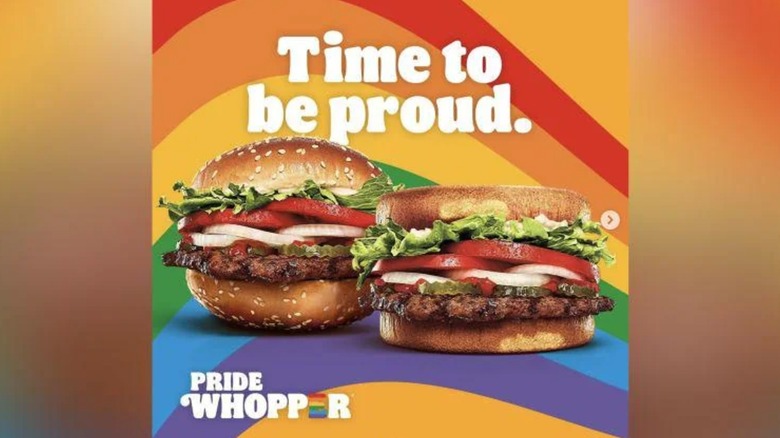
If you're designing an ad for a certain campaign, it's generally a good idea to be familiar with the community or cause you're working with. In 2022, Burger King Austria tried to show a little solidarity with the LGBTQ+ community. Unfortunately, it did it by releasing a Pride Whopper that came with — you guessed it — two top or two bottom buns.
The idea was to promote equality, but those in and familiar with the community know that there's another meaning here that got this one the side-eye at best, and accusations of trying to cash in on Pride Month while clearly not knowing anything about ... well, anything, really. The ad agency apologized profusely, claiming that it hadn't meant any harm, and was walking away from the whole thing with lessons on how important it is to do a little research into the communities they're trying to support.
Stealing Mister Rogers
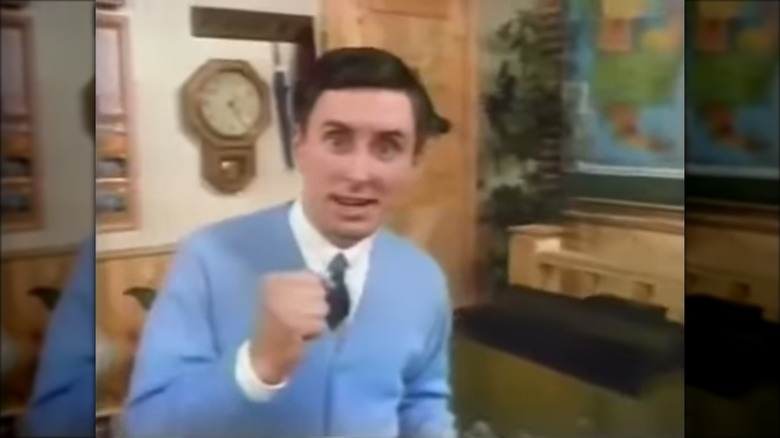
The sweater-wearing Fred Rogers has shaped countless childhoods and taught invaluable lessons on being kind to ourselves and each other, and those are the kind of lessons we need more of these days, honestly. If you're worried about why he's on a list about Burger King tragedies, well, just keep reading.
In 1984, Burger King decided it was a great idea to run some ads featuring a Mister Rogers look-alike they named Mister Rodney. He was going to teach kids about the importance of flame-broiled burgers, and to Burger King's credit, it took a complaint from the real Fred Rogers to convince them never to air the ad again.
The problem he had was that he was afraid that his young audience would be confused by this look-alike with a message of capitalism and consumption, and there's a hilarious footnote to his. According to a story told by one of the directors behind Mister Rogers' show, the real deal met the actor who had portrayed him in the commercial while shooting in New York City. Mister Rogers told him he did excellently, wished him well, and shook his hand. Who's chopping onions in here?
BK vs. Slipknot
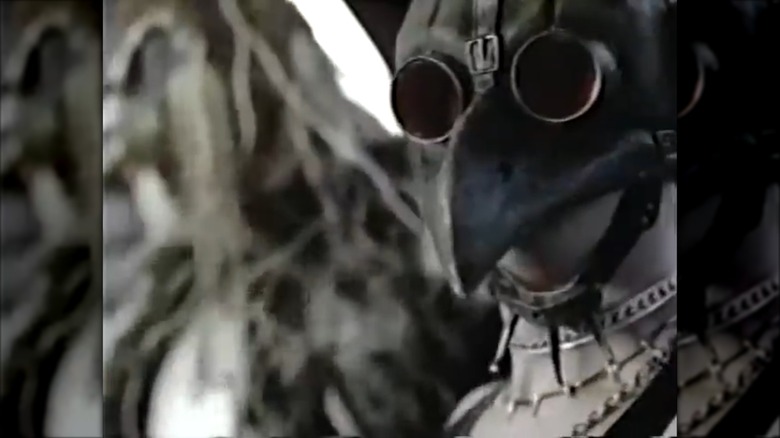
Burger King has found itself the subject of a number of scandals, but one of the strangest has to be the time it was sued by Slipknot. (Again, another sentence we never thought we'd write, but here we are.) In a nutshell, BK approached a different band and asked them to be in an ad campaign for chicken fries. When they said no, BK decided nobody was going to tell it what to do, created a not-at-all-Slipknot-esque band dubbed Coq Roq, and went ahead with the campaign.
Slipknot predictably sued for trademark infringement, but Burger King stood firm and countersued, claiming that its parody was perfectly legal, thank you very much. Slipknot wasn't the only major band to hide their faces behind masks and makeup, and the thing is that they weren't wrong. The original lawsuit and countersuit ended up simply going away, relegated to one of the stranger chapters in both rock and fast food history.