

12 Food Brands With Fascinating (And Sometimes Dark) World War II-Era Histories
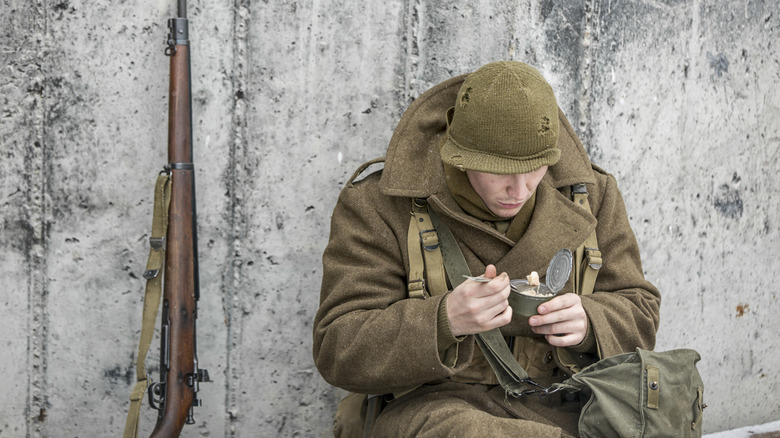
It's easy to get caught up in all the new viral food trends or the latest hacks that promise to give your meals a serious upgrade, but we'd argue that our collective foodie history is just as important. Finding out how food shaped world events can be a humbling experience, and even in our 21st century world, we use ingredients every day that date back to ancient times. We want to take a look at something a little more recent, though, and that's World War II.
Conflict happened on a massive scale, and armies needed to figure out how to feed millions. An estimated 127.2 million people were involved in World War II, and that's hard to put into context. We'll help: at the time of this writing, the population of the entire U.S. is just under 343 million. That's a lot of people that all needed to be supplied over the course of the six-year conflict, and some of the brands you're still familiar with today were front and center... on both sides.
And we're not just talking about supplying foodstuffs, either. Some existing brands transitioned into some pretty surprising wartime roles, while others shifted the focus of manufacturing to specific items pivotal to daily wartime life. Some brands were born out of necessity, intrepid soldiers repurposed some of your favorite foods in strange and sometimes life-saving ways, and for some? Familiar names in ration packs became a touchstone that reminded them of what they were fighting for.
Hershey
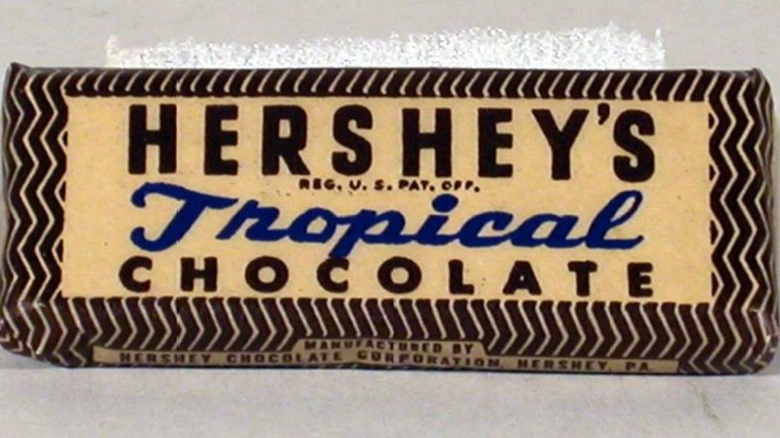
Today, Hershey is perhaps best known as the parent company behind a staggering number of brands, and the manufacturer of some of the most reviled chocolate in Europe. That's bizarre, because Hershey's contributions to World War II were so extraordinary that the company was honored with the Army-Navy 'E' Production Award a whopping five times. Part was in recognition of Hershey's commitment to manufacturing and supplying troop rations, but there's more to the story.
Hershey also developed several different kinds of chocolate for the war effort, starting with a nutrient-rich bar that could be used as an emergency food source. At the military's behest, the company tested hundreds of different recipes before settling on one that was lightweight, high in calories and vitamins, heat-resistant, and not at all tasty. (That was to keep soldiers from eating them until it truly was an emergency.) Versions were made for several different climates, and there are plenty of soldiers who confirmed that they had, in fact, been life-saving.
Hershey products made it into ration kits, long-haul aircraft supplies, and even packages given to prisoners of war. Speaking of POWs, Hershey lent a hand there, too. In 1942, the Hotel Hershey was turned into a POW camp, and used to house nearly 100 Vichy French detainees. (The Vichy government was established after the Nazi occupation of France, and its role in atrocities committed during that occupation has been debated for years.)
Cheerios
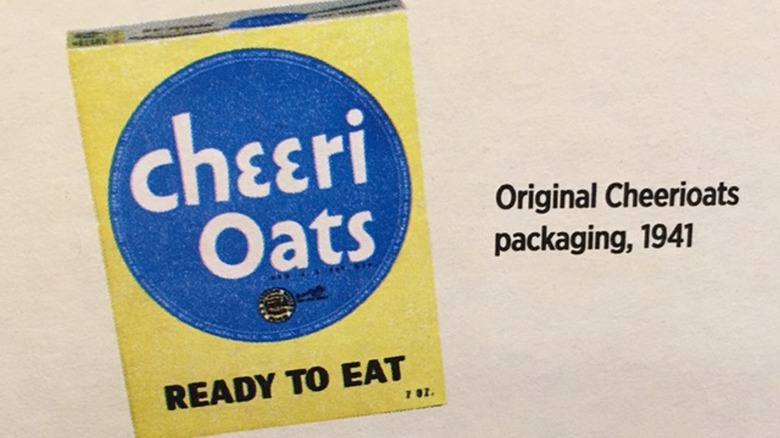
Those fighting overseas weren't the only ones that needed to be fed, of course, and at a time when rationing guidelines were in full force, some companies stepped up with some incredible innovations to help make the most of what resources were available. In 1941, a new product hit the shelves, and it was marketed as a nutritional, easy-to-prepare breakfast that required no cooking and — in an era when sugar was strictly rationed — no added ingredients to turn it into something the kids would love. It was Cheerioats, the puffed cereal we all know today ... albeit under a slightly different name.
The switch to the Cheerios name came in 1945, and by then, it was a huge deal. The entire family dynamic switched during wartime, with many women drafted into the workforce to fill much-needed positions outside the home. Oatmeal takes time that busy families were scrambling to find; Cheerioats were instant and so completely connected to the war effort that Uncle Sam even made appearances in early advertising.
It almost didn't happen. You might think of a group of chefs spearheading an endeavor like this, but Cheerioats' creator was a physicist named Lester Borchardt. When project costs rocketed out of control, it was actually scrapped. (In today's money, more than $2 million was invested.) Insteadm Borchardt kept working, and created the pressurized, high-speed gun that made those perfect little Os.
General Mills
Yes, it's General Mills that was behind the wartime development and popularity of Cheerioats, but the company deserves a shout-out for World War II-ea contributions aside from the development of every toddler's favorite snack. When the war started, General Mills expanded rapidly with a massive hiring push that would allow the company to be on the forefront of producing ration kits for the troops. That's not surprising, perhaps, but things are about to take a turn ... literally.
The company doesn't just produce food, it also develops the technology needed to manufacture a ton of products. During World War II, the company's research and mechanical departments pivoted to military operations. It became a major contributor to the development and production of various precision targeting equipment, including — believe it or not — gun sights and torpedoes.
Back in 2016, a special segment was presented before Congress that recognized the company's 150th birthday, and its contributions to the country's history. Included in that was a mention of the so-called jitterbug torpedo, which was designed to initially miss a target, then lock on for a hit. It's credited with providing an upper hand to Allied Navies, and here are some bonus fun facts: post-war, General Mills (and the University of Minnesota) invented the black box recording units still used in aircraft today.
Spam
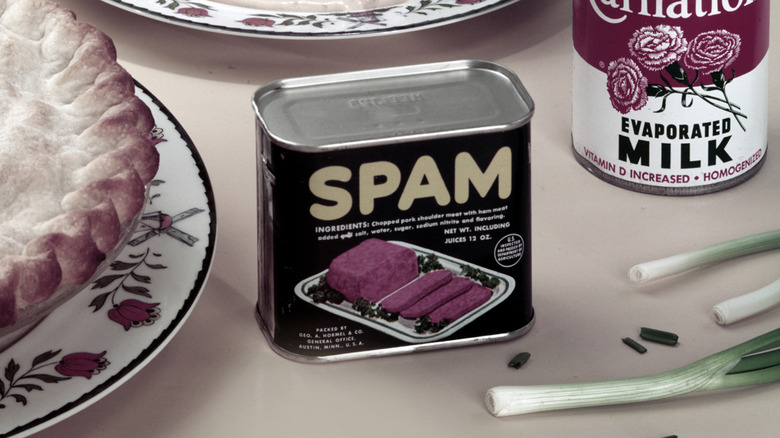
Spam has famously been helping families stretch meals through tough times for decades, ever since it was first introduced, in 1937. Timing couldn't have been more perfect, as it was a brilliant way to feed families on the homefront and soldiers in the field. It was versatile, easy to store and transport, and anyone who's accidentally dropped some of those cans knows they're pretty indestructible.
War-era cookbooks were dedicated to the ways Spam could be used, and it wouldn't be wrong to say that troops got even more creative than those they'd left at home. Spam wasn't just a food. Consider that it had a texture that made it perfect for greasing and lubricating weapons. Also? It turns out that it can be used to make surfaces waterproof, so there's a thing you know.
It makes sense that soldiers figured that one out, because it wasn't uncommon to have Spam on the menu every meal of the day. It was distributed across the Allied nations, and developed such a love-hate sort of following that Hormel proudly kept the most vitriolic letters written by veterans. Spam, however, meant something else to those living in Axis-occupied territories liberated by advancing Allies. In war-torn areas across the Pacific, Spam became a symbol of hope, resilience, and perseverance. By the end of the war, 150 million pounds of Spam had been consumed ... one way or another.
Fanta and Coca-Cola
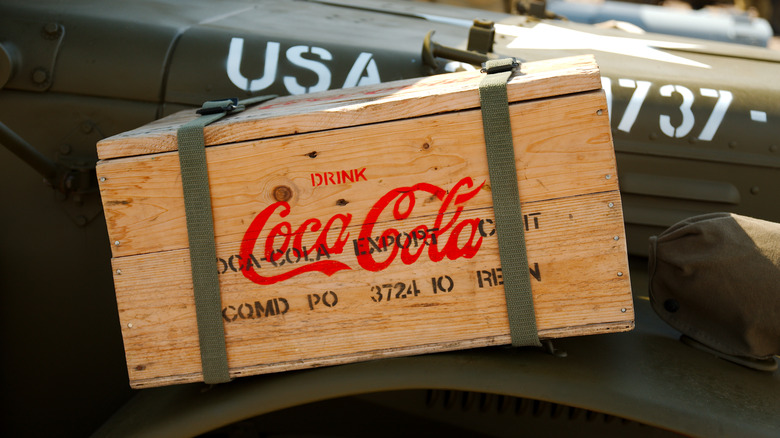
History is complicated, and a few things came together to necessitate the invention of Germany's own fizzy soda. It started in the 1930s with Adolf Hitler's insistence on the development of a national Autarky, a state which would see the country beholden to no others for any goods or services. That included Coca-Cola's syrup, which was initially imported into Nazi Germany.
Even after trade stopped between the U.S. and Germany, Coca-Cola's syrup was an exception. Coke's German branch, meanwhile, had been working on the development of a replacement when the inevitable happened, and when syrup imports stopped in 1942, Fanta was ready to go to market. Chemists had come up with a way to use fruit scraps and byproducts to create an admittedly ever-changing drink, and post-war, Fanta was absorbed into Coca-Cola and given an overhaul with the help of Italy's orange industry.
There's a footnote: the higher-ups of the Third Reich were huge fans of Coca-Cola — so much so that advertising often ran alongside images of Hitler, and were heavily featured at Nazi events. There were attempts by German soda manufacturers to paint Coke as a Jewish-owned intruder, which Cola GmbH formally denied before going on to sponsor the 1936 Berlin Olympics. Gӧring was photographed drinking Coke and popular stories painted Hitler as a fan, too.
Ovaltine
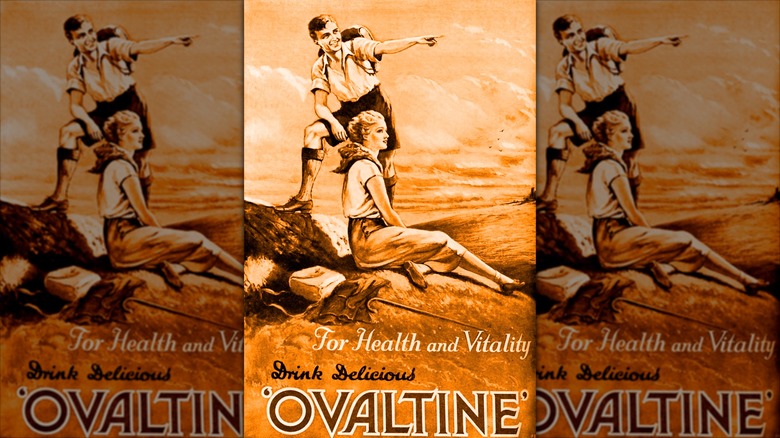
Today, Ovaltine is the secret ingredient that will seriously elevate your whipped cream, but it was initially created as something very different. First called Ovomaltine, it was the product of a Swiss company that had created it as a pharmacy-only product that was essentially an early meal replacement shake.
Fast forward to World War II, and the company switched focus to turn the concept into emergency troop rations. But, you might be thinking, Switzerland was neutral during World War II. You would be correct, but the Swiss still had an army that mobilized into defensive positions along the borders. Meanwhile, Ovaltine spread to the Allies and became incredibly popular in Britain, when it was manufactured as tablets that could be used as an emergency food supplement.
Archived in the BBC's collection of first-hand wartime experiences is the story of one woman who joined the Ovaltine Egg Farm and Dairy Farm complex during the war, and it gives an idea of just how important Ovaltine was. Eggs were hatched 10,000 at a time, milk was carefully monitored for consistency, and there were a number of Ovaltine girls selected to be featured on the brand's advertising. She recalled appearing at various events to promote Ovaltine, and also working alongside German POWs who were occasionally sent to help at the farm. That included one young man who took a liking to her, and after sending her a letter, simply vanished.
M&Ms and Mars
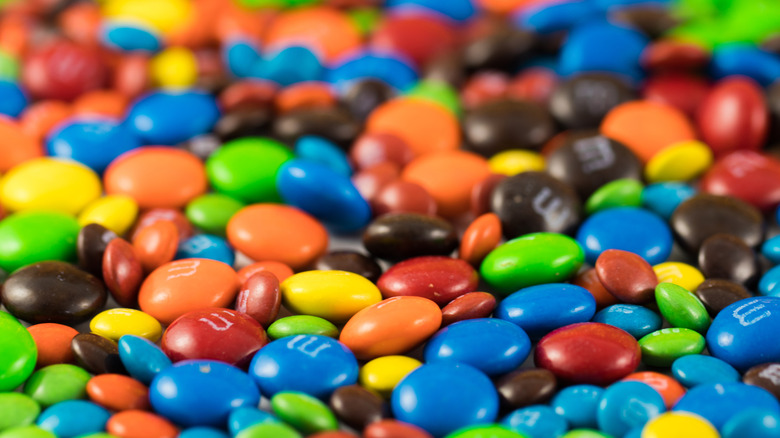
M&Ms were popularized during World War II, and the story is a bit of an odd one. The oft-told tale is that Forrest Mars happened to see soldiers fighting in the Spanish Civil War eating candy-covered chocolates, and when he returned stateside, he ended up manufacturing M&Ms as an ultra-durable and military-only candy given to Allied soldiers. That's the story, but the truth is no one knows the details as the Mars family is incredibly reclusive — and we're going to circle back to that.
We do know that an almost identical product hit the market simultaneously in the UK. Those are called Smarties, and that gives credence to the idea Mars may have been traveling with Rowntree's George Harris when they saw these mysterious candies. (Who made them and what were they? That part is conspicuously absent from the tale.)
That's not the only history we want to mention. When Mars died in 1999, it served as a reminder of just how private the family was. Historians say that devotion to privacy stems from a wartime incident, this one involving rice. The 1940s saw Mars bringing another food advancement back from Europe, and it's the preparation method that allows for the quick-cooking, long-lasting rice that the company released under the Uncle Ben's label. (And is now Ben's Original.) News of the patent got out, the military tried to muscle in on things for the war effort, and Mars largely retreated from the public eye.
Dr. Oetker
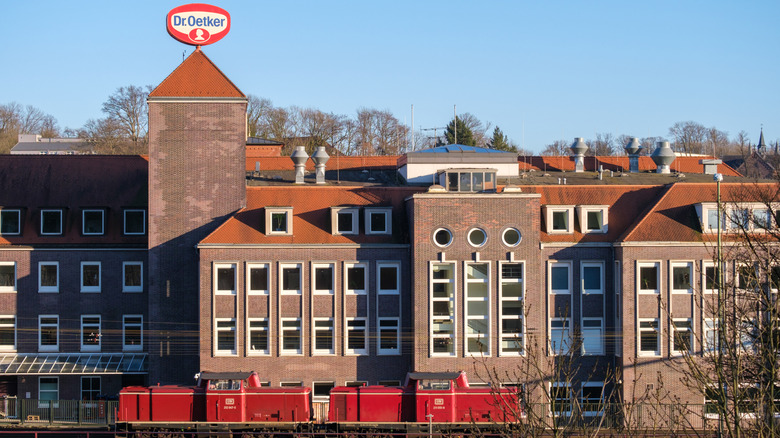
Dr. Oetker is best known for its baking products and pizzas, and it started with a German pharmacy in 1891. It's continued to be passed through the family and made headlines in 2013, when it revealed the results of a deep dive it had done into the company's war-era history. At the time, the company was in the hands of August Oetker. He was straightforward about the fact that his father, Rudolf-August Oetker, and his father's stepfather, Richard Kaselowsky, had been supporters of the Nazi Party.
Rudolf-August Oetker was a member of the Waffen SS, trained at the concentration camp at Dachau, organized the use of forced labor in the company's factories, and was a major supplier to the Nazi Army. Kaselowsky belonged to the Circle of Friends of the Reichsführer-SS, which was an organization of some of the most powerful people in Germany who were united by a commitment to finance the Nazi Party. Dr. Oetker's company historycredits the former with diversifying the company and building it into a power, the latter for turning the company into a "Model National Socialist Enterprise."
Rudolf-August Oetker — who died in 2007 — also possessed a 4,500-piece art collection that has been found to include pieces looted by the Nazis. The current generation has gotten high praise for not only doing thorough research to discover which pieces were illicitly obtained, but return them to heirs and publicize the trruth behind their company's history.
Tootsie Roll
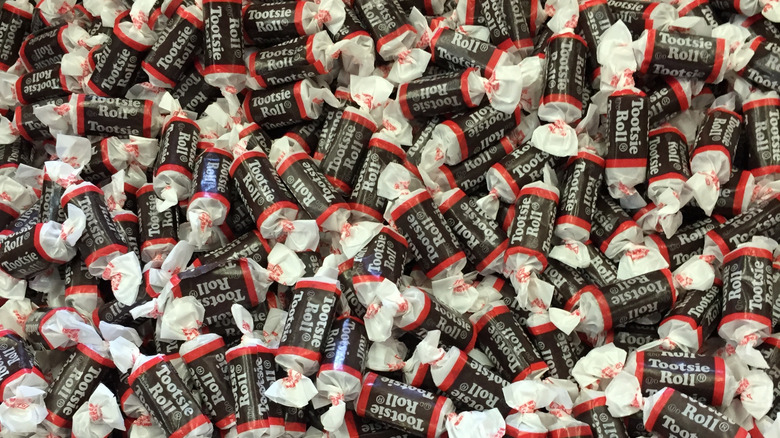
Tootsie Rolls have been around for ages, and were the first wrapped penny candy in the U.S. They were invented in 1896, and became popular in the early 20th century because they didn't melt when the hot weather settled in. Today's Tootsie Rolls are pretty much the same they've always been, and it's that same heat-resistant characteristic that made them so important during World War II.
In addition to being advertised as a sort of adult energy bar, they were so useful in the field that during the war, the military directly contracted with the Stern & Saalberg Co. to produce Tootsie Rolls for rations. There, they served as a conveniently durable snack that also happened to be just the right size to fit into a bullet hole. Did that take an unexpected turn? It absolutely did.
Tootsie Rolls were so important that they remained a military mainstay. Soldiers in the Korean War also carried them in their rations, where they were used for everything from a quick treat to — again — repairing bullet holes in equipment.
Wrigley's
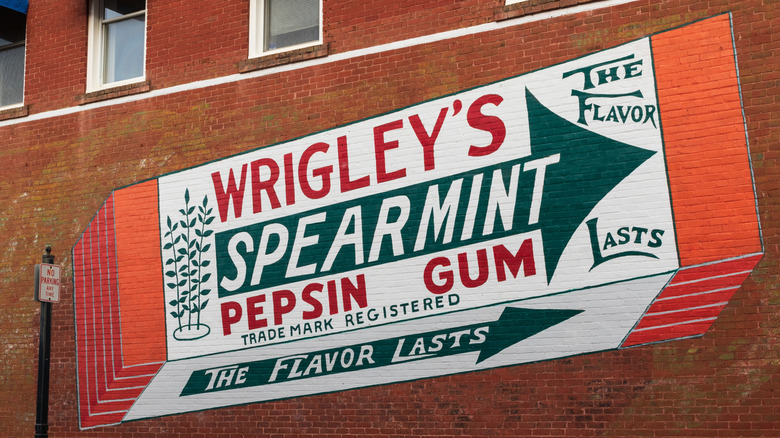
To give you an idea of just how much chewing gum Wrigley's made during World War II, you can still find 1940s-era sticks and packs up for sale in online auctions. Allied ration packs were modified throughout the course of the war, but gum was always included. It stood in as a substitute for a toothbrush, helped relieve stress, and help get rid of the taste of the usually terrible food that made up the rest of the ration packs. It was such an important part of soldiers' kit that Wrigley paused commercial sale of its flagship gum on the homefront.
That's not to say that Wrigley wasn't selling anything at home, because it was. The company debuted Orbit gum during the war, and it was sold with a little apology message that explained rationing was tough, Orbit wasn't ideal, but things would return to normal soon.
Wrigley had one more massive contribution to the homefront: the establishment of the All-American Girls Softball League, designed to be a temporary replacement for Major League Baseball. It was the brainchild of Philip Wrigley — who owned the Chicago Cubs at the time. Wrigley helped write the league rules, which included stipulations that players couldn't wear pants, needed to attend charm school, and would be attended by chaperones. Players like Dorothy Maguire became absolute icons of resilience — she took the field for a game immediately after learning her husband had been killed on the Western Front.
Chef Boyardee
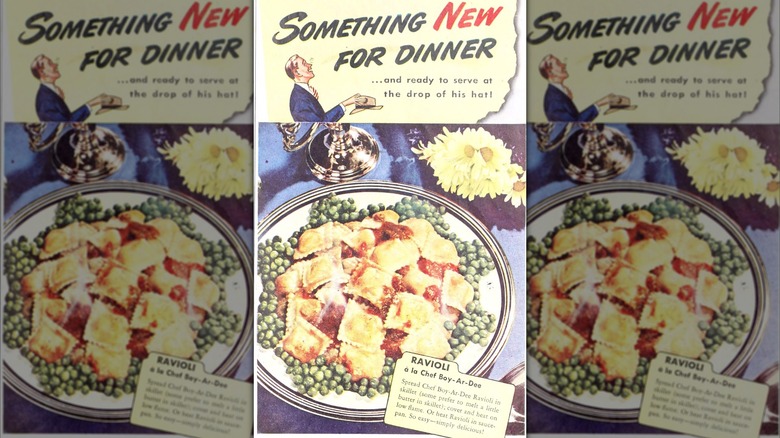
When it comes to the canned goods you'd find in every 1960s-era pantry, Chef Boyardee was a staple. It makes sense, particularly when you know that just a few decades prior, the company had been under a military contract to supply food for the troops. They took things very, very seriously, too.
The real person behind the brand was Ettore Hector Boiardi, and he had transitioned from Italian restaurant to supermarket staple in the late 1920s. Fast forward to 1942, and the company was operating a still fairly-new factory in Milton, Pennsylvania. The switch was flipped to military rations, and Chef Boyardee became the Allies' largest food supplier. It kept growing, and was turning out an average of a quarter of a million cans each and every day.
That's not to say that it was an easy thing. Boiardi himself was behind the canning process and chemical formulas that made the final product shelf-stable enough for the trip overseas, and the plant was soon running 24/7. Even as countless cans made it into the hands of Allied troops, busy families on the homefront fell in love with the delicious convenience that Chef Boyardee offered. The company was sold post-war, but Boiardi remained active until he retired in 1978.
Nestle and Maggi
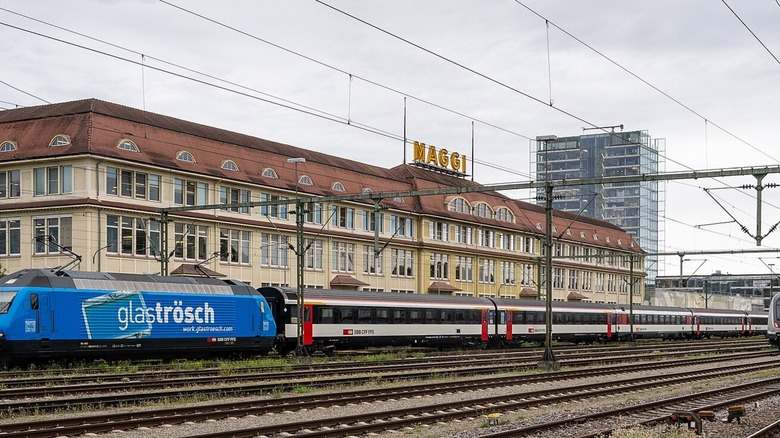
This one takes a little bit of connect-the-dots style legwork, but stick with us. In 2000, Nestle announced it was going to be participating in a settlement that saw European companies paying into a fund destined to settle claims filed by various organizations over human rights abuses and instances of forced labor that took place during World War II. Nestle pledged $14.6 million, but details were vague.
The Independent reported the official statement said it was "to cover all possible legal claims that might be raised against it in both Switzerland and abroad," and see? Vague. However, Nestle also added that an acquisition from 1947 had a wartime history of forced labor, so who were they talking about?
In 1947, Nestle bought Maggi, the Swiss company that pioneered the creation of liquid seasonings. By World War II, it had holdings in what would later become the European backbone of the Axis Powers: Germany, Italy, and Austria. Maggi wasn't just one of the top food producers to the Third Reich's army, either. In 1996, a report from the Independent Commission of Experts found the German division of Maggi quickly became vocal proponents of the Nazi Party, falling in line with things like the use of forced labor, accounts of physical violence in factories, and disciplinary actions that could include being sent to a concentration camp. The report further suggested its acquisition by Nestle was the only thing that guaranteed the company's post-war survival.