

The Canned Meat That Helped Families Stretch Meals During The Depression Is Still Around Today
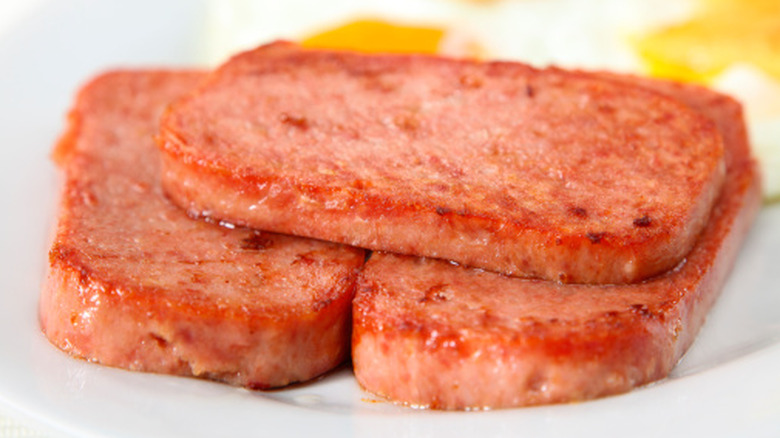
The Great Depression's culinary scene was all about ingenuity. Hoover Stew helped budget-friendly ingredients stretch, and peanut butter-stuffed onions ... also helped, we guess. Utilitarian necessity aside, a lot of the foods that were popular during the Great Depression are still popular today (banana bread, anyone?). Today, we're shining the spotlight on the canned meat that emerged as a staple for 1940s households, and is just as beloved by foodies in the modern age: Spam.
This shelf-stable protein rose to prominence during the Great Depression, and it's managed to stick around nearly a century later. Spam debuted in 1937 during the late years of the Great Depression (1929-1939). Those signature rectangular tins are stuffed with a mixture of ground pork (primarily pork shoulder), water, sugar, the coloring agent sodium nitrate, and a lot of salt. Per the lore, the product's invention was motivated by Minnesota-based parent company Hormel's desire to sell more pork shoulder, a less-popular and ultra-affordable cut. Since Spam comes out of the can pre-cooked, it found a fast fanbase as an affordable, easy-to-prepare foodstuff with versatile applications. Spam could be fried and stuffed into sandwiches at lunchtime, or swapped out for stew meat at dinnertime. In 1940, Hormel even released a 20-page cookbook filled with fan-submitted recipes starring the ingredient. Its rise to prominence finally exploded during World War II (1939-1945), when one period of national economic unease rolled straight into another. U.S. households traded recession-era limitations for war-imposed food rationing, and Spam helped bridge the period of food insecurity.
Spam's global fanbase isn't going anywhere any time soon
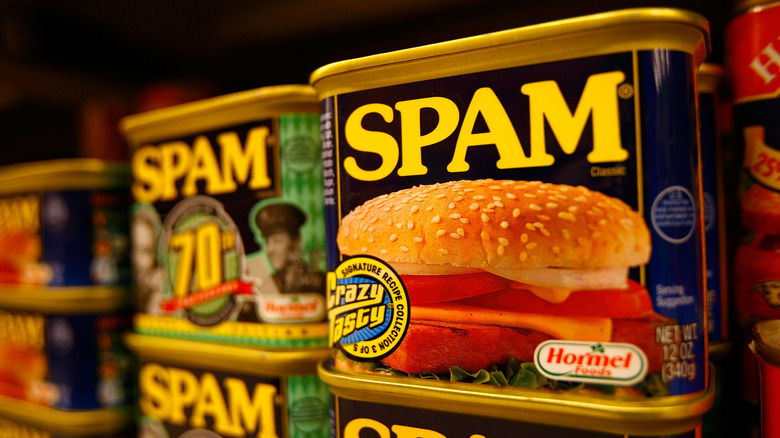
The canned meat was even more popular on the battlefield. During the war, Allied soldiers consumed an estimated 100 million pounds of Spam or more, which could be easily transported in mass quantities without any special refrigeration needs. Folks on the homefront — who, unlike the servicemen, did not have to eat Spam for every single meal — took an especial liking to the ingredient. British Prime Minister Margaret Thatcher famously praised Spam as a "wartime delicacy," and households in the UK, the U.S., and Russia alike came to rely on it. By 1959, Hormel had sold one billion cans of Spam.
Post-war, Spam's enduring cultural influence is reflected in Monty Python's iconic 1970 "Spam" sketch, and a dedicated Spam Museum opened in Minnesota in 1991. Today, it has become a staple ingredient in Filipino and South Korean culinary styles. An estimated seven million cans of Spam are sold each year in Hawaii alone, where Hawaiian-Japanese Spam musubi is a popular snack. Nowadays, Spam comes in multiple flavors for even more creative culinary possibilities. It's sold in 44 countries around the world – and even chef Gordon Ramsay is an outspoken fan. More recently, Spam's global fanbase is centered in the U.S. once again. In March, the New York Post reported that American households, stricken by relentless grocery inflation, are returning to the Depression-era pantry staple en masse. Hormel Foods saw record net sales in nine out of the last 10 years, with a particularly growing customer base in the U.S. market. It looks like there's no end in sight for Spam's circumnavigatory victory lap.