

14 Classic Fall-Themed Dishes That Boomers Love
We've come a long way since Americans stuffed Jell-O dishes with savory ingredients, charged more for canned versions of food than real food, and scarfed down sodium-filled frozen TV dinners while watching "I Love Lucy." That said, mid-century American food was convenient, cheap, and best of all, there were always leftovers. A lot of fall-themed dishes that we now call classic, for example, solidified their place in American cuisine when baby boomers were growing up in the 1940s, '50s, and '60s.
We're talking about your grandma's pumpkin pie that you love so much, which might've come from a famous 1950s recipe, the sweet potato casserole that everyone always requests each Thanksgiving, and even the comforting frozen meals that you buy to save a few bucks here and there. Times may have changed considerably since then, but believe it or not, one thing that newer generations and boomers have in common is a love for these classic fall-themed dishes.
Spice cake
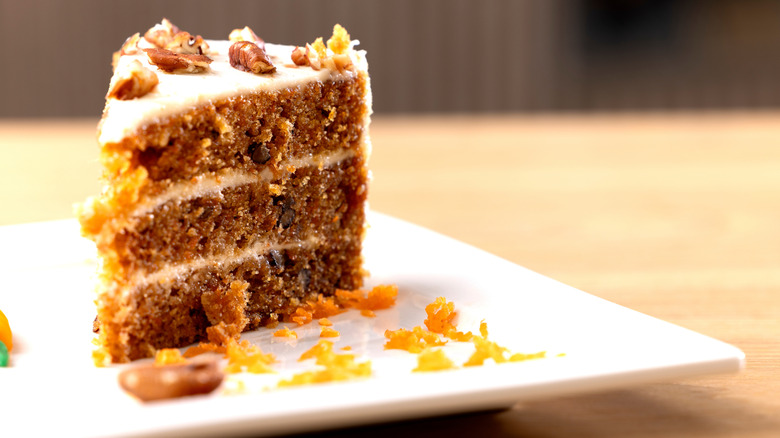
Spice cake was a popular Depression-era dessert that later became a boomer staple. There are many varieties of spice cake, from the late-1940s Campbell's tomato soup-infused cake that ruled the 1960s, to the frosting-topped varieties that began popping up during the 1950s. In its simplest form, however, all you need is water, sugar, shortening, and a warming spice like cinnamon. Spice cake was enjoyed year-round, and it's often topped with a rich cream cheese frosting or a simple dusting of powdered sugar. But as spice cake recipes evolved, the inclusion of other autumnal aromatics like nutmeg, cloves, allspice, and ginger, as well as seasonal fruits like apples or raisins, is likely what made it particularly popular during the fall season.
If you'd like to taste a bit of boomer nostalgia, one popular fall-time variety from back then includes Swan Down's recipe for Pride O'Pumpkin cake with walnuts and canned pumpkin. Another classic autumnal treat is the Araby spice cake recipe from 1950's "Betty Crocker's Picture Cook Book," which features the added depth of cocoa powder and some brightness from lemon zest.
Mac and cheese
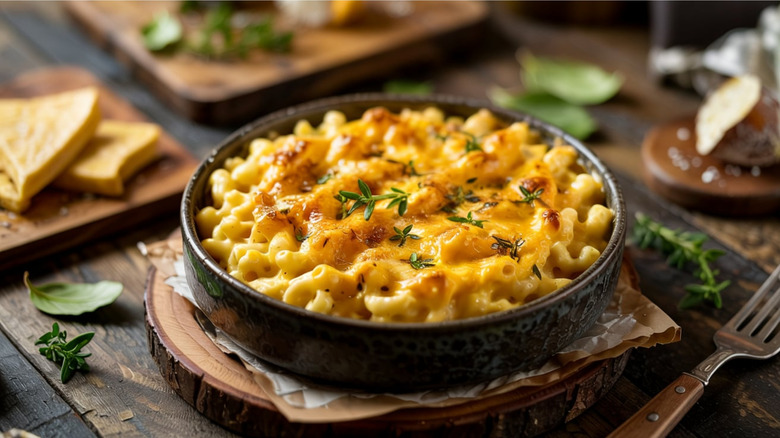
Whether or not you consider mac and cheese an official Thanksgiving dish might have more to do with where you were raised than anything else. In some parts of the U.S. — like the South, for example — it was definitely considered a fall-themed dish that boomers grew up loving. The 1953 edition of the "Better Homes and Gardens New Cook Book" — which is part of one of the best-selling cookbook series ever released — showed masses of Americans how to make mac and cheese. The recipe includes macaroni, condensed mushroom soup, milk, grated onion, salt, pepper, and American cheese.
But this was just one of many popular mac and cheese recipes from the era. Some others include a classic baked macaroni and cheese dish from the 1946 edition of "Fannie Farmer's Boston Cooking School Cookbook," and a recipe from the American Beauty Macaroni Company's 1960 "Prize Winning Recipes" cookbook. That said, this boomer favorite has come a long way since back then. Check out some of our more decadent mac and cheese recipes for your next Thanksgiving spread.
Pot roast
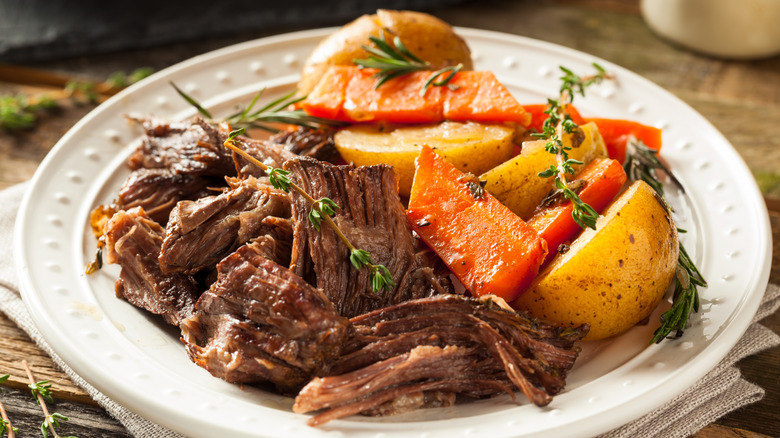
While some mid-century recipes belong in the vintage bin, one quintessential boomer meal is a timeless classic: pot roast. The hearty dish, which is made from cheap cuts of beef (such as chuck roast or bottom round) and slow cooked with vegetables like carrots and potatoes until tender, was a Sunday dinner staple. Boomers would eat it all year — one, because it was super affordable and easy to make; and two, because it was the perfect comfort food for any season, but especially during the fall and winter months.
A classic pot roast recipe from the 1950s includes beef chuck, instant onion soup mix, cream of mushroom soup, and red wine. Though, of course, other variations existed, such as a prize-winning recipe from H.J. Heinz Co. that features a layer of ketchup, and a James Beard recipe from 1964 stirred with beurre manié, which is a combination of softened butter and flour. This boomer go-to is not nearly as ubiquitous as it was back then, but you should still give these pot roast recipes a try.
Sweet potato casserole
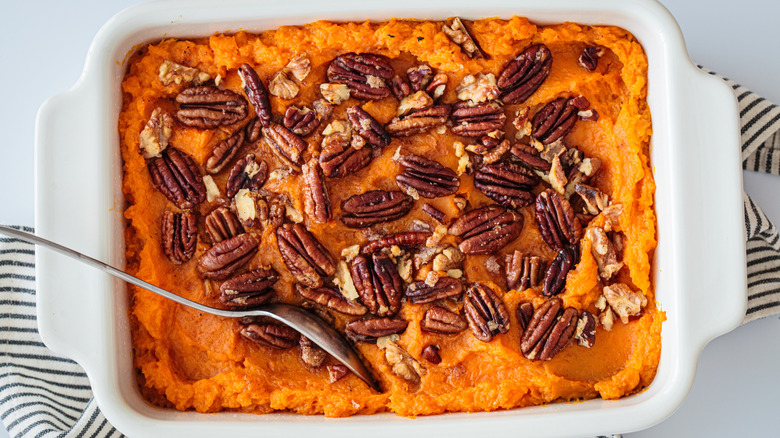
Sweet potato casserole, which is not to be confused with candied yam casserole, has graced Thanksgiving tables for generations, and every family has their own way of making it. In a recipe that dates back over 100 years, Senator Russell's sweet potato casserole, ingredients include mashed sweet potatoes, eggs, sugar, brown sugar, butter, milk, vanilla extract, and copious amounts of chopped pecans. By the 1950s, however, people were adding marshmallows and orange juice concentrate to help further bring out the natural sweetness of the potatoes. And just like that, it became a boomer fall favorite.
Fun fact: The first documented marriage of sweet potato and marshmallows was actually in a 1917 recipe booklet from the Angelus Marshmallow company. From there, it weaved its way into American households via other cookbooks, eventually establishing itself as a Thanksgiving staple. By the mid-century, the dish was almost as synonymous with Turkey Day as the turkey itself. For our take, we like sweet potato casserole with a savory kick of Gruyère cheese and chopped bacon pieces.
Scalloped potatoes
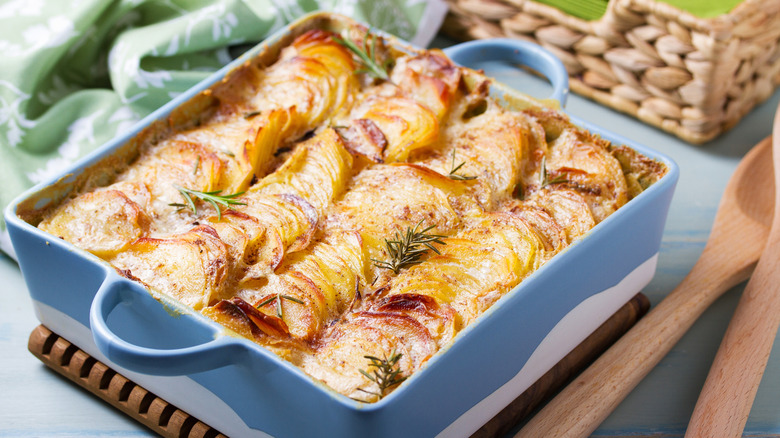
Inexpensive, filling, and easy to make, scalloped potatoes is a dish that could land on dining tables any day of the week, and it's especially comforting as the weather cools down in the fall. To give you an idea of how mid-century Americans prepared it, a classic recipe from the 1950 "Betty Crocker Picture Cook Book" features potatoes (peeled and sliced), chopped onion, butter, flour, milk, salt, and black pepper. It also recommends slipping some tomatoes or ham between the layers for extra flavor. This was one of several popular scalloped potatoes recipes from the era, along with another from the 1947 edition of the "Better Homes and Gardens Cook Book," which also includes a sweet potato version with sliced apples and brown sugar that's even more perfect for the fall.
Our old-fashioned scalloped potatoes recipe spruces up the experience with garlic, vegetable stock, cheddar, and Parmesan cheese. Whether you keep it traditional or try our jazzed-up version, this boomer go-to tastes great with pretty much anything, including classic holiday dishes like glazed ham, roast turkey, green bean casserole, and more.
Green beans almondine
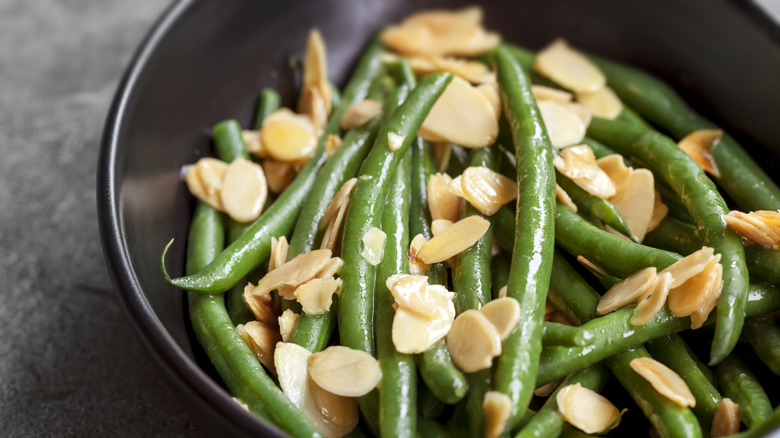
Green beans almondine is a classic boomer side dish. In those days, this simple recipe was not only a holiday favorite, but a popular dinner option for any month of the year. Between the 1950s and '60s, green beans almondine was one of the time's more nutritious options, and it was often served alongside hearty mains like beef stroganoff, roast chicken, and casserole, or with turkey on Thanksgiving. It only takes minutes to prepare, and the basic recipe requires just eight ingredients: fresh green beans, unsalted butter, olive oil, minced garlic, sliced almonds for crunch, a lemon for juice and zest, salt, and black pepper. The recipe works just as well with frozen or canned green beans, too.
Fun fact: Almondine is a French culinary term that describes dishes that are made with sliced, slivered, or whole-roasted almonds. If you'd like to add a little time travel to your dinner table, set back the hands of time with our fresh green bean almondine recipe.
Chicken and dumplings
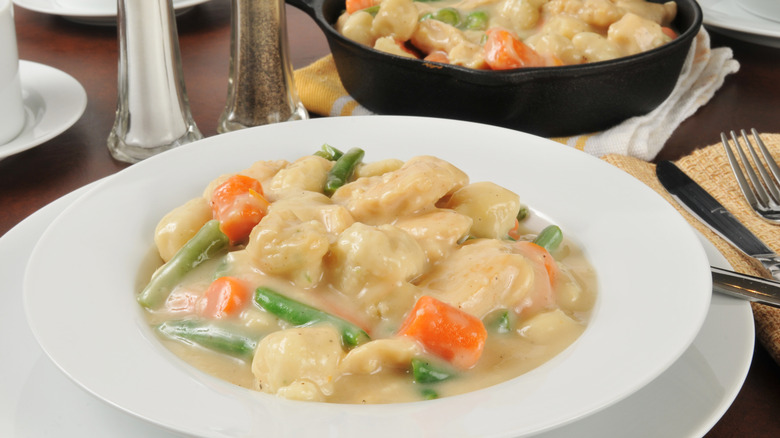
Chicken and dumplings is a perfect example of the types of dishes boomers love: tasty and affordable. Whether it was winter, spring, summer, or fall, it was always on the menu in the 1950s and '60s, because it was easy to prepare and could feed a whole family. The leftovers could be frozen and reheated later, too. This classic boomer dinner only requires four ingredients: chicken broth, canned cream of chicken soup, canned biscuits, and shredded rotisserie chicken. Of course, you can roast the chicken and bake the biscuits yourself for a more authentic mid-century experience.
Either way, the result is a creamy, comforting stew with a rich savory flavor that's guaranteed to fill your stomach and keep you warm on a colder fall day. For a modernized spin on this boomer staple, give chicken and dumplings a flavorful twist with tomatoes, red bell peppers, and a copious amount of spicy Hungarian paprika, otherwise known as the paprikash style.
Salisbury steak
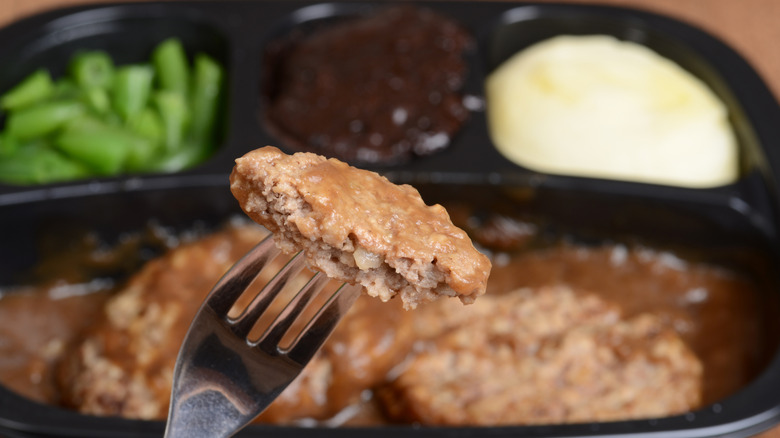
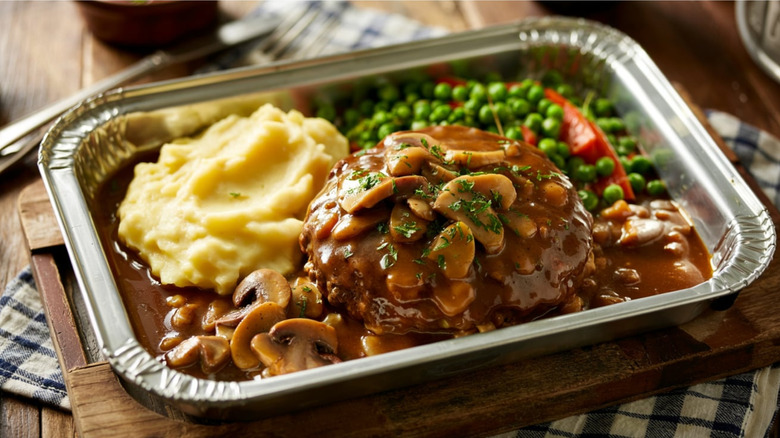
Salisbury steak is a quintessential mid-century dish that, funny enough, isn't really a steak dish at all. It's actually a ground beef patty smothered in mushroom gravy. While it's been around since the late 1800s, it left its biggest mark between the 1940s and '60s, evolving over the period to become an American staple among boomers. When combined with mashed potatoes, sweet peas, and glazed carrots, Salisbury steak was an affordable meal that could feed the whole family, making it perfect for any season.
In the 1940s, people would use ground beef, salt, beef stock, breadcrumbs, and onion to prepare the steak patty, and then use the leftover beef fat along with flour, beef stock, salt, and pepper for the gravy. Worcestershire sauce was also an ingredient commonly used in the gravy. By the time canned varieties and frozen TV dinners from the 1950s hit the scene, Salisbury steak had reached the height of its popularity. You're probably familiar with the names Swanson, Banquet, and Hungry-Man, because these TV dinner brands are still available today. However, if you'd prefer the real thing over the frozen meal, we have an easy Salisbury steak recipe that only takes 20 minutes to cook.
Pumpkin pie
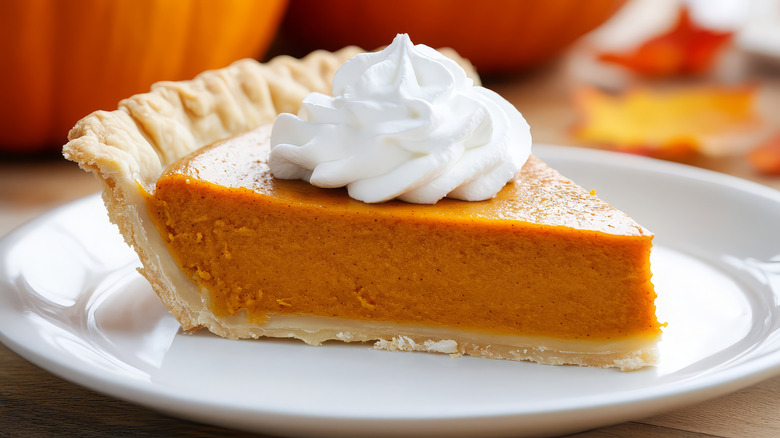
Pumpkin pie first became associated with Thanksgiving in the early 18th century in New England, before eventually gaining popularity elsewhere. So, it's only natural that boomers loved it just as much growing up in the mid-20th century as we still do these days. While there were lots of people who made pumpkin pie from scratch between the 1940s and '60s, using the canned variety was just as common. Libby's was the most popular canned pumpkin brand at the time, and it's still a go-to for home bakers today. In fact, it's currently the number one producer of canned pumpkin in the U.S. That said, Libby's famous pumpkin pie recipe, which it started printing on cans in the 1950s, is what truly made this dessert a Thanksgiving staple across the nation.
This recipe features Libby's 100% pure pumpkin, as well as Carnation evaporated milk, granulated sugar, salt, cinnamon, ginger, cloves, and eggs, all baked inside a deep-dish pie shell. Some other well-known pumpkin pie recipes from back then include one from Red & White, an independent small-town grocery chain and store brand. You could even find another from the master of horror Vincent Price and his wife, Mary Price, in their 1969 "Come into the Kitchen Cook Book."
Chicken pot pie
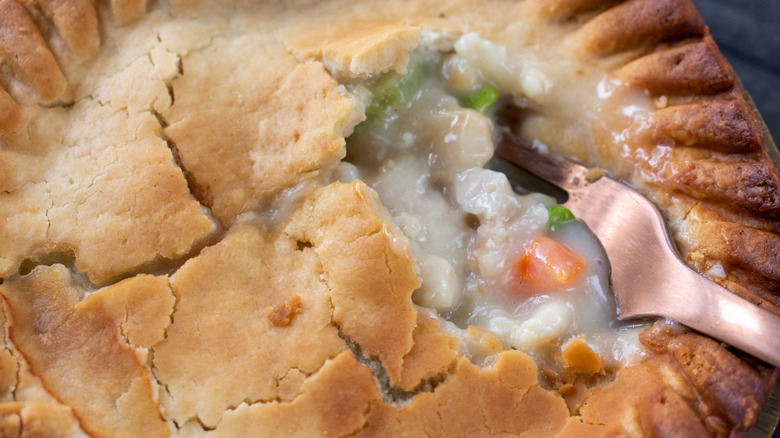
Another frozen TV dinner classic, chicken pot pie was one of many year-round go-tos when mothers didn't feel like sweating over a stovetop. The first frozen pot pie ever was made by Swanson, the brand known for cheap eating. With its flaky crust, juicy chicken chunks, creamy gravy, green peas, and sweet red peppers, boomer kids couldn't have asked for a better, more comforting after-school treat. Swanson's version was introduced in 1951, a couple years before Banquet released its first chicken pot pie, which at the time cost just 25 cents apiece or five for $1 when they were on sale.
Easy preparation and affordability, in fact, helped chicken pot pie dominate the 1950s and '60s. And while it is certainly something that can be enjoyed any day of the week, its hearty, warming filling made it especially perfect for the fall and winter seasons. If you're not a fan of frozen meals, you can whip up a homemade chicken pot pie pretty easily using some store-bought shortcuts, like swapping in frozen veggies, rotisserie chicken, and crescent roll dough for the crust.
Pigs in a blanket
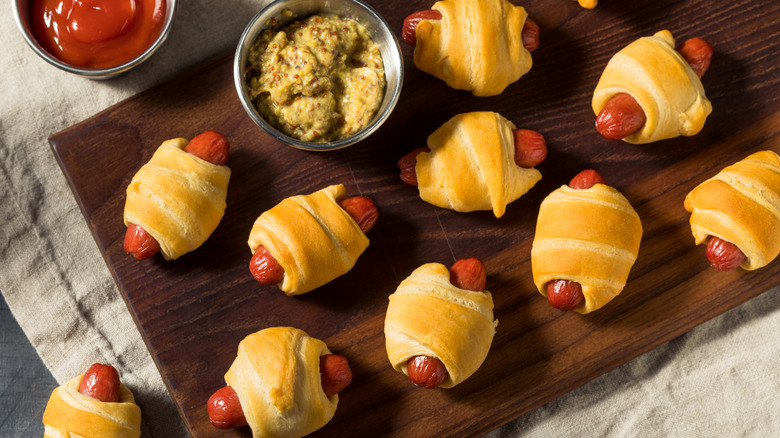
Cocktail parties were all the rage during the 1950s, and if there was one old-school appetizer that people loved to eat, it was pigs in a blanket. These pastry-wrapped franks were such a hit, in fact, that they eventually became a pre-dinner staple for holidays, too.
Good ol' reliable Betty Crocker introduced them to Americans in her 1957 "Cook Book for Boys and Girls," which was targeted toward boomer kids. Her recipe suggests rolling oblong-shaped Bisquick biscuits around wieners or frankfurters, baking them for 15 minutes, and serving them hot. The recipe is easy plus quick plus delicious, which, of course, was the equation for success for everyday Americans. This cookbook went on to sell over a million copies, and it's largely why you're still served platters of pigs in a blanket to hold you over until Thanksgiving dinner is ready. Tracking down Betty Crocker's original recipe isn't too hard, but if you're looking for something more modern, here are the absolute best ways to upgrade pigs in a blanket.
Pecan pie
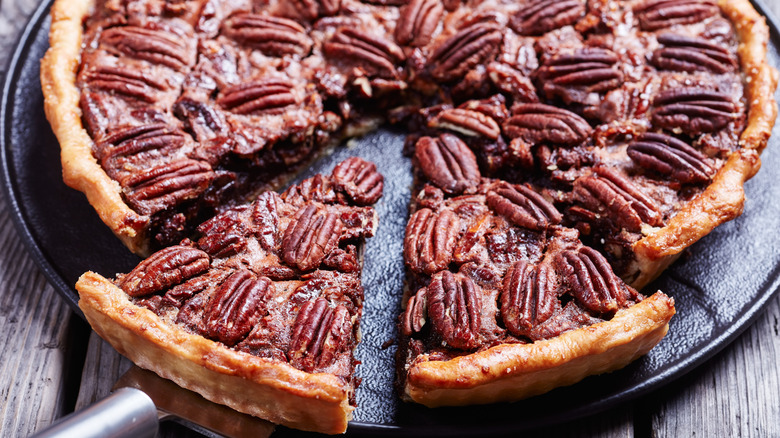
Like its Thanksgiving counterpart, pumpkin pie, pecan pie has long been a Turkey Day staple. It followed some decades after, becoming popular in the late 19th century, but its status as a fall-themed favorite is no less ubiquitous. Much of its fame stems from the 1920s, and it can be credited to the Corn Products Refining Company, which printed a pecan pie recipe on cans of its popular Karo syrup. The product helped make pecan pie a household name, which in turn solidified Karo syrup as a signature ingredient in pecan pie recipes well into the '40s and '50s.
By the time the 1968 version of the "Better Homes and Gardens New Cook Book" had been released, pecan pie was a certified Thanksgiving classic. This, and the fact that — like pumpkins — pecans are harvested during the fall season. People had even begun experimenting with variations on pecan pie, such as the Mystery Pecan Pie recipe from the 1964 "Pillsbury Bake-Off Cook Book," which features a layer of cheesecake baked into the middle. However, if you'd like to experience a traditional take on this boomer dessert, look no further than our classic pecan pie recipe.
Deviled eggs
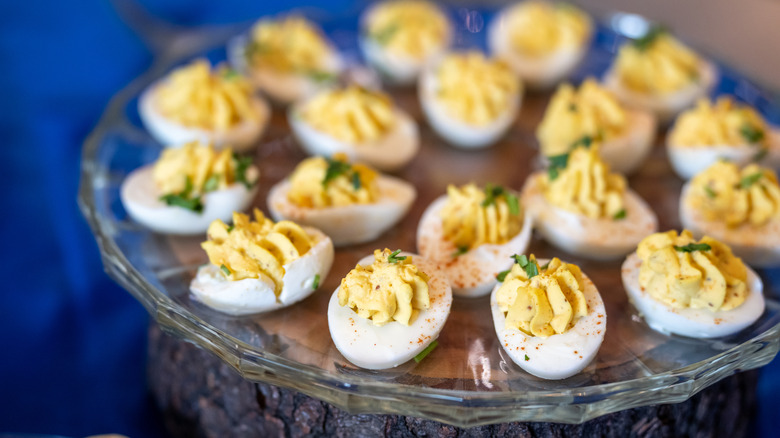
If a Mount Rushmore of hors d'oeuvres existed, deviled eggs would surely be on it. It was so popular during the 1950s that the "Betty Crocker Picture Cook Book" includes several variations, from a de luxe version with minced parsley, chives, celery, or pimientos, to recipes with crisp bacon, salmon, and more. Deviled eggs, in fact, remained in Betty Crocker cookbooks into the '60s and beyond, and the core recipe on the company's website at the time of this writing still isn't much different from the original.
This protein-filled appetizer was a quintessential cocktail party finger food in the mid-20th century, but it was also a Thanksgiving staple. Deviled eggs were the sort of crave-worthy pre-dinner treat that might fill you up too soon if you weren't careful. The more things change, the more they stay the same, because even today, they still remain a fall-time hit. In other words, you don't have to be a boomer to enjoy our easy deviled eggs recipe.
Pineapple ham
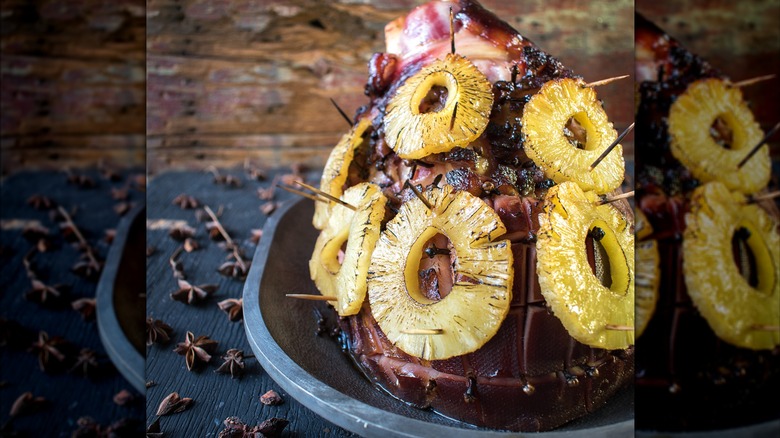
Also known as holiday ham, pineapple ham was and still is a seasonal favorite. The dish, which features pineapple-glazed ham topped with slices of pineapple and maraschino cherries, gained popularity between the late 1950s and '60s. Pineapples are usually harvested between March and July, but thanks to canning, you could find them in pantries across America any time of year. Along with canned pineapples, canned ham had become a popular thing, too.
Choosing canned ham over the real thing may seem blasphemous now, but ironically, boomers and older generations considered it a high-end meat product in those days. Holiday ham was most commonly associated with Easter and Christmas, but it could make an appearance during Thanksgiving, too. And over the years, it's become even more of a Turkey Day favorite. If you'd like to bring some boomer flair to your holiday, look no further than our smoked pineapple ham recipe.