

10 Forgotten Classic Breakfast Cereals From The '70s That Deserve A Comeback
For many kids growing up in the 1970s, the Saturday morning ritual was the high point of the week, made all the sweeter with a bowl of sugary cereal. After getting up at the crack of dawn, they'd run down to the living room, turn on the television, crank up the volume, and veg for the next few hours, basking in animated glory from "The Pink Panther Show" to "The Pebbles and Bam-Bam Show." And their cereal of choice reinforced the experience with tie-ins, promos, and endorsements from TV characters and the brands' cartoon mascots.
Some of these cereals still exist today, but most have disappeared with the passage of time. Some may have fallen victim to poor sales or fading fads, while others were simply discontinued as companies changed their product lines. The memories of these childhood favorites linger among Gen Xers and their parents, who look back on what may seem like simpler times — few younger consumers today would even know these products existed, and that's a shame. Just like the era's disco drinks that have made comebacks, these breakfast cereals deserve another shot at Saturday morning glory.
Waffelos
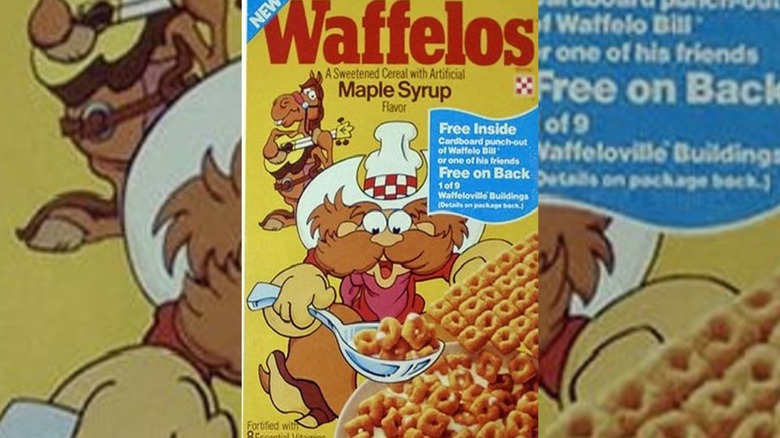
If you like to sit down at the breakfast table with a stack of waffles drenched in maple syrup, Ralston offered Waffelos as a quick-and-easy substitute, with each piece resembling a cut waffle square with a hole. For the kids, an excitable Waffelo Bill and his guitar-strumming steady steed safeguarded the breakfast table by rounding up thieves that tried to steal the cereal "critters" and the boxes that held them.
Waffelos debuted in 1979 but didn't make it through the 1980s. When Waffelo Bill rode out into the sunset, other cereals tried to fill the gap, but none quite captured the combination of waffle-shaped pieces, maple flavor, and Western-themed characters that made Waffelos distinctive. For instance, among Eggo's many breakfast offerings is a maple-flavored homestyle waffle cereal, but a revamped Waffelos could bring back the original's playful character and variety of flavors. With the right marketing, a Waffelos line-up could even rival the number of Cheerios cereal flavors.
Crazy Cow Strawberry
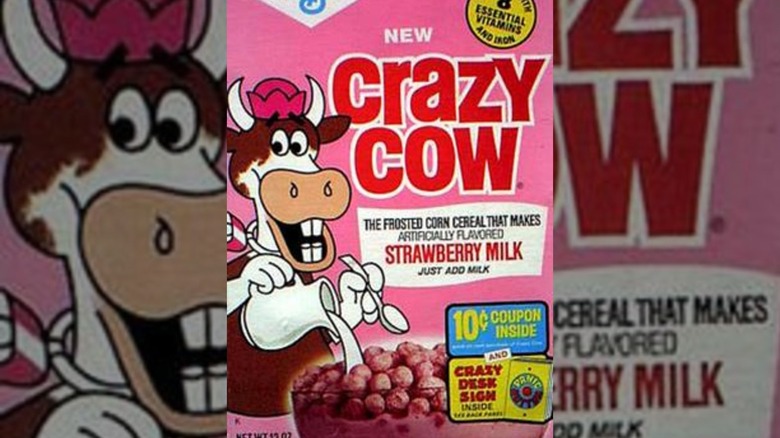
If you're one of the many present-day kids or even adults who go cuckoo for Cocoa Puffs and other chocolate-flavored cereals, you might be interested to know that growing up in the 1970s, kids had a fruity alternative to those multi-grained puffs: Crazy Cow. Or, as the cereal's cow mascot pronounced its brand name, "Ka-razy Cow."
Also from General Mills, Crazy Cow cereal came in two flavors. One, the familiar chocolate; the other, strawberry. The gimmick was in the coating. When milk was added, it dissolved, giving the milk a strawberry flavor while the cereal's core stayed crispy. And, of course, doing so turned your milk into a shade of pink.
A glance down the supermarket aisle shows a few strawberry contenders for today's kids, but nowhere near the number of chocolate options. Crazy Cow may not win any taste awards at the breakfast table, but it certainly deserves a second chance at success.
Pink Panther Flakes
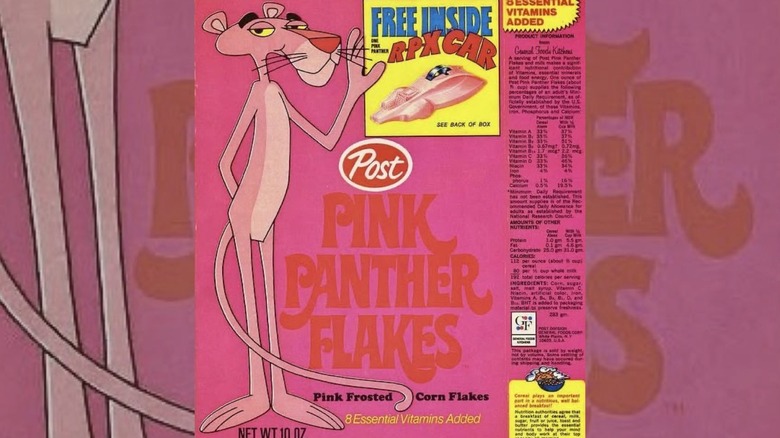
As with the Star Wars-themed C-3PO cereal, Gen Xers chowed down on Pink Panther Flakes, another product tie-in to a 1970s classic. Those who loved the original Peter Sellers film, its many sequels, and the Saturday morning cartoon adaptation could now hold a bowl in their lap as they watched the cool jungle cat navigate the modern world.
As for the cereal, Pink Panther Flakes were trendy and turned those boring bites into a delicious shade of sweet pink. The cereal was discontinued in 1974, and can't come back with its original recipe thanks to the use of Red No. 2, a food coloring that was banned by the FDA.
But its legacy lives on in pop culture. For those who love the Pink Panther's infamous opening song, you might be tickled pink to learn that the cereal had its own verse. Considering that the Pink Panther has an active official YouTube channel that releases new content, a modified version of the cereal using approved coloring could still make a comeback.
Baron von Redberry vs. Sir Grapefellow
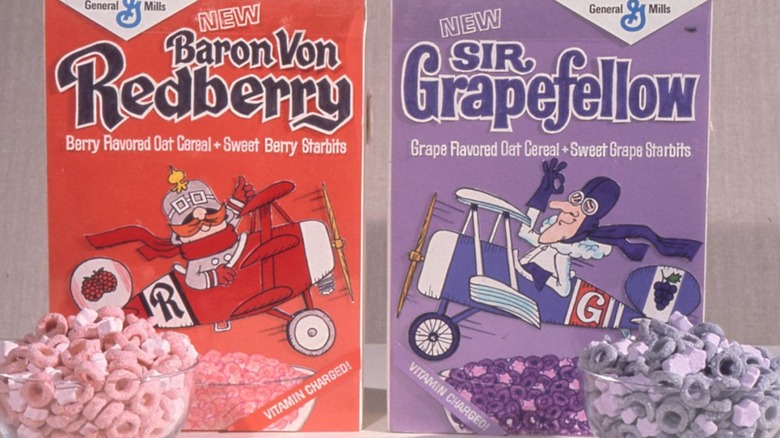
Anyone wondering who would win in a toss-up between competing cereal mascots need not look any further. Baron von Redberry and Sir Grapefellow were deadly adversaries in the skies, each with their own cereal. The names might evoke Cap'n Crunchberries battling Grape-Nuts in the minds of modern cereal munchers, but this rivalry was more in line with Snoopy vs. the Red Baron in a World War I dogfight, with the baron and the knight each coming with respective red and purple marshmallows. Kids got to choose which side they were on.
As the combatants' names imply, Baron von Redberry was a German pilot while Sir Grapefellow flew for Great Britain. But there were no bad guys here; the two good-naturedly competed for attention through the usual cartoon-style antics. That way, kids could pick up where the commercials ended with cut-out biplanes and free patches to show their allegiance and make up their own adventures.
Unfortunately, the gimmicks didn't work, and the rivalry didn't last. Both cereals folded by the mid-1970s, but if we had to call a winner, the Baron has the edge. After all, we still have plenty of fruity cereals to choose from, but you likely won't find any grape flavors among them. With all these fruit flavors competing for our taste buds, it might be tantalizing to revisit the rivalry that once pitted two of them against each other.
Quisp
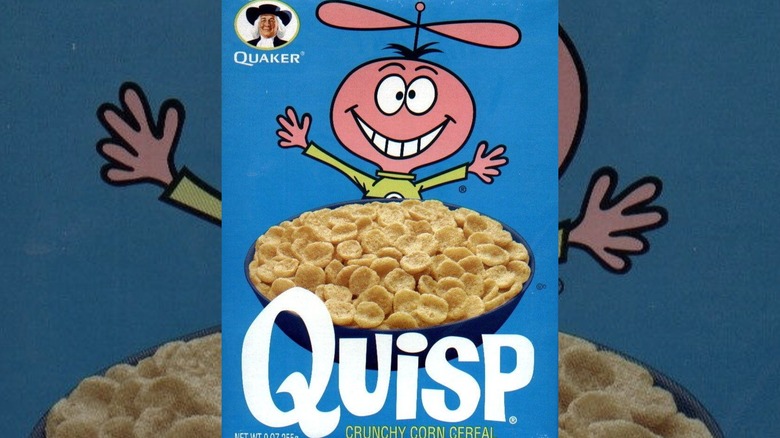
When Neil Armstrong walked on the moon in 1969, it marked a high point in the space age. Quisp, which had debuted from Quaker Oats just four years earlier, was one of the cereals that tapped into America's fascination with space.
The name was a mashup of Quaker Oats and "crisp," giving kids a shorthand for the cereal's flavor and texture. It featured an extraterrestrial on the box – the "Quown Prince of Planet Q" – and its saucer-shaped corn pieces played into the space-age theme, promising "quazy energy." This spaceman also had a rivalry with the earth-bound Quake cereal, with commercials encouraging kids to choose between the two.
Quisp's link to the space age meant that when everyday Americans lost interest in exploring the cosmos, the cereal seemed less relevant, but Quisp has made sporadic comebacks over the years. It returned to mass-market distribution in 2012, but its latest run appears to have ended, making actual cereal sightings in the wild, like UFOs, few and far between.
Freakies
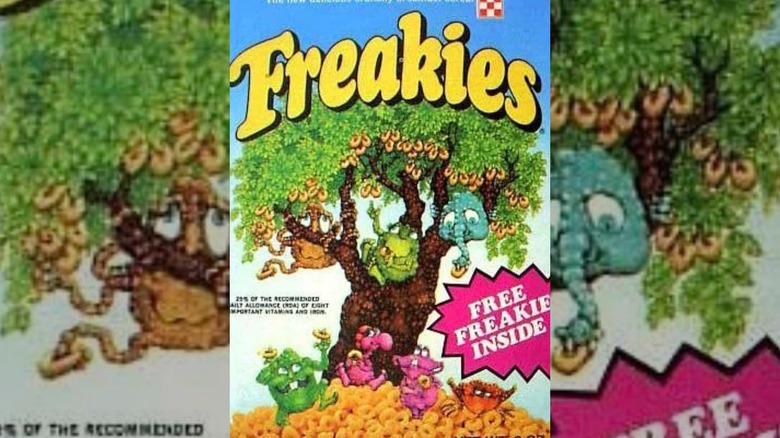
In the 1970s, the word "freak" took on a whole new meaning. No longer consigned to circus folk for the public to gawk at, subcultures in the larger counterculture embraced the term as a youth movement. Promoters eagerly cashed in on the growing freak scene. Enter Ralston's Freakies, whose clever marketing made "freaks" stand out in the cereal aisle.
The cereal was similar in shape to Cheerios, but what made Freakies unique was its seven mascots, all different colors and resembling swamp critters. Every box contained one of seven plastic Freakie action figures, and fans wanted to collect them all. The cereal's marketing also boasted a theme song reminiscent of an old vaudeville ballad — a strange choice, given the countercultural branding.
Sadly, Freakies didn't last through the more conservative 1980s, although it made a brief comeback in 1987 with marshmallows added to the cereal. The nostalgia might hit harder today, when monster-themed cereals continue to have a place in the grocery aisle. Plus, complete sets of the seven original Freakies figures command more than $100 on eBay, showing that the characters still have some collectible appeal.
Winne-the-Pooh Great Honey Crunchers
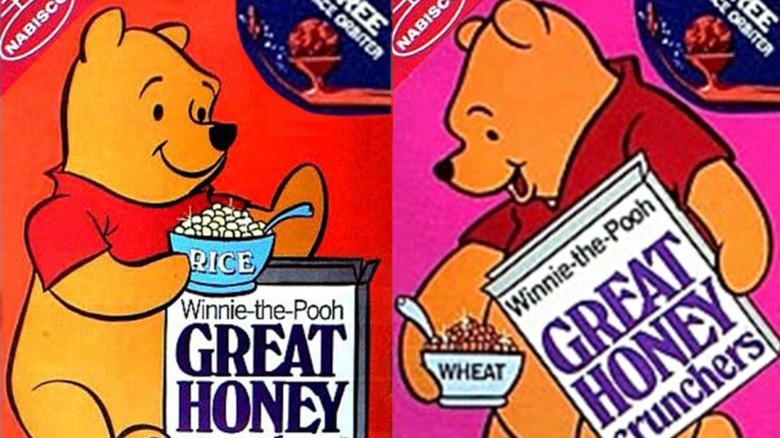
Winnie-the-Pooh Great Honey Crunchers was the latest in a lineage that dated back to 1939, when Ranger Joe Popped Wheat Honnies became the first mass-market sugar-coated cereal. After National Biscuit Company acquired the cereal in 1954, it went through several name changes as sales began to flag. By 1972, Nabisco had put its hopes on a new mascot: the flustered bear from The Hundred Acre Wood. Winnie-the-Pooh's Great Honey Crunchers Cereal was born.
On paper, Pooh was a great casting choice. The bear had previously appeared in other Nabisco giveaways, and television promos featured Disney animation. As for the actual cereal, the name played up the association between the mascot and honey. It came in rice and wheat varieties, with various toys included in the box.
But unlike other cartoon-inspired cereals, such as Fruity Pebbles (named after the Flintstones' daughter), Pooh's cereal didn't last. As Pooh commented in one commercial, "I found that a round bear won't fit into a square box." Even his more recent graham cracker cereal, Hunny Bs from Kellogg's, disappeared around 2005, leaving fans disappointed. The cereal aisle has a bear-shaped, honey-flavored hole to fill, so now might be time to bring back Great Honey Crunchers.
Corny Snaps
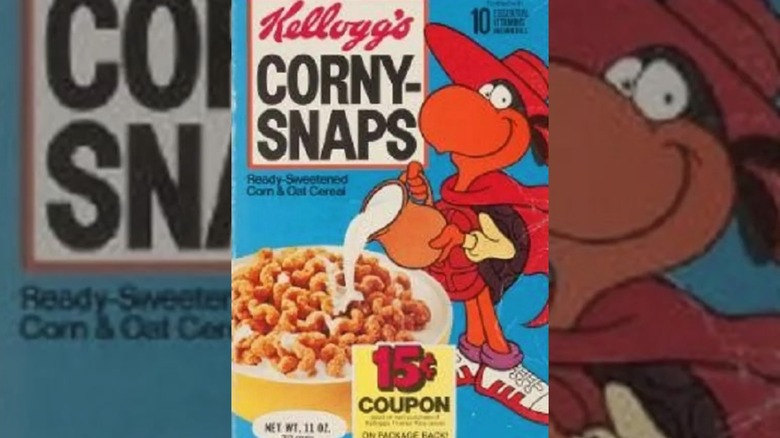
Corny Snaps was a super crunchy, sugary corn-and-oat cereal, with pieces shaped like the letter S. Fans recalled the cereal didn't taste particularly noteworthy, but it had a sweet flavor and a signature snap that stayed even when soaked in milk.
The mascot, Shelly the Turtle, started out as a grumpy character who only cheered up when offered a bowl of cereal. However, Corny Snaps eventually underwent a revamp, renaming the mascot as Snappy and sending him back in time to the town of Durango, an Old Western locale. With his signature bandit mask, Snappy became a makeshift Zorro who wrote a large letter S on things whenever some authority figure tried to clamp down on breakfast-time fun.
Between Snappy's masked-hero persona, the Old California setting, and the ubiquitous prize inside the box, Corny Snaps had plenty to keep kids interested. Add in a texture that could potentially stay crunchy in milk, and this cereal offered something for everyone. Corny Snaps warrants a second chance.
Grins & Smiles & Giggles & Laughs
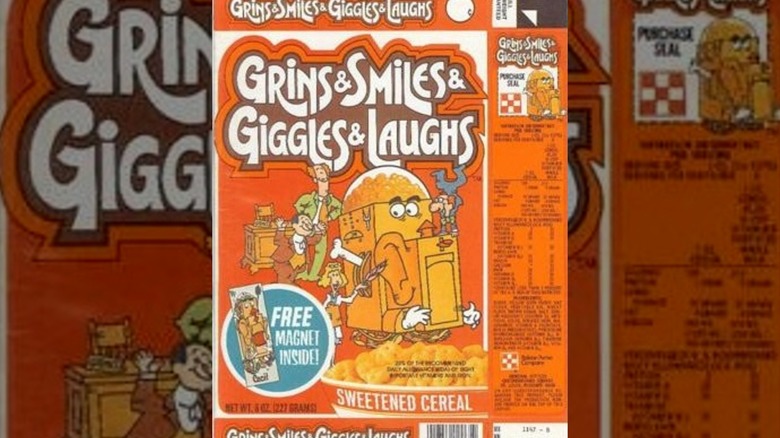
Many 1970s cereals implied that they gave kids a good time, but one was far blunter about it. Ralston's Grins & Smiles & Giggles & Laughs entered the cereal scene in 1976, the year of the country's bicentennial.
Ralston set Grins & Smiles & Giggles & Laughs in an unusual setting for breakfast cereals: the office. A grumpy computer has stalled production and can only produce the cereal when his funny bone is tickled. Thus, four employees, Grins, Smiles, Giggles, and Laughs, make the computer lighten up so he can spew forth boxes of cereal. While the fun antics and animation style in the commercials may appeal to children, their parents would presumably appreciate having smiley face corn puffs in the workplace, too.
From a modern perspective, the concept of users catering to their machines might seem a bit quaint. After all, nowadays, we're surrounded by technology that's ripe for personification and satire. Reviewers recall that the color, texture, and sweet taste resembled Cap'n Crunch, and with the good captain still with us, the cereal itself wouldn't necessarily feel out of place on today's shelves. But the real opportunity would be in updating its bizarre, computer-centered premise for a generation accustomed to turning technology into entertainment.
Buc Wheats
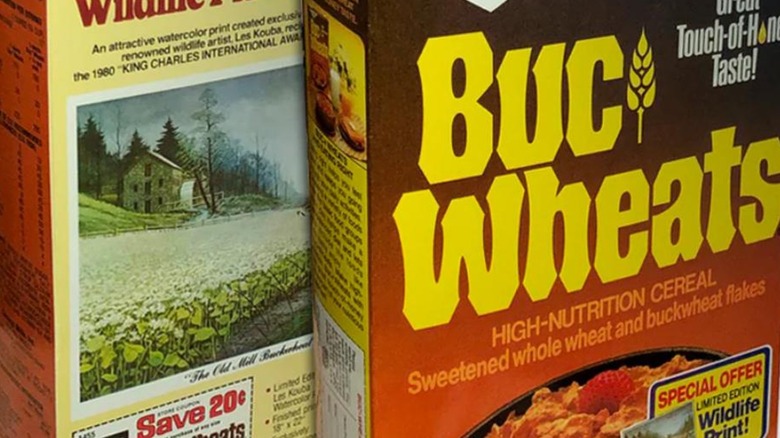
Let's end on a cereal that had adult appeal: Buc Wheats. With no kid-friendly mascot, no surprise toys, and an emphasis on nutrition, this cereal blended buckwheat into wheat flakes with a coating of maple syrup. Buc Wheats was marketed as a healthy breakfast cereal, with its boxes touting 100% of the minimum daily requirements for vitamins and iron alongside its stoneground buckwheat and maple flavor. "Pass the Buc," rang its commercial jingle, and the cereal developed a loyal following.
A cereal centered on high nutrition and a specific regional New England charm meant that tampering with the formula could jeopardize its original appeal. Unfortunately, General Mills replaced the maple glaze with honey around 1982, leaving many fans disappointed. The change coincided with declining sales, and the cereal was discontinued not long after.
Buckwheat has a place on today's cereal shelves, but ready-to-eat cereals centered on the grain are rare compared with the usual corn, rice, and bran varieties. Should General Mills revive the original recipe, consumers might ask the cereal maker to "Pass the Buc" once more.