

12 Things Bourbon Enthusiasts Need To Have In Their Home Bar
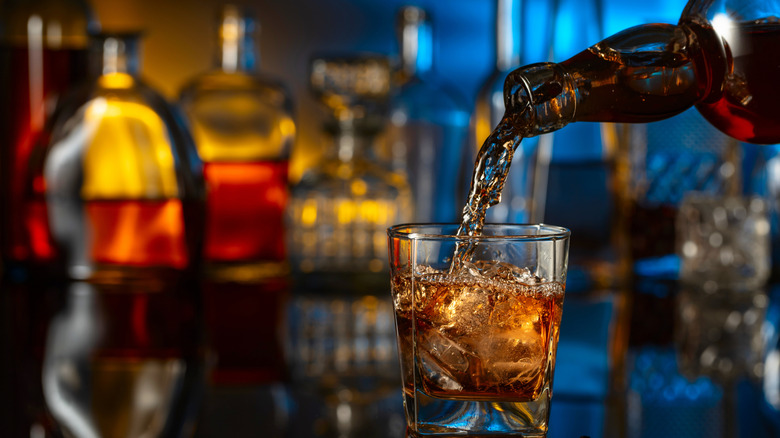
Having a bourbon bar is more than just having a nice row of bottles lined up on a shelf. The whiskey may be the star of the show, but a few potential additions to your home bar can elevate the whole experience. These can range from better ways to serve and store your spirits to more effective ways to enjoy the spirits themselves. This list isn't about turning your home into a professional cocktail bar. Instead, it's about making it both more fun and functional for both you and any potential guests.
I've spent many years tasting and exploring bourbon. That has meant having my own home bar and seeing plenty of setups from others. Added to this experience are countless whiskey tasting sessions where I've seen the benefits of a professional setup. What has been clear in my experience is that the best home bars aren't always the most expensive or elaborate. All of these tools and tricks here will help you to get more out of every pour. Importantly, they all serve a genuine purpose rather than being a gimmick or something you don't actually need. With all 12 of these in place, you'll have a home bar to be proud of, suited to any occasion.
1. The right selection of glassware
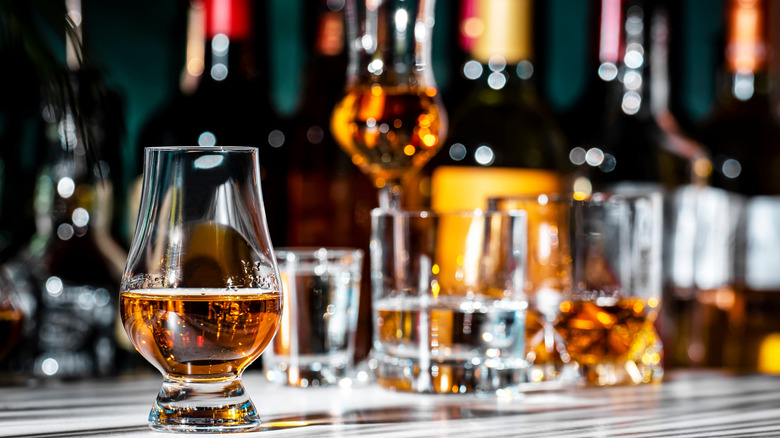
There are a few glasses you need in your home bar if you want to truly appreciate your bourbon. This is especially true when you're drinking it neat. The best place to start is with a Glencairn glass, named after the company that created it. The glass you need doesn't have to be in this exact style, but its tulip-shaped design has some important features. It helps to concentrate the aromas in the glass, making it easier to pick out the subtle notes of a whiskey. I also find the glass's small circumference lets you take small sips and savor the whiskey.
While ideal for first impressions, you most likely won't want to use this glass all the time. For everyday sipping, I prefer a tumbler or rocks glass. Other names include an Old Fashioned or lowball glass. This is easy to drink from and also suitable for basic cocktails and large ice cubes. If you plan on drinking cocktails, you'll want glassware for that as well. A highball glass gives you plenty of room for bourbon and a longer mixer, making it ideal for more casual drinks. It isn't an ideal glass for nosing or enjoying whiskey neat, but that's not the point. These three types of glasses will cover most occasions when enjoying bourbon.
2. Large ice cube trays
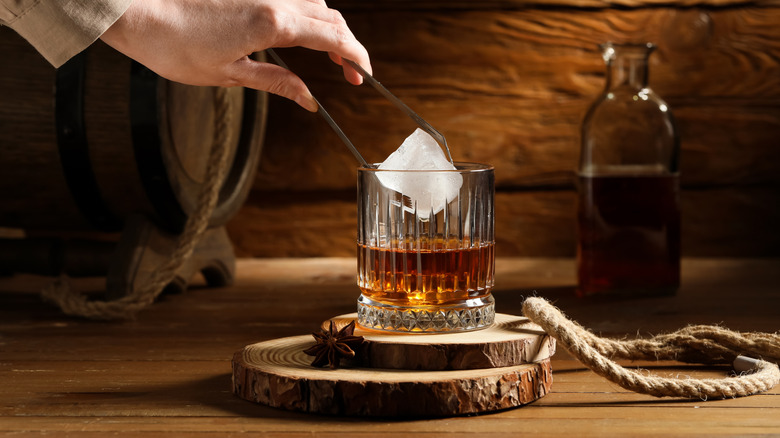
If you don't know why large ice cubes are better for bourbon, it all comes down to surface area. Small ice cubes have a lot of exposed surface area and therefore have more potential to melt more quickly when placed in a drink. The more it melts, the more diluted your whiskey will become. As you'll soon read, whiskey and water aren't always a bad combination, but it's something that you want to control. That's where large ice cubes come in. Because of the smaller surface area of one large cube compared to several smaller ones, it will melt more slowly. By the time you've finished your bourbon, there is likely to have been minimal dilution.
A single large cube in a rocks glass can lower the temperature, soften some of the alcohol's heat, and gradually open up the flavors as it melts. This can be especially enjoyable with higher-proof bourbons, where a little dilution may make the whiskey more approachable. You can always buy large ice cubes, but not all stores sell them. Instead, I find a silicone tray to be the best option, as it's easy to use and won't crack or damage the ice. It may be more work, but I'd recommend using filtered or bottled water for these ice cubes to prevent an unwanted flavor from being introduced as they melt.
3. Whiskey stones
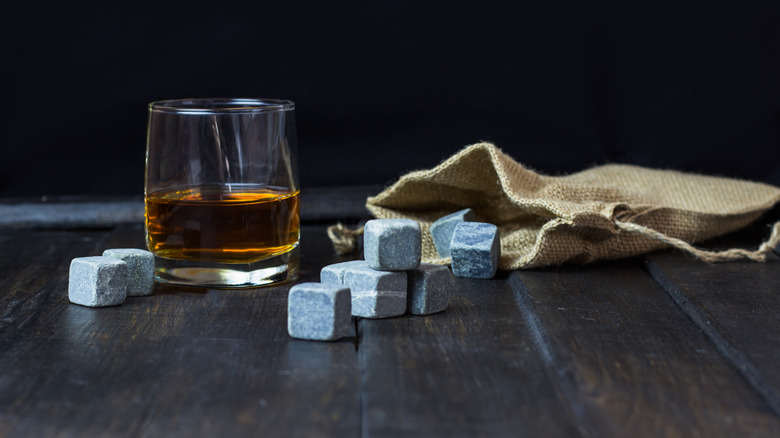
If you want to chill your drink without any dilution, whiskey stones are ideal. I say whiskey stones because they popularized the market, but there are a few other options available now, such as stainless-steel cubes. They can be kept in your freezer and added directly to your drink when you're ready to pour. You won't have to worry about any dilution in your whiskey, so if you want to truly appreciate the flavor of chilled natural bourbon, you can. Ice will change the character of bourbon over time, so it's a useful alternative.
But for full disclosure, I'm not a huge fan. You need to keep cycling them back into the freezer, and I found they don't chill a drink as effectively as ice does. Poorly made stones can also scratch your glassware. Despite this, I still have them, as they are a useful option, especially for guests who want that chill without dilution. It all comes down to personal preference, and most whiskey stones are relatively inexpensive. If you do love the idea of whiskey stones or steel cubes, I'd recommend getting a large set or a few packs so you don't feel like you're constantly refreezing them.
4. High-quality water
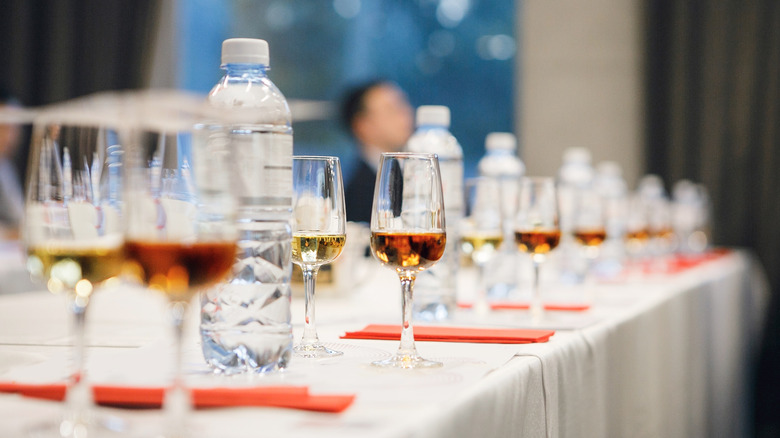
There is nothing wrong with adding water to whiskey, and it's common at professional tasting events. Water can help open up the whiskey, especially if it's high-strength. It may seem simple to just have water available, but it's more complicated than it first seems, as water is rarely just H2O. Tap water generally contains chemicals to ensure it's safe to drink, and spring water can have high mineral content. The only way to get close to pure H2O is to use distilled water, but even that has its drawbacks, as I feel it can taste a little flat and is a pointless hassle to buy.
There is no right answer here, but it's ideal to have water with a low mineral content. If your tap water is fairly soft, using filtered tap water is okay. However, I've always opted to buy bottled water with a neutral taste. I feel this is the right fit for whiskey, as it is the kind of natural, filtered water distilleries typically use to cut whiskey for any expression that isn't barrel-strength. This water isn't just for adding to whiskey, though; you'll also want it on hand to clear your palate when tasting different bottles. You may prefer distilled water or be happy with filtered tap water. Whichever one you prefer, it's important to have it readily available in your home bar.
5. Water dropper
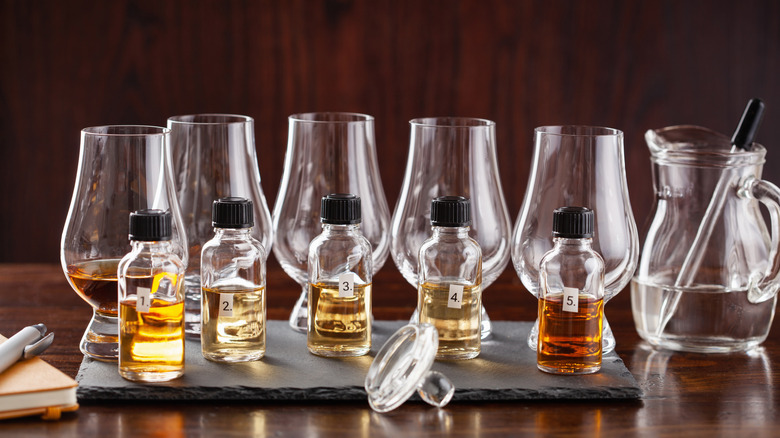
I only touched on it there, but water can be useful for opening up whiskey. This means the water can help dilute the whiskey, allowing you to enjoy aromas and tasting notes that may have been masked in its high-proof form. Yet, this is something you want to be careful with. Add too much water, and you can end up with a watery whiskey diluted to the point of being ruined. If you're as clumsy as I am, then pouring a few drops from an open bottle of water rarely ends well.
This is why a dedicated water dropper can be so useful. Also known as a pipette, this tool allows you to precisely control how much water you add. I generally just keep this dropper in a separate glass of water during tasting sessions. There is no exact amount of water to add, but you usually only need a few drops in a standard measure. It's best to add a little, taste, and then add more if you feel it's necessary. It's a process that is very difficult to do without a dropper.
6. Jigger or measuring cup
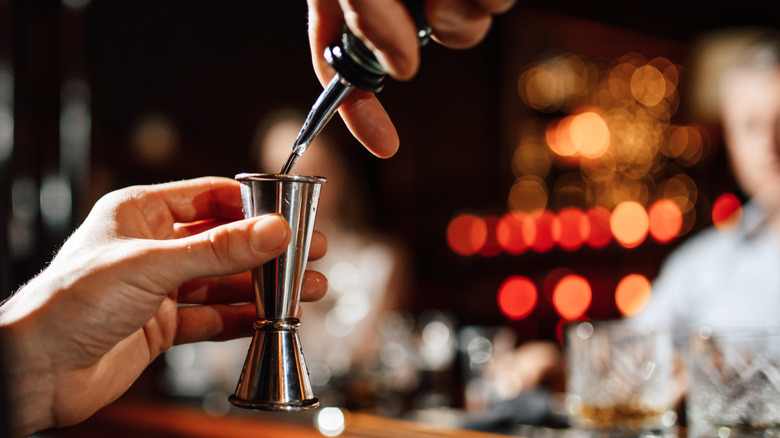
If you don't know what a jigger is by name, you've probably seen one. The most common design for this is a small, two-sided metal cup that bartenders use to measure alcohol for cocktails. Of course, you can just get yourself a small measuring cup instead, as it serves the same purpose. Being able to measure exactly how much bourbon you're serving is useful for a variety of reasons. The simplest one is that it lets you better track how much you're drinking. In my experience, this can stop you from having a little bit too much of that expensive bottle you were hoping to savor.
It also allows you to better control the whiskey-to-water ratio when you are adding a few drops. When doing this, I find it better to use smaller whiskey measures so that if you go a little too far with the water, you're not ruining a large glass. Then, of course, it's ideal for cocktails as well. The balance of a cocktail can change considerably if you're consistently pouring too much or too little whiskey. You don't need anything fancy or expensive here. You'll just appreciate having one when precision matters.
7. Tasting mats or notebook
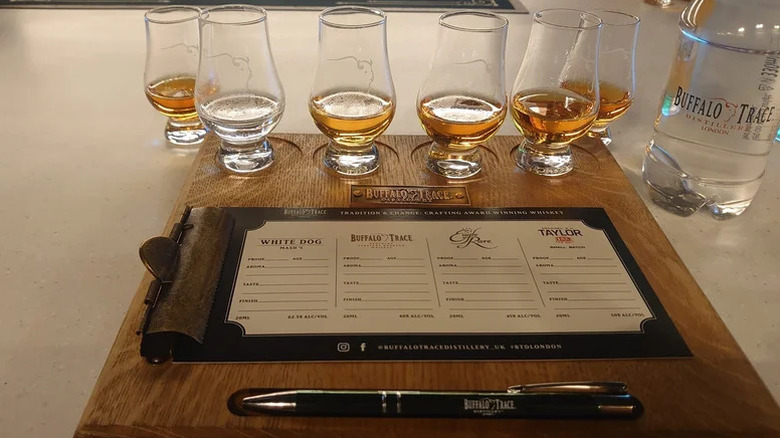
A tasting mat or notebook is a simple addition to a bourbon home bar, but it can make tasting sessions much more of an experience. If you're just enjoying a bourbon yourself, then a notebook is probably all you need. For dedicated tasting sessions with others, tasting mats can be a fun way to jot down your thoughts, share notes, and make the evening more memorable. Doing this can help you build a record of what you notice with each pour, rather than relying on your memory. Depending on which one you get, a tasting mat can also have useful prompts for answering questions about the whiskey, such as familiar tastes or aromas you may expect.
Exactly how you do this will depend on how you want to organize your tasting history. Personally, I like to keep a basic notebook and then enter my thoughts into a spreadsheet later. However, you may want to have a dedicated whiskey journal with your own tasting sections. Palates change over time and memories fade, so combining your bourbon bar with a way to take notes is a solid combination. For anyone who regularly explores new bottles, it's a habit that you'll thank yourself for further down the line.
8. Plain snacks
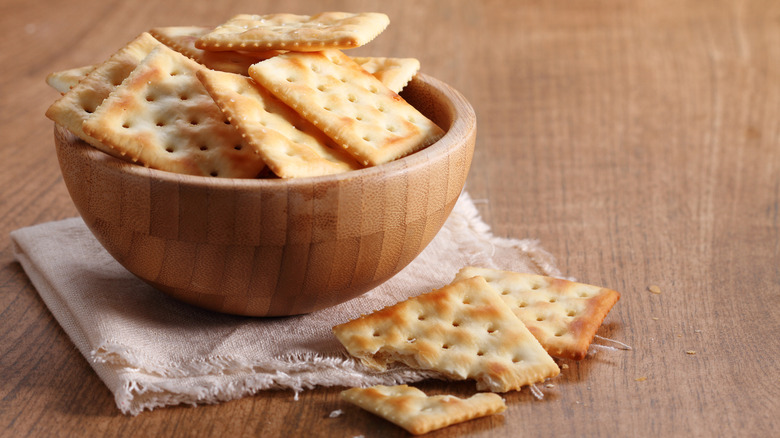
As I mentioned above, it's important to cleanse your palate between whiskey tastings; otherwise, the tasting notes of your next bourbon can be affected by the one you just tasted. Water is usually all you need for this, but sometimes you want something a little more substantial. If you want something to eat, it's best to opt for something mild-tasting. My go-to has always been plain crackers, but they are far from the only option if you're looking for something different.
Bread, pretzels, popcorn, and rice cakes can all be good if they don't have any added flavor. What you want to avoid is anything with a strong, lingering taste. This includes anything with high levels of acidity, spice, sugar, fat, and salt, as well as other strong flavors, such as garlic or onion. Just to reiterate, this is only important when you are switching between whiskeys. For example, chocolate is bad for tasting sessions, but it can pair beautifully with a good whiskey on its own. For tasting sessions, you aren't looking to complement flavors but rather to have something neutral on hand for when your palate needs it. Water is good, but having something to eat alongside your drinks is a sensible way to enjoy a longer session.
9. A strong light
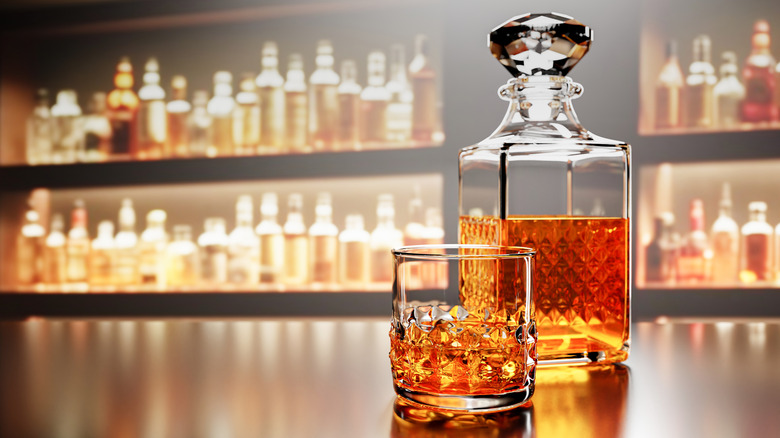
This is perhaps the most left-field suggestion here, but it's something that I've wished for on more than one occasion when at tasting sessions. I find that many places are dimly or softly lit. This helps create a relaxing mood and a warm atmosphere, but it can make it hard to analyze one of whiskey's key characteristics. I like to examine what's in the glass. Bourbon should be clear and transparent, and the color can tell you a lot about how the whiskey has been matured. It isn't always a reliable way to judge whiskey quality, but it provides useful information.
Warm or very dim lights can make everything appear darker than it actually is. You don't need specialist equipment or expensive bar lighting. A good table lamp or floor lamp positioned near your tasting area can be perfectly adequate. It's good to have a bright, clear light to examine the whiskey, and you don't need to keep it on the whole time. There's nothing wrong with keeping the main bar lighting dim for atmosphere. Just make sure you have a brighter light available when you actually want to examine your bourbon.
10. The right storage
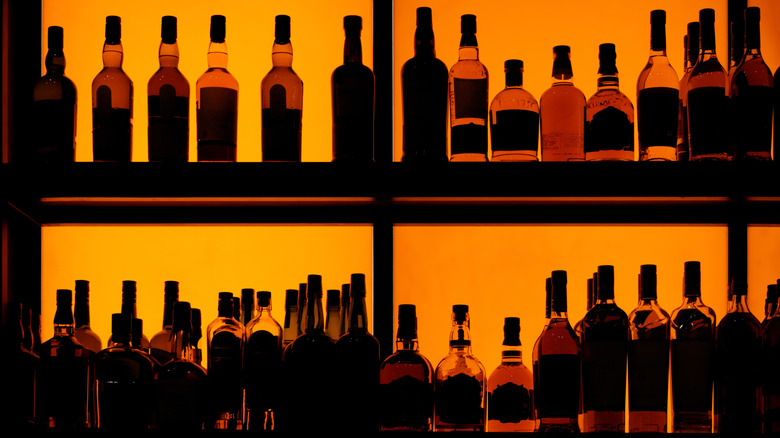
A home bar can be set up in a million different ways. Your bourbon collection may be a handful of bottles or hundreds. It doesn't matter what your home bar looks like, but you do need to protect your whiskey from any outside influence that may degrade its quality. There are two main aspects to consider here: sunlight and temperature. UV light will degrade whiskey over time, dulling the flavor. You don't need to be ultra-cautious here, but you do need to ensure that direct sunlight isn't hitting your bottles.
Temperature is also worth considering. Bourbon doesn't need to be refrigerated, but you do want its temperature to remain stable. Here, you just want to check that your bottles aren't near radiators, heating appliances, or in any area where temperatures can fluctuate. Also keep your bottles upright to prevent damage to the cork. A regular everyday bourbon you'll finish quite quickly? These factors have a minimal impact. But if you plan to keep that special bourbon for years to come, it becomes even more important. A simple enclosed cabinet is the best bet for your most precious bottles. It can be nice to display your collection on open shelving, but you might want to hide away your best bourbons until those special occasions.
11. Basic bar tools
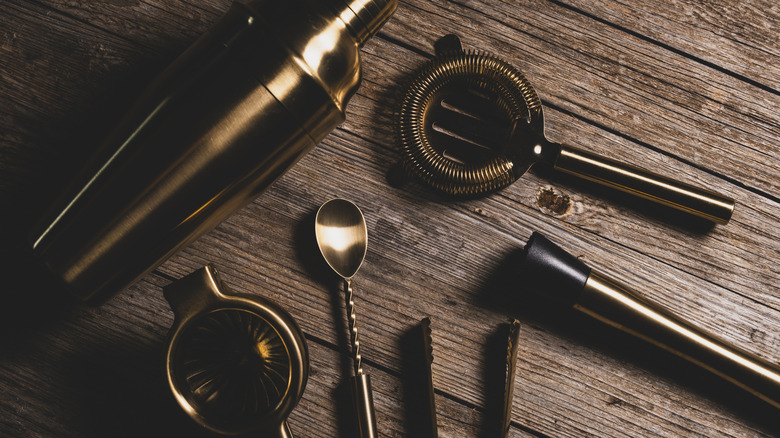
You don't need a drawer full of professional cocktail equipment for a great bourbon home bar. In fact, if you're mostly interested in sipping and tasting bourbon, any specialist bar tools you have will probably just gather dust. Yet, having a few basic bar tools is worth keeping on hand for when you do want to make a cocktail or prepare a drink properly. A bar spoon is the most basic of these, as you can use it to stir simple drinks like an Old Fashioned or Manhattan.
A cocktail strainer lets you pour a stirred drink neatly into your glass without bringing along unwanted ice. A muddler can also be handy if you occasionally make drinks that require any ingredients to be gently crushed. A good bottle opener may be overlooked if you're only focused on bourbon, and a citrus zester can be useful, too. These don't need to be expensive bartender-grade tools. A jigger, spoon, strainer, and citrus peeler will cover almost all of your home bar needs.
12. Simple ingredients
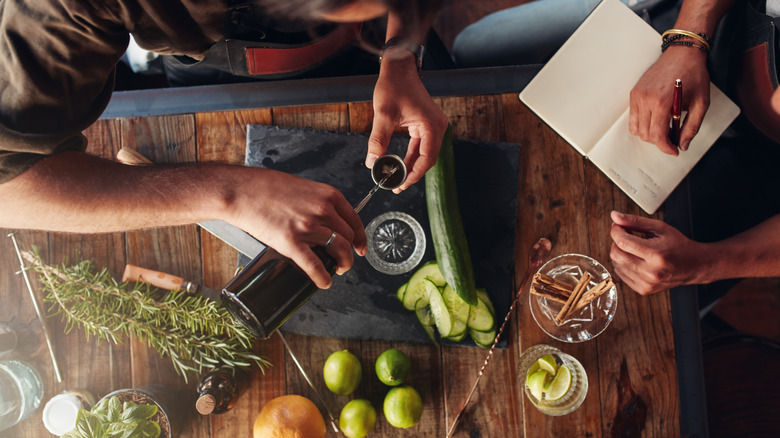
Exactly which ingredients you add to your home bar will depend on how you plan to enjoy it most often. If you usually enjoy your bourbon neat or on the rocks, there is little point in filling your cupboards with fresh ingredients. Even so, it's a good idea to have a small collection of ingredients that can be used across a wide range of bourbon drinks.
It's also worth considering that even if your bar is mainly bourbon-focused, you have a few other types of alcohol available. Angostura bitters is a good place to start, as it can elevate many cocktails. Bitters, in general, take up little space and last a long time. Simple syrup and sugar are also long-lasting ingredients.
Alongside this, it's a good idea to get a small collection of mixers. If you plan on hosting, consider what others may like. The most classic options here are club soda, ginger ale, and cola. This will cover most guests. Getting some fresh oranges, lemons, and limes can also be a good idea for a big occasion or if they suit your tastes. The key is to think about all the ingredients that you'll actually use.