

Classic Beef Moussaka Recipe
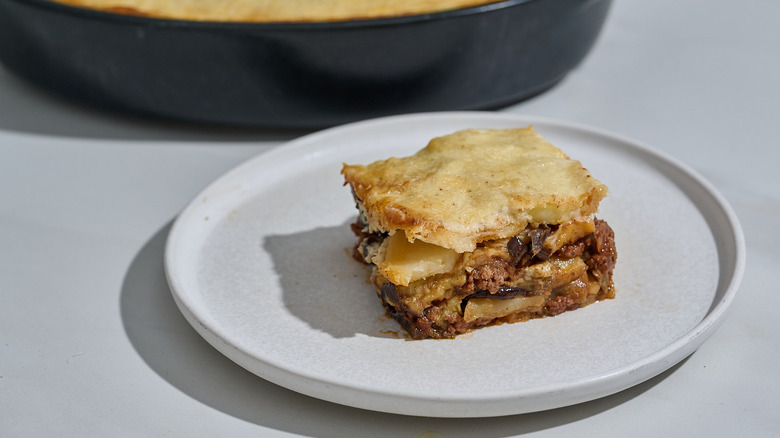
The easiest way to describe moussaka is to compare it to lasagna, but the two are technically very different dishes. Instead of sheets of dense noodles, moussaka nests roasted eggplant between layers of warmly spiced ground meat and creamy bechamel. The result is still a rich, layered, and sliceable casserole, but with a silky, custardy quality and subtly sweet flavor that makes Moussaka unique.
Moussaka has a long history throughout the Balkans and the Middle East, and it evolved over time to become the dish that we're familiar with today. While most moussaka variations around the world include eggplant and ground meat, some are more stew-like, while others incorporate potatoes. Though a relatively modern variation, the Greek-style moussaka is often considered the most familiar, and can either include or forgo the layer of thinly sliced potato.
My moussaka stacks tender roasted eggplant with crispy fried potatoes and warmly spiced ground beef sauce under creamy bechamel, creating layers of contrasting textures and rich, savory flavor in every bite. Like lasagna, moussaka is a labor of love, but the payoff is a comforting casserole that makes every step well worth the effort.
The ingredients needed to make classic beef moussaka
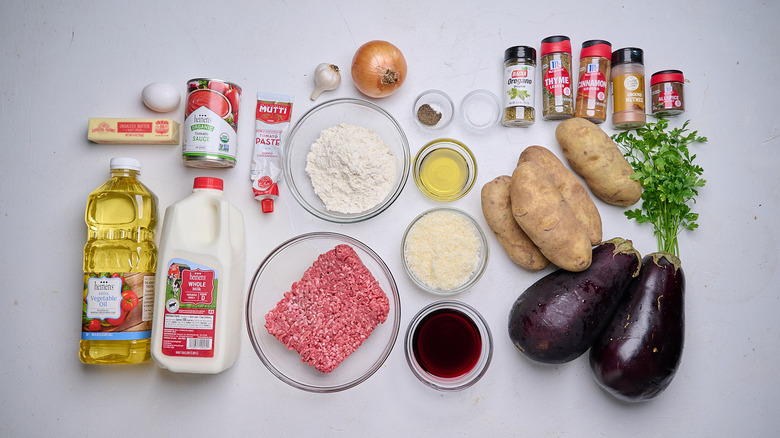
The ingredient list in this recipe might seem intimidating, but it's actually less lengthy than it seems — a large portion of the list includes spices you likely already have. For the first layer, you'll need two eggplants, olive oil, and salt. The potato layer will also require salt, several russet potatoes, and canola (or vegetable) oil for frying. The meat layer requires the most ingredients: You'll need onion, garlic, tomato paste, red wine, ground beef, tomato sauce, parsley, oregano, thyme, cinnamon, allspice, and cracked black pepper, along with a little more olive oil and salt. The last layer, which is the creamy bechamel, just needs butter, flour, milk, nutmeg, egg, and Parmesan cheese, which we will use to sprinkle on top, as well.
Step 1: Heat up the oven
Preheat the oven to 400 F.
Step 2: Sprinkle the eggplant with salt
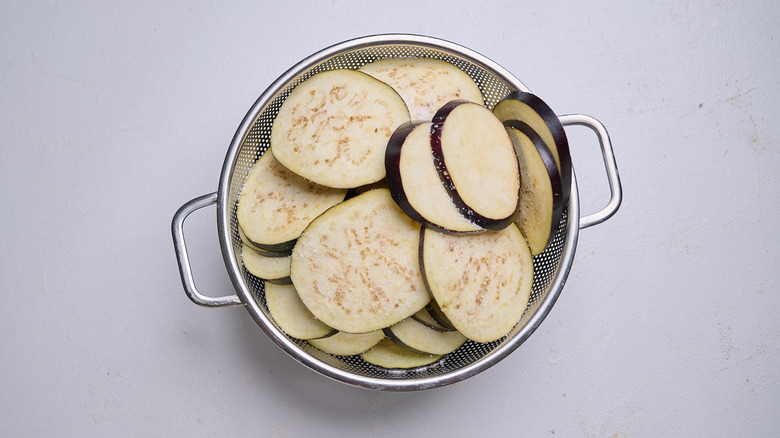
Start with the eggplant. Sprinkle the eggplant with 1 teaspoon salt and place into a colander. Let sweat for 30 minutes.
Step 3: Heat up the oil for frying
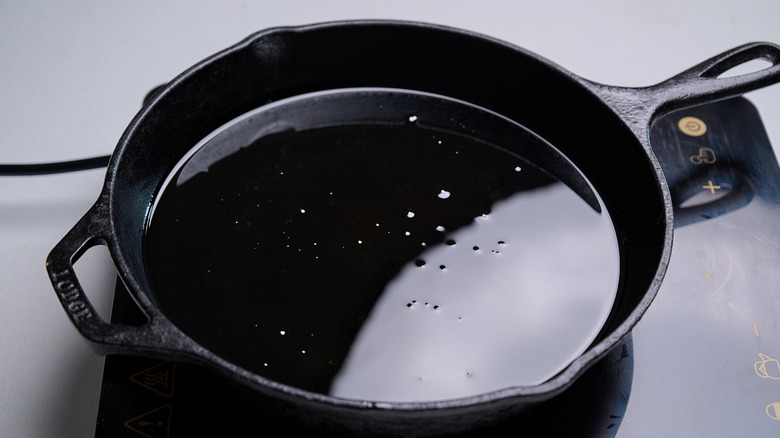
While the eggplant is draining, fry the potatoes. Heat the canola oil in a cast iron skillet over medium heat until very hot (350-375 F).
Step 4: Fry the potatoes
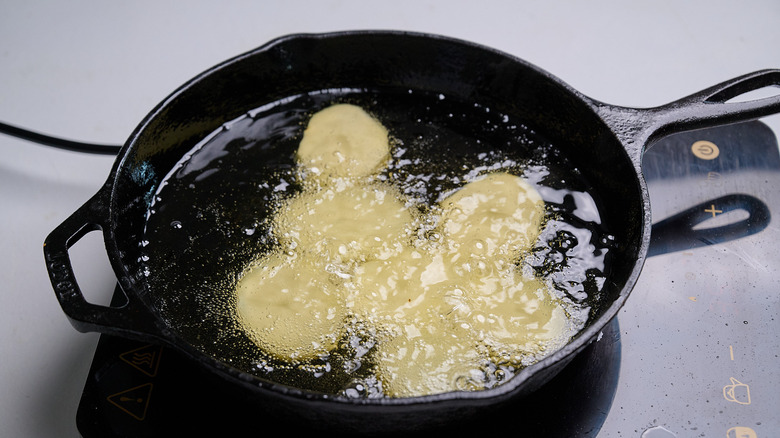
Add the potatoes and fry until just barely golden, about 3 minutes per side. Remove and drain on paper towels, then salt with ½ teaspoon salt or to taste.
Step 5: Dry the eggplant and add oil and salt
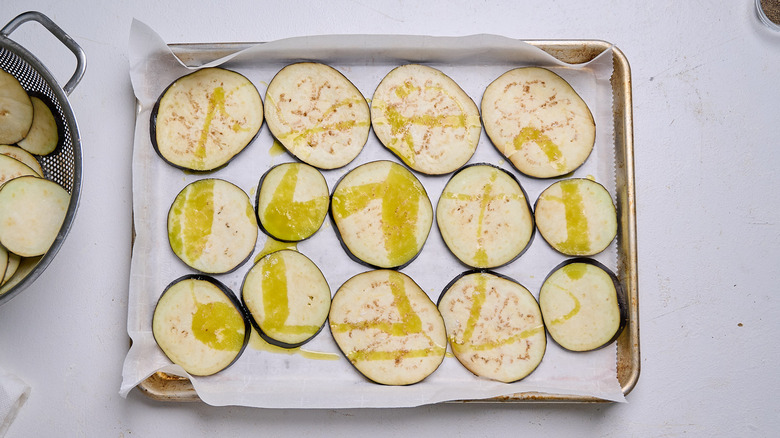
Once the eggplant is drained, pat it completely dry and place on a parchment-lined sheet tray. Drizzle with 2 tablespoons olive oil and sprinkle with ½ teaspoon salt.
Step 6: Roast the eggplant
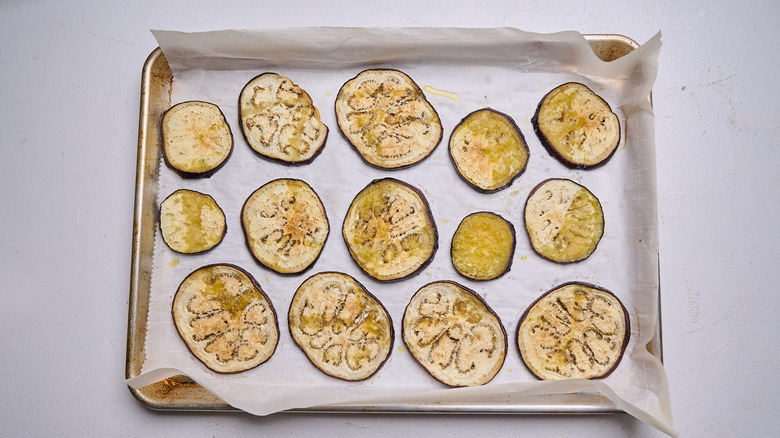
Roast until softened, about 30 minutes, flipping halfway through. Do not let eggplant get too soft and mushy.
Step 7: Heat the oil in a large pot or pan
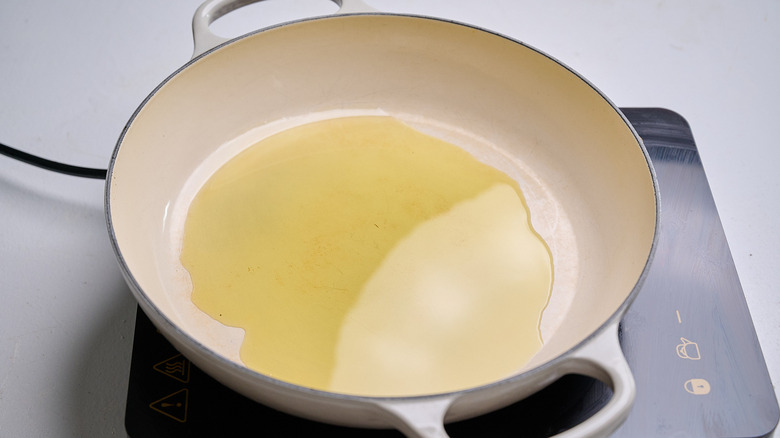
While the eggplant is roasting, make the meat sauce. Heat 2 tablespoons of olive oil in a large pot or braising pan.
Step 8: Soften the aromatics
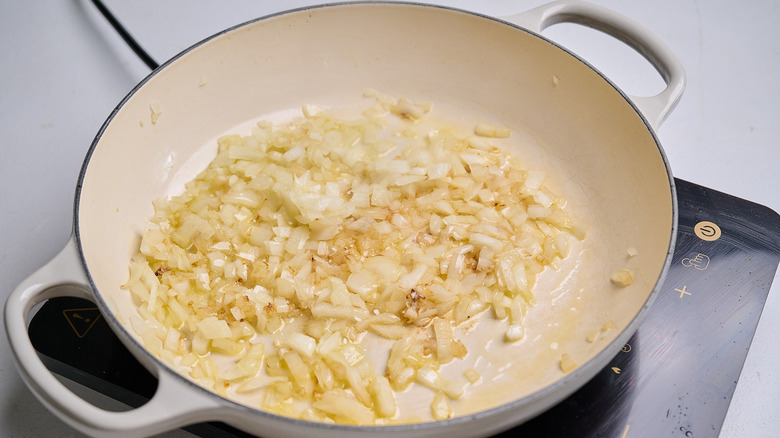
Add the onion and garlic to the pan and soften, about 2 minutes.
Step 9: Stir in the tomato paste
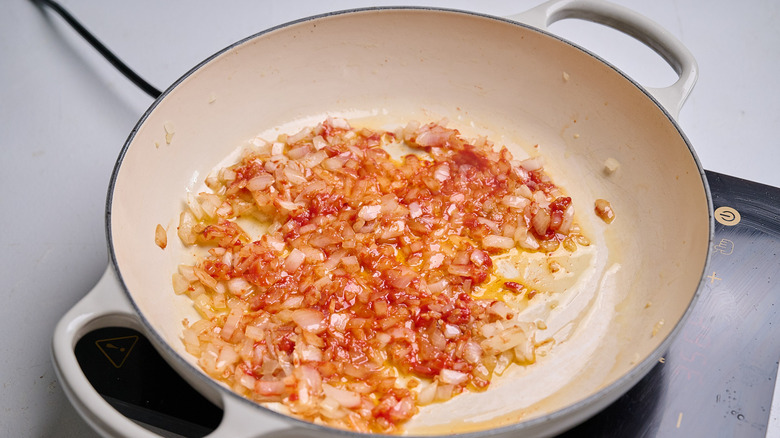
Add the tomato paste and stir to combine. Cook until it's beginning to stick to the pot, for about 2 minutes.
Step 10: Deglaze the pot
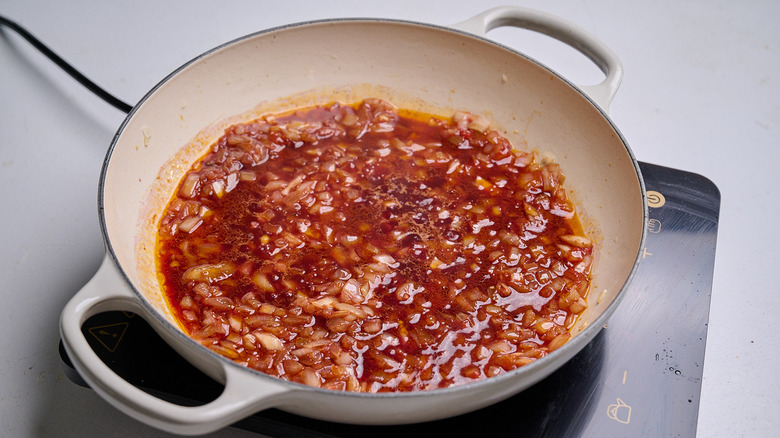
Deglaze with red wine, scraping the browned bits.
Step 11: Crumble the beef
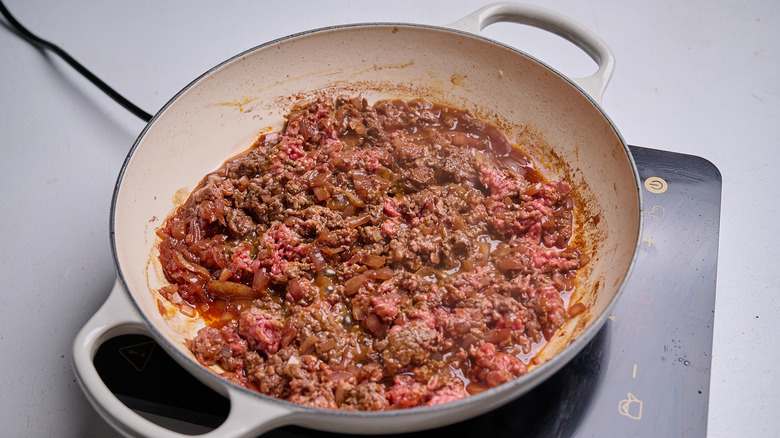
Add the beef and crumble while browning. Cook completely while the wine reduces.
Step 12: Stir in the tomato sauce and spices
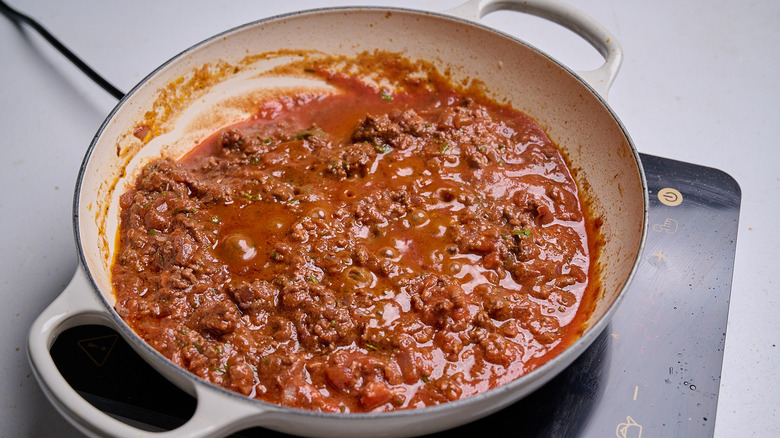
Add the tomato sauce, parsley, herbs, spices, and salt and pepper. Stir and reduce to a simmer and cook for 20 minutes.
Step 13: Begin the bechamel by melting butter
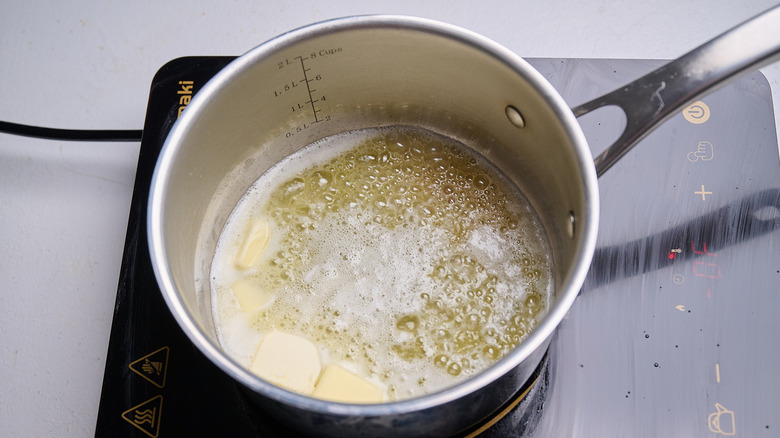
Finally, while the beef is simmering, make the bechamel. Melt the butter in a saucepan over medium heat.
Step 14: Form a roux with flour
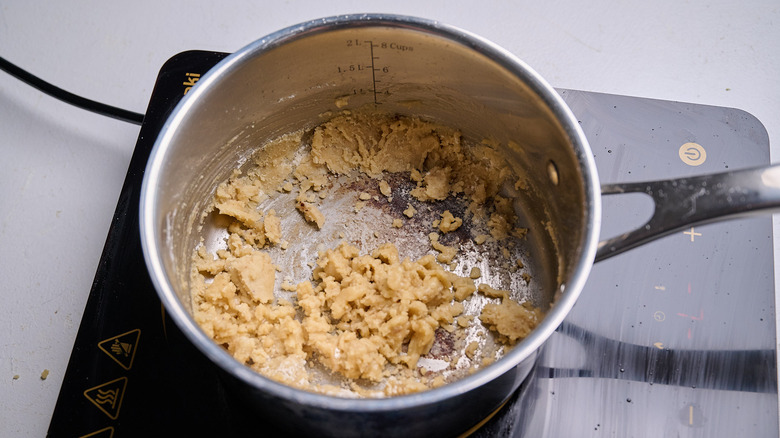
Whisk in the flour to form a very thick roux. Do not allow to burn.
Step 15: Whisk the milk into the roux
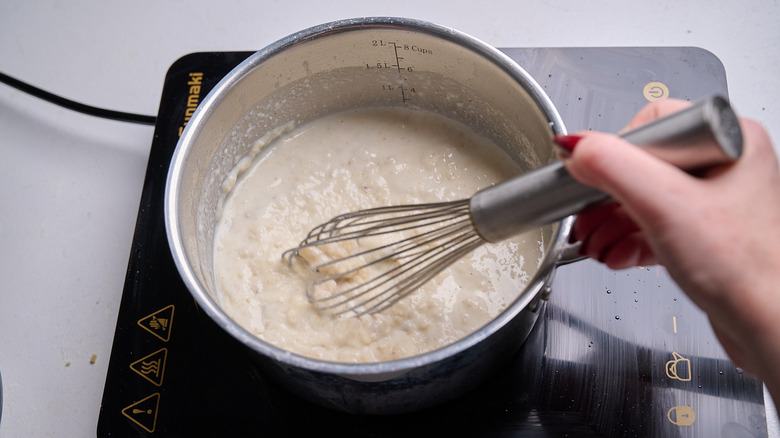
Add the warmed milk in slowly while whisking until the mixture is thick, about 5 minutes. Whisk continuously to avoid the milk burning or sticking to the bottom of the pot.
Step 16: Whisk in the seasoning, cheese, and egg
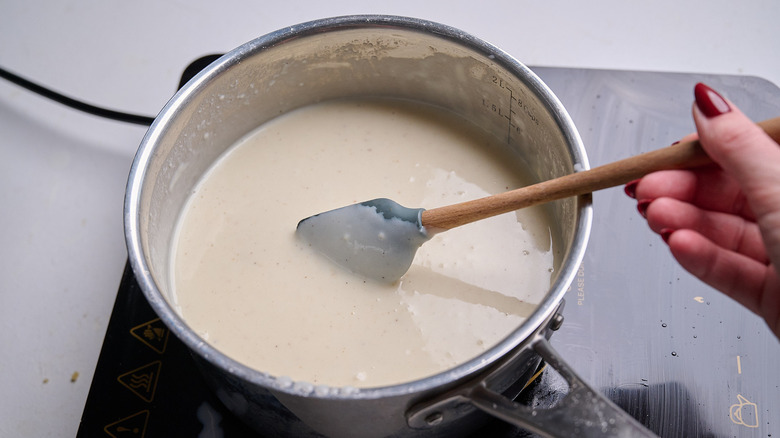
When the mixture coats the back of a spatula, remove the pan from the heat and add salt, pepper, nutmeg, and ½ cup of Parmesan. Allow it to cool, then whisk in the egg.
Step 17: Lower the oven temperature
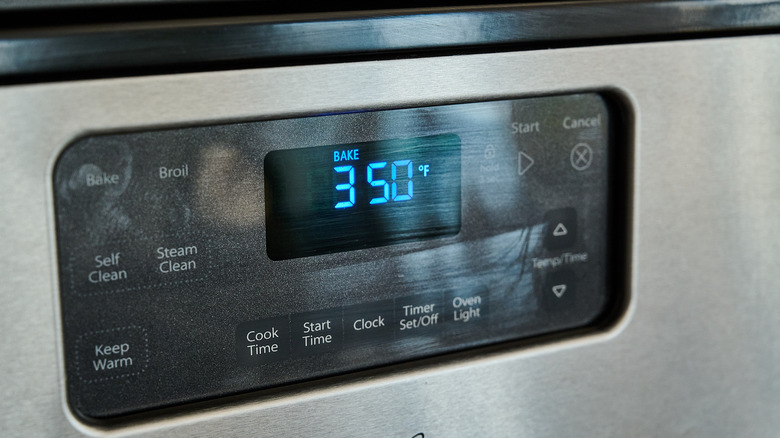
Lower the oven temperature to 350 F.
Step 18: Arrange the potatoes in a casserole dish
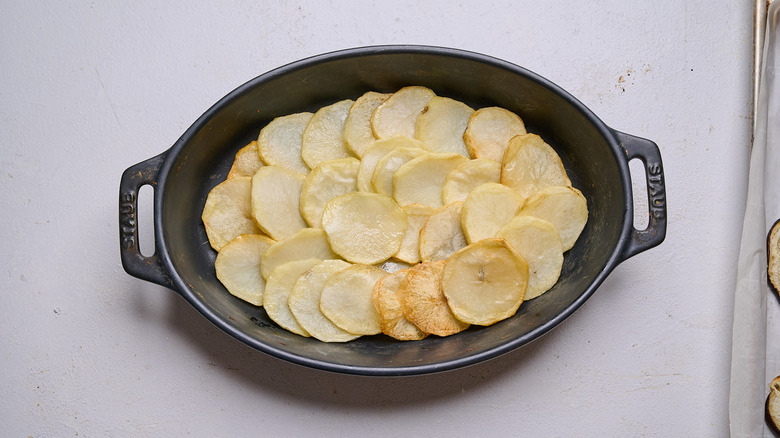
Build the moussaka. Spray a 9x13-inch dish with oil, then arrange half of the potatoes across the bottom of the dish.
Step 19: Layer with eggplant
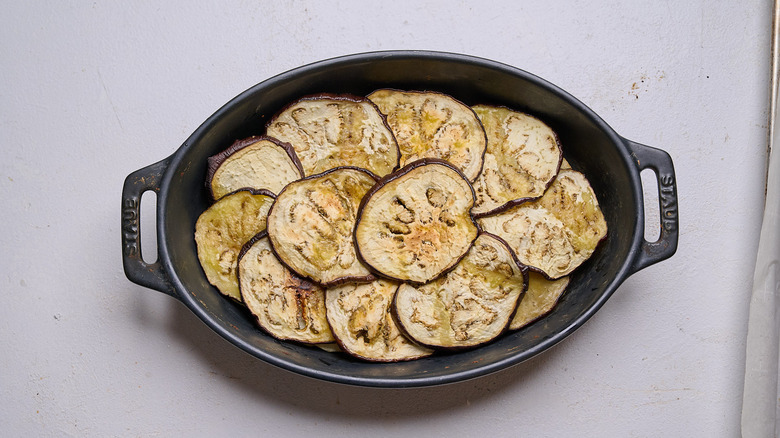
Layer with half of the eggplant.
Step 20: Add the meat sauce
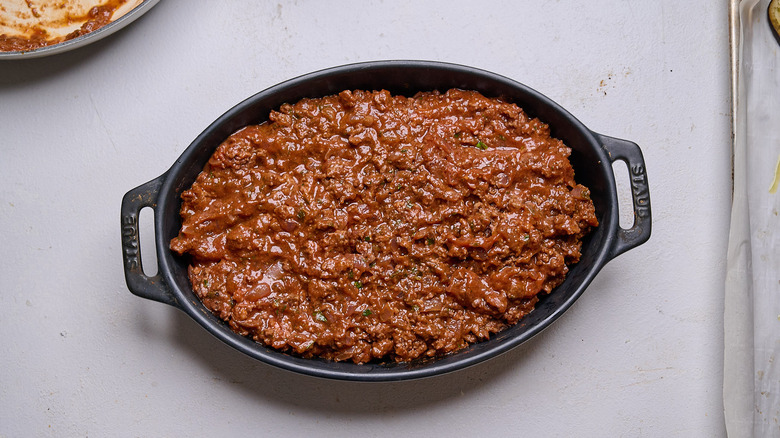
Add the meat sauce on top of the eggplant.
Step 21: Layer with eggplant and potatoes
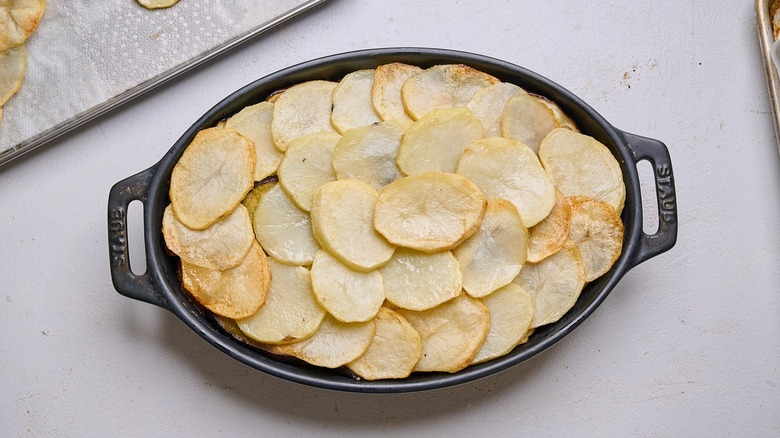
Layer with another layer of eggplant, then another layer of potatoes.
Step 22: Cover with béchamel and cheese
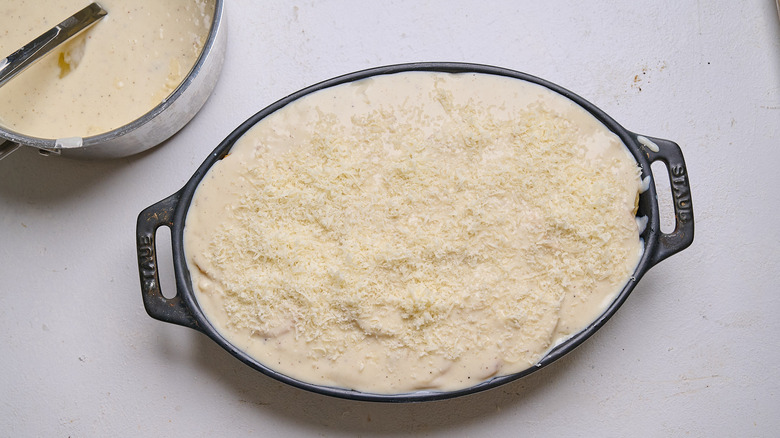
Cover the potatoes with béchamel and sprinkle with the remaining ½ cup Parmesan cheese.
Step 23: Bake the moussaka
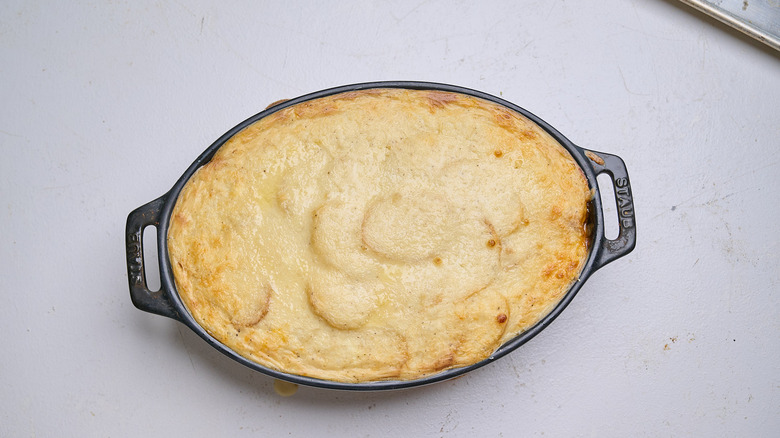
Bake for 40-50 minutes, until the top is golden.
Step 24: Remove, rest, slice, and serve
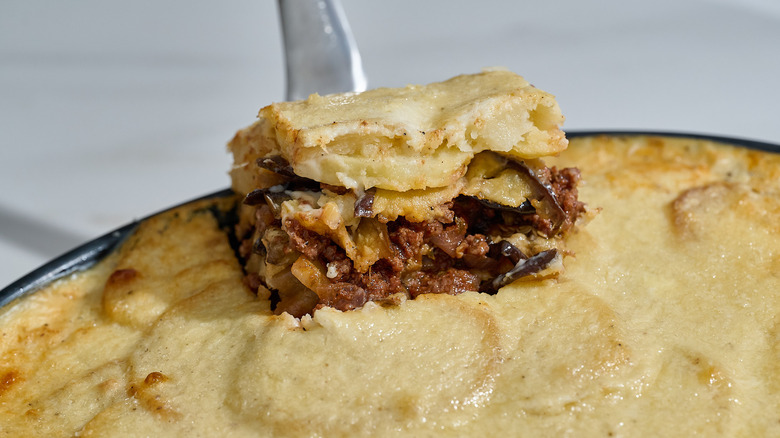
Remove the dish from the oven and let it rest for 15-20 minutes, then slice and serve the moussaka.
What pairs well with moussaka?
Classic Beef Moussaka
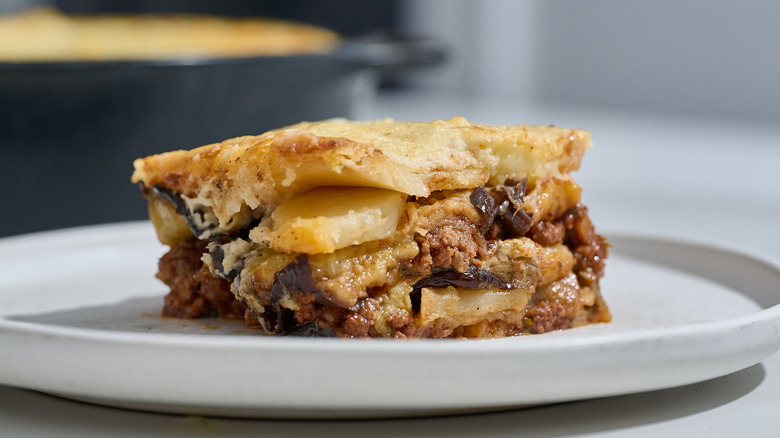
Our classic moussaka stacks eggplant with crispy potatoes, warm-spiced ground beef, and creamy bechamel, creating layers of rich, savory flavor in every bite.
Ingredients
- For the vegetables
- 2 medium-sized eggplants, sliced into ¼-inch rounds
- 2 teaspoons salt, divided
- 2 cups canola oil, for frying
- 4 large russett potatoes, peeled and sliced between ⅛- to ¼-inch thick
- 2 tablespoons olive oil
- For the meat sauce
- 2 tablespoons olive oil
- 1 yellow onion, diced
- 1 tablespoon minced garlic
- 2 tablespoons tomato paste
- ½ cup red wine
- 1 pound ground beef
- 1 (14.5-ounce) can tomato sauce
- 1 tablespoon chopped parsley
- 1 teaspoon dried oregano
- ½ teaspoon dried thyme
- ½ teaspoon cinnamon
- ¼ teaspoon allspice
- ½ teaspoon salt
- ½ teaspoon pepper
- For the bechamel
- 6 tablespoons butter
- ¾ cups flour
- 4 cups milk, warmed
- ½ teaspoon salt
- ⅛ teaspoon pepper
- ⅛ teaspoon ground nutmeg
- 1 cup grated Parmesan cheese, divided
- 1 egg
Directions
- Preheat the oven to 400 F.
- Start with the eggplant. Sprinkle the eggplant with 1 teaspoon salt and place into a colander. Let sweat for 30 minutes.
- While the eggplant is draining, fry the potatoes. Heat the canola oil in a cast iron skillet over medium heat until very hot (350-375 F).
- Add the potatoes and fry until just barely golden, about 3 minutes per side. Remove and drain on paper towels, then salt with ½ teaspoon salt or to taste.
- Once the eggplant is drained, pat it completely dry and place on a parchment-lined sheet tray. Drizzle with 2 tablespoons olive oil and sprinkle with ½ teaspoon salt.
- Roast until softened, about 30 minutes, flipping halfway through. Do not let eggplant get too soft and mushy.
- While the eggplant is roasting, make the meat sauce. Heat 2 tablespoons of olive oil in a large pot or braising pan.
- Add the onion and garlic to the pan and soften, about 2 minutes.
- Add the tomato paste and stir to combine. Cook until it’s beginning to stick to the pot, for about 2 minutes.
- Deglaze with red wine, scraping the browned bits.
- Add the beef and crumble while browning. Cook completely while the wine reduces.
- Add the tomato sauce, parsley, herbs, spices, and salt and pepper. Stir and reduce to a simmer and cook for 20 minutes.
- Finally, while the beef is simmering, make the bechamel. Melt the butter in a saucepan over medium heat.
- Whisk in the flour to form a very thick roux. Do not allow to burn.
- Add the warmed milk in slowly while whisking until the mixture is thick, about 5 minutes. Whisk continuously to avoid the milk burning or sticking to the bottom of the pot.
- When the mixture coats the back of a spatula, remove the pan from the heat and add salt, pepper, nutmeg, and ½ cup of Parmesan. Allow it to cool, then whisk in the egg.
- Lower the oven temperature to 350 F.
- Build the moussaka. Spray a 9x13-inch dish with oil, then arrange half of the potatoes across the bottom of the dish.
- Layer with half of the eggplant.
- Add the meat sauce on top of the eggplant.
- Layer with another layer of eggplant, then another layer of potatoes.
- Cover the potatoes with bechamel and sprinkle with the remaining ½ cup Parmesan cheese.
- Bake for 40-50 minutes, until the top is golden.
- Remove the dish from the oven and let it rest for 15-20 minutes, then slice and serve the moussaka.
Nutrition
| Calories per Serving | 1,114 |
| Total Fat | 91.1 g |
| Saturated Fat | 20.0 g |
| Trans Fat | 0.9 g |
| Cholesterol | 108.5 mg |
| Total Carbohydrates | 48.3 g |
| Dietary Fiber | 8.1 g |
| Total Sugars | 15.0 g |
| Sodium | 1,436.7 mg |
| Protein | 26.9 g |

Do the potatoes have to be fried in Moussaka?
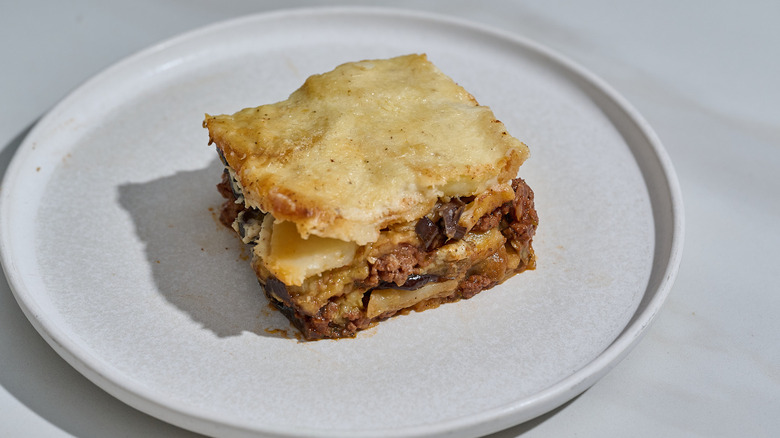
Being that many versions do not have potatoes at all, the potatoes do not need to be fried to make moussaka, but there are a few reasons why you might want to consider it. In this recipe, the potatoes should be partially cooked before you assemble the casserole to ensure they become soft and tender while the casserole is baking. If you layer in raw potatoes, they will be firmer and starchier than is ideal, especially once they're nestled in between the heavy layers of eggplant and meat sauce.
When you fry the potatoes, you begin the cooking process while also crisping their exterior, making them easier to layer and more likely to soften as they finish cooking. Deep frying is a fast, reliable way to crisp the exteriors while making the insides tender and fluffy. A shallow fry can achieve a similarly crispy, golden exterior with less oil, but may require more time to become tender throughout. To save time (and oil), roasting is also a good option. To roast the potatoes, coat them with a light layer of oil and sprinkle them with salt, then roast them until just golden and barely tender. Avoid roasting the slices until they're completely soft, since they'll continue to cook once in the assembled moussaka.
What is sweating the eggplant, and why do I need to do it for moussaka?
Sweating eggplant is actually pretty similar to what it sounds like: The cut eggplant is salted and rested to allow water to expel or "sweat" out of the slices. The water is then blotted away so the eggplant is completely dry before roasting. The salt draws the moisture out of the eggplant, which helps to prevent the eggplant from getting soggy when frying or roasting. This is especially useful in moussaka, in which the eggplant is layered with other ingredients, because it removes any moisture that would otherwise be released into the casserole.
Sweating the eggplant is necessary for this recipe because when it's roasted, we want the slices to brown before we assemble them into the casserole. Make sure the eggplant is completely dry for the crispiest golden-brown exteriors. It might seem like a cumbersome step, but it's worth it in the end: your moussaka will have firm, distinct layers free from excess moisture.