

10 Foods You Should Always Grill Over Indirect Heat
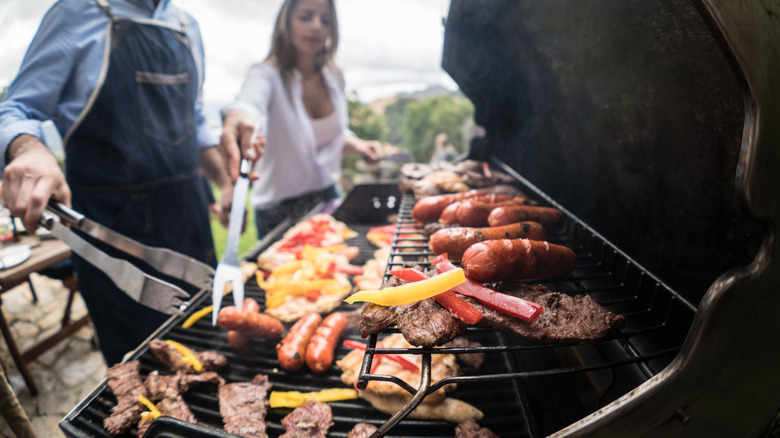
Direct heat (the hottest area over flames or coal) is generally where most people grill, which is great for burgers, steaks, and chops. If it can be safely cooked on the inside before the outside burns, you can put it over direct heat. For that, we can tell you exactly how long to keep your burgers on the grill and the absolute best temperature for juicy and flavorful chicken thighs. But you need to understand that your grill offers more. When you include options that use indirect heat (away from flames or coal), that's when you are going to start making full meals that can feed quite a few people. Indirect heat is for your big-ticket, thick, time-consuming, and crowd-pleasing portions.
There's no right or wrong time to light the grill. Lovely days can come along anytime throughout the year, and that amazing grilled flavor, which you just can't recreate in your kitchen, doesn't have to be saved for the summer months. Imagine slow-cooked turkey, grilled corn on the cob, and roasted sweet potatoes fresh from the grill to your Thanksgiving table. Picture yourself preparing a leg of lamb for New Year's. Surprise your Super Bowl crowd with beer can chicken. And how about some sticky, sweet ribs for March Madness? Great things can happen on the grill, as long as you know what to put where and for how long.
Turkey
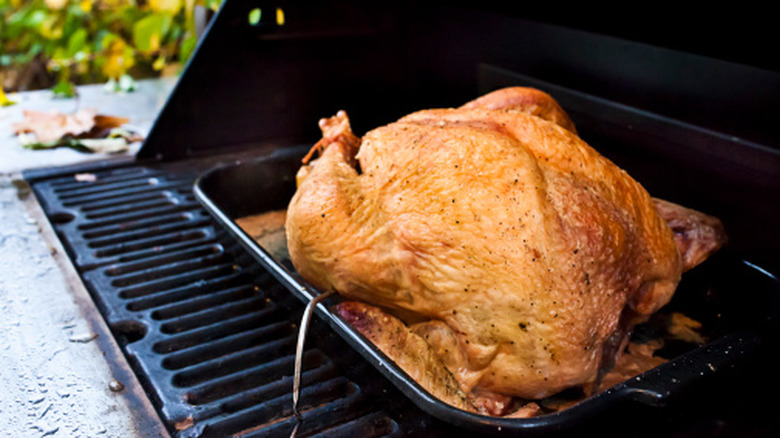
An entire 16-pound turkey takes around 2 to 3 hours to cook on the grill. Set your grill up with the coals along the sides and not in the center. Use an aluminum pan here to help keep the space open. This allows you to grill the turkey using indirect heat with the heat moving around the bird. Silvio Correa, Brazilian grill master and private chef, told us to baste the turkey with butter and herbs while grilling and to rotate to ensure even heating. Just don't lift the lid too often.
Ribs
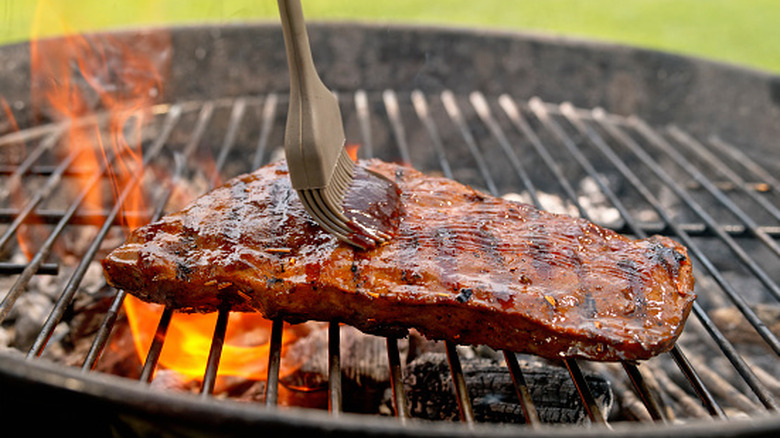
Not removing the silver skin from the back may be the first common mistake you make when grilling a rack of ribs. Another is putting them over direct heat. What to do here is place all your coals to one side of the grill. You can then place the ribs on the other, using the indirect heat you need. Rotate them 180 degrees every half hour for two hours, remove them from the heat, and wrap them in foil. Once the ribs are at an internal temperature of 190 F, sauce them and slap them right on the heat to get a sweet bit of char.
Brisket
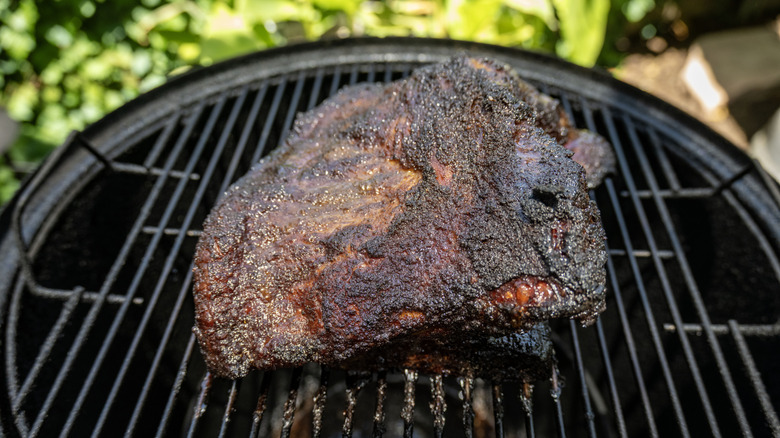
We'll be the first to tell you to avoid putting your brisket on the grill. While brisket needs to be cooked low and slow, the grill is not your best option. But if you are going to do so, start by getting a full brisket, which includes the fat cap, which will keep the rest of the meat moist during the long cook time. Plan on taking a day for the prep and the actual cooking, which can take well over six hours, to finish and rest.
Pork Shoulder
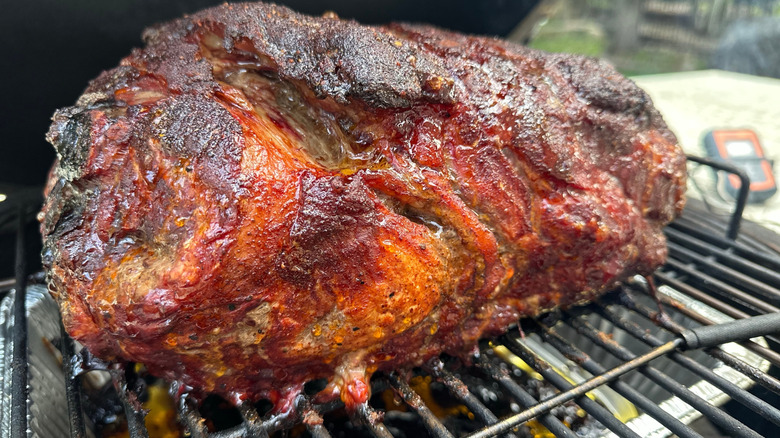
Pork shoulder comes in a variety of sizes, which determine how long it needs to be kept on the grill low and slow. In preparation, trim the fat to around ¼ inch and set your grill up with coals to one side for indirect heating. Experts advise us that when a pork shoulder reaches 160 F, that is generally the temp where it will stall. This is the time to pull it from the grill long enough to re-season it and wrap it in foil. This will help retain and enhance the flavor and juiciness while it reaches 200 F.
Whole Chicken
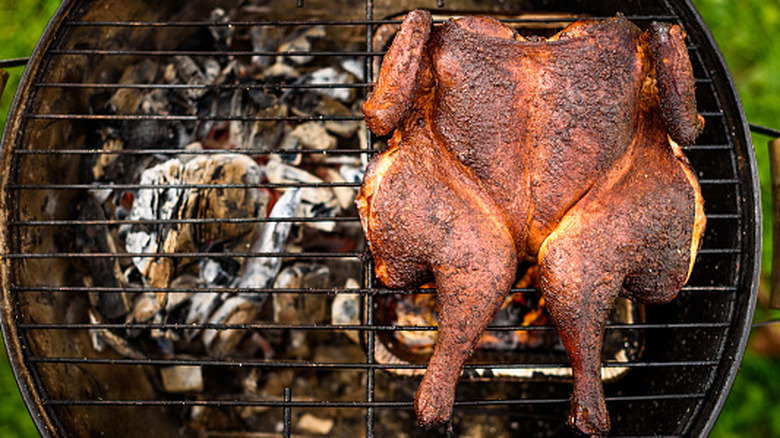
For a whole chicken, grilling times are based on the size. On average, it takes around an hour and a half to grill a 4-pound chicken. Prepare your grill with coals on both sides, leaving the middle open for a drip pan, which you'll place your chicken above. Experts urge you to put your grill cover on for at least an hour before you check the temp (the thickest part of the thigh meat needs to reach 165 F). After an hour, check every 15 minutes until your bird is completely cooked.
Chuck Roast
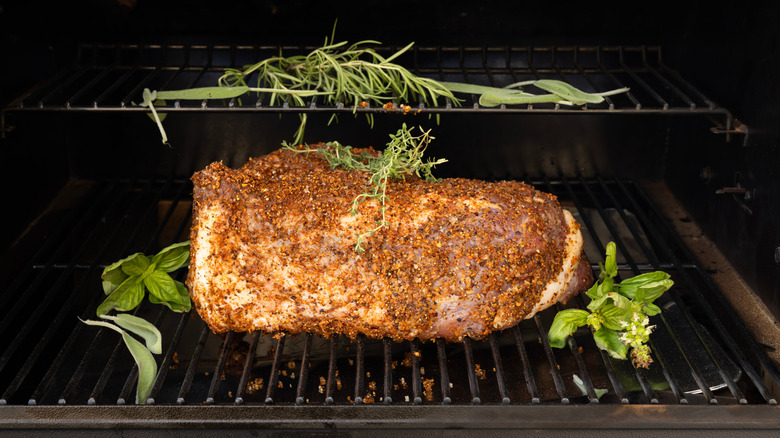
Chuck roast is one of the meats to consider marinating, possibly overnight. A good marinade, with some acid, will help break down connective tissue, offering a more tender final product. And you can make a marinade out of almost any sauce you have. For indirect heat on this one, move all your coals to one side of your grill. Your roast will go on the other side, fatty side up, until it reaches your desired temp of medium-rare (145 F) to medium (160 F). Finish by searing the fatty side of the roast over the hot zone.
Leg of Lamb
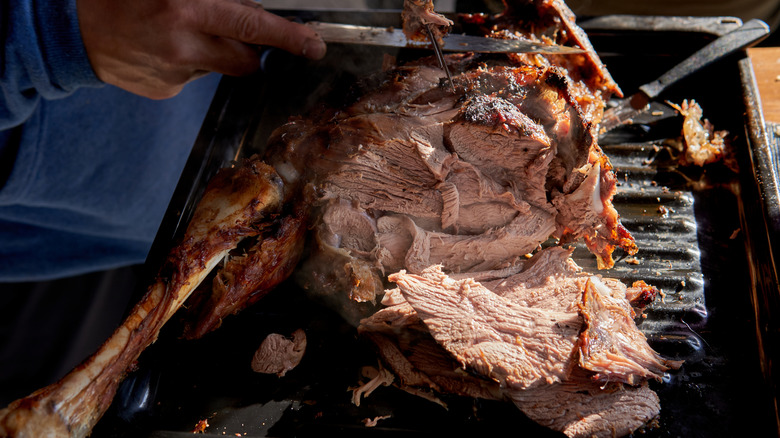
There are some things to know about buying a leg of lamb, and then some common mistakes to avoid while cooking it. Lamb shines when cooked to low temps of 120 to 125 F for rare or 130 to 135 F for medium-rare. It's one of the fattier meats, so trim some away before seasoning. Create a hot coal zone on half of your grill and place the leg of lamb on the other. Check your temperature after around 45 minutes and leave it on the grill until it reaches your preferred doneness.
Cod
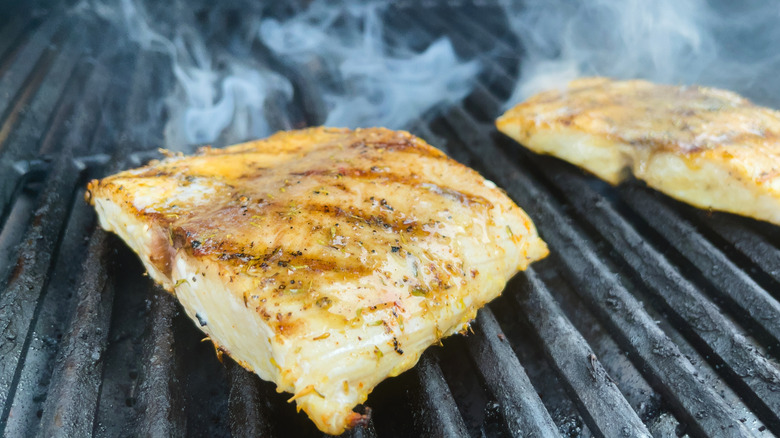
Indirect heat grilling is a great way to prepare delicate fish filets, like cod, which you may have been hesitant about before. Prep half your grill with coals and generously oil your grates so the fish doesn't stick, then plan on grilling for 10 minutes per inch of thickness. Place the fish over the indirect heat, with the lid open, and gently flip it after five minutes. Remove the fish from the grill when it reaches around 140 F and allow it to rest to 145 F.
Shrimp
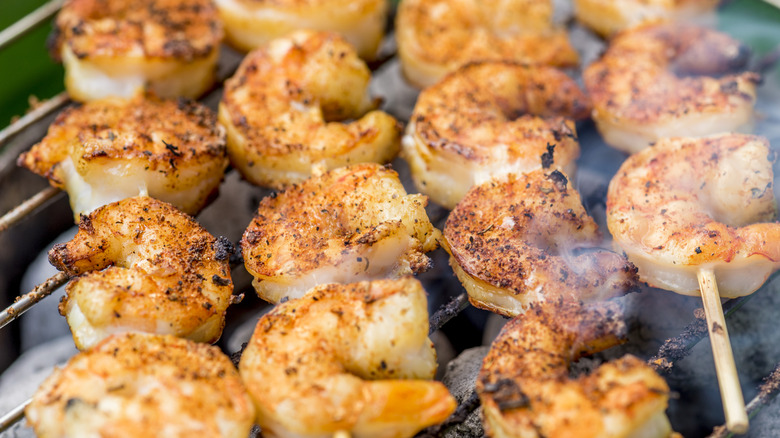
Shrimp is another delicate seafood that's great prepared on the grill, if you know how. They're only going to take a few minutes to cook, but when you use indirect heat, you're much less likely to overcook them. Shrimp can be grilled using indirect heat from coals on one side of the grill or at the outer edges if you have some mains grilling in the middle. Grill your shrimp for a couple of minutes per side, to 145 F, when they'll be slightly pink and no longer translucent.
Sugary sauced items
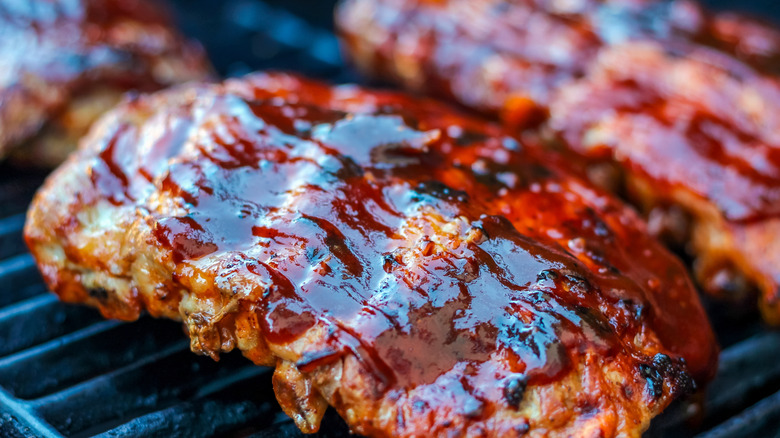
Everybody loves a good, juicy barbecue sauce, especially when it's paired with actual backyard barbecued food. The yummy issue with most of these sauces is that they contain some form of sugar, like molasses, brown sugar, or maple syrup, which is going to burn over high heat or when on the heat too long. What to do is use a dry spice or light layer of sauce before your meat goes on the grill. Cook it over indirect heat and then give your meat a good brushing with sauce near the end, around 10 minutes before it hits the final temp.