

Here's How Long You Should Grill Burgers For The Tastiest Results
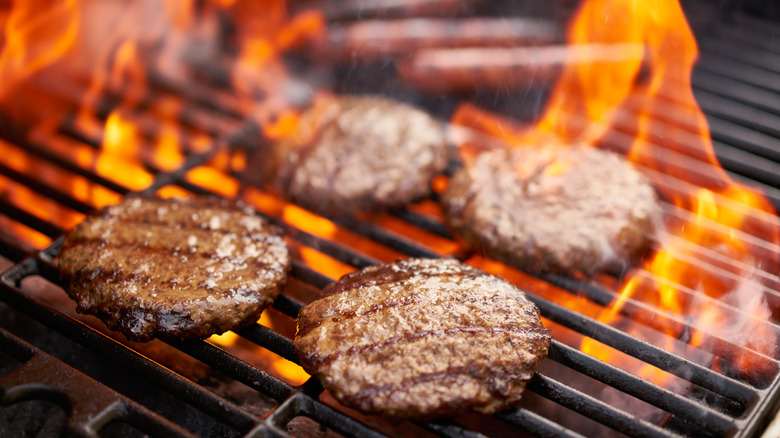
Over the years, burgers have become synonymous with the American lifestyle. Beef patties are by no means a homegrown invention (think Hamburg, Germany), but the Yanks were the first to slap them between a bun and commercialize them, creating an iconic national favorite. It's estimated that over 50 billion burgers are consumed in the U.S. every year, so we all have our preferences. If you're grilling your own burgers at home, achieving those perfect results is key.
A lot of it comes down to timing. When ground meat is heated, the proteins contract, expelling moisture. The longer a burger cooks, the more it dries out, making it incredibly tough. Undercooked burgers, meanwhile, can pose a health risk, and not everyone enjoys a cool center. A good middle ground that balances tenderness and doneness is to cook the burgers to medium, which requires about three minutes of grilling per side if you're cooking at 450 to 500 degrees Fahrenheit.
If you prefer a softer texture and juicier finish, cut that time down and aim for two and a half minutes per side for a medium rare burger. Additionally, a rare burger, which boasts a more intense flavor and red center, typically takes just two minutes per side. Of course, all of this depends on a few factors. It's important to remember that thin burgers cook faster, while thicker patties take longer on the grill. An average patty weighs about 5-ounces, so if yours are different, adjust the cooking time slightly. Here's the timing rule for thin burgers to make sure you don't overcook them.
Internal temperature is also a factor
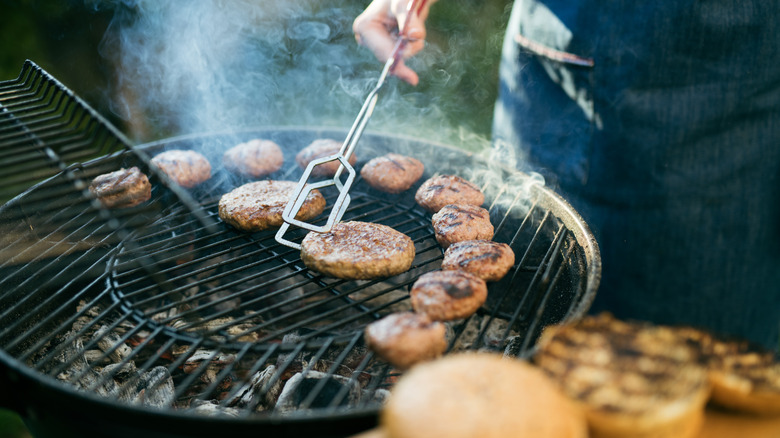
Lean meat also has a shorter cooking time, so keep an eye on patties with less than 15% fat. Another thing to keep in mind is how hot the grill is. Lower heat will cook more slowly and vice versa — this is where pre-heating your grill can come in handy. The two-zone grilling method is considered to be the best for juicy burgers, and there are several visual clues to let you know whether or not the burgers are done. Look for a browned crust and patties that shrink and firm up. What you're looking for, ideally, is a little push back when you poke the center with your finger.
Unless you're a seasoned chef, it's always best to use a meat thermometer, especially since each level of doneness needs to reach a certain internal temperature. Rare burgers, for instance, should rest at 125 degrees off the grill. For medium rare burgers, that bumps up to 135 degrees, with medium coming in at 145 degrees, and medium well at 155 degrees. That said, the U.S. Department of Agriculture (USDA) recommends cooking burgers to an internal temperature of 160 degrees Fahrenheit to ensure food safety.
Since ground beef has a large surface area for harmful bacteria to grow, it can be more dangerous to eat a rare burger than a rare steak — so keep that in mind when cooking at home. If you want to take this on board, chefs and pitmasters generally recommend pulling burgers off the grill when they reach between 150 and 155 degrees, as they will keep cooking off the grill for a while.