

The Timing Rule For Grilling Thin Burgers Everyone Seems To Get Wrong
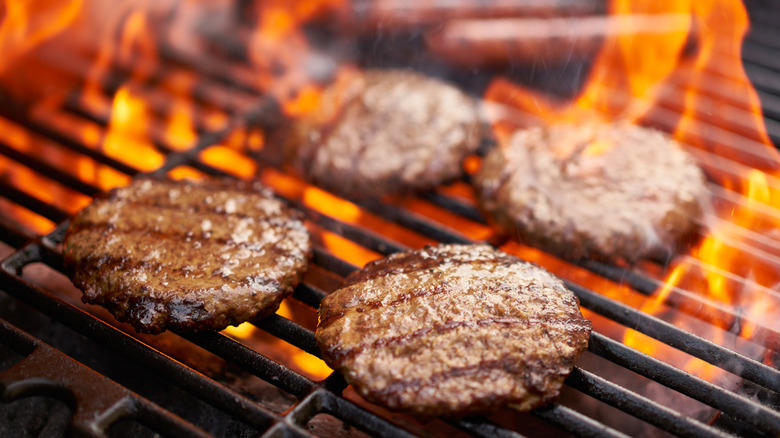
Grilling often doesn't get the same respect as other culinary styles, seen more as the domain of smoky weekend cookouts and simple staples like burgers and hot dogs. But it requires just as much skill and creativity as any other form of cooking. Making a truly excellent burger requires mastery of heat and time, the core of any cook's skill. When it comes to mistakes with grilling thinner burgers, however, it's the timing that gets the better of many backyard barbecuers.
We are all creatures of habit, and it's easy to want to treat each burger the same when you put it on the grill, but size really does matter here. Perhaps you are used to using the 5-6-7 rule for perfect burgers with just the right internal temperature. With thin burger patties, though, you are going to need to trim down those times to ensure that they aren't overcooked. A slimmer patty calls instead for around 3-4 minutes on each side. The mechanics here don't require much explaining — it takes less time for heat to reach the center of a thinner patty — but this reduced cook time does lead to another technique that is perhaps a bit counterintuitive.
Seeing as your thin burgers won't have as much time on the grill, getting a good crust on them means you actually want to turn up the heat. A short cook over higher heat will allow them to brown up beautifully while staying nice and juicy in the middle.
Thinner burgers call for a different approach to grilling
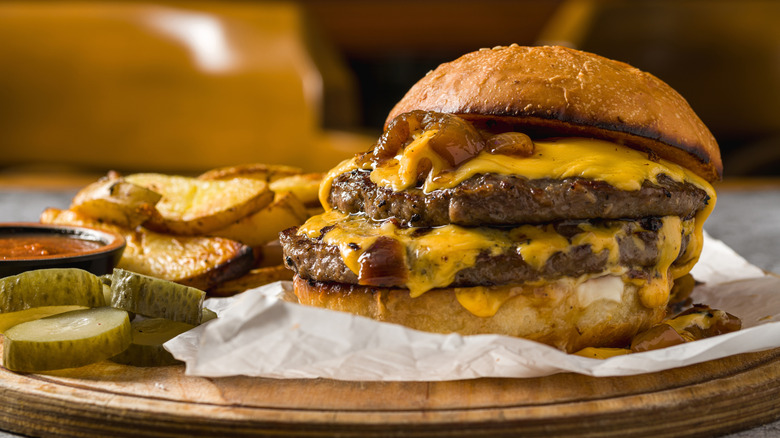
The changes needed to cook the best thin burgers don't stop at heat and time. For the absolute ideal results, you'll want to change a few more of those long-ingrained grilling habits.
For starters, one common mistake with grilling thin burgers is to close the lid on the grill. For thicker burgers, this creates an oven-like environment where omnidirectional heat helps the meat cook all the way to the center. With a thinner burger, though, extra heat will just lead to overcooking. Stick to high heat from underneath, only flipping the burgers once.
Another important thing to consider for burgers of all kinds is the type of meat that you use. 80/20 beef works well, but for grilled burgers, a fat ratio of 75/25 is even better. On the grill, the fat cooked out of the meat will drip off and incinerate, so keeping your burgers juicy requires choosing a mix with a bit more fat in it.
It is also worth noting that some of these suggestions extend beyond the grill and apply to burgers cooked indoors as well. Particularly when it comes to using higher heat and shorter cook times — these rules apply to any thin burger. Getting that nice crust while also nailing the cook means making these simple changes. So, next time you're whipping up an easy smash burger, don't forget to treat the more slender patties with the techniques they demand.