

Thai-Style Grilled Steak Recipe
We may receive a commission on purchases made from links.
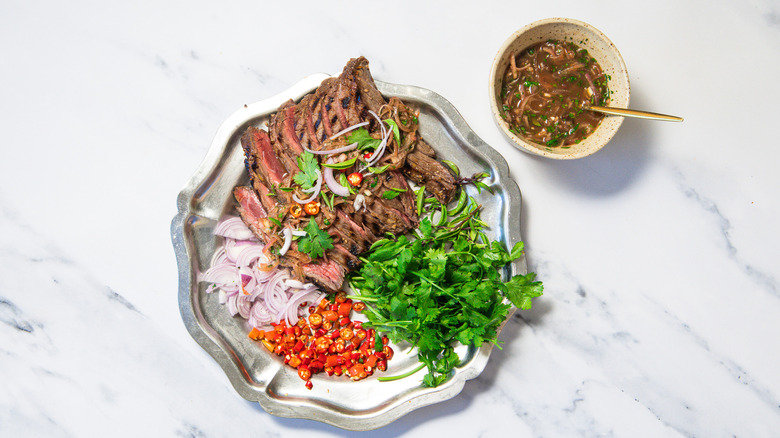
This Thai grilled steak is like a trip to Thailand without the airfare. It might taste like nothing else you've tried and go against any common advice for serving steak, yet it ends up being incredibly delicious, and it will appeal to even the most die-hard steak purist. It doesn't hurt that, despite seeming a bit complicated, it's also actually fairly easy to execute, so even beginners can master it.
As a recipe developer and blogger with a penchant for Asian recipes, I love Thai grilling recipes. They're some of the most unique in the world, and they're able to coax the most flavor out of ingredients and provide flavor combinations that stand harmoniously alongside the protein's natural characteristics. In this recipe, we marinate a steak, grill the steak to perfection, make a fantastic nam jim jaew dipping sauce, and accompany the whole thing with fresh herbs and chile peppers. It's an unusual and surprising take on cooking steak, but the result will stay with you long after the last bite.
This recipe is fragrant, layered in flavor, and remarkably complex. It takes a simple, relatively affordable cut and transforms it, and in the end, it tastes like the best version of steak you can imagine. And to me, that's a winning grilled steak recipe if ever there was one.
Gather the ingredients for Thai grilled steak
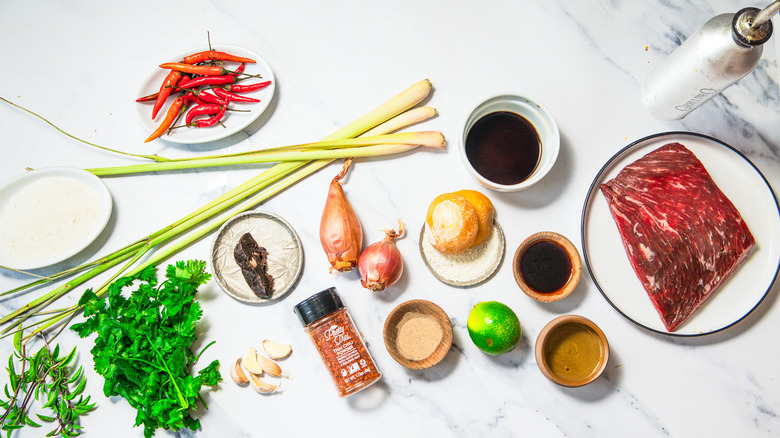
For the steak and marinade itself, grab some lemongrass stalks — we will only be using the tender white parts. Then, we'll also need garlic cloves, fish sauce, oyster sauce, palm sugar, neutral oil, white pepper, and flap steak. For the nam jim jaew shallot sauce accompanying the dish, you'll need fish sauce, lime juice, tamarind paste, more palm sugar, toasted rice powder, Thai chile powder, shallots, and cilantro. Set aside more cilantro and accompany it with Thai basil, fresh bird's eye peppers, and more shallots.
But as some of the ingredients on this list are a bit unusual, they're worth a few notes before we start. Tamarind paste is a dried paste made from the preserved pulp of the tamarind fruit. It has a sour, fruity flavor, and is sold in jars or packets of pressed paste. You can get it online or in most Asian supermarkets. If your tamarind paste is older, it can become very thick or stiff, so just microwave it for 10 to 15 seconds to soften it. Palm sugar is less sweet and more complex than granulated sugar, closer to brown sugar or the Latin panela. It has a faint caramel or molasses note, and is usually sold in solid discs you'll need to grate on a microplane. If you can't find it, use a light brown sugar in its place.
Finally, the last unusual ingredient you have here is toasted rice powder, and I could go on about it for hours. This is exactly what it sounds like: raw white rice that has been toasted in a pan until golden, then ground into a coarse powder. It's a common ingredient in Thai and even Burmese recipes, and while you can sometimes buy it pre-made and labelled "khao khua," you could also make it yourself in just about 5 minutes.
Step 1: Make the marinade
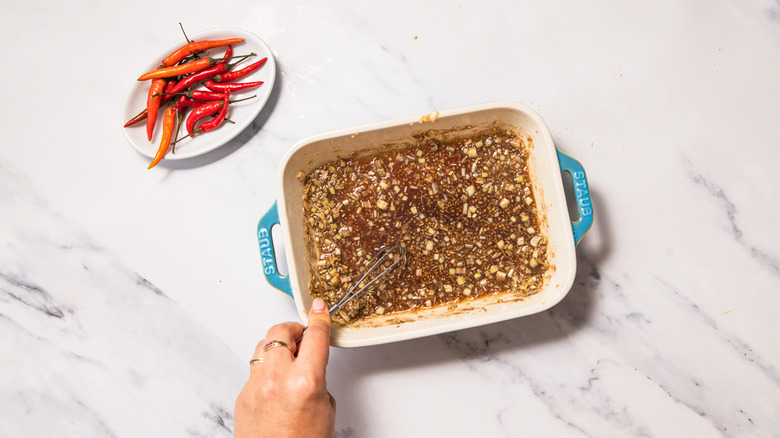
Combine the lemongrass, garlic, fish sauce, oyster sauce, palm sugar, oil, and white pepper in a shallow dish. Stir until the sugar dissolves.
Step 2: Marinate the steak
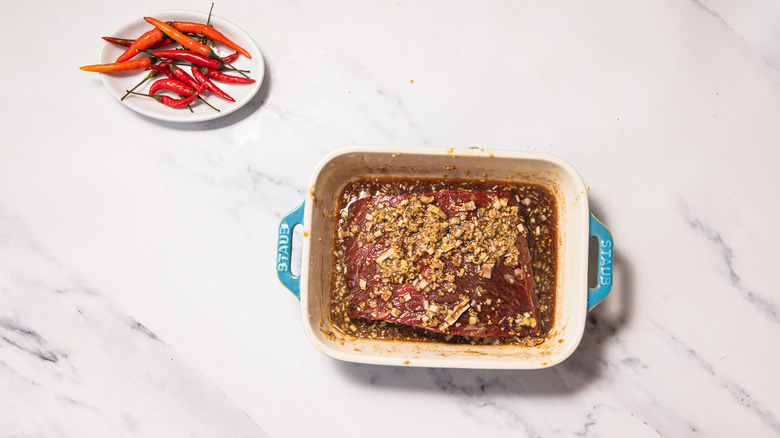
Place the steak in the dish and spoon the marinade on top. Turn to coat, cover, and refrigerate for at least 2 hours or overnight.
Step 3: Make the nam jim jaew
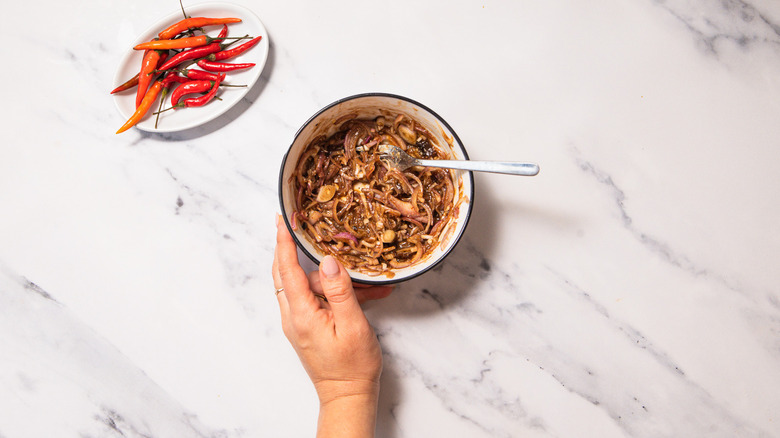
Stir together the fish sauce, lime juice, tamarind paste, palm sugar, toasted rice powder, chile powder, and shallots until the sugar dissolves. Taste and adjust seasoning, then set aside.
Step 4: Pat the steak dry
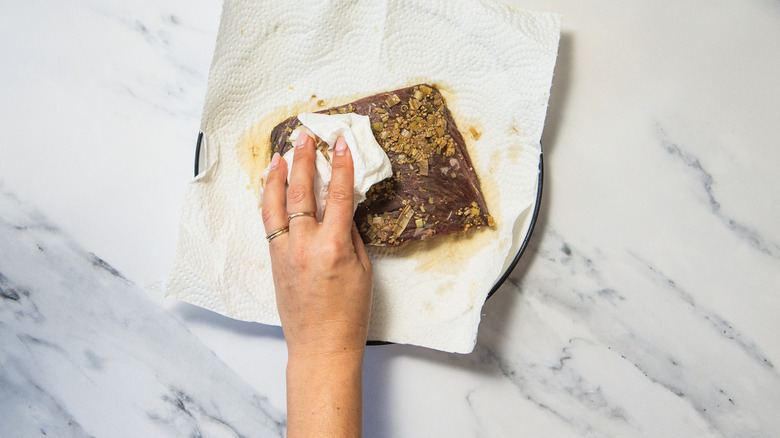
Remove the steak from the refrigerator 30 minutes before cooking and pat it dry with paper towels.
Step 5: Preheat the grill or grill pan
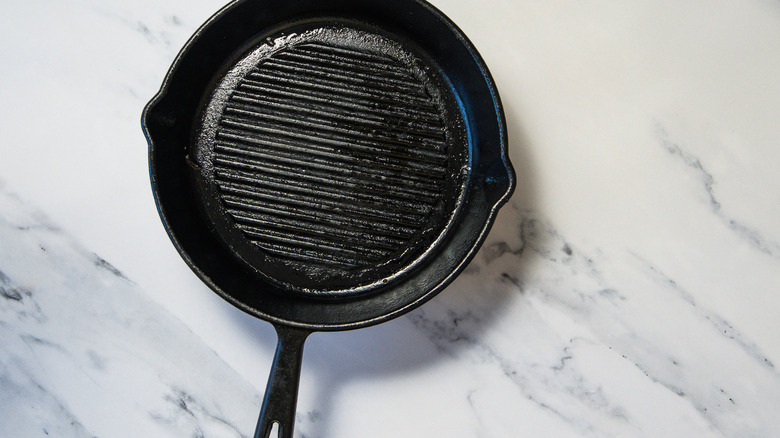
Preheat a grill or grill pan to high heat.
Step 6: Grill the steak
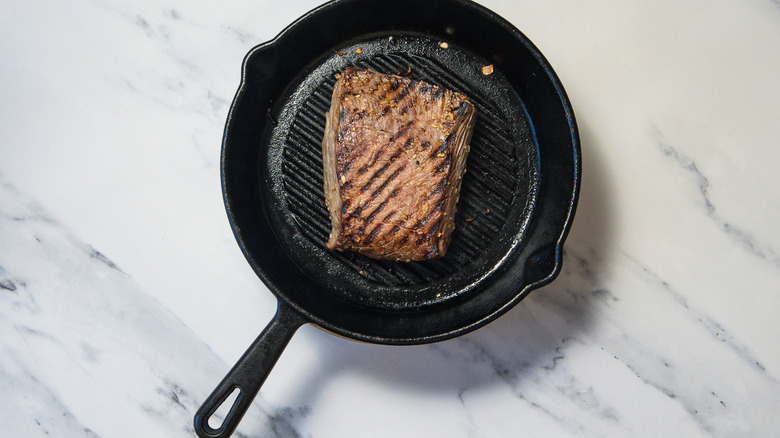
Cook the flap steak for 2 to 3 minutes per side, until it's charred outside and medium-rare inside.
Step 7: Rest the steak
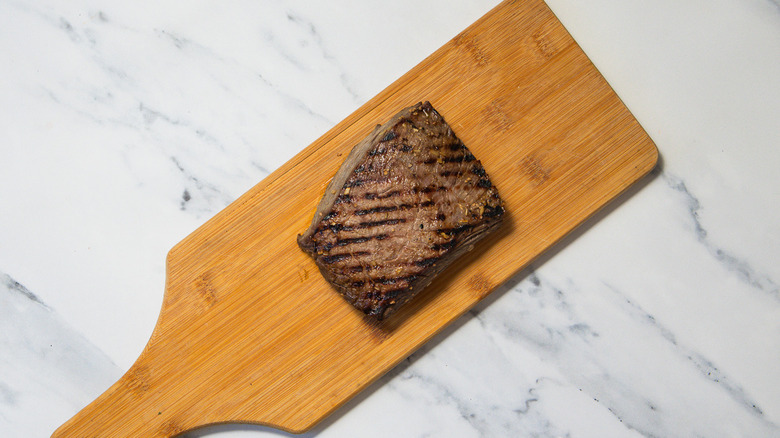
Transfer to a cutting board and let it rest for 5 minutes.
Step 8: Slice the steak
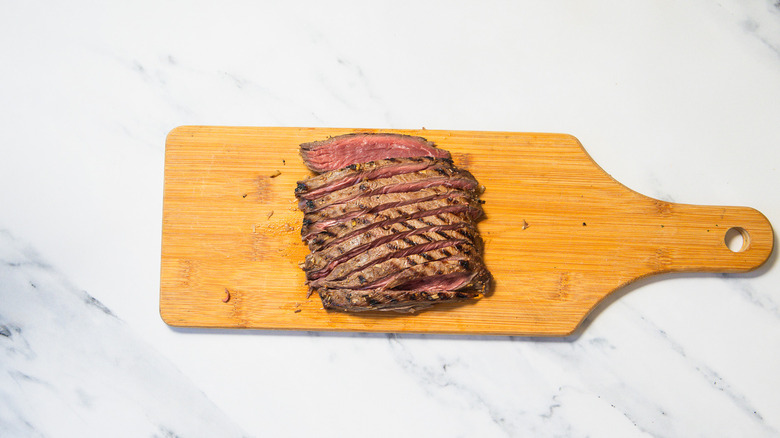
Slice the steak thinly against the grain.
Step 9: Arrange the steak on a platter
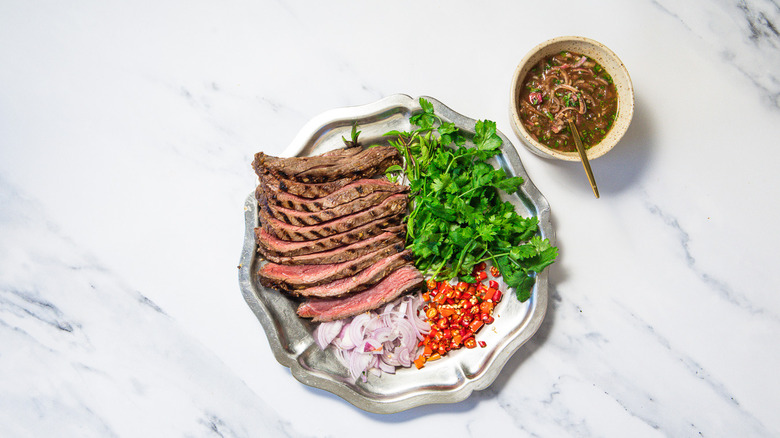
Arrange the steak on a serving platter with the Thai basil, cilantro, bird's eye peppers, and shallots, if using.
Step 10: Finish the sauce
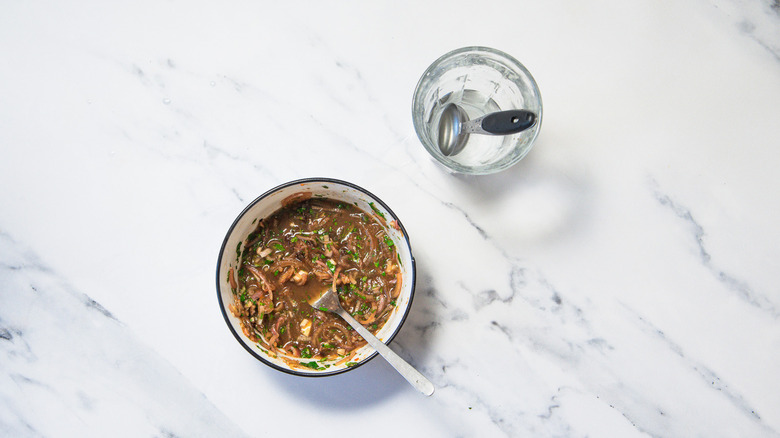
Stir the finely chopped cilantro into the nam jim jaew shallot sauce, and dilute it with 3 to 6 tablespoons of water, if needed, to loosen it into a dipping sauce.
Step 11: Serve the steak with nam jim jaew sauce and herbs
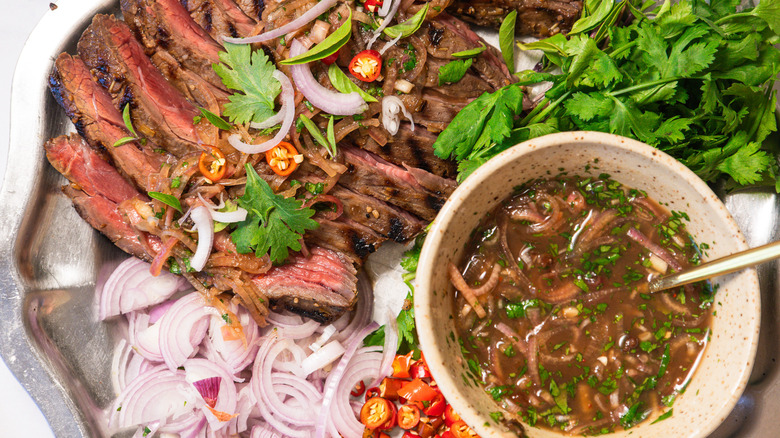
Serve the Thai steak with the nam jim jaew shallot sauce alongside.
What can I serve with Thai-style grilled steak?
Thai-Style Grilled Steak Recipe
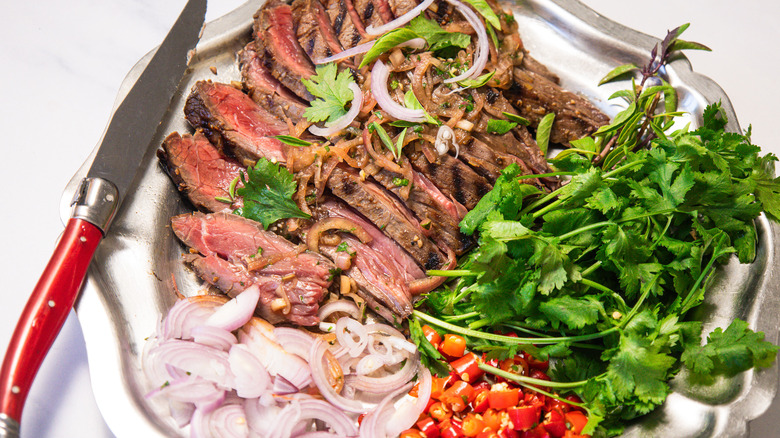
Flap steak in a Thai-inspired marinade is grilled to perfection and served with a tasty nam jim jaew dipping sauce, fresh herbs, and chile peppers.
Ingredients
- For the steak and marinade
- 2 lemongrass stalks, tender white parts only, finely minced
- 3 garlic cloves, minced
- 1 ½ tablespoons fish sauce
- 1 tablespoon oyster sauce
- 1 tablespoon palm sugar, grated or packed
- 1 tablespoon neutral oil
- ½ teaspoon white pepper
- 1 pound flap steak
- For the nam jim jaew shallot sauce
- 3 tablespoons fish sauce
- 3 tablespoons lime juice
- 1 tablespoon tamarind paste
- 3 tablespoons palm sugar, grated or packed
- 1 tablespoon toasted rice powder
- 1 teaspoon Thai chile powder
- 2 shallots, thinly sliced
- ¼ cup cilantro, finely chopped
- To serve
- Fresh Thai basil
- Fresh cilantro
- Fresh bird's eye peppers, sliced
- Shallots, thinly sliced
Directions
- Combine the lemongrass, garlic, fish sauce, oyster sauce, palm sugar, oil, and white pepper in a shallow dish. Stir until the sugar dissolves.
- Place the steak in the dish and spoon the marinade on top. Turn to coat, cover, and refrigerate for at least 2 hours or overnight.
- Stir together the fish sauce, lime juice, tamarind paste, palm sugar, toasted rice powder, chile powder, and shallots until the sugar dissolves. Taste and adjust seasoning, then set aside.
- Remove the steak from the refrigerator 30 minutes before cooking and pat it dry with paper towels.
- Preheat a grill or grill pan to high heat.
- Cook the flap steak for 2 to 3 minutes per side, until it’s charred outside and medium-rare inside.
- Transfer to a cutting board and let it rest for 5 minutes.
- Slice the steak thinly against the grain.
- Arrange the steak on a serving platter with the Thai basil, cilantro, bird's eye peppers, and shallots, if using.
- Stir the finely chopped cilantro into the nam jim jaew shallot sauce, and dilute it with 3 to 6 tablespoons of water, if needed, to loosen it into a dipping sauce.
- Serve the Thai steak with the nam jim jaew shallot sauce alongside.
Nutrition
| Calories per Serving | 723 |
| Total Fat | 36.7 g |
| Saturated Fat | 12.1 g |
| Trans Fat | 1.6 g |
| Cholesterol | 147.4 mg |
| Total Carbohydrates | 51.1 g |
| Dietary Fiber | 4.5 g |
| Total Sugars | 27.6 g |
| Sodium | 3,632.9 mg |
| Protein | 52.0 g |

What is flap steak, and can I use another steak instead?
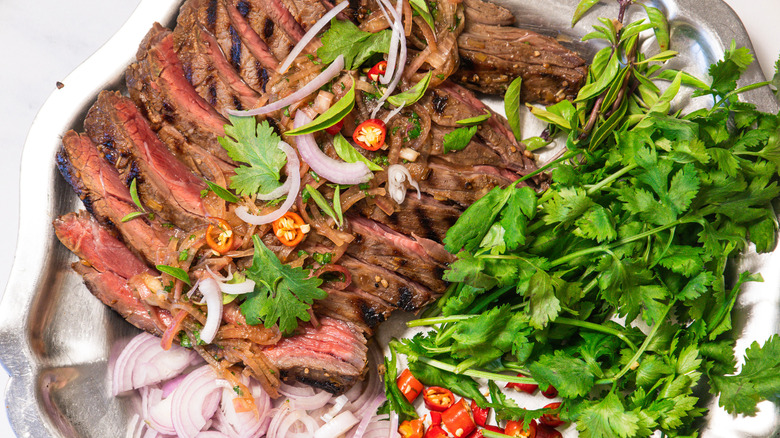
Flap steak is sometimes sold as bavette or sirloin top, and it's a steak cut from the bottom sirloin. It has an open, loose grain and good fat marbling throughout. It's this grain structure that makes it ideal for this recipe, because it soaks up the marinade, chars well over high heat without burning through, and slices into tender pieces when cut thinly against the grain. It's also priced well below ribeye or strip steak, making it an affordable cut to work with.
If you can't find flap steak, skirt steak is the closest widely available substitute. It has a similarly loose grain, marinates well, and cooks at about the same time. Flank steak also works, although it's a bit leaner, and so you need to be very careful when cooking it so it doesn't come close to shoe leather. Cook it for 2-3 minutes per side, and then let it rest.
All three of these cuts need to be rested before serving, cooked to medium-rare, and sliced thinly against the grain. If you slice them wrong, no matter how well you cooked them, they'll taste chewy.
What is nam jim jaew and what can I do with it?
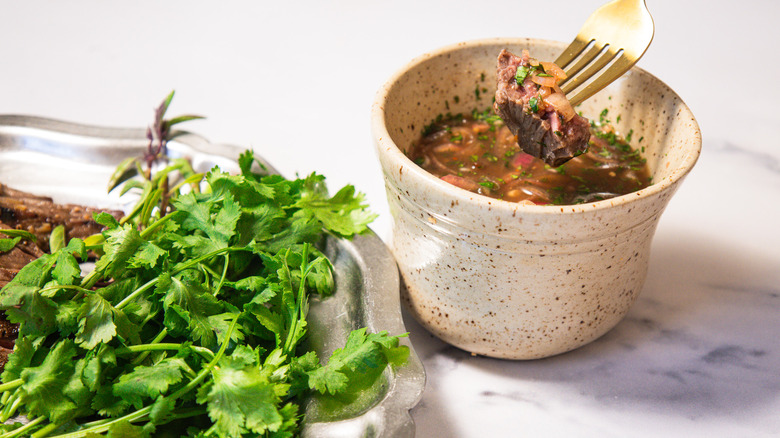
Nam jim jaew is a Northeastern Thai dipping sauce that is traditionally served alongside grilled meats. My husband, an avowed meat lover, said it's the only sauce he's had with steak that actually improves its taste rather than masking it. It's sour, salty, sweet, and spicy all at once, and feels incredibly funky in the best way possible.
There are a few keys to this sauce. First, you need fish sauce, tamarind paste, palm sugar, Thai chile powder, and toasted rice powder. Skip the last one, and the sauce will lose its characteristic texture. Second, you need to dice or slice your shallots thinly, or they will have an unpleasant texture. Third, you need to let the sauce rest for at least half an hour for the shallots to soften. And fourth, don't forget to dilute it with water right before serving to loosen up its texture.
Leftover nam jim jaew shallot sauce will keep in the fridge for up to a week. It's actually one of the most versatile and interesting condiments you can try. Use it as a dipping sauce for grilled chicken or pork skewers. Drizzle it over a rice bowl with a fried egg, as you would with chile crisp. Or spoon it over roasted vegetables for a fishy flavor that is similar to bonito flakes. If you want to play with the flavors, you can also add lemongrass or galangal, or chop up fresh Thai chiles instead of chile powder. I recommend tasting it and adjusting the flavors as needed to suit your palate. Just remember that it won't be as potent when drizzled on something as it is on its own.