

For The Perfect Skirt Steak, Follow These 8 Tips
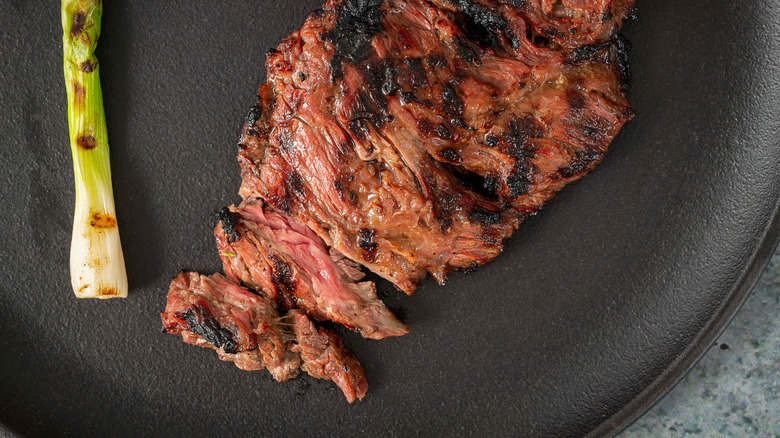
Skirt steak just might be the ideal everyday cut of beef. It's uniquely flavorful, readily available in grocery stores and at butchers around the country, and it's surprisingly affordable to boot, making it a great choice for special occasions and weeknight dinners alike. But even if it is approachable, skirt steak can be difficult to do right. It's especially thin and lean, which, unlike fatter, thicker, and generally more expensive cuts, means it can be less forgiving if something goes wrong during the cook.
That said, you shouldn't be scared of skirt steak. If you follow a few simple directions, you're sure to be left with a tender, juicy, delicious piece of beef. Below, we've collected tips from meat experts Colton Hays, executive chef at San Francisco's EPIC Steak; Ashley Moore, CEO of AM-PM Farms Butchery & Market; Antimo DiMeo, executive chef of Bardea Steak in Wilmington, Delaware; Britt Rescigno, a "Chopped" champion and executive chef and owner at Fiamma in Sun Valley, Idaho; and Robert Liberato, regional executive chef at STK Steakhouse in Los Angeles.
1. Look for the right piece of meat
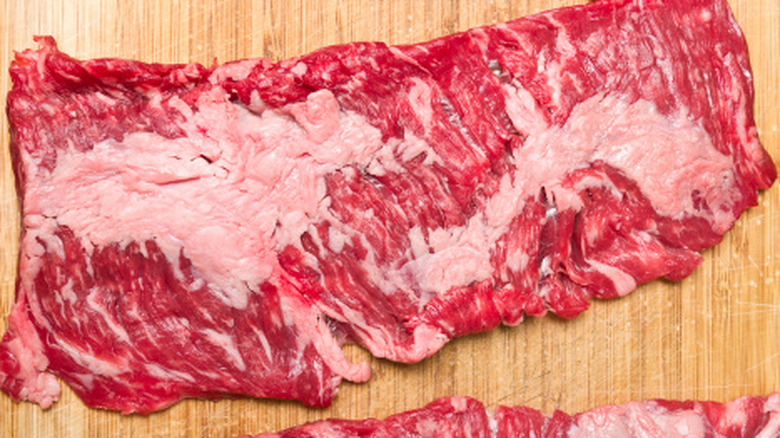
Your skirt steak journey begins not in the kitchen, but at the grocery store. Before you even get it home, you'll want to make sure you pick the right piece of beef. You'll first want to select for freshness, says executive chef Colton Hays. "Firstly, I choose a piece that has a vibrant red color and looks fresh, not oxidized or sitting in its juices."
It's a little-known fact that there are actually two cuts of skirt steak – the outside skirt and the inside skirt — which may be sourced from the same cow but taste completely different. If you're buying from a butcher counter, you can always ask for the tenderer, more flavorful outside skirt, but it's easy enough to tell the difference visually. Hays says, "I look for more narrow pieces, as this typically means it comes from the "outside skirt" and will generally be more tender since it has shorter muscle fibers."
Fat content is also worthy of looking at. "After that, I check for fat content, although it's a generally lean cut, look for one with the most marbling throughout the meat," Hays adds. You want to see a bit of marbling (white strips of fat) on the inside of the cut, but little to no fat on the outside. Don't worry if you do, though, because you can always trim your skirt steak at home.
2. Trim your skirt steak and bring it to room temp before cooking
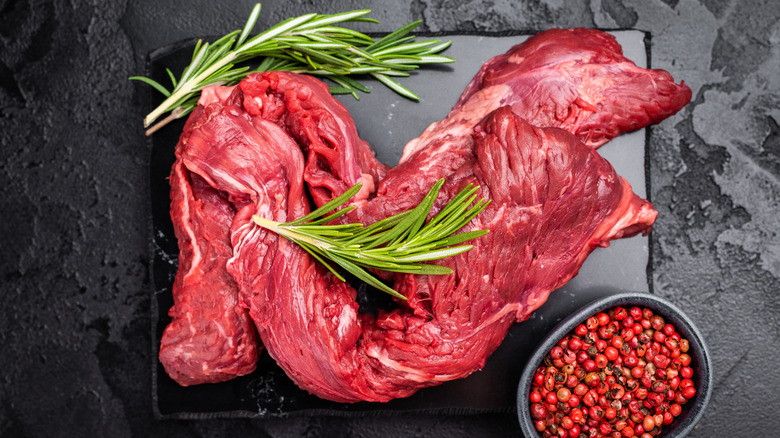
Once you get your skirt steak back to the kitchen, you'll want to take a few extra steps before you start cooking. According to Ashley Moore, CEO of AM-PM Farms Butchery & Market, your first step should be to break out a cutting board. "If there's any hard fat, I trim that off because skirt steak cooks best hot and fast ... and that fat won't really have time to render." She also removes the silverskin, which she says can make the steak too chewy.
"The most important step is to pat it very dry before it hits the heat," says executive chef Antimo DiMeo. "I don't think you need to let it sit out for too long to come to room temperature. 15 to 20 minutes while you prep is plenty." Drying your steak with a paper towel before cooking prevents excess moisture from steaming the beef. If you want a good sear, you'll need direct contact between a well-dried skirt steak and pan, resulting in the culinary phenomenon known as the Maillard reaction and giving the meat an appetizing, deep brown crust.
3. Season or marinate early
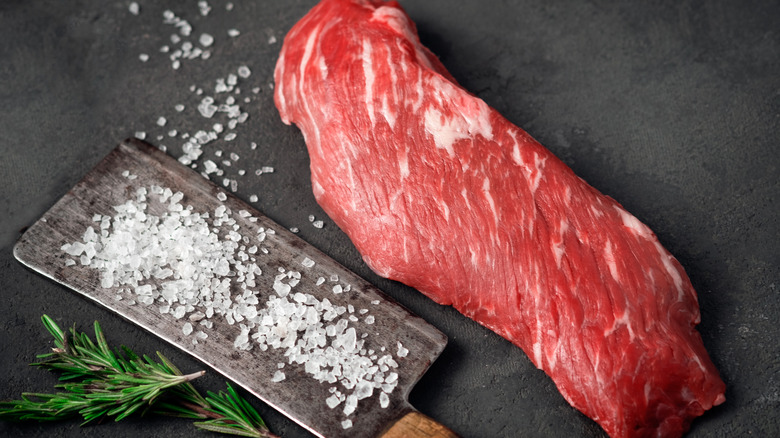
You might be used to sprinkling your favorite steak seasoning right before you throw it into a pan, but executive chef Britt Rescigno says the earlier the better. "At a minimum, season with salt 30 minutes before cooking to allow the salt to penetrate." She keeps it simple but uses seasonings that bolster the natural flavor of the skirt steak while adding a little texture. "My favorite way to season is a dry spice mix of salt, pepper, garlic powder, and lots of cracked coriander. The meat will get an excellent crust," she says.
But, as Colton Hays notes, skirt steak is a great cut for marinating, too. "A little soy sauce works well, along with acids like red wine, balsamic vinegar, or even a bit of lime juice, depending on the flavor you want. Let it marinate at room temperature for at least 30 minutes, or for a few hours in the fridge," he says. This will give the marinade plenty of time to soak through the entire steak, leaving it rich and flavorful the whole way through, but be careful not to over-marinate, as it can ruin your skirt steak.
4. Cook hot and fast
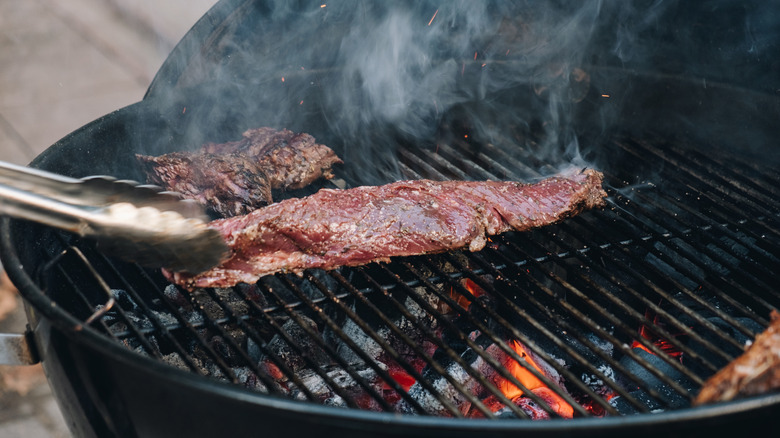
Slow and steady won't win you any races when it comes to skirt steak. Beefier, more expensive cuts — like prime rib — will often have large amounts of fat around the outside. When they're cooked slowly, that fat effectively melts off the meat, making it even more tender and flavorful. That's not the case for skirt steak, though, which is such a thin cut that it's always at risk of drying out.
"Skirt steak is best cooked with high heat and fast cooking, either on a hot grill or in a ripping hot cast-iron pan. You want an aggressive sear," says Antimo DiMeo. So don't be afraid to crank those burners up to high and wait until the oil is almost smoking to put your skirt steak in.
Colton Hays, a self-proclaimed "grill guy," says skirt steak also does well on the barbecue. However, it does better on some grills than others: "Ideally, use hardwood charcoal rather than gas since skirt steak takes on a smoky flavor well." This will help bolster the natural flavors of the beef, as well as your chosen seasoning or marinade, for a well-rounded piece of steak.
5. Keep an eye on the temperature
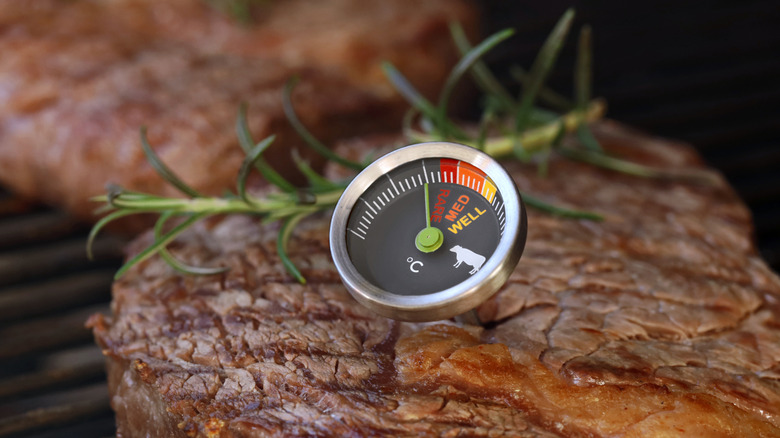
Because skirt steak is so thin, it cooks quickly. "Skirt is best cooked on a grill, on high heat for about two and a half minutes per side for a beautiful medium rare," says Britt Rescigno. But if you're particular about how your meat is cooked, you may need to rely on an extra tool — namely, a meat thermometer.
"It's a good idea to start with a thermometer and use it to help train your instincts over time," says Colton Hays. While you can eventually learn to guess the doneness of meat reliably just by looking at it, if you're not used to making skirt steak, it's best to leave it up to a thermometer. Pick a good instant-read meat thermometer, stick it into the thickest part of your skirt steak, and follow these guidelines: 125 degrees Fahrenheit for rare, 135 degrees Fahrenheit for medium-rare, 145 degrees Fahrenheit for medium, 150 degrees Fahrenheit for medium-well, and 160 degrees Fahrenheit for well-done.
If you don't have a thermometer, though, you can check the cook by observing the firmness of the meat. "The fleshy part of your palm below the thumb is actually a pretty good guide," says Ashley Moore. "Press that spot with your hand relaxed, and that's roughly blue or very rare. Touch your thumb to your forefinger and press again: that firmness is about rare. Thumb to middle finger is medium-rare, and it keeps going from there. It's not perfect, but it gets you close."
6. Rest your skirt steak after cooking
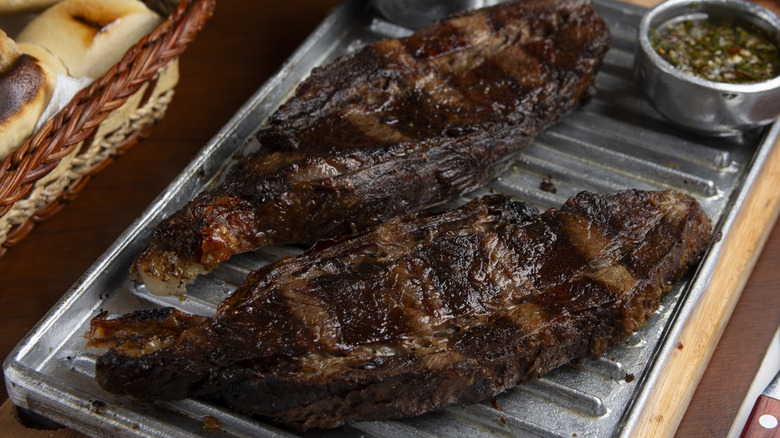
Now that your skirt steak is cooked to your liking, it probably smells great, and there's nothing you'd rather do than plate it and dig in. Before you do that, though, experts say you shouldn't skip the resting period. Resting your skirt steak allows the juices inside to resettle after cooking, giving you a moister, more flavorful piece of meat. If you cut into it right away, all that flavor will spill right out.
"Yes, always rest it," says regional executive chef Robert Liberato, although he cautions against letting it sit for too long. "Rest five to 10 minutes, place on a cookie rack (not a cold surface), and lightly cover it with foil." He doesn't recommend wrapping it, as it can trap steam and ruin the crust.
Ashley Moore suggests an alternate resting method that'll help you create an even more flavorful steak using a compound butter: "One little trick I like: Rest the steak on a rack over some room-temperature butter mixed with garlic and herbs." The resting juices will melt and mingle with the butter, and you can then stir the resulting mixture and pour it back over the steak.
7. Slice against the grain
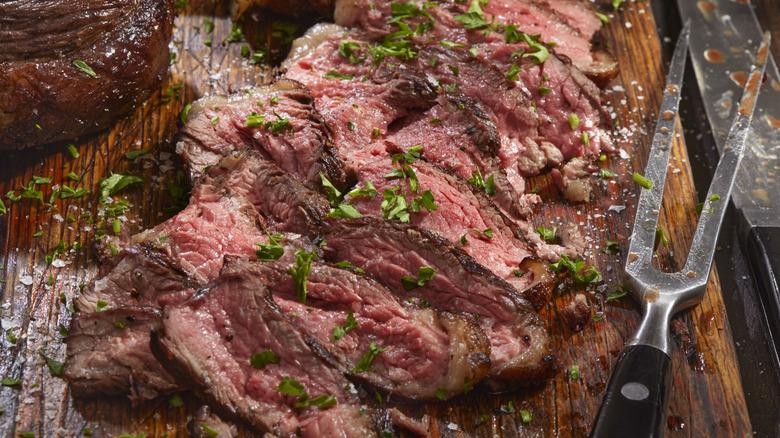
Because it's so long and thin, skirt steak is often sliced prior to serving. But if you don't cut it correctly, you might end up ruining the tenderness you worked so hard to achieve. "Respect the cut! This is non-negotiable. Cut perpendicular to the fibers to keep it tender," Robert Liberato says.
As Colton Hays mentioned, shorter muscle fibers equal a tenderer piece of meat. When you slice into a cooked piece of meat correctly — and this goes for any cut, not just skirt steak — you're actively making the muscle fibers even shorter. If you cut with the grain, you'll get a tough steak.
But how do you actually cut against the grain? Look closely at your skirt steak, and you should see distinct lines running down the length of the meat in a single direction. This is easiest to do when it's raw. Place your knife at a 90-degree angle to those lines for an even cut that keeps your skirt steak nice and tender.
For a little bit of added flair that increases tenderness and looks great on a plate, Antimo DiMeo says, "I like to [cut] it on a bias, so you get the most tender bite possible. To cut on a bias, instead of keeping your knife perpendicular to the grain, cut it at a slightly diagonal angle. This creates wider pieces of steak and yields a softer, more tender texture.
8. Don't overthink it
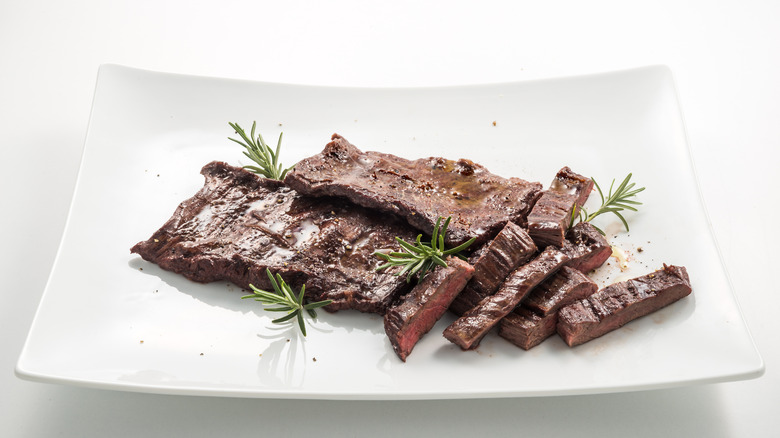
If you want a perfect skirt steak, the best thing you can do is take it easy. "Honestly, the biggest thing is just don't overthink it," says Ashley Moore. "Use high heat, cook it quickly, let it rest, and slice against the grain. If you do those things, skirt steak is one of the most flavorful and satisfying cuts you can cook." In a similar vein, Antimo DiMeo reminds us, "Buy a good one, cook it hot and fast, rest it, and slice it correctly. That's really the whole game. It's one of the most flavorful cuts on the animal, but it rewards confidence, not timid cooking."
Even though it can be easy to mess up, skirt steak isn't all that expensive. It's not like A5 Wagyu beef. You can get it in just about any grocery store's meat section, and, once you know what you're doing, cooking it is quick and easy. If all else fails, you can always try, try again.