

Homestyle Filipino Chicken Adobo Stir-Fry Recipe
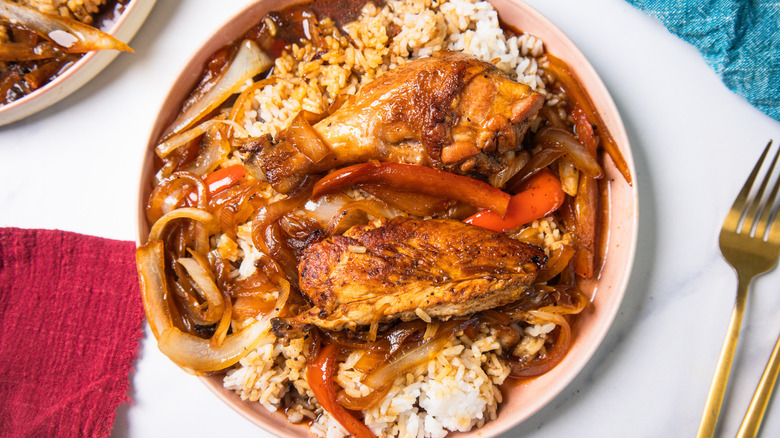
Homestyle Filipino chicken adobo is one of those dishes that's hard to fully describe until you've tasted it. It's a balanced hit of sweet and sour, with a tang that stays in your mouth long after you've taken the last bite. And the best part is that it feels completely homey and easy to throw together, just as the best meals should be.
Before I became a recipe developer and blogger, I used to live in a predominantly Filipino neighborhood. My neighbors and friends would invite me over for potlucks, displaying a rich array of comforting stews, juicy lumpias glistening with oil, and colorful, deceptively rich desserts. But each time, my favorite bite was the chicken adobo.
Filipino adobo is different than Mexican adobo, which most of us know from the incredible pantry staple that is peppers in adobo sauce. The name comes from the Spanish word for marinade, but the technique here is decidedly Filipino. The chicken is braised in a mixture of vinegar, soy sauce, garlic, and bay leaves until it reduces into something that is salty, sour, and savory. As is typical in homestyle Asian stews, we use a whole chicken cut into pieces, and supplement it with onion and bell pepper for a satisfying stir-fry. The result is comforting and easy, while also being incredibly flavorful. It's the one dish that your cold-weather lineup desperately needs.
Gather the ingredients for homestyle Filipino chicken adobo stir-fry
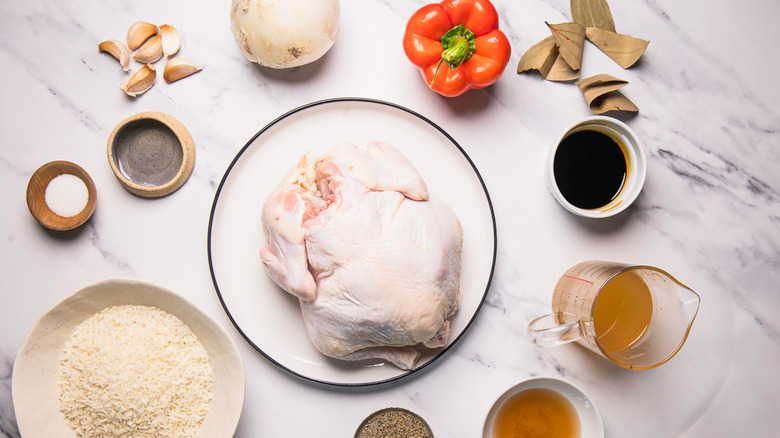
For the chicken and marinade, gather a whole chicken of about 3½–4 pounds, apple cider vinegar, soy sauce, garlic cloves, black pepper, and bay leaves. For the adobo sauce, you'll need more soy sauce, apple cider vinegar, granulated sugar, and chicken broth. For the stir-fry, grab some neutral oil, a large onion, a bell pepper, and cooked white rice for serving.
Step 1: Cut the chicken
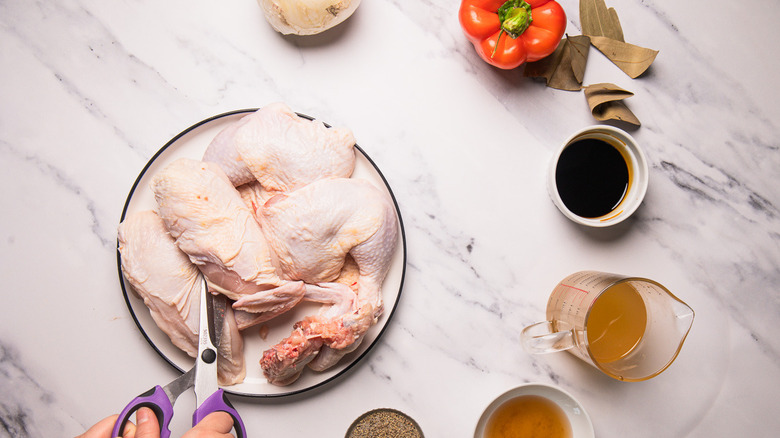
Cut the chicken into pieces using scissors or a sharp, heavy Chef's knife.
Step 2: Marinate the chicken
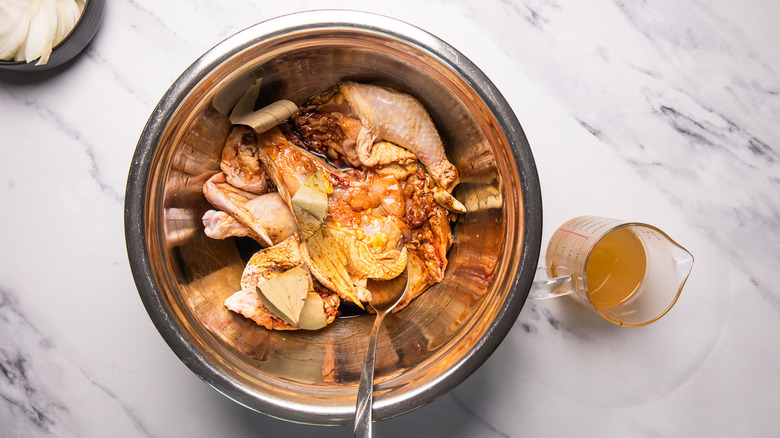
Combine the chicken pieces with apple cider vinegar, soy sauce, smashed garlic, black pepper, and bay leaves in a large bowl. Toss to coat. Cover and marinate in the fridge for at least 1 hour or up to overnight.
Step 3: Make the adobo sauce
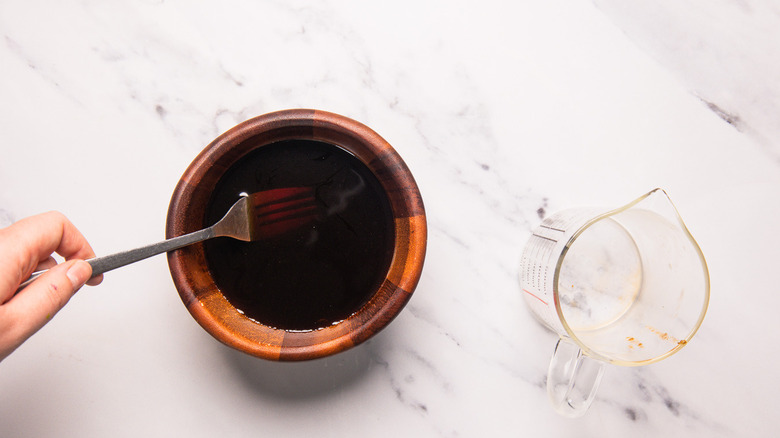
Whisk together the soy sauce, apple cider vinegar, sugar, and chicken broth in a small bowl. Set aside.
Step 4: Preheat a pan with oil
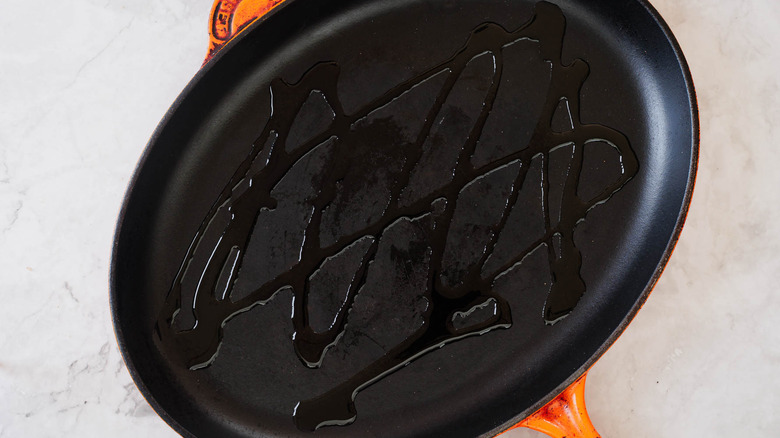
Heat the oil in a large heavy-bottomed skillet or wok over medium-high heat.
Step 5: Pat the chicken dry
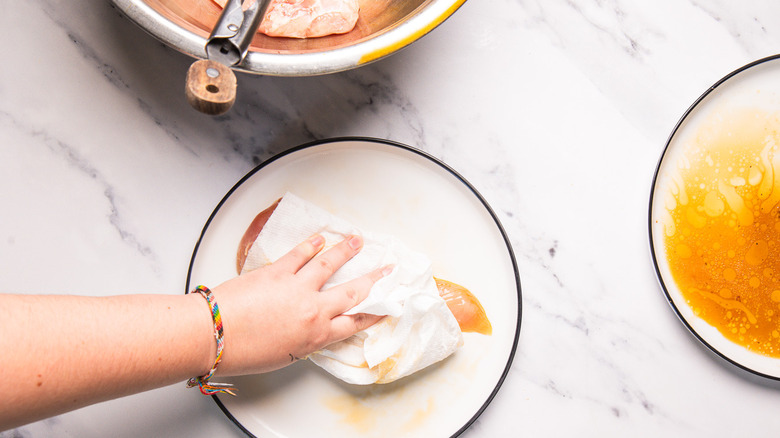
Remove the chicken from the marinade and pat it dry. Reserve the marinade.
Step 6: Sear the chicken
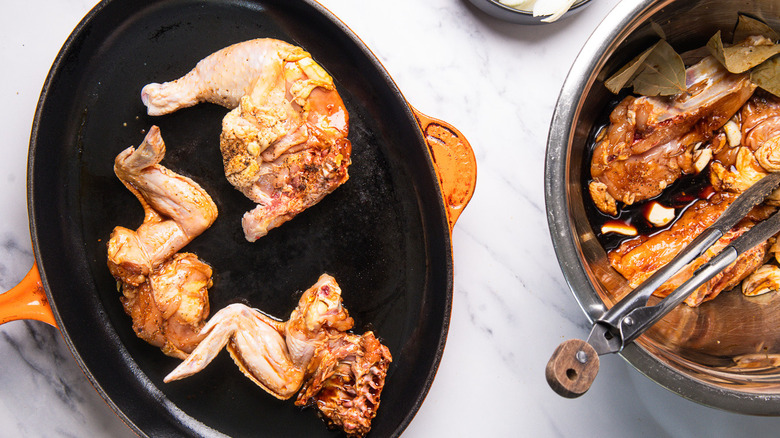
Add the chicken pieces skin-side down and sear for 4–5 minutes per side until golden brown. Work in batches if needed.
Step 7: Set the chicken aside
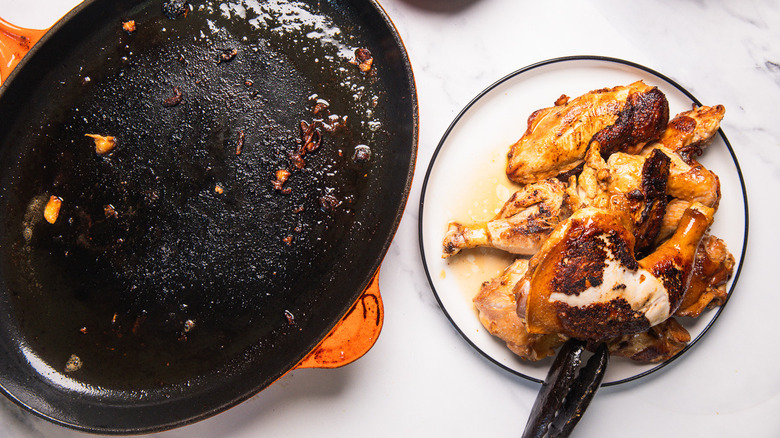
Remove the chicken and set it aside.
Step 8: Cook the vegetables
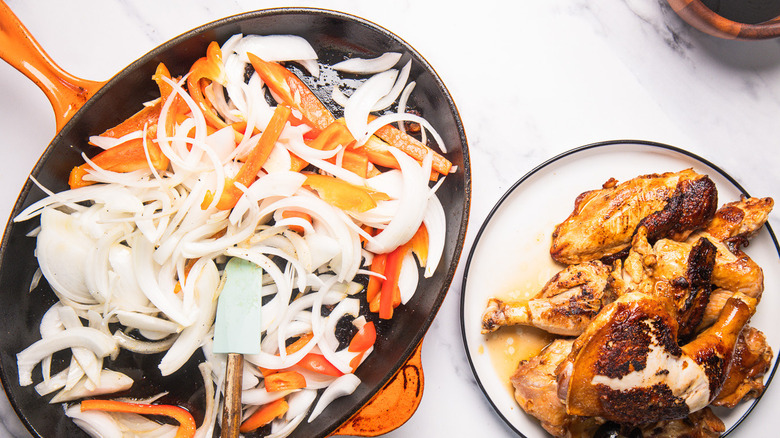
Add the onion and bell pepper to the same pan and cook for 3–4 minutes, until softened.
Step 9: Add the sauces back to the pan
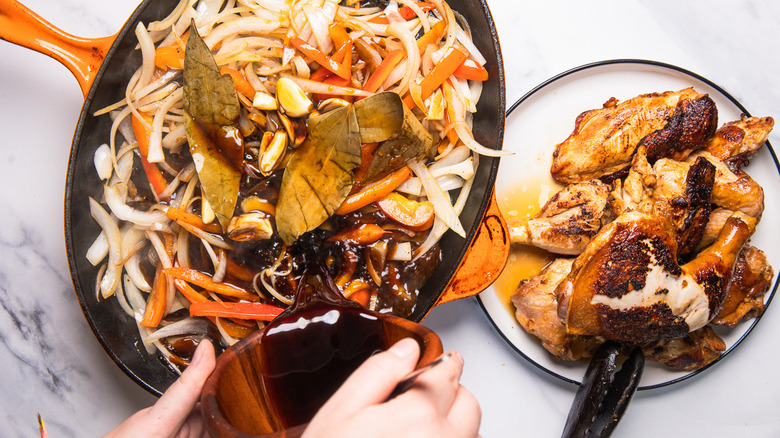
Pour in the adobo sauce and reserved marinade.
Step 10: Return the chicken to the pan
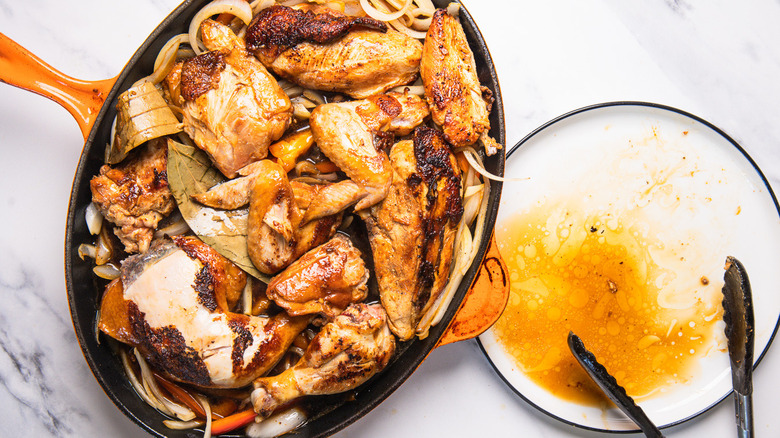
Return the chicken to the pan. Bring to a boil, then reduce the heat to medium-low.
Step 11: Cover and cook
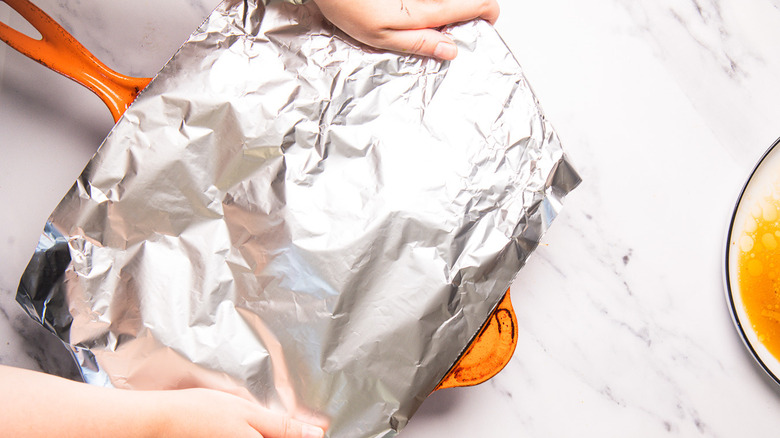
Cover and cook for 25–30 minutes, turning the chicken occasionally, until it's cooked through and the sauce has reduced.
Step 12: Adjust the seasoning as needed
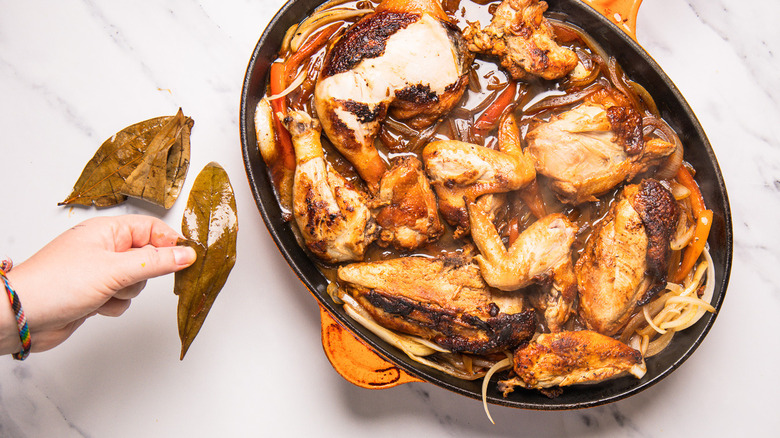
Remove the bay leaves. Taste and adjust the seasoning.
Step 13: Serve the Filipino chicken with rice
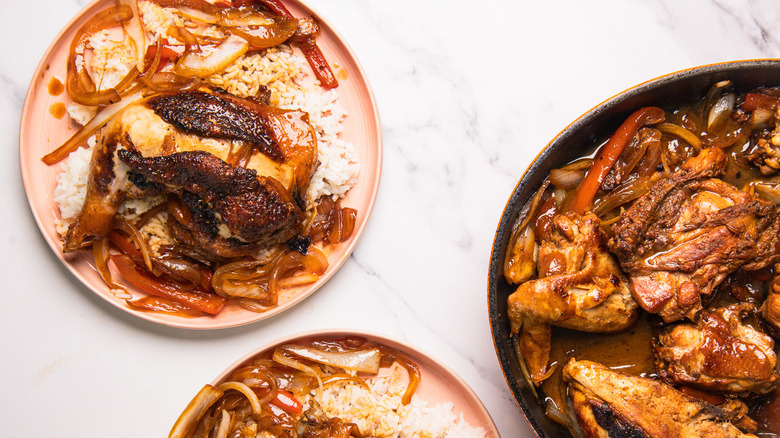
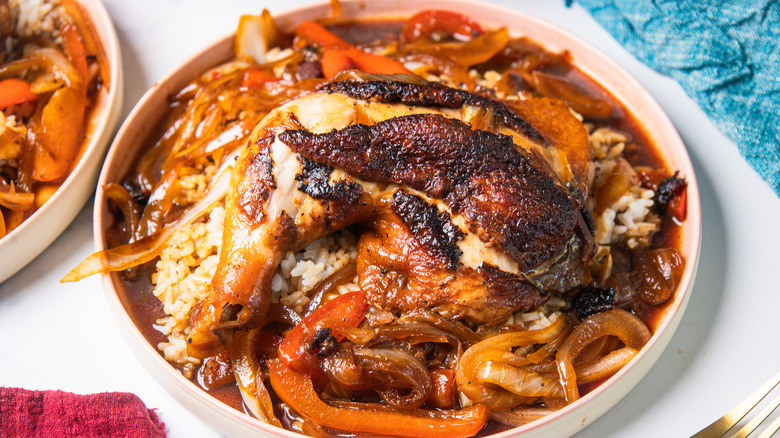
Serve the Filipino chicken stir-fry over white rice.
What can I serve with Filipino chicken adobo?
Homestyle Filipino Chicken Adobo Stir-Fry Recipe
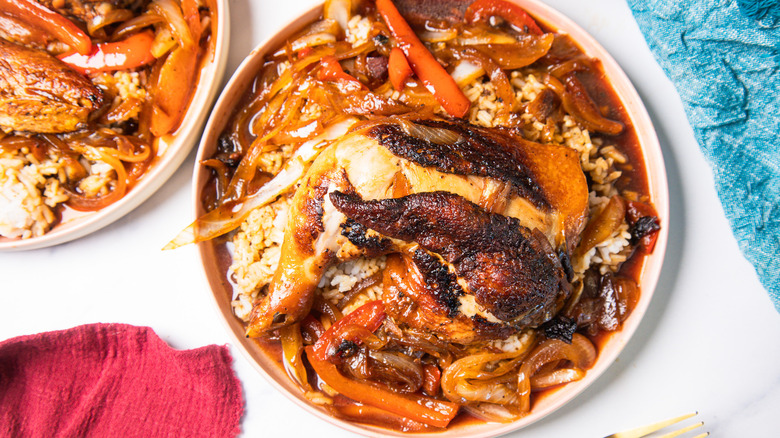
Homestyle Filipino chicken adobo is a comforting and satisfying dish featuring braised chicken in a sauce that offers a balanced hit of sweet, sour, and tangy.
Ingredients
- For the chicken and marinade
- 1 whole (3½–4-pounds) chicken
- ¼ cup apple cider vinegar
- ¼ cup soy sauce
- 6 garlic cloves, smashed
- 1 teaspoon black pepper
- 4 bay leaves
- For the adobo sauce
- ¼ cup soy sauce
- ¼ cup apple cider vinegar
- 1 tablespoon granulated sugar
- 1 cup chicken broth
- For the stir-fry
- 2 tablespoons neutral oil
- 1 large onion, sliced
- 1 bell pepper, sliced
- 4 cups cooked white rice, for serving
Directions
- Cut the chicken into pieces using scissors or a sharp, heavy chef’s knife.
- Combine the chicken pieces with apple cider vinegar, soy sauce, smashed garlic, black pepper, and bay leaves in a large bowl. Toss to coat. Cover and marinate in the fridge for at least 1 hour or up to overnight.
- Whisk together the soy sauce, apple cider vinegar, sugar, and chicken broth in a small bowl. Set aside.
- Heat the oil in a large heavy-bottomed skillet or wok over medium-high heat.
- Remove the chicken from the marinade and pat it dry. Reserve the marinade.
- Add the chicken pieces skin-side down and sear for 4–5 minutes per side until golden brown. Work in batches if needed.
- Remove the chicken and set it aside.
- Add the onion and bell pepper to the same pan and cook for 3–4 minutes, until softened.
- Pour in the adobo sauce and reserved marinade.
- Return the chicken to the pan. Bring to a boil, then reduce the heat to medium-low.
- Cover and cook for 25–30 minutes, turning the chicken occasionally, until it’s cooked through and the sauce has reduced.
- Remove the bay leaves. Taste and adjust the seasoning.
- Serve the Filipino chicken stir-fry over white rice.
Nutrition
| Calories per Serving | 1,043 |
| Total Fat | 53.9 g |
| Saturated Fat | 13.9 g |
| Trans Fat | 0.3 g |
| Cholesterol | 226.8 mg |
| Total Carbohydrates | 69.1 g |
| Dietary Fiber | 2.9 g |
| Total Sugars | 7.2 g |
| Sodium | 2,051.3 mg |
| Protein | 65.6 g |

Why use whole chicken in this recipe?
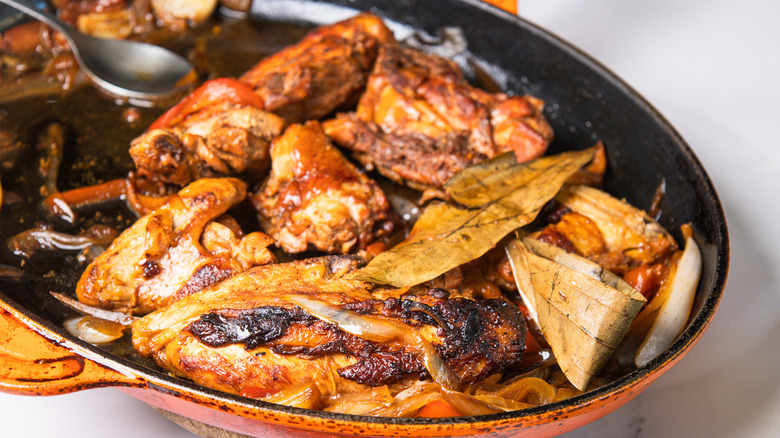
Most weeknight stir-fry recipes will tell you to buy a boneless chicken cut like thighs or breast, and to cut it into strips against the grain. This helps cook the chicken faster and provides you with a good piece that won't fall apart while cooking, and will still retain some bite. But if there's one thing I learned from my Filipino neighbors, it's that the most economical way to cook a chicken is to buy a whole chicken and cut it into pieces, which is probably easier than you think, given the right guidance.
A whole chicken cut into pieces gives you a mix of dark and white meat, which works well in a braise like this one. Dark meat, which is thighs and drumsticks, stays moist and gets richer as it cooks. White meat, like breast pieces, absorbs the flavors more deeply and doesn't dry out because of the added liquid. It makes for a pleasant variety of textures and fat levels to appeal to people with different preferences.
If you're looking for a substitute, bone-in, skin-on chicken thighs and drumsticks make the best stand-in. Their skin renders during searing and adds body to the sauce, and the bone keeps the meat moist through the long braise. If you're short on time, boneless thighs are the next best thing, because they cook in a total of 15 to 20 minutes. My advice is to skip the chicken breast, because it'll dry out and won't be as flavorful.
What is adobo sauce and how did it get to the Philippines?
You may be inclined to think that adobo sauce came to the Philippines through the Spaniards, because the word "adobo" comes from the Spanish word "adobar," which means to marinate. However, even the name of this dish is an example of how far-reaching the effects of colonization on cuisine can be.
Historians have found that while Philippine adobo may have a Spanish-sounding name, records detailing this technique predate the arrival of Portuguese explorer Ferdinand Magellan on the archipelago in 1521. Indigenous Filipinos had developed ways to preserve protein in the humid, tropical climate of the islands by cooking meat in vinegar and salt to prevent spoilage. Chinese traders later introduced soy sauce, and that became the other essential component in the dish we know and love today.
But the name of that technique was never recorded, so when the Spaniards found it, they referred to it by the familiar term, "adobo," because it reminded them of similar techniques encountered in Spain and Mexico. However, Filipino adobo's richness is far from being typically Hispanic, and it actually varies dramatically from one region to another. In Batangas, annato water is used instead of soy sauce. In the south, adobo includes coconut milk and green finger chiles. White adobo, called adobong puti, is made without soy and bay leaves. And if you're not a fan of chicken, you can make it with pork, squid, or even water spinach. So if this homestyle Filipino chicken adobo stir-fry caught your fancy, you can go much further down the rabbit hole of discovering Filipino adobo.