

One Professional Chef Thinks This Filet-O-Fish Ingredient Does Nothing For Flavor
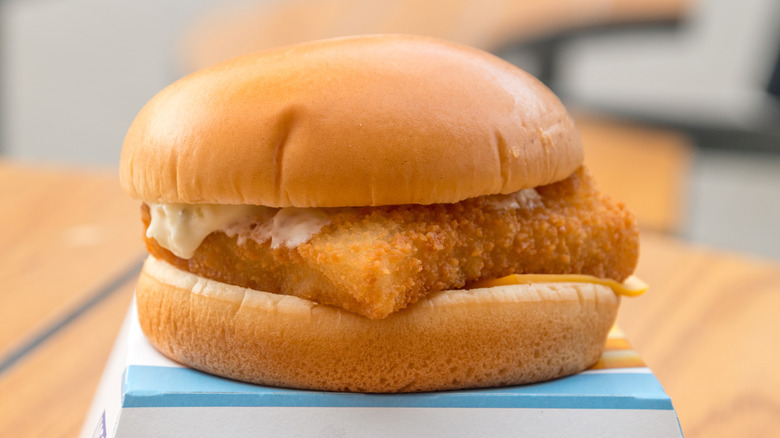
The Filet-O-Fish was the first major addition to the McDonald's menu when it arrived back in the early 1960s. In the six decades since the sandwich found its place in the Golden Arches' bill of fare, it hasn't changed much. The marine protein at its center might've shifted from halibut to Alaskan pollock, but aside from that, it is pretty much the same: a breaded and fried square of fish with tartar sauce and American cheese on a steamed bun. However, according to some — including a few that really know their way around a kitchen — that crooked half slice of cheese may not belong.
"Is that cheese doing anything? Absolutely not," said Joe Nierstedt, chef and owner of Katsubo in Charleston, South Carolina, when speaking with Tasting Table about what chefs really think of the McDonald's Filet-O-Fish. The opinion flies in the face of decades of success for this fast food fish staple, but it is worth questioning. In some culinary traditions, these two ingredients are never meant to go together, though others consider it a myth that fish and cheese should never meet. If sales numbers are any indicator, cheese certainly isn't hurting the sandwich. According to USA Today, McDonald's sells upwards of 300 million Filet-O-Fish sandwiches annually.
Of course, simply selling such a massive number of sandwiches doesn't necessarily indicate whether the cheese is helping anything. Nierstedt didn't say that detracted from the experience, only that it was something of a passenger in the equation. For a more complete answer, we may need to look at some of the international Filet-O-Fish variations.
Does American cheese belong on McDonald's Filet-O-Fish?
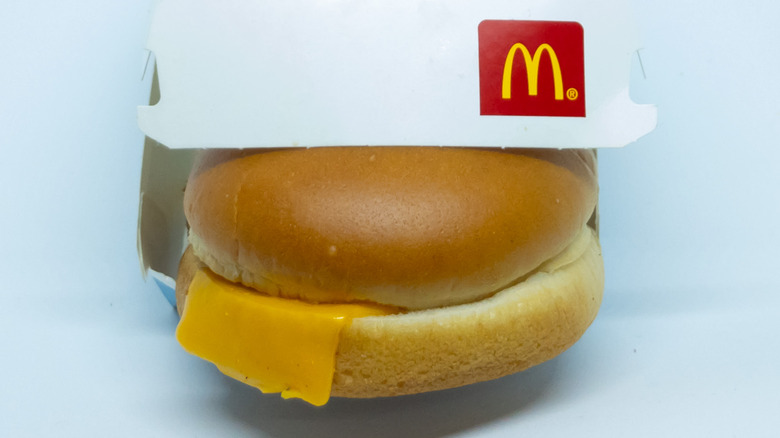
The first example that plays in Nierstedt's favor is the Belgian Filet-O-Fish variant, the McFish. In its standard format, this sandwich eschews not just that neon slice of cheese, but also the traditional tartar sauce. It is a much simpler sandwich, boasting just the fried fish on a bun with ketchup. Just across the border, one may also find a French Filet-O-Fish variant called the McFish mayo, which is basically the Belgian offering save that the ketchup is replaced with a swipe of mayo instead. In Western Europe, it seems that the American cheese is not missed.
Another example of a slight shift to the McDonald's seafood flagship in European markets is the Fish McFeast, a Norwegian take on the Filet-O-Fish. In this sandwich, the fried fish patty is dressed more like a burger, with toppings like lettuce, tomato, onion, pickles, and a variety of sauces. Like a burger, it receives a slice of cheese. However, this offering utilizes processed cheddar rather than American. It is still a processed cheese, so this one lands closer to the original than the cheese-free McFish, but it does still beg the question of why the American was replaced.
In the end, the cheese may just be a matter of preference. For some, it might not add much at all. For others, though, that creamy, melty slice may add a delicate richness that separates the Filet-O-Fish from its competitors. After all, the cheese in the Egg McMuffin is the same, and it was chosen very deliberately to try to create a handheld eggs Benedict. If it can replace hollandaise, can you really cut the American cheese from a Filet-O-Fish?