

12 Iconic Foods That Don't Taste As Good As They Used To
Some foods are so iconic that the mere mention of them elicits a sensory experience. Take Honey Nut Cheerios, for example. You've likely already pictured the sweet, toasted, wheaty taste, brown and yellow box, and cheerful mascot, Buzz. And that's just one of countless examples of iconic foods that have grown to become a normal part of everyday life.
Without the fruity, slightly metallic flavor of Capri Suns, the delectable caramel pull from biting into a Twix bar, or the finger-licking sting of Hot Cheetos, this life would taste markedly different. The natural result of eating these staples over years and years is that we've developed a sort of taste memory. Which is to say, we know when McDonald's fries are lacking in the flavor department or when the Girl Scouts Thin Mints don't taste like they did the previous year.
Recipe reformulations aren't anything new, of course. And in many cases, there are good reasons for them. However, historically speaking, companies often drop the ball when trying to switch things up. And as loyal consumers, we know when our favorite foods have gotten worse. The old adage, "if it ain't broke, don't fix it," remains truer than ever, and many companies would do well to remember that. Here are some of the iconic foods that don't taste as good as they used to.
McDonald's fries
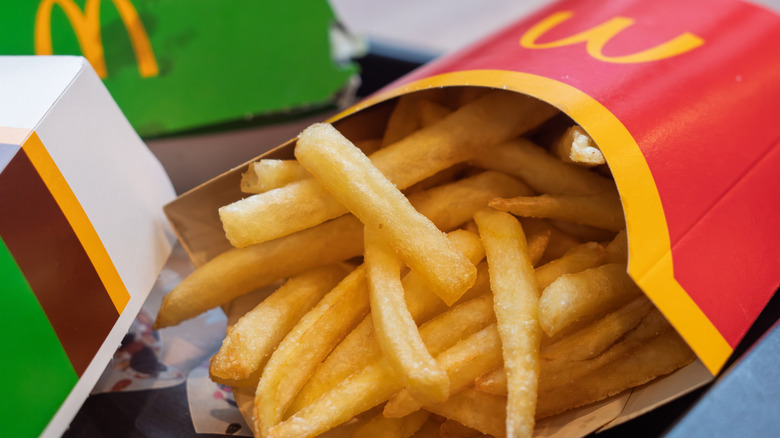
McDonald's World Famous Fries are one of its best-selling menu items, but if you were around prior to 1990, you got to experience what many consider the superior version, its legendary beef tallow fries. They were phased out due to criticism from nutritionists at the time, who labeled tallow unhealthy. The chain has used a canola blend ever since, though we now know that cooking with beef tallow isn't inherently worse or better. In fact, there are pros and cons to consuming both beef tallow and canola oil. But when it comes to taste, there's simply no comparison.
Canola oil has a neutral flavor that makes it highly versatile. Beef tallow, which is rendered fat from a cow, infuses foods with a delicious, meaty flavor. "I thought when they first started out the French fries were very good, and then the nutritionists got at them, which turned out to be erroneous that beef tallow fat was bad ... and they've been kind of limp ever since ... It's too bad. I'm always very strong about criticizing them, hoping maybe they'll change," said Julia Child in a 1995 interview, which is pretty much the general sentiment of pre-'90s babies who wish for the return of tallow fries.
Reese's peanut butter cups
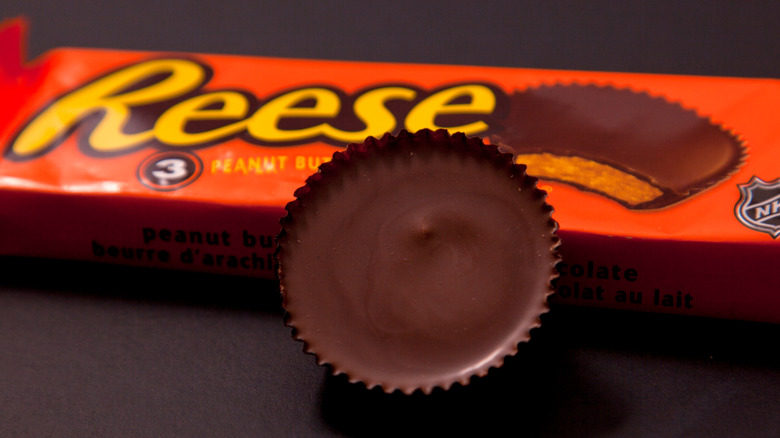
Fans have been complaining about the ingredients in Hershey products for over a decade. In February 2026, Brad Reese, the grandson of the inventor of Reese's Peanut Butter Cup, H.B. Reese, wrote an open letter accusing the company of false advertising. "[Reese's] identity is being rewritten, not by storytellers, but by formulation decisions that replace Milk Chocolate with compound coatings and Peanut Butter with peanut‑butter‑style crèmes," he said.
The letter, which received over 100 comments on LinkedIn and subsequently went viral, was the confirmation disgruntled fans had long been waiting for. Hershey didn't waste time responding to the controversy, saying, "We make Reese's Peanut Butter Cups the same way we always have, using a one-of-a-kind peanut cup butter that is combined with iconic milk chocolate," in a press release, while also admitting that recipe adjustments have been made to other Reese's products.
According to Instagram user @collectingcandy, the ingredients in the cups haven't changed much, if at all — just how they're listed on the package. However, some folks believe that just because the ingredients are the same, it doesn't mean that they are of the same quality. In the end, Reese scored a small victory, because a couple of months later, Hershey issued another statement, saying that it plans to use real chocolate, rather than a chocolate compound coating, for all of its products by 2027.
Little Debbie Oatmeal Creme Pies
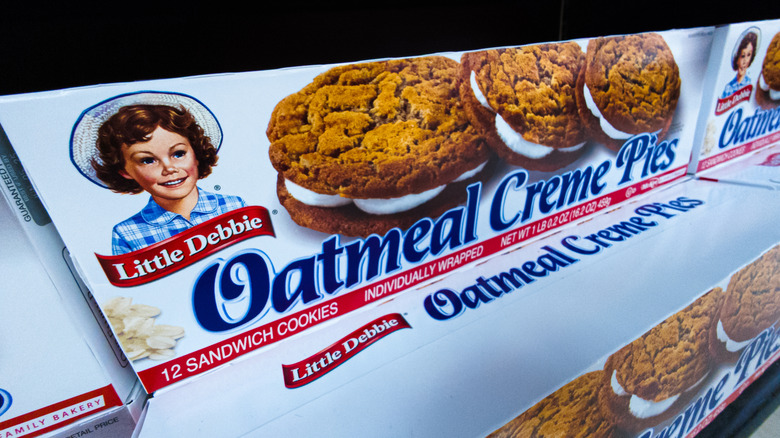
This toasted, brown sugary, creme-stuffed treat was a childhood favorite and was rightfully given the number one spot in our ranking of worst to best Little Debbie snacks. Oatmeal Creme Pies belong on the Mount Rushmore of pastry snacks, right alongside Twinkies, Hostess Cupcakes, and honey buns. Or at least, according to fans, they used to. "I tried one recently and it taste nothing like I remember. They're smaller, overly sweet, and lacking [any] actual flavor I remember," said the original poster of a Reddit thread about their alleged fall-off.
Little Debbie has never released an official statement saying that it's changed the recipe. But self-proclaimed food hacker @og_deez found that during the COVID-19 pandemic, the real eggs and spices were removed from the ingredient list in place of dried eggs and artificial and natural flavors, including the addition of more chocolate. On top of that, it's abundantly clear that Little Debbie has declined as a whole in the eyes of fans, and not just the Oatmeal Creme Pies. "I tried one of their Cosmic Brownies the other day and it was like eating insulation," said one Reddit user.
Chef Boyardee pastas
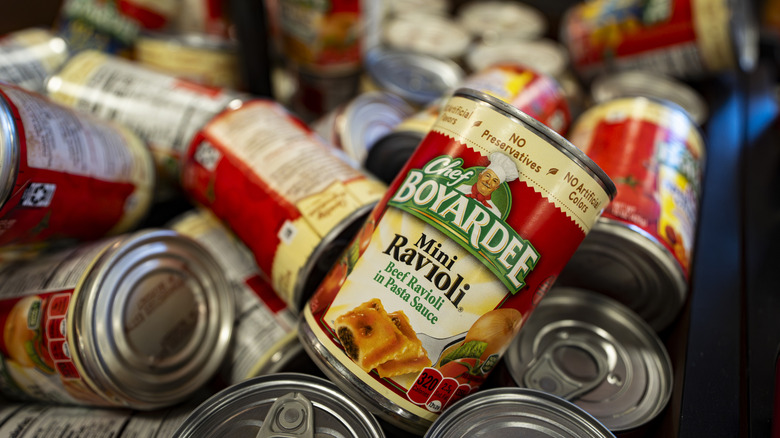
No one ever mistook Chef Boyardee for restaurant-quality pasta, but for many kids, it might as well have been the real thing. It was originally introduced in 1928 by brothers and co-founders Paul, Hector, and Mario Boiardi — the actual Italian spelling of Boyardee. The pasta featured real olive oil and Parmesan cheese imported from Italy, and real tomatoes and mushrooms. But when the brothers sold the company after World War II, it triggered a turning point in the quality of the brand. And, somewhere down the line, it stopped importing ingredients from Italy.
We couldn't find any official press releases about a major recipe change, but in 2019, the introduction of a Throwback Recipes line of pastas all but confirmed it. The Throwback Recipe pastas contained sugar, olive oil, dried garlic, dried onion, beef broth, spice, Romano cheese, and a little trans fat. Comparatively, the newer version contained high fructose corn syrup, enzyme-modified cheddar cheese, and textured vegetable protein.
The next major change came in 2015 when Conagra, the then-parent company of Chef Boyardee, removed all trans fats from its products. It's debatable whether or not the removal impacted the taste of Chef Boyardee, but because trans fats do help improve texture, the switch may have altered the mouthfeel. Whatever the case, the bottom line is that today's Chef Boyardee pasta recipe just doesn't hit like the OG one did.
Hostess Twinkies
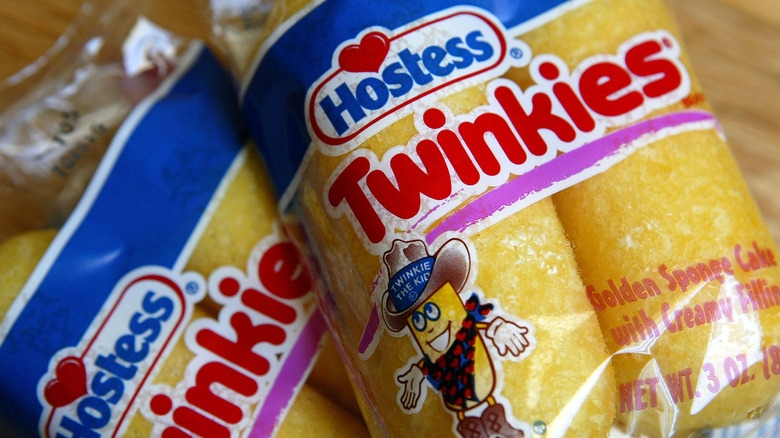
While many have moved away from the processed snack foods that Hostess specializes in, Twinkies hasn't lost much of a step and is expected to increase its market size to $606.26 million by the year 2032, per ReAnIn. However, despite the glowing analysis, fans say that, like many classic foods, Twinkies has become a victim of shrinkflation and numerous recipe changes.
One change allegedly occurred around 2012 after Hostess filed for bankruptcy, though exactly when the change occurred is unknown. What we do know is that a lot of people are unhappy with how today's Twinkies taste. "Yes now they are small and dry there aren't good anymore like back in the days," said someone on a Facebook post about '80s Twinkies being better.
On a Reddit thread with many comments, others complain about a lack of vanilla filling, cheap dough, and even employees calling out unsanitary working conditions. That said, another reformulation appears to be on the horizon because according to a 2025 press release, The J.M. Smucker Co. plans to remove all artificial dyes from its products by the end of 2027.
Breyers ice cream
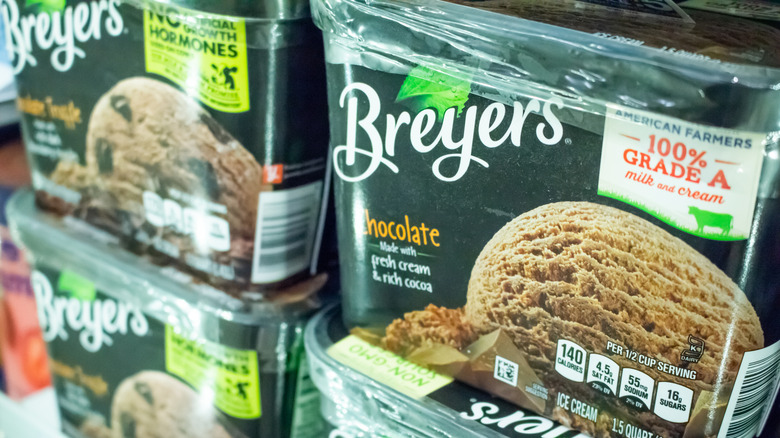
"Frozen dairy treat" is how Breyers describes some of its ice cream flavors. We say some because, oddly enough, the company also has flavors that qualify as real ice cream. According to the USDA, ice cream must have at least 20% total milk solids in order to be considered ice cream. Breyers flavors such as chocolate chip cookie dough, cookies and cream, and others with less than 2% dairy product solids. The problem is that to the naked eye, both "real" and "fake" ice cream products can appear indistinguishable.
Breyers, which first launched in Philadelphia in 1866, was once a fully ice cream brand before being purchased in 1993 by Unilever, which eventually added frozen dairy treats to the lineup. In an interview with The New York Times, Nick Soukas, the then brand-building director for Unilever, said frozen dairy treats were introduced because consumers requested them. He also said that "They're basically the same ingredients," which today, we know isn't true.
The ice cream kerfuffle didn't end there, though. In 2025, Breyers was forced to settle a false advertising lawsuit for $8.85 million when a customer sued it over the ingredients in its Natural Vanilla ice cream, which was advertised as containing real vanilla from a vanilla plant when it was actually made with vanilla flavoring. The settlement was paid out to people who purchased Breyer's Natural Vanilla ice cream anytime between April 2016 and August 2024. Overall, people say it's just not the same "ice cream" it used to be.
Red Delicious apples
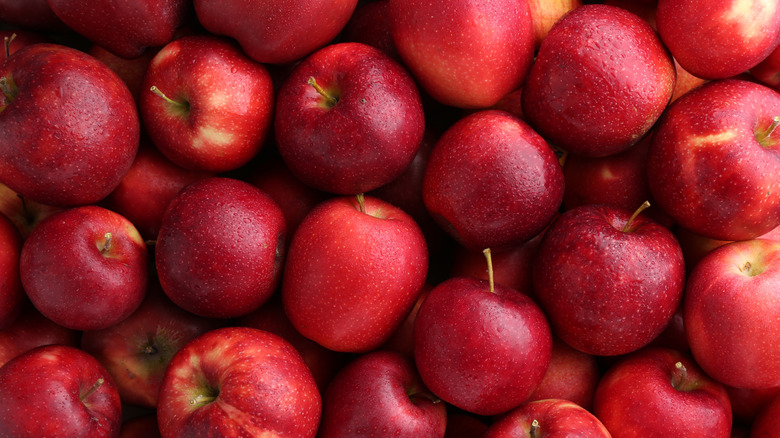
If you grew up in the U.S. before the 2000s, it seemed as if only two apple varieties existed: Red Delicious and Granny Smith. Between the two, however, Red Delicious was given the red carpet treatment, appearing everywhere you turned, from school lunch bags and the tops of teachers' desks to gas stations and gift baskets, to the point where today we still consider it the universal symbol for all apples.
The ubiquitous nature of Red Delicious apples has certainly contributed to them being the most hated variety, but that alone isn't why so many Americans despise them. The overly thick, waxy skin and grainy, bland taste are the real culprits.
Red Delicious were first cultivated during the late 1800s, and apparently, they weren't always gag-worthy. The real kicker, however, is that they were literally bred to be less tasty. Not intentionally, but as a result of propagating the aesthetic imperfections out of the genetic code. Once upon a time, Red Delicious apples weren't all uniformly red; some would have yellow stripes. Those stripes, as it turned out, was where the flavor was contained genetically. Breeding them out is what ultimately ruined the variety.
Pizza Hut pizza
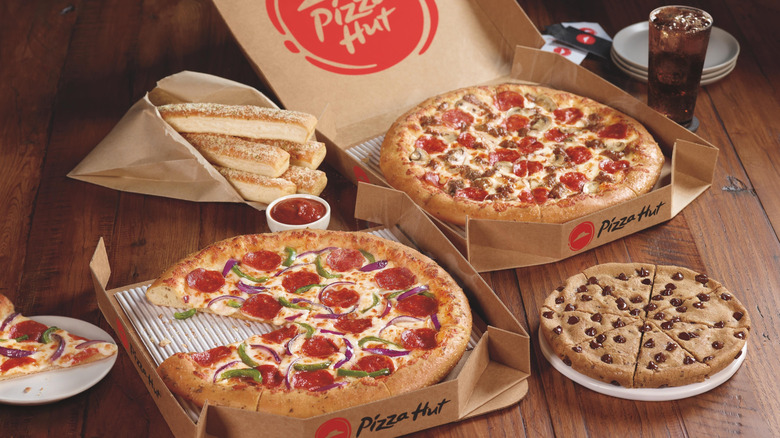
Pizza Hut's iconic trapezoidal red roof used to mean something, and while we wouldn't go so far as to call it a failing pizza chain, it's pretty clear the pizza is not as beloved as it used to be. "First time I worked there we made the dough fresh everyday. Years later I worked there and everything was a frozen disc that came in a box," said a former employee on Reddit. The thread, which has nearly 100 comments as of the time of writing, is filled with disgruntled customers and former employees, some of whom point to Pepsi's acquisition of Pizza Hut in 1977 as the beginning of its decline.
The chain has apparently made numerous changes to the recipe since then. "I worked there in 1992 and every ingredient has changed through the years. Some even multiple times. Dough, cheese, sauce and every single topping is different," said another Reddit user. Pizza Hut updated its hand-tossed crust recipe for the first time in over a decade in 2026, so if anything, it isn't oblivious to the complaints. Nevertheless, the update has done little to sway customer sentiment so far.
Girl Scout cookies
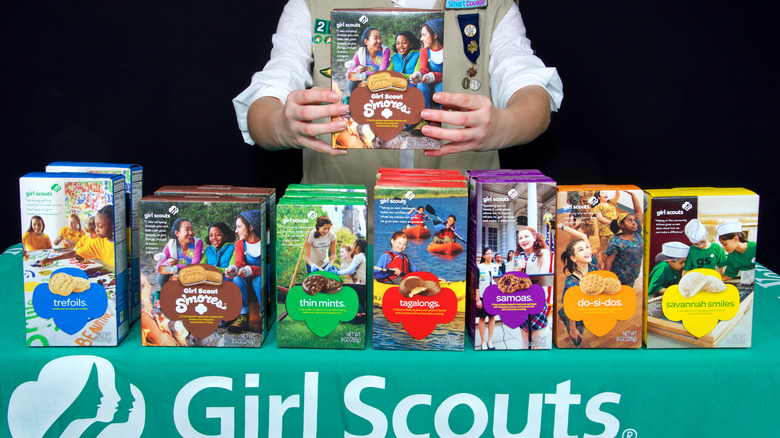
Each year, from mid-January to mid-spring, Girl Scouts travel from door to door and set up shop outside of storefronts, in hopes of selling as many cookies as possible to help fund the program. Girl Scouts have sold cookies for over 100 years, but for some time now, many say that their taste and texture have been lacking. "Just about every ingredient is of perceptibly lower quality, from the coconut in the Samoas to the peanut butter in the Tagalongs," said the original poster of a Reddit thread about Girl Scout cookies not being as good.
Scrolling through the 300 comments, it quickly becomes clear that a lot of people only buy the cookies to support the kids. Philanthropic urges aside, the truth is that Girl Scout cookies might taste different depending on where you live. The organization partners with two bakeries to produce its cookies, ABC Bakers in South Dakota and Little Brownie Bakers in Kentucky. The bakers sometimes use distinct recipes and have different names for the same cookies, like, for example, Samoas and Caramel deLites. As a result, the cookies can have different textures and tastes from one year to the next, depending on which troop you buy them from.
But the decline in quality has less to do with using different bakeries than the alleged use of poor ingredients. "They're full of additives and chemicals just like everything else! Google it," said someone on Facebook. The organization was in fact sued in 2025 for its cookies reportedly containing high amounts of heavy metals.
Pop-Tarts
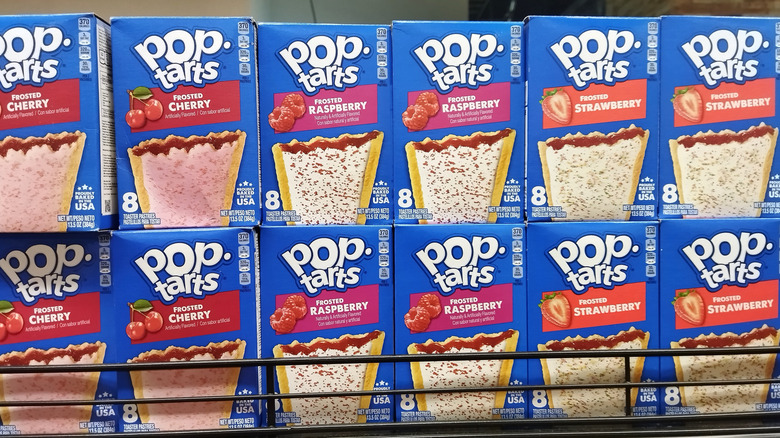
From the sweet fruit filling and sprinkle-flecked frosting to the toasted pastry edges, Pop-Tarts are a thing of beauty. Or, at least, they once were. Photos of sad-looking breakfast pastries shared on social media paint a grim picture of the brand's diminishing quality. According to one self-proclaimed Pop-Tart-eater, the outer edges have gotten bigger in recent years, while others say that the frosting, which used to be thicker, is now basically transparent. To top it off, the pastries include less filling and allegedly don't toast as well.
While there are no official statements saying that the recipe has changed, Kellogg's did remove trans fats from Pop-Tarts in 2005, which can impact mouthfeel. That said, based on the number of customer complaints, it's safe to assume that there have been some others changes, too. "These used to be evenly covered with icing and they were so full of filling that when you'd toast them it would leak out of them," said someone on a Facebook thread. The release of what we consider to be Pop-Tart's worst flavor doesn't help its case, either.
Burger King Whopper
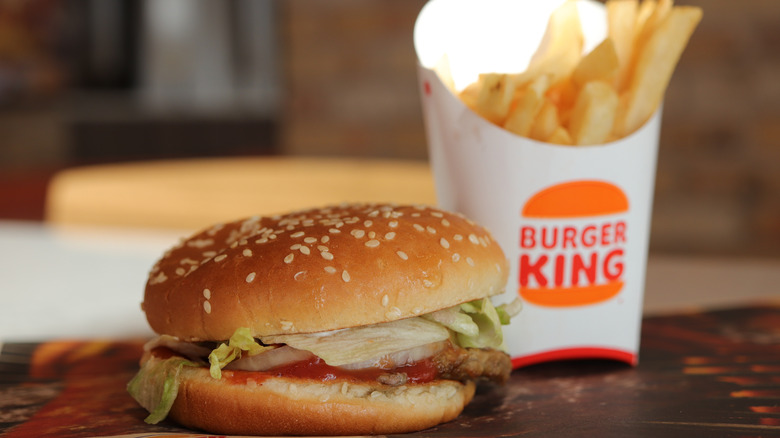
The Whopper has been around since 1957 and is still made with the same ingredients: a ¼-pound, flame-grilled beef patty, tomatoes, lettuce, mayonnaise, ketchup, pickles, and white onions on a toasted bun. That said, there have been numerous updates to the recipe over the years. Most notably, the switch to a sesame seed bun during the 1970s, a brief switch to a kaiser roll in 1985, the removal of artificial ingredients, monosodium glutamate (MSG), and high-fructose corn syrup in 2020, and, in 2026, the introduction of a premium glazed bun, upgraded mayonnaise, and a cardboard clamshell box to replace the paper wrapper.
Despite BK's continual attempt at refining its flagship handheld, it seems to only move further afnd further away from the classic Whopper many remember. "Back then it was a two handed sandwich. i probably spent 15 minutes scraping all those sesame seeds off," said someone on a Facebook thread. By 2020, the public ire toward the Whopper's waning quality had further increased. On another Facebook post by BK promoting the 2020 upgrade, people appeared to be more concerned with false advertising than the notion of a healthier Whopper. "Hey BK, where can I get a Whopper that sort of, kind of, vaguely resembles the pictures you use in your ads," said one of many comments. What's more, the 2026 Whopper change has garnered mixed reviews, too.
Honey Nut Cheerios
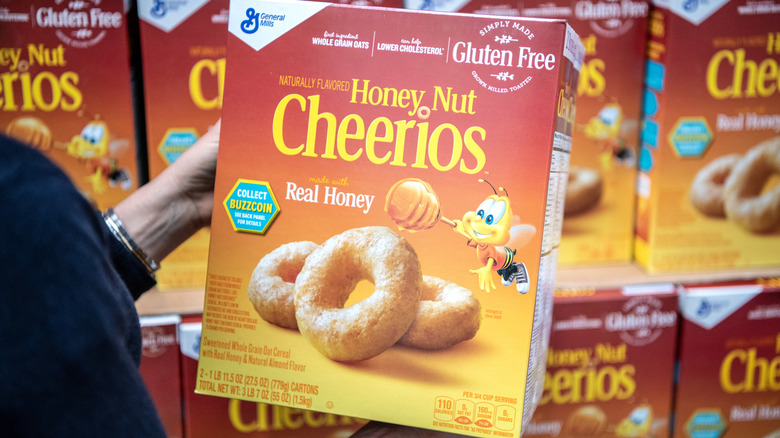
Honey Nut Cheerios featured real almond pieces well into the 1990s. Then, around 2006, General Mills decided to replace them with natural almond flavor. But the thing is, most natural almond flavors are derived from synthetic compounds, which, of course, nullified the word "Nut" in the name. The OG cereal also contained wheat germ and wheat starch, whereas today's iteration contains gluten-free corn starch. Wheat germ and wheat starch aren't gluten-free, but they do aid digestion, with the former offering additional benefits such as energy, Vitamin E, and more.
"90s/early 2000s Honey Nut Cheerios were unlike anything else. A god tier cereal," said someone on a Reddit thread. Other complaints in the thread include it making people gassy and leaving a weird aftertaste. What's more, we came across a recent comment on a thread from over a decade ago about the 2026 version, saying, "Old thread but just wanted add my 2026 2 cents — Honey Nut Cheerios taste so bad now. Had to throw the whole box away."