

Thai Basil Beef Bowls Recipe
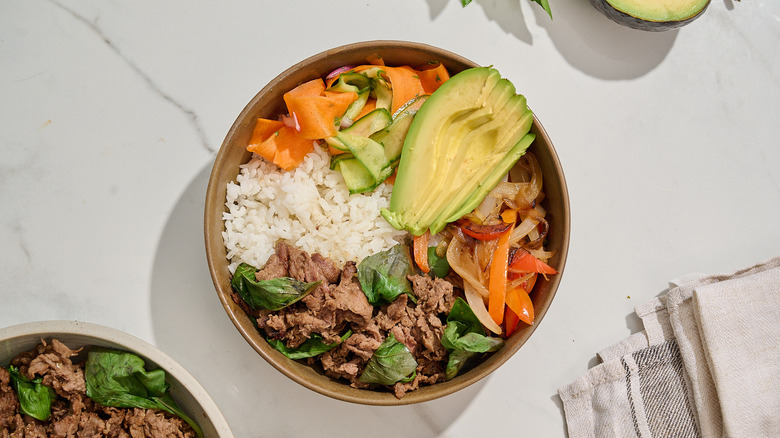
If you order from a Thai restaurant in the U.S., it's likely that you'll see Thai basil listed on the menu, available with various protein options like chicken, pork, and beef. Considered traditional in Thai cuisine, Thai basil beef is a finely minced, meaty dish that is widely popular for its uniquely spiced flavor peppered with the star of the show: wilted Thai basil leaves. Unlike Genovese basil, which is the most common variety in American grocery stores, Thai basil has a deep purple stem and a light, herbal anise flavor. Adding it to beef, chicken, or pork alongside other seasonings, sauces, and veggies imparts the dish with a subtly sweet taste that closely replicates quintessential Thai flavors.
If you find yourself with a bundle of Thai basil, Thai basil beef is likely going to be one of your first ideas for how to use it. In this recipe, we maximize our stir-fry by turning it into an all-in-one bowl, which can be used as meal-prepped lunches or extra-satisfying dinners. This dish piles peppers, rice, cucumbers, and carrots onto the classic Thai dish for a bright, fresh, nutritious, and easy lunch or dinner that elevates the flavors of your favorite Thai takeout.
Gathering ingredients to make Thai basil beef bowls
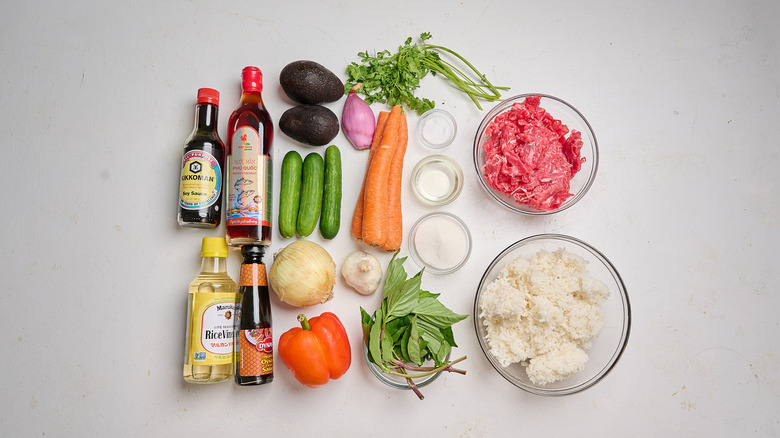
This recipe is made in a few parts: First, we make the cucumber-carrot salad, then we cook the beef, peppers, and onions, and then we assemble all of the bowl ingredients together. To make the salad, grab cucumbers, carrots, salt, rice vinegar, sugar, a shallot, and cilantro. Then, to make the beef, gather your soy sauce, fish sauce, oyster sauce, sugar, and thinly sliced steak, which you can buy already sliced at the grocery store. From there, pick up a red bell pepper and a yellow onion, some garlic, avocados, Thai basil, and cooked white rice.
Step 1: Salt the cucumber and carrots
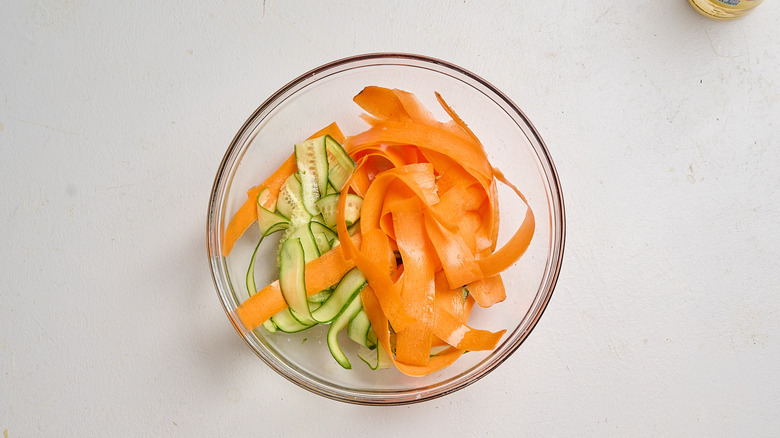
Add the cucumber and carrot ribbons to a large bowl and sprinkle them with salt. Let them rest while preparing the dressing, then drain any excess liquid.
Step 2: Dissolve the sugar
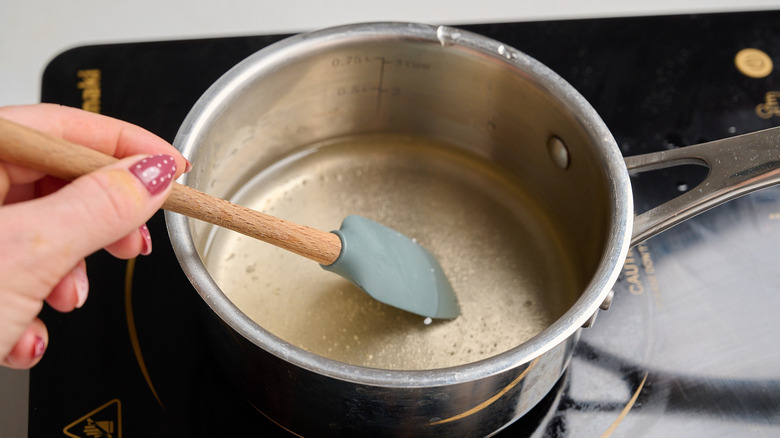
Add the vinegar and sugar to a saucepan over medium heat. Simmer to dissolve the sugar, about 2 minutes. Let cool.
Step 3: Add vinegar to the vegetables
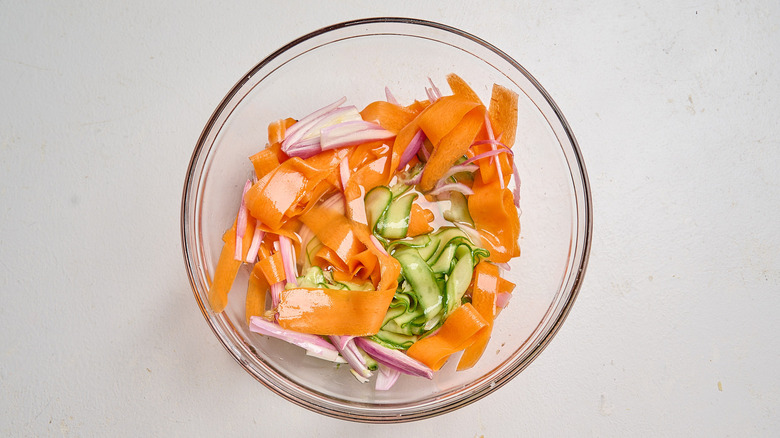
Add the shallots to the bowl with the carrots and cucumbers, then pour the vinegar mixture on top.
Step 4: Add cilantro
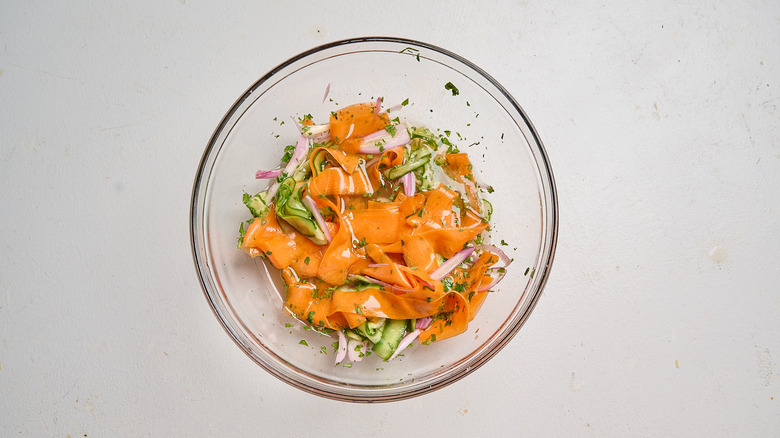
Mix the cilantro into the salad and set it aside.
Step 5: Mix together the stir-fry sauce
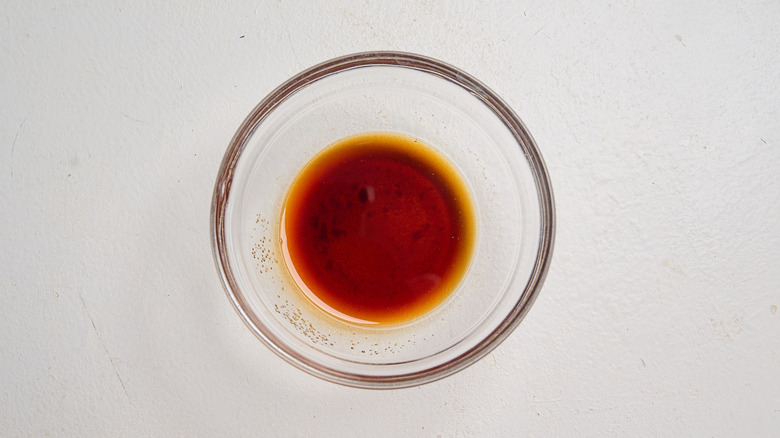
To make the beef, first stir together the soy sauce, fish sauce, oyster sauce, and sugar in a small bowl.
Step 6: Heat oil in a skillet or wok
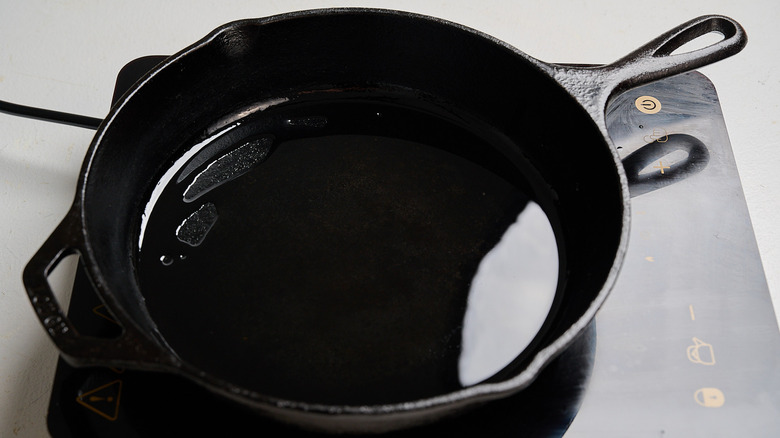
Heat the oil in a cast iron skillet or wok over medium heat.
Step 7: Soften the vegetables
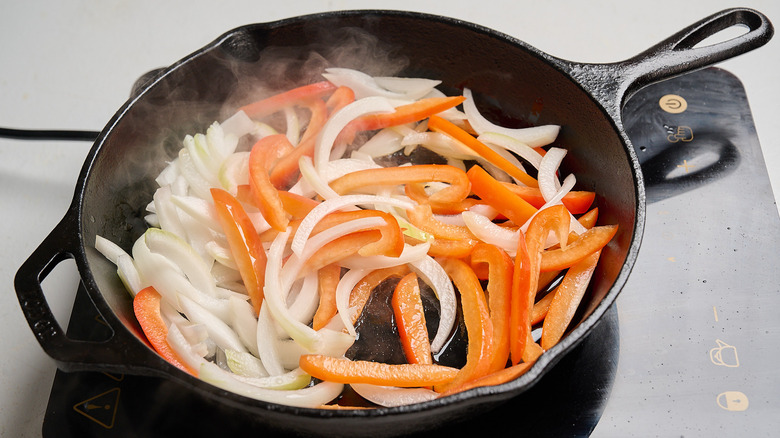
Add the peppers and onions and cook until softened, about 5 minutes. Remove from the skillet.
Step 8: Sear the beef
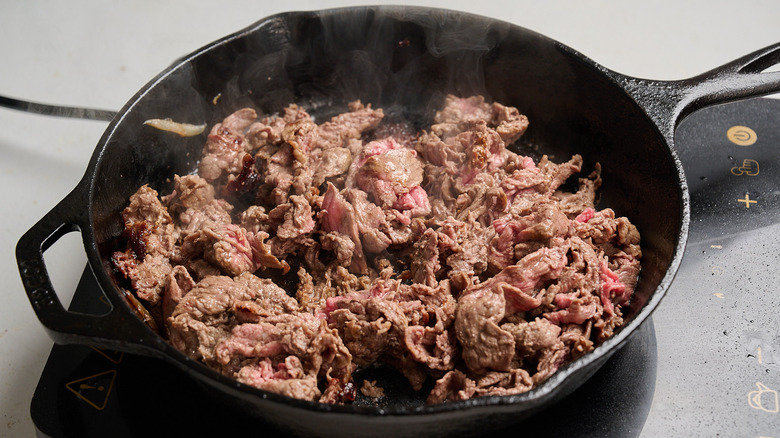
Add the beef to the skillet and sear until browned, about 5 minutes. Stir in the garlic.
Step 9: Stir in the sauce
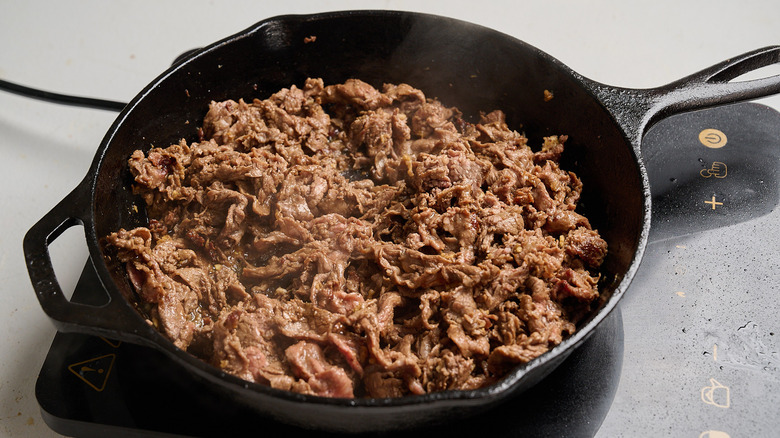
Add the prepared sauce. Stir until well-coated.
Step 10: Wilt the basil onto the beef
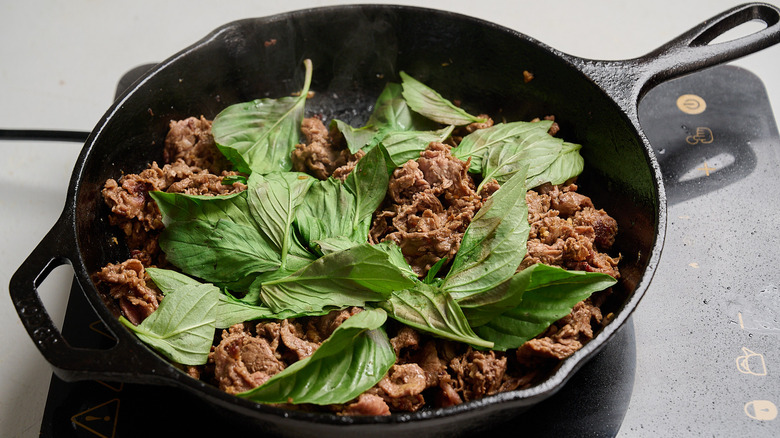
Add the basil and wilt it gently over the beef, then remove from the heat.
Step 11: Assemble the bowls
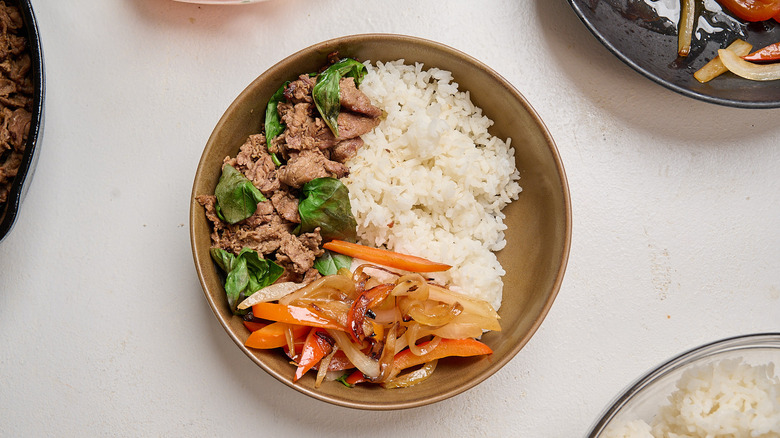
To assemble the bowls, first divide the rice between bowls, then divide the beef and peppers between bowls.
Step 12: Serve with cucumber and avocado
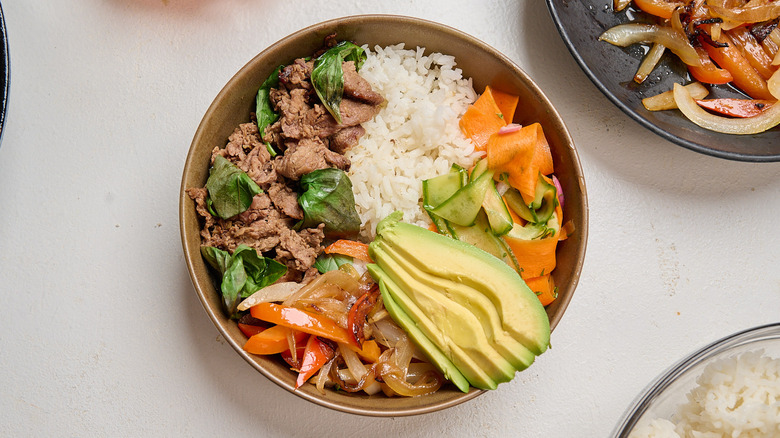
To serve, divide the cucumber salad between the bowls and top with the avocado.
What can I serve with Thai basil beef bowls?
Thai Basil Beef Bowls Recipe
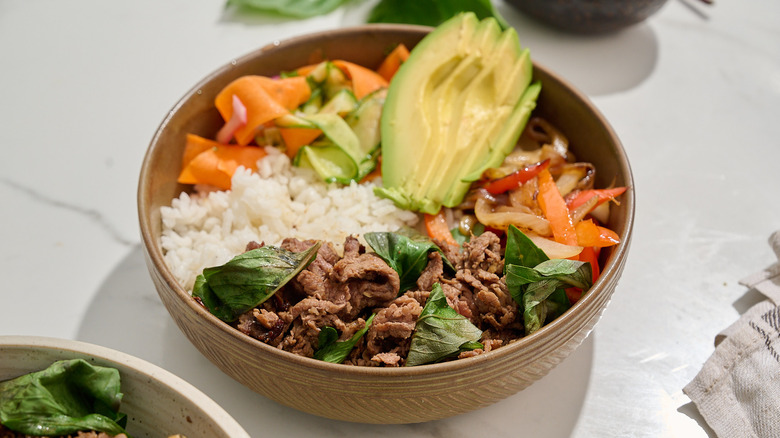
In our satisfying Thai basil bowl peppers, rice, cucumbers, and carrots are piled onto the classic Thai dish for a bright, fresh, and easy lunch or dinner.
Ingredients
- For the cucumber and carrot salad
- 2 cups shaved cucumber ribbons (about 5 mini cucumbers)
- 2 cups shaved carrot ribbons (about 3 large carrots)
- ½ teaspoon salt
- ½ cup rice vinegar
- ¼ cup sugar
- 1 shallot, sliced
- ¼ cup chopped cilantro
- For the Thai basil beef and assembly
- 2 tablespoons soy sauce
- 2 tablespoons fish sauce
- 2 teaspoons oyster sauce
- ½ teaspoon sugar
- 1 tablespoon oil
- 1 red bell pepper, sliced
- 1 onion, sliced
- 1 pound very thinly sliced steak
- 1 tablespoon minced garlic
- 1 cup Thai basil leaves, divided
- 2 cups cooked white rice
- 2 avocados
Directions
- Add the cucumber and carrot ribbons to a large bowl and sprinkle them with salt. Let them rest while preparing the dressing, then drain any excess liquid.
- Add the vinegar and sugar to a saucepan over medium heat. Simmer to dissolve the sugar, about 2 minutes. Let cool.
- Add the shallots to the bowl with the carrots and cucumbers, then pour the vinegar mixture on top.
- Mix the cilantro into the salad and set it aside.
- To make the beef, first stir together the soy sauce, fish sauce, oyster sauce, and sugar in a small bowl.
- Heat the oil in a cast iron skillet or wok over medium heat.
- Add the peppers and onions and cook until softened, about 5 minutes. Remove from the skillet.
- Add the beef to the skillet and sear until browned, about 5 minutes. Stir in the garlic.
- Add the prepared sauce. Stir until well-coated.
- Add the basil and wilt it gently over the beef, then remove from the heat.
- To assemble the bowls, first divide the rice between bowls, then divide the beef and peppers between bowls.
- To serve, divide the cucumber salad between the bowls and top with the avocado.
Nutrition
| Calories per Serving | 706 |
| Total Fat | 36.8 g |
| Saturated Fat | 10.1 g |
| Trans Fat | 1.0 g |
| Cholesterol | 70.3 mg |
| Total Carbohydrates | 65.6 g |
| Dietary Fiber | 10.9 g |
| Total Sugars | 21.8 g |
| Sodium | 1,373.2 mg |
| Protein | 30.4 g |

How do I make cucumber and carrot ribbons?
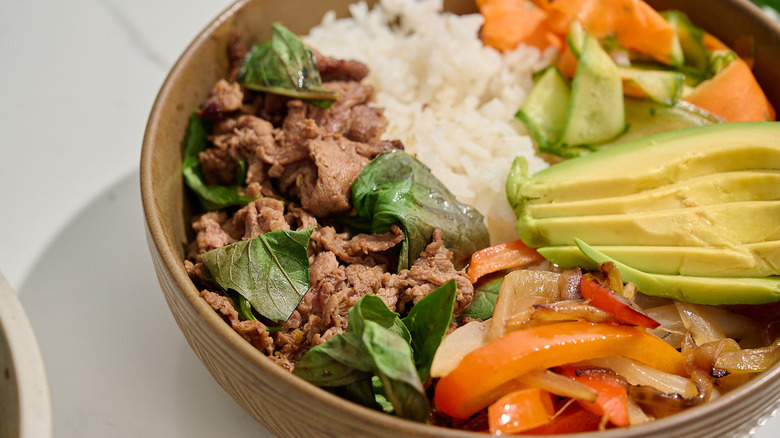
Making cucumbers and carrots into ribbons is easy and only requires a vegetable peeler — in fact it's not all that different from peeling the vegetable. Bring the peeler to the long side of the vegetable and peel down the side, first disposing of the outer skin or peel. Continue peeling down the length of the vegetable to form ribbons, stopping when the slices begin to tear or break down. Repeat on the other side of the vegetable until you are left with a thin middle strip to dispose (or, ideally, compost or snack on).
If you are having trouble peeling the cucumbers into ribbons (or simply don't own a peeler), you can also slice the cucumbers into rounds or roughly chop them, then smash the cucumbers to make a version of the much-loved Thai smashed cucumber salad. Instead of slicing the carrots, though, I recommend julienning the carrots into thin, matchstick-sized slices, which will be easier to eat in the salad than crunchy raw carrot coins.
What can I use instead of Thai basil?
The large, green, slightly round and leafy basil that you see near most grocery stores' tomato baskets is Genovese, a variety often used in pesto, on pasta, or mixed into Caprese salads. Thai basil, on the other hand, is oblong, pointed at the end, and is prized for its pungent, savory, minty, slightly spicy anise flavor, which adds its distinctive touch to dishes like pho, curry, and drunken noodles. It's actually an entirely different flavor than Thai holy basil, which is used in Thailand for its clove-like delicate sweetness. Because Thai holy basil loses its flavor in transport, it isn't typically found in the United States (unless you grow your own), so anise-forward Thai basil takes its place.
Increasingly, Thai basil is available at most grocery stores, but you can certainly find it in Asian grocery markets that focus on Thai cuisine. There's no true replacement for its complex flavor, but if you are having trouble finding it, you can also swap in Genovese basil instead. This will be a more peppery, slightly minty, and mild flavor in comparison, lacking the anise flavor attributed to American Thai basil. To provide anise flavor without Thai basil, you can add a few leaves of tarragon, which has a delicate anise flavor that will complement sweet basil, and, the two herbs together will come close to replicating Thai basil.