

15 No Age Statement Scotches That Prove Age Isn't Everything

Age statements are often given high regard in the world of whisky, generally for good reason. More time in the barrel generally means a more rounded, smoother, and complex spirit. And if you're going to let your product sit in a barrel for a decade or longer, it makes sense to let people know about it. Yet the problem comes when people presume that great whisky can only come from an impressive age statement. The reality is much different, as these Scotch whiskies show.
But that perception is partly based in reality. If the Scotch was only aged of the legal minimum of three years, it's going to be a little rougher and have less character, and you're not going to brag about how long it was aged for. But there's no reason to treat all no age statement (NAS) whiskies with disdain. Rather than to hide the lack of aging, distilleries may avoid an age statement for more flexibility, innovation, or marketing reasons.
I've spent the best part of two decades writing, tasting, and studying whisky, which has meant sampling a wide range of Scotch with and without age statements. While time in the barrel is important, it's clear that you'll be missing out on some great bottles if you only look beyond NAS whisky. The 16 in this list are all unique but share a common theme in showcasing the qualities that can be found without an age statement.
1. Ardbeg Corryvreckan
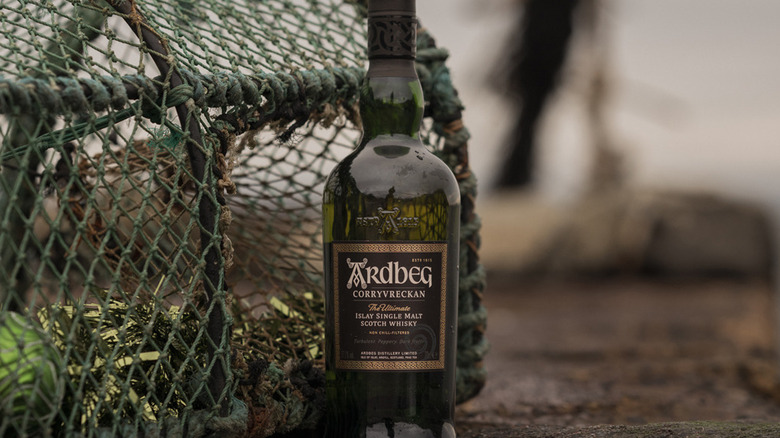
I'm starting with Ardbeg Corryvreckan, because I feel it perfectly demonstrates just how good NAS whisky can be. The Corryvreckan feels like a Scotch whisky that stands proudly on its own rather than being a gateway to Ardbeg's other expressions. Perhaps that's due to it being unashamedly intense. Ardbeg is made on the island of Islay on the western edge of Scotland, and this expression is named after a whirlpool off its coast. It's a spirit that captures that raw energy and showcases the heavy peat that Ardbeg whisky is known for.
Matured in both ex-bourbon and French oak casks, you're greeted with a punch of smoke on the nose before you settle into other earthy aromas, such as dark chocolate and black pepper. The palate is full-bodied and supports waves of spice, bitter cherry, and roasted coffee. The only real sweetness here comes from those dark fruits, so if you're a fan of a highly approachable whisky, Corryvreckan likely isn't for you. However, if you're looking to dive into the world of peated whisky, this is an NAS that still delivers complex and layered flavors despite its youth.
2. Monkey Shoulder

If the Ardbeg Corryvreckan sounds a little too intense, Monkey Shoulder sits at the other end of the approachability scale. This is a blended malt Scotch that aims for pure drinkability, making it ideal for beginners.
Monkey Shoulder is produced by William Grant & Sons, using a mix of Speyside single malts which give it a smooth elegance that's hard to resist. Its gentle nature is immediately apparent on the nose, where you'll enjoy notes of soft vanilla and honey with a little citrus. The taste is also easy going, and that sweetness from the nose comes through to the palate, where it's joined by toffee and earthy tones of oak and baking spice. What you don't get is a great deal of depth, but that's not what Monkey Shoulder is about. Instead, it delivers a well-balanced profile that's almost impossible to dislike.
3. Aberlour A'bunadh
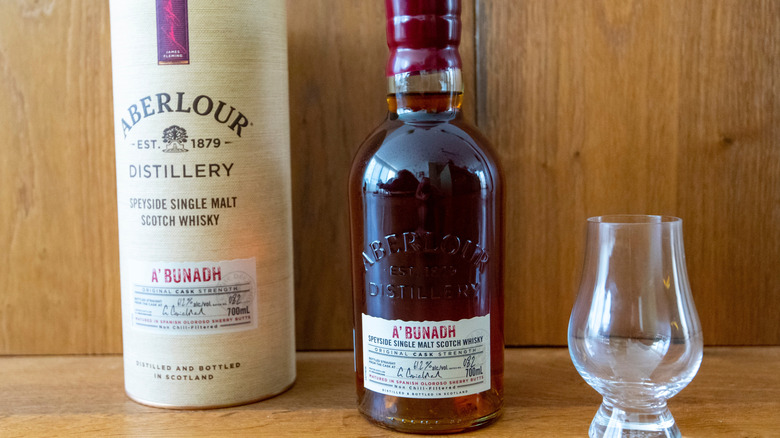
I'm a big fan of Aberlour, as I feel that its whisky range is excellent value for money. With it being cask strength, the A'bunadh is a whisky that seems to use its lack of NAS status for innovation rather than being a simple entry point. The brand has a fascinating history, which I talked about when reviewing the Aberlour 12 Year, and this whisky's name is a nod to that legacy. A'bunadh means "the original" in Gaelic, and the expression is a tribute to the distillery's founder, James Fleming.
What sets this whisky apart from many other NAS whiskies is that high proof that's usually above 60% ABV. It's not a casual sipper but a bold spirit with a rich tasting profile. After enjoying the fruit and spice aromas, the palate displays more intense flavors. Raisin, cinnamon, and orange peel are the most unique notes that sit on an almost syrupy mouthfeel. There's a bright alcohol heat throughout — likely due to the whisky's strength and youth — that leads to an impressively long finish.
4. Glenmorangie Signet
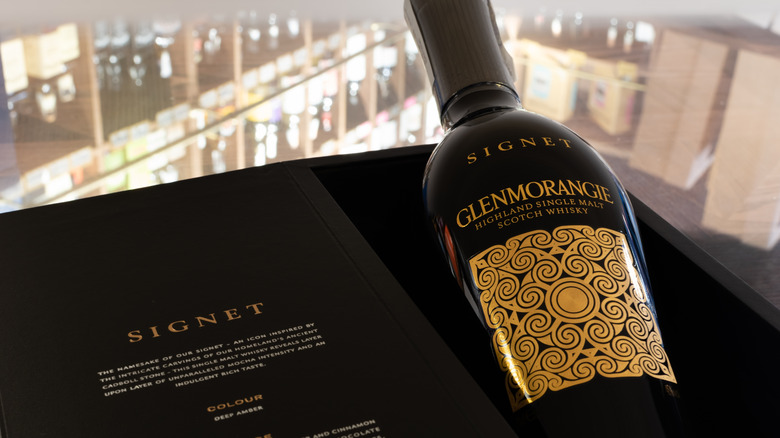
I praised two of the whiskies above for being bold and intense, but Glenmorangie Signet instead showcases how a luxurious, premium Scotch doesn't need an age statement. It was born from a desire to create a whisky with the tasting notes of mocha coffee, which the distillery achieves by crafting a spirit from heavily roasted chocolate malt. It's the type of experiment that could have easily failed, but it worked spectacularly.
On the nose, expect waves of espresso, dark chocolate, and toasted spice, backed by hints of orange peel and vanilla. The first things you'll notice upon tasting are the silky texture and full body. The aromas carry over to the palate, but they're not overwhelming, and a nice range of dried fruit and nut flavors continue to develop on the tongue. The result is a sumptuous whisky that you'll appreciate if you love chocolate and coffee. The premium end of the whisky market may be dominated by high age statements, but Glenmorangie Signet proves you don't need one to justify your Scotch's quality.
5. Bruichladdich The Classic Laddie
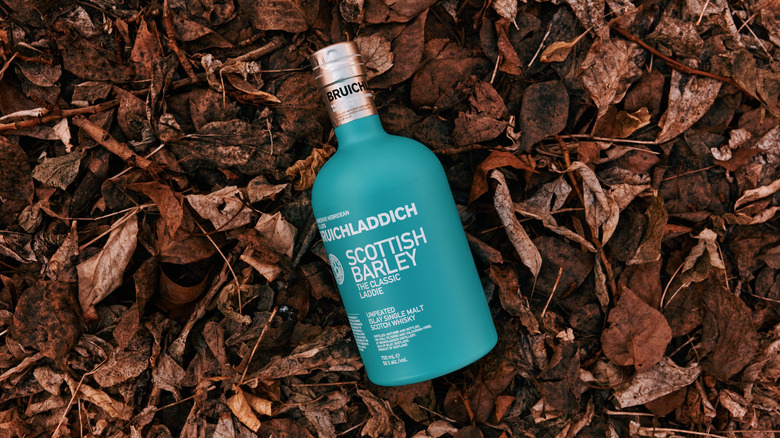
Bruichladdich appears to enjoy subverting expectations, mainly because it's an Islay whisky distillery that eschews peat in many of its core expressions. However, this also allows it to highlight the true potential of affordable NAS whisky, and The Classic Laddie is all about elegance and clarity. Things start with an aromatic nose of vanilla and lemon. An enticing floral quality also emerges with hints of mint and honey. There isn't any smoke here, but a slight salinity is evidence of Islay's coastal influence. That subtle saltiness also peeks through on a palate that mainly focuses on fresh and vibrant notes, with green apple joining the vanilla, honey, and citrus. The biscuity malt character has an approachable sweetness, while light oak rounds things off.
As a small batch whisky, the precise tasting notes of The Classic Laddie can vary, but the quality remains remarkably consistent. It's a highly flavorful whisky that excels thanks to superb craftsmanship rather than any gimmick, and it's one of the softest Islay whiskies around.
6. Kilchoman Machir Bay
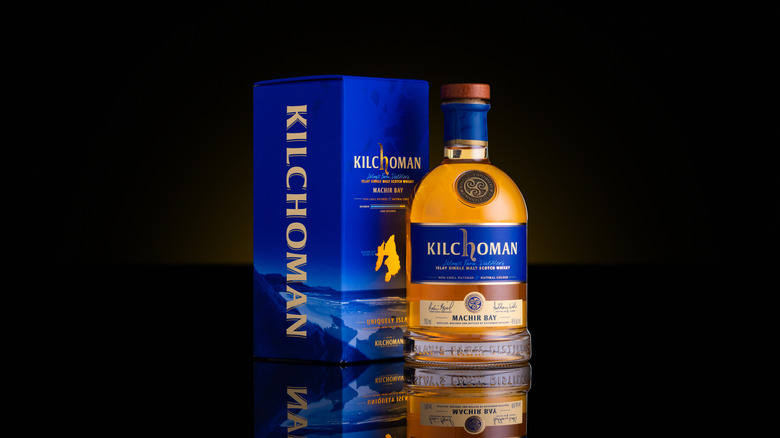
Founded in 2005, Kilchoman stands apart from other Islay distilleries, as it's the only producer on the island that sources all of its barley from its own farm. Machir Bay is named after a beach near the distillery, and it's an expression that reflects Kilchoman's craft-focused approach to whisky making. Matured in both bourbon and sherry casks, Machir Bay presents a delightful combination of flavors that both contrast and complement one another other. This is immediately noticeable on the nose, where an initial hit of earthy tones is quickly followed by more subtle sweet and fruit notes.
As soon as it passes your lips, you'll appreciate the whisky's warmth while sea salt and smoke grab your attention. The sweetness develops into elegant caramel with apples and citrus joining the lively mix. There's a youthful rawness to the whisky that highlights how a lack of aging isn't automatically a bad thing. You aren't getting an overly polished or oak-heavy whisky here. You're getting an example of how a smaller producer can punch above its weight without worrying about how long its whisky has been in the cask.
7. Laphroaig Quarter Cask
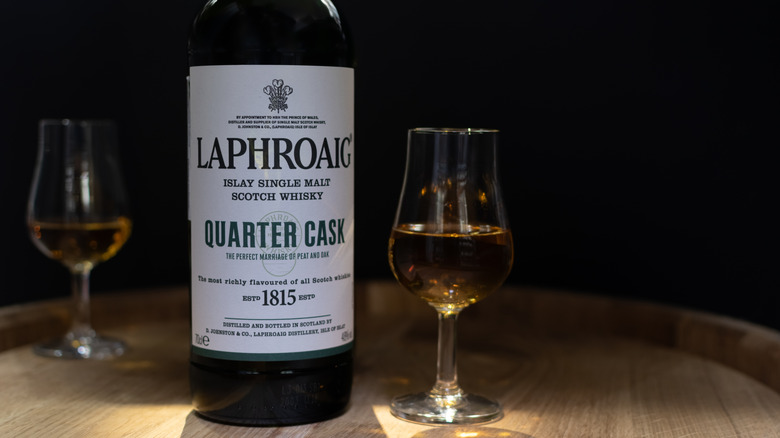
It's unusual to spend this long looking at Islay whisky without mentioning Laphroaig, so here we are. A quarter cask is exactly what it sounds like — it's a smaller whisky barrel, one fourth the size of a regular whisky butt. The smaller size means there's more surface contact between the spirit and the wood, making it possible to achieve a notable oak character sooner than with a larger cask.
The nose is unmistakably Laphroaig, featuring an abundance of peat smoke combined with strong scents of medicinal iodine and seaweed. However, there's still some sweetness underneath with hints of vanilla and coconut. The mouthfeel is rich and slightly oily with smoke, charred wood, spice, and a welcome touch of caramel coming together on the palate. It certainly tastes as though the smaller cask introduces an extra layer of warmth and intensity.
What makes the Quarter Cask particularly interesting is how it balances raw peat power with a more delicate sweetness, meaning it drinks a little bit softer than the signature Laphroaig 10 Year. Whether that's a good or a bad thing comes down to personal preference, but the Quarter Cask expertly demonstrates how an intense whisky can still have its subtle moments.
8. Talisker Storm
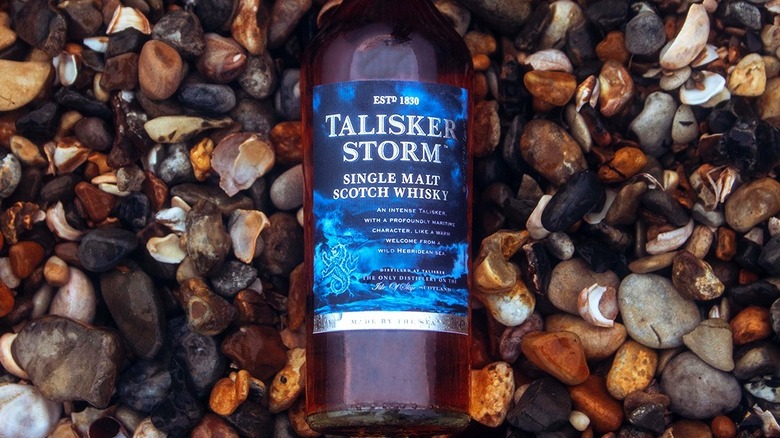
Talisker Storm comes from the Isle of Skye, and it perfectly showcases how Scotch whisky is a product of its environment. You first sense this on the nose, which opens with an aroma of briny sea air. I find that Talisker's salinity is more prominent than many other coastal distilleries, but it's soon accompanied by a touch of pepper and a burst of smoke. There are also some fruit notes present that mellow the experience.
Once you taste the whisky, you'll see why the name "storm" is so fitting. You can picture yourself drinking this on a cold and wet winter's night as the wind howls outside. It has a warmth that radiates to your very core with layers of peat smoke, oak, and spice. Yet there is a wave of sweetness here, too, in the form of salted caramel. It's an untamed whisky that offers a unique and energetic character, and while it's not the most refined whisky in the world, I see that as part of the appeal. It has a raw edge that sometimes you crave as a whisky drinker.
9. Johnnie Walker Gold Label Reserve
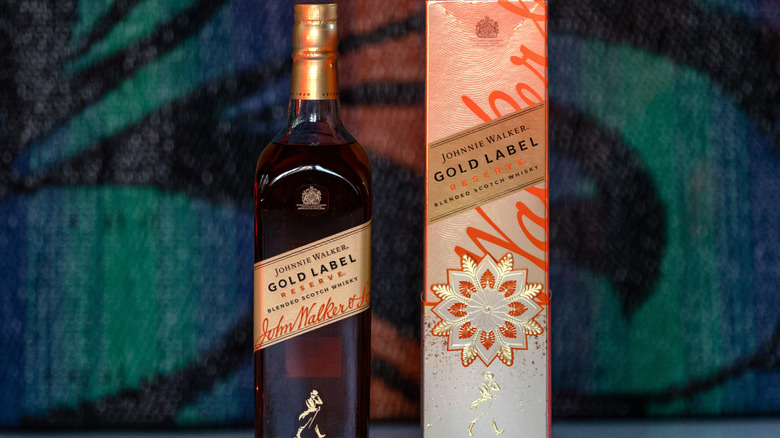
The storm has passed — now it's time appreciate the more elegant side of Scotch once again. Johnnie Walker is unique in offering a range of premium blended NAS whiskies (as opposed to the premium, extra-mature single malts offered by other companies), with the Johnnie Walker Gold Label Reserve perhaps being the best example. It's also important to know what an age statement means for blended whiskies. You have to declare the youngest whisky in the bottle as the age statement, which means that if you blend together a 5-year-old and 18-year-old whisky together, you'd legally have to state it was aged for five years. That perhaps gives some insight into why Johnnie Walker can shy away from using them.
This bottle is built around a mix of blends that all have sweet flavors, especially in the form of honey. That flavor opens on the nose, and you also get a little vanilla, too. Orchard fruits make an appearance, as does a hint of smoke. As you can expect from a premium blended whisky, the mouthfeel is creamy and well rounded. The honey is still there, but toffee and butterscotch give it a delectable mix of sweetness.
They aren't all light notes, however. There is a little spice and a warm smokiness to give it some grounding and depth. It manages to be approachable without being dull. It's far from the boldest whisky here, but it may be the smoothest.
10. Bunnahabhain Stiùireadair

Bunnahabhain Stiùireadair is similar to Bruichladdich's The Classic Laddie in that it's an Islay whisky that doesn't employ peat. Instead, it takes a gentler approach, which includes maturation in sherry casks. This helps to deliver an impressively rich and rounded profile for what we can presume is minimal aging.
Even without the intense smoke aspect, it can't get away from its coastal whisky roots, as a gentle brine runs through the nose and palate. Yet it's accompanied by sweeter aromas, such as apricot and raisins. On tasting, you'll start to enjoy darker notes, such as chocolate and dried fruit, and you'll see why this is one of the most underrated Scotches available right now. There is still a faint hint of smoke, but it's nothing compared to other island whiskies. It's joined by a mild spice that lingers until the pleasingly long finish. Ultimately, it's a very impressive Scotch for under $50.
11. The Glenlivet Founder's Reserve

While The Glenlivet 12-Year is perhaps the ultimate gateway whisky — we've previously called it one of the best bottles under $50 and one of the 12 top Scotches for beginners — the Founder's Reserve is a worthy alternative for those on a tighter budget. Despite lacking an age statement, it still showcases the smoothness expected of The Glenlivet range.
The nose is clean, fresh, and fruity, and you should be able to pick out notes of vanilla, green apple, and pear, and perhaps a dash of citrus. Those orchard fruits remain in the soft palate, along with creamy toffee, gentle oak, and a touch of spice. This isn't a whisky that will challenge your tastebuds, but it's a reliable sipper with wide appeal, and it's remarkably good value for money. The difference between Founder's Reserve and a bottom-shelf blended Scotch is vast, making it an ideal entry point for those who are new to the spirit but still want to drink excellent whisky.
12. Oban Little Bay

While Oban is technically a Highland Scotch, the distillery's location on the west coast of Scotland imbues its whiskies with an undeniable island-whisky feel. There's a clear salinity on the nose, which is joined by soft orchard fruits, honey, and a hint of oak.
All of those notes marry impressively on the palate, with a richness that indicates a reasonable degree of aging, despite the lack of age statement. There's delectable caramel and a touch of clove that provides plenty of warmth. Subtle fruit flavors evolve with each sip, and you should be able to identify specific notes, like orange zest. As with Laphroaig Quarter Cask, Oban Little Bay also spends time aging in smaller barrels. The result is a well-rounded whisky with plenty of depth despite its youth, and a welcomed edge from its coastal environment.
13. The Dalmore Cigar Malt Reserve
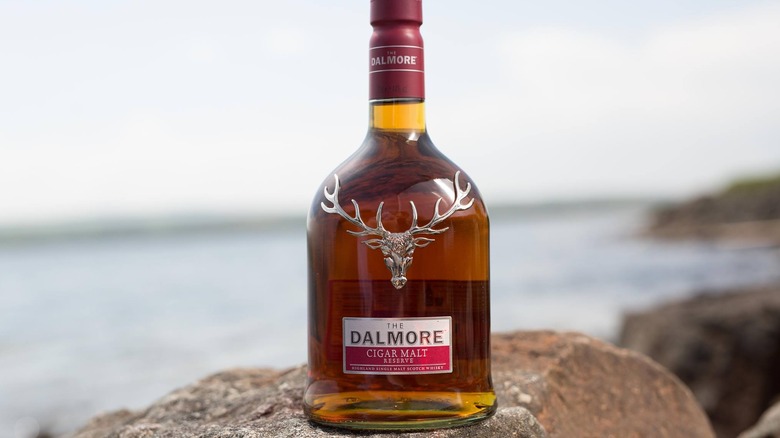
The Dalmore Cigar Malt is a premium NAS Scotch whisky, and as you may well have guessed, it was purposely built to be enjoyed with cigars. However, you certainly don't need to be a smoker to enjoy it — you just need an appreciation for rich, full-bodied, flavorful whisky.
The whisky's complexity is partly thanks to its maturation in an interesting mix of barrels. It's aged in a combination of American white oak ex-bourbon casks, oloroso sherry casks, and cabernet sauvignon wine barriques, providing both notable depth and approachable sweetness. On the nose, you'll find dark fruits, toffee, warming spices, and a hint of orange zest. The palate is both dense and indulgent, reminiscent of a fine cognac with its notes of raisins, dark chocolate, and cinnamon. They sit on a velvety texture which carries them though a long and satisfying finish. For those who enjoy heavier drams and stronger flavors, this is a standout NAS Scotch.
14. Compass Box Hedonism
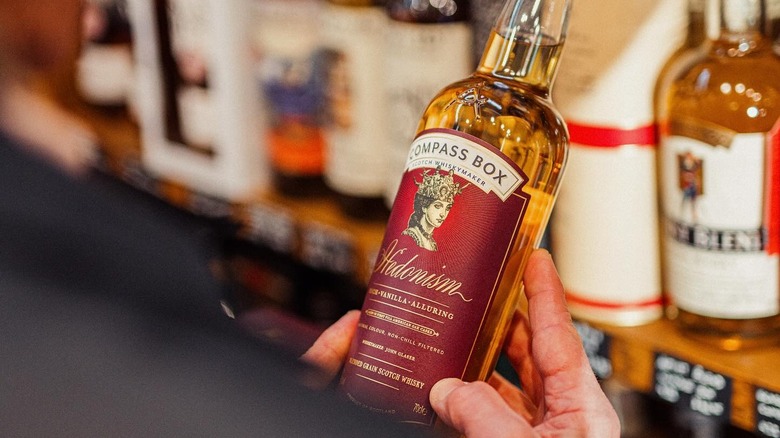
Compass Box Hedonism stands out from the rest of the Scotches we've looked at, as it's a blended grain whisky. Grain whisky is often looked down upon, as it's seen as mass-produced and cheap to make, with lower quality ingredients. When you add that to the lack of an age statement, I wouldn't be surprised if some casual fans instantly dismiss this Scotch, but that would be a big mistake.
Made from high-quality grain, it has an interesting collection of tasting notes. They burst to life on the nose in the form of creamy vanilla and coconut, along with some sweet toffee and pastry. The first thing you'll notice sipping Hedonism is the luxurious mouthfeel. It delivers notes of caramel, white chocolate, and gentle spice, and while there's a light oak backbone, this isn't an earthy or woody whisky. Instead, it's a gentle dram that allows its dessert-like sweetness to shine. Grain whiskies and NAS expressions are often overlooked, but Compass Box shows just how refined they can be.
15. The Ardmore Legacy
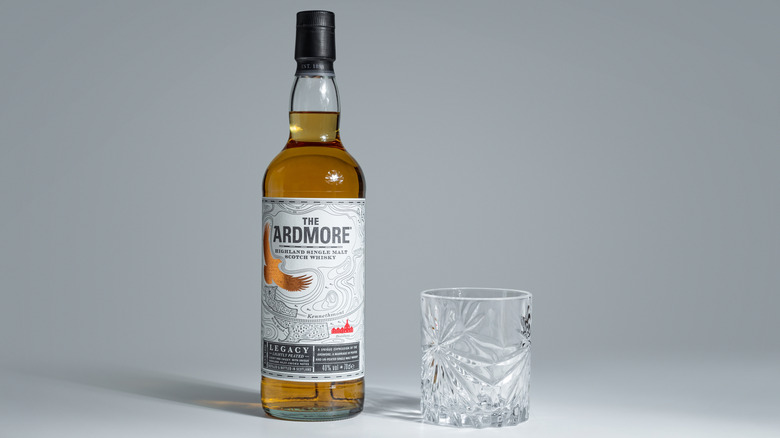
Our NAS whisky journey ends with The Ardmore Legacy — an approachable, affordable Scotch that I often pick up as a reliable everyday sipper. This is one of several Highland whiskies that use peat to deepen the tasting experience, but in a way that is not as intense as some of the other Islay whiskies we've looked at here. That means it's only lightly peated, making it an ideal starting point for anyone interested in a Scotch that has a little smoke without being overwhelming.
The nose opens with soft smoke, sticky honey, and light citrus. On the palate, that sweetness is led by vanilla and a touch of caramel. Meanwhile, mild peat and subtle spice create an earthy foundation that supports the lighter flavors without dominating them. It's not a whisky that's trying to be complex or intense. Instead, it excels as an impressively balanced single malt that makes peat more accessible and offers considerable value for money. As with all of the whiskies mentioned above, Legacy doesn't need an age statement to justify itself.