

15 Herbs And Spices You Need For Cooking Middle Eastern Food
We may receive a commission on purchases made from links.
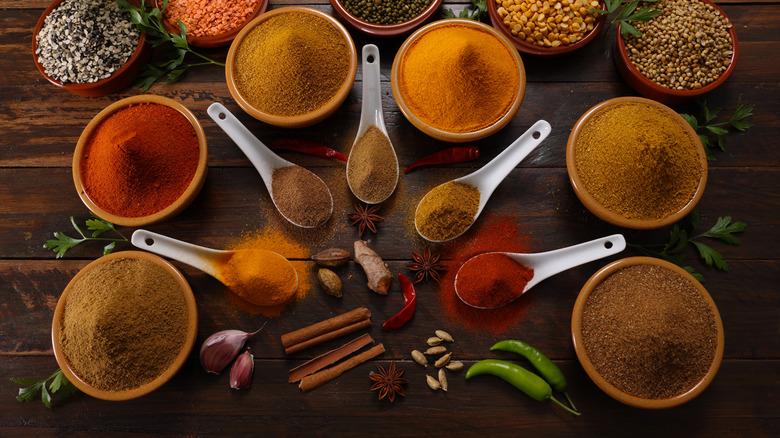
When one thinks of spice-forward cuisines, Middle Eastern food may come to mind. Middle Eastern and North African cuisine is specifically known for its use of spices like cumin, cinnamon, saffron, and nutmeg, and blends like baharat and ras el hanout. It may also be surprising to folks who are unfamiliar with the cuisine that herbs are unsung supporting actors and play a big role in developing fragrances and flavors. As an Egyptian recipe developer and food writer, I've grown up with these herbs and spices, and my pantry is packed full of every Middle Eastern flavor ingredient you can think of.
Having an intimate knowledge and know-how of how to use these herbs and spices is something I consider to be a gift, as it makes cooking so much more interesting. Having a pantry full of aromatic spices and herbs can make you not only a better cook, but it also allows your mind to travel while making dinner in your kitchen. It may be intimidating figuring out where to start, but there is so much fun to be had along the journey. One way to learn is to just throw yourself in, experiment, and taste along the way. Whether you're looking to build your pantry from scratch or just thinking of what may be missing, here are some of the herbs and spices you need for cooking Middle Eastern food.
1. Cumin
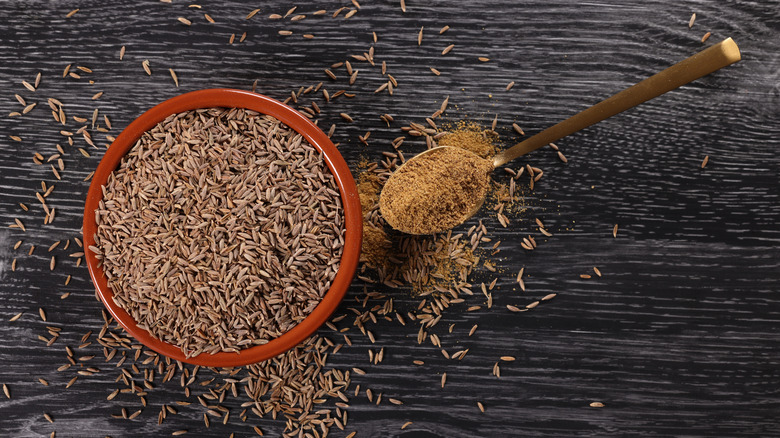
If I had to (very reluctantly) choose only one spice to own for cooking Middle Eastern cuisine, it would be cumin. Cumin is the backbone spice of so many blends and is heavily used even on its own in all kinds of dishes. It's very important in meat and chicken dishes and is almost essential for cooking fish. It's also common in many vegetarian dishes like falafel and is often used as a topping for hummus, tahini, and other dips. I remember my family even using it when cooking dishes from other cuisines, like spaghetti Bolognese or fish and chips. A grilled steak would never be served with just salt and pepper in my household, but with a pinch of cumin too.
Cumin is a fragrant spice and can be used in both the whole seed form or ground. The ground form is often used generously, so you'll want to grind the whole seeds yourself or pick some of it up at the store. Then, give this baked falafel salad recipe a try to get you started.
2. Sumac
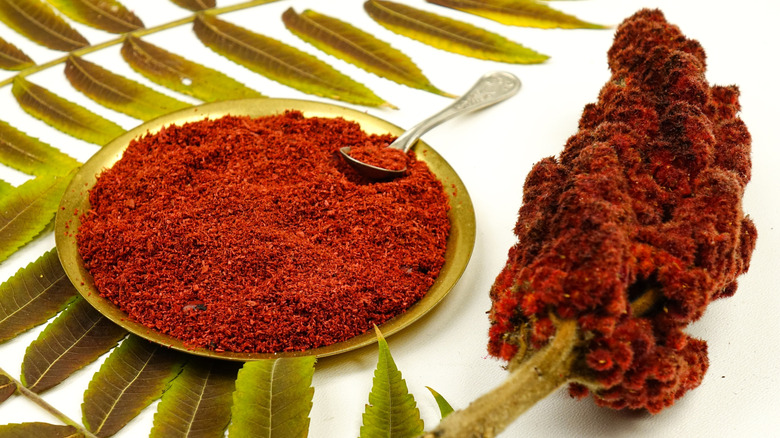
Sumac is a lesser known spice that, in my opinion, should be in every pantry. It can instantly elevate any meal. It's made from the dried berries from the Rhus coriaria shrub and has a bold tartness that surprises the taste buds. Not to mention, its beautiful crimson color looks impressive on the plate. You may have already unknowingly had some if you've ever ordered a kebab at a Turkish restaurant, as it's tossed all over the signature onion and parsley salad that's customarily served with kebabs.
Sumac is popular in Iranian, Turkish, and Middle Eastern cuisines and is used to brighten the flavor of dishes, similar to how lemon juice is often used. You can sprinkle it on a crisp green salad or on some grilled lamb to cut through the richness. I like to make a delicious marinade for chicken by combining sumac with yogurt. You can also try it in an iconic dish called musakhan, a Palestinian roast chicken dish served with flatbread. You'll be running to buy more sumac immediately after.
3. Za'atar
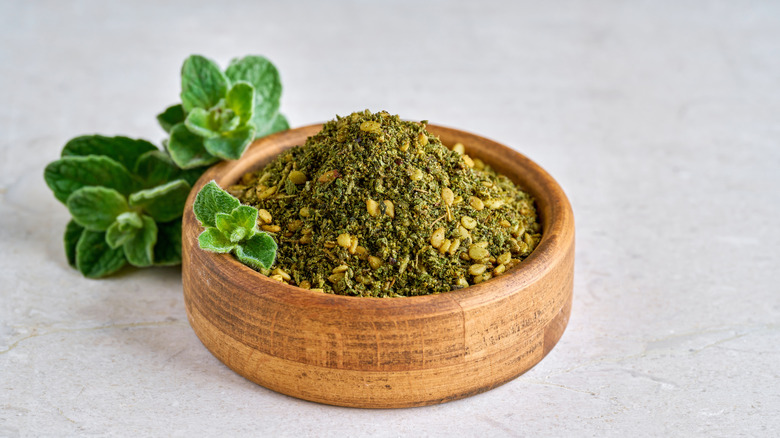
Za'atar has become quite popular on restaurant menus and delis within the past decade. This herb and spice blend hails from the Levant and is made with herbs like wild thyme (which locally goes by the same name), sesame seeds, salt, and sometimes sumac. While it may sound pretty simple, it's immensely flavorful and even has a delicate, crunchy texture because of the sesame seeds. It can certainly be used as a seasoning ingredient, but in the place it originates from, it's the central ingredient of a whole meal. Za'atar is often the main event, and in my home, it was frequently served in the middle of the table. Everyone dips some freshly baked bread in some olive oil and then za'atar. This spice blend is incredibly satisfying when served this way, and it's commonly eaten for breakfast, as a snack, or in a light meal.
Za'atar is also mixed with olive oil to form a paste that can be spread onto flatbreads and turned into manakish. They can also be topped with cheese and other toppings to make delicious little pizza-like flatbreads. I also love sprinkling za'atar on my eggs or with some feta to make it extra tasty. It's also delicious in a yogurt dip or used as a seasoning for roast chicken. The possibilities are endless. You can find za'atar at any Middle Eastern grocery store, but if not, you can also make a homemade za'atar blend.
4. Baharat
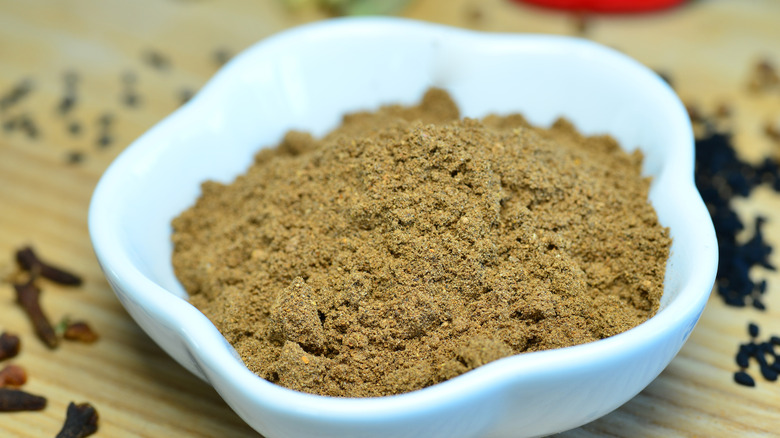
Baharat, also known as Lebanese seven spice, is a rich blend of spices used extensively in Middle Eastern cuisine. While not every blend is made with the exact spices, or even made with exactly seven spices, you'll usually find things like cumin, cinnamon, coriander, black pepper, paprika, cardamom, and cayenne pepper in it. Some blends also include cloves, nutmeg, turmeric, and more. It makes for a flavorful dry rub on its own for roasts and grilled meats, or you can mix it into a marinade. It's really useful for making some homemade shawarma. Once you get your hands on baharat or make your own blend, you'll be well on your way to making great Middle Eastern-inspired dishes. Seeing as it's a kind of all-purpose blend, it can be a great entry into this regional cuisine.
Usually people aren't shy about adding spice to Middle Eastern foods, but it's best to start with a little here and taste as you go. You can always add more if you like. Plus, you don't have to only cook Middle Eastern recipes with it; you can simply introduce it to the things you already like to cook. For example, give brisket a rich and earthy vibe with some baharat.
5. Cardamom
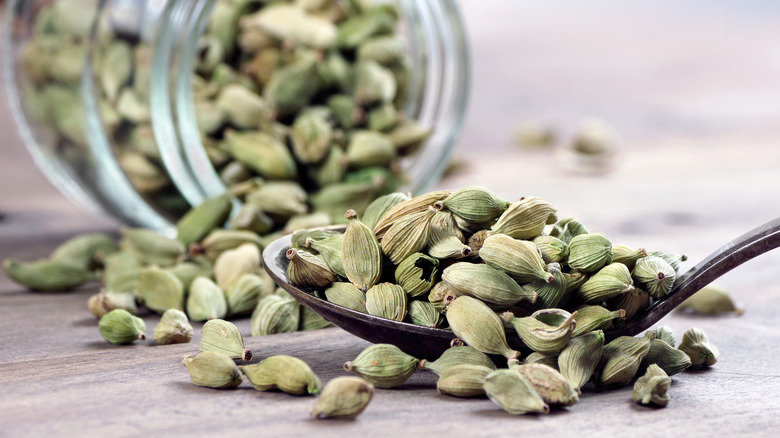
Cardamom is another commonly used spice in Middle Eastern cuisine. It has many uses and can be added to recipes in both the whole and ground form. It's also not just limited to foods; cardamom is a key ingredient in making tea and Arabic coffee (also called Turkish coffee). Coffee and cardamom are brewed together, and since the spice is believed to aid in digestion, it makes for the perfect drink for after eating. It's also a key ingredient in karak tea, a creamy cardamom-scented black tea, which is the Arab Peninsula's take on India's masala chai.
Growing up, one of the main ways I learned to use cardamom was in making broth or stock for soups, stews, and rice dishes. Whole cardamom pods were often added to chicken or beef stock to remove any undesirable aromas. I think everybody with Middle Eastern heritage has the unfortunate experience of biting into a whole cardamom pod while eating, which I don't recommend because it's incredibly potent. Make sure to fish out the pods before eating and keep count of how many you threw in so that you can get them all. Cardamom is also used in desserts of all kinds, like halva, baklava, and rice pudding, so it truly is an essential spice to keep for Middle Eastern cooking.
6. Dukkah
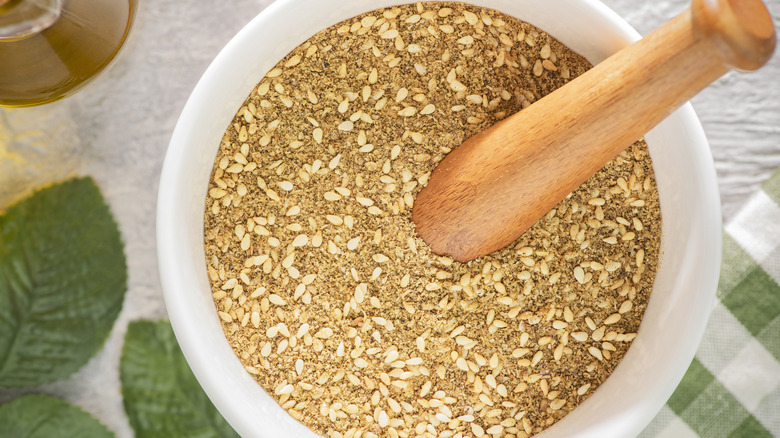
Dukkah is a nut and spice sprinkle that I grew up with. I would look forward to having it as a snack with some bread after coming home from school. Dukkah is an Egyptian seasoning blend usually made with cumin, coriander, salt, and sometimes chili powder. It also includes sesame seeds and different types of nuts like almonds, peanuts, pistachios, and more. While it's got a strong cumin and coriander flavor, the inclusion of crushed nuts and sesame seeds gave it a whole different dimension, making it more nutty and textural. The nuts and seeds made it more filling and often kept me satiated until dinner time.
Other than dipping bread into it, dukkah can be used for cooking. It's a delight when used as a crust for baked salmon or a rack of lamb. It's also great on fried eggs or added to a salad of any kind. Throw some on some honey-roasted carrots or lemon-garlic broccoli to take these veggies to the next level.
If you can't find a good dukkah blend, it is incredibly easy to make yourself. Simply throw your spices and nuts of choice into a food processor and blend until it reaches your desired consistency. Throw in some sesame seeds and you've got yourself some delicious, homemade dukkah.
7. Ras el hanout
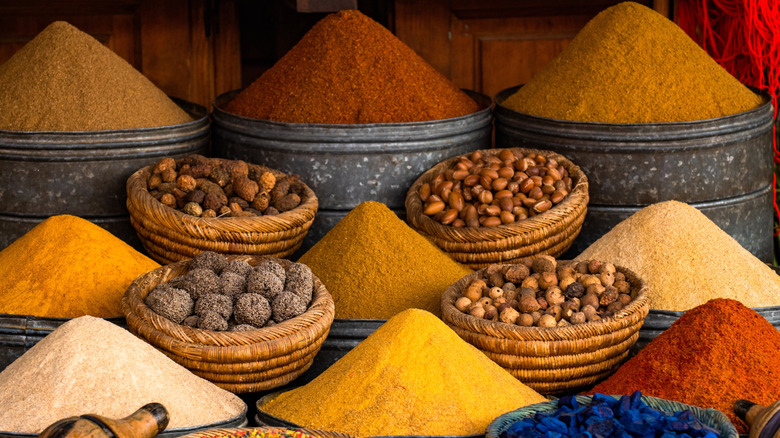
If you're familiar with Moroccan cuisine, then you're likely no stranger to ras el hanout. It originated in North African countries like Morocco, Algeria, and Tunisia and is another all-purpose seasoning blend. Its name, directly translated, means "head of the shop," referring to the idea that it's the best of what the spice shop owner or merchant has to offer. Every blend is slightly different, but it often includes spices like black pepper, cinnamon, turmeric, ginger, cumin, coriander, nutmeg, allspice, cloves, and more. It's warming, fragrant, and sometimes even floral, with the inclusion of rose buds.
Ras el hanout is commonly used in tagine and couscous and is delicious paired with any type of meat stew you're making. It's also great on baked fish and roasted veggies. I love mixing some into marinades, salad dressings, and various dips. It's a very versatile ingredient, and it will enrich your cooking exponentially. Ask around at any North African or Middle Eastern specialty food store to find a good ras el hanout blend.
8. Mint
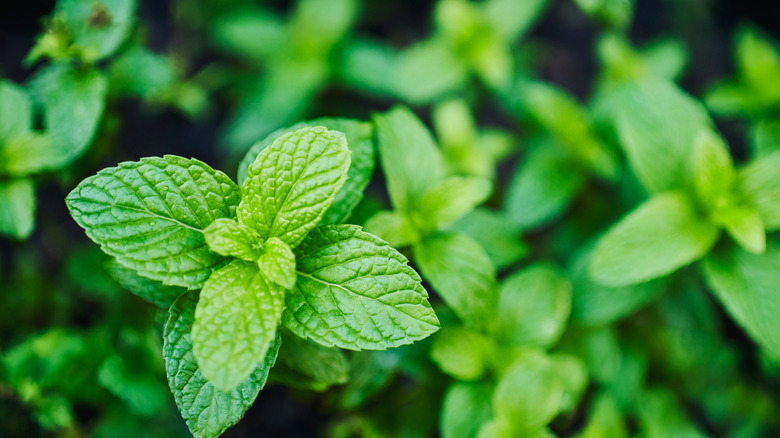
A Middle Eastern feast isn't complete without some hot mint tea being served afterwards. Whether you're in Morocco, Egypt, Lebanon, or Turkey, you'll find that the beverage is commonly consumed after lunch or dinner alongside coffee. Mint is used in both dried and fresh form in many ways in Middle Eastern cooking and is a versatile ingredient. From what I've witnessed both in my household and in various Middle Eastern countries, fresh mint is added to salads, marinades, and syrups, while dried mint is used in flatbreads, eggs, yogurt, grilled meats, and soups.
Dried mint offers a totally different experience than fresh mint, as I find it to be a little more woody and earthy. It still has a cooling effect when added to hot foods, but it is a little more mellow than fresh mint. One of my favorite combinations is feta and dried mint. The earthy herb balances the saltiness of the cheese beautifully. You can also make a whipped feta dip by blending up some feta with yogurt, drizzling in some olive oil, and topping it with salt and dried mint. You'll want to dip everything in it, from breadsticks and carrots to crackers.
9. Loomi
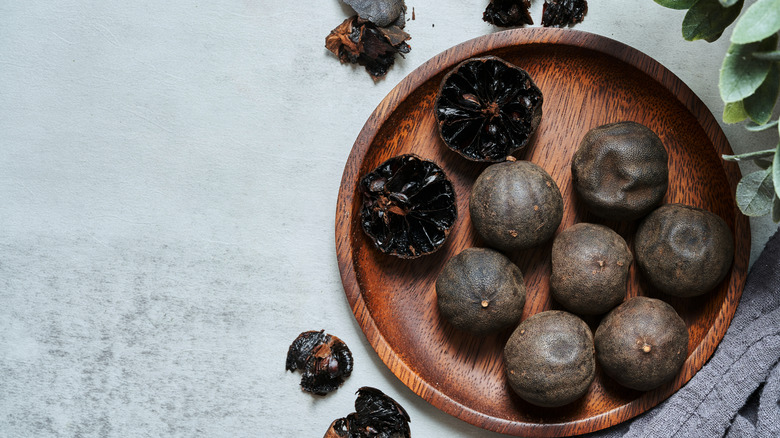
Loomi is a lesser-known Middle Eastern ingredient, unless you know your way around Persian cooking. Loomi, also called limu omani, Omani limes, Persian limes, or black limes, are dried limes that are used to perfume dishes like rice, stews, and even tea. They have a more complex aroma and flavor than you would imagine a dried lime would have. While there is the deeply sour element you might expect, there is also a robust tanginess and slightly smoky, musky aroma, too. In my opinion, they're similar to bay leaves in the sense that you may not be able to exactly put your finger on the flavor while eating, but you'll definitely miss them if they are absent.
You may be wondering what to use loomi for — and there are countless options. Basically anything that will be cooked in a liquid, like soups, tagines, stews, and braises, can benefit from loomi. This applies to meat and vegetable stews as well as rice pilaf. Loomi may also be exactly what your soup is missing, as it'll add a deep citrusy note. You can use them whole, grind them into a powder, and add them like a spice. You can find loomi at a Persian or Middle Eastern grocery or get some from brands like Slofoodgroup online.
10. Cilantro
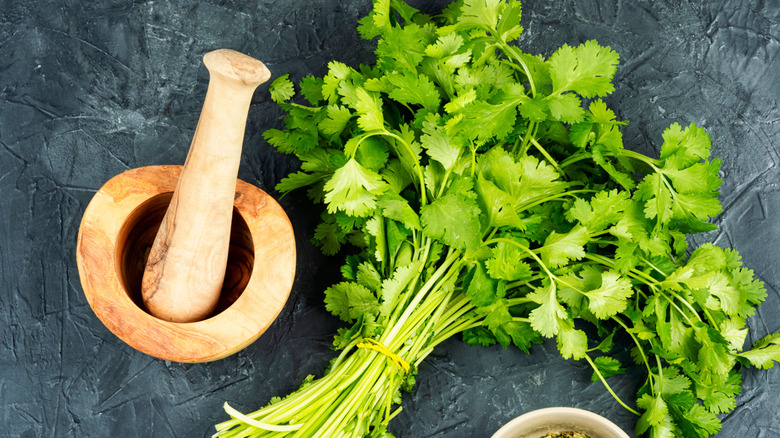
Cilantro is a fresh herb used extensively in Middle Eastern cooking. You'll find cilantro in cold dishes like salads, dips, sandwiches, and salsas, as well as cooked ones like soups, stews, and kebabs. Cilantro leaves are blended into ground meat to make kofta, which is popular across the Middle East. Unfortunately for some people who have a specific gene, cilantro can taste like soap. Middle Eastern cooking may be a challenge for these folks, as it's a region with some very cilantro-heavy recipes. In that case, you can use parsley instead, which won't taste exactly the same, but at least you will have a similar fresh, herbaceous element in your meal.
In my background of Egyptian cooking especially, cilantro is used in larger volumes than you might expect. I've always got a large bunch of cilantro in the fridge, and usually I use it all before it can even begin to wilt. I mainly use it when blending up a falafel mixture, as it makes it green and fresh tasting. I also add it into a tomato and cucumber salad that goes well with any main dish.
11. Nutmeg
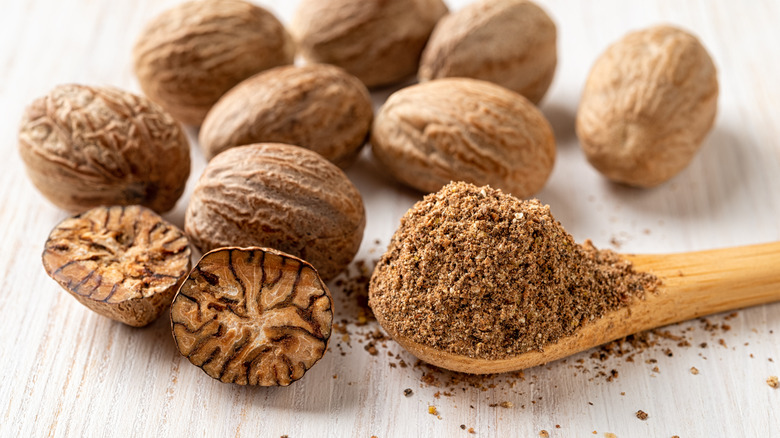
Nutmeg is a potent spice that's usually only used in small amounts. Although it's used in cuisines around the world, in the Middle East, you'll find it used for sweet and savory recipes. It's added to béchamel, which is pretty common in various Middle Eastern dishes, and it's often used in meat dishes. Whether it's lamb, chicken, goat, or beef, it also helps mask unpleasant aromas and enhance the flavor. As a spice, it's often mixed into blends like the ones previously mentioned, including ras el hanout and baharat.
While most spices are used generously in Middle Eastern cooking, always use just a pinch when you're cooking with nutmeg, as too much can make you feel weird or even high. In my experience, nutmeg adds a delicious, faint earthy sweetness to savory dishes.
12. Cinnamon
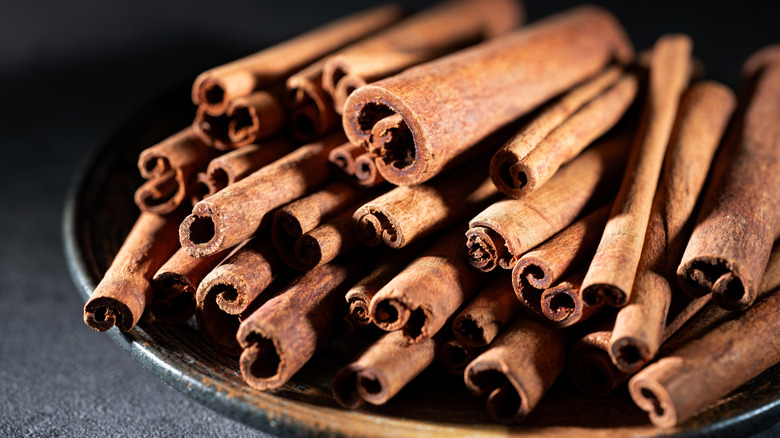
Cinnamon is a spice that's more associated with sweet foods and drinks around the world, like apple pie, hot chocolate, and cookies, but in Middle Eastern cooking, it's used a lot in savory dishes, like Moroccan lamb tagine and Lebanese meat pie. Like nutmeg, cinnamon adds a pleasant sweetness to meat dishes and is included in popular spice blends, too. A stick or two of cinnamon is also commonly added to pilaf rice dishes like Saudi Arabia's kabsa or Jordanian mansaf.
Cinnamon is a spice you likely already have in your pantry, but using it in your savory cooking might help you see it in a new light. Don't worry if it's ground cinnamon or whole cinnamon sticks; either works in most recipes. Try your hand at this succulent lamb tagine with dates and almonds recipe and let your cinnamon shine.
13. Aleppo pepper
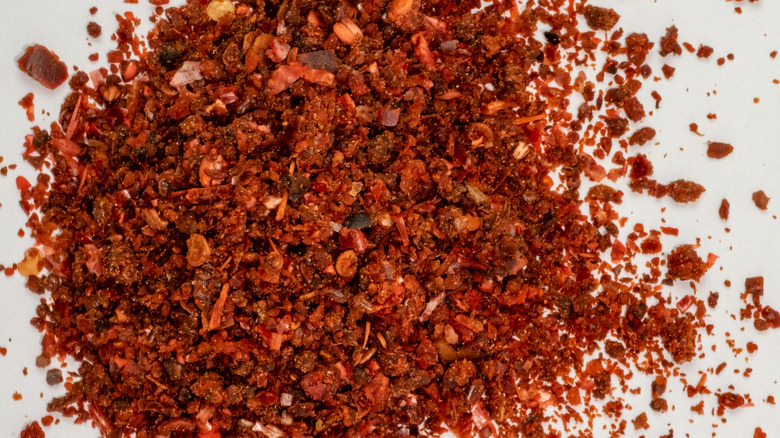
While chile peppers and powders of all kinds are popular all over North Africa and the Middle East, Aleppo pepper has a distinct flavor that you will want to try in your own cooking. Aleppo pepper has many of the same qualities as chile flakes, but with a bit more flavor and less heat. Aleppo pepper is generally milder in terms of spice, but it has a robust chile flavor. This makes it perfect for people who can't tolerate really spicy chiles but still want a mild heat.
I know Aleppo pepper in Arabic as "filfil halaby," and it originates from the Syrian city with the same name. With its fruity and savory notes, it's delicious on meats, dips, sauces, and more. If you're not sure where to start, a roasted red pepper dip called muhammara is a tasty way to go. Start with just a little and add more to build the flavor and heat.
14. Parsley
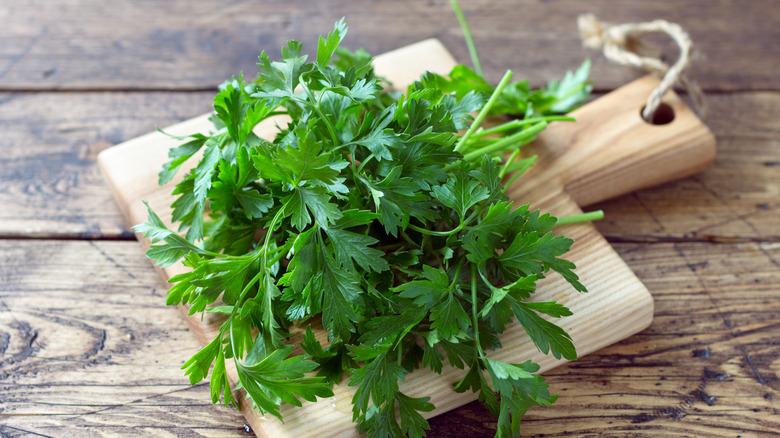
Like cilantro, parsley is a fresh herb that's used extensively in Middle Eastern cuisine. Its strong grassy, herbaceousness makes it super popular on kebabs and in salads and sandwiches. It's the main flavor ingredient in tabbouleh – which is essentially a parsley salad with a bit of bulgur wheat. Parsley is also added to kofta, kebabs, and falafel after it's either ground with a food processor or chopped by hand.
If you have a bunch of parsley that you need to use, you can also blitz up some chermoula, Morocco's take on salsa. Although it's completely customizable, I like to make mine with parsley, fresh chile, ground cumin, and some lemon juice and zest. This turns it into a tangy, zesty, and spicy dressing for salad, a veggie pita, or on some baked fish.
15. Saffron
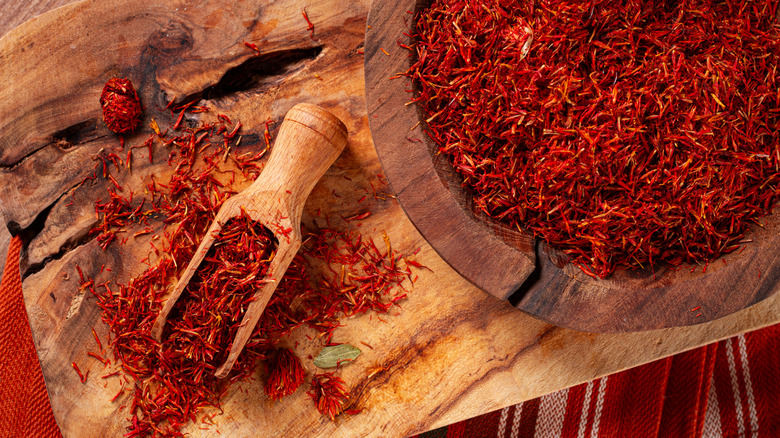
Saffron, known as the world's most expensive spice, is another staple in Middle Eastern cooking. It's a significant spice in Iranian cuisine, which uses it in both savory and sweet ways. This delicate spice gives anything it's added to a gorgeous golden hue and a subtle floral fragrance. Given that it's expensive, you want to use it in special dishes like Persian tahdig. This signature rice dish is baked with a crispy, saffron-yellow top layer. In my experience, it requires some know-how to get the technique right, but the result is well worth the effort.
In Persian cuisine, a bright yellow ice cream called bastani is another incredibly popular way to use saffron. Saffron and rose water make for a floral, creamy ice cream that's often topped with pistachios. If you've got a sweet tooth, I can't think of any other way to use saffron.