

9 Frozen Foods That Replace Fresh Ingredients Without Ruining The Dish
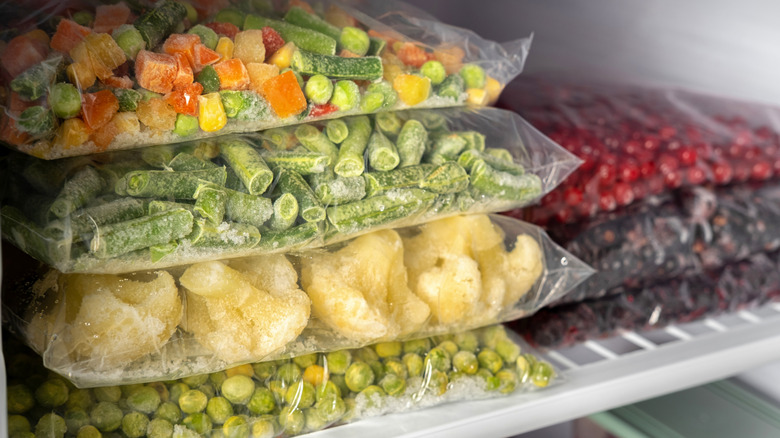
When you see a supermarket truck rolling down the highway, there's a good chance that its exterior is decorated with images of perfectly symmetrical apples, plump peaches, vibrant corn on the cob, and tomatoes fresh off the vine. Less often, you'll see images of frozen produce, and it's no wonder why frozen food isn't considered all that sexy. But did you know that frozen fruits and veggies are sometimes more nutritious than their fresh counterparts? Or that some recipes actually work better with frozen produce? Not to mention, frozen produce is typically more affordable than fresh. And if you have a garden or live in an agriculturally abundant area, you might spend the better part of each summer freezing superfluous produce anyways.
Nonetheless, some fruits and veggies freeze better than others. For instance, many people believe that the convenience of frozen green beans doesn't make up for their finicky texture and flavor. Having cooked in a bed and breakfast and tended to a flourishing garden for many seasons, I know what freezes well and what doesn't. More importantly, I know the dishes in which frozen produce actually shines.
In this article, I'll introduce you to a handful of the foods that commonly fill my freezer. I'll also share a few tips for how to freeze produce for added convenience. One final note before we dive in: The quality of frozen produce varies drastically by brand, so try a few products before casting judgement.
Berries
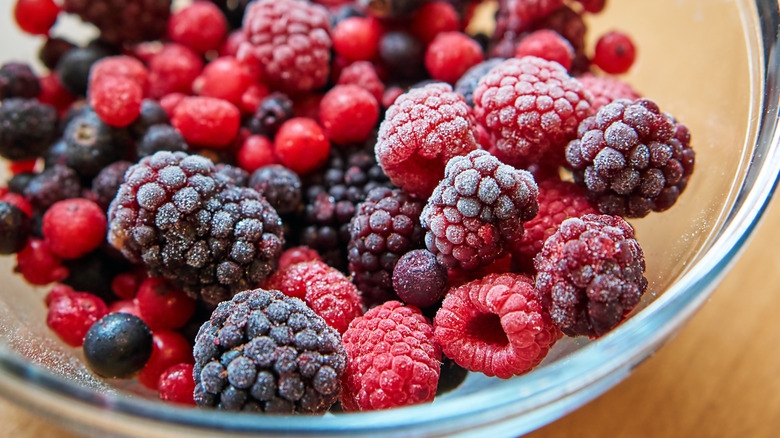
Imagine getting home from the grocery store and opening a carton of raspberries, excited to make that parfait you've been craving all day. Only, you find that half of them are coated in white mold. There's no need to worry about berries decomposing when they're frozen, though. We've successfully stored berries in our deep freezer for a few years after picking them, though I'd recommend trying to finish them within a year for optimal flavor.
Huckleberries, boysenberries, strawberries, blueberries, mulberries, blackberries, raspberries, and lingonberries are all commonly frozen. Of course, it goes without saying that frozen berries are ideal for smoothies, but you can also turn them into a jammy breakfast topping. You can concoct a compote in mere minutes, and indeed, I find frozen berries to be preferable here because they release their juices more quickly than fresh ones (no need to defrost them). Similarly, I've been delighted with strawberry jam made from frozen berries.
I like to use frozen berries when preparing baked goods, too, but again, don't be tempted to defrost them. Otherwise, a handful of blueberries can cast a blue hue over your entire batch of muffins! I also suggest adding frozen berries to overnight oats, ice cream, and simmering pots of simple syrup. Room temperature recipes are less amenable to frozen berries, so avoid using them in fruit salads or atop cakes. As they thaw, their juices will make a mess and wreak havoc on such dishes' texture.
Cauliflower
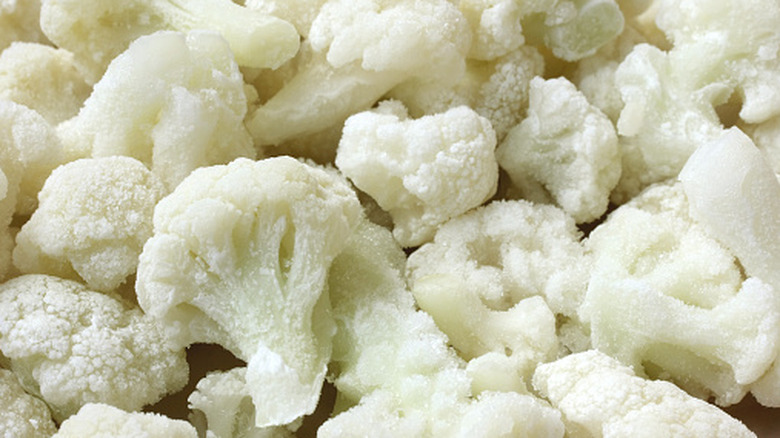
Cauliflower and broccoli may frequently be interchangeable, but they don't hold the same value once frozen. I find that frozen broccoli becomes too droopy when defrosted, even when thrown into a stir fry. Those little flower buds that make up each floret can disintegrate, permeating dishes with a subtle, but off-putting mushiness. Besides, broccoli is just not versatile enough to deserve space in my freezer. Frozen cauliflower, on the other hand, works wonders in a plethora of recipes and scores high marks on the textural front. Cauliflower is a rather bland vegetable to begin with, so I don't notice much of a difference in flavor between fresh and frozen, either.
Though I've successfully added frozen cauliflower to stir fries and sheet pan dinners, the majority of my freezer stock is used for something else entirely: It might come as a surprise, but you can bulk up smoothies with this nearly-tasteless vegetable. This technique became a fad when wellness influencers were initially on the rise in 2017, but I've tried it, and it works. I blanch cauliflower before freezing it, then use it in both smoothies and smoothie bowls for extra thickness and nutrition. It's a trick that companies like Daily Harvest have caught on to, as well. For the same reasons why cauliflower shines in smoothies, it also excels in soups, where it adds creaminess without detracting from the flavors of other ingredients.
Peas
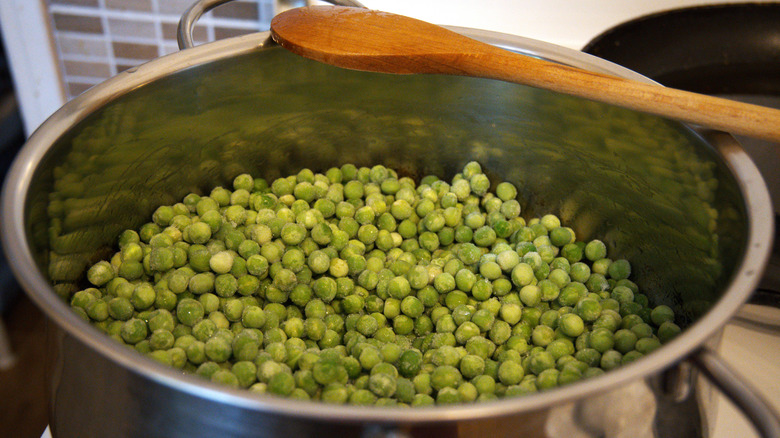
I live much of each year in India, and I admit it: Before spending time in this agriculturally abundant nation, I didn't give much thought to where frozen peas come from. As it turns out, fresh peas are sold in bulk at farmers markets and grocery stores each spring in the U.S., too, but it's not often that I add them to my cart. After spending hours shelling fresh peas in India, I'm not incentivized to do the same when frozen peas are available.
There's another reason, aside from convenience and the need to ice bruises, to have frozen peas on hand: Bobby Flay typically picks frozen peas over fresh, citing them as sweeter due to fresh peas' propensity to become starchy the longer they sit. Recently, I grew peas in our garden and was impressed with their texture and flavor, particularly in salads. But if I can't pick and eat peas on the same day, I'll use frozen ones in hot dishes like fried rice, matar paneer, risotto, pasta, pot pie, and soup. For a quick snack, I sauté them in butter, salt, and pepper (boiled peas have always made me gag).
Frozen peas are readily available at the grocery store, but freezing them from your garden is also a breeze. Shell, blanch, and dry the peas before adding them to a Ziploc bag. As long as the peas are dry, they'll break apart relatively easily when frozen, reducing the need to pre-portion them.
Spinach
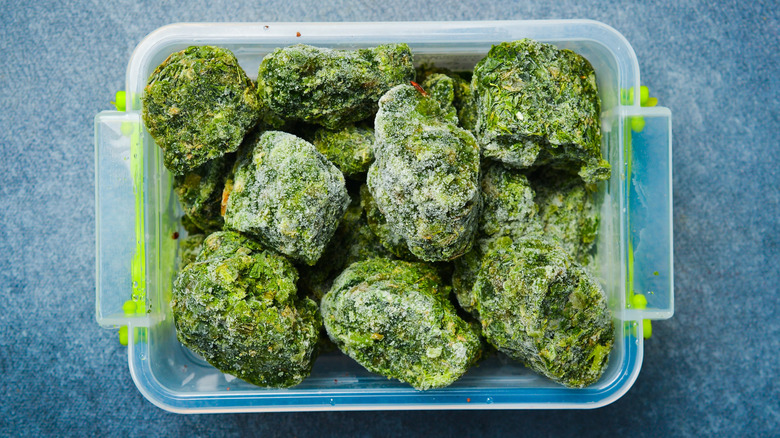
I like buying fresh spinach from Costco, where its price-per-ounce is superior to that offered at standard grocery stores. However, depending on what the menu looks like each week, it can be a struggle to finish a bulk carton of spinach before it inevitably turns slimy. We've tried all the tricks, including layering each container with multiple paper towels, but the fact remains: Spinach does not age well.
Frozen spinach circumvents that issue, and I've used it in dishes like soup, casserole, and spinach borek. Certainly, there are many creative uses for frozen spinach, ranging from scones to French toast to smoothies. No, these dishes won't be quite as spectacular when made with frozen spinach as opposed to fresh, but I like not having to contend with the guilt of wasting food. Not to mention, frozen spinach is extremely convenient; you don't have to de-stem or chop it, and in many cases, you don't even have to defrost it. Plus, when compared to canned spinach, frozen spinach lends a far superior flavor.
If you're freezing spinach from your garden — or desperately freezing the contents of a store bought package before they become slimy — I recommend de-stemming, blanching, and drying the leaves before adding them to muffin or ice cube trays. Pop these trays into the freezer, then wait a few hours. Once the pucks have frozen, toss them into a freezer bag for long-term storage.
Edamame
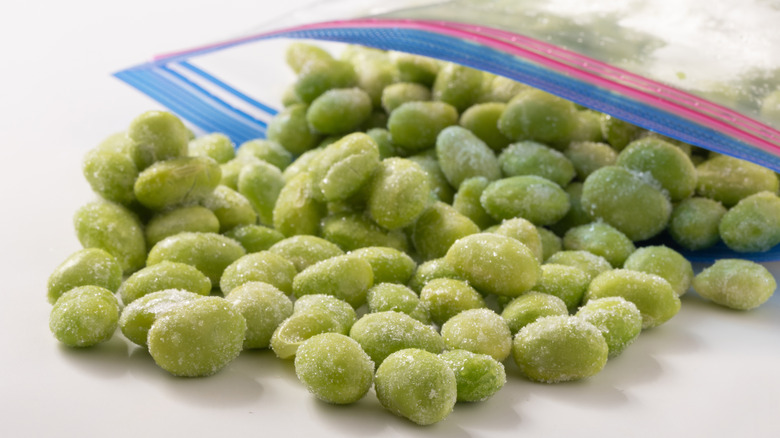
Speaking from experience, freezing edamame is a great way to use up a crop run wild. One summer, we grew a handful of edamame plants and harvested enough to last us a whole year. You can blanch and freeze whole edamame pods — ideal if you like to salt and savor the pods as a snack — or you can shell the edamame first before blanching it — ideal if you plan to incorporate it into other recipes. In either case, make sure to dry the edamame before sticking it in the freezer, lest you end up with inseparable blocks. Both edamame pods and shelled edamame are commercially available at grocery stores, too.
Frozen, shelled edamame can bulk up vegetarian pho, and it also makes for a tasty, protein-rich addition to soups and lentil stews. In such dishes, there's no need to defrost the edamame, as long as it has adequate time to cook in water or broth (three to five minutes will do the trick). On the other hand, if the edamame is flying solo as a snack, then boil, steam, or microwave it from frozen before adding seasonings as desired. Defrosted, shelled edamame even has enough integrity and durability to hold up reasonably well in salad, setting it apart from other frozen produce members that display a propensity toward mushiness.
Carrots
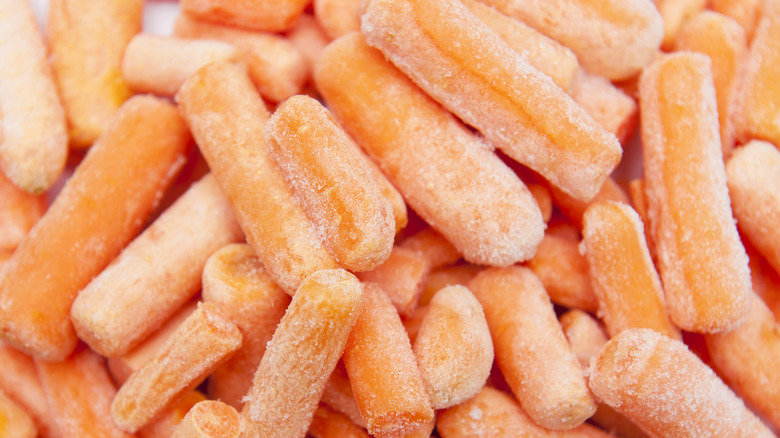
There's a reason why bags of frozen mixed vegetables — including the standard Normandy blend — usually contain carrots: They freeze extraordinarily well. Admittedly, defrosted carrots don't scream "rabbit food;" they aren't crunchy, crisp, or stable enough to be dipped into hummus or ranch, so they'll need to be combined with other ingredients in order to shine. Frozen carrots are commonly used in stir fries, and indeed, I would happily throw them into any sauté alongside oil and spices. When properly seasoned, the difference in flavor between fresh and frozen carrot becomes harder to distinguish. The same holds true in soups and casseroles.
Another option is to shred carrots before freezing them. I'm a fan of pre-portioning shredded carrots so that when I need to make a quick batch of carrot muffins for my toddler — or when my husband requests carrot cake — I can whip up recipes in a jiffy. Shredded carrot is similarly delicious in quiche, egg muffins, and gajar ka halwa, one of my favorite Indian desserts. I've even made carrot cake-inspired overnight oats with shredded carrots. Depending on the recipe, you may need to thoroughly defrost, drain, and dry frozen carrots to account for moisture disparities. Want to use frozen carrots straight from the freezer? Use them to add unexpected sweetness to your smoothies; try hiding frozen carrots in tropical smoothies alongside fruits like pineapple and mango for a boost of nutrition.
Summer squash
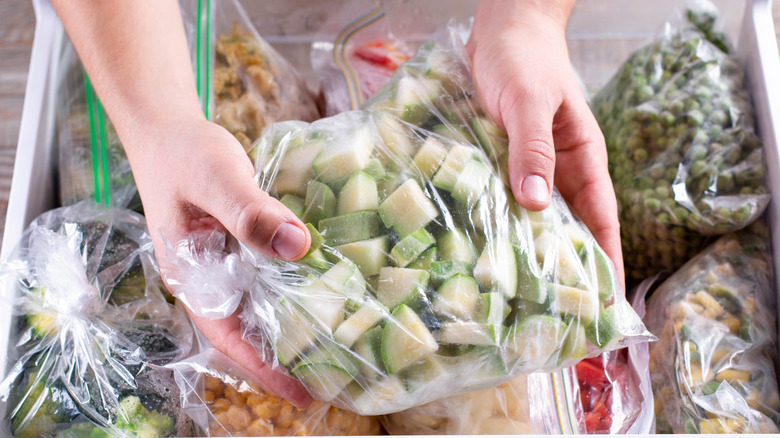
There are a few different techniques at your disposal for freezing summer squash, just like there are when freezing other summer fruits and vegetables. The first question you should ask yourself is how you plan to use the squash. If you frequently make stir fries or chunky soups, then you should cut, blanch, dry, and freeze your squash. Zucchini noodles, or "zoodles," can likewise be frozen.
Alternatively, you might be more partial to zucchini bread, zucchini muffins, or chocolate zucchini cake. Or perhaps you have plant-based "meat" balls and fritters on your mind. In either case, first put your squash through the vegetable shredder on one of the larger settings. If your shreds are too small, they'll turn into mush once defrosted. After shredding your squash, give it a thorough squeeze in a cheesecloth or nut milk bag before further drying it with a clean kitchen towel. Finally, pour the squash into plastic bags, which you'll lay flat in the freezer. I like to portion squash out according to my favorite recipes to save my future self some work, labeling each bag with how many cups it contains.
I defrost zucchini by placing it in the fridge overnight. Then, I let it rest in a strainer to remove leftover moisture. This last step is especially crucial when baking or following recipes where wet-to-dry ratios must be finely attuned.
Tomatoes
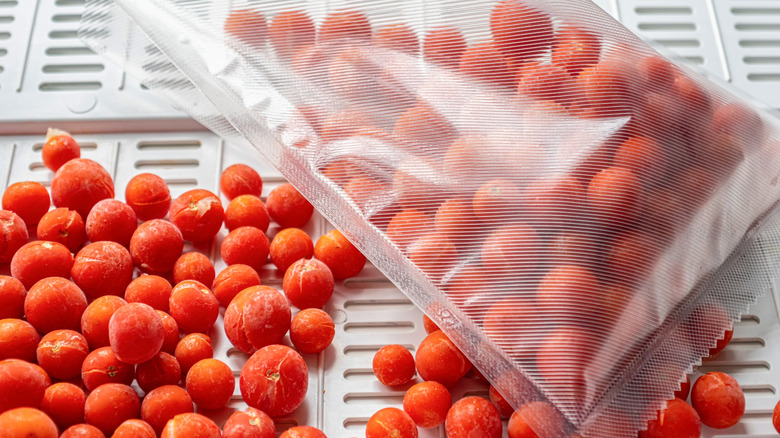
Frozen tomatoes have infinite potential, compounded by the fact that there are so many varieties. Whether your recipe calls for roughly chopped, diced, pureed, or whole tomatoes, there's a good chance that frozen ones will suffice. Let's be reasonable, though. We all know that a tomato sandwich can only be done justice with a juicy summer 'mater, so follow your instincts and stick mainly to hot dishes when using the frozen kind.
Pasta sauces, soups, chilis, and more can be made in a pinch when frozen tomatoes are on standby. They remove the burden of having to drench a cutting board in tomato juice, too, which is good news for whoever is on sous chef duty. In many cases, you can simply add frozen tomatoes to a bubbling pot and allot a few more minutes of cooking time so that they can defrost. If your recipe is more time-sensitive, though, let the bag defrost in the refrigerator overnight. I've learned my lesson here: Placing the bag in a bowl to catch leakage is a must.
We freeze about a dozen bags of chopped tomatoes each year, in addition to a few bags of tomato puree. That's because when tomato plants thrive, they really thrive. So, rather than letting the extra tomatoes rot on the counter, we freeze them. On the other hand, you can freeze leftover canned tomatoes any time of the year.
Corn
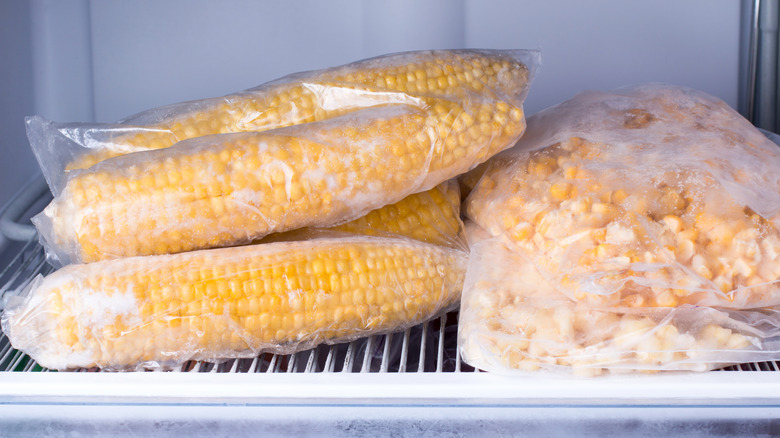
Our family has a separate freezer just for produce, and when corn comes into season mid-summer, it doesn't take long for it to dominate a whole shelf. I've frozen it in various forms, though creamed corn takes up a disproportional amount of space. Whenever I use fresh corn kernels in my cooking, I often freeze the bare cobs so that I can add them to stock throughout the year. I've also had great success freezing corn kernels for later use in hot dishes, such as stews, soups, stir fries, and simple sautés. Frozen corn works well in cornbread and savory muffins, too, as long as you account for a possible moisture disparity due to ice crystals. However, I wouldn't recommend thawing frozen corn for a fresh salad where crispness is the name of the game.
Buying local corn on the cob during the summer, then shucking, shelling, and freezing it, will likely give you a better flavor (and perhaps at a better price) than what you would get at the supermarket in the frozen section. And if you often crave corn on the cob when it's not in season, plan ahead: It can be blanched and frozen in this form, too! But if you're shopping for corn during the fall, winter, or spring, head to the frozen section; there are scientific reasons why frozen corn can be sweeter and more nutritious than "fresh" corn when it's not in season locally.