

The Best Time To Add Oil To Your Pan, Depending On The Type You're Using
Cooking food is all about timing. How long something needs to cook is the very foundation of cooking, but there are nuances as well. What happens when you cook an ingredient for a long time on low heat? What happens if you cook the same ingredient for a short time on high heat? And then there's the stuff that separates the amateurs from seasoned cooks. What's the right time to add salt to your soup so it doesn't taste bland? How does one harness the power of time to make delicious toast? Timing really is at the heart of everything.
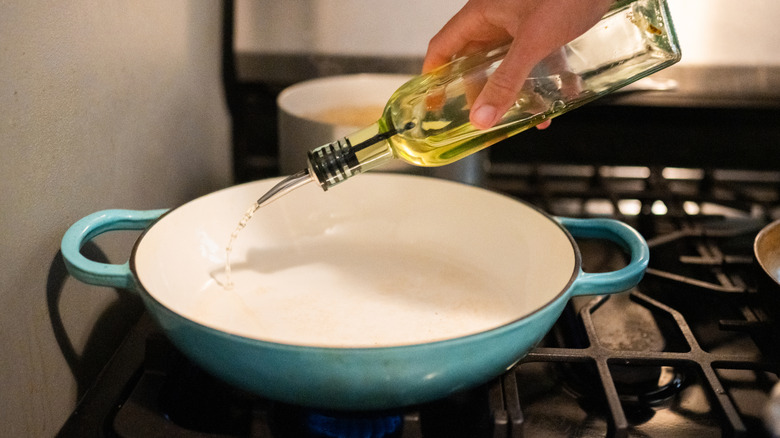
Having said that, none of this would mean anything if you fail to get the timing of one thing right: the best time to add oil to the pan, which changes based on the type of pan you're using. This is not nice-to-know information. Getting this step wrong could trigger a wide range of kitchen disasters, from wrecking your pans to ruining your food. In some cases, the type of oil you're using can matter as well, impacting the longevity of your pan. Here's all you need to know about the best time to add oil to your pan, depending on its material.
Non-stick pan
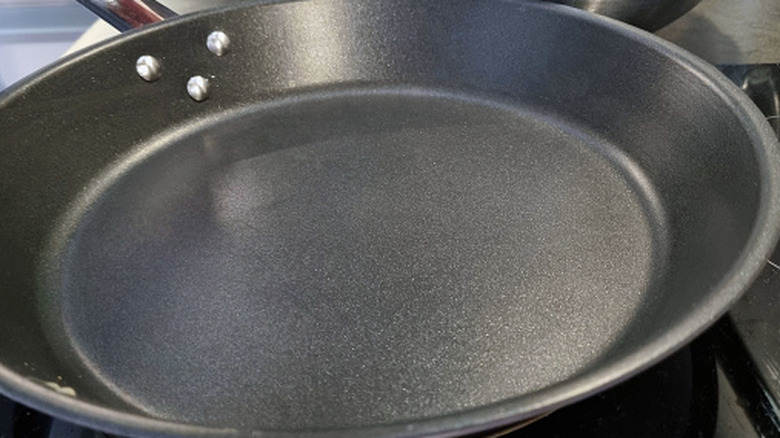
Non-stick pans are only safe to use as long as their coatings are in perfectly good condition. One thing that can destroy the non-stick coating is heating the pan without anything in it. So the best time to add oil to a non-stick pan is before turning on the stove. Spread a thin layer of oil across the pan before heating it, and your non-stick coating will stay protected for longer. Two additional notes: The worst mistake you can make with a non-stick pan is overheating it. Also, don't use cooking sprays instead of oil. These often contain chemicals that can damage your non-stick coating over time.
Cast iron pan
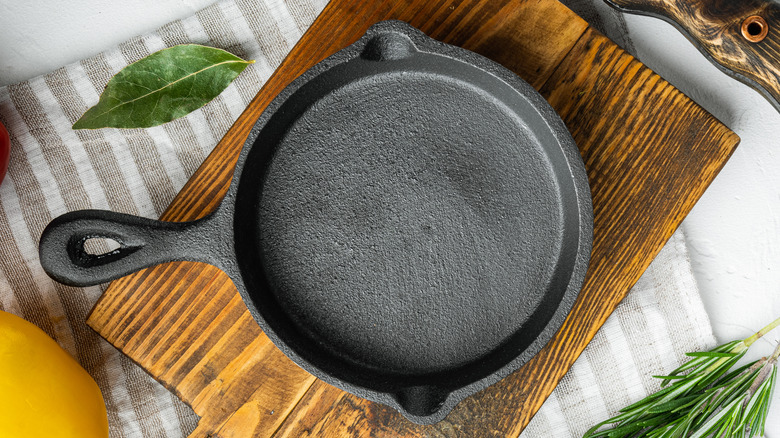
As long as you know how to season your cast iron pan, you don't need to worry about a non-stick coating. There are a couple of steps you should follow before adding oil to the pan. First, wipe down your pan thoroughly to get rid of any surface-level moisture. Second, preheat the pan so any residual moisture evaporates. Now you're ready to add oil or any other fat you prefer.
Enamel-coated cast iron pan
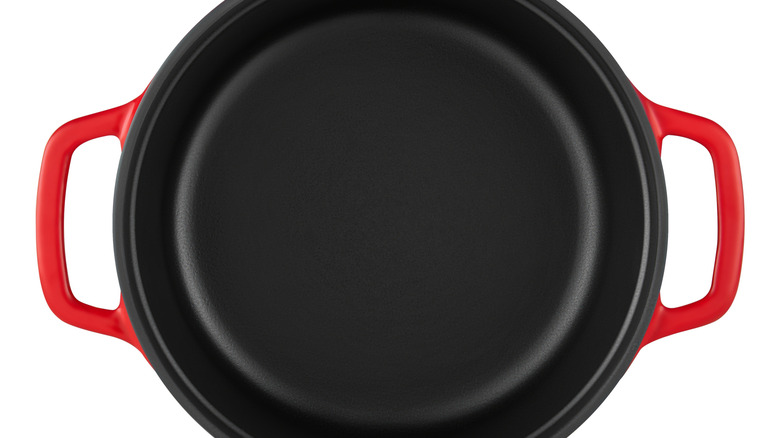
If cast iron pans are indestructible, then surely enamel-coated cast iron pans should be doubly so. As it turns out, that isn't quite the case. Unlike cast iron, you should refrain from heating your enamel-coated pans without any contents inside since this can cause web-like cracks in the enamel coating. While these cracks don't impact your pan's performance, they can ruin how it looks. Much like you would with non-stick cookware, add a little bit of oil before turning on the heat. Keep temperatures on the lower side (under 400 degrees Fahrenheit) since cooking at higher temps is the easiest way to ruin your enameled cast iron pan.
Stainless steel pan
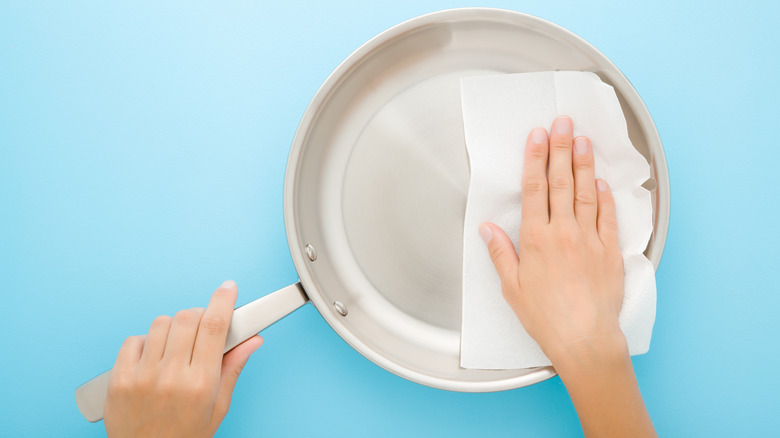
When it comes to stainless steel, you want to preheat your pan before adding oil. This is because the metal expands when heated, closing any microscopic pores and giving it non-stick properties. In fact, not pre-heating it correctly is one of the many mistakes everyone makes while cooking with stainless steel. To test if your pan is at the right temperature, drop some water on it. If the water forms tiny globules that skittle around the surface, you're in the sweet heat spot. This is the time to add oil to your pan.
Carbon steel pan
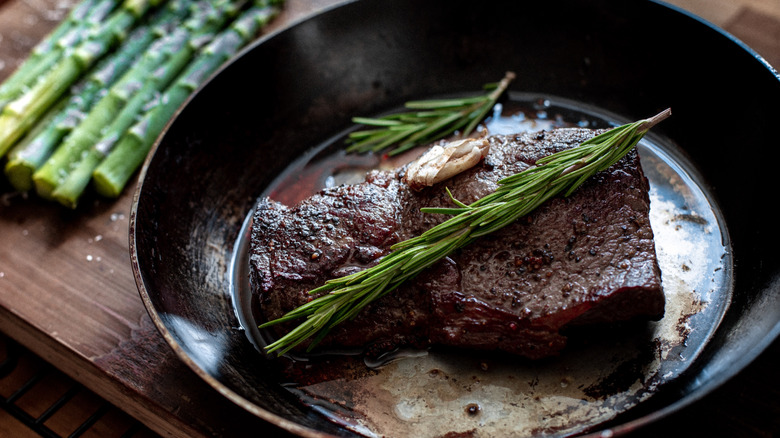
Their ability to handle high heat and delicate food has made carbon steel pans extremely popular in chefs' kitchens. Made using 99% iron and 1% carbon, these pans can withstand temperatures of up to 1,200 degrees Fahrenheit and are virtually indestructible. The right time to add oil or other fat to the pan is after pre-heating it for two to three minutes. Wait an additional couple of minutes before adding food to the pan, especially if you're looking to trigger the Maillard reaction and get a crunchy and caramelized exterior on your veggies or meat.
Copper pans
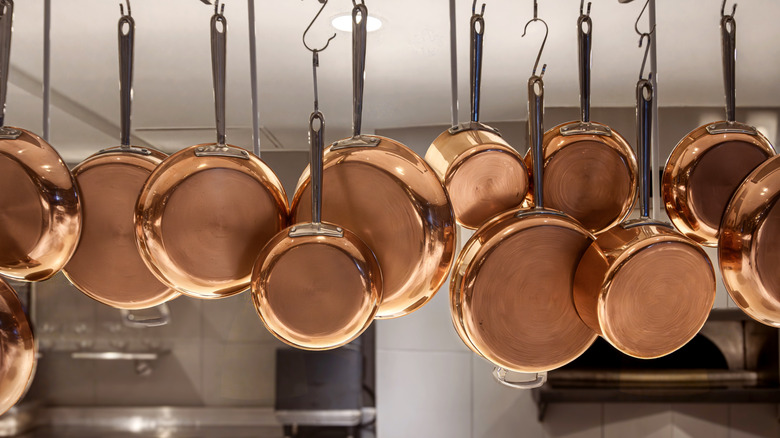
Copper pans fall into the category of pans where you need to add oil before heating the pan, but for totally different reasons from a non-stick pan. Copper is the best conductor of heat among metals commonly used for cookware, which means your pan will get very hot, very quickly. It's important to add oil before heating the pan so it can absorb this heat. You might also want to stick with using low- to medium-heat while using copper pans (we believe it's worth investing in a set, with some caveats).
Ceramic pans
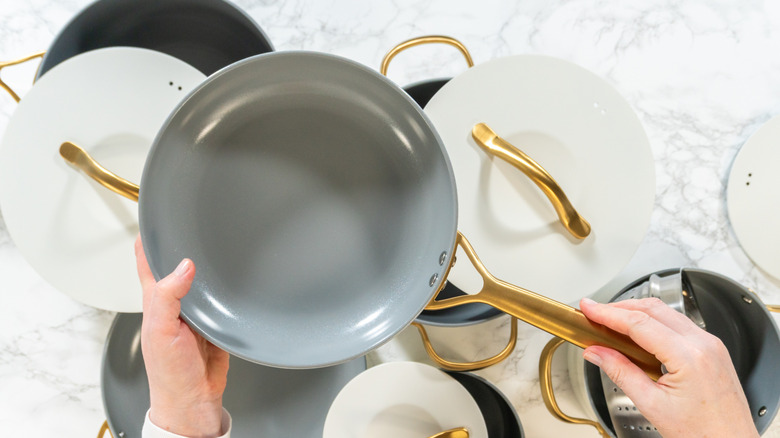
Ceramic cookware includes pots and pans made of hard anodized metal base with a ceramic coating that provides a non-stick layer. While there are several important tips for using ceramic cookware, protecting the coating is the most important. One of the ways to do this is to avoid exposing it to very high heat. This means never preheating the pan empty. Add oil to the pan before turning on the stove, and turn down the flame to low or medium before the oil starts smoking.
Aluminum pans
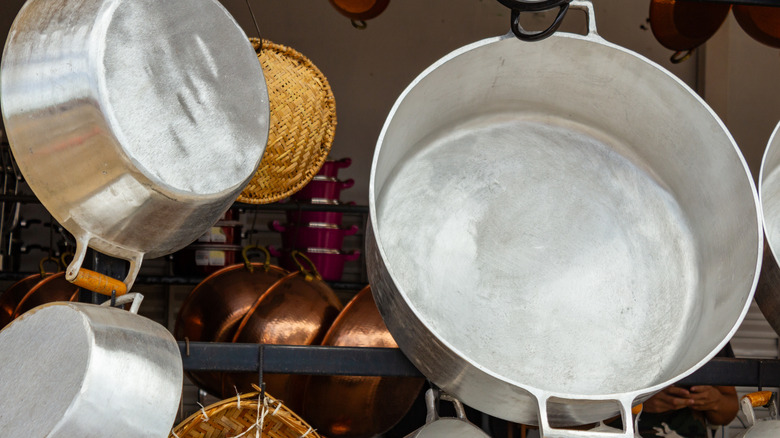
Much like copper, aluminum is an excellent conductor of heat, which means aluminum cookware heats up quickly and evenly. To absorb some of this heat, add oil to the pan first. Incidentally, this ability to heat evenly is the main reason you should always bake brownies in an aluminum pan. Whether you should be using aluminum pans in the first place is a matter worth debating, with the U.S. Food and Drug Administration warning retailers and consumers in 2024 of potential lead hazards found in imported cookware made from aluminum.
Titanium-reinforced non-stick pan
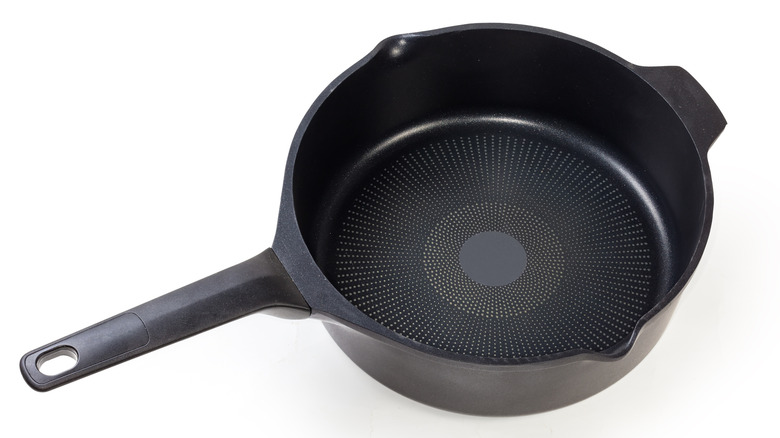
Titanium-reinforced pans have a smooth, scratch-resistant surface. So you can focus on your food without stressing about what will happen to the pan. Preheating your titanium-reinforced pan before you add oil — a step that ensures the pan (and your food) is heated evenly. When it comes to titanium cookware, choose oils with a high smoke point, like avocado or sunflower oil. This will reduce the chances of burning your food and damaging your pan. However, if this happens, here's how you can rescue your pan.
Tri-ply pan
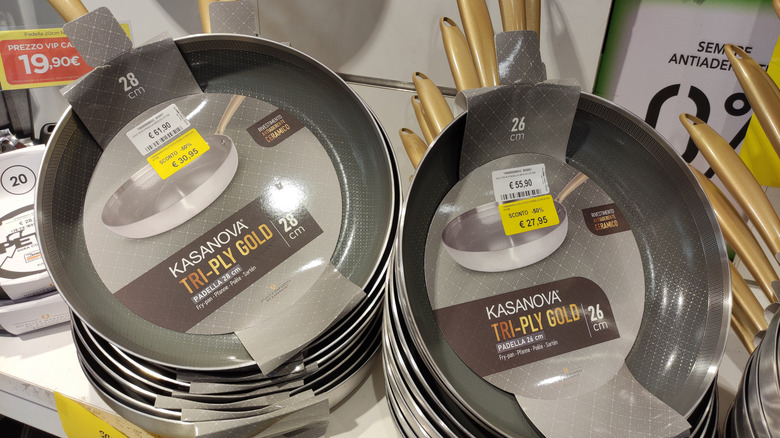
If you've ever wondered what tri-ply cookware means, or why it's important, here's the answer. Tri-ply pans have three layers: two made of stainless steel with an aluminum layer in between, combining the thermal conductivity of aluminum with the food-safe properties of stainless steel. When it comes to tri-ply pans, the general rule to follow is to allow your pan to heat up for two to three minutes before adding oil. Preheating the pan not only ensures an evenly heated cooking surface, but it also prevents the pan from warping.