

Tanqueray: The Ultimate Bottle Guide
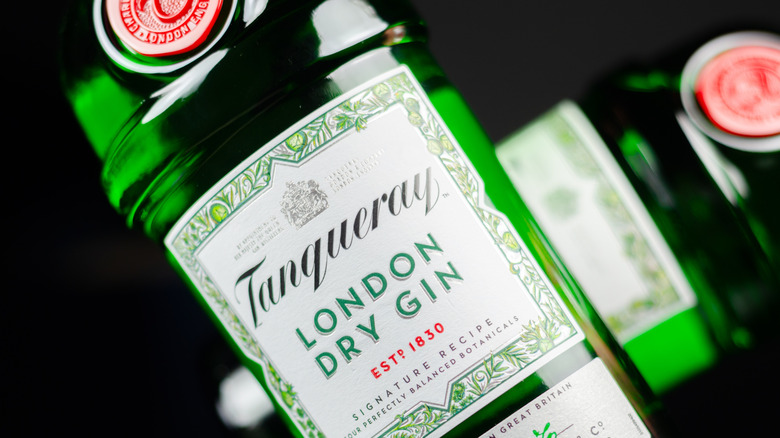
Tanqueray London Dry Gin is one of the most approachable and readily available gins on the market. But behind that approachability, there's a lot of history: established in 1830 by brothers Charles and Edward Tanqueray, Tanqueray is characteristic of a gin variety known as London dry. Compared to other brands in the market, it uses a simpler formulation than other popular gins, incorporating just four botanicals for a versatile taste profile that works well in a variety of different cocktails. It also has a slightly higher alcohol-by-volume percentage than most gins in the market, coming in at 47.3%.
You've almost certainly seen Tanqueray on the shelves of your local liquor store. It's one of the most popular brands of gin worldwide, after all; according to The Spirits Business, Tanqueray moved 4.37 million nine-liter cases of gin in 2025. If you're interested in trying it for yourself, here's everything you need to know about Tanqueray's London Dry Gin and how to drink it.
History of Tanqueray
Tanqueray brands itself as a London dry gin, which means, no surprise, it's historically been manufactured in London. This is where founder and namesake Charles Tanqueray opened a distillery with his brother, Edward, in 1830, eventually taking over a storefront on Vine Street. They used what was, at the time, a unique formula, leaving out the sugar used in more typical-of-the-time Old Tom gin and earning the descriptor "London dry."
Born to a family of ministers, Charles and Edward Tanqueray were the last two people you'd expect to start making and selling gin, let alone in a concoction that's still being sold nearly 200 years later. But the Tanqueray distillery operated in London, remaining a family enterprise for several generations, until it was severely damaged during the bombing of London in World War II.
These days, Tanqueray is produced at the Cameronbridge Distillery in Fife, Scotland, the largest grain distillery in Europe.
What does Tanqueray taste like?
Before you even drink it, you'll likely notice that Tanqueray has a strong nose of licorice and citrus. These flavors are milder on the tongue, but certain cocktail preparations can bring them out. That's why the best gin cocktails typically make ample use of citrus to bolster their natural flavor profile, which is especially prominent in Tanqueray.
Like most other gins, Tanqueray is heavy on the juniper -– it's by far the predominant flavor. But even though every gin contains juniper berries, which are added during the distillation process, they're especially prominent in Tanqueray. They give the gin its characteristic piney, citrusy taste.
Those juniper topnotes give way to a sweet, warm, spicy flavor, which comes from the other botanicals used in making Tanqueray. You may detect angelica (which has a vegetal flavor similar to carrot or celery), licorice, and coriander, the bright, herbaceous seeds of the plant also known as cilantro.
How is Tanqueray made?
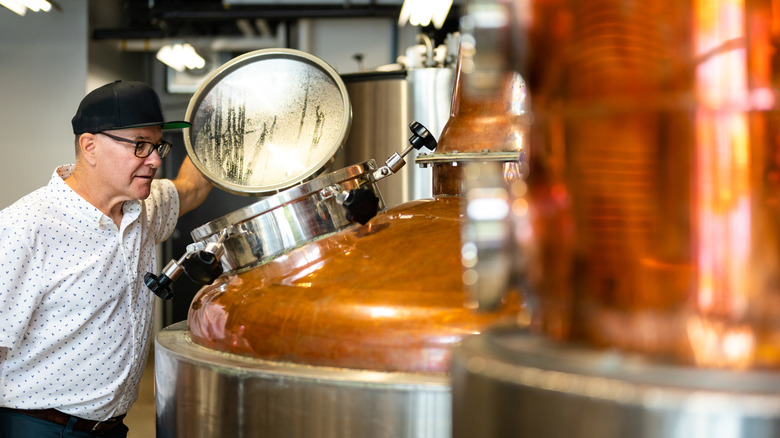
Tanqueray's proprietary blend is made using a four-part distillation process. The repeated distillation helps remove the strong flavors of the neutral spirit, or the fermented ingredients that produce the alcohol in gin.
Notably, Tanqueray is made in copper pot stills. This has several benefits for the final product: first, copper reacts with the sulfur compounds in the neutral spirit. Copper removes unpleasant, funky tastes from the blend, and also conducts heat especially well, ensuring even temperatures throughout the still. This also makes for better separation between the components that make it into the bottle and those that'll be discarded.
Distilling liquor in copper stills also promotes the formation of esters, which add to Tanqueray's bright, fruity taste. And finally, copper is a natural antibacterial, which helps keep the batch safe for consumption.
Four botanicals are added to Tanqueray during distillation: Juniper, angelica, licorice, and coriander. This infuses the gin with its complex, layered flavor profile.
How to drink Tanqueray
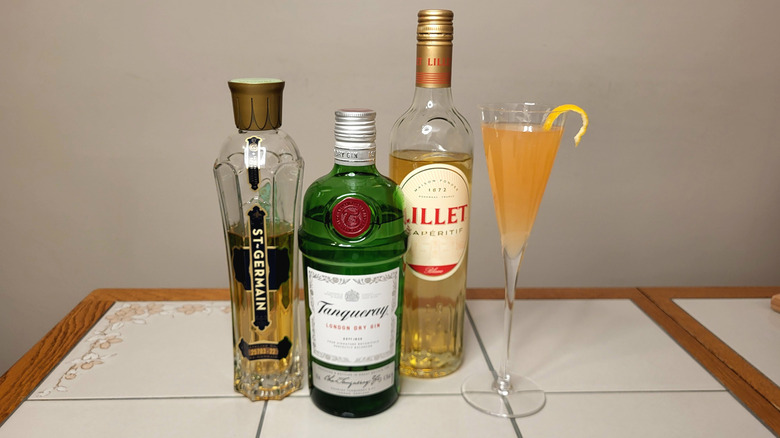
Despite its complex taste, gin is one of the few liquors you never want to drink straight. Not that you can't take a shot straight from the bottle, per se, but the best preparations of gin combine it with complementary ingredients to deepen its already bold flavors.
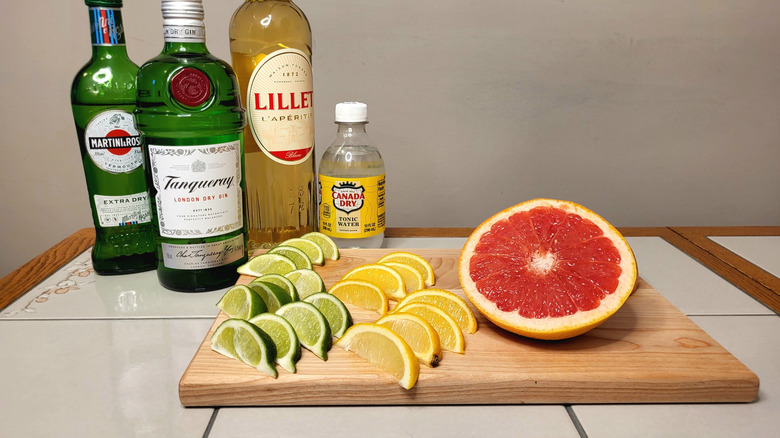
Tanqueray's citrus notes lend themselves well to orange, lemon, or lime-forward cocktails. Think the classics here: Mix it with lemon juice, simple syrup, and club soda for a Tom Collins. Muddle some cucumber before shaking for an extra-cool cucumber Collins. Tanqueray also works well in a summery French blonde, shaken with lemon juice, grapefruit juice, Lillet blanc, and elderflower liqueur.
However, because Tanqueray is an especially dry gin with much simpler ingredients, it can go far in a cocktail that puts it center stage. A classic martini, with just a touch of dry vermouth and an olive or lemon garnish, lets Tanqueray really shine.
The bright, acidic sweetness of Tanqueray also plays nicely with bubbly sodas. Try it in a gin and tonic with a twist of lime, or with lemon and Champagne in a French 75.
Tanqueray vs. Bombay Sapphire
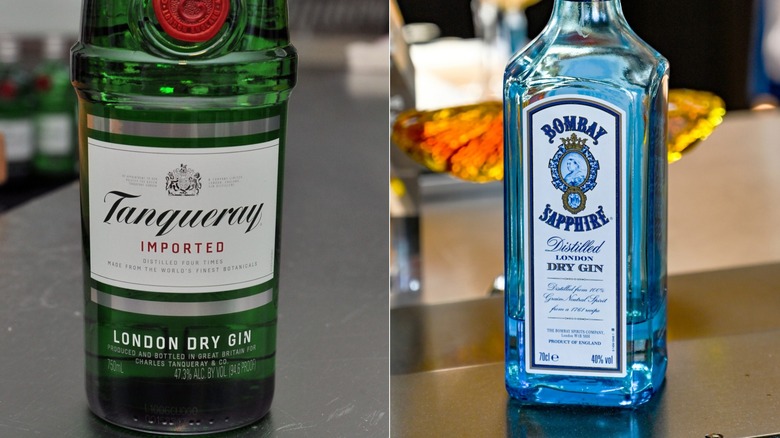
Bombay Sapphire is a comparable gin to Tanqueray. Both are juniper-forward, with the designation "London dry" due to their relatively unsweet flavor. They're usually similar in price, although Bombay may be slightly more expensive, depending on where and when you're buying.
However, there are some major differences between Tanqueray and Bombay Sapphire. The first is pedigree; although Bombay Sapphire, like Tanqueray, uses a centuries-old recipe, it's a relative newcomer on the London dry gin scene, having been launched as recently as 1986.
Then there's the difference in flavor, which is largely due to the fact that Bombay Sapphire uses 10 different botanicals, including lemon peels, almonds, and cassia bark, whereas Tanqueray uses only the four described above.
Both are excellent, layered gins that you can get at a relatively reasonable price point, but simplicity is where Tanqueray shines. Bombay's strong flavors can stand out too much in bolder cocktails. It may work perfectly fine in a martini or a G&T, but Tanqueray is much more versatile, able to hold its own in those simple drinks just as well as in a complicated French blonde.
Tanqueray has used the same copper still since its founding
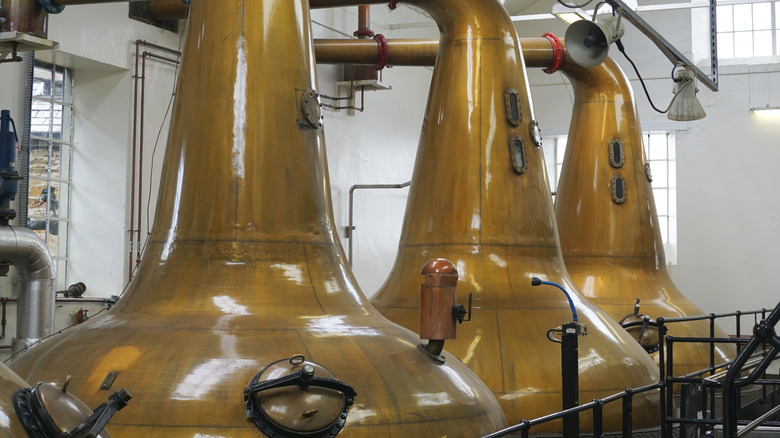
Tanqueray prides itself on history and tradition, which is especially apparent in its manufacturing. To this day, it still uses an over-250-year-old copper still from its original London distillery, which has earned the nickname Old Tom. It's named after a style of gin that was popular in the 19th century, and, unlike London dry gin, was often sweetened with sugar.
Every drop of Tanqueray you'll ever drink has passed through Old Tom at some point during production. Like your grandma's old cast-iron pan, the jury's still out on whether centuries of use have really affected the taste.
Regardless, it's still an impressive feat, a testament to the quality of the manufacturing equipment, and an homage to Tanqueray's storied history that Old Tom is still used today. To commemorate its role in the history of gin, Tanqueray released a limited-edition blend called Old Tom in 2014, employing one of Charles Tanqueray's rejected recipes that calls for the addition of beet root sugar.
Tanqueray's inventor was an exacting genius
Charles Tanqueray's break from family history and his success in gin distilling already make him a fascinating historical figure, but this is far from the sum of his life's work. Tanqueray, not content with creating one of the most widely imbibed gins even 200 years later, was a consummate inventor. His notebooks are full of all sorts of strange and outlandish ideas, including recipes for veterinary medicines and horse saddle polish.
Of course, none of these inventions has endured in the same way as his London dry gin, and there may be a reason for that. Tanqueray was incredibly picky when it came to his gin, and tried over 300 different recipes before settling on the final botanical blend and distillation process that would eventually become synonymous with his family name.
Tanqueray's bottle is modeled after a cocktail shaker
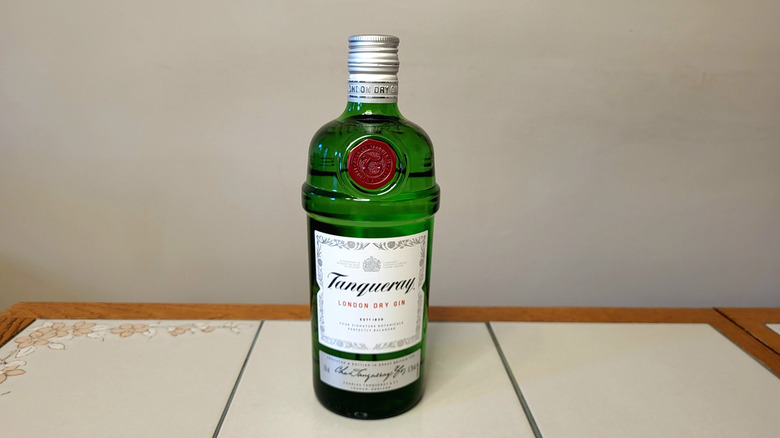
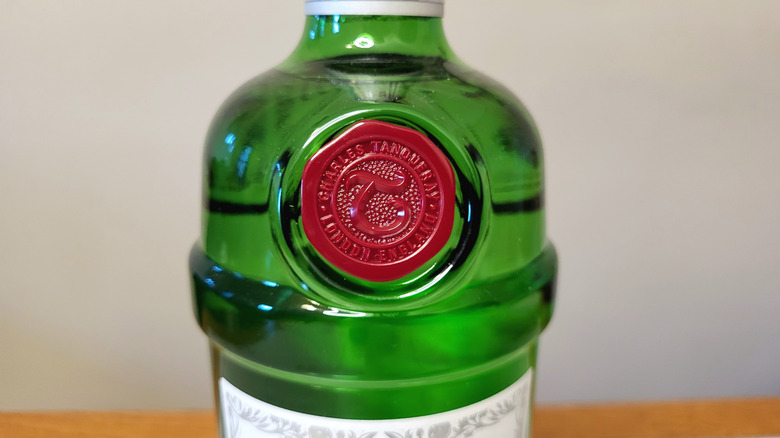
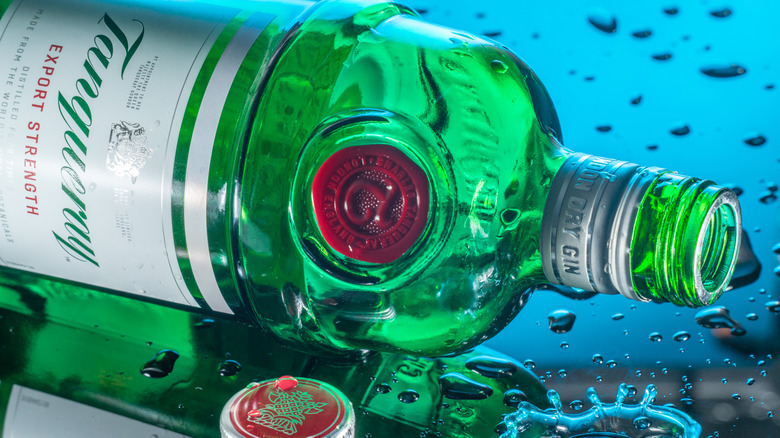
One of the first things you'll note about Tanqueray, before you even take it off the shelf, is the bottle's unusual shape and color. It uses dark green glass and is especially wide and bulky for a liquor bottle, starting at the bottom in a typical cylindrical shape, then flaring out above the label before bending back around in a high arc and tapering off into a short neck.
It's an unusual shape for a bottle of gin, one that's often been mistaken for a fire hydrant or a bell. But as it turns out, Tanqueray's bottle is actually designed to resemble a much more pivotal part of its history: it's modeled after a traditional three-part cocktail shaker. The idea for the shaker-shaped bottle first arose in 1948, proposed by the London design firm Sedley Place. The original iteration of the design was much simpler, but it's evolved over the years into the immediately recognizable form you'll find on shelves today.