

Smoked Sausage And Sauerkraut Skillet Recipe
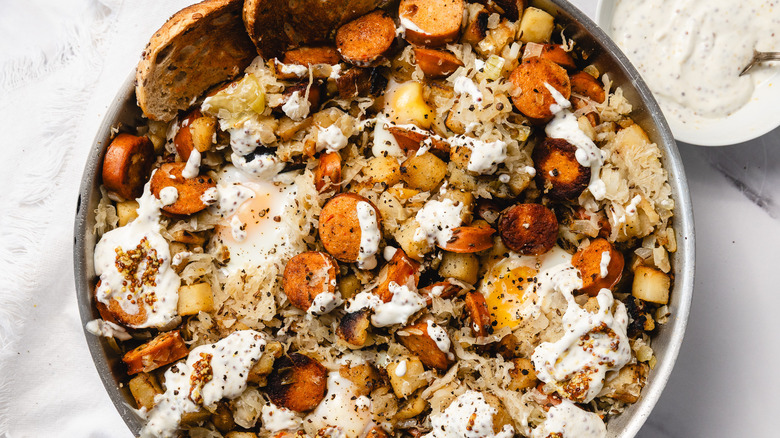
Though sauerkraut may not be what you typically think of as breakfast fare, this tangy, sharp, and peppery condiment actually pairs perfectly with smoky sausage and mild-mannered eggs and potatoes. This smoked sausage and sauerkraut skillet is a grown-up take on comfort food that offers an unusual and hearty option for those looking for a satisfying high-protein way to start the day.
This dish is heavily inspired by German-American food. Sauerkraut, which literally means "sour cabbage" in German, arrived in America with German immigrants in the late 19th century. Though fermented cabbage itself is not strictly German, and can be found anywhere from China to Poland, it is as strongly associated in American culture with German cuisine as schnitzel and, as the second component of this dish suggests, sausage. Meat and sauerkraut also pair well with caraway seeds and mustard, as is evident in the great German American sandwich, the Reuben.
No stranger to pairing fermented ingredients with hearty fare for my Eastern European recipes on At the Immigrant's Table, I wanted to combine these flavors with eggs and potatoes to soften the sharp flavors. The mustard makes its appearance in a creamy remoulade sauce that adds smoothness to the dish and helps bring everything together with a briny finish.
Gather the ingredients for this smoked sausage and sauerkraut skillet
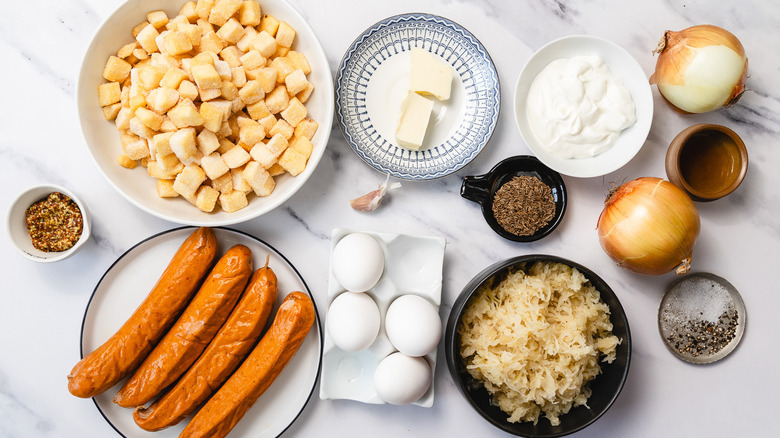
To assemble the breakfast skillet, you'll need butter, diced onions, the smoked sausage of your choice, fresh or frozen hash browns, drained sauerkraut, caraway seeds, eggs, and salt and pepper to taste. The hash browns, which have become a very broad term for a variety of breakfast potato preparations, can be cubed or grated, as per your preference.
For the sauce we'll serve on the side, you'll need sour cream, whole-grain mustard, apple cider vinegar, garlic, and salt and pepper to taste. The mustard can also be a strong German or Russian mustard with a kick to it, though we do like the textural element that whole-grain mustard adds to the sauce.
Step 1: Preheat a skillet
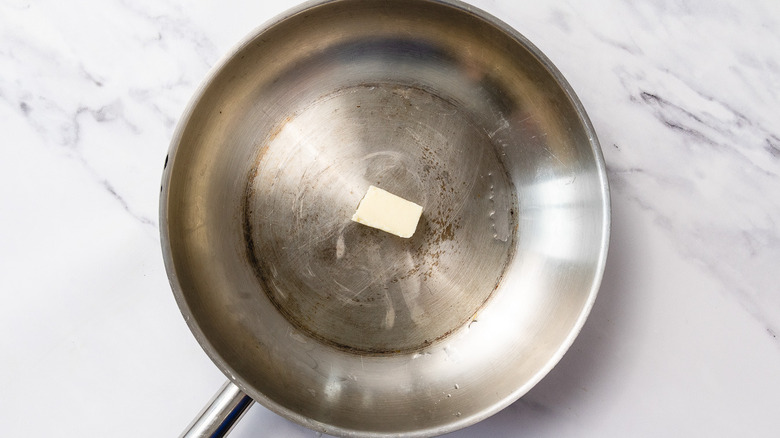
Heat 1 tablespoon of butter in a large skillet over medium-high heat.
Step 2: Saute the onions
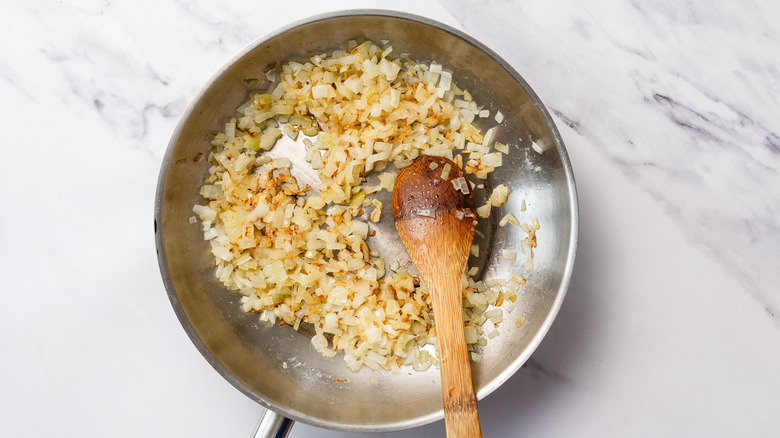
Add the onions and cook for 12-15 minutes until golden brown. Transfer to a plate.
Step 3: Fry the sausage

Add the remaining butter to the skillet. Add the sausage and cook for 5 minutes until browned.
Step 4: Set the sausage and onions aside

Remove to a plate with the onions.
Step 5: Brown the hash browns
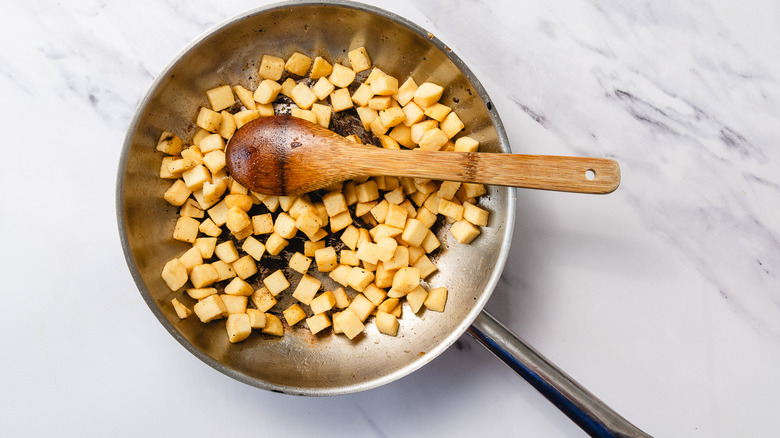
Add the hash browns to the skillet and cook for 8-10 minutes until crispy, stirring occasionally.
Step 6: Combine the skillet components
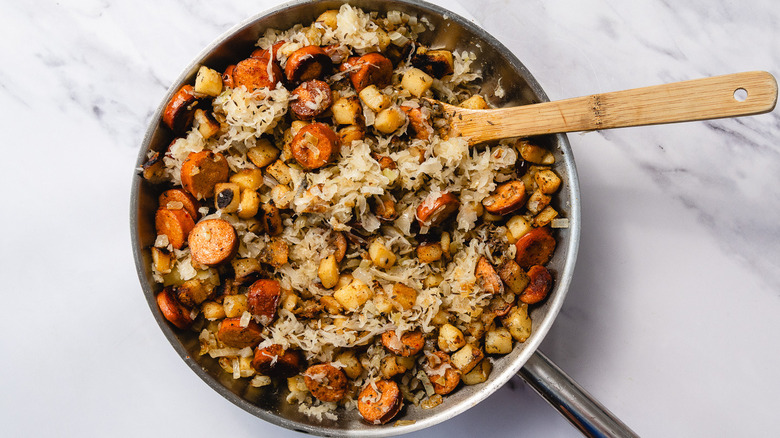
Return the sausage and onions to the skillet. Stir in the sauerkraut and caraway seeds. Cook for 2 minutes.
Step 7: Add the eggs
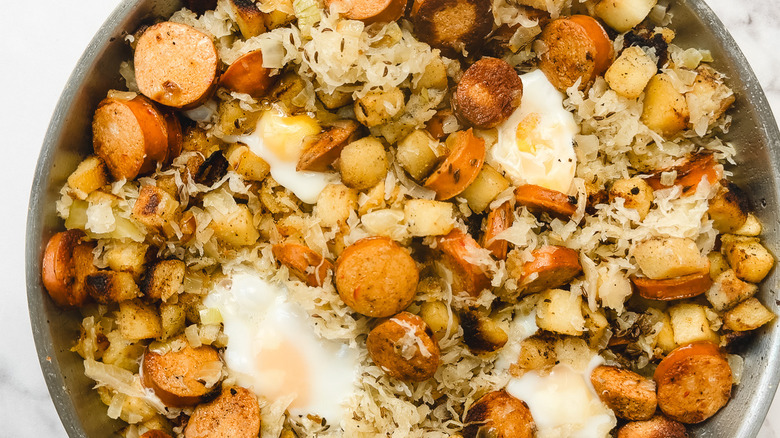
Make 4 wells in the mixture. Crack 1 egg into each well. Cover the skillet and cook for 5-7 minutes until the eggs reach your desired doneness and season with salt and pepper.
Step 8: Make the mustard sauce
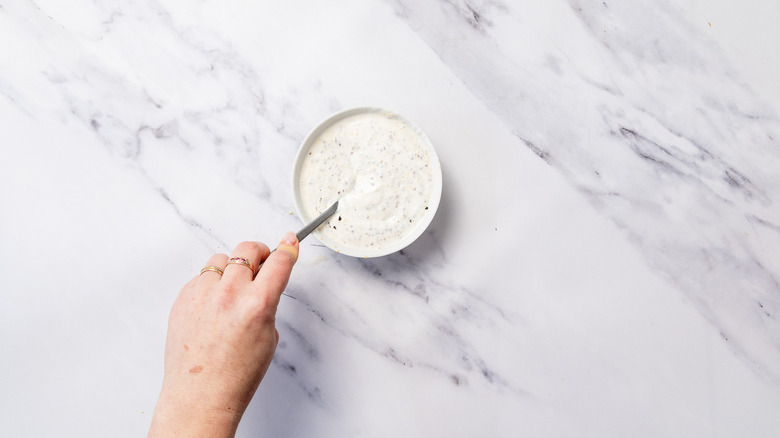
Whisk together the sour cream, mustard, vinegar, and garlic. Season with salt and pepper.
Step 9: Garnish and serve the smoked sausage and sauerkraut skillet
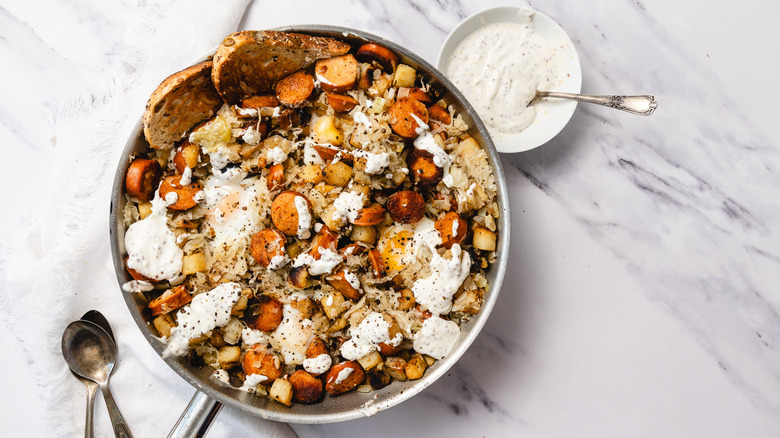
Serve the skillet with the sauce on the side.
What pairs well with a breakfast skillet?
Smoked Sausage and Sauerkraut Skillet Recipe
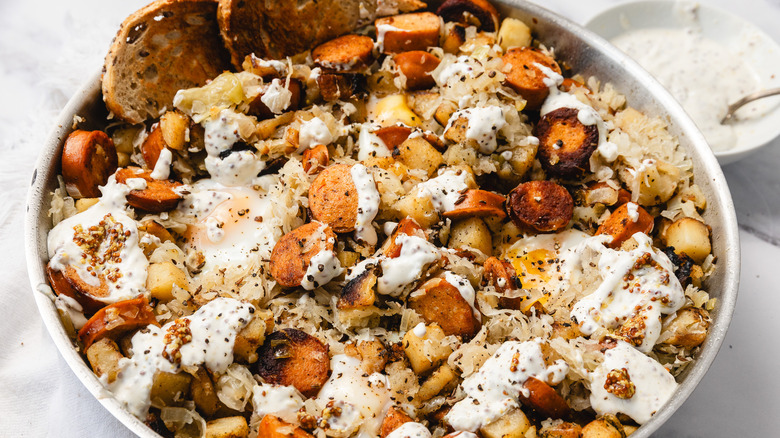
Sauerkraut is the surprise ingredient in our hearty and comforting breakfast skillet, which combines smoky sausage, hash browns and a tangy remoulade.
Ingredients
- For the skillet
- 2 tablespoons butter, divided
- 2 large onions, diced
- 1 pound smoked sausage, sliced into rounds
- 4 cups hash browns (fresh or frozen)
- 2 cups sauerkraut, drained
- 1 tablespoon caraway seeds
- 4 eggs
- Salt and pepper to taste
- For the sauce
- ½ cup sour cream
- ⅛ cup whole-grain mustard
- 1 tablespoon apple cider vinegar
- 1 clove garlic, minced
- Salt and pepper to taste
Directions
- Heat 1 tablespoon of butter in a large skillet over medium-high heat.
- Add the onions and cook for 12-15 minutes until golden brown. Transfer to a plate.
- Add the remaining butter to the skillet. Add the sausage and cook for 5 minutes until browned.
- Remove to a plate with the onions.
- Add the hash browns to the skillet and cook for 8-10 minutes until crispy, stirring occasionally.
- Return the sausage and onions to the skillet. Stir in the sauerkraut and caraway seeds. Cook for 2 minutes.
- Make 4 wells in the mixture. Crack 1 egg into each well. Cover the skillet and cook for 5-7 minutes until the eggs reach your desired doneness and season with salt and pepper.
- Whisk together the sour cream, mustard, vinegar, and garlic. Season with salt and pepper.
- Serve the skillet with the sauce on the side.
Nutrition
| Calories per Serving | 973 |
| Total Fat | 63.8 g |
| Saturated Fat | 19.5 g |
| Trans Fat | 0.4 g |
| Cholesterol | 271.6 mg |
| Total Carbohydrates | 71.0 g |
| Dietary Fiber | 10.1 g |
| Total Sugars | 9.1 g |
| Sodium | 2,001.4 mg |
| Protein | 30.8 g |

What types of smoked sausage can you use in this sausage skillet recipe?
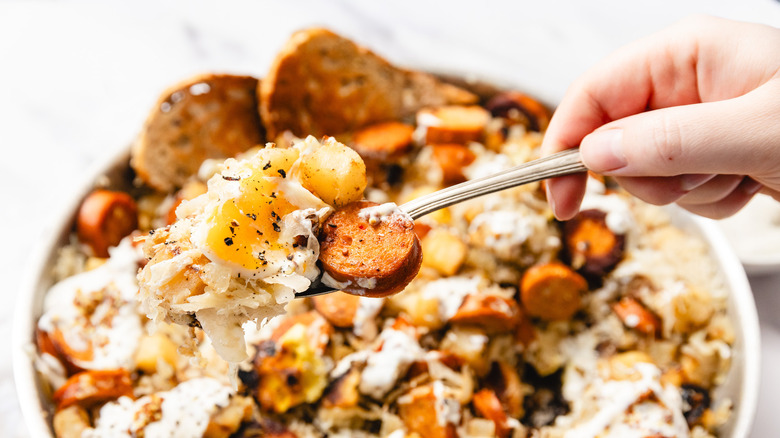
Smoked sausage is one of the central components in this dish, and the type you choose can drastically impact its flavor. From the traditional to the funky, we're here to offer you some smoked sausage alternatives for your skillet.
The most typical sausage to use in this recipe is the traditional Polish kielbasa, which is a natural bedfellow for the sauerkraut. If you want to stay strictly German, a bratwurst or a knockwurst will give the dish a great peppery kick that truly complements the rest of the strong flavors in this recipe.
If you want your sausage to have a milder flavor, try a smoked turkey sausage, which is leaner and less dominant. To give the dish a real funky edge, try the New Orleans favorite, smoky andouille sausage, which will definitely become the dominant flavor in the dish. Whatever variety you choose, make sure it's one that slices neatly and doesn't fall apart when the casing is cut. There are plenty of options on grocery store shelves, or you can ask your favorite butcher for their recommendations.
What adaptations can you make to this recipe?
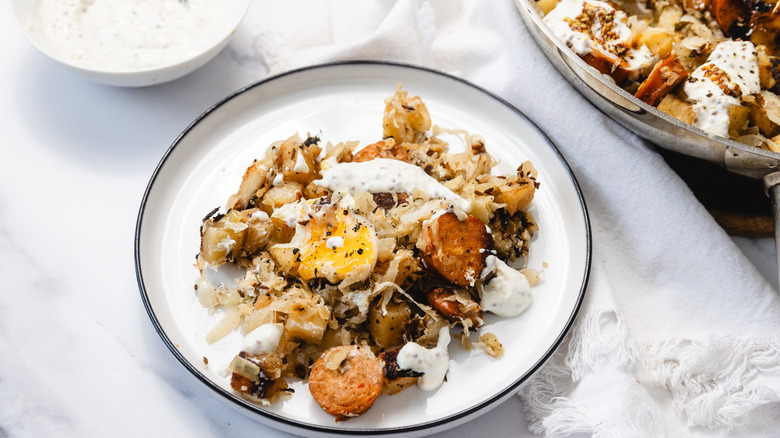
There are some variations and adaptations you can make to give this dish a different spin without changing its flavor too drastically. From playing around with the sausages, which we already covered, to changing up the vegetables or even the presentation of the dish, the options for this brekkie are endless. First off, you definitely can make this dish for a vegetarian. Sub the smoked sausage for a good vegetarian sausage of your choice, of which there are plenty of options these days, or even smoky tempeh bacon. You can add more veggies, like bell peppers or mushrooms, to give it more body and heft.
If you're not a fan of caraway seeds, which can be quite fragrant, replace them with the subtler dill seeds. We also love adding fresh dill, parsley, and chopped scallions right before serving, to give the dish more freshness.
For the sauce, a thimbleful of horseradish would really add zing, as would a squeeze of lemon. Fresh herbs would do well as an addition here, and we also love adding a splash of buttermilk, like in a buttermilk potato salad. When prepping ahead, we've sometimes even portioned out the skillet in large tortilla wraps with the sauce, in a German spin on a breakfast burrito. Any way you choose to serve it, this smoked sausage and sauerkraut skillet is a great option for starting your day.