

6 Once-Popular Lunches That You Don't See Much Anymore
Unlike in parts of Europe, where a midday meal is often followed by a nap, lunch in the U.S. has historically just been something to tide you over before getting back to work. We all gravitate toward certain foods, and skimming through any vintage cookbook will clue you into the constantly evolving culinary movements.
With each decade comes new American food trends, influenced by agriculture, shaped by immigrants, and impacted by economic downturns, nationwide rationing, and wavering import laws. It took a while to kick the eating habits of the Great Depression, when certain foods brought comfort to Americans during an incredibly taxing time. Hearty Depression-era meals were established out of necessity, but they quickly became nourishing favorites throughout the remainder of the 20th century. These dishes were once lunchtime stalwarts until economies shifted and palates changed.
You may recoil at the thought of these throwback dishes, but midday Sweetgreen salad bowls and fast food value meals weren't always an option. Several of these creations disappeared because consumer preferences evolved, prices fluctuated, or something better came along. Some of these meals are regional fare, and your grandparents may still indulge in one or two on occasion, but for the most part, the following lunch specials have vanished.
Liverwurst sandwiches
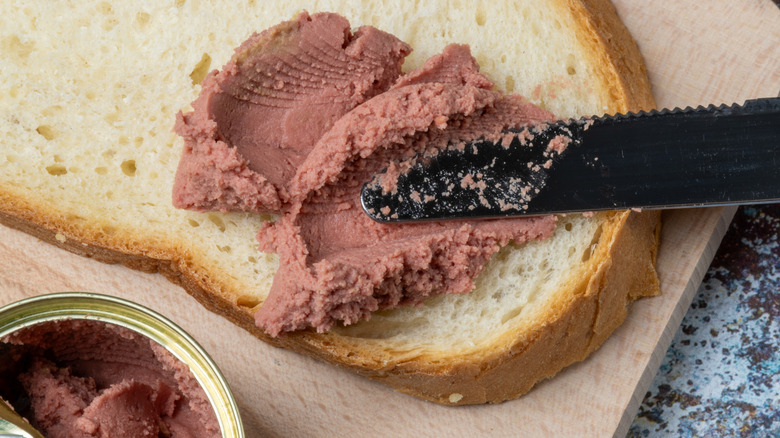
Before it was called pâté and sat on fancy platters alongside fine cheeses and caviar, liverwurst sausage spread was nothing more than a commoner's snack. Charcuterie boards have made cured meats fashionable again, but up until the '70s or so, liverwurst was the main meat blend on the menu.
Generations of Americans slathered liverwurst onto rye bread with nothing more than a spiral of yellow mustard and a few slices of raw onion. Made from pork liver blended with fats and spices, liverwurst dominated mid-century deli counters. Its flavor is assertive and rich, tasting somewhere between pâté and bologna.
The liverwurst sandwich was largely brought over to America by Germans and Eastern Europeans in the 19th and early 20th centuries, arriving at the perfect time, as organ meats were already commonplace. Liverwurst didn't call for much preparation beyond slicing, and it kept well in the fridge — a double win for frugal households. No one gave offal a second thought at the time, especially with the 1940s government pushing it to consumers to save meat rations for the soldiers. After World War II ended, Americans didn't skip a beat before filling their shopping carts back up again with expensive cuts of tender steak. As households shied away from organ meat, liverwurst slowly faded into obscurity.
Creamed chipped beef on toast
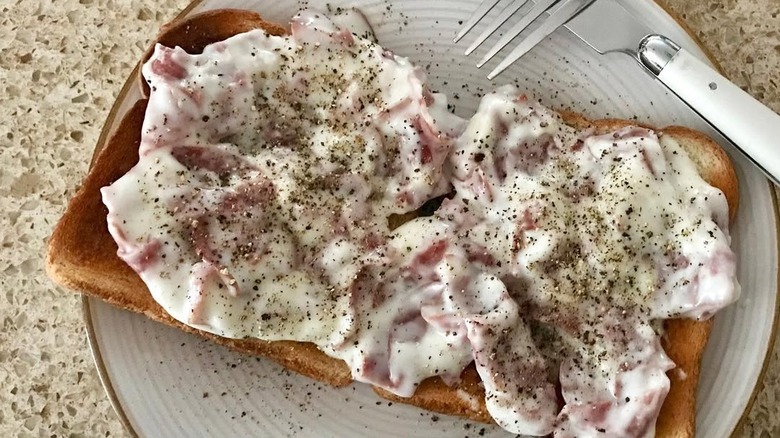
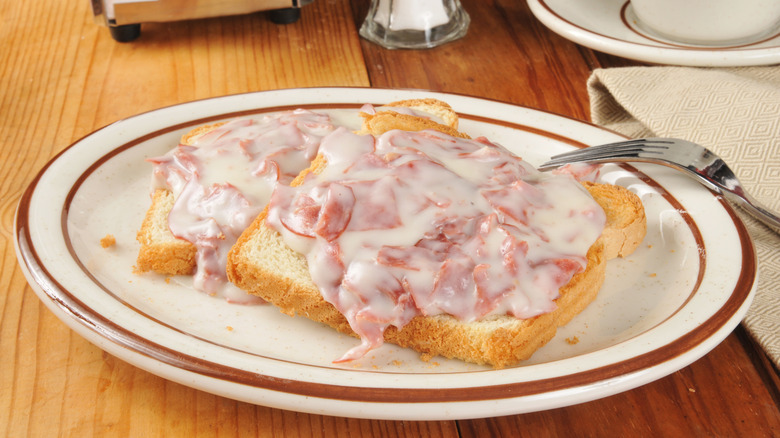
Creamed chipped beef can be traced back to the 18th century, but the U.S. military adopted it as their own in the early 1900s. Known with rough affection by its army nickname, "Same Old ... Stuff" (S.O.S. for short), creamed chipped beef is a homestyle classic.
Thin slices of salted, dried beef are folded into a thick béchamel sauce before being ladled over white toast. It kept soldiers fueled up, but its heyday didn't end with the army. The dish may have originated in mess halls, but it gradually started popping up in home kitchens, on job sites, and at school cafeterias.
Creamed chipped beef tasted like a home-cooked meal, but it was made entirely from inexpensive, shelf-stable ingredients, hence why it became a staple on military menus. The decadent, creamy sauce, thickened with flour, is filling enough for a quick lunch, and the dish stretched a small amount of protein into something satisfying enough to get hard workers through an afternoon slump. Creamed chipped beef was also popular as a classic 1950s TV dinner, and while it can still occasionally be spotted in the freezer aisle at the grocery store, for the most part, it's a lunch of the past.
Perfection salad
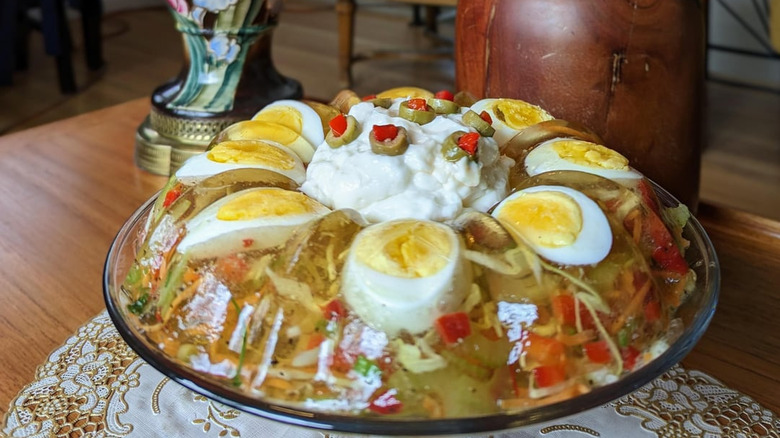
Perfection salad stands out for its obscurity. It might look like it belongs at a Halloween party buffet table, but apparently, this Jell-O salad was beloved in the early 1900s.
The term "salad" is being used fast and loose here, really only supported by the fact that the sugary recipe includes an assortment of vegetables. Perfection salad is a molded gelatin dish packed with shredded cabbage, celery, and pimentos, suspended in savory, slightly tangy Jell-O. It was the kind of dish that appeared in women's magazines, community recipe booklets, and farm journals from around 1900 all the way through until the late '70s. The recipe was first penned in 1904, when it won a Knox Gelatine Inc.-sponsored cooking contest.
Making aspic for molded salads was labor-intensive and time-consuming, meaning it was typically the domain of dedicated mid-century housewives or professional cooks. Presenting these wiggly dishes at a luncheon was a sign of skill and class. The effort eventually began to outweigh the achievement, especially for a simple lunch dish, and now the so-called perfection salad only lives on in infamy. Today, Jell-O is far more accessible and seen as a kid-friendly snack or perhaps mediocre hospital food.
Sardine sandwiches
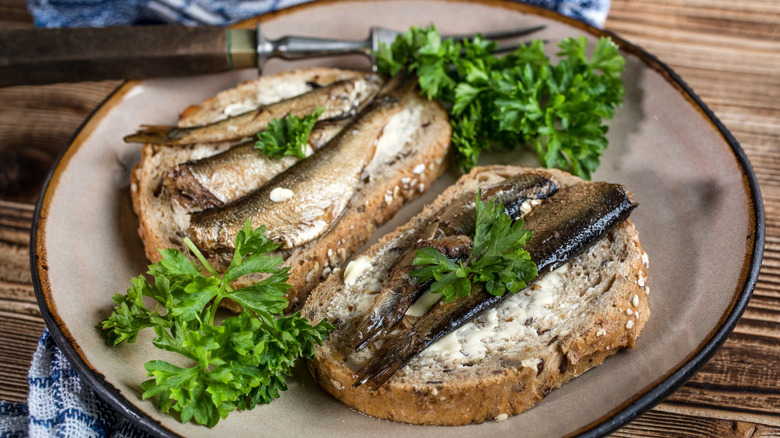
Tinned fish has been trending for a while now, but back in the day, the popularity of the classic sardine sandwich was predominantly about sustenance. Much like America's spreadable liverwurst, modern sardines are more sophisticated than they used to be.
Canned tuna is hugely prevalent in the U.S., but it wasn't the first tinned fish to make menu appearances. Sardines actually led the tinned fish industry before there was a marketing push for canned tuna in the 1950s. The fish have ebbed and flowed in different cookbooks over the decades, with new preparations and recipes popping back up every now and again. However, between the 1910s and '30s and then again during the '70s, sardine sandwiches were a simple yet much-adored lunch.
Skin-on and bone-in sardines (which are totally edible) were taken straight from the can and pressed onto a slice of warm, buttery toast, and extra sandwich ingredients were up to the diner. A 1912 recipe includes finely diced capers and green olives for another layer of brininess, finished with a generous squeeze of lemon. A few decades later, a similar sardine sandwich recipe incorporated fixtures like lettuce, tomato, and a few dollops of mayonnaise.
Mock chicken salad sandwiches
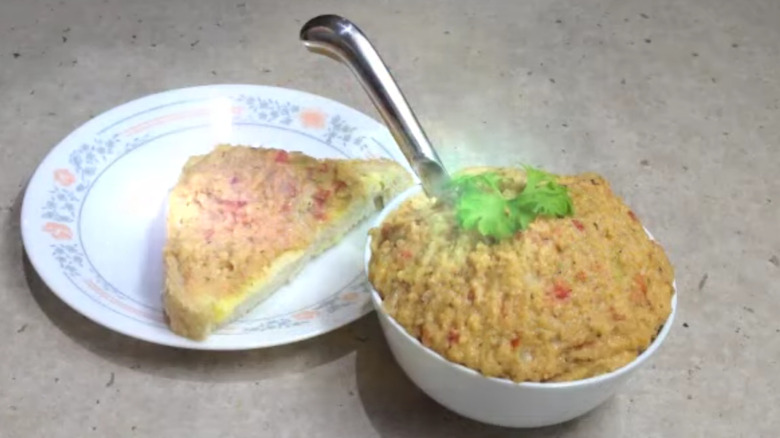
Before the outpouring of impressive plant-based meat substitutes, there was mock chicken. The Depression-era recipe was a testament to home cooks' creativity at the time, who always seemed able to create something delicious out of very little.
Mock chicken salad had just a few ingredients — mainly finely chopped eggs, tomatoes, and onions, fried in butter and blended together. The mix was served chilled on bread as a stand-in for chicken salad. The vegetarian-friendly chopped salad did a reasonable job of matching chicken salad's consistency, but it was far cheaper to prepare for lunch.
It might sound like nothing more than a simple egg scramble or egg salad, but the secret was all in the spices. Diced herbs and Italian seasonings were important add-ins that helped mimic the rich savoriness of chicken. The primary driving force behind mock chicken salad's popularity was poultry's high price tag during the 1930s, so when that cost started to drop back down, pseudo-chicken lost its appeal. Plus, these days, the eggs might actually outprice the chicken.
Cow tongue sandwiches
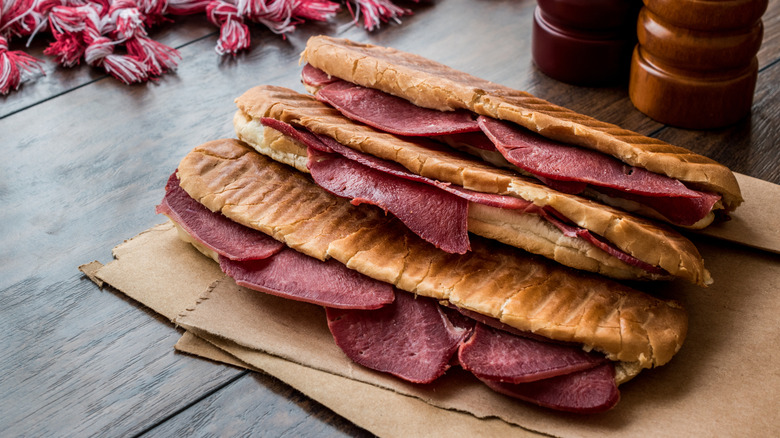
Cured or braised cow tongue, sliced thin and layered onto rye bread (there's a theme here) with a little mustard, was once a fixture of delicatessens and Eastern European kitchens. The meat itself is surprisingly tender for a muscle. It's rich with a fine-grained texture, it slices cleanly, and it's just as easy to cure as pastrami.
These smoked, peppery flavors are still prominent in Jewish delis, especially in New York City, but beef and calf tongue aren't the most sought-after sandwich option these days. The tongue's culinary pedigree is global and stretches back to ancient times. It appears in Mexican tacos de lengua, French recipes from the late 1800s, Sendai-based menus from the late 1940s, and British Victorian cooking. The sandwich felt like a nod to every cuisine.
In the 1950s, some tongue sandwich recipes gravitated more toward a take on ham salad, made with ground tongue and minced with mayonnaise, butter, and pickles. After the '60s, interest in cow tongue dissipated along with other offal meat, and by the end of the '80s, it was seen as more of a delicacy than an everyday lunch order. The tongue sandwich has stuck around regionally, but it has largely been forgotten.