

8 Distillery Red Flags That Should Send You Running
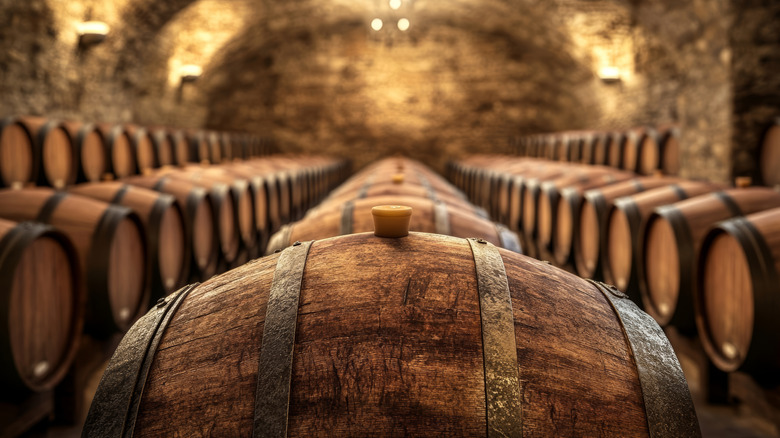
Great spirits don't come from secrecy. They come from expert craftsmanship and pride in the process. After many years of visiting distilleries and tasting whiskey professionally, it has always struck me how the best distilleries are often the most open. While they won't divulge all the intricacies of the process, reputable distillers are usually proud and honest. It's this trust and openness that is often missing from some distilleries. This can ultimately present itself as several red flags that ultimately mean the distillery isn't worth your time or money.
I've visited many distilleries, mostly in the beautiful country of Scotland. However, this article isn't just about seeing them in person. It's also about when you go to buy from a distillery, and you have suspicions that something isn't quite right. Some of these red flags are subtle, and it can be hard to know what to look for. Here I'll break down these red flags, so you know what to expect from a great distillery, and what to spot from a bad one.
Avoids warehouse or aging information
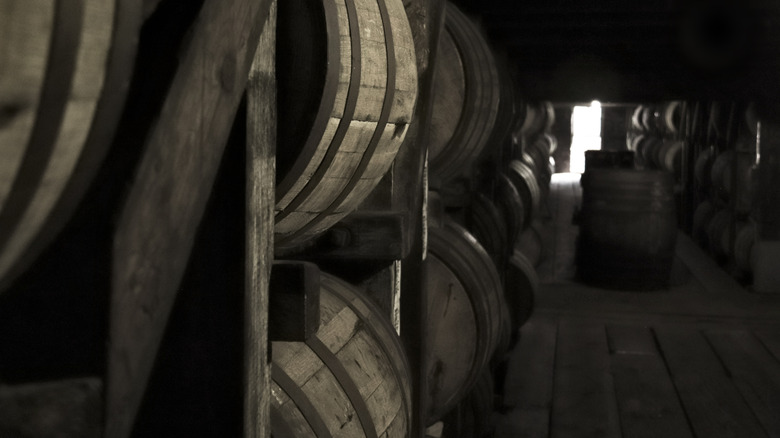
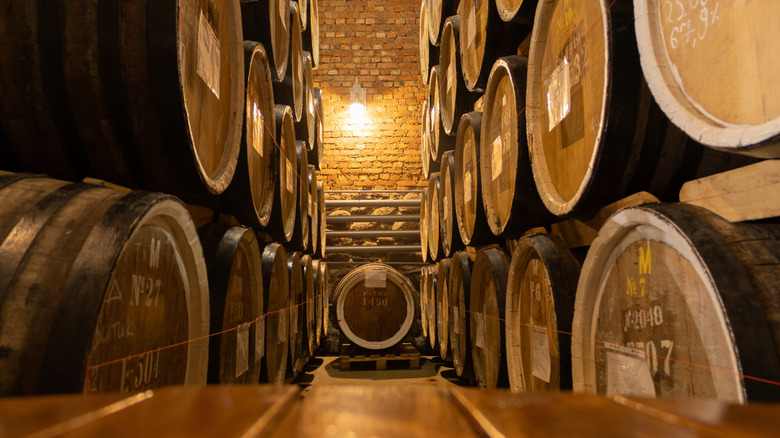
Maturation is the process that will define many aspects of barrel-aged spirits, such as whiskey and rum. When a distillery doesn't divulge how spirits are aged, then you wonder what they are trying to hide. When visiting a distillery, you should expect a tour of the warehouse, as it's an important aspect of the whole experience. The aging process is a part of the story.
I've always found that instead of being secretive about aging, good distilleries are happy to share their craft and are proud of their own take on the process. Buffalo Trace is a good example of a huge distillery that happily walks you through its fascinating variety of warehouses. As a whiskey-lover, you expect this insight.
These warehouses can be fascinating. Some are brick, where the temperature will change with the climate. Others are insulated and climate controlled. You don't need to see every barrel or be given trade secrets, but bad distilleries may hide information such as which barrel types were used or even it was aged on-site at all.
On many great distilleries' websites, they'll even have full pages dedicated to how the brand makes its spirit. As you'll see, a lot of the red flags with distilleries aren't necessarily about what you see; they're about what's hidden. Tours that skip production areas, or websites that have no information about aging, are suspicious.
A lack of transparency on sourcing
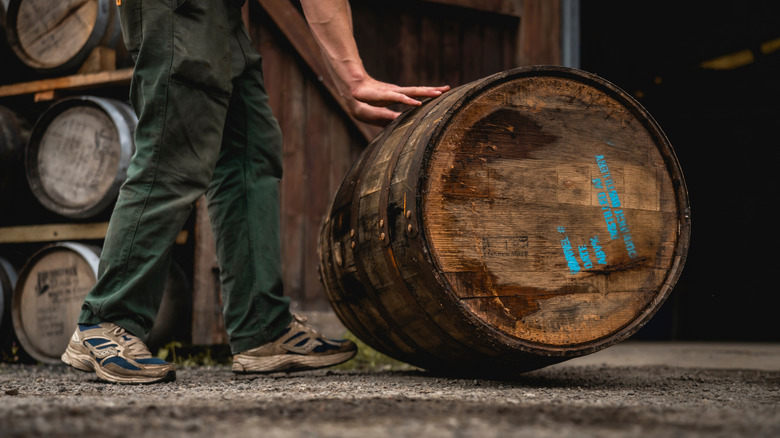
Sourcing spirits isn't inherently a problem, and there are a few good ones out there. This is where a brand or distillery will import a spirit from somewhere else. They may do this to blend spirits together for their own creation, to finish its maturation uniquely on-site, or because they have yet to build up distilling capacity. Others do it to sell it on as a craft spirit. Blending and finishing a whiskey is an art form, so I wish more brands were open about this. Transparency is important, as you can even find that what you may think is a distillery doesn't actually distill any spirits at all.
As a consumer, I believe you should be able to clearly see if a whiskey was distilled in-house or sourced. Terms such as "crafted by" or "produced for" can be key indicators. On the label, you also want to see if it says "distilled by." If that information is missing, there's a good chance it's sourced. Outsourcing at least a part of the process, such as bottling, is common. But whiskey lovers want to know where what they were drinking was actually produced.
A trustworthy distillery will fully explain its process. Widow Jane is a good example of doing the right thing. It is open about how it sources whiskey and cuts it with local New York water. Customers appreciate this honesty, and the result is an impressive range of whiskeys. Conversely, hiding your source goes against the heritage and craftsmanship of whiskey making.
Over-promotion of branding, endorsements or awards
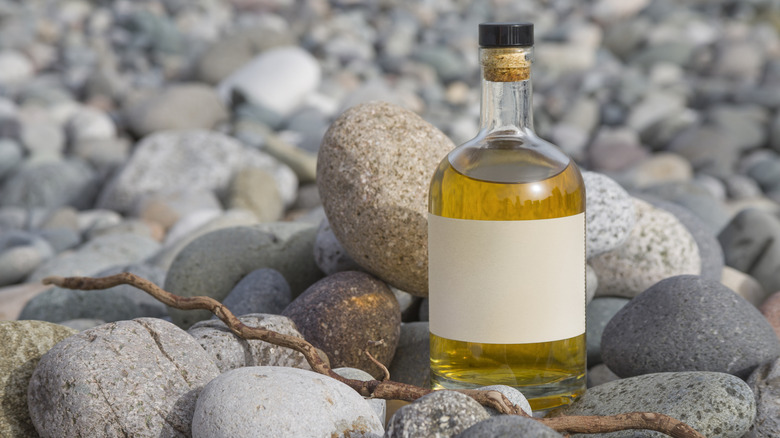
Every distillery needs to market itself. The red flag comes when this branding becomes the main attraction instead of focusing on the spirit in the bottle. Checking for this often starts with a look at the bottle. A fancy bottle isn't an outright red flag, but it should raise suspicions. You can see from looking at the best bourbon brands how the vast majority have fairly standard bottles for the core range. You see the same with the most popular Scotch brands, as well. Limited editions and ultra-premium bottles can be exceptions, but a distillery will usually rely on what's in the bottle to sell its product.
That also applies to endorsements and awards. Celebrity advertisements are common, but if a brand focuses more on who drinks the whiskey rather than how it's made, it's a red flag. Then we get awards, which are deceptive. There are often multiple categories and multiple awards given. A distillery also needs to submit spirits to be eligible. You may see something like "Winner of Gold at X Awards." To the casual eye, it looks like the spirit was the best in the world. In reality, it may have been one of several "gold" winners in a specific category. Acknowledging these awards is normal. But when they feature heavily on the label or in marketing, it's suspicious. In my opinion, these awards mean very little.
Staff with little enthusiasm about the product

The people who represent a distillery often give a clear indication of the pride that exists behind the scenes. Even if you don't visit a distillery, this pride can often be seen in videos, social media posts, and professional profiles. I've visited distilleries where greeters, servers, and retail staff seem genuinely enthused about what they are a part of. Then you get tour guides and brand ambassadors who speak with passion and are able to answer any questions you have. You can't help but be lured in and become enthusiastic about the spirit yourself. It also tells me the distillery cares a lot about all the small details.
Whether online or offline, you want a distillery to speak with passion about flavors, processes, and releases. In felt this on my visit to the Buffalo Trace Distillery in London, when everyone from serving staff to the brand manager and master blender passionately brought me into their world. When that energy about the spirit is missing, it starts to give you doubts. Do they care about the experience? Why isn't the focus on the spirit? Is there a poor working culture here? These are the types of questions I start asking myself.
A distillery that doesn't seem enthused by what it is making never seems to create an exceptional product. Motivated staff will go beyond the script and speak with excited honesty. When done badly, it ultimately makes you wonder: If they don't care about the whisky or small details, why should I?
Vague answers about key details
Spirit lovers adore the details. We want to know everything. Small batch? We want to know how small. High-proof? Let's see how high. You use a long-necked pot still? Show me. Clarity matters in more ways than one when it comes to spirits. Some distilleries rely on buzzwords that seemingly fall apart when you start to do some digging.
The term "craft" is a good example. When I hear "craft distillery," I picture a relatively small distillery that is trying to make its mark by doing things a little differently. The passion should be sky-high here, with independent ownership and transparency.
The term "craft" doesn't have much regulation, and it can be used by distilleries that mostly source spirts, have a token still, or are owned by a much larger corporate group. Each term used should come with context. If you hear "small batch," you want barrel numbers, identification, and how this batch was different.
Great distilleries give you information like this because they have nothing to hide. Missing information or answering with buzzwords is a red flag. It doesn't automatically mean the spirit is going to be bad, but transparency builds trust. Every good distillery knows that drinkers want the details. It's a part of the hobby to know the ins and outs of what you're tasting.
The label missing key details

Not reading the label is one of the biggest mistakes that you can make when buying spirits. Labels are bound by legal requirements, meaning you can't state anything on the bottle that is untrue. This means that what's missing can be as important as what's included. As mentioned earlier, if the label avoids stating where the spirit was distilled, it usually means it wasn't created by that brand. That's not automatically bad, but it helps to make you more informed.
A fact that surprises some about bourbon is there is no minimum aging. However, the term "straight bourbon" can only be used if it has been aged for at least two years, "bottled-in-bond bourbon" for a minimum of four. A label that just says "bourbon" will be younger than this.
Cask, barrel, and batch numbers can be included. Spirits' labels are also proud about where they are made and how pure the spirit is. "Single malt" Scotch is made from only barley, "100% agave" shows no other plant was used in the production of tequila. Using the impressive Aberlour 12 as an example: From the label, you can find the region, whisky type, age, year of origin, maturation process, barrels used, volume, proof, master distiller, tasting notes, distiller, bottler, address, and parent company. That's not unique; it's the information you'd expect from a great spirit. Anything less, and the red flags start to come.
Inconsistency in quality and identity
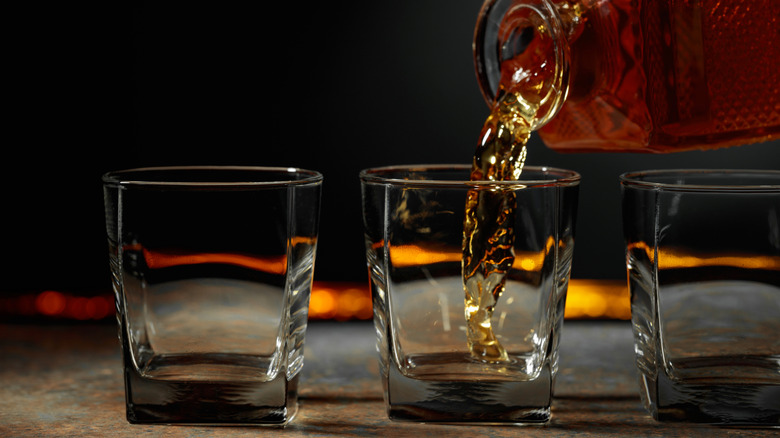
It's not uncommon for a distillery to experiment with limited releases, but most of them will have consistency in quality and a core identity. Maker's Mark is one of many good examples of this. It has a core range of wheated bourbons that, while all being different, are unmistakably related. It may have limited releases and the quirk of its wax-dipped neck, but the quality and consistency are its unshakable foundation. Most distilleries with this foundation of quality never veer away from it. Consistency in whiskey-making is difficult. It requires expertise in every single area, from picking the grain, blending the whiskey, and everything in between.
Whiskey can have variations in taste, especially in genuine small batches. However, these are usually small differences in flavor, not a big drop-off in quality. Big swings in quality are usually symptomatic of deeper issues, or even a brand changing where its whiskey is sourced. It can also show changes in business direction or a complete lack of identity.
You expect flagship expressions to be an anchor for a brand and a reference point for drinkers. You couldn't ever imagine the quality of an iconic brand, such as Jack Daniel's, ever changing dramatically. A good distillery should have a set philosophy which results in consistency. Most distilleries are proud of what they stand for. With weak distilleries, you have no clear idea.
Leaning too heavily on a great story
One of the many things I love about visiting a distillery is how many of them have a great story to tell. When tasting a spirit, you are enjoying the result of that story. There are many examples of this, with Four Roses Bourbon being one of them, such as how it used a technicality to sell bourbon through Prohibition. The point is that great stories are intriguing but common. Leaning into this history is common. Yet sometimes, it feels as though the story is the product. There is a thin line here, but if a brand is trying to tell you all about its story without celebrating the spirit itself, it's a red flag.
As with Four Roses, Glenfiddich is another distillery with a fantastic story, but it doesn't shout it from the rooftops. While that information is easy to find, the distillery's priority is delivering a world-class spirit.
Craft distilleries can be guilty of overreliance on a story. It sometimes feels they are scared of admitting they are new. A visit to Templeton Rye was a good example of this. The brand was on the receiving end of a class-action lawsuit after stating the whiskey was small batch, had a Prohibition-era recipe, and was made in Iowa. The sourced whiskey was none of these things (and actually came from Indiana). If you see any over-the-top marketing, do a little research. You'll often find a story that is usually as shallow as the spirit itself. Great distilleries know that stories matter — but never more than the spirit they create.