

The Best Basque Nachos With 'Pintxo Pico' Recipe
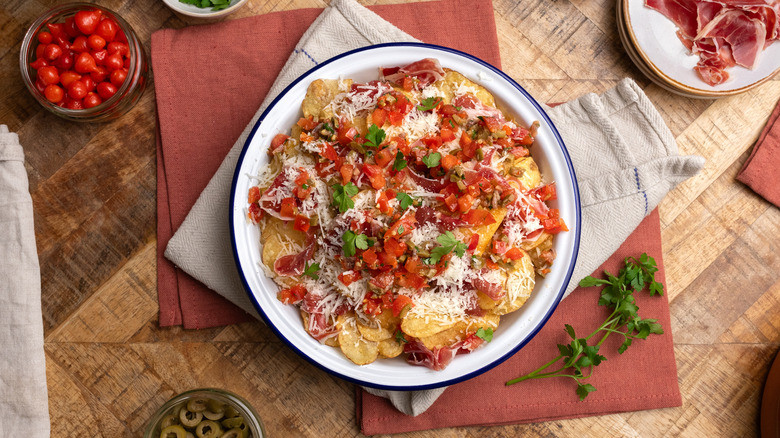
Basque nachos, also known as Spanish nachos, are among the latest party food creations to trend on social media. This fun yet fancy fusion takes inspiration from the enduringly popular Mexican dish nachos and adds a fresh, new twist using region-specific ingredients. This Basque nachos recipe, from the kitchen of recipe developer Jennine Rye, is inspired by foods originating from the Basque region, an autonomous community straddling the Spanish and French border and bounded by the Bay of Biscay.
While you may well have heard of a Basque cheesecake before, the Basque Country is deeply steeped in food culture, known specifically for its abundance of seafood and high-quality fresh products. These Basque-specific ingredients are often showcased in pintxos, tiny, bite-sized snacks similar to tapas, often served on a toothpick. Arguably the most famous of pintxos is the Gilda, a combination of sweet pickled peppers, savory anchovies, and briny green olives, and it is this specific pintxo that inspires the bold, punchy salsa used in this recipe.
The combination of thick, crunchy kettle chips topped with tangy Manchego cheese, salty-smoky Iberico ham, and a Gilda pintxos-inspired salsa creates a bold yet sophisticated snacking option that can be assembled in under 10 minutes. Elegant and unique, if you enjoy Spanish flavors, then this Basque nachos recipe is one to try.
Gather the ingredients for this Basque nachos recipe
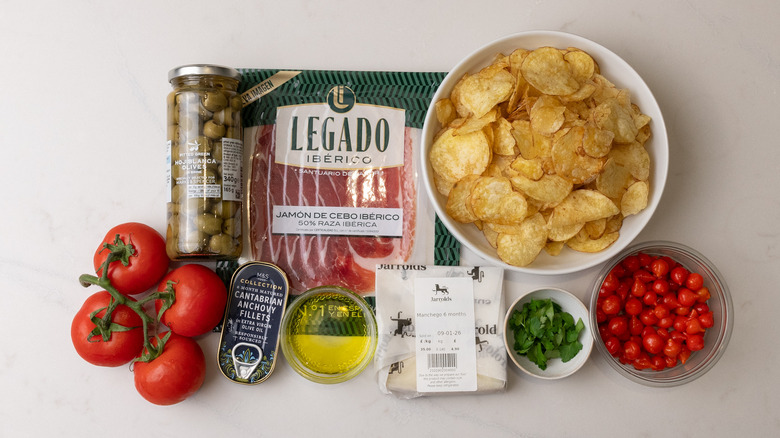
To begin this Basque nachos recipe, complete with a pintxo-inspired pico, first you will need to gather the ingredients. For the salsa, you will want tomatoes, piquillo peppers, anchovies, Spanish olives, fresh parsley, and olive oil. To assemble the nachos, you will additionally need a packet of kettle chips, Iberico ham, and grated Manchego cheese.
Step 1: Preheat the oven
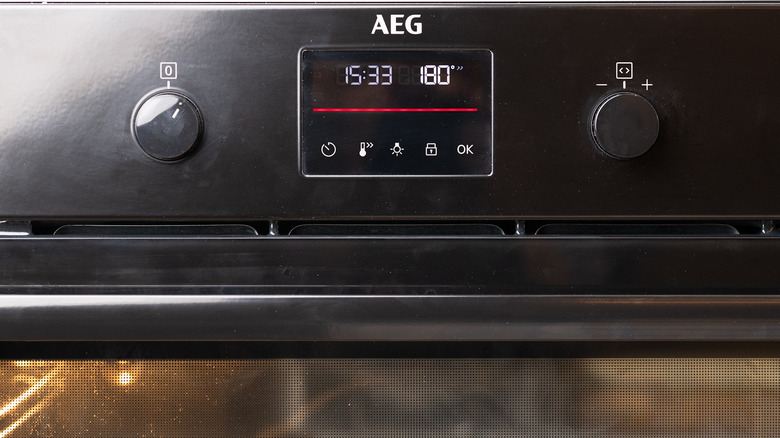
Preheat the oven to 375 F.
Step 2: Dice the tomatoes
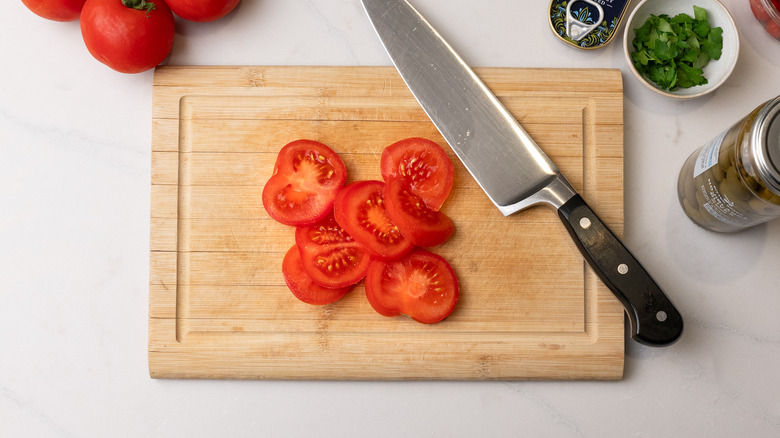
Begin by preparing the salsa. Dice the tomatoes, discarding the insides.
Step 3: Mix the salsa
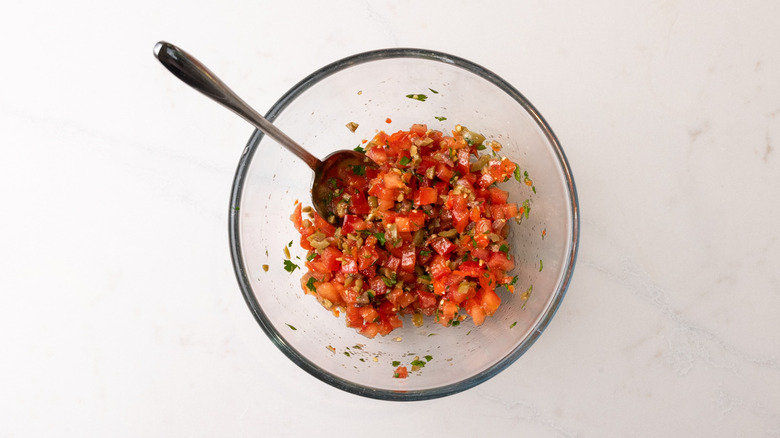
Combine the chopped tomatoes, Piquillo peppers, anchovies, olives, parsley, and olive oil in a bowl. Set aside.
Step 4: Place the chips in an oven tray
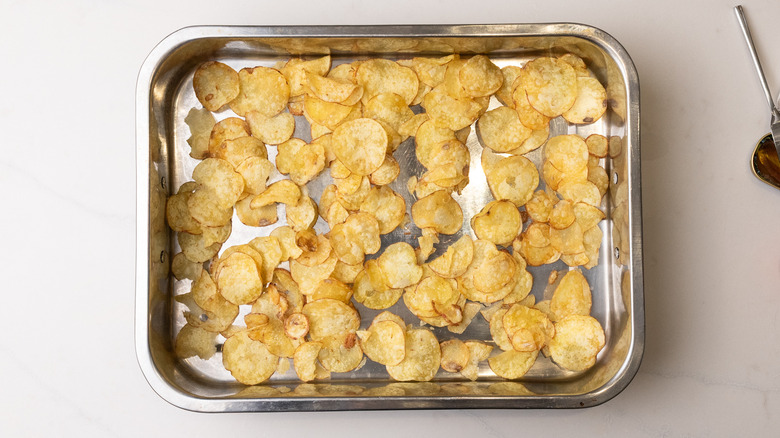
Spread the kettle chips out on an oven tray.
Step 5: Bake
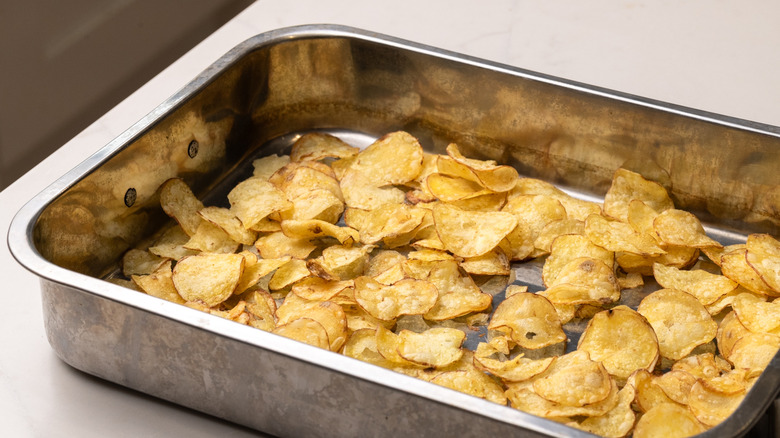
Bake the chips for 4 to 5 minutes until warmed through.
Step 6: Begin assembling the nachos
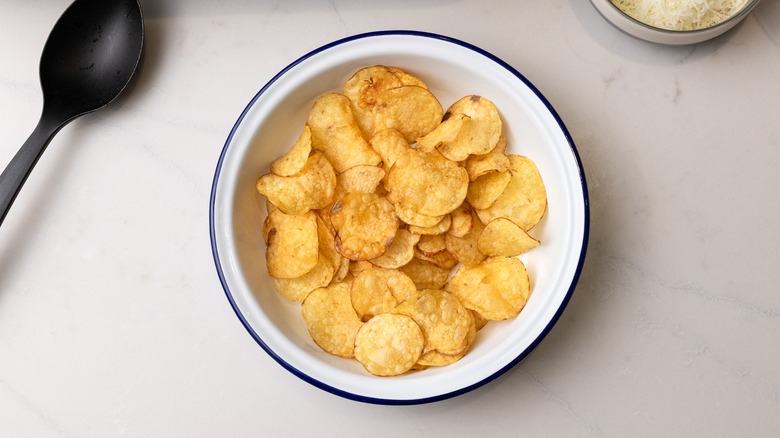
Using a serving platter or bowl, layer half the warm chips at the base.
Step 7: Add half the toppings
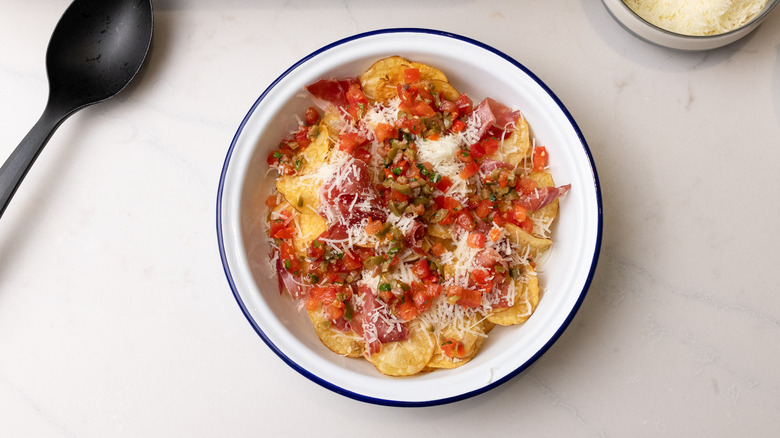
Top with half of the salsa, Iberico ham, and Manchego cheese.
Step 8: Top with the remaining chips
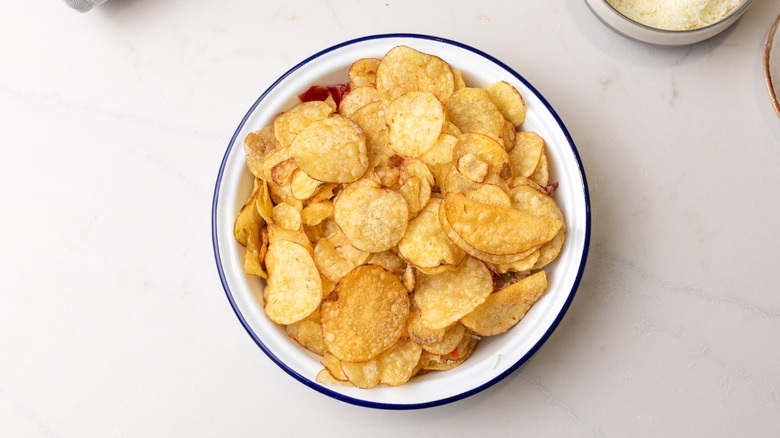
Top with the remaining chips.
Step 9: Finish with the remaining toppings
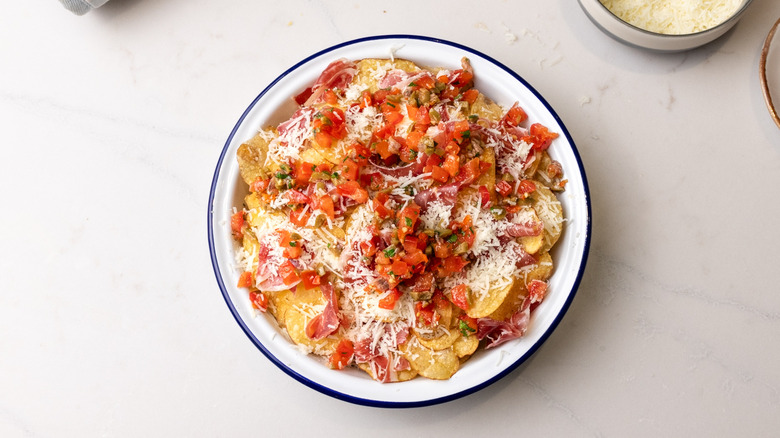
Finish with a second layer of salsa, Iberico ham, and Manchego cheese, before serving.
What can I serve with Basque nachos?
The Best Basque Nachos With 'Pintxo Pico' Recipe
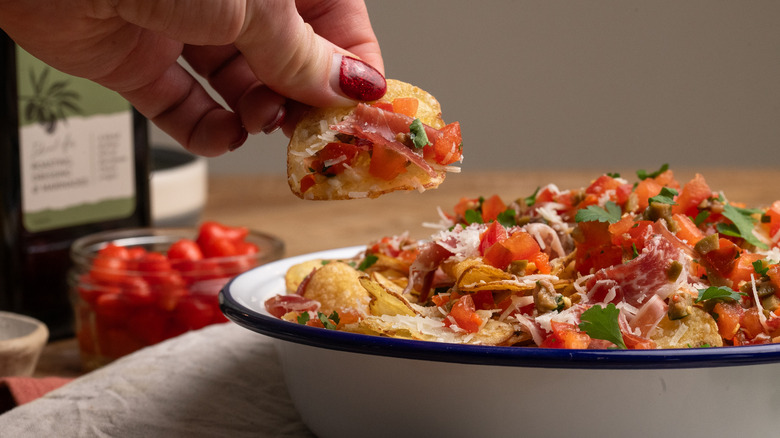
Inspired by Basque tapas, our fun Basque nachos feature crunchy kettle chips, smoky Iberico ham, Manchego cheese, sweet peppers, anchovies, and briny olives.
Ingredients
- 2 ripe tomatoes
- 2 tablespoons finely chopped Piquillo peppers
- 1 tablespoon finely chopped anchovies
- 3 tablespoons finely chopped Spanish olives
- 1 teaspoon finely chopped fresh parsley
- 1 tablespoon olive oil
- 1 (6-ounce) packet kettle chips
- 2 ounces Iberico ham, roughly torn
- ½ cup grated Manchego cheese
Directions
- Preheat the oven to 375 F.
- Begin by preparing the salsa. Dice the tomatoes, discarding the insides.
- Combine the chopped tomatoes, Piquillo peppers, anchovies, olives, parsley, and olive oil in a bowl. Set aside.
- Spread the kettle chips out on an oven tray.
- Bake the chips for 4 to 5 minutes until warmed through.
- Using a serving platter or bowl, layer half the warm chips at the base.
- Top with half of the salsa, Iberico ham, and Manchego cheese.
- Top with the remaining chips.
- Finish with a second layer of salsa, Iberico ham, and Manchego cheese, before serving.
How can this Basque nachos recipe be adapted?
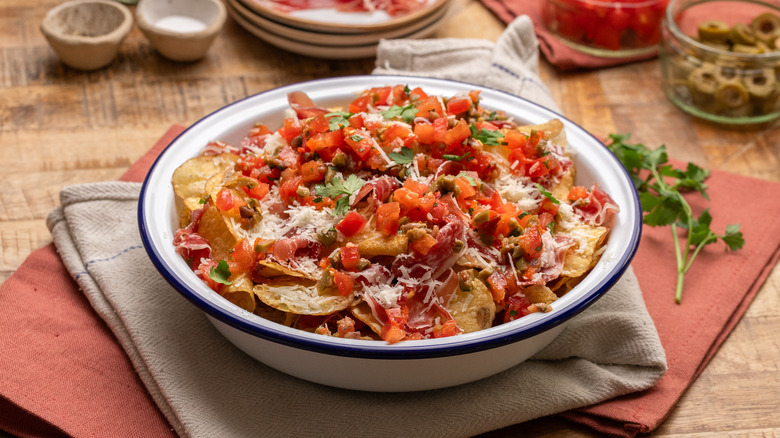
This Basque nachos recipe provides a casual yet elegant way to enjoy some of the bold flavors of Spanish cuisine, and it can easily be adapted depending on your personal preferences and the ingredients you are able to source. While this recipe uses the popular Spanish cheese Manchego, known for its rich, tangy, and nutty taste, we also recommend trying Idiazábal cheese if you are able to get your hands on some. This smoky and nutty cheese comes straight from the Basque region and would similarly work well with the other elements of the dish.
If you would like to switch up the meats you are using while keeping your nachos Spanish, cecina is a cured beef popular in Spain that can offer you a similarly decadent dining experience. Alternatively, while it's not specifically Basque, you could try mojama, a dried tuna that is particularly loved in the southern regions of Spain. This cured tuna offers a complex, salty, and umami flavor, and is affectionately known as the jamón of the sea. If you prefer to make this recipe even simpler, you can always forgo the salsa assembly and instead simply toss some marinated, anchovy-stuffed green olives straight into your nachos for a delicious, briny pop.
What is Iberico ham?
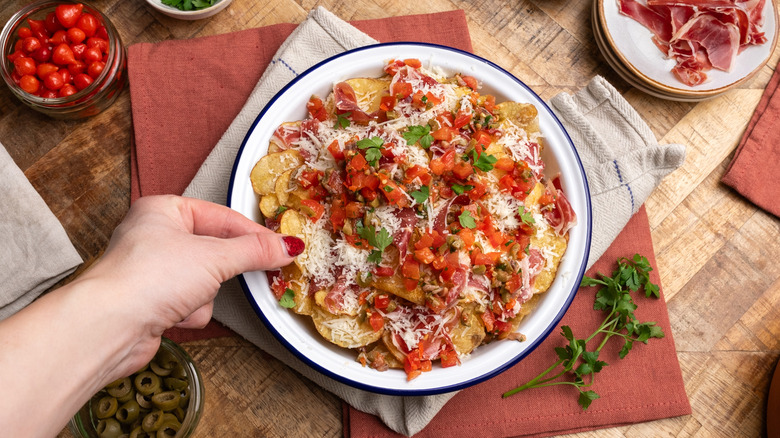
With the rise in popularity of charcuterie boards, it's no wonder consumers have become much more adventurous in exploring varieties of cured meats that are offered globally. If you consider yourself somewhat of a cured meat connoisseur, then you'll likely already know that jamón Iberico is considered to be one of the most prized cured meats found worldwide. This particular delicacy is carefully crafted in Spain using the meat of the Iberico pig.
The Iberico pig is the only type of pig that can be used to make Iberico ham. Native to Spain, Iberico pigs are known for foraging acorns and for their particular ability to store fat within their muscles, both of which contribute to the unique, rich, and nutty flavor of the resulting meat product. The slow curing process is another reason for the desirability and high price of Iberico ham, with traditional aging processes calling for the meat to hang after salting for anywhere up to four years.
When shopping for Iberico ham, you may notice that the packages display a classification system, which was introduced by the Spanish Ministry of Agriculture and Fishing, to categorize this prized meat according to its quality. This classification system ranges from white to black, with the black label product boasting 100% free range, acorn-fed Iberico. A whole leg of Black Label Iberico ham can easily cost a few thousand dollars, though you definitely won't need as much as that for this recipe!