

13 Mistakes Everyone Makes With Stir-Fry
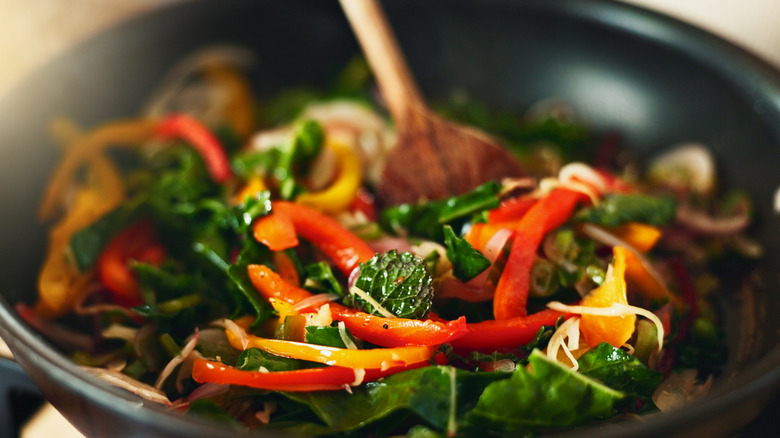
Although stir-fry has the appearance of a quick and easy, clean-out-the-fridge weeknight dinner, a quality stir-fry requires technique. This doesn't mean it will necessarily take longer, or that you can't use what you have on hand; however, it's essential to follow a few guidelines if you're hoping for a good outcome. Notable stir-fry flops include mushy veggies, underseasoned proteins, and a lack of consistency. As a recipe designer and chef, I've always felt there isn't enough focus put on variety of textures, which is especially important when all the ingredients are cooked together in one pan. Stir-fry can still be your weeknight go-to, but with a few bumpers in place, you'll have a formula for success.
If you're new to the stir-fry game, follow a few stir-fry recipes to get your toes wet. This will make selecting vegetables and proteins a no-brainer, and you won't find your ingredients drowning in a liquidy sauce or overpowered by sodium. Once you get your footing, remember the mistakes everyone makes with stir-fry so that you can avoid them before they become a habit. Before long, your confidence will build, and you'll be creating restaurant-worthy stir-fry and tossing your takeout menus in the recycling bin. Now, let's wok and roll.
The heat is too low
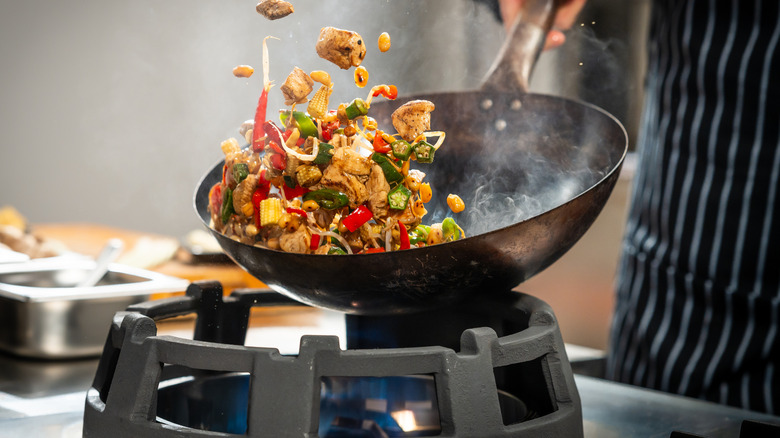
One of the major mistakes folks can make with stir-fry is being cautious with heat. You cannot start with a cold pan, and you cannot stick to a low or medium level of heat. If you're not hearing that iconic sizzle the moment your aromatics hit the pan, then it's just not hot enough. This might mean a lengthy pre-heating process, depending on the type of pan you're using — although a wok should only take between three and five minutes to reach full medium-high heat. Test it by cautiously flicking a tiny bit of water into the pan and listening for that aggressive sizzle.
Adding ingredients as your pan is just starting to heat up may cause meat and veggies to stick. Proper seasoning requires heat. Slow cooking is the stir-fry mistake that causes soggy ingredients. It results in the veggies slowly steaming all together, and instead of leaving those caramelized brown spots, they slowly become mushier and mushier. A perfectly executed stir-fry will be loaded with sizzling, al dente, flavorful vegetables. It can be easy to overcook the vegetables, too, so the best approach is to hit those ingredients with a scalding hot pan for a shorter amount of time. Luckily, this tip will likely save you some time in the kitchen, reinforcing stir-fry's reputation as a great weeknight dinner.
Not blanching your veggies first
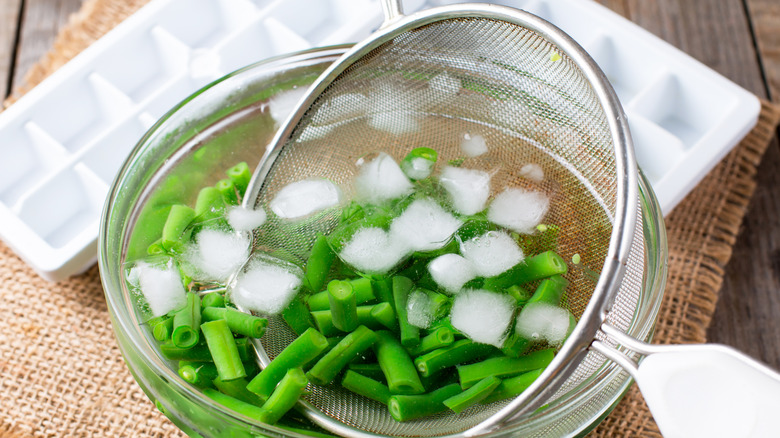
It's frustrating when your takeout or in-restaurant meal is much better than what you can make at home. Even a simple stir-fry can taste so different depending on the quality of ingredients and the methods used. But another way to ensure your stir-fry veggies will taste restaurant-quality requires one extra step: blanching. Before your veggies even hit the wok, they should take a quick dip in some boiling water, bringing out their bright coloring. This method will tenderize them just enough so that when they hit the wok, most of the cooking is already done.
Have you noticed that cooking veggies with high heat often results in the outsides being nice and tender, but the insides ending up a little too crunchy? A quick blanch can often resolve this issue. To blanch your veggies, you'll want to immerse them in rapidly boiling water for a few minutes, or for more tender veggies, even 60 seconds can do the trick. Ultra-soft vegetables like leafy greens and summer squash can forgo the flash blanching, and tougher produce like carrots or sweet potatoes might take a little longer. When green vegetables like broccoli become more vibrant, that's your cue to remove them immediately. If your veggies aren't going right from the blanching station into the wok, you can cool them down in an ice bath so they don't overcook.
The wok is over-crowded
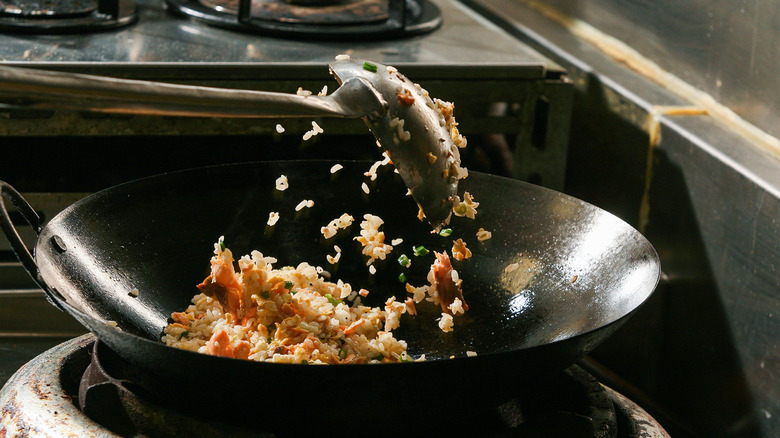
Are your stir-fries turning out soggy? And I don't mean saucy, because sauce is great. I mean soggy, mushy, and steamy. This often happens if the wok is overcrowded. The same rules apply if you're crisping vegetables in the oven. Don't crowd the pan. Overcrowding the wok is ruining your stir-fry because vegetables let out steam when they cook. Most vegetables contain a lot of water. Well, when that veggie hits the hot pan, some of that water sizzles out. And, if there are more vegetables close by, they can get hit with that steam. If you give them space to breathe, then they are less likely to get steamed and soggy and more likely to sear, which is the desired outcome for stir-fry.
So, how much food is too much food in your wok? If you have a 12 to 14-inch wok, you can toss in enough ingredients to feed two big portions, or up to four small servings. You don't want to see layers and layers of ingredients, and it should never exceed more than a third of its full capacity. You should be able to pick up the pan to shift the ingredients around, and a heavy wok will be hard to work with. This might mean you have to make multiple batches, and that's okay. Although it will take more time, your pan will already be preheated and ready to go for round two.
The proteins haven't been marinated
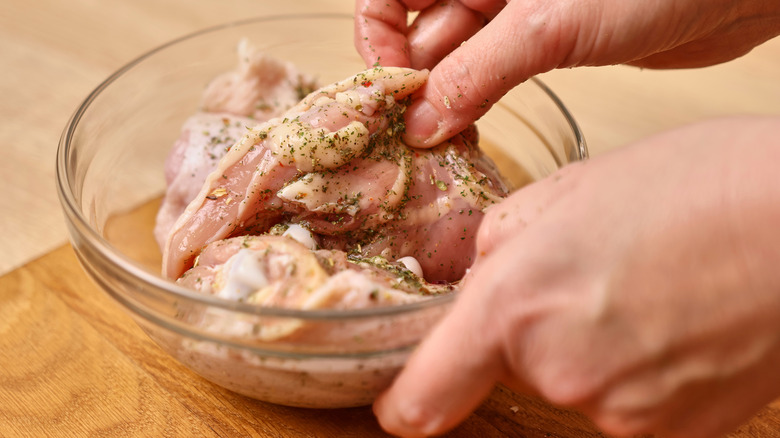
Stir-fry is a famous sauce-heavy meal. And as a recipe designer and chef, I value sauce more than just about any other element of cooking. If you think tossing some sauce in your pan to glaze your ingredients is enough, then your sauce hasn't yet reached its full potential. Don't feel bad, this is good news! Your sauce can have more of an impact than it currently does. Even if that chicken, tofu, or steak is fully doused in sauce by the end, it still needs to be marinated before it even reaches the pan.
Marinating helps to tenderize protein and penetrate flavor deep into the center, so not a single bite is flavorless. This is especially important with tofu, tempeh, poultry, and other milder proteins that act as a vehicle for flavor. If you can, marinade your proteins overnight in the refrigerator, after you've cut them up. But, if you haven't thought that far ahead, don't sweat it; a few hours can make a huge difference. You don't have to use the same sauce that you're drizzling into the wok. If you do change things up, be sure you're using complementary flavors. Start with your basic tips on marinating chicken, easy formulas for marinating steak, or take a walk on the wild side and try using unique ingredients like fruit juices in your homemade marinades.
There is too much oil in the pan
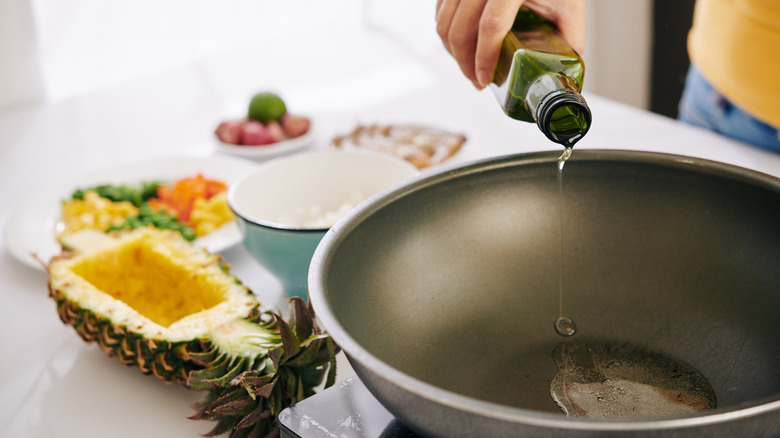
I'm going to confess something here: I'm an avid over-oiler. Especially when it comes to olive oil, I go through Costco-sized bottles rapidly. It goes in the pan, over my breakfast toast, drizzled on sandwiches, garnishing soups and pasta, and even over my ice cream. But when it comes to cooking stir-fry in a wok, I have to actively rein in my olive oil usage. Your goal is to keep things relatively dry in the pan until the sauce goes in toward the end.
The absolute best method to ensure successful stir-fry is to season your pan properly with a minimal amount of oil and then add a tad more during the entire process. You should not exceed 2 tablespoons, and in most cases, one will be quite enough. If you like the dense mouthfeel of oil, consider adding it to your sauce. Sesame oil can add incredible depth and flavor with a very small amount necessary. Keep things light, dry, and hot for the very best stir-fry outcome.
Using the wrong pan
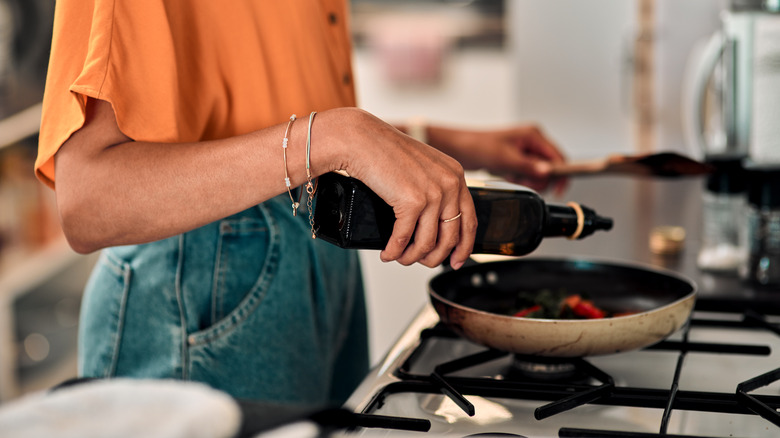
I get it. Not everyone has a big ol' wok sitting in their cupboard for stir-fry night. And unless stir-fry or Chinese cooking makes a regular appearance in your household, it's unlikely you've got one on hand. The reason woks work well for stir-fry is the large surface area. It also creates different zones of heat, with the center being scalding hot and the edges out of direct heat. Made primarily of carbon steel, with the proper seasoning, a wok can become non-stick, allowing for some wrist action and ingredient tossing. This, of course, adds cool points to the stir-fry process.
For those of us without a wok, there are other options you can use. You'll want a pan you can season and seal, like cast iron or even stainless steel. Target a skillet with a large surface area, and if you're cooking on an electric stovetop, you'll also want to consider something with a flatter bottom that will make more contact with the heat. Avoid nonstick pans that can't handle high heat. At the end of the day, a wok is the absolute best pan for stir-fry, and stir-fry is the absolute best use for a wok. Truly, a match made in heaven.
The oil has a low smoke point
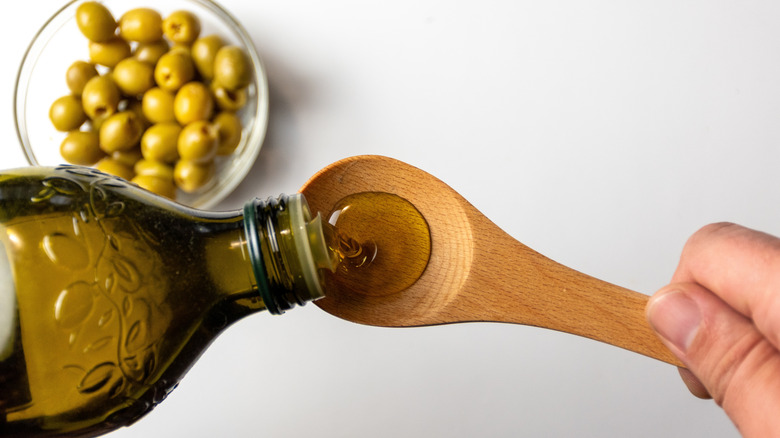
If you have yet to do a deep dive into different cooking oils and smoke points, this is your sign. Did you know that cooking with a low-smoke-point oil on high heat can release carcinogens? Even though certain oils might contain nutrient-dense elements when enjoyed at room temperature, excessive heating can change the game. Stir-fry is all about the heat, so we must select an oil that can take it.
I'm a huge fan of extra virgin olive oil, but its smoke point ranges from 350 to 410 F. Medium-high heat typically exceeds 400 F, so it's best to go with something with a higher smoke point. This is why refined avocado oil is great for sauteing; it has a smoke point of around 480 to 520 F. Other high smoke point oils include refined peanut oil, safflower oil, and canola oil, all exceeding 400 F. Lesson learned: If you can't take the heat, get out of the kitchen.
Letting the sauce do all the flavoring
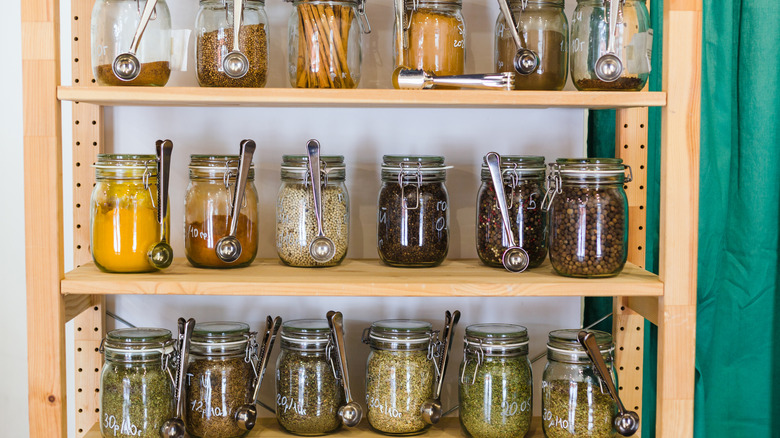
While sauce is just about the best thing to come from the culinary arts, it should not be heavily relied upon. You wouldn't forgo seasoning your chicken tender breading because you plan on dipping it all in honey mustard after it's fried, would you? Flavor should reach the core of every dish, and then there is always room to sprinkle or drizzle more on afterward. When it comes to stir-fry, those proteins and veggies should be flavorful before they even meet their sauce. The proteins should always be pre-marinated, and aromatics are essential to add to the wok pre-saucing.
For a stir-fry, it's important to include powerful aromatics like garlic and ginger. Other intensely flavorful ingredients could include chilies, onions, peppercorns, star anise, and others. Add your aromatics, herbs, and spices early enough so they tangle with a little heat, but keep a close eye so they don't overcook. There is nothing worse than burnt garlic. Aromatics are important when cooking chicken, tofu, and other mild proteins because they carry the flavor. So, don't forget them, let them blossom, and enjoy incredible food, topped with a memorable, mouthwatering sauce that adds to the established flavors.
All the ingredients are going in at once
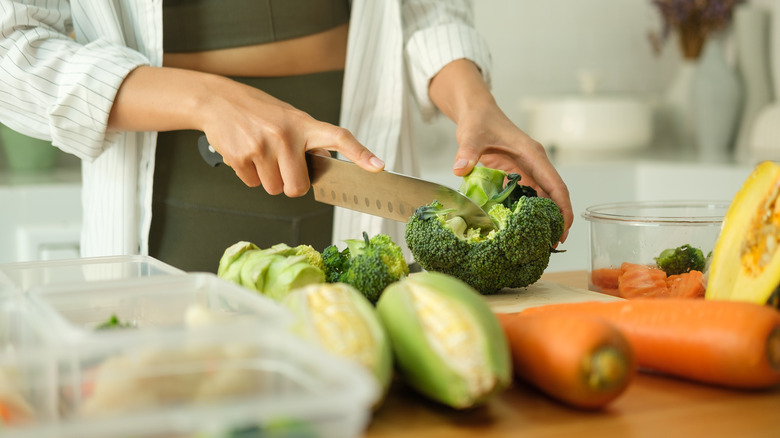
Vegetables have different cooking times, so if you want to ensure that each ingredient is cooked al dente, then it's best to stagger them. Now, you don't need to set a timer or look up a formula. Go with your gut. Firmer vegetables like carrots, beets, sweet potatoes, and other root vegetables might need a little bit longer in the pan, unless they have been blanched beforehand.
Tender and soft vegetables like leafy greens should be thrown in at the last minute and only cooked until just before their color truly starts to change. Vegetables will continue to cook, even out of the pan, so it's best to undercook veggies that have the potential to become mushy. Give a little extra attention to those two extremes — crunchy and ultra soft — and feel free to be a little more flexible with all the other ingredients.
Of course, you want to be sure that meats are cooked all the way through, so test them by cutting a larger piece open to check the inside or using a meat thermometer. Do this before they exit the skillet. In addition, don't make a common stir-fry mistake by adding salt too early in the cooking process. The salt will draw out moisture from the vegetables, potentially making them mushy. Cooking is an art, but sometimes you need a little bit of science to help everything come together.
There is too much variety
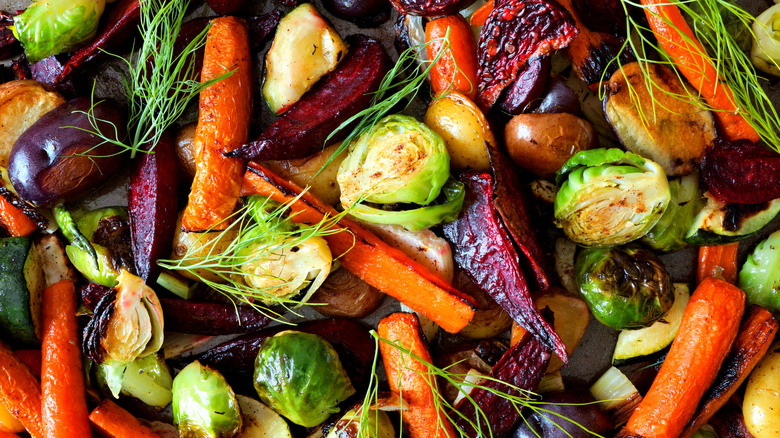
Although it can be tempting to use every last remaining protein and vegetable in your refrigerator in your stir-fry, it's important to choose ingredients with intention and not overstimulate the palate. No one ingredient can really shine if there are too many characters in play. Now that doesn't mean you have to necessarily limit your aromatics and spices, but instead limit and be thoughtful about your proteins and vegetables.
How many ingredients are too many? The ideal number of ingredients to include in a stir-fry is three to five, including one protein. This will help draw focus to the ingredients you do have and keep the cooking experience less complicated. No, this doesn't mean that you can't go outside of that range. It's simply a guideline for success, but feel free to experiment and use your culinary creativity.
Forgetting to use a thickening agent
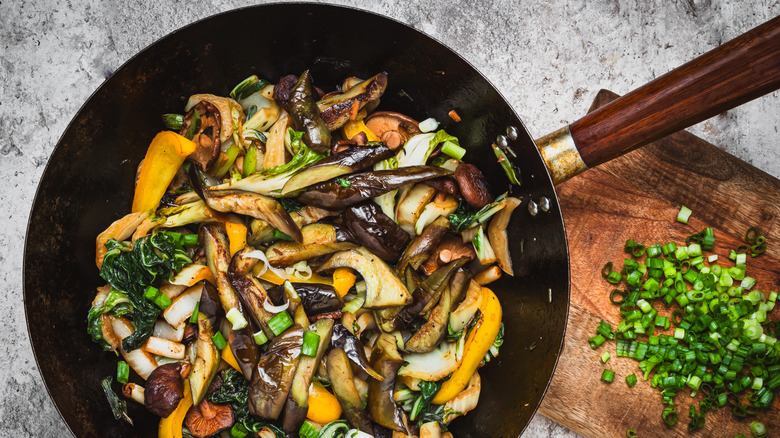
A stir-fry should be saucy but not wet. Let's talk about the distinction there. Thin liquid makes it watery and soggy. A sauce should be thick enough to coat and stick to your ingredients fairly evenly. And, it's always nice to have a little extra left over to saturate your noodles or rice. The best way to thicken your sauce and avoid a watery texture is to add starch. Cornstarch is the secret to restaurant-worthy stir-fry, as it is a nice neutral thickening agent that can ensure an incredible saucy texture.
This is often the ingredient that homemade stir-fries are missing, and a little corn starch can make your stir-fry restaurant-quality. To avoid lumps of starch, you want to stir your corn starch into a small amount of your warmed sauce. Whisk it to ensure that there are no lumps before introducing it back into the rest of the sauce. It will dissolve and shouldn't change the color of your dish. You will notice, especially if you have leftovers, that it will continue to thicken as it cools. A few tablespoons can do the trick, but start light and add more as needed.
The sauce is going in too early
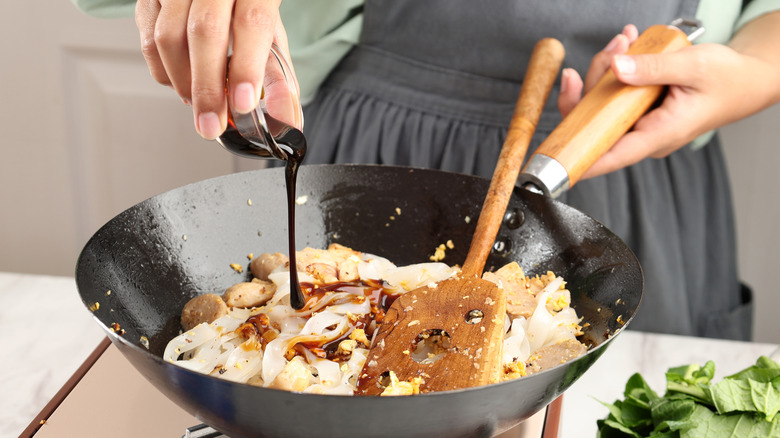
It's a delicate balance trying to time everything going into your wok. And although there is plenty of wiggle room, there are a few strict rules to live by. The mistake many people make is adding in their stir-fry sauce too early. The goal is not to cook the veggies in the sauce, but instead to coat the veggies in the sauce and let it reduce and thicken rapidly under high heat. If a sauce is added too early, you risk the veggies steaming and becoming mushy. Remember, dry and hot is always best.
So when should you add your sweet and savory stir-fry sauce to the sizzling wok? Before your veggies are fully done cooking, and you've just added any leafy greens. Keep the pan hot, and let the sauce bubble and sizzle for only one or two minutes before removing your creation from the heat. At that point, you'll want to plate your stir-fry immediately; that way, you remove it from the hot pan to prevent everything from overcooking. And it will continue to cook, so that's why it's crucial to add the sauce before the veggies are fully cooked. The only exception is that you'll want any meat-based proteins to be fully cooked to reduce the risk of food-borne illness.
Not varying the texture
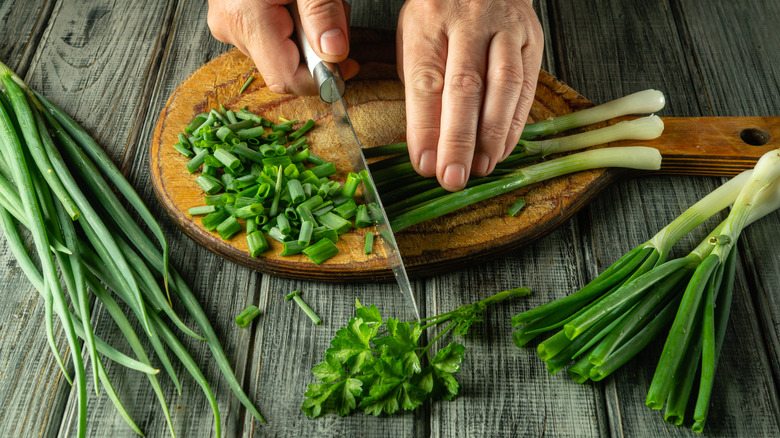
Rice and noodles add a variety of textures, but it's important to create a unique mouthfeel with each bite. Chewy proteins and al dente vegetables often hold some contrast, but if you're looking to elevate your stir-fry game, then it's important to consider adding fresh, fermented, or crunchy toppings.
You may not always be in the mood for a multi-step recipe, but adding a sprinkle of something crunchy takes no more than a few minutes to execute and can make all the difference. Try topping your stir-fry with fresh green onions or cilantro, toasted sesame seeds, crispy shallots, or kimchi. The temperature and texture contrast will help to create a more memorable dining experience and up your stir-fry game considerably. Even some roasted cashews, crumbled tofu, raw crumbled ramen, or shredded raw carrots can make your recipe sing. Now, you can enjoy the perfect stir-fry, sans mistakes.