

10 Additions That Make Salads Way More Filling
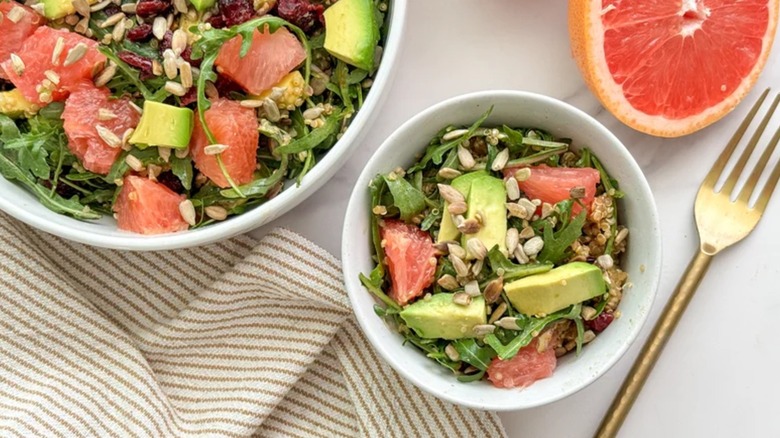
Salads are such a popular dish that we can expect them at virtually any eatery we visit. They're also easy to whip up at home and offer some greens to go with meals. But if you're planning to eat salad as a standalone meal or a hearty side dish, you might want to consider bulking it up and making it more filling. We've rounded up some tasty ways to give salad more oomph, bolster its flavors, texture, and color, and, of course, make it more hearty so we feel full by the end of it.
The great thing is that a lot of the following additions can be mixed and matched to achieve unique and fun flavor profiles. Salads don't just have to feature bland, limp, and waterlogged pieces of lettuce; there are so many ways to approach them and make them scrumptious and satiating. After trying some of them, you may never look at salad the same way again.
Veggies
Incorporating veggies into a salad can give it a boost of nutrients, add extra calories, and make it more filling. Plus, you can use one or more veggies to add color and texture to your bowl. We love that they can be raw, roasted, sauteed, or cooked however your heart desires. Cooking them, of course, will add more prep time, so raw veggies might be the best bet if you're trying to get dinner on the table fast. Even grated carrot or Brussels sprouts can make an impact. However, we also love the flavor of roasted ingredients, such as broccoli, zucchini, or carrots, in salad. While their texture is soft, their flavor is ramped up, especially if they're charred beforehand.
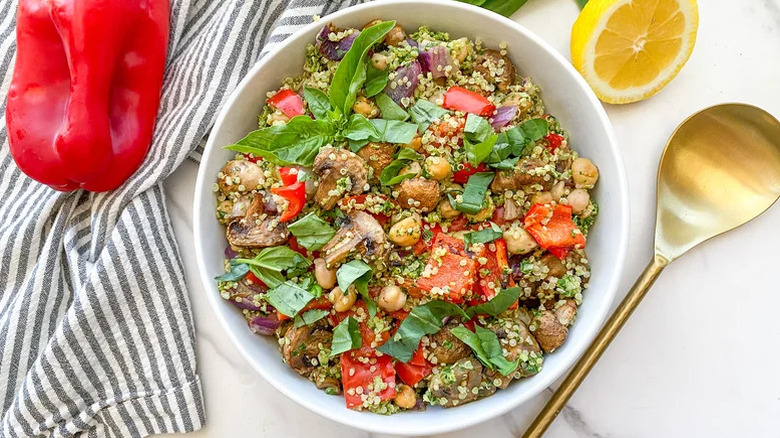
Try roasting bell peppers and mushrooms for a bold pesto quinoa salad or whipping up diced herb-roasted root veggies (golden and red beets, sweet potatoes, and carrots) to toss into your favorite salad. We enjoy pan-frying green beans, whether chopped or whole, warm or cold, to add to salads with goat cheese. There's really no wrong way to approach adding vegetables to salads; it can take the most basic ones to new heights. Plus, there's a whole world of seasonings and chopping techniques that you can use on the veggies to switch things up.
Meat
Meat is a common ingredient used in other dishes, so you might as well add it to a salad to make it more filling. Use anything that you like; we particularly enjoy grilled steak or chicken. Try pairing prime rib or flank steak with fresh greens, balsamic dressing, blue cheese, and other additions for a quick and satisfying salad. Or use cooked ground beef to make a burger salad with lettuce, cheese, pickles, tomatoes, and onions — or whatever you typically like on a burger.
When you want to whip up something familiar but hearty, go for a classic grilled chicken Caesar salad. The homemade sourdough croutons give it a zesty crunch, while the romaine hearts make it look like a restaurant-quality dish. Load it up with grilled chicken and assemble as directed for a scrumptious, filling, and unfussy meal.
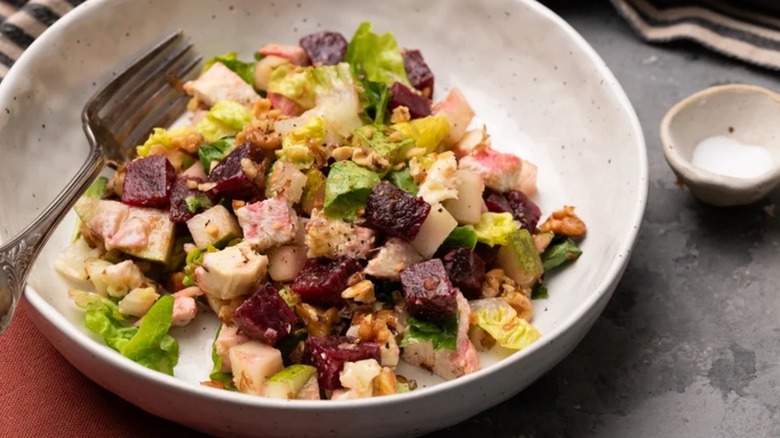
You can also combine chopped chicken, pear, and beets to create a salad that's fresh, colorful, and delightful. It brings together many components and shows how satiating and texturally diverse a salad can be. There's the sweet, earthy touch of beets, the delicate sweetness of pear, and juicy baked chicken in every bite.
Whole grains
There are a lot of incredible whole grains that can be incorporated into a salad to give it more body. This add-on can increase your prep time, since they need to be cooked, but the way the grains add texture and heartiness to a salad may make the extra time worth it. Croutons are a common salad topping, but whole grains bring even more fiber, vitamins, and minerals. Use anything from quinoa to bulgur to black rice in your next creation. Quinoa is another terrific addition when you want a smaller, less textured mouthfeel that blends in better with other ingredients. It works wonderfully in a grapefruit and arugula salad with diced avocado.
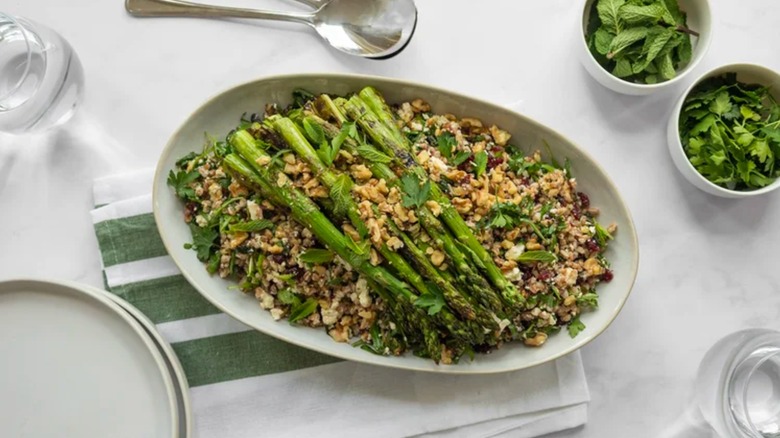
This spring harvest farro salad is guaranteed to impress guests. It's packed with unique ingredients that will make a salad as memorable as it is delicious. It uses cooked farro, toasted walnuts, and lightly charred asparagus as the base and is enhanced with fragrant mint and parsley, tangy and sweet dried cranberries, and briny crumbled feta. Again, this is a wonderful example of how you can mix various nourishing components into one dish — here we have nuts, whole grains, and cheese, but you could also incorporate sliced apples or roasted chickpeas.
Avocado
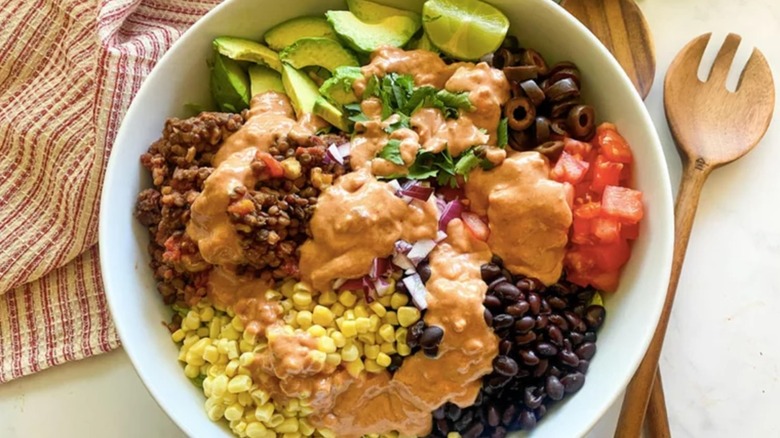
We love using avocados in meals (salads included) because they are a nutritional powerhouse filled with fiber, potassium, magnesium, folate, monounsaturated fatty acids, and a bunch of other nutrients and vitamins. They offer a creamy texture and mild flavor, which allows other elements to shine, but still deliver heart-healthy fats that keep you feeling full.
Sliced or diced avocados can work on virtually any salad. They work particularly well on the aforementioned burger salad, or a vegan taco salad if you want a meat-free option. The latter is decked out with all sorts of goodies like black beans, lentils, tomatoes, corn, and a flavorful sauce that makes it unlike the average salad. Every corner is bursting with flavor, color, and texture, making it a surefire hit.
Alternatively, a honey mustard chicken tender salad could use avocado to make it more memorable. Chicken tenders offer protein and added heartiness, while the honey mustard dressing hits various flavor points: sweet, tangy, spicy. If you want something a little lighter but still nutritionally dense, a Mexican kale salad with diced avocado might be right up your alley; the kale-loaded chopped salad doesn't require any lettuce and works perfectly as a side to the main dish (but it can be made even more satiating by adding more beans than the recipe calls for).
Nuts and seeds
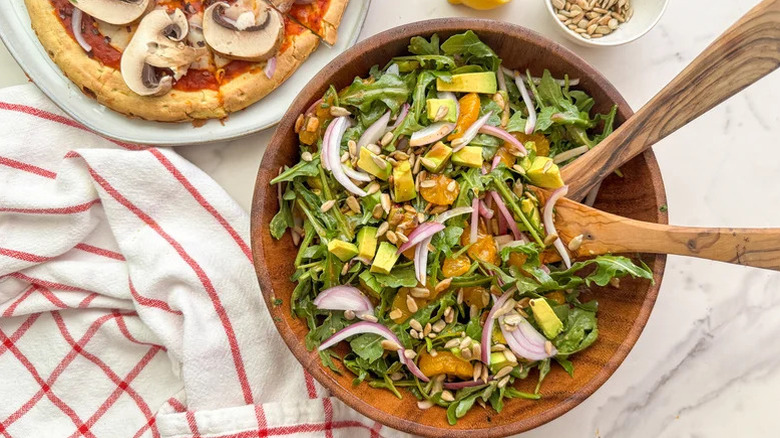
Nuts and seeds are a fantastic addition to many types of salads, offering protein, fiber, and healthy unsaturated fats. The best part is how versatile the seeds and nuts can be: You can mix them in the salad, pair them with other add-ins, or blend them into a dressing. A citrusy arugula salad incorporates several satiating ingredients, including raw sunflower seeds, canned mandarin oranges, and diced avocado. This vibrant salad offers a tangy base when you want something nourishing without being heavy. Plus, it only takes 10 minutes to put together and makes for a terrific side for pizza or pasta. If you prefer to go for the greens, this super green grain salad is an excellent option; it's brimming with tasty ingredients like pumpkin seeds, tahini (a rich sesame seed paste), and edamame.
You may have spotted options in some of the previously mentioned salads, too, as seeds and nuts pair with a lot of other filling ingredients on this list. Walnuts, cashews, or toasted seeds add a scrumptious crunch to the chicken tender salad, the grapefruit arugula dish calls for sunflower seeds, and the roasted quinoa salad calls for pumpkin seeds and pine nuts to top it all off. Consider using sesame seeds, hemp seeds, poppy seeds, almonds, pistachios, pecans, or peanuts (technically a legume) to add crunch to your next salad.
Fresh fruits
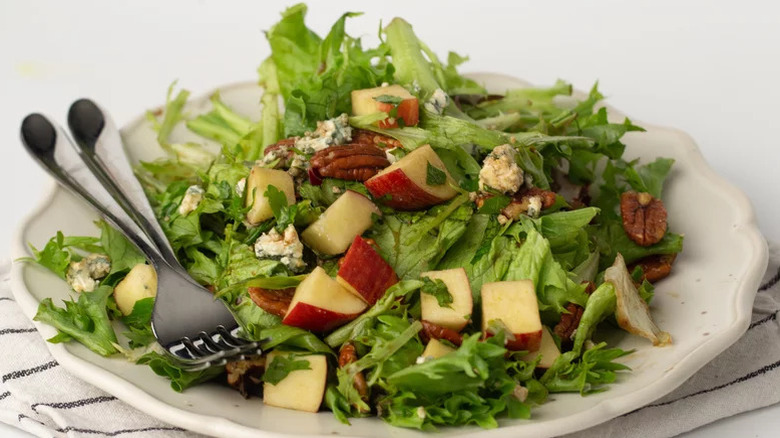
Bring a sweet touch by adding fresh fruits into your salad rotation; they can be a filling carbohydrate while also offering a burst of juicy flavor. Dried fruits, while perfectly delicious and acceptable for salads, tend to be more calorically dense and sometimes have added sweeteners that might make a salad sweeter than you want it to be. It's possible to add dried fruit, but just consider using ones with no sugar added. Apples, pears, strawberries, blueberries, blackberries, watermelon, mango, and grapefruit are just a handful of common fruit additions you'll find in salad recipes.
This harvest apple salad recipe combines crisp, diced apple with pecans and blue cheese. Consider using Granny Smith apples when you want something a bit more tart; the variety works especially well with goat cheese and walnuts. Strawberries make a vibrant addition to a salad with avocado, leafy greens, cheese, and nuts, and tend to work well with a tangy balsamic dressing. When you want a salad that appeases multiple senses, try a beautifully layered and colorful roasted butternut squash salad. It combines the sweet and earthy notes of satiating ingredients like roasted butternut squash, goat cheese, pumpkin seeds, and fresh fruit in the form of bite-sized pomegranate arils.
Eggs
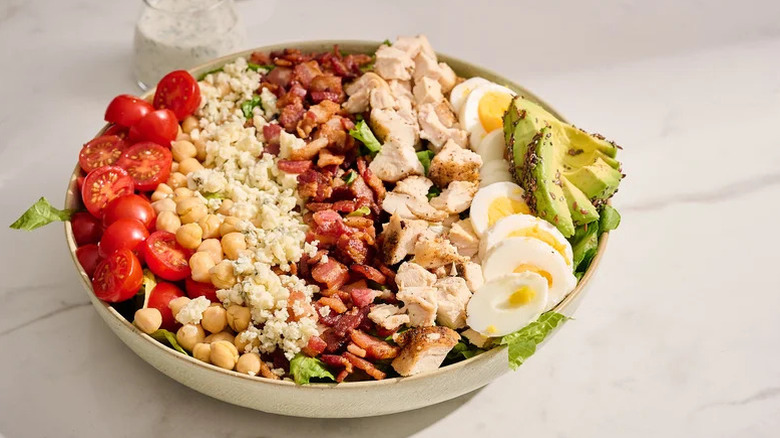
While a mayo-based egg salad technically has "salad" in its name, there are many other ways to think outside the box with this ingredient. Hard-boiled eggs are a great choice in salads, including this protein-packed Cobb salad. This option offers avocado, eggs, beans, meat, and more, and is so filling that you might have to add it to your weekly meal rotation. It's not just a salad; it's an entire meal decked out with toppings, including sliced hard-boiled eggs.
Hard-boiled eggs also work in a Niçoise salad, but that's not the only type of egg worth trying. You can also use poached or soft-boiled eggs with jammy or runny yolks for this recipe. Try topping a salad with fried or over-easy eggs; this can work with mixed greens, avocado, tomato, and cucumber. You can even add breakfast sausages, potatoes, or hash browns for a more brunch-ified salad — because salads aren't just for lunch and dinner. For something entirely different and more discreet, try incorporating egg yolks into the salad dressing itself as a creamy alternative to mayonnaise.
Beans
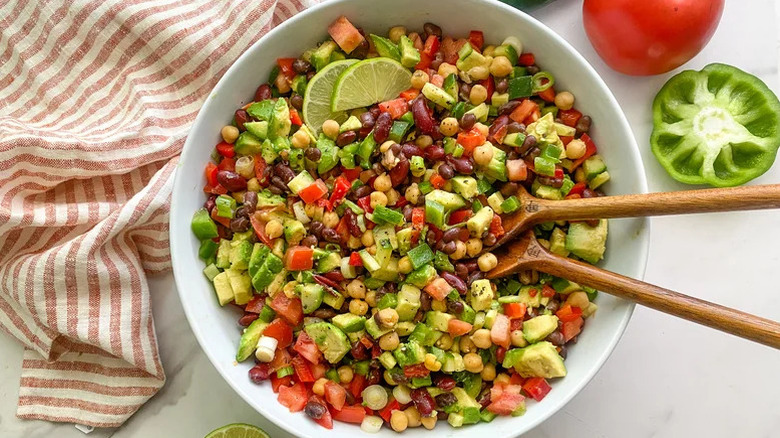
Beans, beans, the magical fruit, the more you eat, the more ... satiated you feel. It shouldn't come as a surprise that beans are an ideal way to beef up a salad. Cannellini beans, black beans, and chickpeas are a common trio. It's certainly feasible to use homemade beans, but pre-cooked, canned ones are ultra convenient. Make a tasty cowboy caviar with black beans, bell peppers, avocado, and cotija, or try swapping the black beans for kidney beans or black-eyed peas if that's what you have on hand.
This jalapeño-lime three-bean salad calls for chickpeas, black beans, and kidney beans for a colorful combination. All the ingredients create a blend of textures that's anything but ordinary. The jalapeño brings a fiery touch, and the cumin-lime dressing offers a tangy, spicy element that envelops the entire salad. We totally recognize that lima beans might be an underappreciated bean, but they can be a scrumptious addition to a salad with mixed greens and veggies. Navy, Great Northern, cannellini, and butter beans could be ideal when you want a mild flavor; these varieties offer a neutral, creamy mouthfeel while still making the salad extra filling.
Cheese
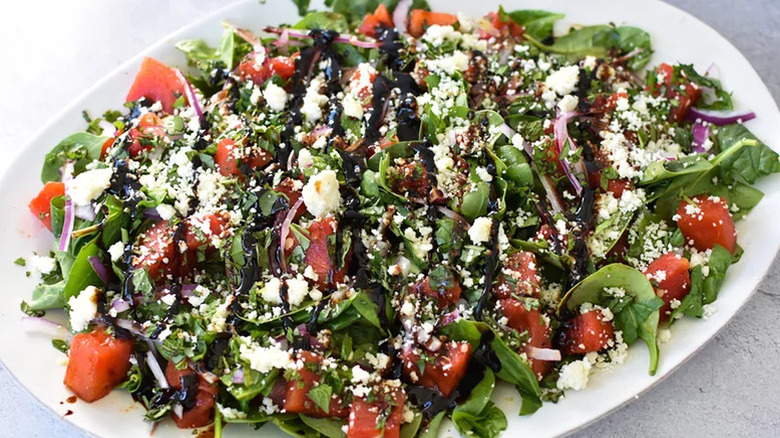
It's not as though cheese is an uncommon ingredient in salads; we see it quite often and in many forms. If you like to sprinkle some on salads, then you're right on the mark, as it is considered a filling add-in. There's no wrong way to include cheese in a meal, but it helps to factor in the overall flavor profile. Do you want the cheese to impart a noticeable flavor? Gruyère and blue cheese are more potent than milder options like mozzarella or cheddar. Gorgonzola adds a tangy yet earthy punch that pairs wonderfully with pears or apples, nuts like pecans or walnuts, and mixed greens.
The patty-like goat cheese rounds in this summery fried goat cheese salad offer an elevated texture and appearance. They are coated in breadcrumbs and fried and are best served right away to maintain their crunchy texture and soft, warm interior. The salad is especially tasty when topped with sweet and juicy sliced peaches.
This grilled watermelon salad with cotija follows the same idea, pairing fruit, cheese, and greens to make a showstopper worth bringing to potlucks and family gatherings. Both of these recipes are perfect when you want something impressive, satisfying, and delicious.
Seafood
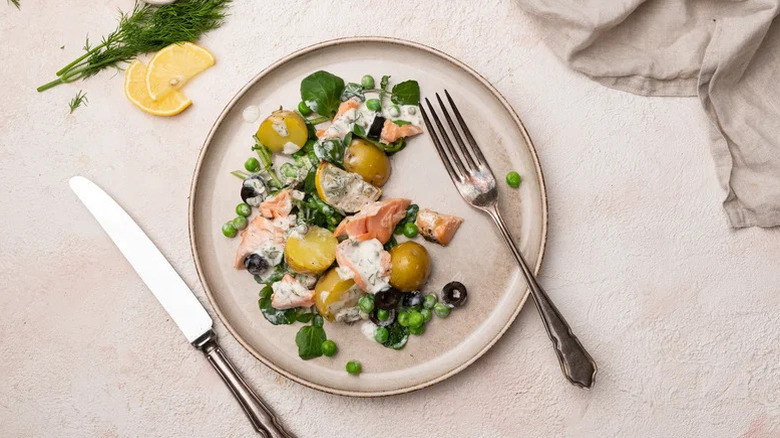
Salad can get a hearty boost of protein with seafood. This can include anything from grilled shrimp and canned tuna to smoked mackerel — the world is your oyster, so to speak. A grilled salmon, watercress, and pea salad might be the best match when you want something that looks like it came from a gourmet restaurant. It has a minimalist ingredient list but it stands out because of the herby dressing. A salmon, tuna, or mackerel Niçoise is always a tasty choice, thanks to the rich and chunky ingredients. It feels substantial with mix-ins like hard-boiled eggs, cucumber, olives, and cherry tomatoes.
Shrimp makes a scrumptious addition to many salads; pan-fry them for a simple topping, or give them a flavor upgrade by grilling them or using blackened seasoning. Load up your salad with avocado, black beans, diced onion, tomatoes, corn, and greens of your choice. For a twist on a familiar favorite, use shrimp or lobster in place of chicken on a Caesar salad. Whether you opt for seared scallops or warm mussels, seafood is a more versatile salad topping than you may have initially thought.