

The 12 Essential Rules For Mixing Cocktails

Nothing beats going out to your favorite watering hole, sidling up to the bar, ordering a drink, and then watching the bartender spin their magic. It can be something as simple as an old fashioned or something as complex as a 10-ingredient tiki drink. But watching as they measure, pour, shake, and strain can be just as satisfying as the drink itself. That spectacle is why we prefer grabbing a stool at the bar over that low-lit booth in the back.
While the show itself is always fun, we've discovered that every bartender has their own ritual, after many years of going to more bars than we can count. Some might build the drink in the glass while others place all the ingredients in the shaker first. Some will use a jigger to keep the measurements precise, while others just wing it. But there's one thing that's always guaranteed: Each mixologist has their own set of rules they follow to ensure they're creating the absolute best cocktail.
Since we also like creating our own drinks occasionally, we wanted to know which rules would ensure our drinks would be as good as theirs. So we reached out to several experts to get their opinions on which rules you should absolutely adhere to when mixing up your favorite cocktail.
Only use fresh, quality ingredients
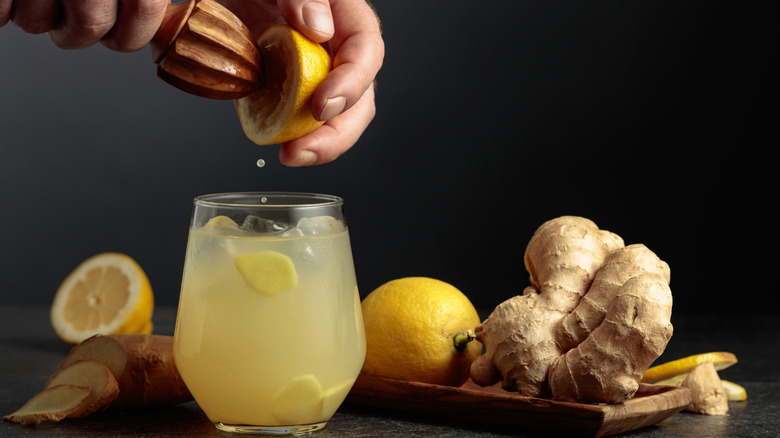
When it comes to creating a drink, you may think that the liquor is the most important ingredient, and it is, especially if you're imbibing an old fashioned or martini. But the mixers are equally important, especially when fruits and botanicals are involved. In fact, it's something that Mia Mastroianni says she "never skimps on." It may be easier to grab a mix, but the frequent judge on "Bar Rescue" strongly advises against it. It really shouldn't even be added to your cocktail in the first place. "The ingredients you choose to use are paramount," she exclaims. "Quality ingredients are always going to yield a better, fresher tasting cocktail than any pre-batched mix you could get at the store, and it's a difference that you can most definitely taste in the glass."
Those packaged mixes and juices may be more convenient, but Mastroianni says they're frequently "loaded with extra sugar, preservatives, or even colors not found in nature." So, when she's creating drinks at home or the bar, Mastroianni uses fresh herbs and a quality selection of spirits.
She also insists on using fresh citrus, as does the bar director from Bar Next Door, Brynn Smith. "Fresh citrus makes a better quality drink and is unmatched next to fake lime juice and better for you, [too]," explains Smith. Not only will these superior ingredients yield a better drinking experience, but the mixologists also promise that both you and your guests will definitely notice the difference.
Use fresh, good quality ice
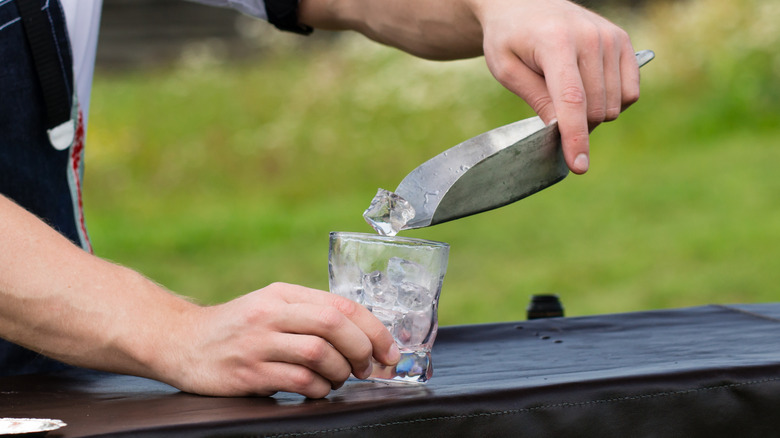
Ingredients aren't the only thing that should be fresh. Both Licensed to Distill founder Jabin Troth and Bar Next Door's Brynn Smith agree that ice should also be brand new and of good quality. The latter doesn't necessarily mean it has to come from a fancy ice maker or be clear, though. It could be a freshly made cloudy cube from your fridge. While clear ice definitely makes for a prettier cocktail, Smith tells us that as long as it's good quality, it won't just get you a better-looking drink; it will also "properly chill and dilute the cocktail." So, if you've noticed the cubes from your fridge taste strange or have been sitting in their trays for a while, dump them and create a fresh batch before you shake up that drink.
Troth, who's been schooling people on how to use ice when mixing drinks for years, says he always uses fresh ice when he creates a cocktail. It doesn't matter if he's using the same glass or cocktail shaker; if there's ice left over, he tosses it out every time before he starts creating something new. "The reaction is always the same," he explains. "'That ice is still good! Do not throw it away! Use it again!'" But here's why he says you should never do that. A large rock, or sphere, "may still look good, but it has greatly decreased in surface area. That means when you use it again, it will melt faster, create more dilution, and not keep your cocktail as cold."
Dilution is an important part of the mixing process
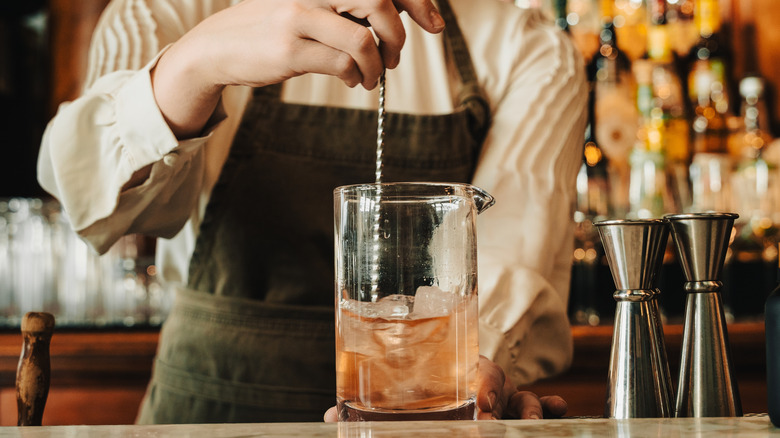
Good quality ice isn't just for aesthetics; it's also important when actually stirring or shaking up your cocktail. See, that ice isn't just for chilling your drink, it's also providing the appropriate amount of dilution so the final cocktail has just the right flavor. That's why both Brynn Smith and The Last Refuge general manager Andrew Forrester say that precision is very important when stirring or shaking up that drink. Smith tells us that you really need to "make sure you are stirring and shaking with ice for the proper amount of time."
Forrester goes even deeper, explaining that dilution is an important "structural component" of the drink. "The right amount [of dilution] lowers the alcohol concentration enough to release volatile aromatics while smoothing harsher ethanol notes," he says. In other words, if you stir or shake the drink too quickly, you'll end up with a harsher drink, but if you shake or stir it for too long, that pretty cocktail will be a watered-down mess. "A proper shake generally yields about 25–30% dilution, while a proper stir lands closer to 15–20%," Forrester continues. He says the key is consistently using "dense, cold, large cubes, [which] allows for reproducible results."
Add the least expensive ingredients first
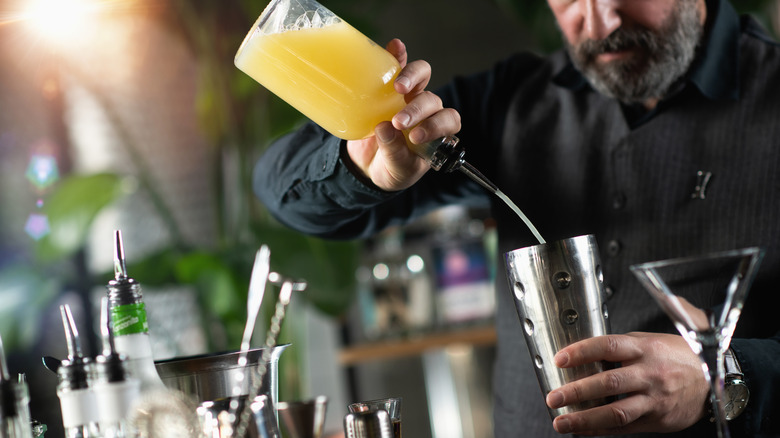
Whenever you mix up a cocktail, it's typical to start with the spirit and then add whichever mixers or botanicals are needed at the end. That order makes sense because when creating a drink, you're usually thinking about which liquor you want to consume before building from there. But entertainment expert Paul Zahn strongly advises against that.
Instead, he suggests that "when mixing cocktails, [you] always add the least expensive ingredients first. This is a sure-fire way to ensure that if you do happen to make a mistake, the waste is less costly." After all, that lemon juice or simple syrup is significantly less expensive than the tequila or rum you may have grabbed off the shelf, especially if those spirits are aged or top-shelf favorites.
Zahn uses an espresso martini as an example, telling us that if you're using a nice, reposado tequila as the base of your cocktail, the tequila should always be the last thing you pour into the shaker. "You want to add the simple syrup first (if you use simple in your espresso martini) and then the espresso," Zahn explains. "Next, you add your liqueur and tequila." He always mixes up his drinks in this manner because, as he declares, "I hate wasting good spirits if I happen to make a mistake."
Ice is always the last ingedient
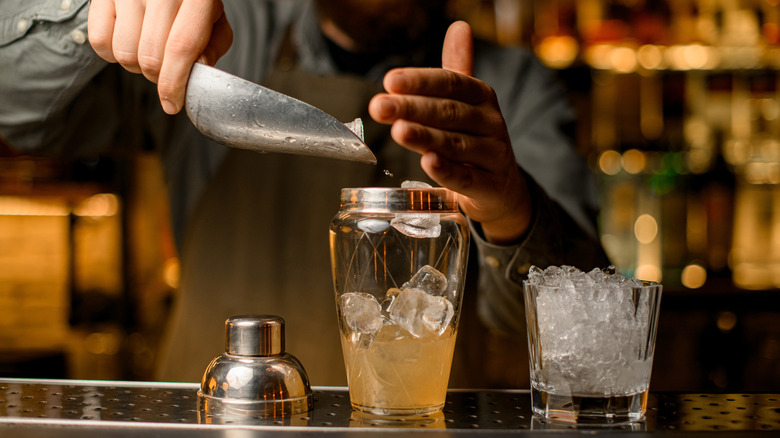
Ordering a drink at the bar is always a fun experience because you don't just get a great drink, you get a show — a show that includes the bartender creating the drink from start to finish. This show usually starts with the bartender adding a scoop of ice to the glass in order to chill it so the cocktail will still be nice and cold once it's served to you. But sometimes, after the bartender adds ice to the glass, they add another scoop of ice to the shaker and then start to create the cocktail. But you don't need to cool down the shaker. You need to cool down the drink inside, which is why Jabin Troth tells us adding ice to the shaker before any ingredients is a big no-no.
"Whether you are building your cocktail in a shaker, a mixing glass, or directly into the glass, don't add the ice until you are ready to shake or stir," he stresses. "If the ice goes in first, it will over-dilute your cocktail while you are adding ingredients." The reason Troth says adding the ice first will ruin your drink is that every second that ice is in the shaker, it's melting and thereby introducing water into your drink. And that's water you may not want. While it's true that some water is needed for each and every cocktail, too much of it ruins a drink. As such, Troth says it's best to "add ice at the end and immediately start stirring or shaking."
Invest in a great cocktail shaker
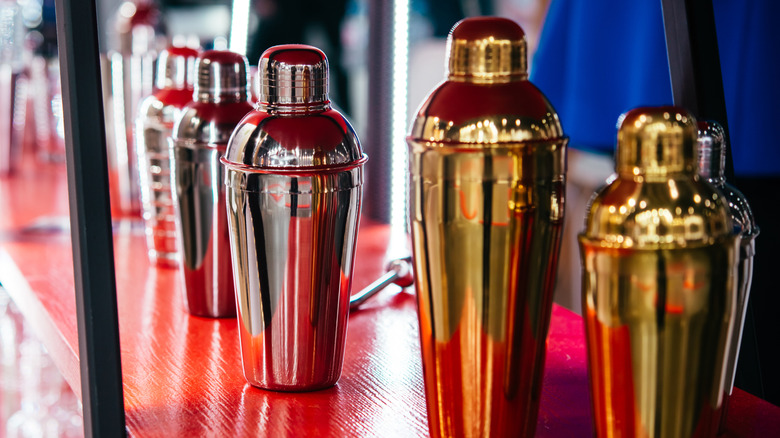
There are three ways to create a cocktail: You can build it in the glass, you can stir it up in a stunning crystal mixing glass, or you can shake it up in a cocktail shaker. While the device you choose depends on which kind of cocktail you'll be making, it should almost always be shaken if your drink includes citrus, egg whites, or dairy. And if you're going to shake a cocktail, Paul Zahn says you should "invest in a great cocktail shaker."
While there are really three different kinds of cocktail shakers, Zahn says many of them "are beautiful to look at but do not function properly." The entertainment expert recommends "investing in one that will work for years and is also a stunning piece on the home bar." He says his favorite comes from Elevated Craft: "It does not leak, and the lid even has measurements inside it so you do not even need a jigger!" Not only is it a great shaker, but Zahn also says that it "makes a great holiday gift."
Should you stir or shake your cocktail?

Now that you've invested in the perfect cocktail shaker, you need to decide when to use it. You may think there's no difference between shaking a cocktail and stirring it, but The Last Refuge's Andrew Forrester assures us there is an absolute difference, and your choice will affect the final drink. He says it's "fundamentally about how different ingredients behave under agitation." Drinks containing citrus, dairy, or eggs need to be shaken in a cocktail shaker, and Forrester explains that this intense motion helps drinks containing such ingredients "[have a] stable temporary emulsion, incorporate air, and achieve full integration."
On the other hand, Forrester says that "spirit-forward cocktails built exclusively from clear, miscible ingredients should be stirred to maintain clarity and texture while achieving targeted cooling and dilution." If you shake a cocktail like an old fashioned or martini, Forrester says you'll be introducing tiny bubbles into the drink and possibly over-dilute it as well. So, you could end up with a watered-down drink that just doesn't taste right, and if there's one thing we don't want, it's a weak martini.
Having the proper tools guarantees a great drink
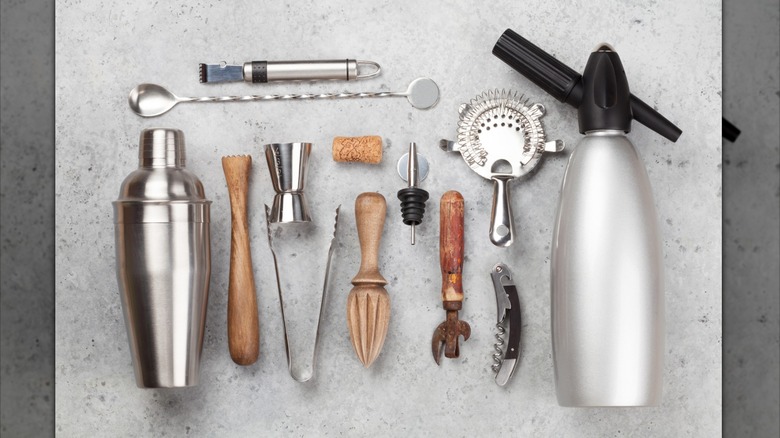
"Having the proper tools to make a cocktail is essential," declares Mia Mastroianni. While she admits that busy bars will have every kind of tool available, most of us home bartenders don't have that kind of space or money. So, if you can only invest in a few instruments, Paul Zahn recommended the shaker, but Mastroianni says a jigger is also valuable. "Following a cocktail recipe is just as important as a recipe for baking or cooking," she explains. "If your measurements are off, the balance will be off, and that could be the difference between a drink that is too sweet, too sour, or too strong."
You may have witnessed many a bartender free-wheeling it and just pouring the ingredients straight from the bottle without taking the time to measure out exact amounts. But these are seasoned professionals who (ideally) have been crafting drinks for years and should know what an ounce or two is just by looking. We're not nearly that qualified. So, Mastroianni says she "would recommend that any home bartender invest in a graduated jigger: One tool that can measure every increment from a quarter ounce to 2 ounces." But if you don't have a jigger, don't despair; Mastroianni says that the measuring spoon makes a great substitute. Once you're comfortable mixing drinks, the mixologist strongly suggests adding to your bar cart by grabbing "a mixing vessel and bar spoon, some strainers, and continue to build your bar from there."
The dry shake can make or break your cocktail

Cocktails made with egg whites have been around for over 200 years. Typically included in drinks like the whiskey sour and Ramos gin fizz, the egg white not only adds a beautiful frothy head to the drink, but it also adds a silkiness that can't be beat. But if you're going to include an egg white in your drink, you can't just shake it up and serve it. Bethne Stewart, a bartender at The Portrait Bar in New York City, tells us it's actually a two-step process known as the dry shake.
A dry shake is when you shake the cocktail without ice for a minute or two. This begins the emulsification of the eggs and starts to create that froth. You then add the ice and shake again to create a thicker foam while chilling the drink at the same time. And that's how Stewart learned it when she first started bartending. But she says recently she's changed things up and has started to do a reverse dry shake. "I've been swapping the order of operations because I feel like it gives a smoother, fluffier foam to egg-white [and] fee-foam cocktails, and especially [to] espresso martinis," she said.
Crack eggs like a pro
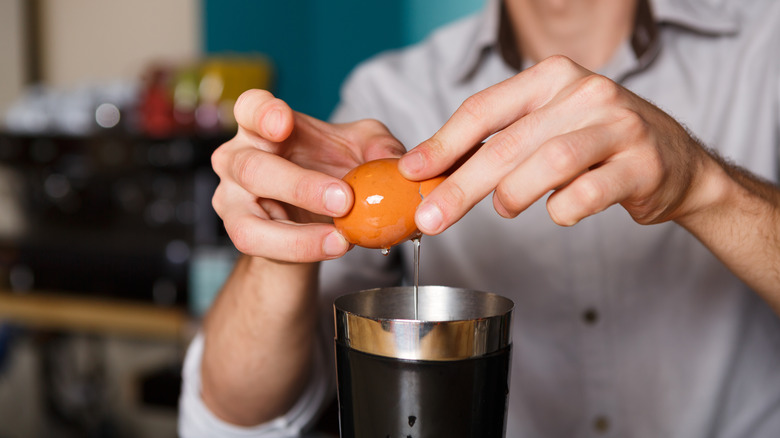
Continuing with the egg white theme, Bethne Stewart tells us that how you crack that egg and add it to your shaker is just as important as how long you shake the drink. If you've ever separated an egg for baking, you know how hard it can be to keep those whites and yolks separate. It may not seem like a big deal, but if even the smallest speck of yolk sneaks its way into the bowl or shaker, you won't get the same froth you would if it were a spotless separation.
While we know several hacks to make cracking an egg easier, Stewart was nice enough to give us a new one to try. "I learned from a veteran bartender that cracking a small hole in the pointier end of an egg can (with practice) allow you to just dump the white into your shaker and toss the shell and yolk in one fell swoop," she said. Stewart admits it sounds a little weird but her colleagues were soon copying her technique once "they saw how quick and clean it was."
Don't disregard the garnish
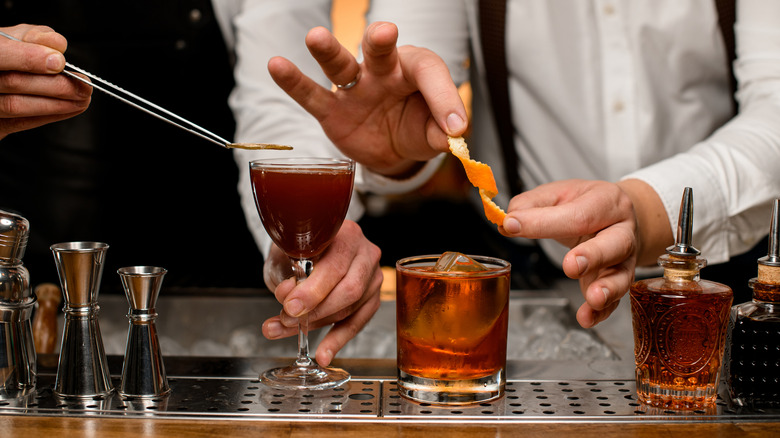
We love a good drink. But it's not just about the way the drink tastes; how it looks is just as important. While it used to be as simple as rimming a glass with salt for a margarita or adding a wedge of lime to that Moscow Mule, these days mixologists go to a lot more trouble to make the drink look just as impressive as it tastes by using interesting glassware and unique garnishes. Mia Mastroianni agrees with this trend, admitting that "presentation is an element that shouldn't be neglected when mixing cocktails."
While the type of glassware you use is important, the cocktail judge says the "choice of garnishes can elevate the drinking experience, or even lend to the theme of a party!" Fresh garnishes like slices of citrus or skewered berries and herbs may enhance the flavors of the cocktail, but be sure to follow this one rule to ensure the perfect sprig or slice makes it to the glass.
Meanwhile, "the tried-and-true cocktail umbrella or whimsical plastic dolphin," as Mastroianni says, are great, easy ways to have a little fun. "So, put some thought into how you want to serve your creation and how you would like the initial impression of it to be perceived," she continues. "We see and smell our cocktails before we even taste them, so those details should never be overlooked."
Don't skip the aromatics
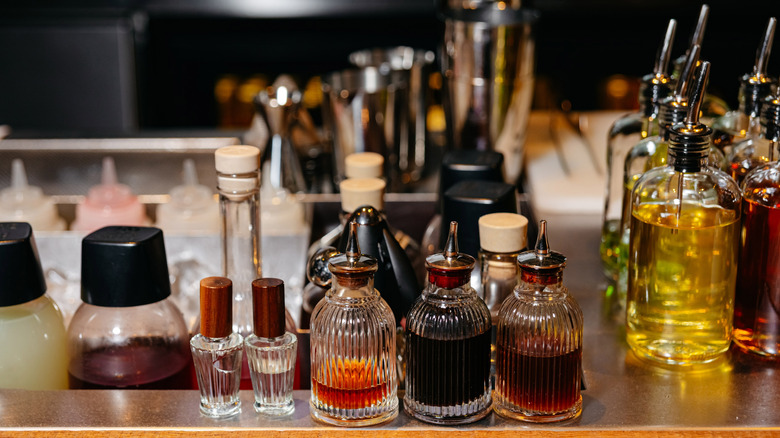
Garnishes aren't the only thing that takes your drinks to the next level, as aromatics are equally as important. "It's easy, especially when we're mixing cocktails at home and might be a bit short on ingredients, to forget that a cocktail should be an experience that incorporates all of your senses," explains Bethne Stewart. Aromatics, which can be anything from a low-ABV liqueur to an interesting variety of bitters, will do just that. "A spritz of absinthe or scotch (or sherry, or eau de vie, or chartreuse...) or a few dashes of fancy bitters can make a good drink amazing," she says.
But you don't have to limit yourself to spirits; fresh fruits and herbs can also add some pizzazz when muddled, stirred, or shaken into your cocktail. "Mint, bay leaf, rosemary, lavender, and rose can all be very flexible and add herbal and floral aromatic complexity before you've even taken a sip," Stewart adds. But if you do choose to go this route, Andrew Forrester stresses that fresh is best. "Fresh citrus, herbs, and peels carry a far more vibrant flavor because their aromatic compounds degrade quickly once exposed to air," he explains. "By squeezing juice fresh and expressing citrus oils directly over the drink, you preserve brightness, balance, and aroma — all key to a well-constructed cocktail." Then, if you really want to go the extra mile and have the time, Stewart says that "infusing a spirit with hibiscus or pea flowers can pack a visual punch."