

The Pros And Cons Of 10 Coffee-Brewing Methods, According To A Barista
Since the founding of our country, Americans have been in a passionate love affair with coffee. After the Boston Tea Party, we ditched the flowery, herbal drink in favor of something a little stronger (and, more importantly, less controlled by the British). The patriotic swap stuck, to say the least, and now coffee is an integral part of our history, identity, and daily routines.
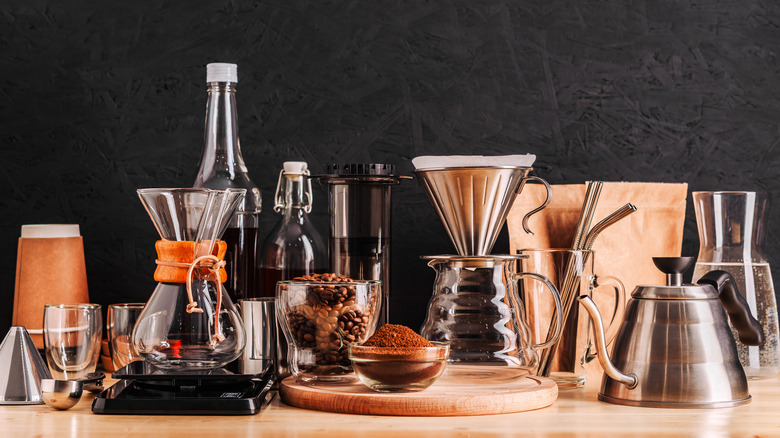
The humble auto-drip coffee maker was a fixture in American homes for decades, but in recent years, caffeine fiends have traded their bulky machines for sleeker, trendier brewing gear. We all know the French press and espresso machine, but there's an entire universe of coffee gadgets to dive into — many of which are far less complex than you'd think. Each method brews coffee differently, with each creating its own distinct cup.
I have over 10 years of professional barista experience under my belt and have brewed with everything from an AeroPress to a cezve. I'm here to break down the pros and cons of most popular coffee brewing methods so you can choose the one that fits your taste, budget, and morning routine. Whether you prefer a quick, strong shot or a light, bright cup with plenty of acidity, there's a coffee maker out there to create the cup of your dreams.
1. Automatic Drip Machine
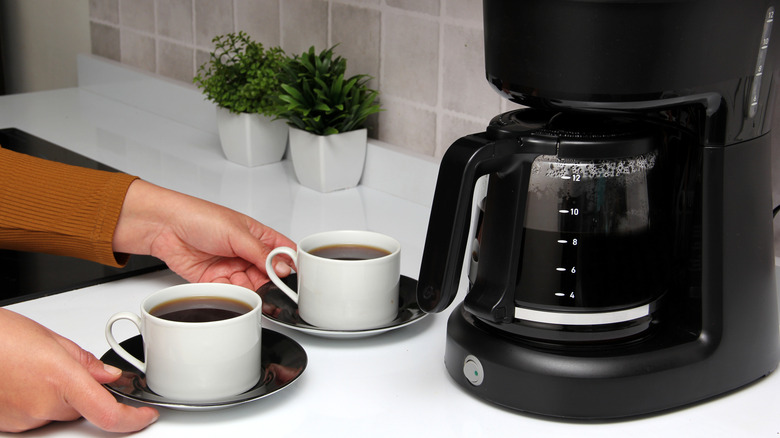
Chances are, if you grew up in a coffee-drinking household, you're no stranger to the iconic automatic drip machine. It's been a mainstay in nearly every American kitchen for decades, and for good reason. Its most noteworthy feature revolves around a principle that Americans hold dear: convenience. The automatic drip machine is a set-it-and-forget-it type of appliance. All you have to do is pop in some ground beans, fill the reservoir with water, and push a button. A few minutes later, the kitchen fills with the smell of coffee and all is right in the world. If you're brewing for multiple coffee drinkers in your house, it's easy to find a drip machine capable of large-capacity brewing. Its automated aspect means coffee is always consistent, and the best drip brewers are often programmable.
The auto drip machine is a classic, there's no doubt about that — but it's not without its faults. My biggest qualm with these machines is the lack of control you have over your brew. Sure, it's convenient and consistent, but there's no skill involved, which is unappealing for someone interested in the art of coffee brewing. They can also be a pain to clean and, let's be honest — when was the last time you even remembered to clean yours? Whether it's properly cleaned or not, running coffee through a complex plastic and metal contraption often results in muted, muddled flavors.
2. Pour-over
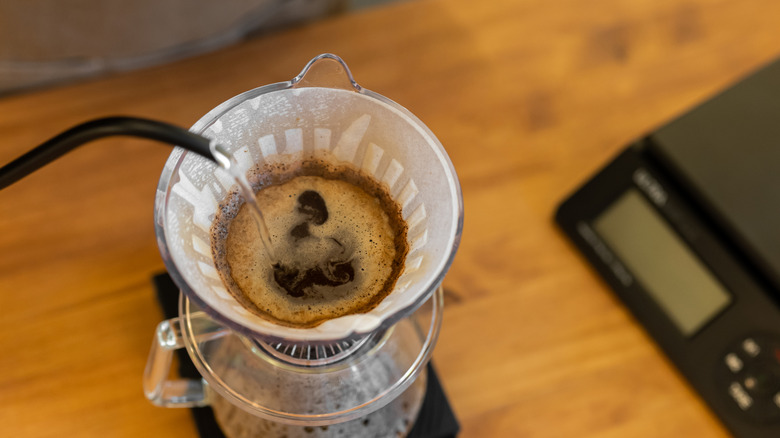
If you're looking to retire your drip machine to learn more about the science and artistry of coffee brewing, I'd implore you to reach for a pour-over brewer. A pour-over brewer is essentially the manual version of an automatic drip machine. Hot water is poured by hand — usually from a gooseneck kettle — over ground coffee in a filter into a basin or carafe, and that's all there is to it.
Since everything is done by hand, pour-over brewing allows for quick manual adjustment, like altering the speed of the water's flow or the temperature of the water. The apparatus itself is simple — it's usually just a triangular piece with a flat bottom, or a glass funnel with a wide, jug-like basin, like in the case of Chemex. It's easy to clean, store, and it doesn't require electricity. Since the apparatus is so simple, the coffee it produces tastes clean and bright, with subtle nuances easily detectable.
Starting the day with a meditative task that requires you to be present and mindful has its perks, but for some, the process is too long and tedious; some of us just want our caffeine fix as soon as we wake up. It's also easy to make mistakes when brewing pour-over coffee (especially if you're still a beginner) so you might have to put up with some weak, acidic, or unbalanced coffee before you get the technique for the perfect pour-over down pat.
3. French press
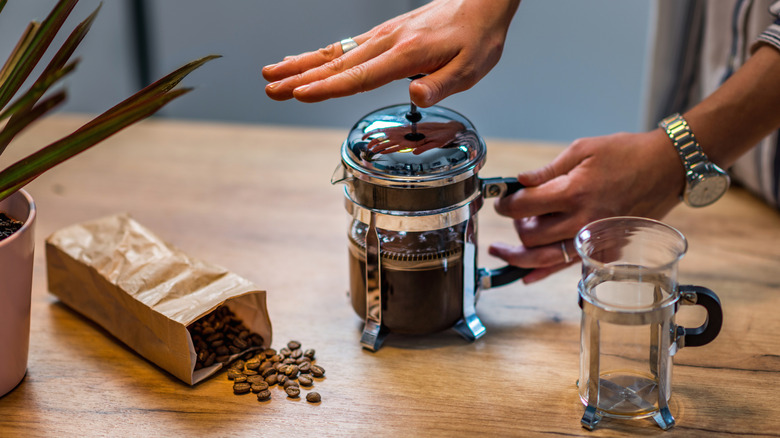
The French press is one of the most popular brewers in the U.S. because it combines elements of the auto drip — ease and convenience — with elements of a manual pour-over brewer — clean extraction and more control. It works by adding hot water and ground coffee beans into a carafe with a metal press. After the beans steep, they're pressed to the bottom of the carafe and filtered out so the coffee pours clear.
Since all the grounds are steeped in water rather than extracting by having hot water pass over them, the result is a coffee with a heavier body and more robust flavor, which many coffee drinkers prefer. It also requires less skill and precision than other manual brewers, but doesn't require the use of electricity and programmable settings. A French press even has uses other than brewing coffee, so it's a nice inexpensive gadget to have stashed away, even just for occasional use.
Compared to pour-over, a French press produces coffee with richer flavors, sacrificing brightness and clarity. For some, this is a positive feature, but if you're looking to experiment with a new light-roasted single-origin to detect its subtle nuances, the French press isn't your best bet; this brewer is better suited for your daily driver medium-roasted morning blend. To get the most out of your favorite beans with a French press, timing is everything. While it's mostly hands off, a kitchen timer is still crucial, and the loud beeps of a timer aren't exactly everyone's favorite thing to hear early in the morning.
4. Espresso
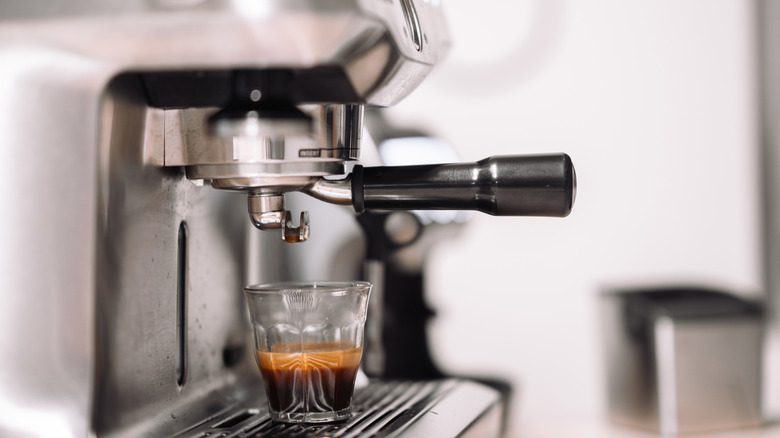
Espresso is a perfect example of how the same coffee beans can taste so different depending on how they're brewed. We all know it and love it, but if you've never made it yourself, you might not know exactly what goes into pulling a shot. Espresso is essentially a concentrated shot of coffee made by forcing hot water through finely-ground beans. Certain coffee blends are made specifically to taste the best when brewed as espresso, but — despite popular belief — any beans can be turned into a potent, crema-rich shot.
For those fully invested in learning all the ins-and-outs of coffee brewing, some might say that having a home espresso machine is a must. Espresso is easily the most fun to make, and you can never learn enough about all its subtle intricacies. It brews quickly, has a famously intense, rich flavor, and is ideal for those who prefer a milky coffee drink.
The biggest downside to using an espresso maker is, by far, the cost. Even espresso machines designed for beginner enthusiasts can run you anywhere from $400 to upwards of $1,000, so it's not practical for the average coffee drinker. The cheap-o machines you can buy on Amazon may look promising, but they typically lack the pressure-producing capabilities of real machines, so they don't make true espresso — they're just glorified drip brewers. Making espresso as your main morning joe also leaves you limited on your drinks, since an espresso maker can't make anything that resembles a regular cup of coffee.
5. Single-serve pod machines
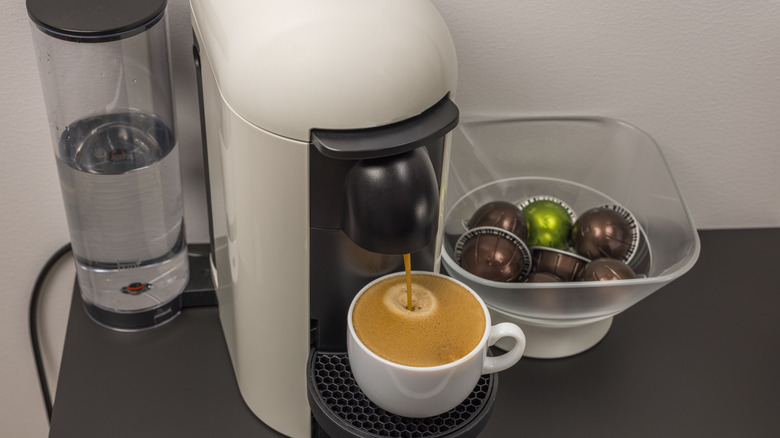
Nestlé and Keurig took the coffee world by storm when their single-serve coffee makers were unveiled in 1986 and 1998, respectively. It took a few years for the Nespresso and Keurig machines to catch on, but in 2020, 40% of U.S. coffee drinkers owned a single-serve pod machine (via Statista). This coffee maker works by forcing hot water through a disposable pod of ground coffee directly into the cup.
It's hard to imagine a coffee maker more convenient than the automatic drip brewer, but single-serve pod machines said, "Step side — I've got this." They're the definition of fast and convenient, with minimal clean-up and basically zero effort. The machines themselves — like the Keurig — are relatively inexpensive, and are ideal for offices or college dorms, where measuring out beans or brewing a separate pot of hot water can be a headache.
Despite their conveniences, single-serve pod machines aren't ideal for anyone who prefers fresh, high-quality coffee over a quick, on-the-go cup. There's no way to customize your cup other than buying different pods, which isn't much fun. The coffee pods are typically made of aluminum and food-grade plastic, which can significantly alter the natural flavor of coffee — not to mention that the beans inside are, of course, pre-ground, which is a major faux pas if you're trying to brew a fresh cup. These single-serve brewers also produce significantly more waste than other coffee makers and can cost more per cup.
6. Cold brew
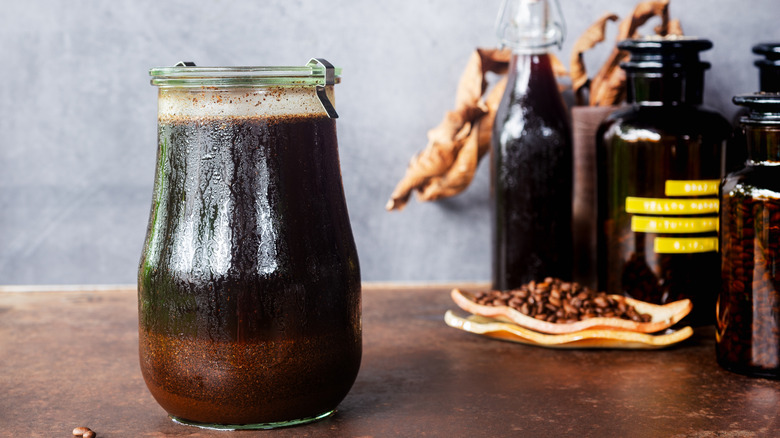
Cold brew has absolutely exploded in popularity in recent years, and for good reason. It's simple to brew; just put ground coffee in a filter bag or directly into cold water and steep it in the fridge for 12 to 24 hours. When it's done, remove the filter or strain the grounds to enjoy what's essentially a bougie iced coffee. Cold brew is famous for its smooth, mellow flavor and low acidity while still being dark and robust. I know some coffee drinkers who tried cold brew and immediately made it their regular morning drink for life — it really is that uniquely delicious. It's easy to make cold brew at home with no special skills, but there are still some obvious downsides.
The biggest challenge with cold brew is the need to plan many hours ahead; it's not the type of thing you can whip up on the fly. Although it's easy to customize to your preferred strength by varying the amount of coffee used and brewing times, it doesn't taste very good reheated, so you're limited to just chilled coffee. However, it requires just water and a pitcher, and it keeps in the fridge for a while, so brewing a batch for some summer refreshment as an occasional swap for your regular morning joe is easy. Relying on cold brew for all your coffee needs, on the other hand, might leave you sick of the stuff in a matter of weeks.
7. AeroPress
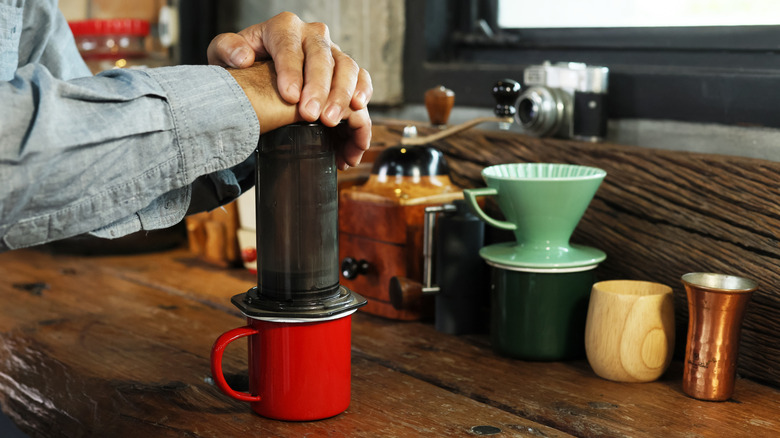
The AeroPress is a little more obscure than the other brewing methods on this list, but it's easy to understand if you just think of it like a funky hybrid contraption: It's essentially a French press, espresso machine, and pour-over brewer all rolled into one. The AeroPress works by steeping coffee grounds in a small, cylindrical tube placed on top of a cup. Once the grounds have steeped, they're slowly plunged by hand directly into the cup, straining through a tiny mesh filter.
Like a French press, the AeroPress plunges coffee, but the final result tastes different from the coffee produced by a French press. The plunger mechanism presses coffee, while a French press' plunger acts more like a filter. This gives AeroPress coffee a richer taste with more subtle flavors extracted. It's fun to play around with ratios, water flow, and the amount of pressure used to achieve a cup that aligns perfectly with your tastes. It requires no electricity, it's extremely lightweight, and it's inexpensive, so it's a great tool to have on hand for tasty coffee on the go.
The biggest downside to the AeroPress is its tiny capacity — it can only brew one cup at a time. It's also constructed primarily from plastic, which coffee purists often won't allow near their brew as it can alter the taste. Some AeroPress fans use it as a substitute for espresso, since it can produce a similarly-rich, decadent coffee. However, it isn't capable of withstanding the amount of pressure needed to produce actual espresso.
8. Percolator
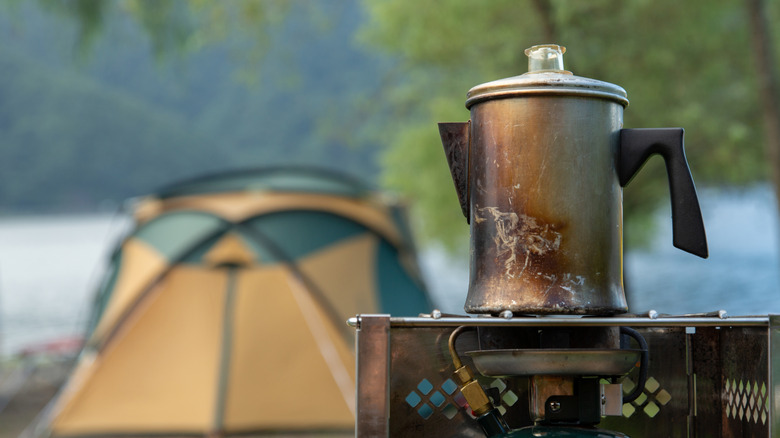
The humble percolator has a lot going for it — it's a timeless classic for a reason. For those out of the know: A percolator brews coffee by cycling hot water through ground coffee in a filter basket inside the carafe, which is heated directly on a stovetop, fire, or electric hotplate. It's a popular choice for brewing at the campsite, since it doesn't require electricity, it's easy to use, and it's usually large enough to serve a small crowd.
Since water continues boiling inside a percolator, coffee beans are extracted fully, resulting in a fuller flavor and body. However, this can also be its downside. Over-extraction can cause a bitter taste, so it's a good idea to keep a watchful eye over the percolator.
This brewing method doesn't offer nearly as much control over coffee as the pour-over method. However, it's more customizable than a non-programmable automatic drip coffee maker since the temperature of the water can be configured, so it falls somewhere in the middle. Still, it isn't a great choice for those who like to have control over their coffee or are after a consistent cup. On the other hand, it's a decent option for those who want a simple piece of gear that's capable of brewing some strong joe sans electricity.
9. Turkish coffee
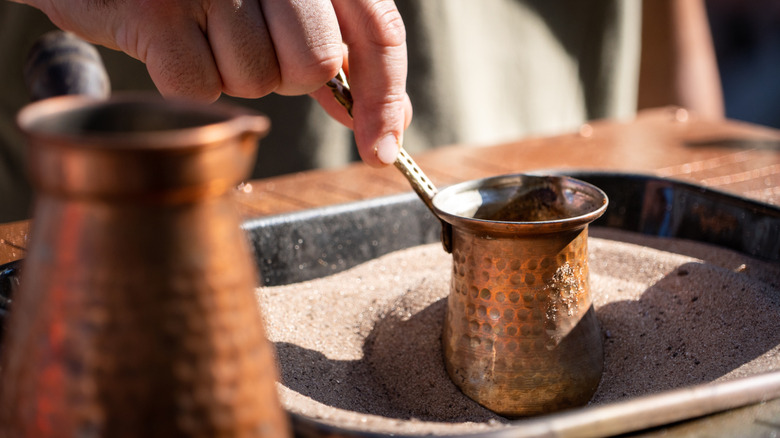
It may not be the most popular brewing method in America, but this traditional brew is starting to pick up steam in the coffee mainstream, and I couldn't be happier. The method for brewing authentic Turkish coffee involves adding very finely-ground coffee beans, spices, sugar, and water to a small copper pot called a cezve. The pot is heated on hot sand, which sits on top of a stove or flame.
When making Turkish coffee at home, it's hard to achieve the same flavor as those brewed in the coffee's homeland, but it's doable. It usually involves spices, like cinnamon and cardamom, which complement coffee's natural bitterness and complexity. Since the beans are never separated from the water, Turkish coffee is incredibly bold and dark, with deep layers of flavor highlighted by sugar and spices. It doesn't require a stove with an open flame and sand to make at home; it can be made on a regular range with minimal equipment.
There's a bit of a learning curve when it comes to brewing Turkish coffee. It's easy to burn, or grind too coarse, and not getting enough of the signature froth is a letdown. It takes a while to master, and it takes longer to brew than other methods, making it an all-around time-consuming process. For these reasons, it isn't a great choice for a regular morning coffee, but rather an occasional treat.
10. Moka pot
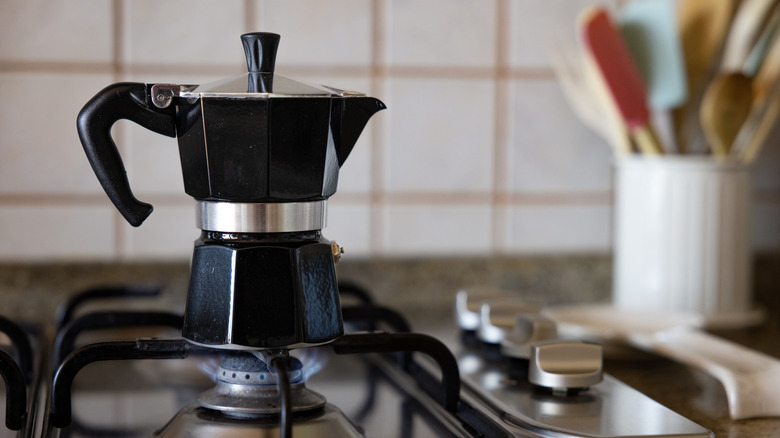
If you love to make espresso drinks but don't want to shell out the significant amount of dough needed for a legitimate espresso machine, the moka pot should be on your radar. It functions much like a percolator, where steam forces water up through a chamber and through a basket of coffee grounds. This handy contraption is known as a stovetop espresso maker, although it can't produce the amount of pressure needed for genuine espresso, so it isn't actually the real deal. But that doesn't mean it produces bad coffee — it's actually a worthy, affordable substitute.
Bialetti's Italian Moka Pot is the most iconic version of this brewer, and it clocks in at only around $45* — much cheaper than a $1,000 espresso machine. It requires minimal skill to brew using a moka pot, and it's easy to customize your coffee by adjusting grind size, ratios, heat, and timing. Plus, it's hard not to mention how chic this piece of gear looks sitting on a stovetop.
The few cons that come with a moka pot are the simple fact that it doesn't make genuine espresso. However, if milky, sweet drinks are your pleasure, the difference is hardly noticeable. They can also be a bit tricky to clean, and it's a good idea to clean a moka pot after each use. Some home baristas don't prefer them because most are made from aluminum, which is known to give the coffee a hint of a metallic taste.