

5 Methods Of Making Coffee While Camping
We may receive a commission on purchases made from links.
Camping is an amazing way to reconnect with nature and get back to basics. But unless your camping trip is a form of detox, there's no reason to give up all your creature comforts. If you're someone who needs a cup of Joe to get started in the morning, there are plenty of ways to make coffee while camping. The best coffee brewing method for you will depend somewhat on how you like to drink coffee, but also on the kind of trip you're taking.
Through-hikers will need to be particularly aware of weight limitations, as well as access to water along the trail. Even if you're taking a less adventurous approach and driving all the way to the campsite, you still need to consider how much space these coffee brewing options take up, and how easy they are to use and clean. All these methods will require a way of heating water, so it's assumed you have a pot and access to gas stove or campfire.
If you're just on a day hike, there are battery powered espresso makers like the WACACO Minipresso GR that will heat the water for brewing. But if you're staying overnight it's most likely you'll have a stove on your list of cooking essentials for seasoned campers.
Cowboy coffee
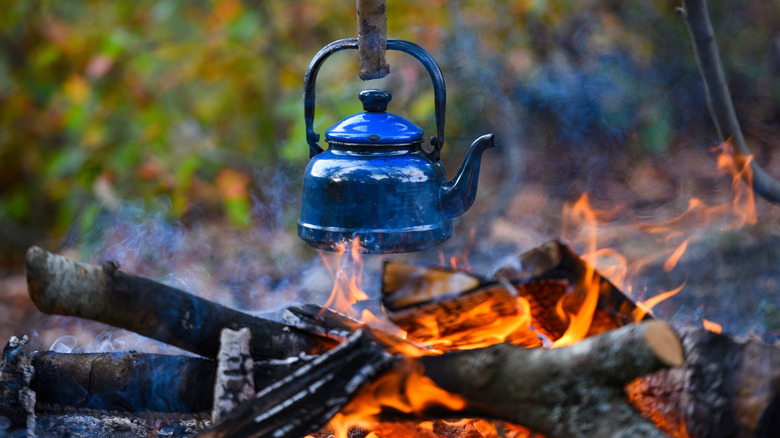
Cowboy coffee is the OG method of brewing coffee on the trail. All it requires is a pot for heating water and some pre-ground coffee beans. Traditionally, the grounds would have been boiled in the water similarly to other old-school coffee brewing methods. But you can save your taste buds a little torment with just a couple of extra steps.
Start by bringing water to the boil, then remove from the heat and let it sit for around 30 seconds. This reduces the heat to the best temperature for brewing coffee and will help to reduce any bitter taste. Next add the coffee grounds — 2 tablespoons for every 8 ounces of water — and stir well. Leave to brew for four minutes, stir again, then leave for another two minutes before drinking.
Cowboy coffee is a good method for brewing for a few people at once, and portioning it out has the benefit of straining out some of the coffee grounds. But if you're on your own you could potentially drink it straight from the pot and save yourself the chore of washing up a cup.
Although this is a simple and convenient way to make coffee, it's not without its downsides. If you're used to coffee shop lattes and the brews from your local hipster cafe, you might struggle with the rustic taste and the sediment in a cup of cowboy coffee. Using your pot to boil the coffee also means that you'll need to give it a good clean before cooking anything else — that is, unless you want your dinner full of grounds. Also, if you have limited access to water, this may not be the best option.
Instant coffee
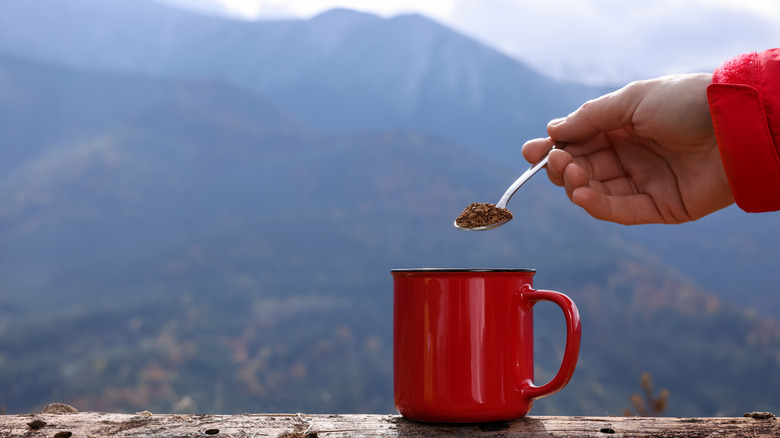
If your morning coffee is more about caffeine rather than taste, then instant coffee could be for you. Packets of instant coffee are incredibly lightweight, take up very little space, and only require hot water to make. Plus, apart from your cup and stirring device, there's no washing up required.
Instant coffee isn't what most people would consider gourmet, but there are some brands that manage to elevate the concept. Starbucks Via Instant Medium Roast Colombia Coffee is an affordable upgrade, while brands like Verve get into seriously specialty prices. Instant can also be the best choice if you prefer to drink your coffee with milk. Instant latte mixes contain both instant coffee and powdered milk or creamer.
Apart from how to improve the taste, the only thing to consider when opting for instant coffee is the balance between cost and convenience. Individual packets are much lighter than a jar of instant coffee, but end up being a more pricey option per cup, and they create waste you'll need to pack out.
Coffee bags
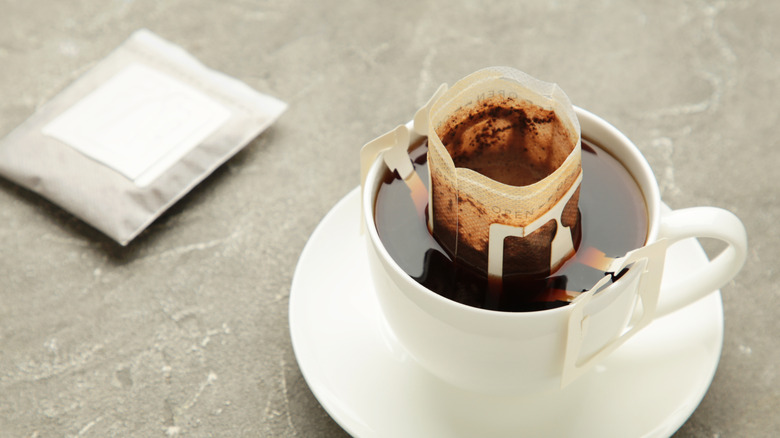
Coffee bags could be considered the halfway point between instant coffee and fresh brewed coffee. These work just like tea bags: add them to a cup of hot water and let them steep to brew coffee. While these won't have the oomph you might get from other brewing methods, they do have that true coffee flavor when compared to instant.
There's another type of coffee bag that use a method similar to the pour over brewing technique. Known as pour over coffee bags or drip coffee bags, these come with small foldout cardboard brewers that sit on top of your cup, allowing you to pour hot water through the grounds for a more nuanced brew. The downside to these is that they generate a lot of waste. Even if you find biodegradable choices, the packaging and coffee bags still need to be taken with you when you pack up camp.
Just like instant coffee packets, coffee bags can work out to be considerably more expensive than brewing with ground coffee. They're not nearly as common, so you won't have the choice of more economical brands –- though the Conihat Vietnamese Coffee Drip Bags are among the more affordable. You also need a way to ensure they are kept completely dry, as any dampness could kickstart the brewing process.
AeroPress
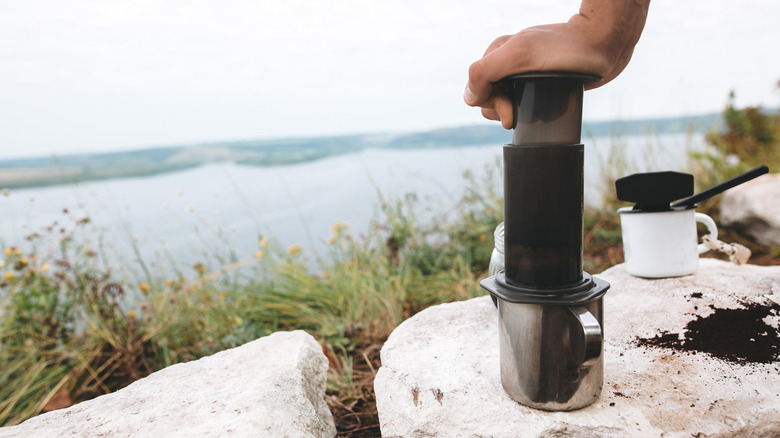
As an invention by the guy who brought us the Aerobie, the AeroPress could have turned out to be nothing more than a novelty item. Instead it's become a respected brewing method among coffee fanatics and even baristas. It's lightweight, portable, and most importantly makes a great cup of coffee — so this is the camping equipment you need if you consider yourself something of a coffee snob.
The AeroPress Original comes with single-use paper filters, but if you don't want the waste or the risk of getting them wet, you can buy another type of coffee filter: a permanent stainless-steel filter. It weighs in at 6.5 ounces and packs up to just 5.25 inches by 4.2 inches but for camping you might want to consider the AeroPress Go instead. Designed for travel, it's smaller at 4.5 inches by 3.6 inches. While it does weigh more, it includes a mug that fits perfectly onto the bottom of the brewer.
The one thing to be aware of when considering the AeroPress is that you will need a stable surface to put it on for the brewing and extraction process. It's also not ideal for making coffee for a crowd, with each cup needing around 2-3 minutes to brew.
Pour over
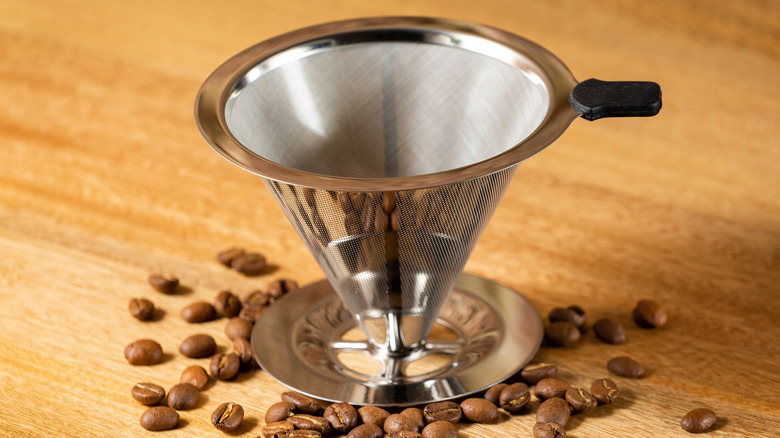
If you're familiar with coffee-making equipment, you might associate pour over brewing with drippers like the Chemex of Hario V60. Neither of these would be suitable for throwing into your backpack — but there are plenty of more portable options that use exactly the same technique. A collapsible pour over brewer is ideal if you're short on space. The GSI Java Drip will flatten down to a disk less than an inch high, and weighs less than 5 ounces. However you will need to bring your own single-use coffee filters to contain the grounds.
For a no-waste version of the camp-friendly coffee brewing method, you can find a dripper like the LHS Pour Over Coffee Dripper that works as both a filter and brewer in one. This is a stainless-steel cone that sits over your cup, with mesh sides that allow water to flow through while retaining the coffee grounds. This only requires a quick rinse to clean, and the occasional scrub to ensure none of the holes are blocked.
The key thing to remember with this technique is that it needs specific and even grind sizes –- which can be hard to get with store-bought pre-ground coffee. So you'll either need to ask your local roaster for a grind to suit your brewer or grind a big batch yourself before you hit the trail.